
Poland Sweden Common rulers historical connections wars and
- Slides: 26
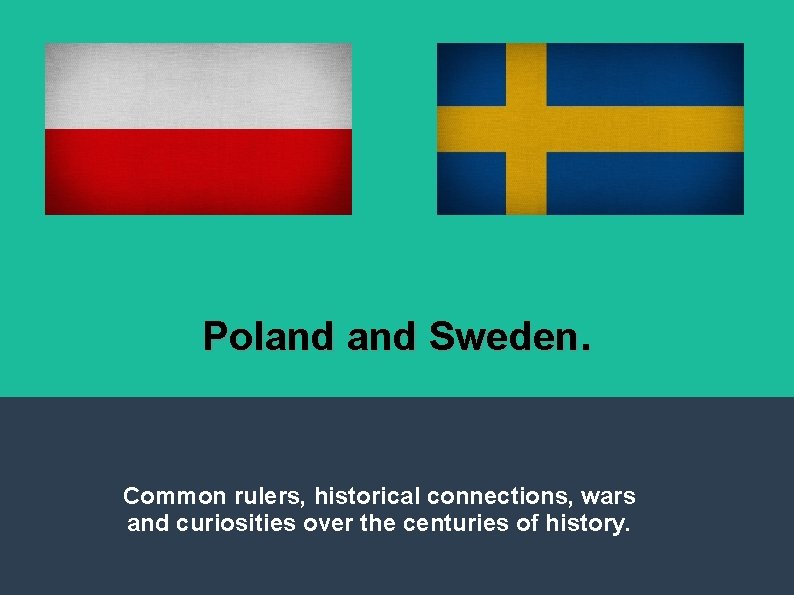
Poland Sweden. Common rulers, historical connections, wars and curiosities over the centuries of history.
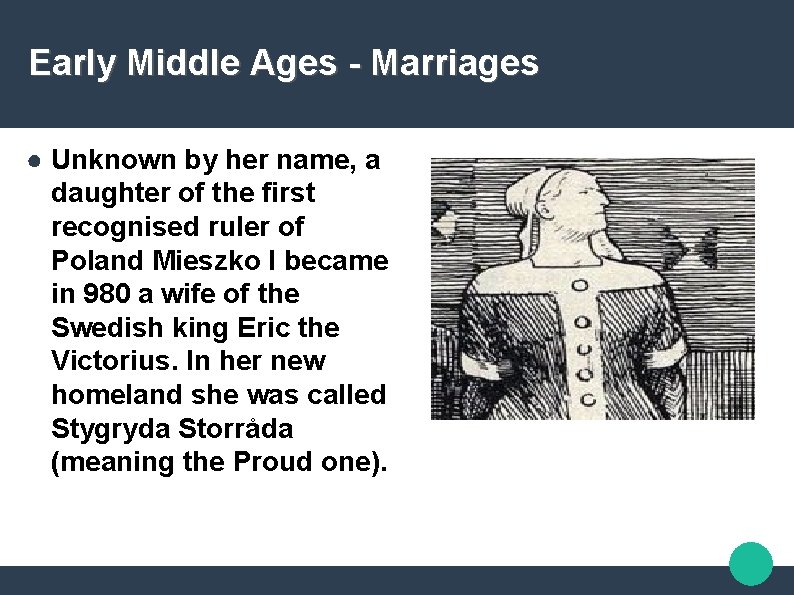
Early Middle Ages - Marriages ● Unknown by her name, a daughter of the first recognised ruler of Poland Mieszko I became in 980 a wife of the Swedish king Eric the Victorius. In her new homeland she was called Stygryda Storråda (meaning the Proud one).
Early Middle Ages - Marriages • Another daughter of Mieszko I was the wife of the Danish king, Sven Forkbeard. People of Denmark called her Gunhild, because her Slavic name Świętosława was very difficult for them to pronounce properly. • She gave birth to 2 sons among whom were Harald I i Kanut the Great, subsequently the kings of Norway and Sweden, and 2 daughters, of whom one was named Świętosława after her mother.
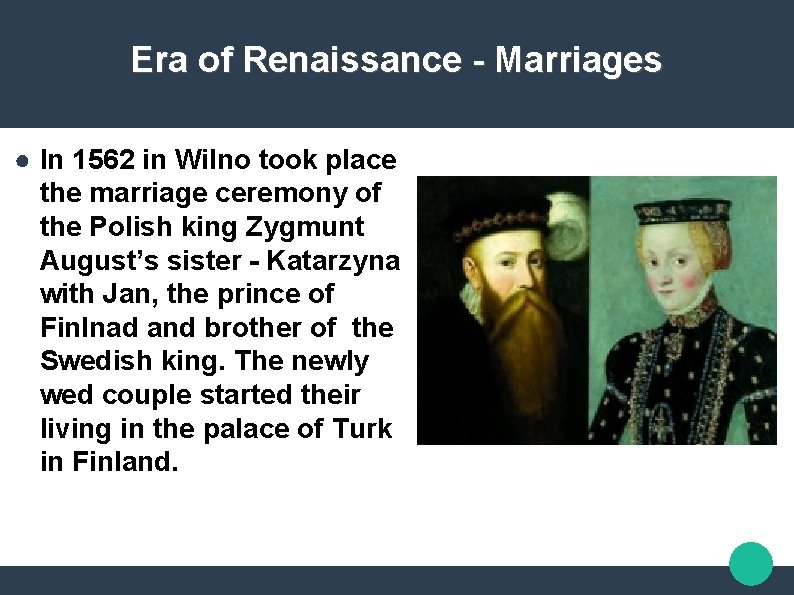
Era of Renaissance - Marriages ● In 1562 in Wilno took place the marriage ceremony of the Polish king Zygmunt August’s sister - Katarzyna with Jan, the prince of Finlnad and brother of the Swedish king. The newly wed couple started their living in the palace of Turk in Finland.
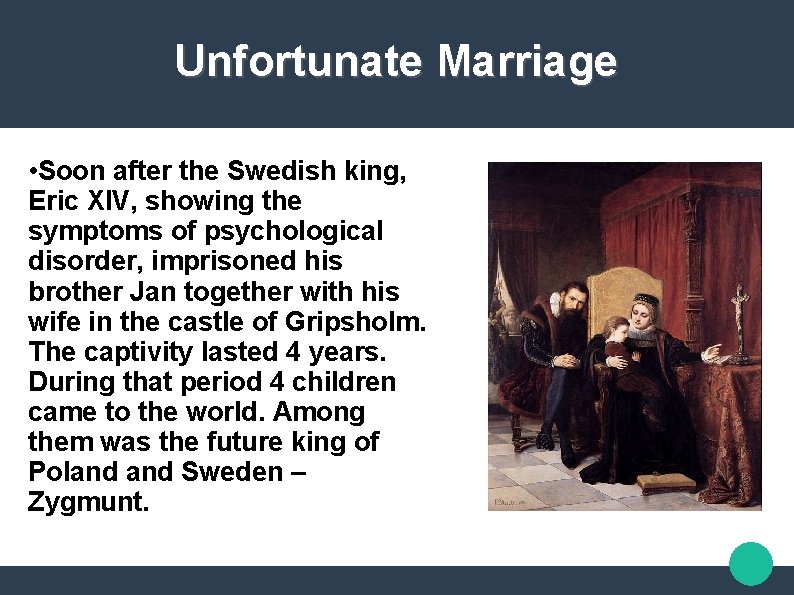
Unfortunate Marriage • Soon after the Swedish king, Eric XIV, showing the symptoms of psychological disorder, imprisoned his brother Jan together with his wife in the castle of Gripsholm. The captivity lasted 4 years. During that period 4 children came to the world. Among them was the future king of Poland Sweden – Zygmunt.
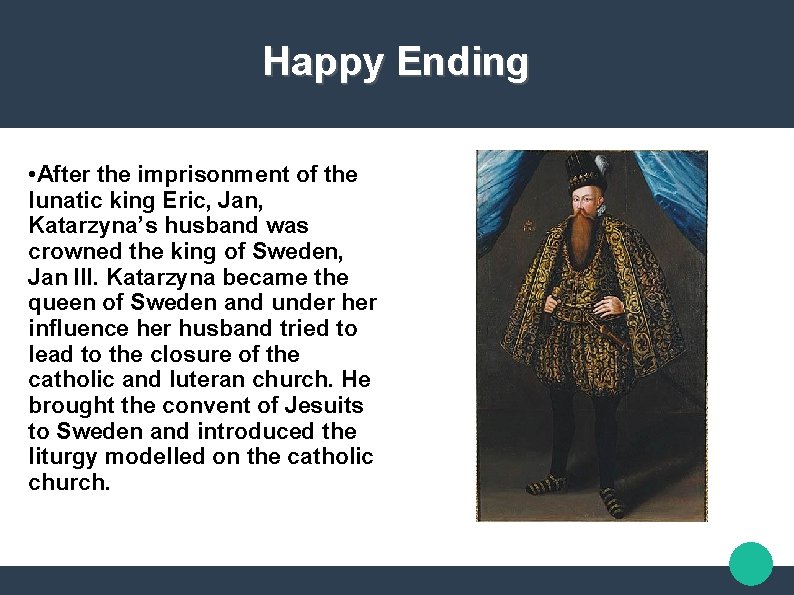
Happy Ending • After the imprisonment of the lunatic king Eric, Jan, Katarzyna’s husband was crowned the king of Sweden, Jan III. Katarzyna became the queen of Sweden and under her influence her husband tried to lead to the closure of the catholic and luteran church. He brought the convent of Jesuits to Sweden and introduced the liturgy modelled on the catholic church.
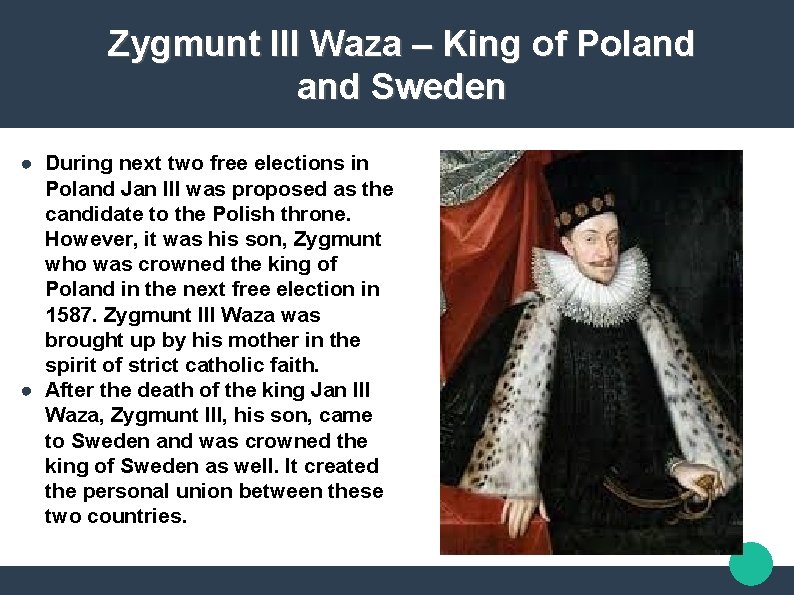
Zygmunt III Waza – King of Poland Sweden ● During next two free elections in Poland Jan III was proposed as the candidate to the Polish throne. However, it was his son, Zygmunt who was crowned the king of Poland in the next free election in 1587. Zygmunt III Waza was brought up by his mother in the spirit of strict catholic faith. ● After the death of the king Jan III Waza, Zygmunt III, his son, came to Sweden and was crowned the king of Sweden as well. It created the personal union between these two countries.
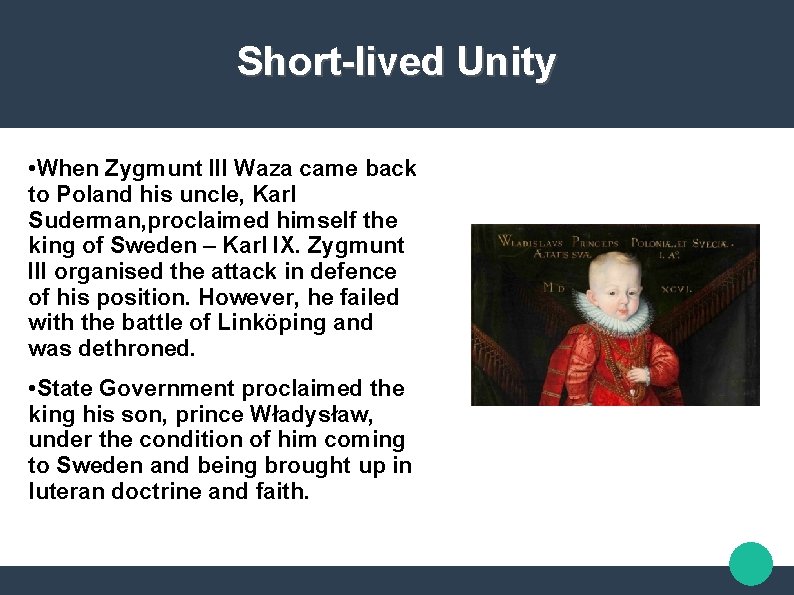
Short-lived Unity • When Zygmunt III Waza came back to Poland his uncle, Karl Suderman, proclaimed himself the king of Sweden – Karl IX. Zygmunt III organised the attack in defence of his position. However, he failed with the battle of Linköping and was dethroned. • State Government proclaimed the king his son, prince Władysław, under the condition of him coming to Sweden and being brought up in luteran doctrine and faith.
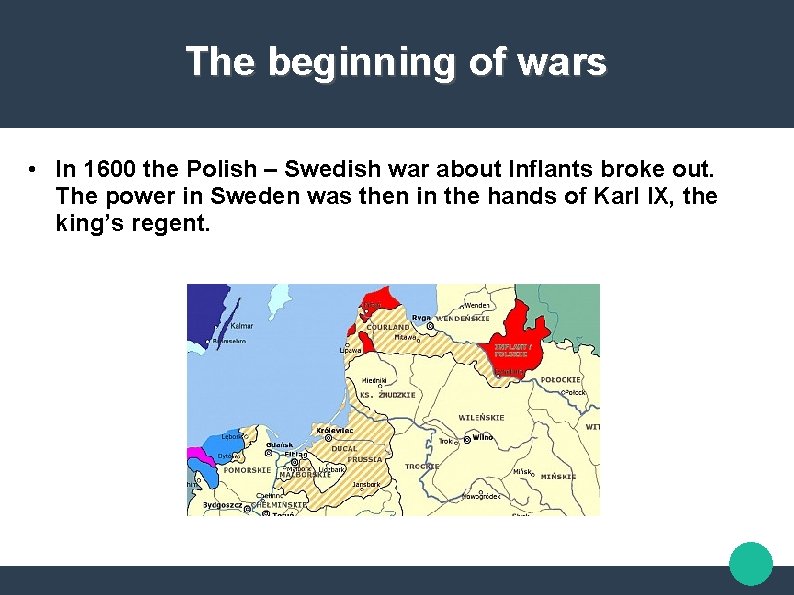
The beginning of wars • In 1600 the Polish – Swedish war about Inflants broke out. The power in Sweden was then in the hands of Karl IX, the king’s regent.
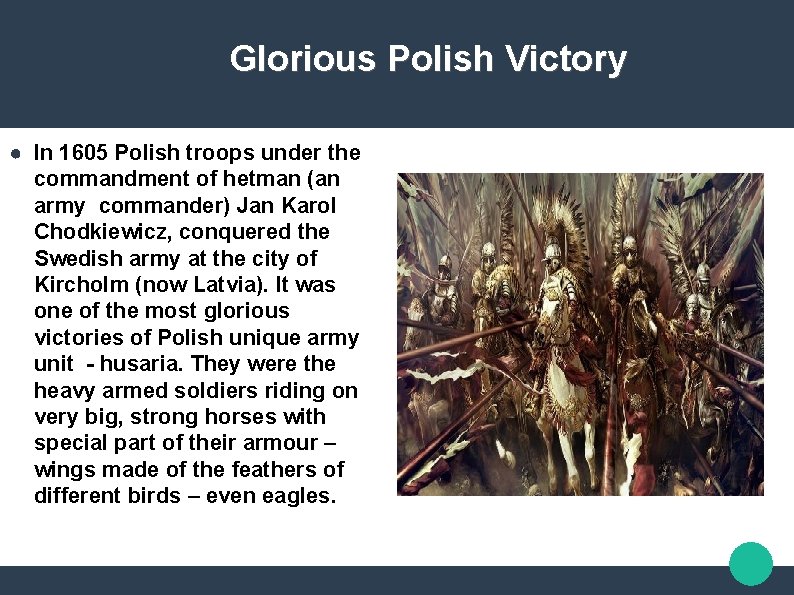
Glorious Polish Victory ● In 1605 Polish troops under the commandment of hetman (an army commander) Jan Karol Chodkiewicz, conquered the Swedish army at the city of Kircholm (now Latvia). It was one of the most glorious victories of Polish unique army unit - husaria. They were the heavy armed soldiers riding on very big, strong horses with special part of their armour – wings made of the feathers of different birds – even eagles.
Subsequent battles and wars between Poland Sweden • Within 20 incoming years there were more wars between Poland Sweden over the domination of the south coast of the Baltic Sea. • Swedish troops took over the lands of todays Latvia and north-east coast of Poland.
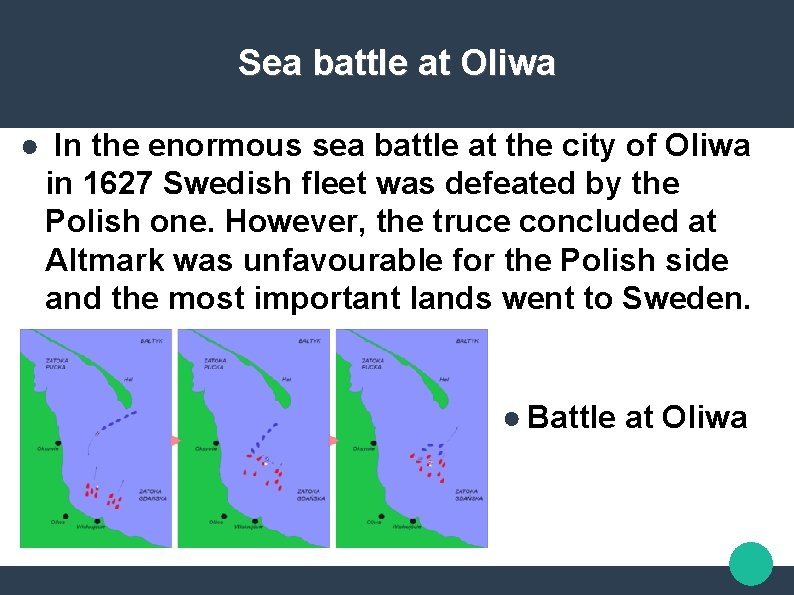
Sea battle at Oliwa ● In the enormous sea battle at the city of Oliwa in 1627 Swedish fleet was defeated by the Polish one. However, the truce concluded at Altmark was unfavourable for the Polish side and the most important lands went to Sweden. ● Battle at Oliwa
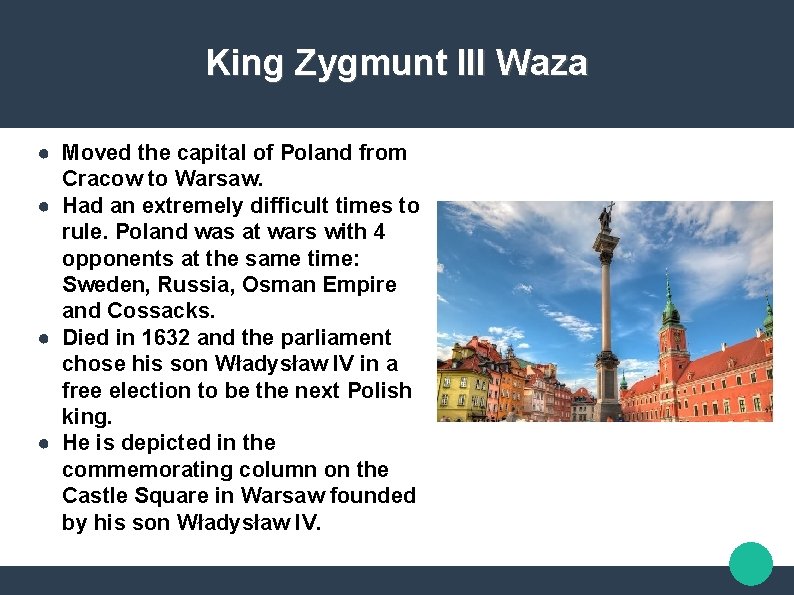
King Zygmunt III Waza ● Moved the capital of Poland from Cracow to Warsaw. ● Had an extremely difficult times to rule. Poland was at wars with 4 opponents at the same time: Sweden, Russia, Osman Empire and Cossacks. ● Died in 1632 and the parliament chose his son Władysław IV in a free election to be the next Polish king. ● He is depicted in the commemorating column on the Castle Square in Warsaw founded by his son Władysław IV.
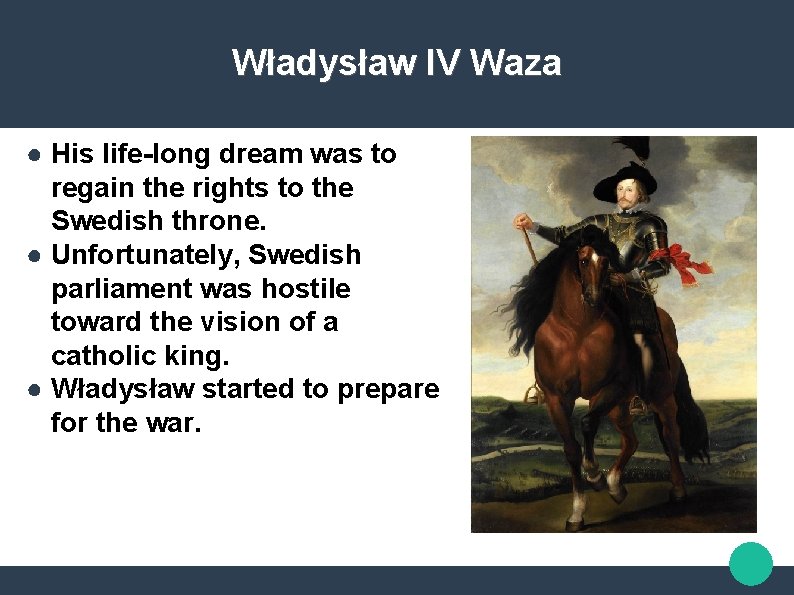
Władysław IV Waza ● His life-long dream was to regain the rights to the Swedish throne. ● Unfortunately, Swedish parliament was hostile toward the vision of a catholic king. ● Władysław started to prepare for the war.
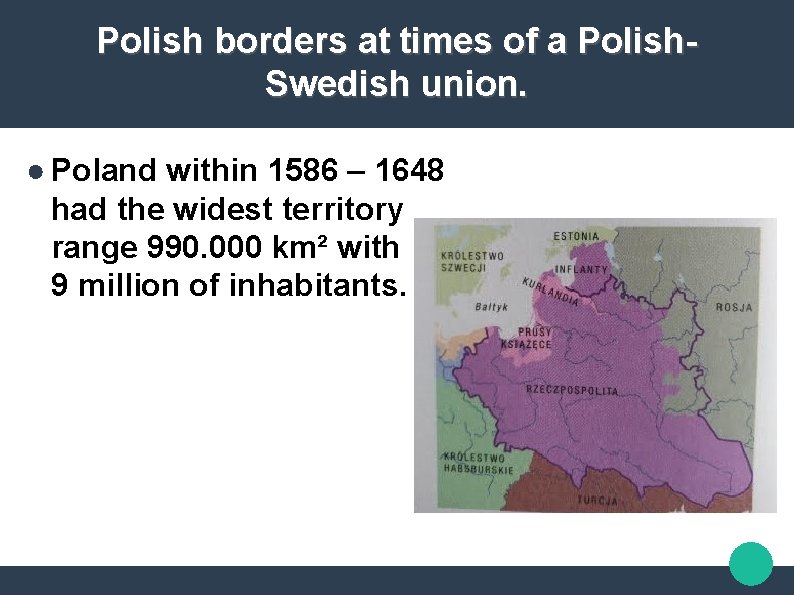
Polish borders at times of a Polish. Swedish union. ● Poland within 1586 – 1648 had the widest territory range 990. 000 km² with 9 million of inhabitants.
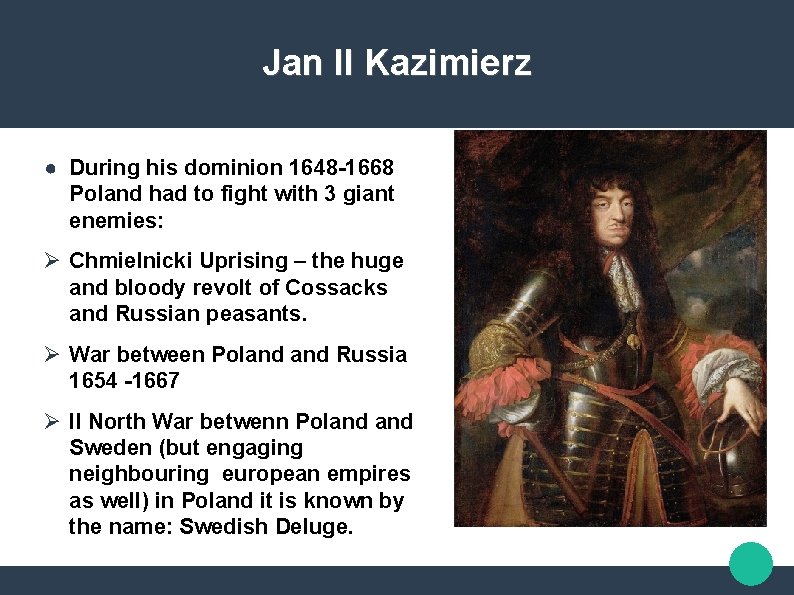
Jan II Kazimierz ● During his dominion 1648 -1668 Poland had to fight with 3 giant enemies: Ø Chmielnicki Uprising – the huge and bloody revolt of Cossacks and Russian peasants. Ø War between Poland Russia 1654 -1667 Ø II North War betwenn Poland Sweden (but engaging neighbouring european empires as well) in Poland it is known by the name: Swedish Deluge.
Reason of Swedish aggression ● Getting the money, treasures and loots ● Conquering Poland spreading Swedish dominion over the whole Baltic Sea – making it an internal sea of Sweden. ● Forcing Jan Kazimierz to resign from the claims to the Swedish crown. ● Aversion of Polish protestants and part of the gentry to king Jan II Kazimierz
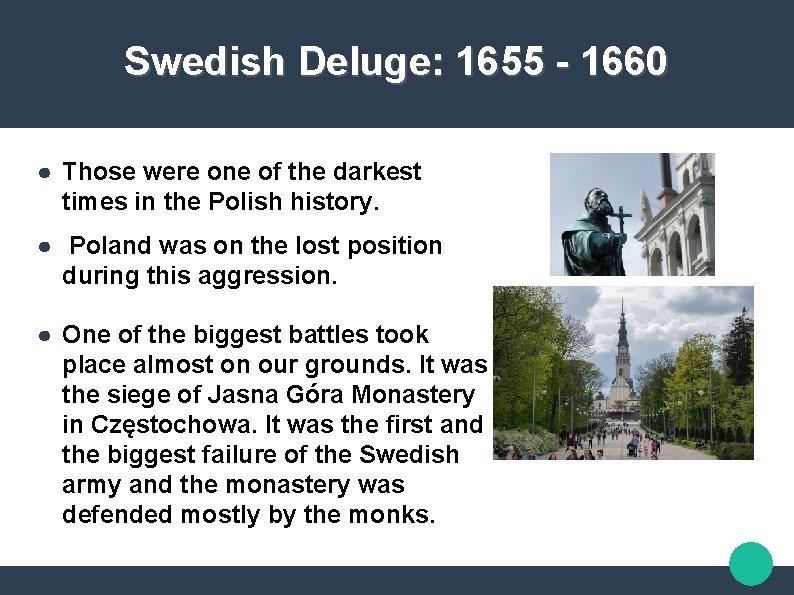
Swedish Deluge: 1655 - 1660 ● Those were one of the darkest times in the Polish history. ● Poland was on the lost position during this aggression. ● One of the biggest battles took place almost on our grounds. It was the siege of Jasna Góra Monastery in Częstochowa. It was the first and the biggest failure of the Swedish army and the monastery was defended mostly by the monks.
End of the war 1660– truce at Oliwa second 1) Poland resigned from most of their lands on the south - east coast of the Baltic Sea. 2) Jan Kazimierz renounced his claims to the Swedish crown. 3) Sweden was obliged to return robbed treasures. Actually, they never did. 4)Poland was obliged to keep the freedom of religion in newly gained areas.
Results of the Swedish Deluge for Poland ● Loss of population by 30 – 40 %. ● Vast material destruction of the country. ● Unspeakable plunder of the works of art. For example, just from one of the castles Swedish troops stole 150 carriages of the treasures and cultural goods. ● Destruction of numerous castles – most of them were never rebuilt.
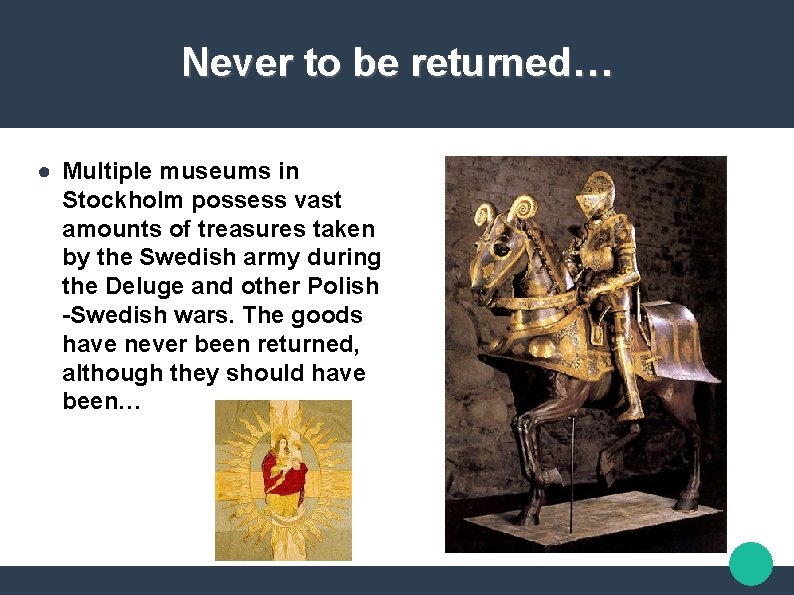
Never to be returned… ● Multiple museums in Stockholm possess vast amounts of treasures taken by the Swedish army during the Deluge and other Polish -Swedish wars. The goods have never been returned, although they should have been…
Wars in Northern Europe in the XVIIIth century ● In 1700 broke out the III North War. Its ignition was reckless acting of the young Swedish king Karl XII ● Denmark, Russia and Saxony attacked Sweden altogether in order to regain the lands lost before and weaken too bold position of Sweden in Europe. ● Parts of this war were led on the territtory of Poland. However, our country was not an official side in this conflict. ● Still, Swedish king Karl XII conquered the troops faithful to the Polish monarch and forced him to flee the country. ● Then, in the place of the dethroned king, he put his favourable candidate.
End of Wars engaging and Sweden. Poland ● III North War was finished with the truce at Nystad, Finland in 1721. ● This truce utterly finished the Swedish hegemony over the Baltic Sea. Unfortunately, it unnecessarily strenghtened the position of Russia in Europe and in the world. ● Karl XII died at the siege of Fredrikshald, Norway in 1718. He was the last absolute monarch of Sweden.
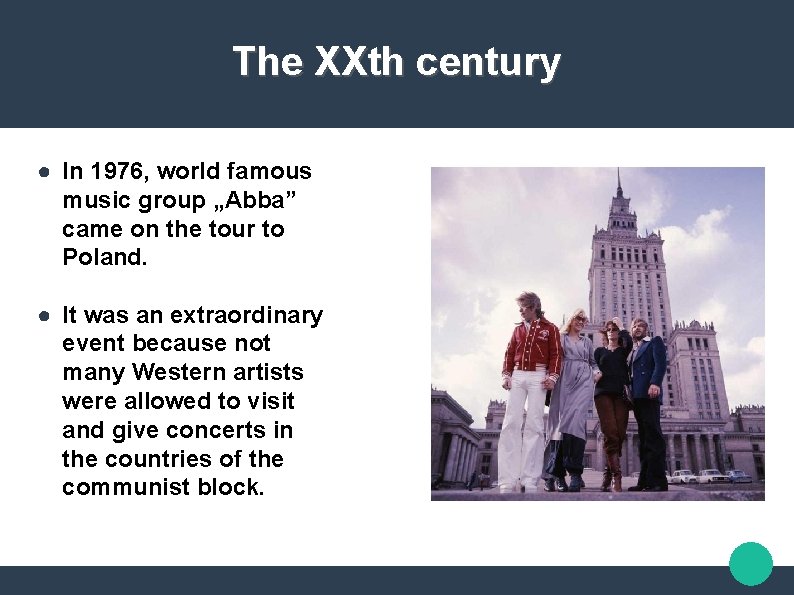
The XXth century ● In 1976, world famous music group „Abba” came on the tour to Poland. ● It was an extraordinary event because not many Western artists were allowed to visit and give concerts in the countries of the communist block.
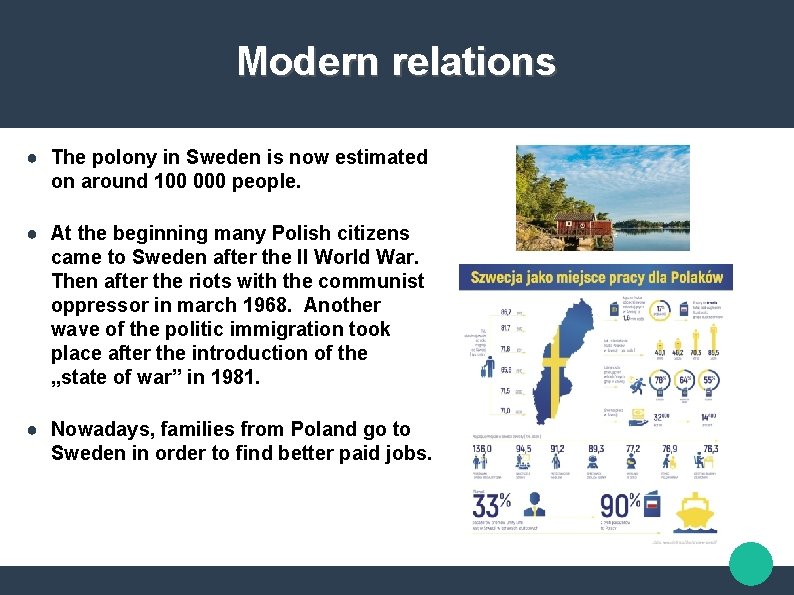
Modern relations ● The polony in Sweden is now estimated on around 100 000 people. ● At the beginning many Polish citizens came to Sweden after the II World War. Then after the riots with the communist oppressor in march 1968. Another wave of the politic immigration took place after the introduction of the „state of war” in 1981. ● Nowadays, families from Poland go to Sweden in order to find better paid jobs.
Sources: ● Wikipedia ● T. Biber, A. M. Leszczyńscy „Poczet władców Polski” ● Ciekawostki historyczne K. Janicki „Jedna rzecz, którą musisz wiedzieć o Świętosławie”; A. Szabelski „Polskie skarby zrabowane podczas potopu szwedzkiego. Gdzie można je oglądać? ” ● Histmag. org ● You tube Prepared by: Aleksander Sterczewski