
Poland during World War 2 Wojtek War Bear
Poland during World War 2 Wojtek War Bear Hero: 1+2 Languages L 3 learning resources for Scottish schools
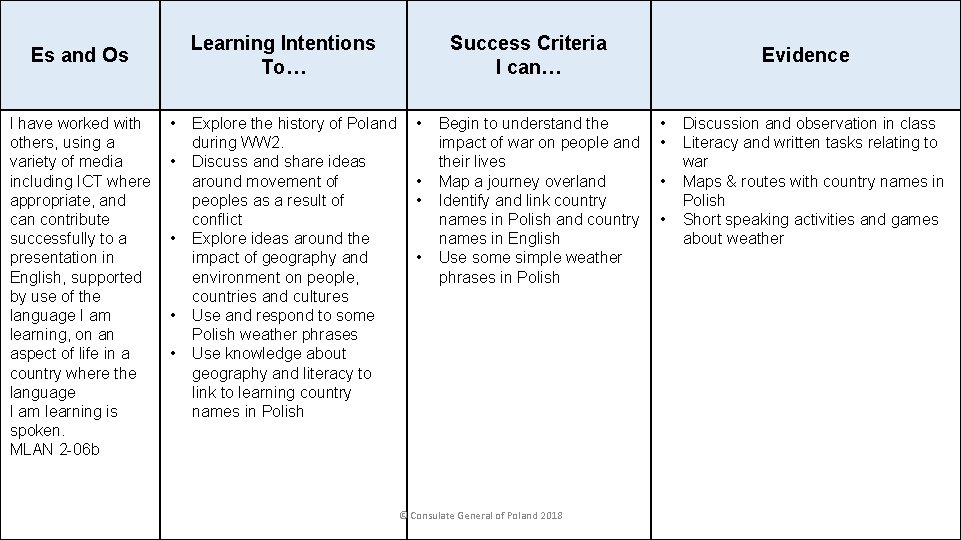
Learning Intentions To… Es and Os I have worked with others, using a variety of media including ICT where appropriate, and can contribute successfully to a presentation in English, supported by use of the language I am learning, on an aspect of life in a country where the language I am learning is spoken. MLAN 2 -06 b • • • Explore the history of Poland during WW 2. Discuss and share ideas around movement of peoples as a result of conflict Explore ideas around the impact of geography and environment on people, countries and cultures Use and respond to some Polish weather phrases Use knowledge about geography and literacy to link to learning country names in Polish Success Criteria I can… • • Begin to understand the impact of war on people and their lives Map a journey overland Identify and link country names in Polish and country names in English Use some simple weather phrases in Polish © Consulate General of Poland 2018 Evidence • • Discussion and observation in class Literacy and written tasks relating to war Maps & routes with country names in Polish Short speaking activities and games about weather
Activity 1 World War 2 in Poland Teacher notes The following slides will explain a bit about Poland in WW 2 and how its people came to be displaced. This helps to set the context for the first couple of chapters which focus on the movement of the Poles out of Poland towards the middle east. This can be used by teachers to prompt discussion around a range of issues including displacement and seeking refuge during war.
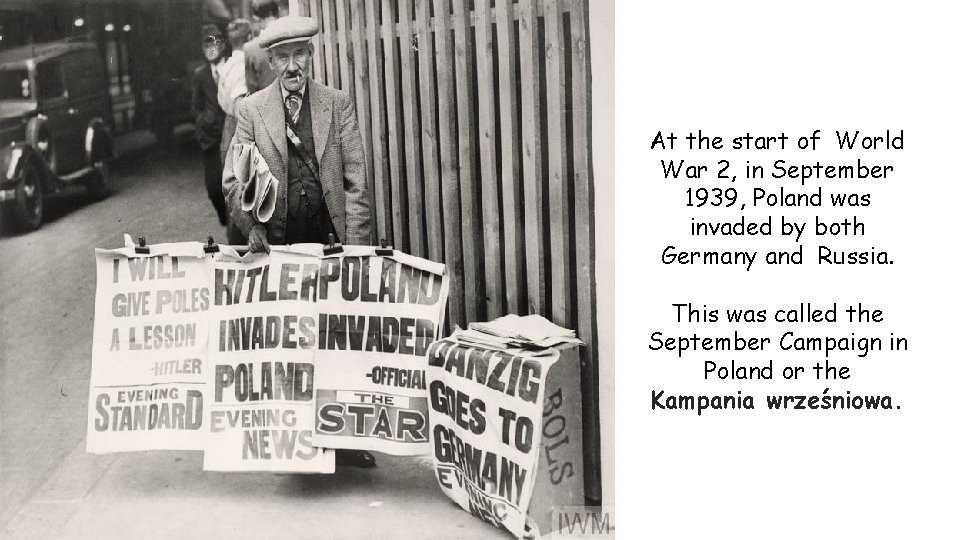
At the start of World War 2, in September 1939, Poland was invaded by both Germany and Russia. This was called the September Campaign in Poland or the Kampania wrześniowa.
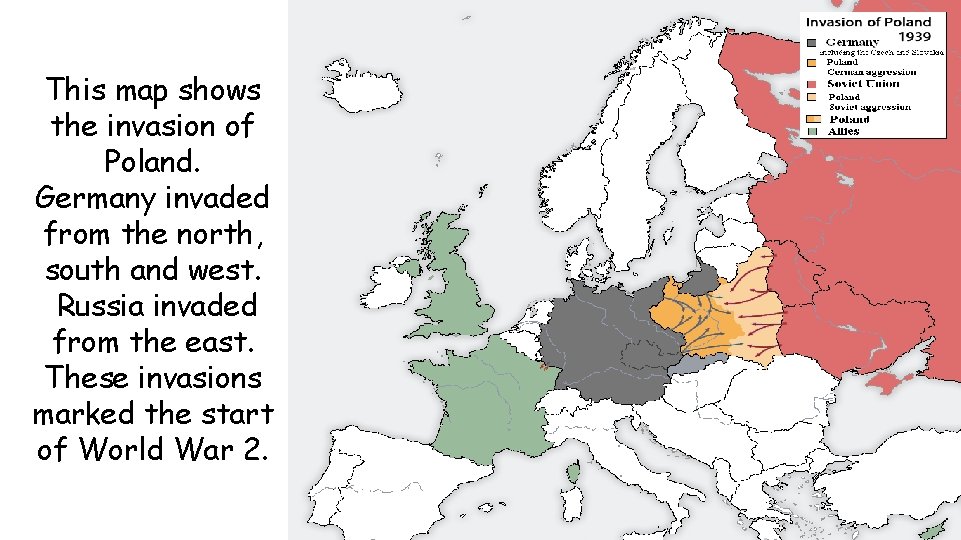
This map shows the invasion of Poland. Germany invaded from the north, south and west. Russia invaded from the east. These invasions marked the start of World War 2.
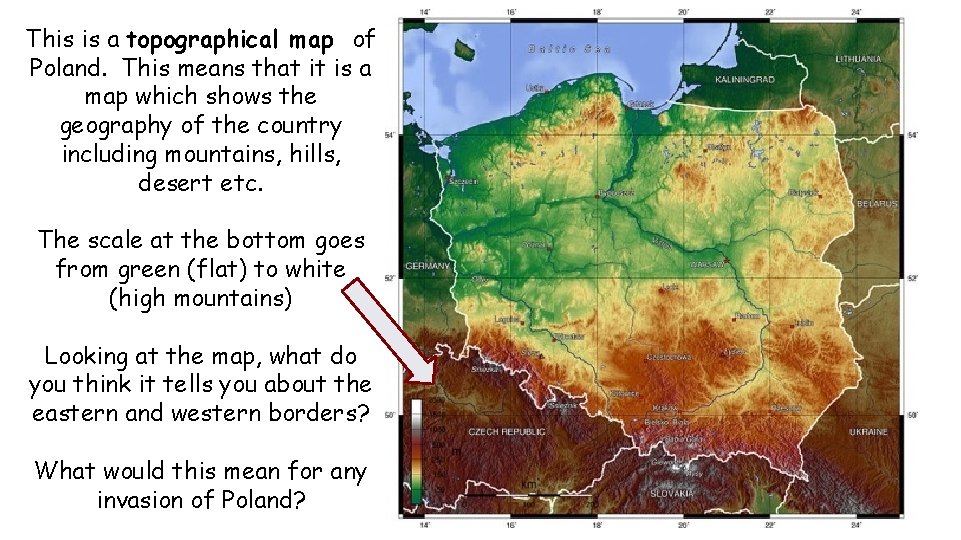
This is a topographical map of Poland. This means that it is a map which shows the geography of the country including mountains, hills, desert etc. The scale at the bottom goes from green (flat) to white (high mountains) Looking at the map, what do you think it tells you about the eastern and western borders? What would this mean for any invasion of Poland?
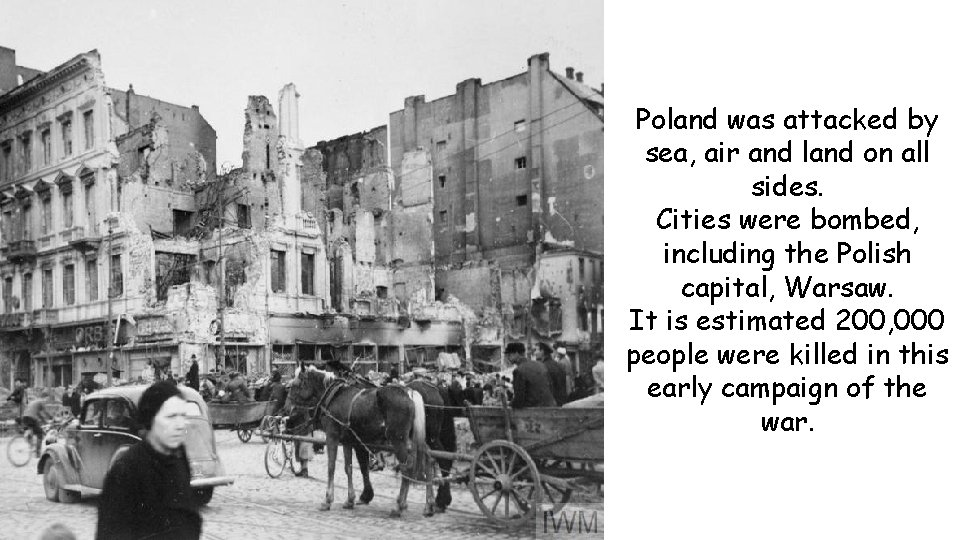
Poland was attacked by sea, air and land on all sides. Cities were bombed, including the Polish capital, Warsaw. It is estimated 200, 000 people were killed in this early campaign of the war.
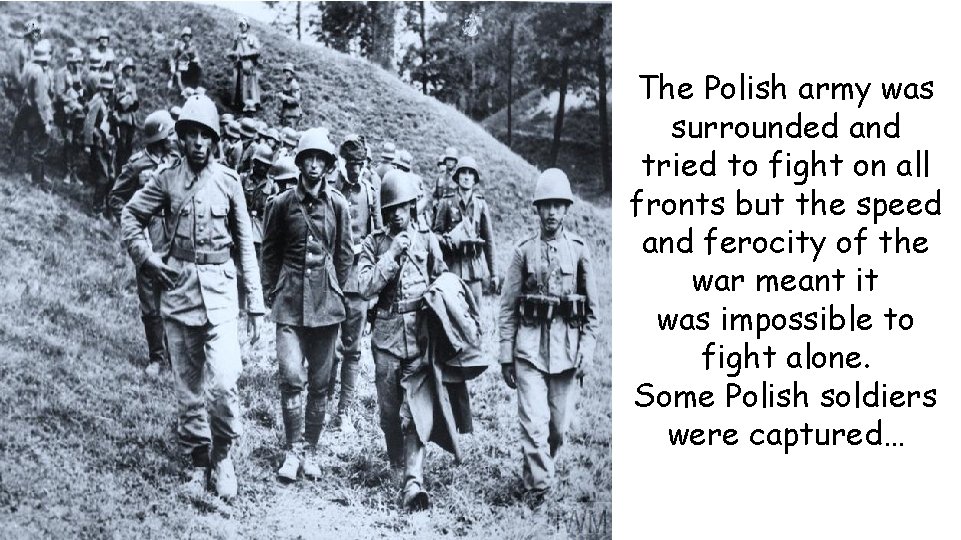
The Polish army was surrounded and tried to fight on all fronts but the speed and ferocity of the war meant it was impossible to fight alone. Some Polish soldiers were captured…
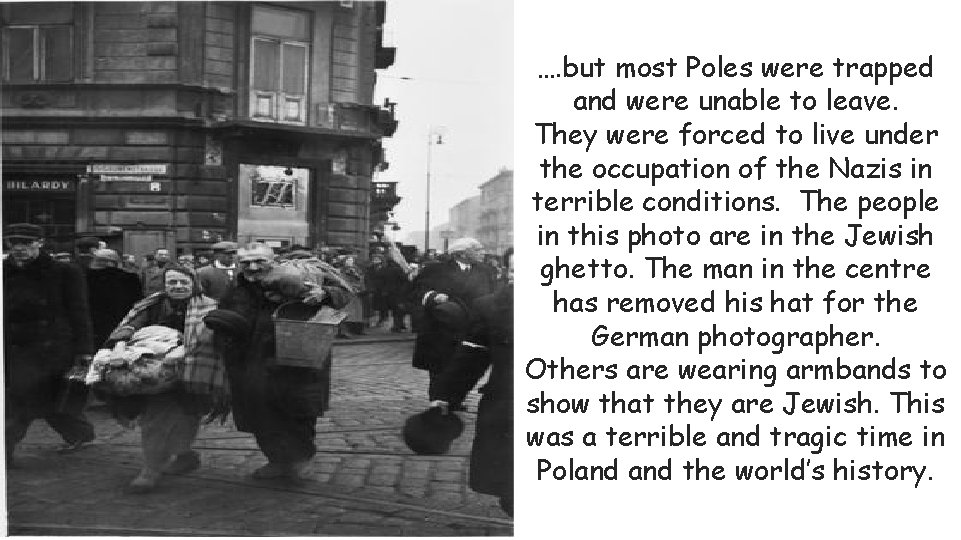
…. but most Poles were trapped and were unable to leave. They were forced to live under the occupation of the Nazis in terrible conditions. The people in this photo are in the Jewish ghetto. The man in the centre has removed his hat for the German photographer. Others are wearing armbands to show that they are Jewish. This was a terrible and tragic time in Poland the world’s history.
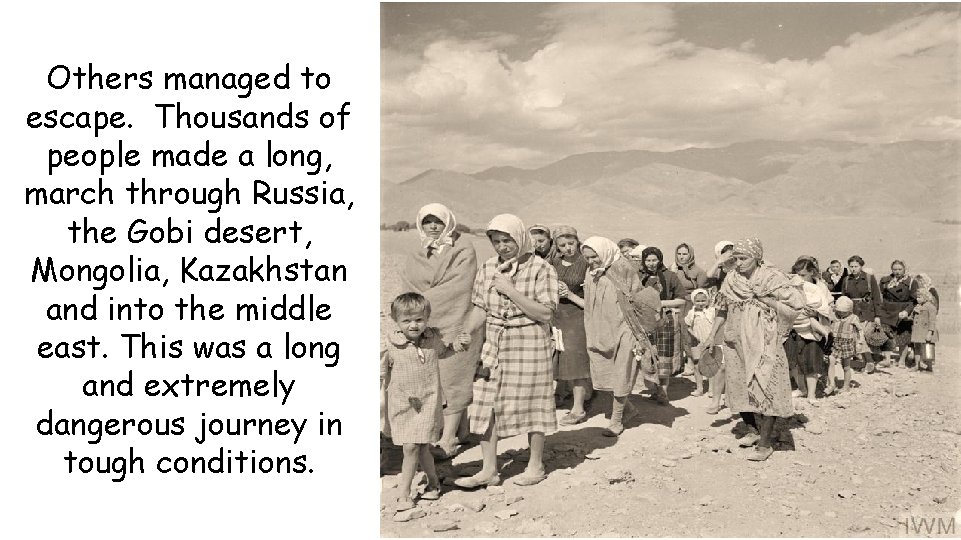
Others managed to escape. Thousands of people made a long, march through Russia, the Gobi desert, Mongolia, Kazakhstan and into the middle east. This was a long and extremely dangerous journey in tough conditions.
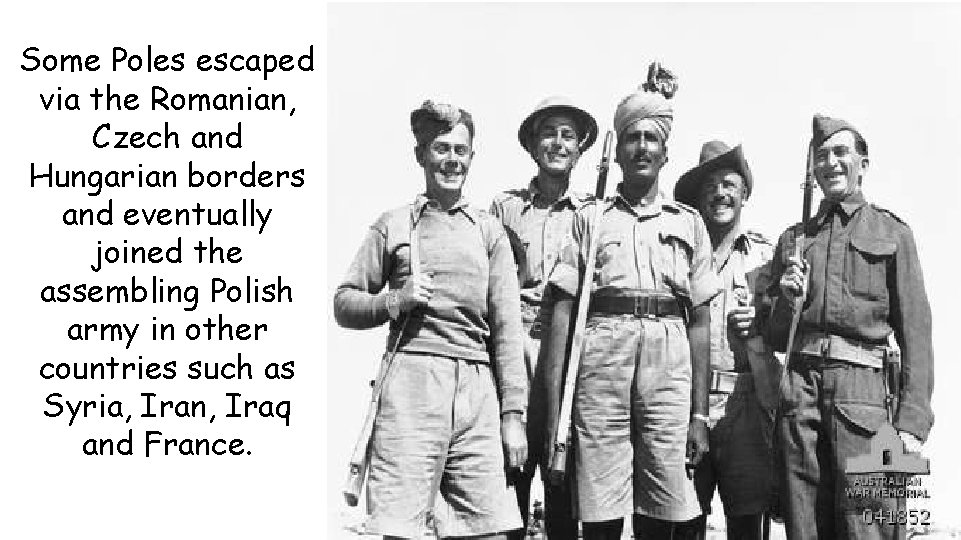
Some Poles escaped via the Romanian, Czech and Hungarian borders and eventually joined the assembling Polish army in other countries such as Syria, Iran, Iraq and France.
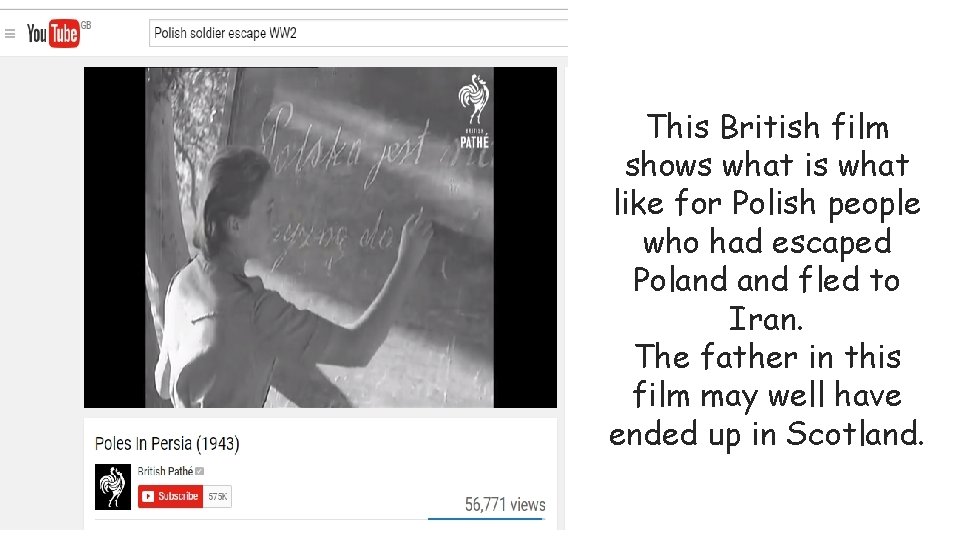
This British film shows what is what like for Polish people who had escaped Poland fled to Iran. The father in this film may well have ended up in Scotland.
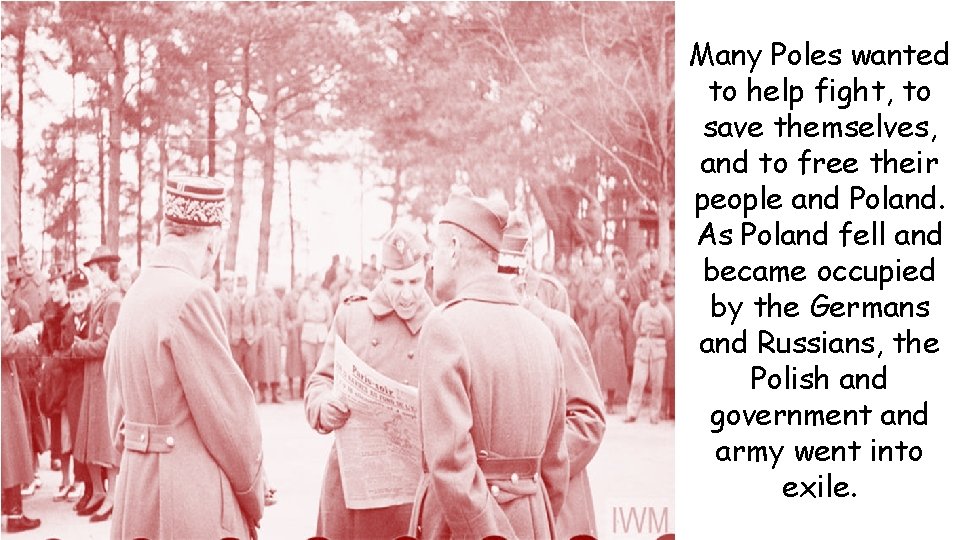
Many Poles wanted to help fight, to save themselves, and to free their people and Poland. As Poland fell and became occupied by the Germans and Russians, the Polish and government and army went into exile.
Activity 2 Mapping the journeys 1. Read chapters 1 and 2 of Wojtek by Jenny Robertson 2. Match the country names to their English equivalent. 3. Find where each country is on a map of Eastern Europe/the Middle East. 4. Working in a pair or in a group, use a map to trace a possible route that Piotr and his group might have taken. 3. What was the environment like on their journey? What kind of terrain would they need to cross? 4. Think about the seasons, what temperature do you think it would be at different times of year. 5. Can you measure how far it would be. 6. How long would the journey take? 7. Which languages might they meet along the way?
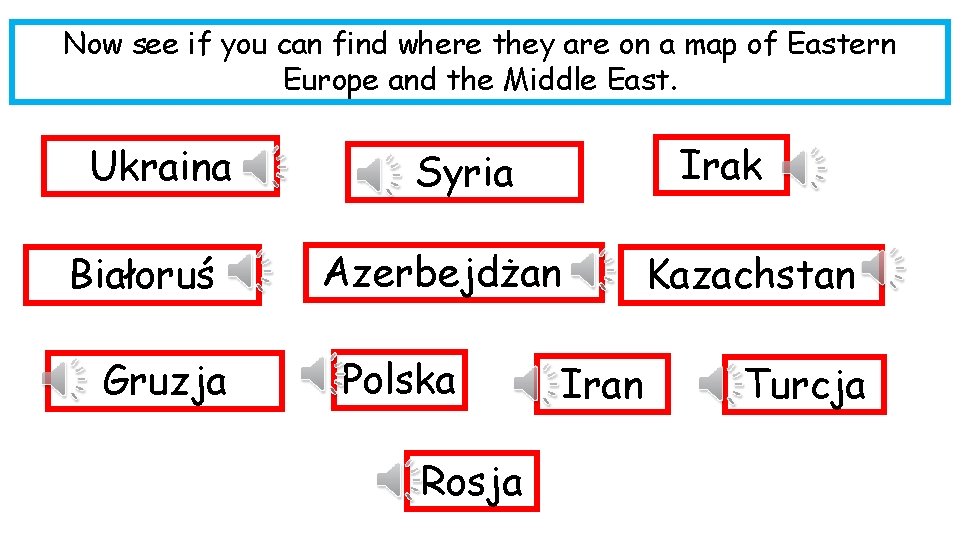
Now see if you can find where they are on a map of Eastern Europe and the Middle East. Ukraina Białoruś Gruzja Irak Syria Azerbejdżan Polska Rosja Iran Kazachstan Turcja
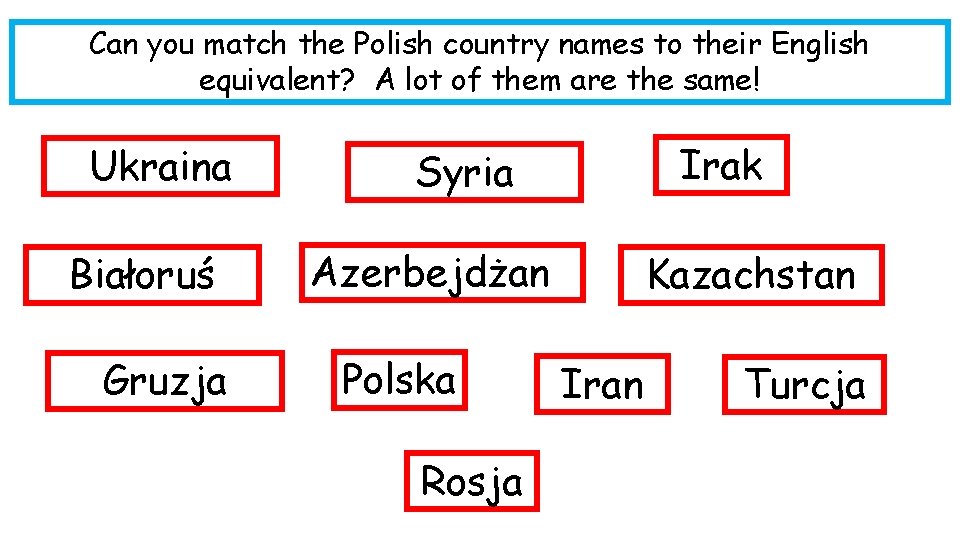
Can you match the Polish country names to their English equivalent? A lot of them are the same! Ukraina Białoruś Gruzja Irak Syria Azerbejdżan Polska Rosja Kazachstan Iran Turcja
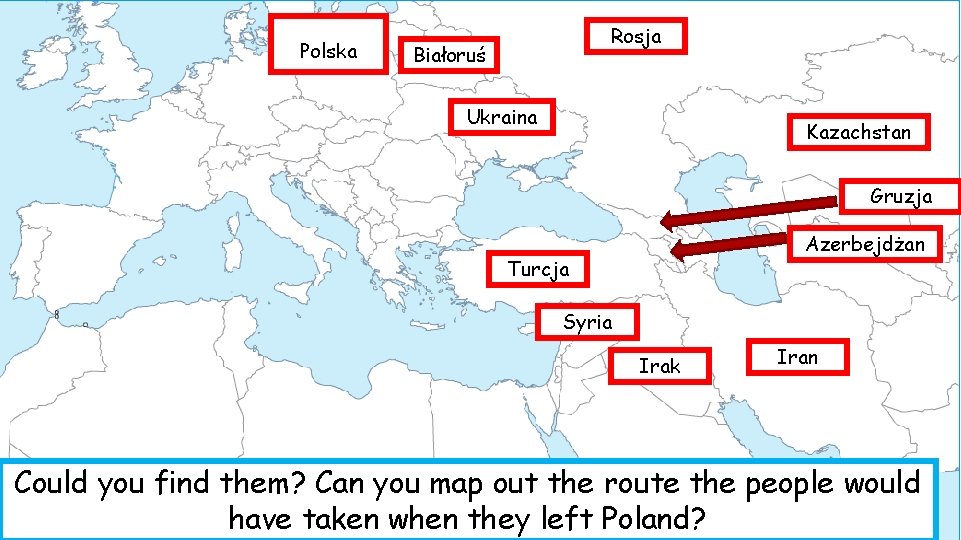
Polska Rosja Białoruś Ukraina Kazachstan Gruzja Azerbejdżan Turcja Syria Irak Iran Could you find them? Can you map out the route the people would have taken when they left Poland?
Activity 3 Mapping the journeys 1. Look at the weather phrases. There are more weather phrases in the weather language packs. 2. What weather would people have encountered on the route? Try and match weather to the countries in the previous exercises. 3. Think about the seasons, what temperature do you think it would be at different times of year. 4. Use the language to describe what the weather would be like for the Poles on their journey to the middle east. Can you measure how far it would be. How long would the journey take? Which languages might they meet along the way?
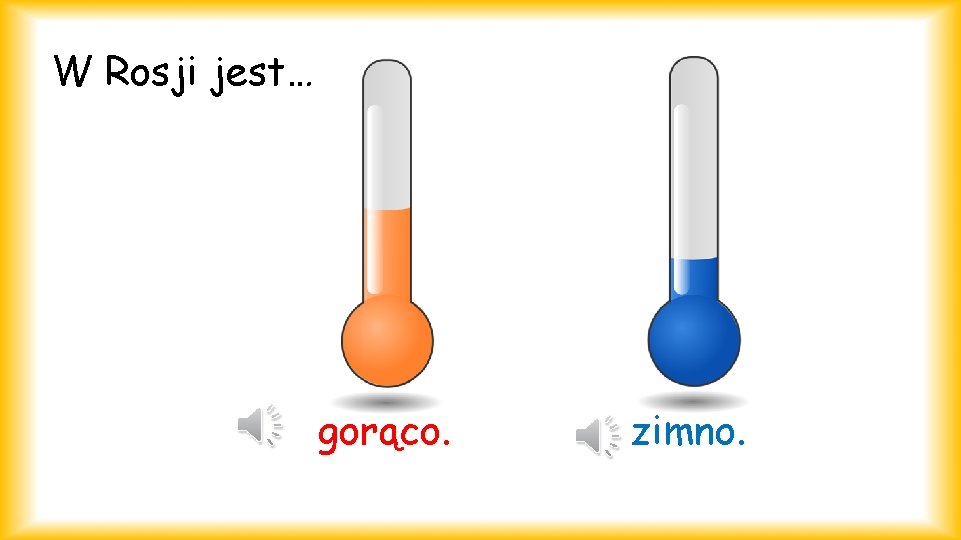
W Rosji jest… gorąco. zimno.
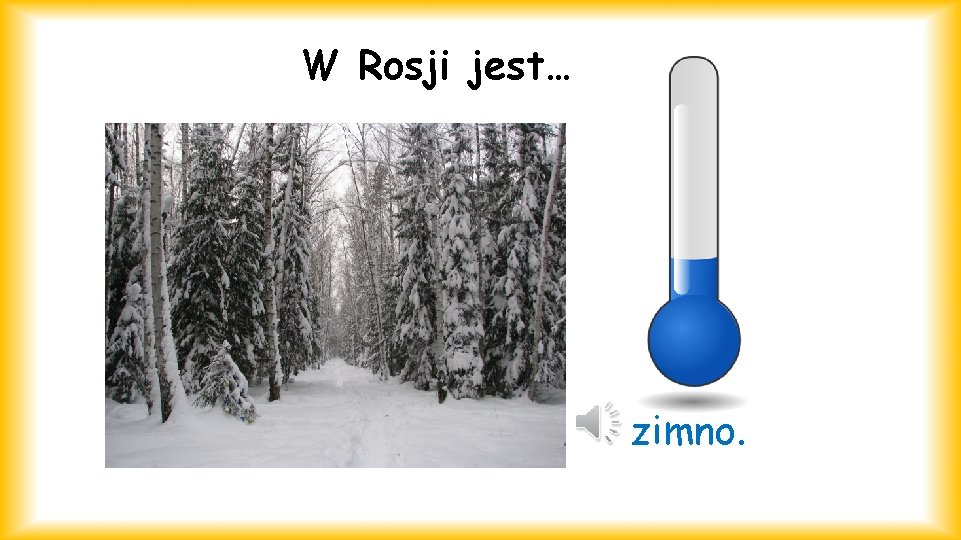
W Rosji jest… zimno.
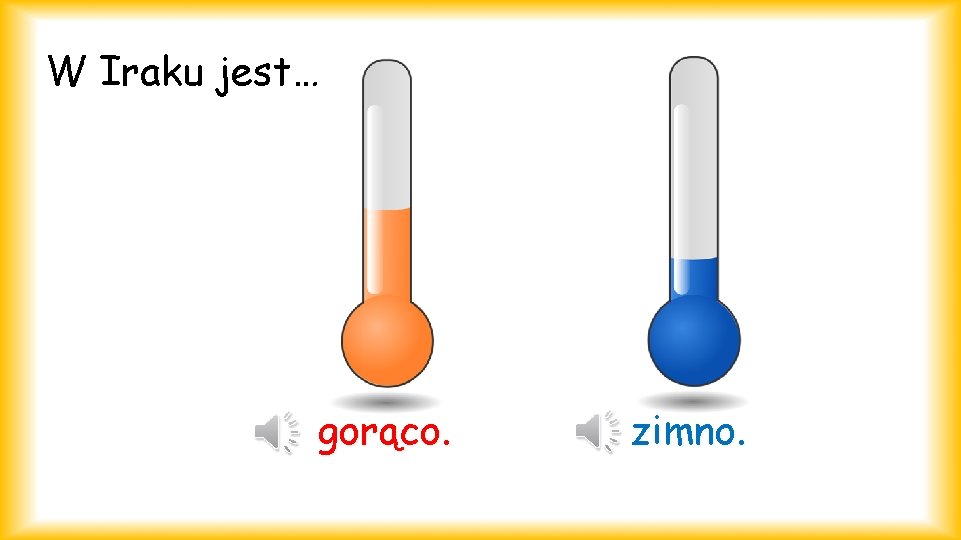
W Iraku jest… gorąco. zimno.
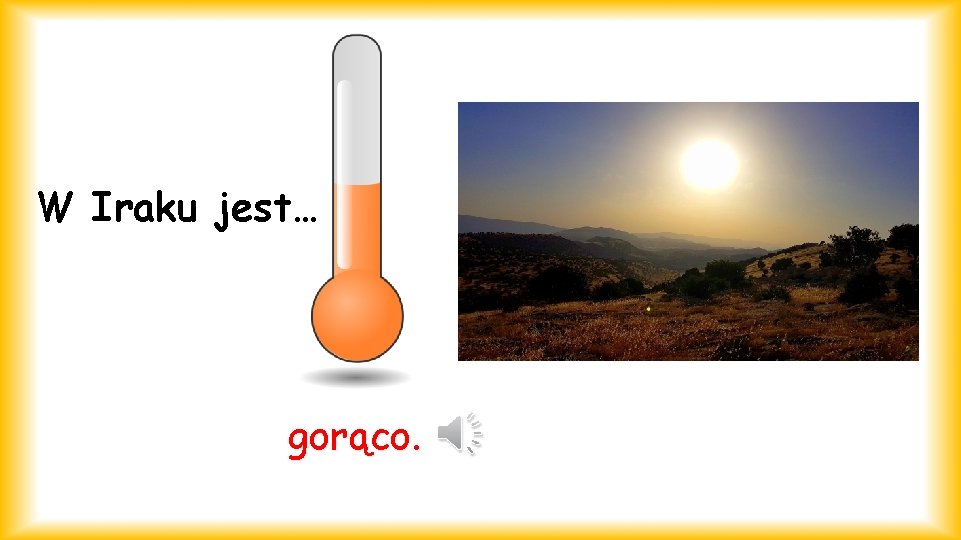
W Iraku jest… gorąco.
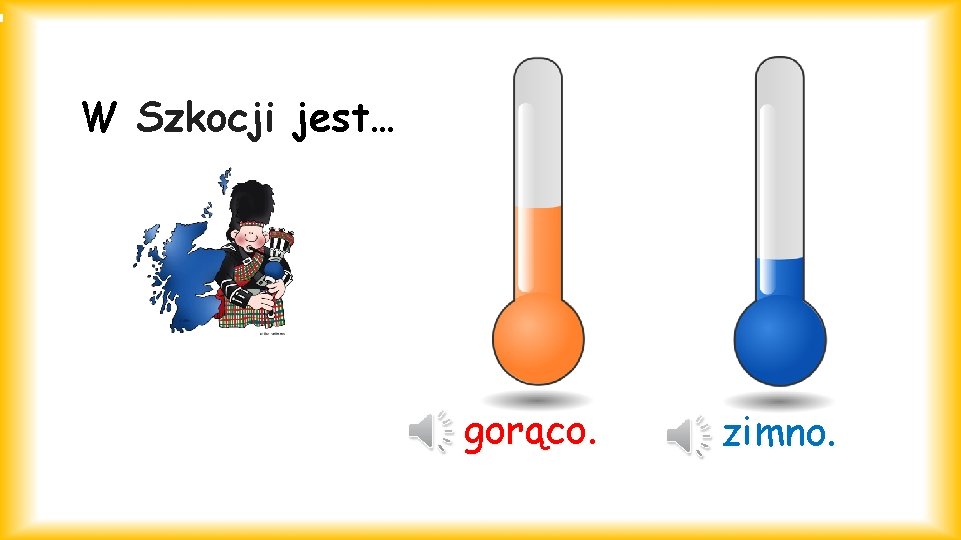
W Szkocji jest… gorąco. zimno.
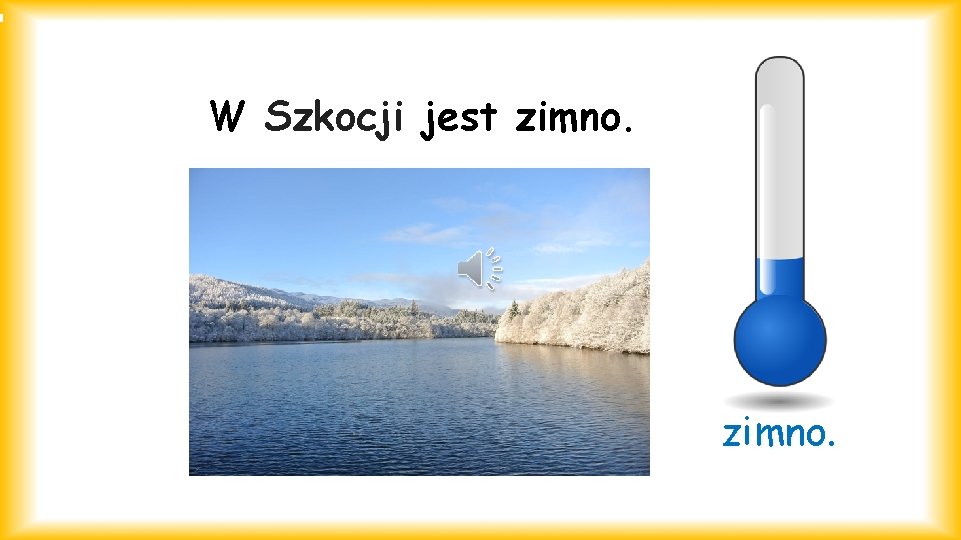
W Szkocji jest zimno.
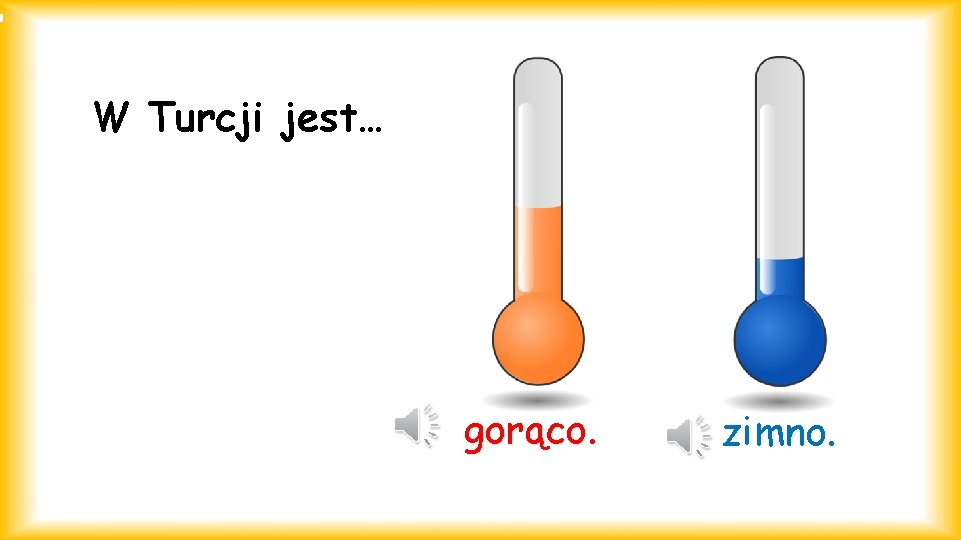
W Turcji jest… gorąco. zimno.
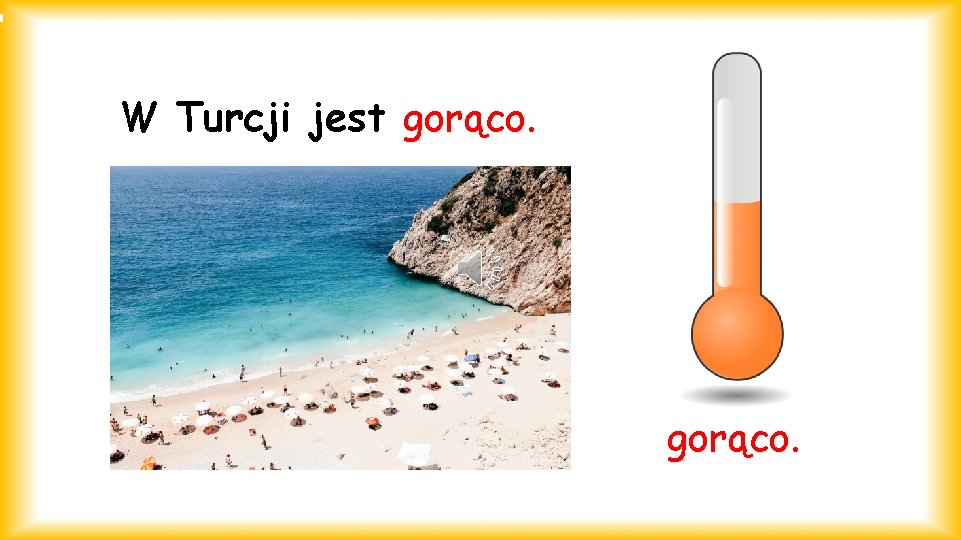
W Turcji jest gorąco.
Activity 4 Mapping the journeys Extra challenge! 1. Can you measure how far the journey would have been approximately? 2. Use the capital cities across the route you’ve mapped out and find out the distances between them. E. g. Warsaw (capital of Poland) to Damascus (capital of Syria) = ? 3. Most people walk around 3 miles an hour. How many hours would it take to walk this route? 4. Which languages might they meet along the way? Can you say hello in any of these languages?
Dziękuję, do zobaczenia!
- Slides: 28