
Poissons ratio Poissons ratio n Isotropic materials only
- Slides: 14
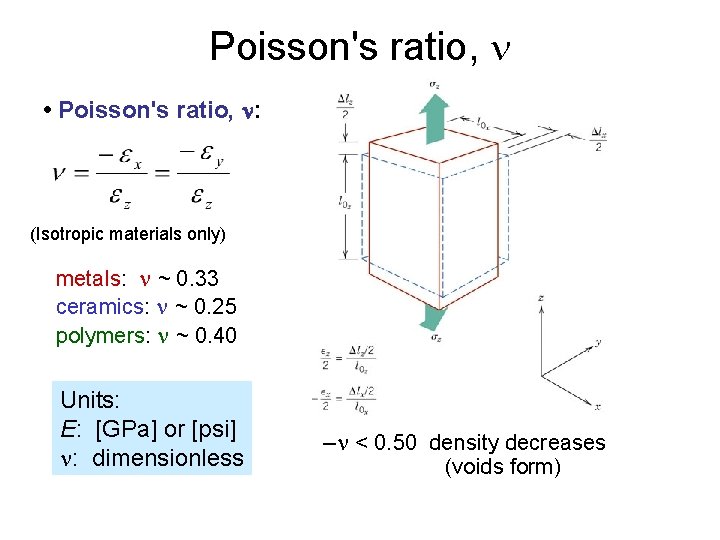
Poisson's ratio, • Poisson's ratio, n: (Isotropic materials only) metals: ~ 0. 33 ceramics: ~ 0. 25 polymers: ~ 0. 40 Units: E: [GPa] or [psi] : dimensionless – > 0. 50 density increases – < 0. 50 density decreases (voids form)
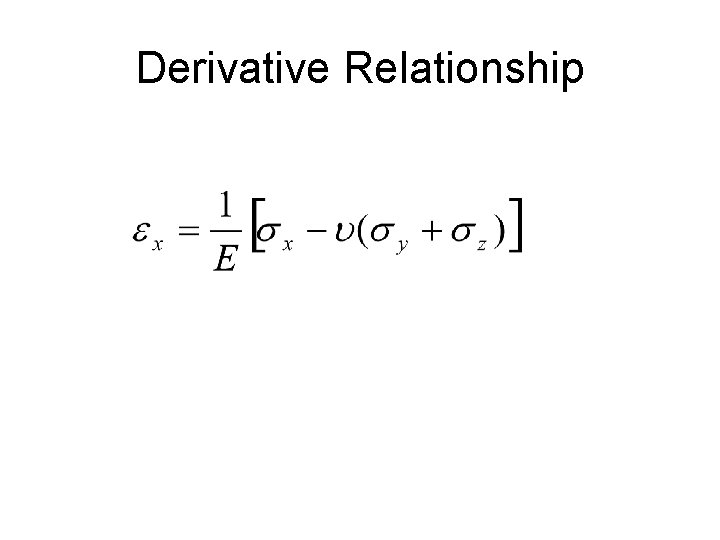
Derivative Relationship
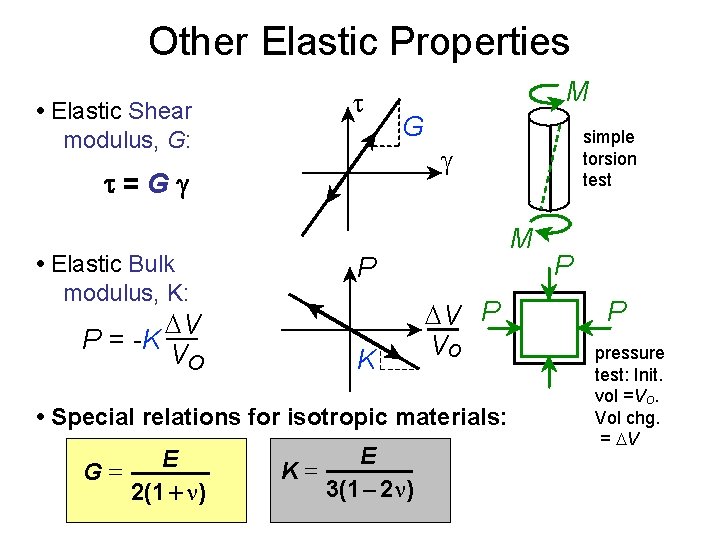
Other Elastic Properties • Elastic Shear modulus, G: t M G t=Gg • Elastic Bulk modulus, K: V P = -K Vo g M P K V P Vo • Special relations for isotropic materials: E G= 2(1 + ) E K= 3(1 - 2 ) simple torsion test P P pressure test: Init. vol =Vo. Vol chg. = V
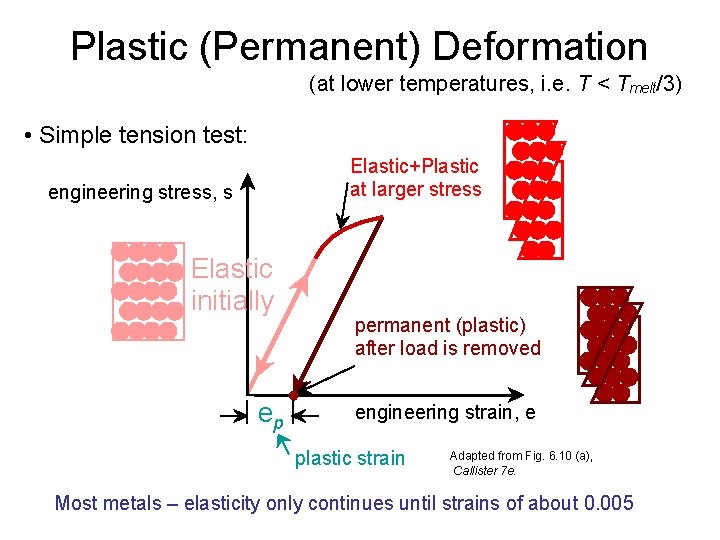
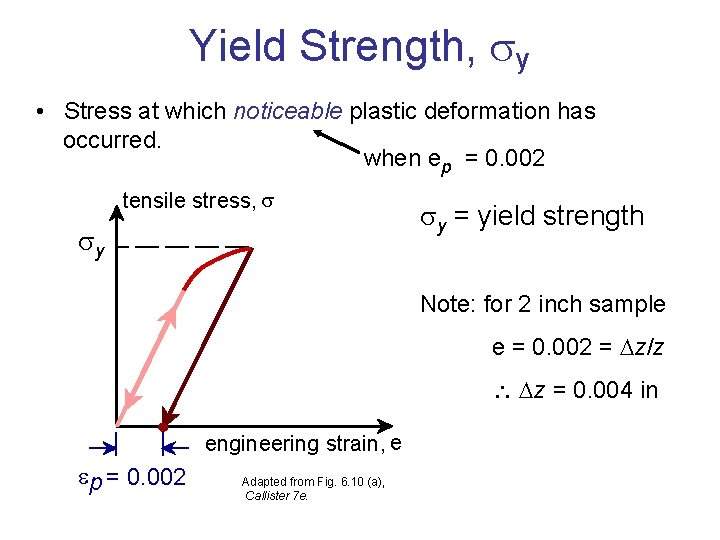
Plastic (Permanent) Deformation (at lower temperatures, i. e. T < Tmelt/3) • Simple tension test: Elastic+Plastic at larger stress engineering stress, s Elastic initially ep permanent (plastic) after load is removed engineering strain, e plastic strain Adapted from Fig. 6. 10 (a), Callister 7 e. Most metals – elasticity only continues until strains of about 0. 005
Yield Strength, y • Stress at which noticeable plastic deformation has occurred. when ep = 0. 002 tensile stress, y y = yield strength Note: for 2 inch sample e = 0. 002 = z/z z = 0. 004 in engineering strain, e ep = 0. 002 Adapted from Fig. 6. 10 (a), Callister 7 e.
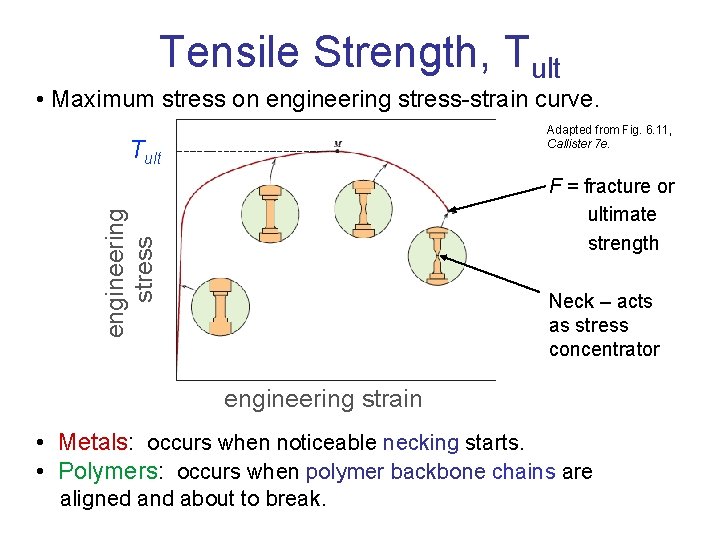
Tensile Strength, Tult • Maximum stress on engineering stress-strain curve. Adapted from Fig. 6. 11, Callister 7 e. Tult F = fracture or ultimate strength engineering stress y Typical response of a metal Neck – acts as stress concentrator strain engineering strain • Metals: occurs when noticeable necking starts. • Polymers: occurs when polymer backbone chains are aligned and about to break.
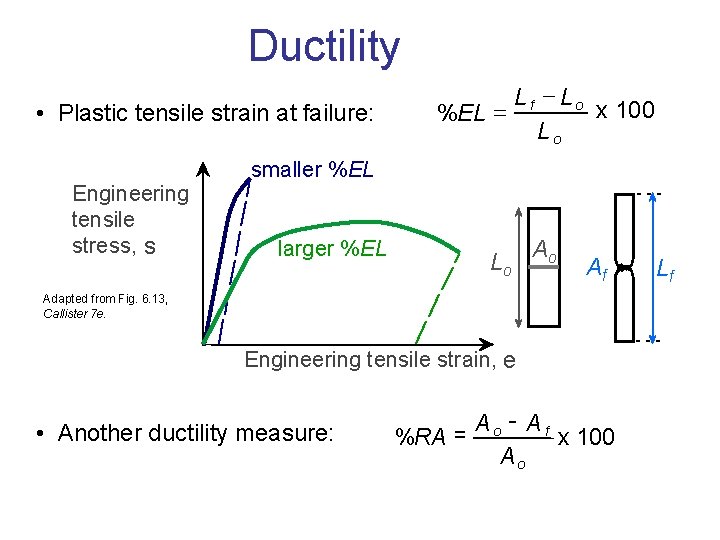
Ductility • Plastic tensile strain at failure: Engineering tensile stress, s Lf - Lo x 100 %EL = Lo smaller %EL larger %EL Lo Ao Af Adapted from Fig. 6. 13, Callister 7 e. Engineering tensile strain, e • Another ductility measure: %RA = Ao - Af x 100 Ao Lf
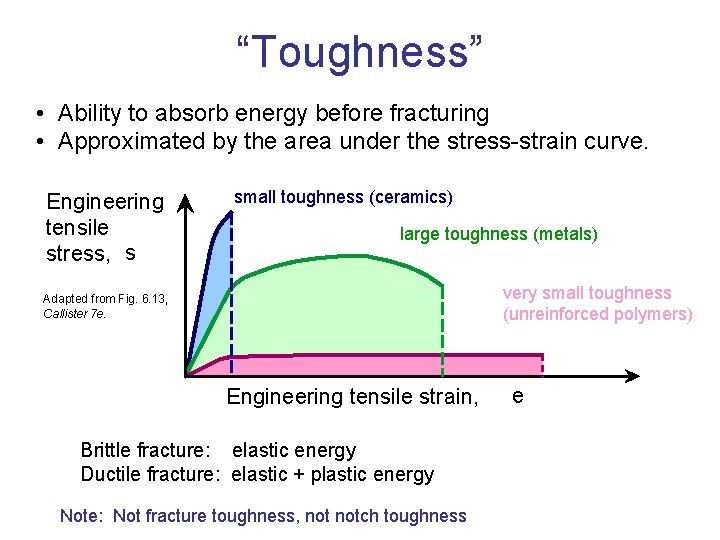
“Toughness” • Ability to absorb energy before fracturing • Approximated by the area under the stress-strain curve. Engineering tensile stress, s small toughness (ceramics) large toughness (metals) very small toughness (unreinforced polymers) Adapted from Fig. 6. 13, Callister 7 e. Engineering tensile strain, Brittle fracture: elastic energy Ductile fracture: elastic + plastic energy Note: Not fracture toughness, notch toughness e
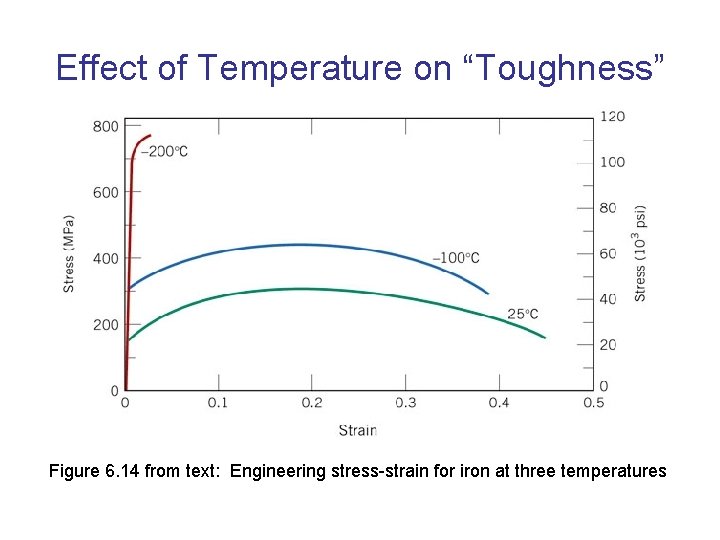
Effect of Temperature on “Toughness” Figure 6. 14 from text: Engineering stress-strain for iron at three temperatures
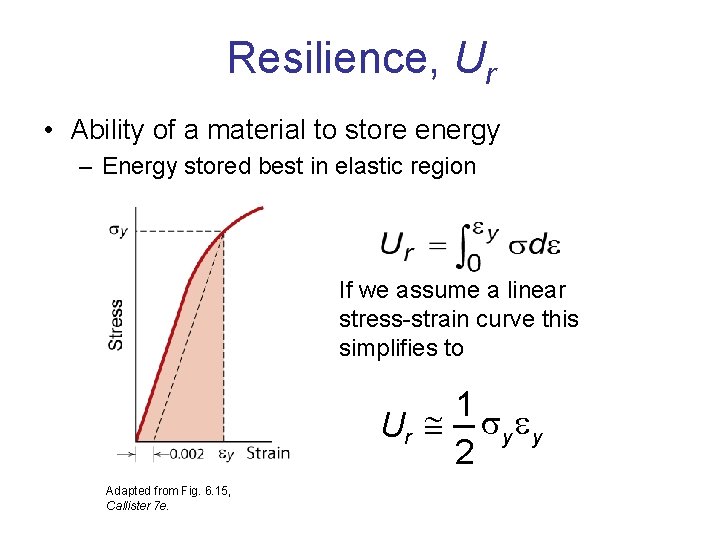
Resilience, Ur • Ability of a material to store energy – Energy stored best in elastic region If we assume a linear stress-strain curve this simplifies to 1 Ur @ y e y 2 Adapted from Fig. 6. 15, Callister 7 e.
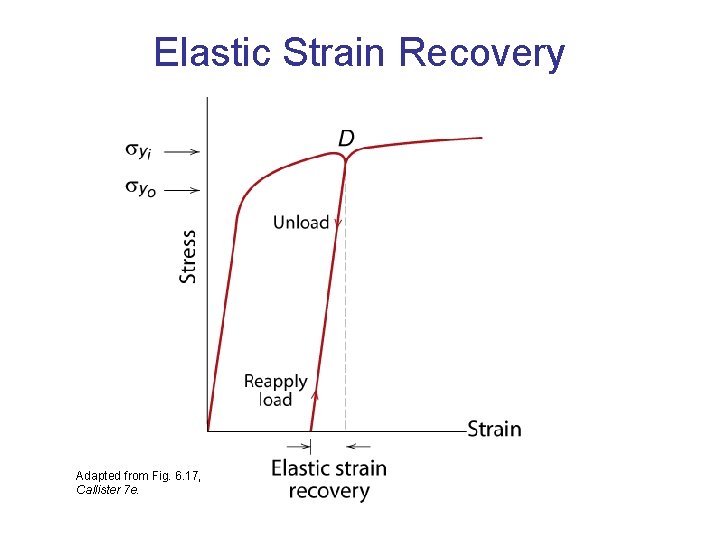
Elastic Strain Recovery Adapted from Fig. 6. 17, Callister 7 e.
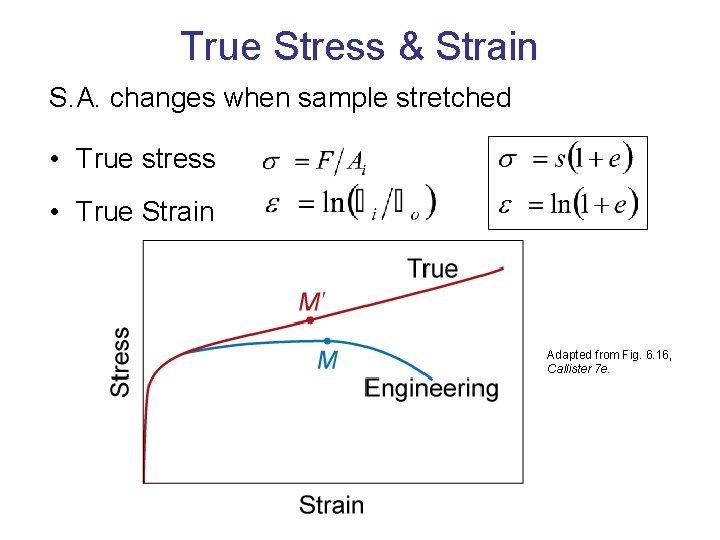
True Stress & Strain S. A. changes when sample stretched • True stress • True Strain Adapted from Fig. 6. 16, Callister 7 e.
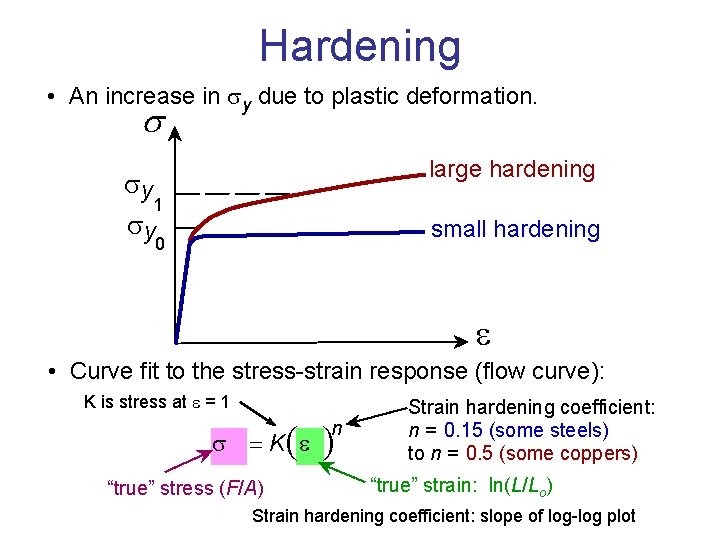
Hardening • An increase in y due to plastic deformation. s large hardening y 1 y small hardening 0 e • Curve fit to the stress-strain response (flow curve): K is stress at e = 1 ( ) =K e “true” stress (F/A) n Strain hardening coefficient: n = 0. 15 (some steels) to n = 0. 5 (some coppers) “true” strain: ln(L/Lo) Strain hardening coefficient: slope of log-log plot
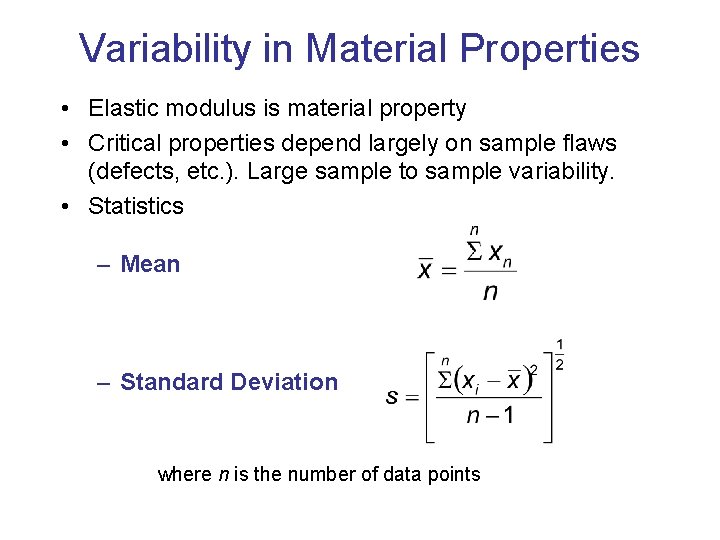
Variability in Material Properties • Elastic modulus is material property • Critical properties depend largely on sample flaws (defects, etc. ). Large sample to sample variability. • Statistics – Mean – Standard Deviation where n is the number of data points