
Poisonous Plants PBIO 006 Spring 2012 Chapter 21
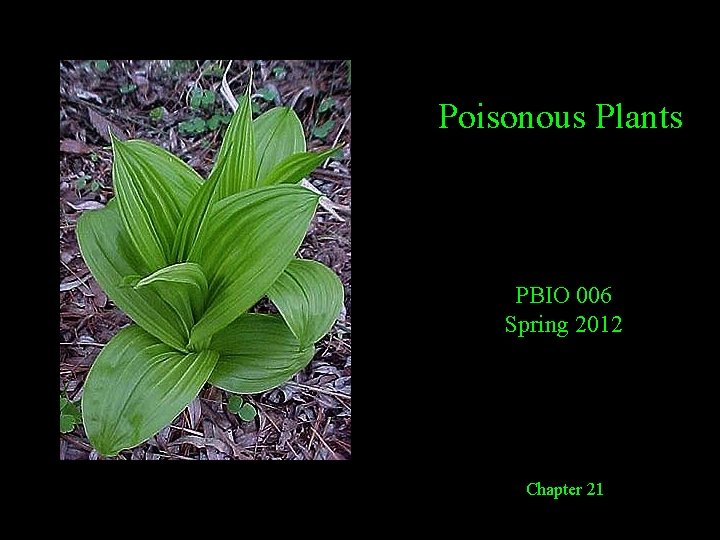
Poisonous Plants PBIO 006 Spring 2012 Chapter 21
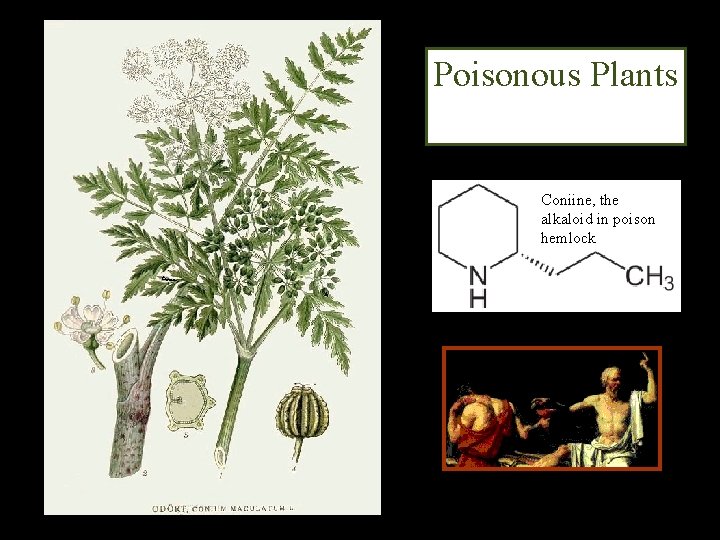
Poisonous Plants Coniine, the alkaloid in poison hemlock
Plant Families Rich in Poisons: • • • Apiaceae (Parsley Family) Liliaceae (Lily Family) Solanaceae (Nightshade Family) Fabaceae (Pea Family) Euphorbiaceae (Poinsettia Family)
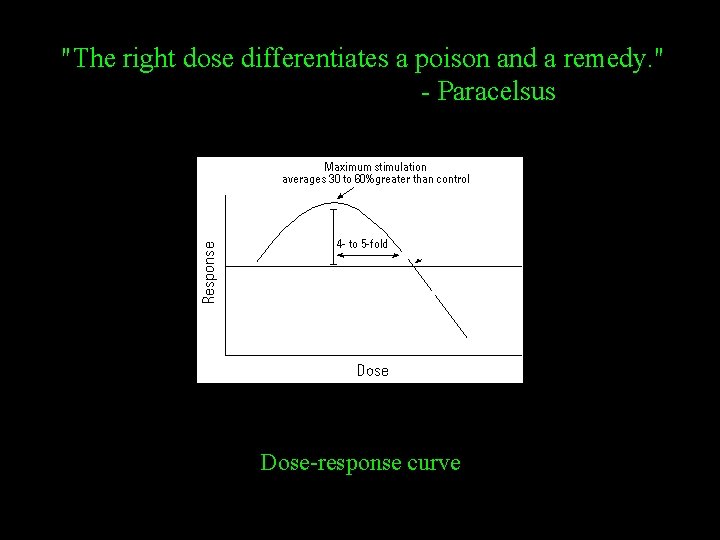
"The right dose differentiates a poison and a remedy. " - Paracelsus Dose-response curve
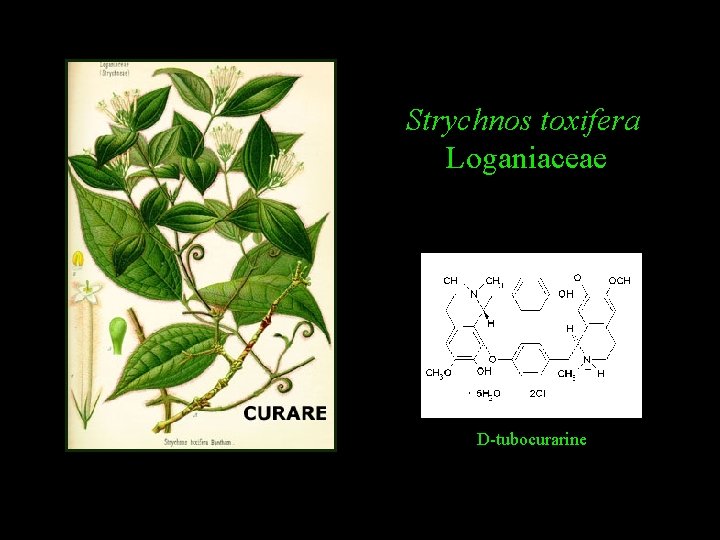
Strychnos toxifera Loganiaceae D-tubocurarine
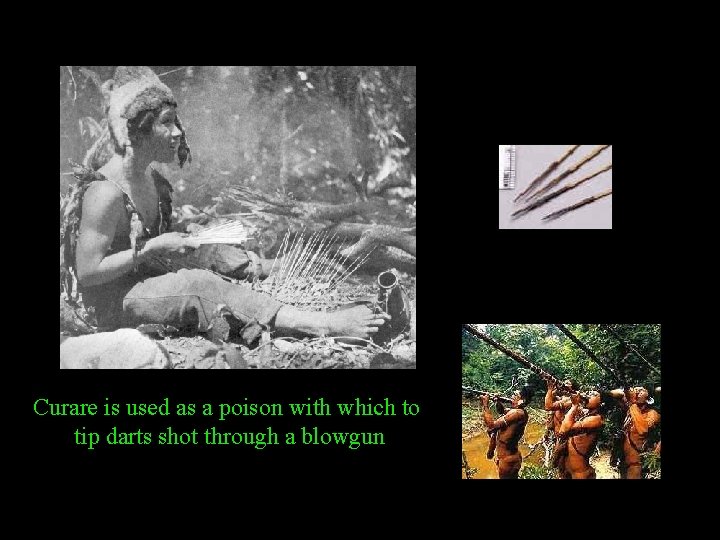
Curare is used as a poison with which to tip darts shot through a blowgun
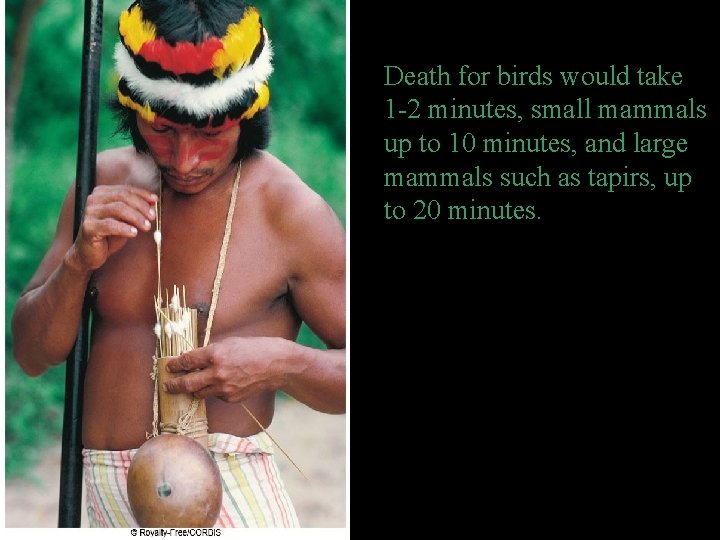
Death for birds would take 1 -2 minutes, small mammals up to 10 minutes, and large mammals such as tapirs, up to 20 minutes.
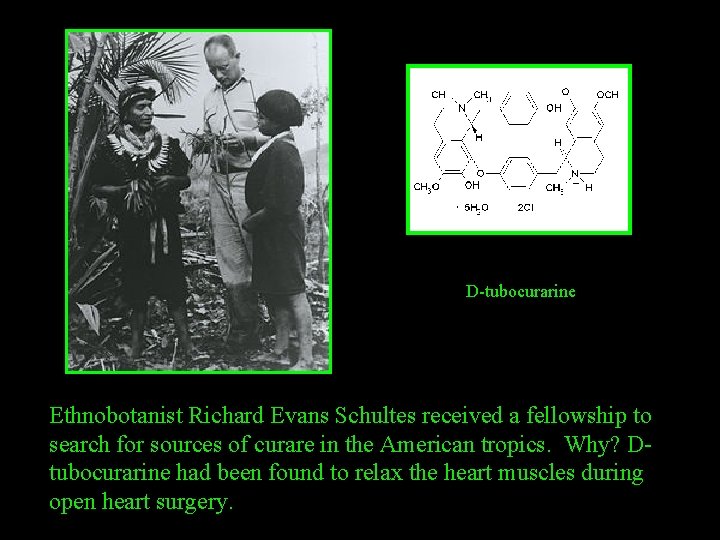
D-tubocurarine Ethnobotanist Richard Evans Schultes received a fellowship to search for sources of curare in the American tropics. Why? Dtubocurarine had been found to relax the heart muscles during open heart surgery.

The monarch butterfly contains cardioactive glycosides, which make the butterfly distasteful and even poisonous to its predators (mainly birds). However, the butterfly cannot synthesize these compounds and must obtain them from a plant. The monarch butterfly, when it is in the caterpillar stage, obtains the cardioactive glycosides by feeding on which of the following poisonous plants? A. poison hemlock B. oleander C. St. Johnswort D. milkweed E. false hellebore Clicker Question
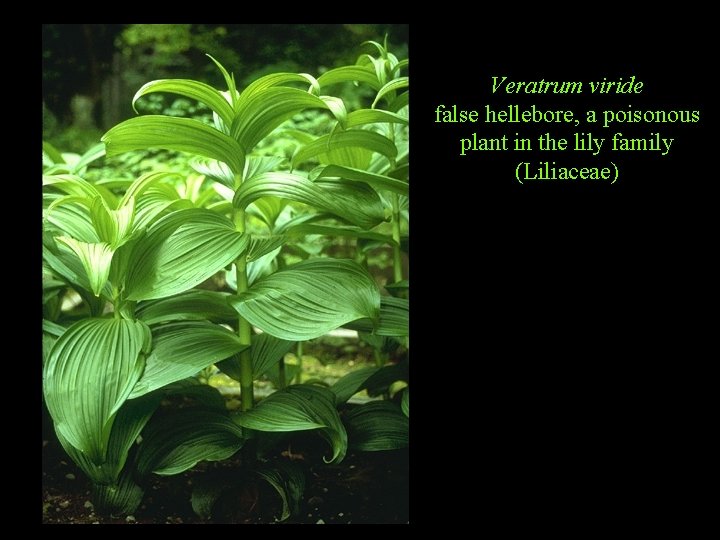
Veratrum viride false hellebore, a poisonous plant in the lily family (Liliaceae)
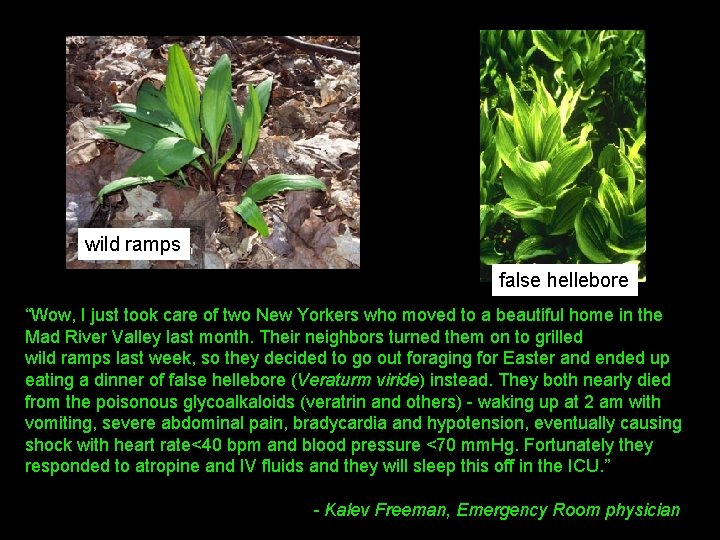
wild ramps false hellebore “Wow, I just took care of two New Yorkers who moved to a beautiful home in the Mad River Valley last month. Their neighbors turned them on to grilled wild ramps last week, so they decided to go out foraging for Easter and ended up eating a dinner of false hellebore (Veraturm viride) instead. They both nearly died from the poisonous glycoalkaloids (veratrin and others) - waking up at 2 am with vomiting, severe abdominal pain, bradycardia and hypotension, eventually causing shock with heart rate<40 bpm and blood pressure <70 mm. Hg. Fortunately they responded to atropine and IV fluids and they will sleep this off in the ICU. ” - Kalev Freeman, Emergency Room physician
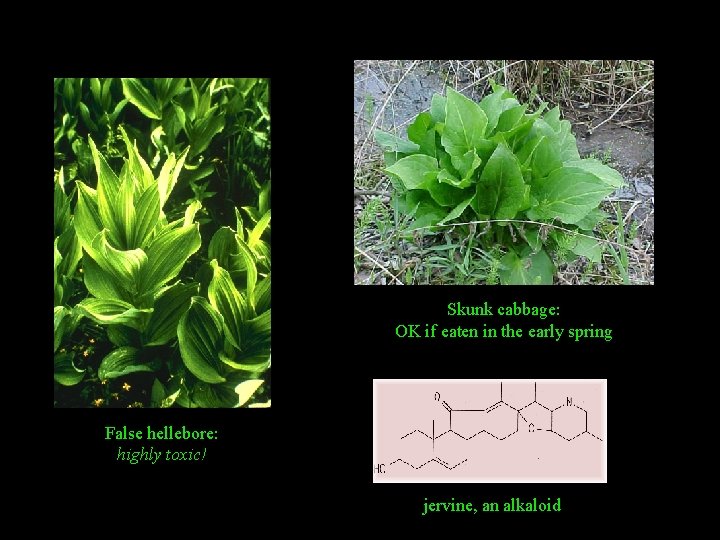
Skunk cabbage: OK if eaten in the early spring False hellebore: highly toxic! jervine, an alkaloid
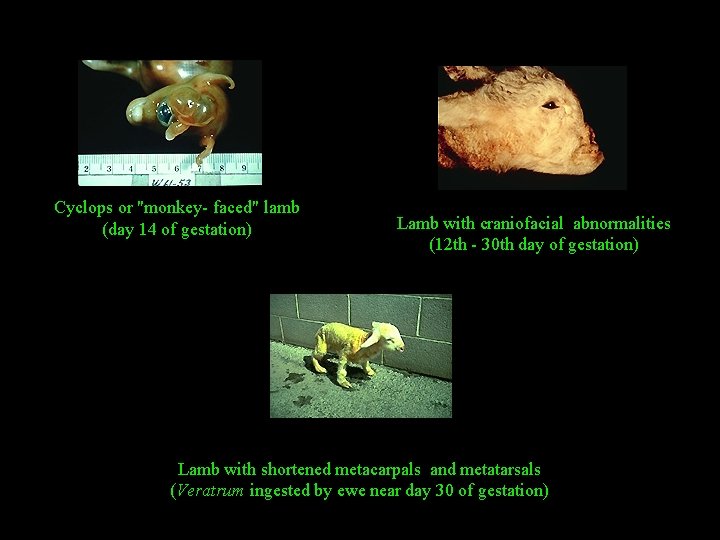
Cyclops or "monkey- faced" lamb (day 14 of gestation) Lamb with craniofacial abnormalities (12 th - 30 th day of gestation) Lamb with shortened metacarpals and metatarsals (Veratrum ingested by ewe near day 30 of gestation)
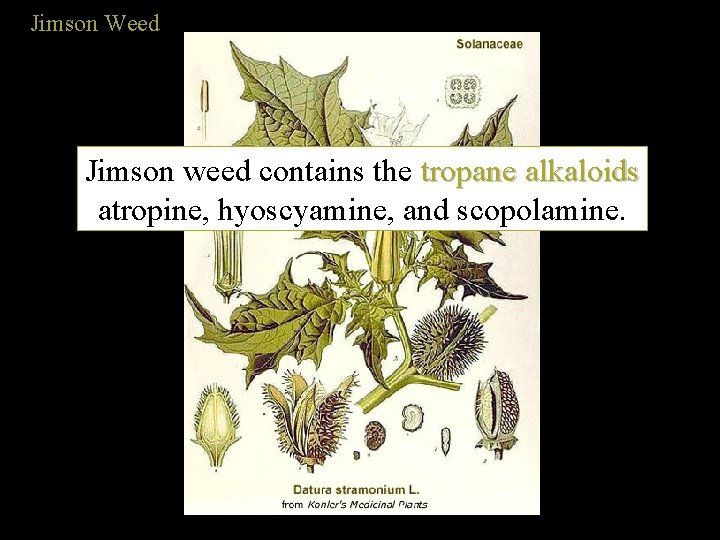
Jimson Weed Jimson weed contains the tropane alkaloids atropine, hyoscyamine, and scopolamine.
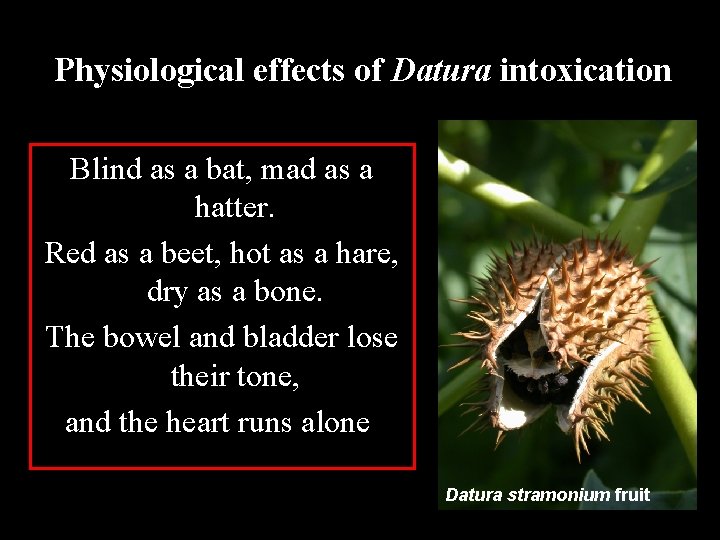
Physiological effects of Datura intoxication Blind as a bat, mad as a hatter. Red as a beet, hot as a hare, dry as a bone. The bowel and bladder lose their tone, and the heart runs alone. Datura stramonium fruit
The effects of Datura have been described as a living dream: consciousness falls in and out, people who don't exist or are miles away are conversed with etc. The effects can last for days.
Tropane alkaloids are some of the few substances which cause true hallucinations, which cannot be distinguished from reality.
The doses that cause noticeable effects and the doses that can kill are very close with datura. This makes overdosing on Datura stramonium very easy.
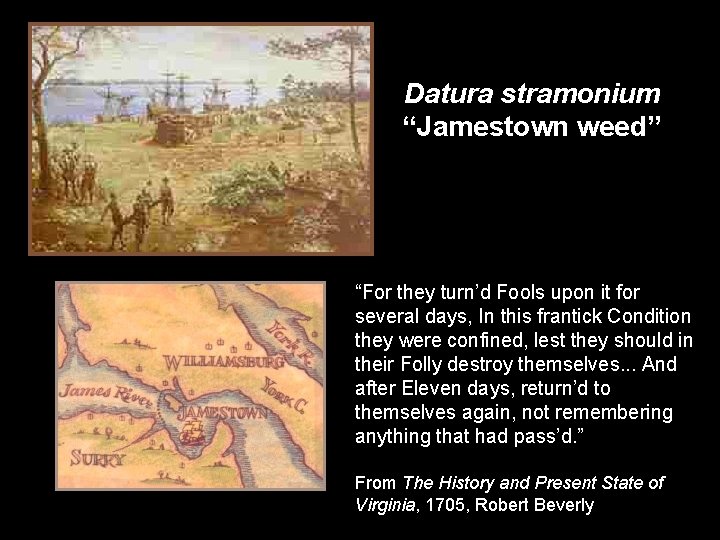
Datura stramonium “Jamestown weed” “For they turn’d Fools upon it for several days, In this frantick Condition they were confined, lest they should in their Folly destroy themselves. . . And after Eleven days, return’d to themselves again, not remembering anything that had pass’d. ” From The History and Present State of Virginia, 1705, Robert Beverly
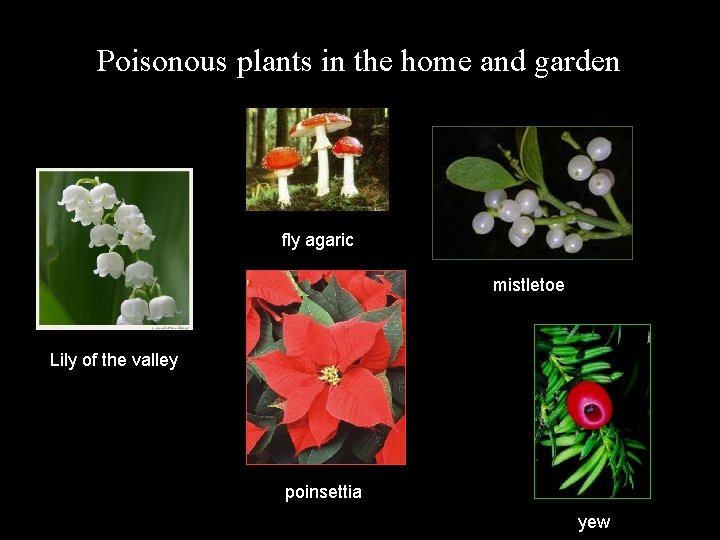
Poisonous plants in the home and garden fly agaric mistletoe Lily of the valley poinsettia yew
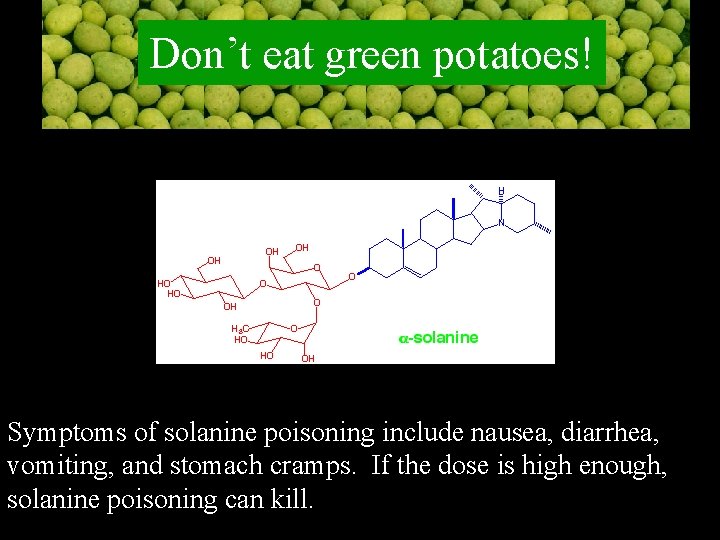
Don’t eat green potatoes! Symptoms of solanine poisoning include nausea, diarrhea, vomiting, and stomach cramps. If the dose is high enough, solanine poisoning can kill.
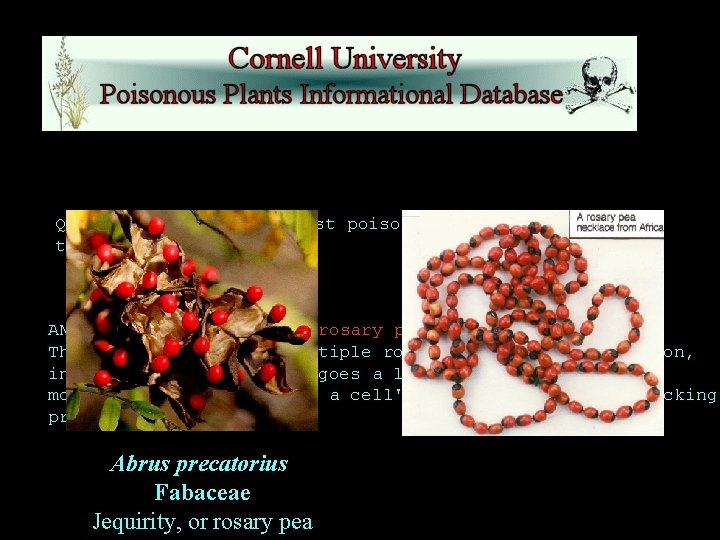
QUESTION: What is the most poisonous plant in the world to humans? ANSWER: The lectins in … rosary pea are your best bets. They can be lethal by multiple routes (ingestion, injection, inhalation) and a little goes a long ways. Only a few molecules can inactivate a cell's ribosomes, thereby blocking protein synthesis. Abrus precatorius Fabaceae Jequirity, or rosary pea
GREENHOUSE TOUR AND QUIZ (APRIL 7 -14) In PBIO 006, you have seen many photographic images of plants. Now is your chance to dive into UVM’s greenhouse to touch, smell, and examine living, growing plants! Here is what you do: Visit the UVM greenhouse (immediately east of the Aiken building) any time between 8: 30 am and 4: 00 pm during the week of April 7 -14. Bring with you a printed copy of the question sheet and the map, both on Blackboard. You will need to visit Conservatory 1, Conservatory 2, and the hall beyond them to answer the questions. Greenhouse Tour To find the plants that correspond to each question, refer to the map and look for the signs labeled “Question 1 (PBIO 6), ” “Question 5 (PBIO 6), ” etc. Information such as the plant name and family can be found on the white tag sticking out of the pot. In a few cases, you may have to use your textbook or consult Lord Google for the answer, so it would be a good idea to make a note of the scientific and common name so that you can look it up later. Please take your time to enjoy being with each plant, even if you can answer the question in a second. You may be surprised how much you learn from your own observations. After completing the tour, go to a computer, sign into Blackboard, and enter your answers to the questions online. The quiz is open from Thursday the 7 th to Thursday the 14 th. Have fun! Cathy Paris
- Slides: 23