
points of natural selection The Origin of Species
- Slides: 7
points of natural selection
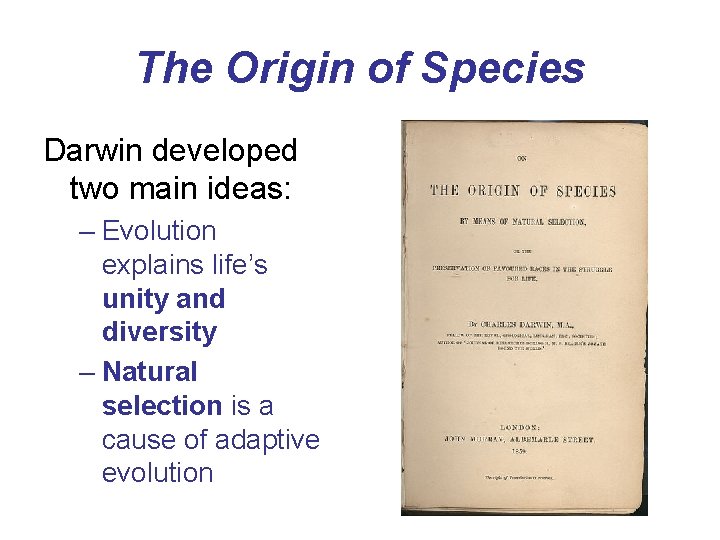
The Origin of Species Darwin developed two main ideas: – Evolution explains life’s unity and diversity – Natural selection is a cause of adaptive evolution
1. Overproduction • Most species produce far more offspring than are needed to maintain the population. • Species populations remain stable because a small amount of offspring live long enough to reproduce.
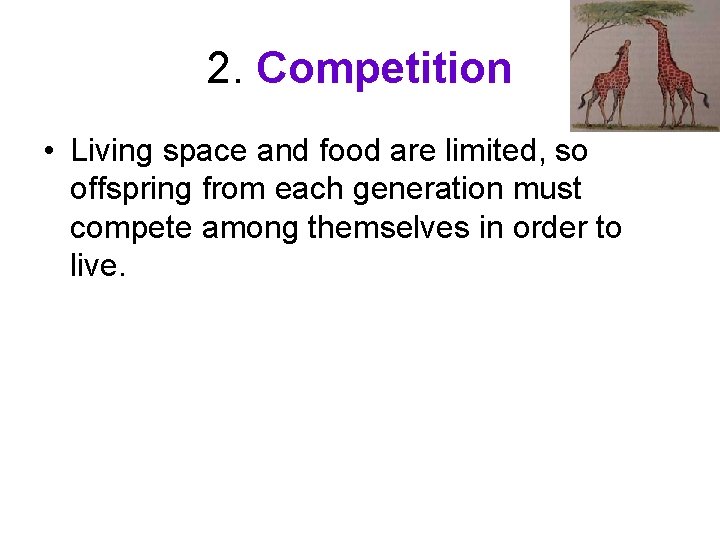
2. Competition • Living space and food are limited, so offspring from each generation must compete among themselves in order to live.
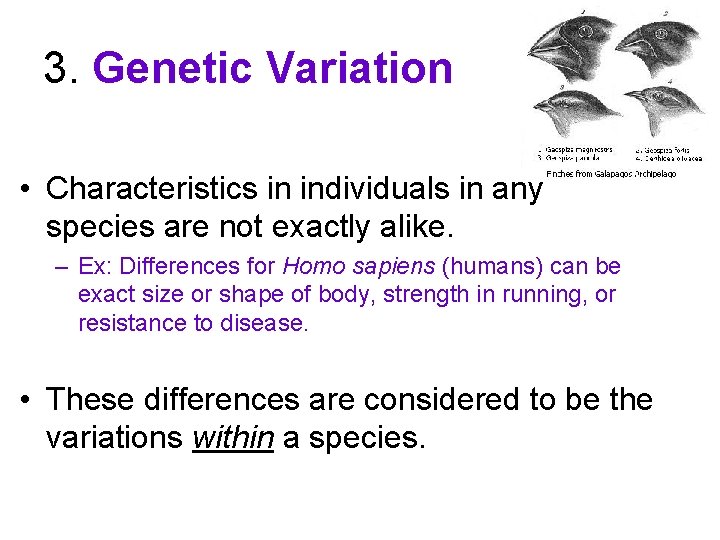
3. Genetic Variation • Characteristics in individuals in any species are not exactly alike. – Ex: Differences for Homo sapiens (humans) can be exact size or shape of body, strength in running, or resistance to disease. • These differences are considered to be the variations within a species.
4. Adaptation • An adaptation is an inherited trait that increases an organisms’ chance of survival and reproduction in a given environment. • Better traits to help organisms survive will be passed along
5. Speciation • Over many generations, favorable adaptations gradually increase in a in species and “bad” ones disappear. • Eventually, accumulated changes become so great, the result is a new species. • Formation of a new species is called “Speciation” and it takes many, many generations to do.