
PointCounterpoint Hospital Scorecards and Quality The Quality Colloquium



- Slides: 12
Point-Counterpoint: Hospital Scorecards and Quality The Quality Colloquium at Harvard August 22, 2005 Richard Siegrist Senior Vice President & General Manager Health. Share Technology, a Web. MD company Adjunct Lecturer, Harvard School of Public Health
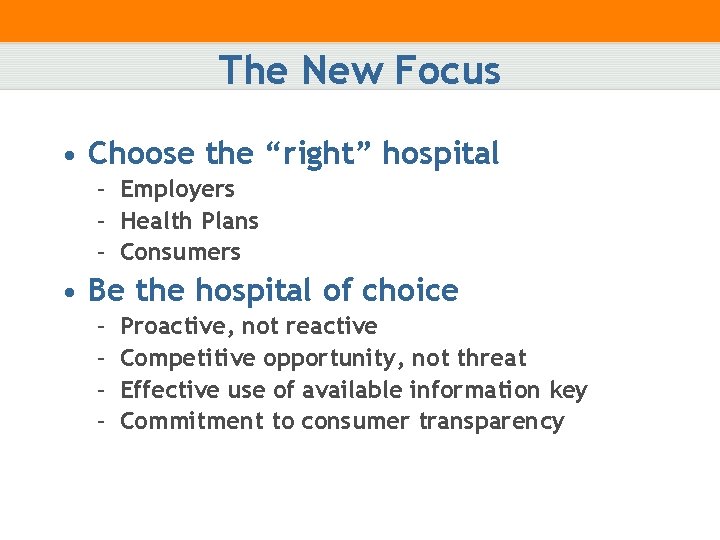
The New Focus • Choose the “right” hospital – Employers – Health Plans – Consumers • Be the hospital of choice – – Proactive, not reactive Competitive opportunity, not threat Effective use of available information key Commitment to consumer transparency
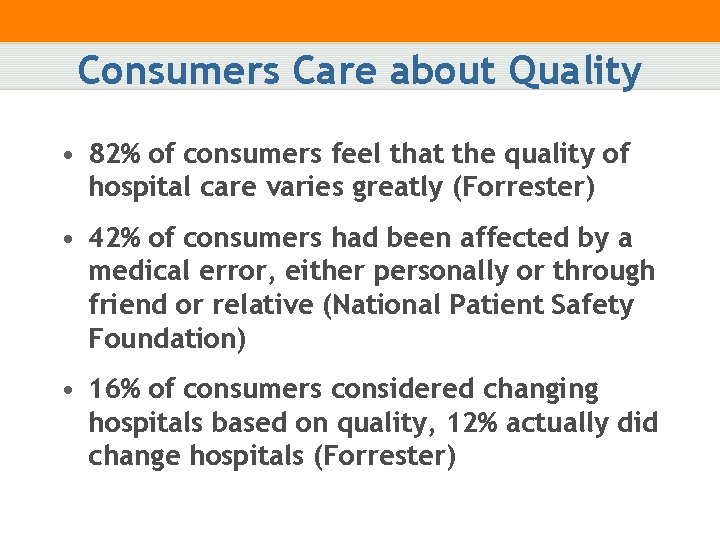
Consumers Care about Quality • 82% of consumers feel that the quality of hospital care varies greatly (Forrester) • 42% of consumers had been affected by a medical error, either personally or through friend or relative (National Patient Safety Foundation) • 16% of consumers considered changing hospitals based on quality, 12% actually did change hospitals (Forrester)
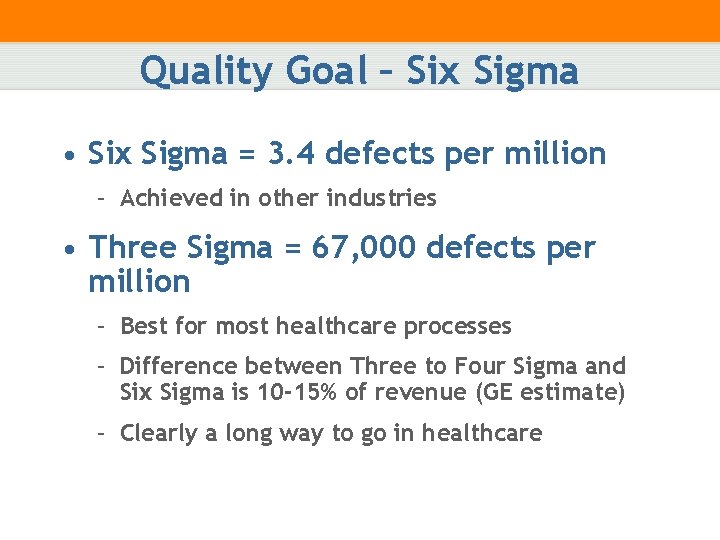
Quality Goal – Six Sigma • Six Sigma = 3. 4 defects per million – Achieved in other industries • Three Sigma = 67, 000 defects per million – Best for most healthcare processes – Difference between Three to Four Sigma and Six Sigma is 10 -15% of revenue (GE estimate) – Clearly a long way to go in healthcare
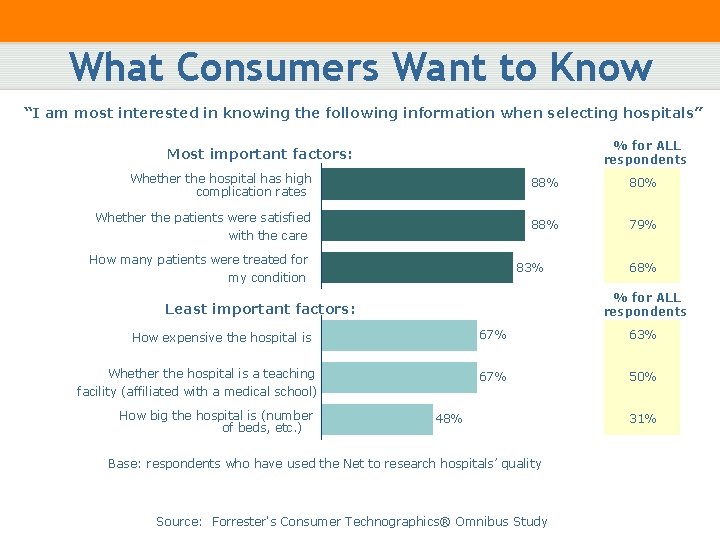
What Consumers Want to Know “I am most interested in knowing the following information when selecting hospitals” % for ALL respondents Most important factors: Whether the hospital has high complication rates 88% 80% Whether the patients were satisfied with the care 88% 79% How many patients were treated for my condition 83% % for ALL respondents Least important factors: How expensive the hospital is Whether the hospital is a teaching facility (affiliated with a medical school) How big the hospital is (number of beds, etc. ) 68% 67% 63% 67% 50% 48% Base: respondents who have used the Net to research hospitals’ quality Source: Forrester's Consumer Technographics® Omnibus Study 31%
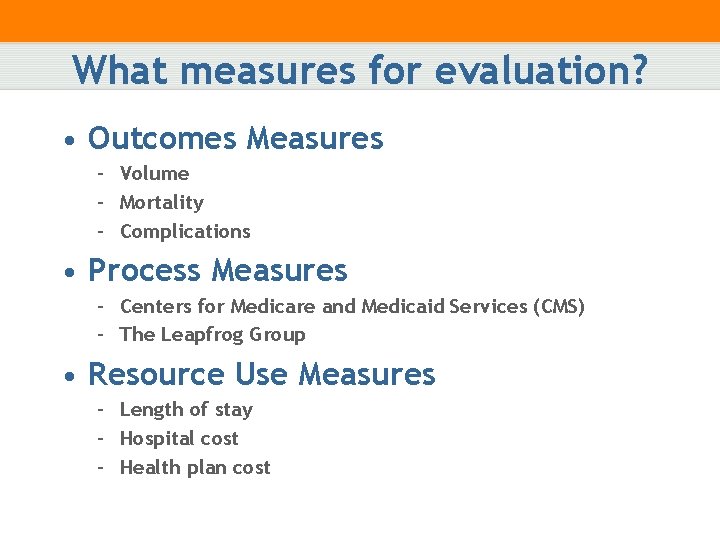
What measures for evaluation? • Outcomes Measures – Volume – Mortality – Complications • Process Measures – Centers for Medicare and Medicaid Services (CMS) – The Leapfrog Group • Resource Use Measures – Length of stay – Hospital cost – Health plan cost
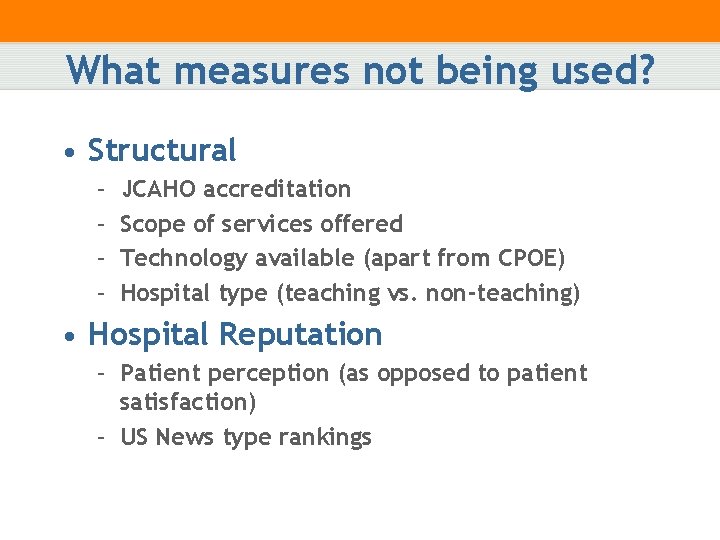
What measures not being used? • Structural – – JCAHO accreditation Scope of services offered Technology available (apart from CPOE) Hospital type (teaching vs. non-teaching) • Hospital Reputation – Patient perception (as opposed to patient satisfaction) – US News type rankings
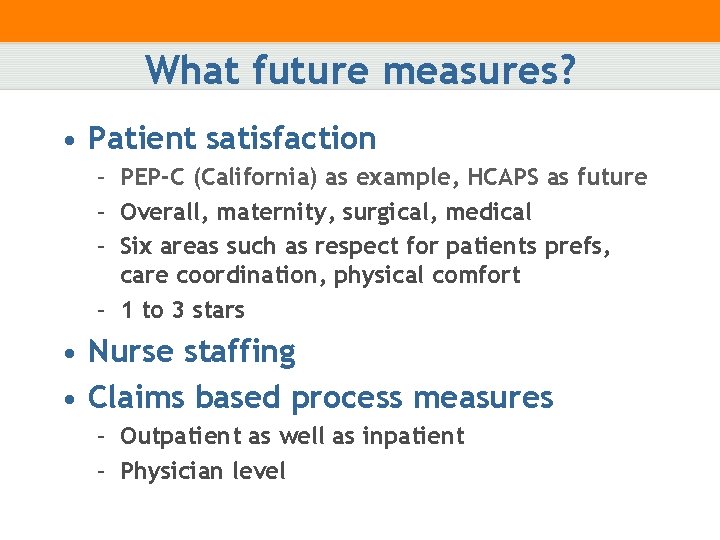
What future measures? • Patient satisfaction – PEP-C (California) as example, HCAPS as future – Overall, maternity, surgical, medical – Six areas such as respect for patients prefs, care coordination, physical comfort – 1 to 3 stars • Nurse staffing • Claims based process measures – Outpatient as well as inpatient – Physician level
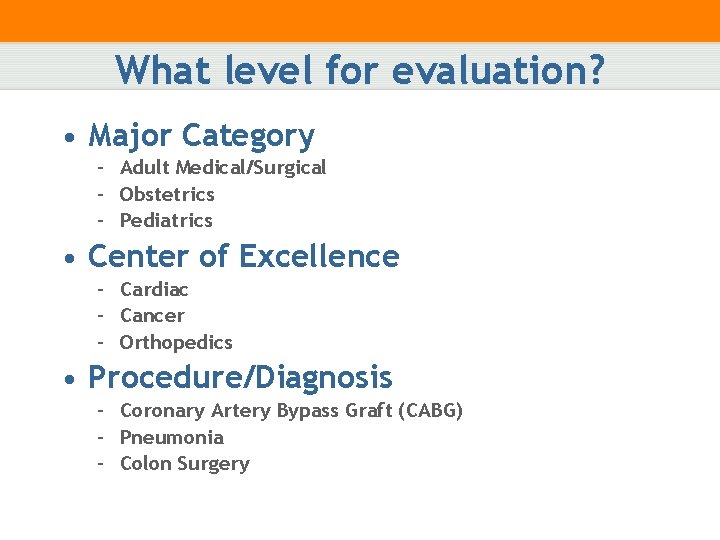
What level for evaluation? • Major Category – Adult Medical/Surgical – Obstetrics – Pediatrics • Center of Excellence – Cardiac – Cancer – Orthopedics • Procedure/Diagnosis – Coronary Artery Bypass Graft (CABG) – Pneumonia – Colon Surgery
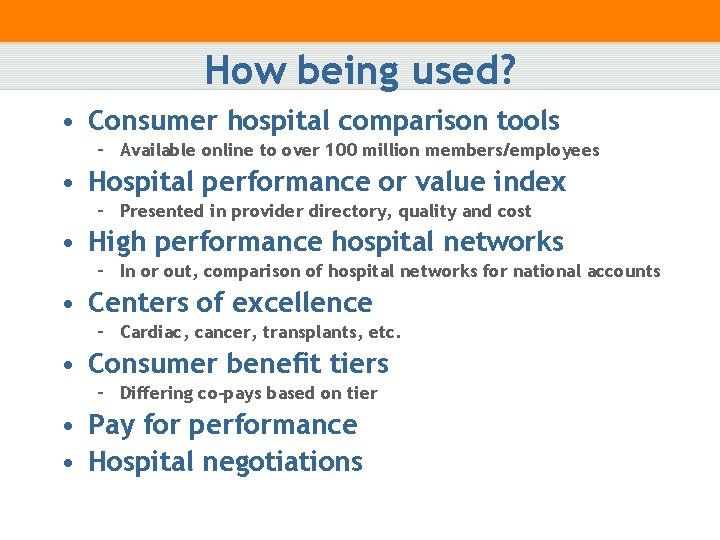
How being used? • Consumer hospital comparison tools – Available online to over 100 million members/employees • Hospital performance or value index – Presented in provider directory, quality and cost • High performance hospital networks – In or out, comparison of hospital networks for national accounts • Centers of excellence – Cardiac, cancer, transplants, etc. • Consumer benefit tiers – Differing co-pays based on tier • Pay for performance • Hospital negotiations
Specific Examples • Tufts Navigator – Tiered Payments – Plan offered to Mass State employees – Hospitals placed in 3 tiers for employee co-payment based on hospital quality and health plan cost – Well received by employees • National Plans – Hospital Value Index – Index based on relative performance on health plan cost (claims based) and hospital quality – For display in provider directory and for use in hospital contract negotiation • Regional Plans – Pay for Performance – Severity adjusted quality comparison across multiple measures – Being used in pay for performance programs • Employers/Coalitions – Quality Report Card – High volume procedures, outcomes and process measures – Public release of comparisons, internal cost control