
Point Velocity Measurements Thermal Anemometry P M V

- Slides: 10
Point Velocity Measurements: Thermal Anemometry P M V Subbarao Professor Mechanical Engineering Department True Measurement of High frequency Velocity Variations…. .
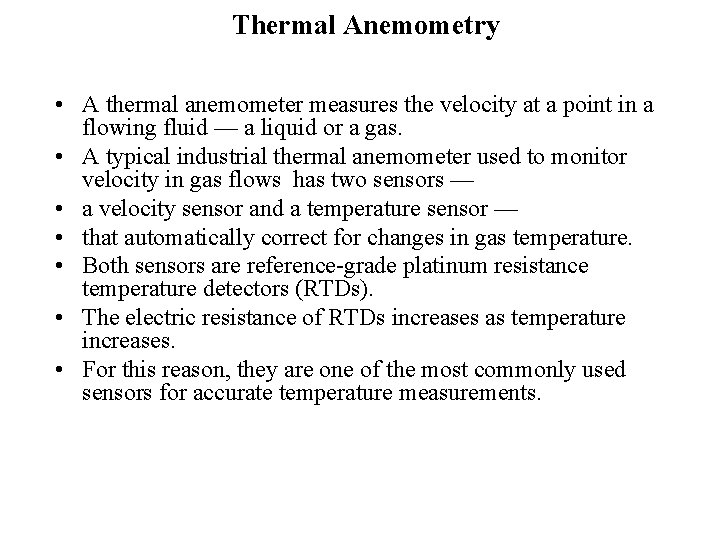
Thermal Anemometry • A thermal anemometer measures the velocity at a point in a flowing fluid — a liquid or a gas. • A typical industrial thermal anemometer used to monitor velocity in gas flows has two sensors — • a velocity sensor and a temperature sensor — • that automatically correct for changes in gas temperature. • Both sensors are reference-grade platinum resistance temperature detectors (RTDs). • The electric resistance of RTDs increases as temperature increases. • For this reason, they are one of the most commonly used sensors for accurate temperature measurements.
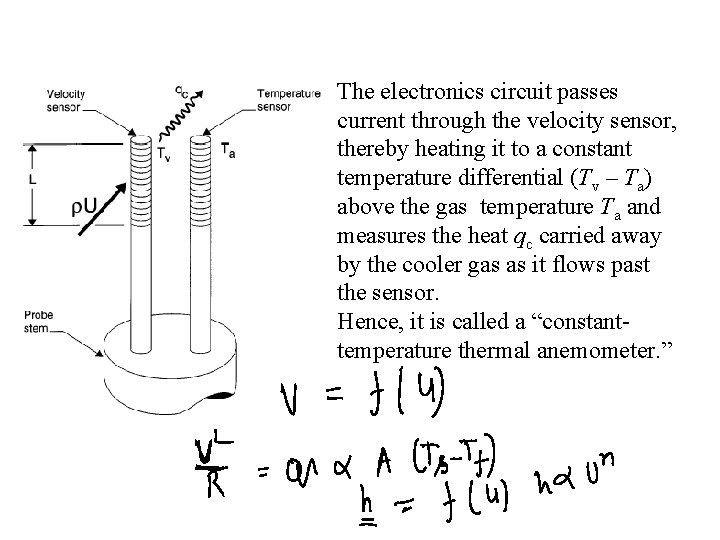
The electronics circuit passes current through the velocity sensor, thereby heating it to a constant temperature differential (Tv – Ta) above the gas temperature Ta and measures the heat qc carried away by the cooler gas as it flows past the sensor. Hence, it is called a “constanttemperature thermal anemometer. ”
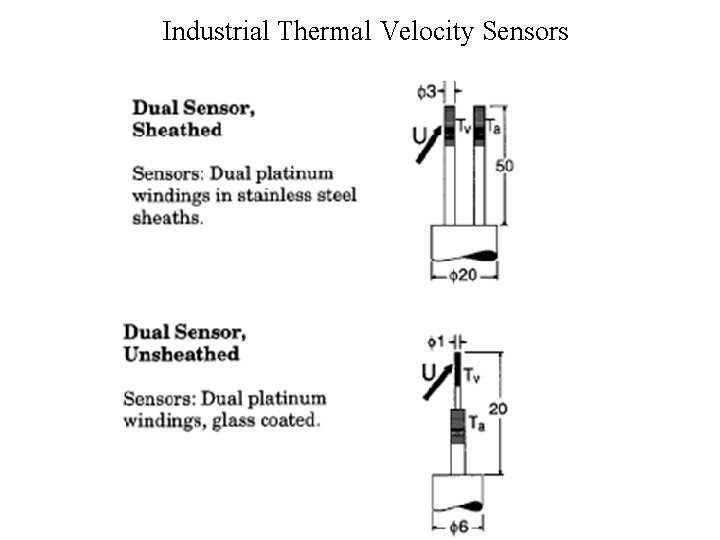
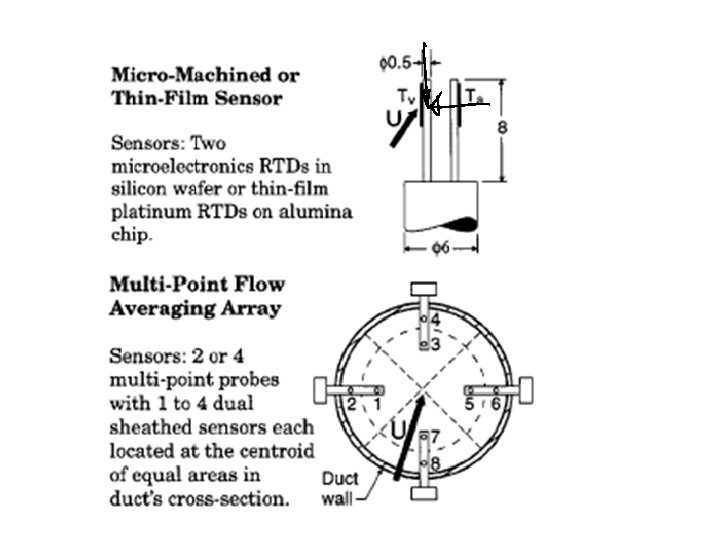
Industrial Thermal Velocity Sensors
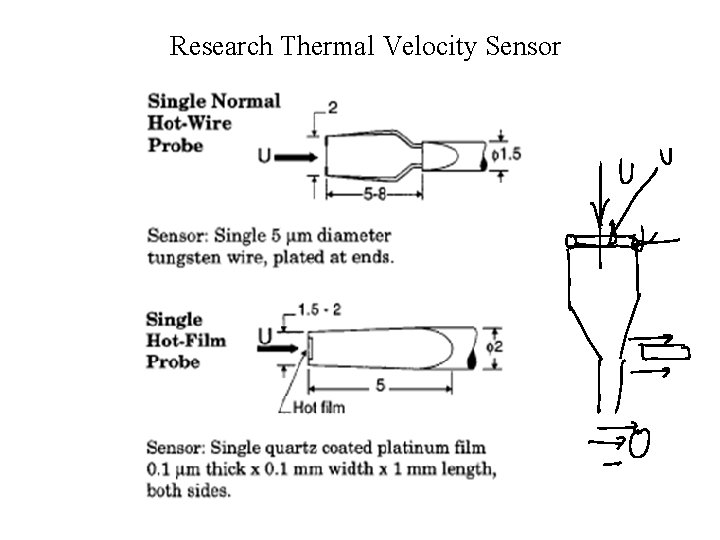
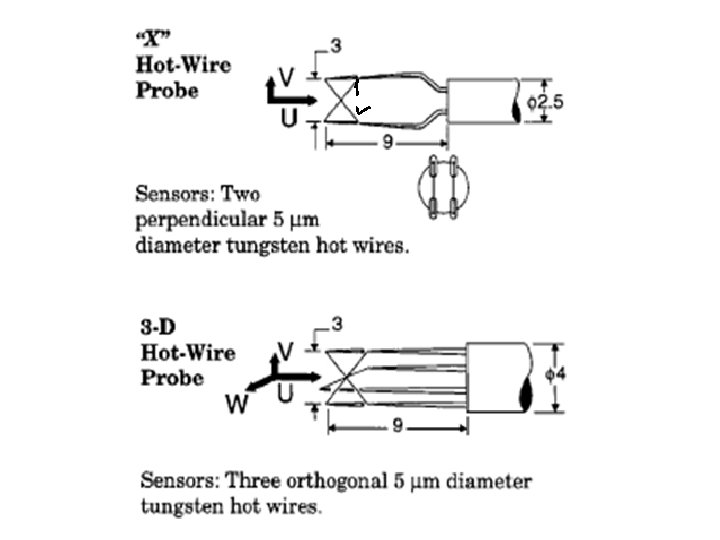
Research Thermal Velocity Sensor
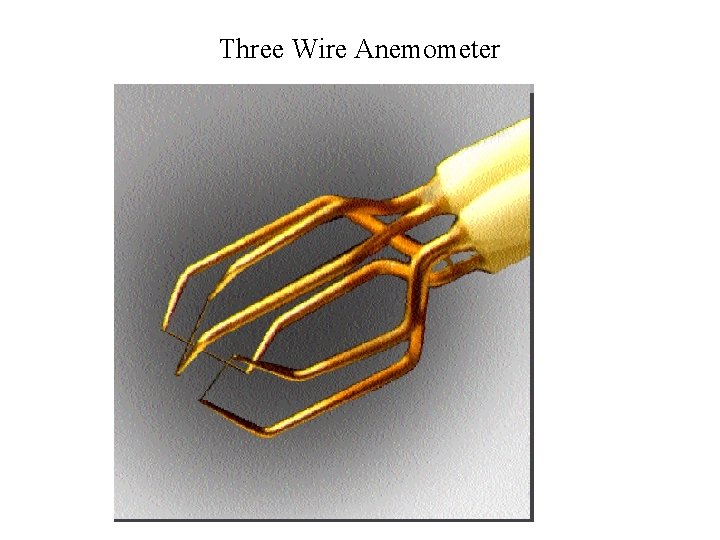
Three Wire Anemometer
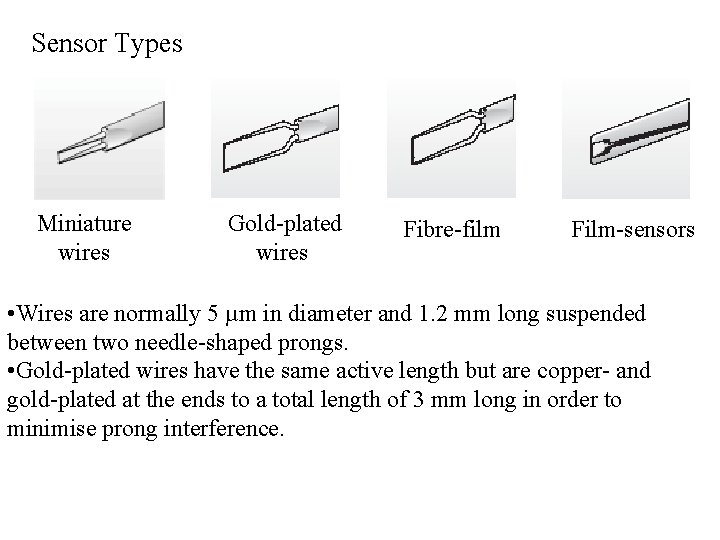
Sensor Types Miniature wires Gold-plated wires Fibre-film Film-sensors • Wires are normally 5 µm in diameter and 1. 2 mm long suspended between two needle-shaped prongs. • Gold-plated wires have the same active length but are copper- and gold-plated at the ends to a total length of 3 mm long in order to minimise prong interference.
• Fibre-sensors are quartz-fibers, normally 70 µm in diameter and with 1. 2 mm active length, covered by a nickel thin-film, which again is protected by a quartz coating. • Fibre-sensors are mounted on prongs in the same arrays as are wires. • Film sensors consist of nickel thin-films deposited on the tip of aerodynamically shaped bodies, wedges or cones.