
Point de dpart The verb avoir to have
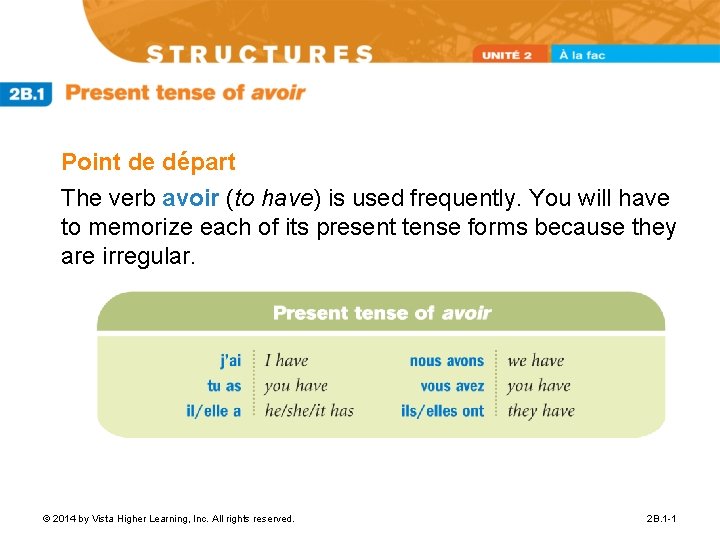
Point de départ The verb avoir (to have) is used frequently. You will have to memorize each of its present tense forms because they are irregular. © 2014 by Vista Higher Learning, Inc. All rights reserved. 2 B. 1 -1
© 2014 by Vista Higher Learning, Inc. All rights reserved. 2 B. 1 -2
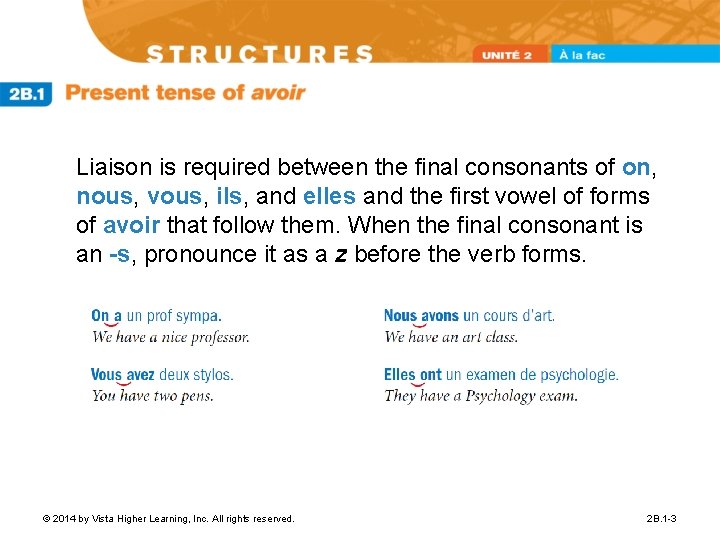
Liaison is required between the final consonants of on, nous, vous, ils, and elles and the first vowel of forms of avoir that follow them. When the final consonant is an -s, pronounce it as a z before the verb forms. © 2014 by Vista Higher Learning, Inc. All rights reserved. 2 B. 1 -3
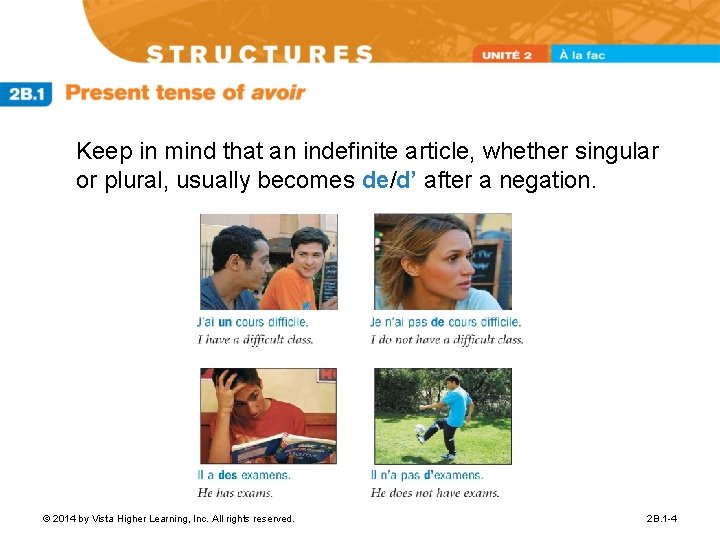
Keep in mind that an indefinite article, whether singular or plural, usually becomes de/d’ after a negation. © 2014 by Vista Higher Learning, Inc. All rights reserved. 2 B. 1 -4

Boîte à outils In the expression avoir l’air + [adjective], the adjective does not change to agree with the subject. It is always masculine singular, because it agrees with air. Examples: © 2014 by Vista Higher Learning, Inc. All rights reserved. 2 B. 1 -5
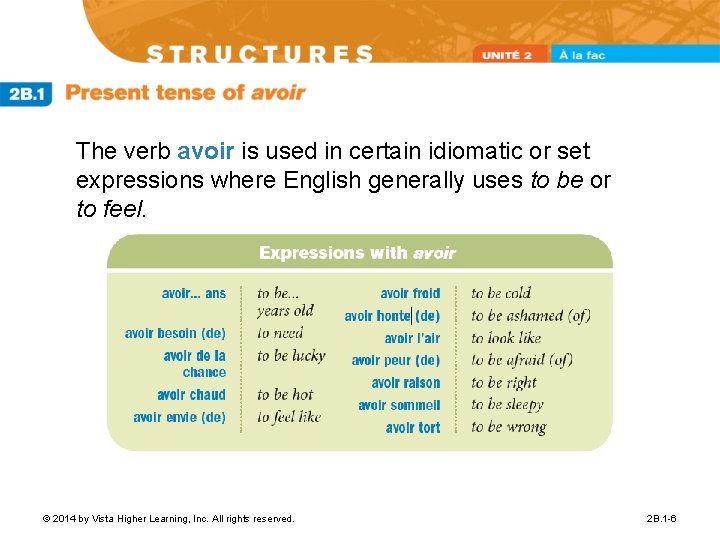
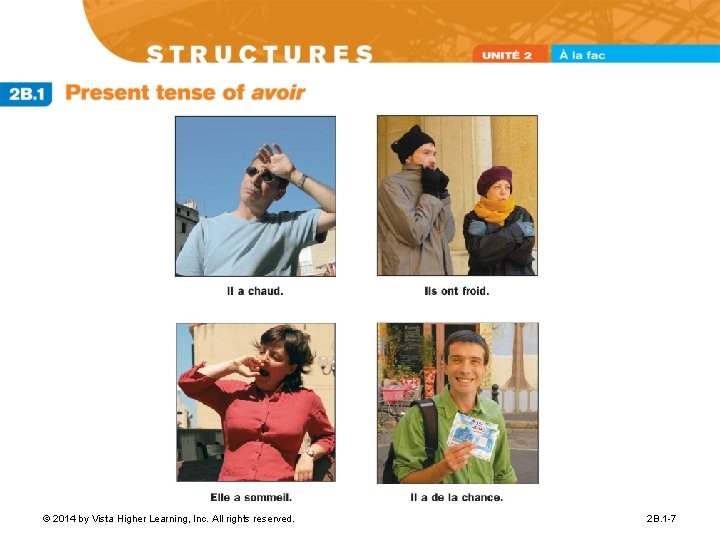
The verb avoir is used in certain idiomatic or set expressions where English generally uses to be or to feel. © 2014 by Vista Higher Learning, Inc. All rights reserved. 2 B. 1 -6
© 2014 by Vista Higher Learning, Inc. All rights reserved. 2 B. 1 -7
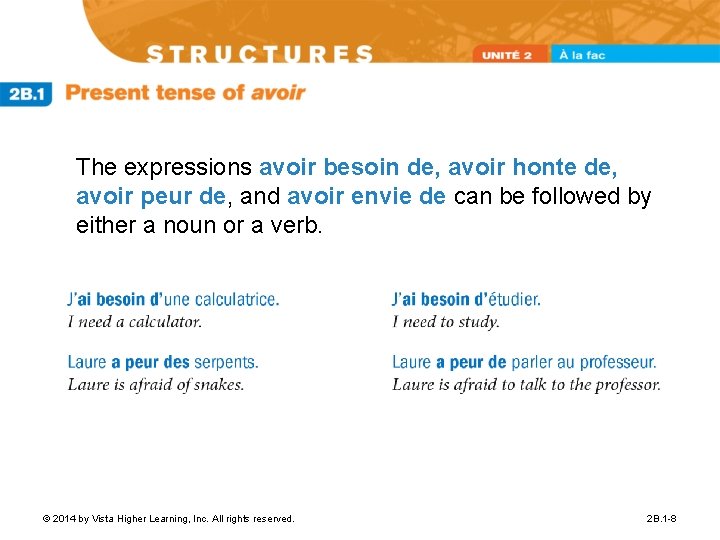
The expressions avoir besoin de, avoir honte de, avoir peur de, and avoir envie de can be followed by either a noun or a verb. © 2014 by Vista Higher Learning, Inc. All rights reserved. 2 B. 1 -8
- Slides: 8