
Point de dpart The verb avoir to have
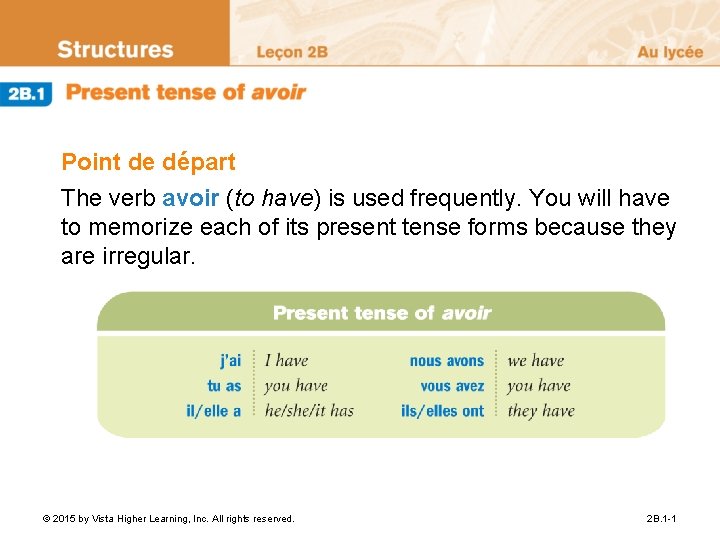
Point de départ The verb avoir (to have) is used frequently. You will have to memorize each of its present tense forms because they are irregular. © 2015 by Vista Higher Learning, Inc. All rights reserved. 2 B. 1 -1
© 2015 by Vista Higher Learning, Inc. All rights reserved. 2 B. 1 -2
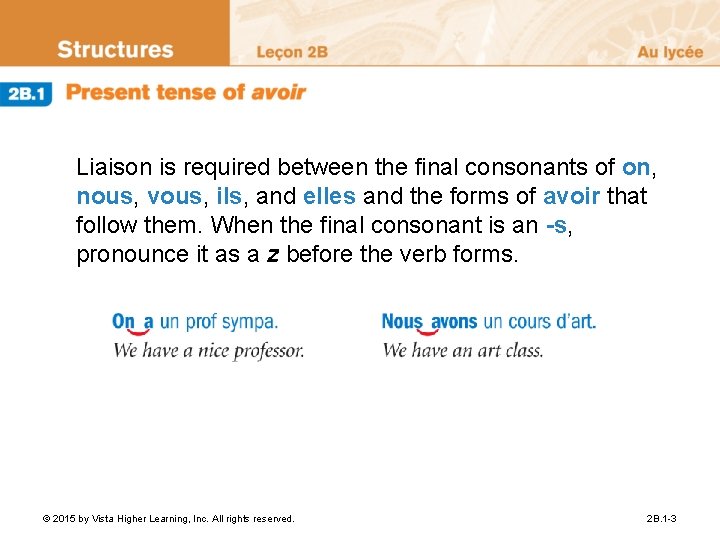
Liaison is required between the final consonants of on, nous, vous, ils, and elles and the forms of avoir that follow them. When the final consonant is an -s, pronounce it as a z before the verb forms. © 2015 by Vista Higher Learning, Inc. All rights reserved. 2 B. 1 -3
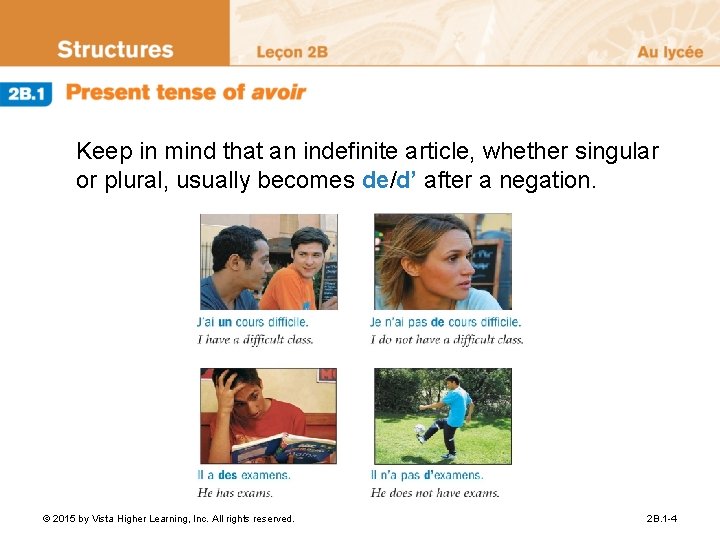
Keep in mind that an indefinite article, whether singular or plural, usually becomes de/d’ after a negation. © 2015 by Vista Higher Learning, Inc. All rights reserved. 2 B. 1 -4
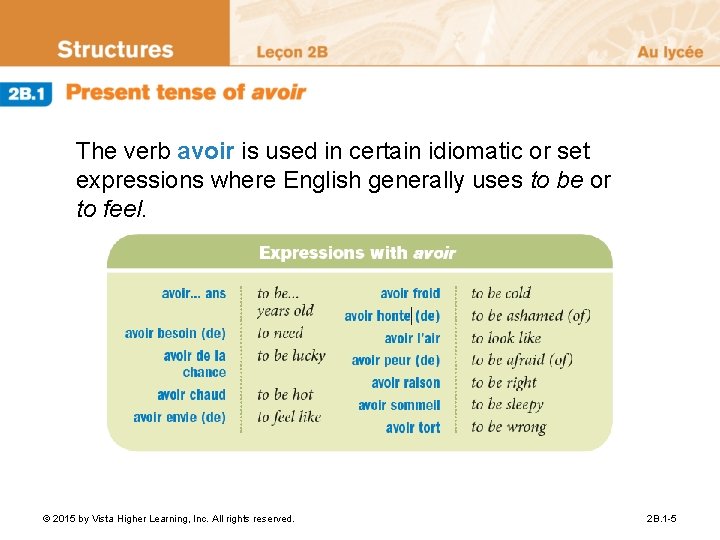
The verb avoir is used in certain idiomatic or set expressions where English generally uses to be or to feel. © 2015 by Vista Higher Learning, Inc. All rights reserved. 2 B. 1 -5
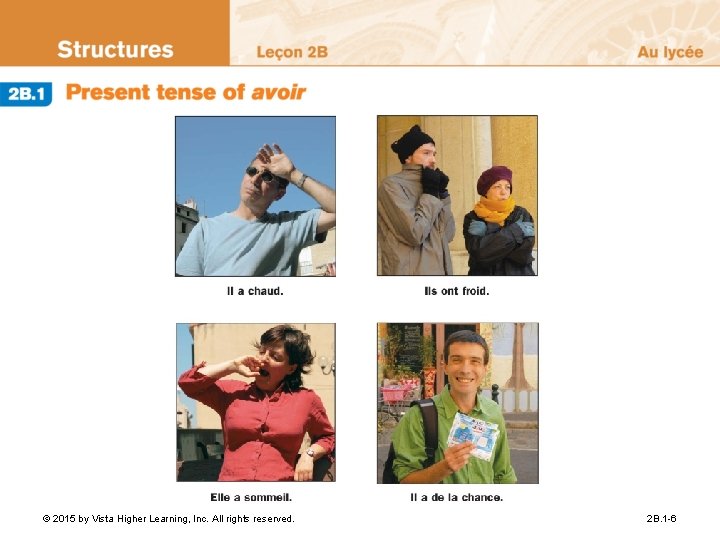
© 2015 by Vista Higher Learning, Inc. All rights reserved. 2 B. 1 -6
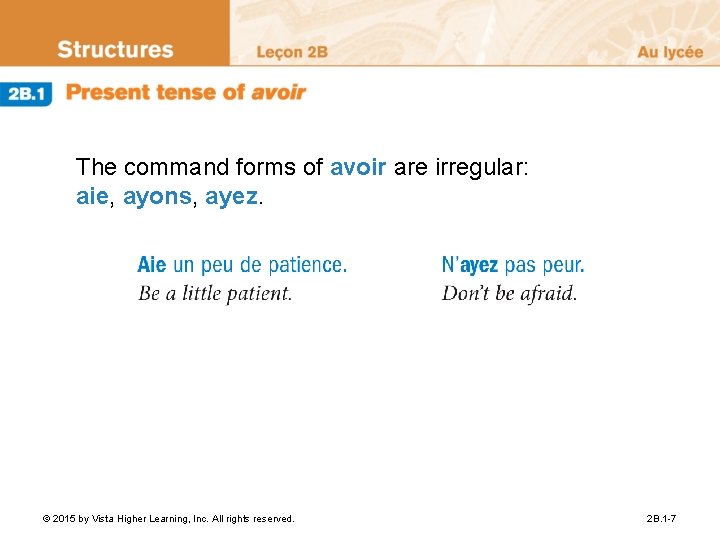
The command forms of avoir are irregular: aie, ayons, ayez. © 2015 by Vista Higher Learning, Inc. All rights reserved. 2 B. 1 -7
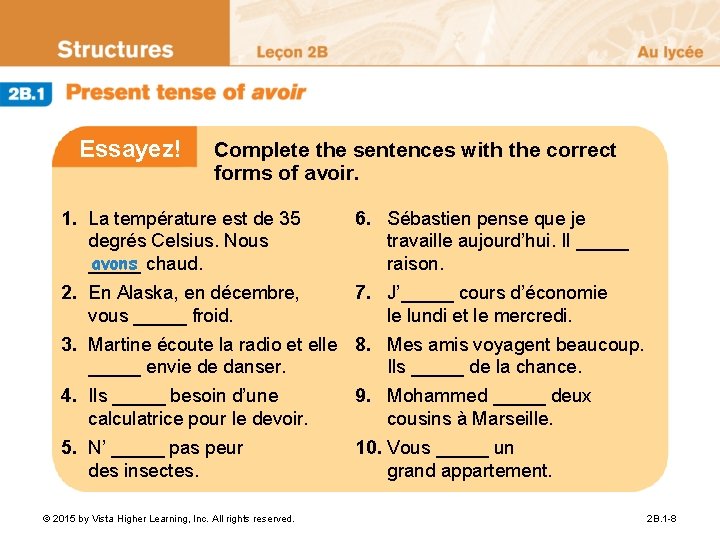
Essayez! Complete the sentences with the correct forms of avoir. 1. La température est de 35 degrés Celsius. Nous avons chaud. _____ 6. Sébastien pense que je travaille aujourd’hui. Il _____ raison. 2. En Alaska, en décembre, vous _____ froid. 7. J’_____ cours d’économie le lundi et le mercredi. 3. Martine écoute la radio et elle 8. Mes amis voyagent beaucoup. _____ envie de danser. Ils _____ de la chance. 4. Ils _____ besoin d’une calculatrice pour le devoir. 9. Mohammed _____ deux cousins à Marseille. 5. N’ _____ pas peur des insectes. 10. Vous _____ un grand appartement. © 2015 by Vista Higher Learning, Inc. All rights reserved. 2 B. 1 -8
- Slides: 8