
Point de dpart Adverbs describe how when and
Point de départ Adverbs describe how, when, and where actions take place. They modify verbs, adjectives, and even other adverbs. You’ve already learned some adverbs such as bien, déjà, surtout, and très. 1
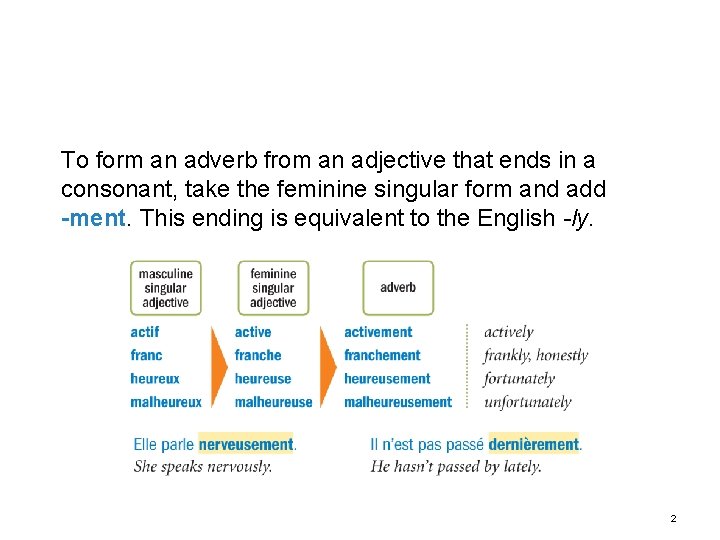
To form an adverb from an adjective that ends in a consonant, take the feminine singular form and add -ment. This ending is equivalent to the English -ly. 2
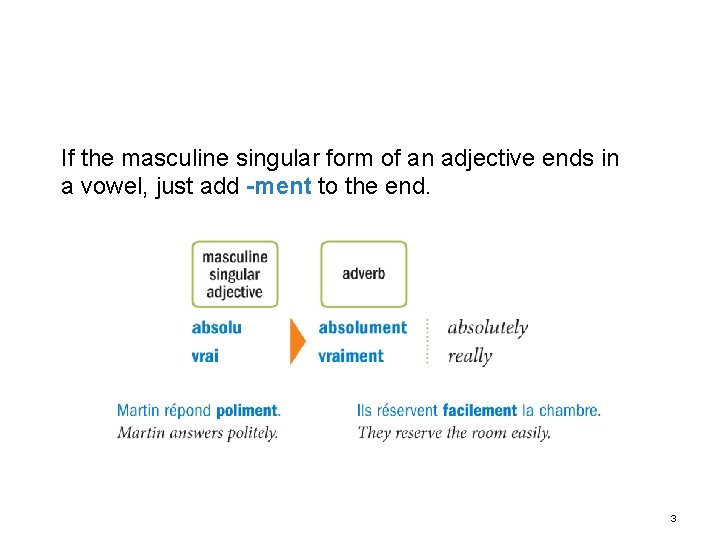
If the masculine singular form of an adjective ends in a vowel, just add -ment to the end. 3
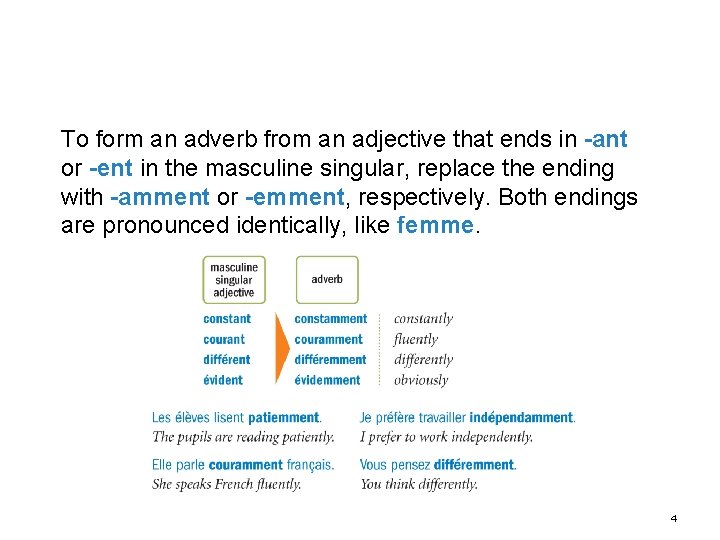
To form an adverb from an adjective that ends in -ant or -ent in the masculine singular, replace the ending with -amment or -emment, respectively. Both endings are pronounced identically, like femme. 4
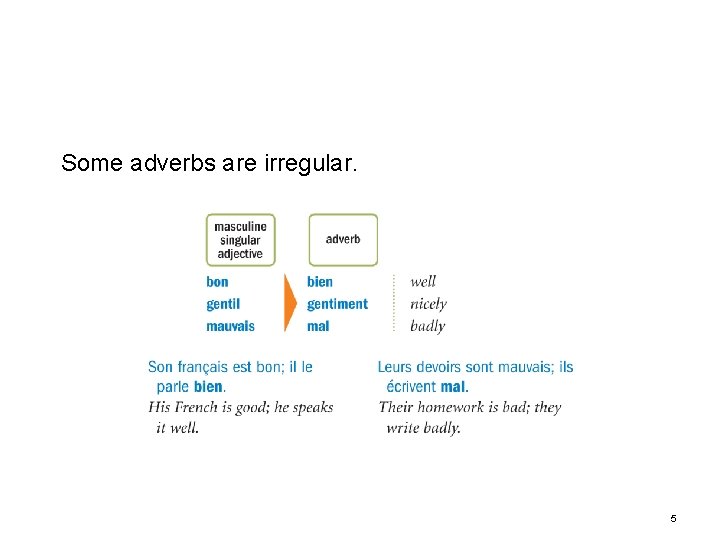
Some adverbs are irregular. 5
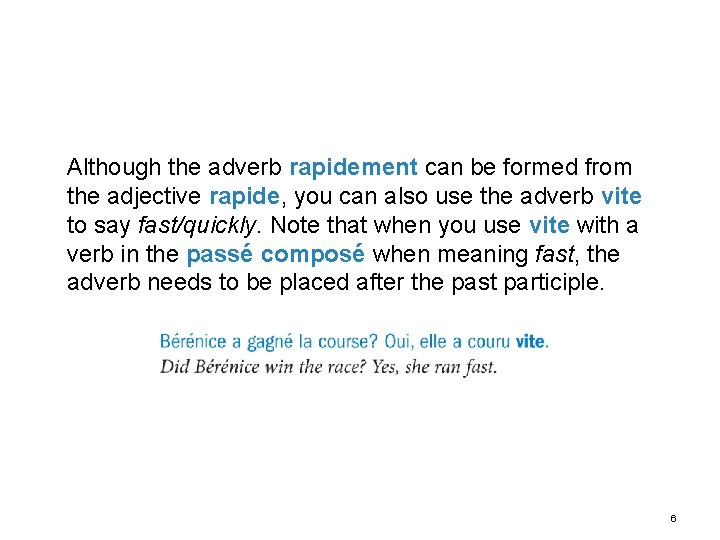
Although the adverb rapidement can be formed from the adjective rapide, you can also use the adverb vite to say fast/quickly. Note that when you use vite with a verb in the passé composé when meaning fast, the adverb needs to be placed after the past participle. 6
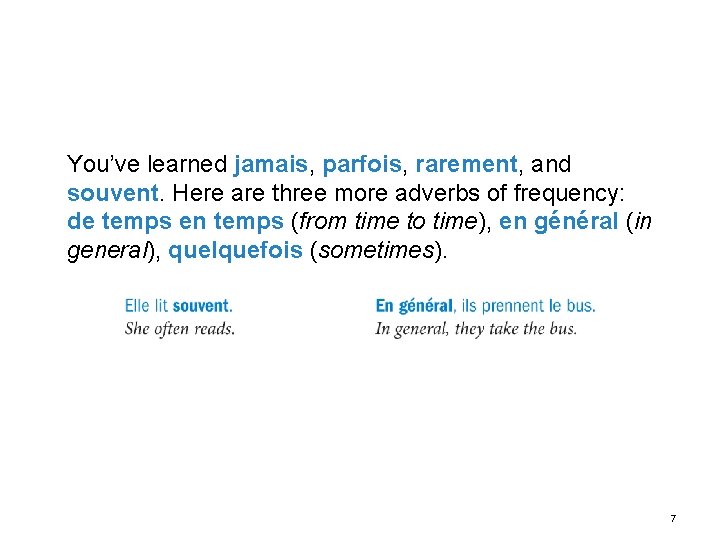
You’ve learned jamais, parfois, rarement, and souvent. Here are three more adverbs of frequency: de temps en temps (from time to time), en général (in general), quelquefois (sometimes). 7
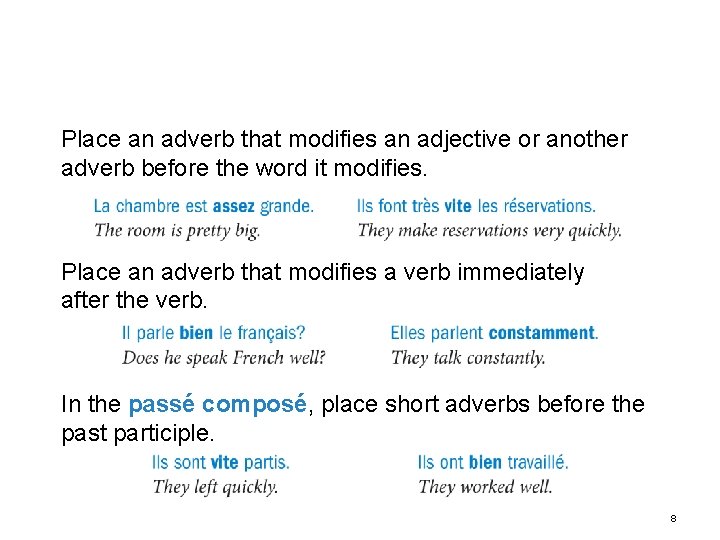
Place an adverb that modifies an adjective or another adverb before the word it modifies. Place an adverb that modifies a verb immediately after the verb. In the passé composé, place short adverbs before the past participle. 8
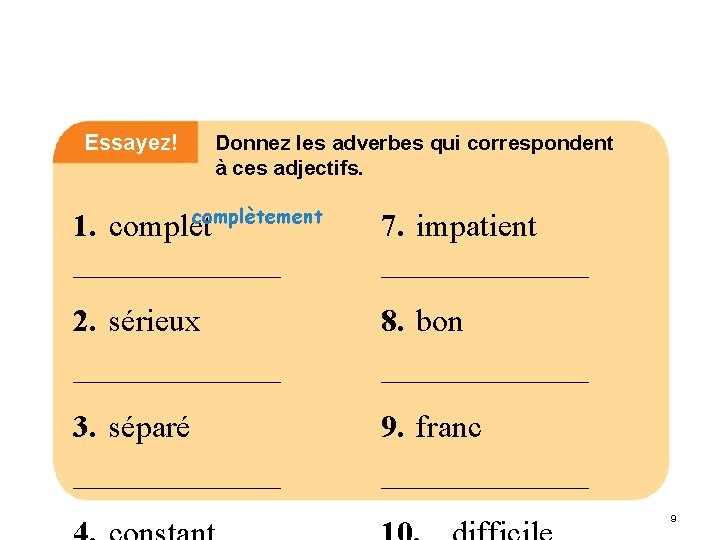
Essayez! Donnez les adverbes qui correspondent à ces adjectifs. complètement 1. complet _______ 7. impatient _______ 2. sérieux _______ 8. bon _______ 3. séparé _______ 9. franc _______ 9
- Slides: 9