
Point de dpart Adjectives are words that describe
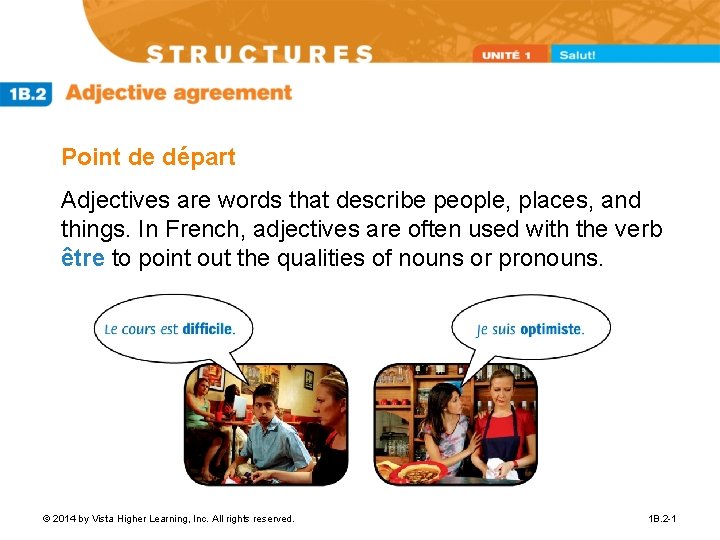
Point de départ Adjectives are words that describe people, places, and things. In French, adjectives are often used with the verb être to point out the qualities of nouns or pronouns. © 2014 by Vista Higher Learning, Inc. All rights reserved. 1 B. 2 -1

Many adjectives in French are cognates; that is, they have the same or similar spellings and meanings in French and English. © 2014 by Vista Higher Learning, Inc. All rights reserved. 1 B. 2 -2
Boîte à outils Use the masculine plural form of an adjective to describe a group composed of masculine and feminine nouns: Henri et Patricia sont élégants. © 2014 by Vista Higher Learning, Inc. All rights reserved. 1 B. 2 -3

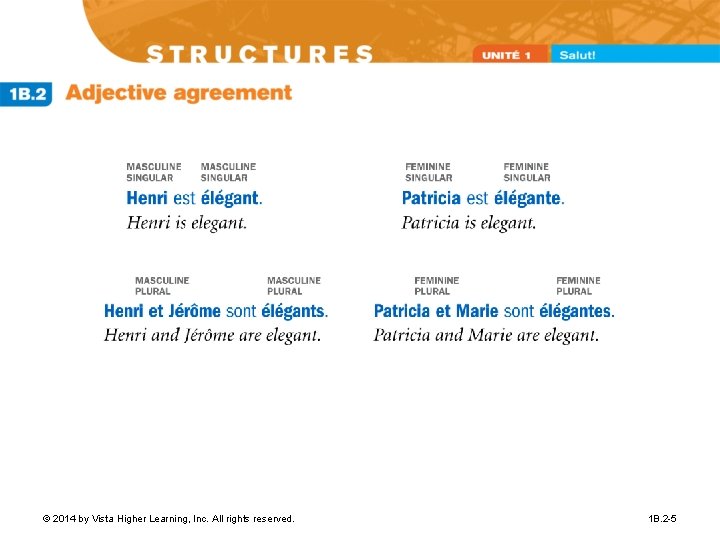
In French, most adjectives agree in number and gender with the nouns they describe. Most adjectives form the feminine by adding a silent -e (no accent) to the end of the masculine form, unless one is already there. Adding a silent -s to the end of masculine and feminine forms gives you the plural forms of both. © 2014 by Vista Higher Learning, Inc. All rights reserved. 1 B. 2 -4
© 2014 by Vista Higher Learning, Inc. All rights reserved. 1 B. 2 -5
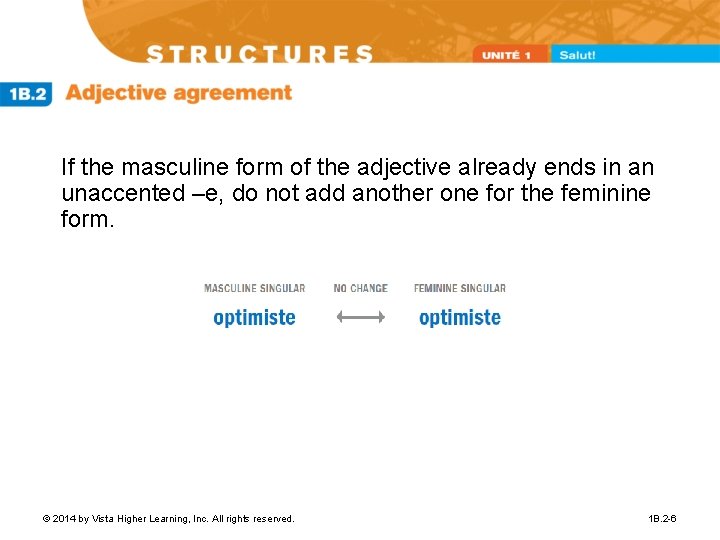
If the masculine form of the adjective already ends in an unaccented –e, do not add another one for the feminine form. © 2014 by Vista Higher Learning, Inc. All rights reserved. 1 B. 2 -6
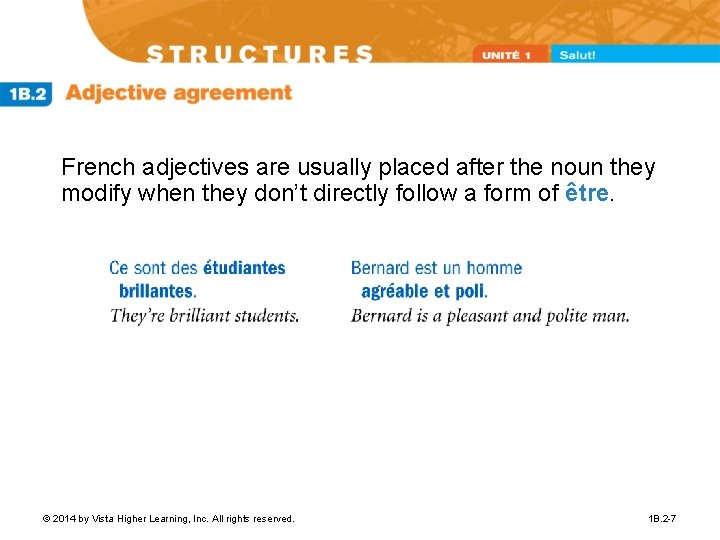
French adjectives are usually placed after the noun they modify when they don’t directly follow a form of être. © 2014 by Vista Higher Learning, Inc. All rights reserved. 1 B. 2 -7

Here are some adjectives of nationality. Note that the -n of adjectives that end in -ien doubles before the final -e of the feminine form: algérienne, canadienne, italienne, vietnamienne. © 2014 by Vista Higher Learning, Inc. All rights reserved. 1 B. 2 -8
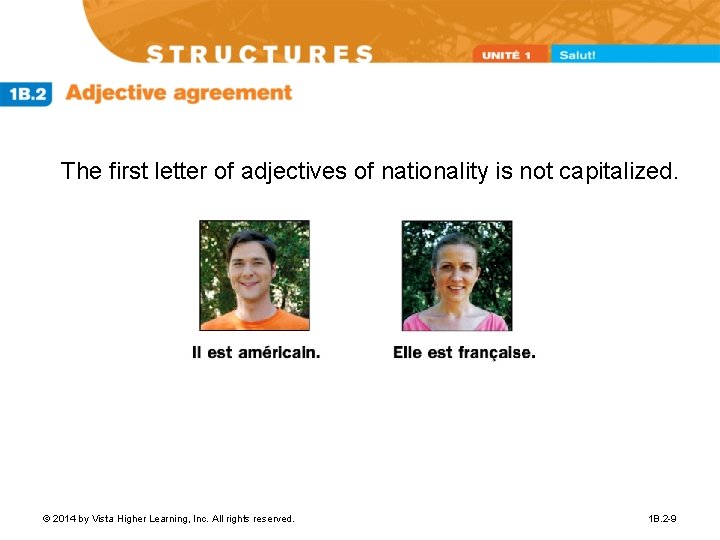
The first letter of adjectives of nationality is not capitalized. © 2014 by Vista Higher Learning, Inc. All rights reserved. 1 B. 2 -9
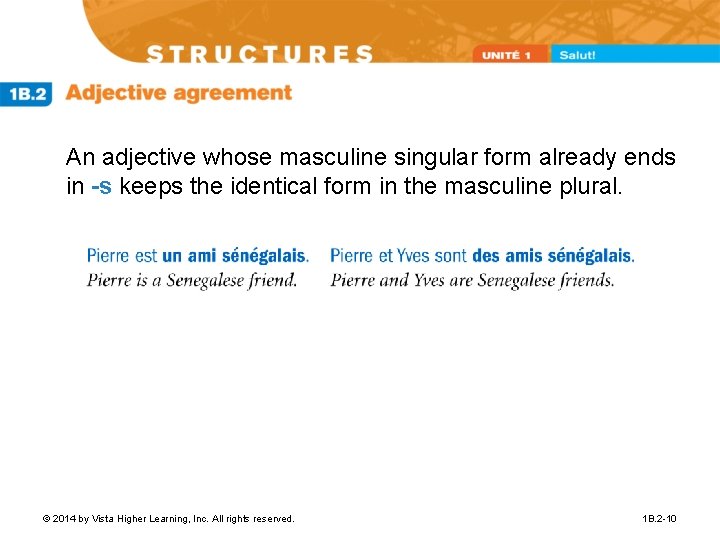
An adjective whose masculine singular form already ends in -s keeps the identical form in the masculine plural. © 2014 by Vista Higher Learning, Inc. All rights reserved. 1 B. 2 -10
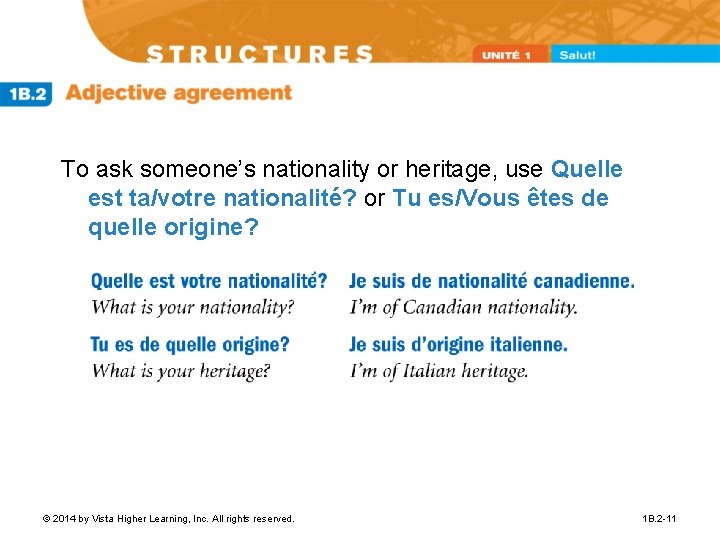
To ask someone’s nationality or heritage, use Quelle est ta/votre nationalité? or Tu es/Vous êtes de quelle origine? © 2014 by Vista Higher Learning, Inc. All rights reserved. 1 B. 2 -11
- Slides: 11