
Poetry Vocabulary List 1 Simile comparing two or
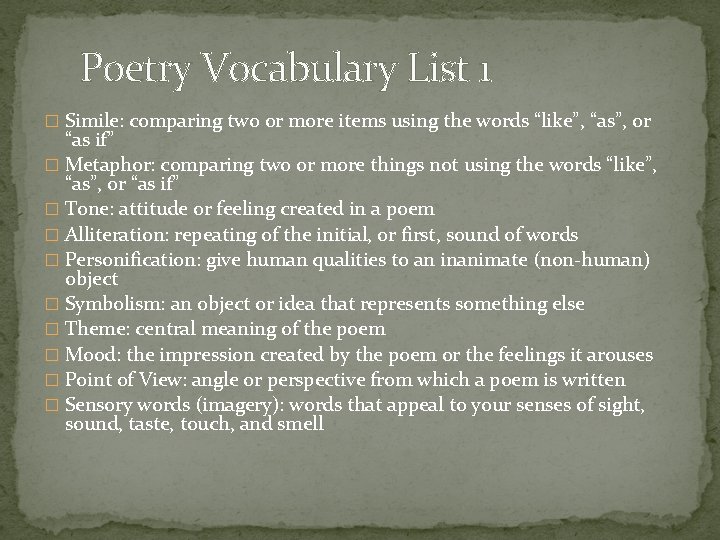
Poetry Vocabulary List 1 � Simile: comparing two or more items using the words “like”, “as”, or “as if” � Metaphor: comparing two or more things not using the words “like”, “as”, or “as if” � Tone: attitude or feeling created in a poem � Alliteration: repeating of the initial, or first, sound of words � Personification: give human qualities to an inanimate (non-human) object � Symbolism: an object or idea that represents something else � Theme: central meaning of the poem � Mood: the impression created by the poem or the feelings it arouses � Point of View: angle or perspective from which a poem is written � Sensory words (imagery): words that appeal to your senses of sight, sound, taste, touch, and smell
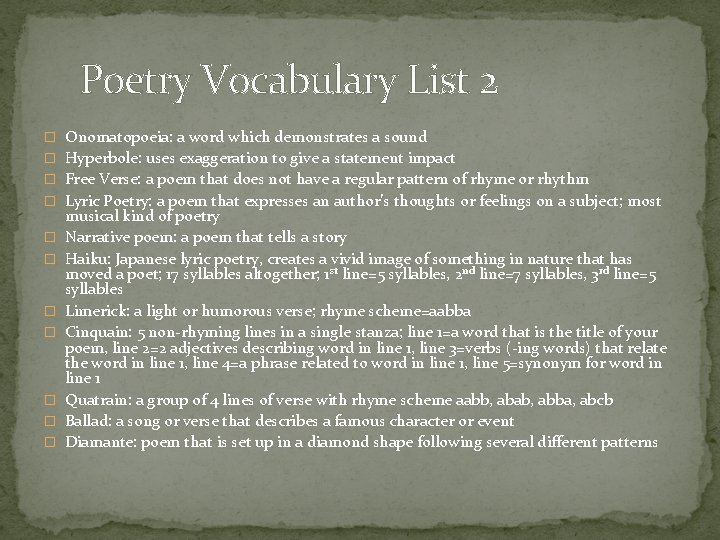
Poetry Vocabulary List 2 � Onomatopoeia: a word which demonstrates a sound � Hyperbole: uses exaggeration to give a statement impact � Free Verse: a poem that does not have a regular pattern of rhyme or rhythm � Lyric Poetry: a poem that expresses an author’s thoughts or feelings on a subject; most � � � � musical kind of poetry Narrative poem: a poem that tells a story Haiku: Japanese lyric poetry, creates a vivid image of something in nature that has moved a poet; 17 syllables altogether; 1 st line=5 syllables, 2 nd line=7 syllables, 3 rd line=5 syllables Limerick: a light or humorous verse; rhyme scheme=aabba Cinquain: 5 non-rhyming lines in a single stanza; line 1=a word that is the title of your poem, line 2=2 adjectives describing word in line 1, line 3=verbs (-ing words) that relate the word in line 1, line 4=a phrase related to word in line 1, line 5=synonym for word in line 1 Quatrain: a group of 4 lines of verse with rhyme scheme aabb, abab, abba, abcb Ballad: a song or verse that describes a famous character or event Diamante: poem that is set up in a diamond shape following several different patterns
- Slides: 2