
POETRY PART 1 Alliteration and Onomatopoeia POETIC DEVICES

- Slides: 12
POETRY PART 1 Alliteration and Onomatopoeia
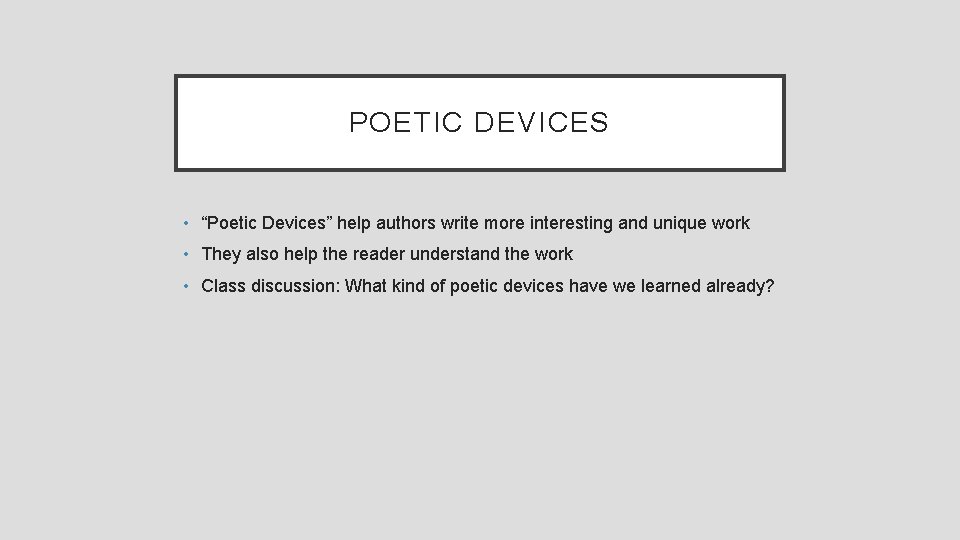
POETIC DEVICES • “Poetic Devices” help authors write more interesting and unique work • They also help the reader understand the work • Class discussion: What kind of poetic devices have we learned already?
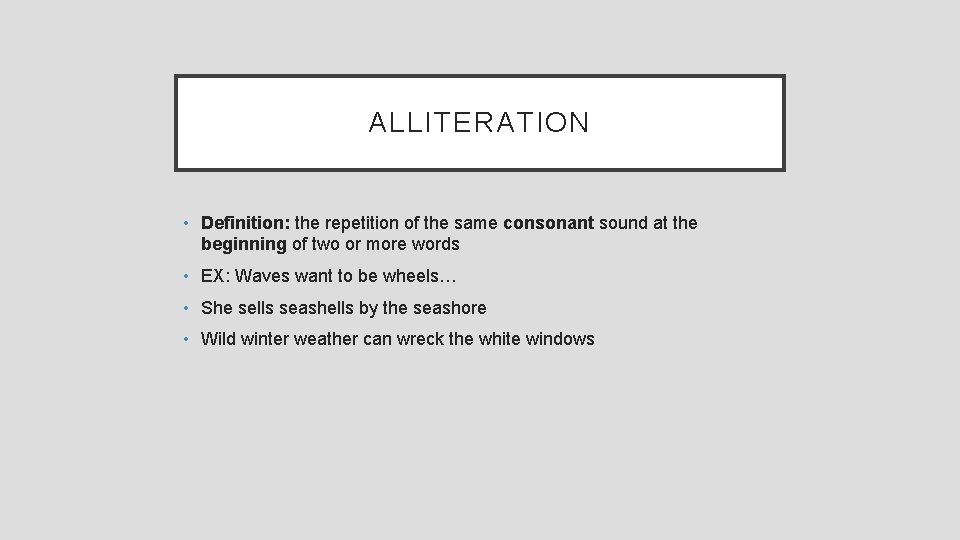
ALLITERATION • Definition: the repetition of the same consonant sound at the beginning of two or more words • EX: Waves want to be wheels… • She sells seashells by the seashore • Wild winter weather can wreck the white windows
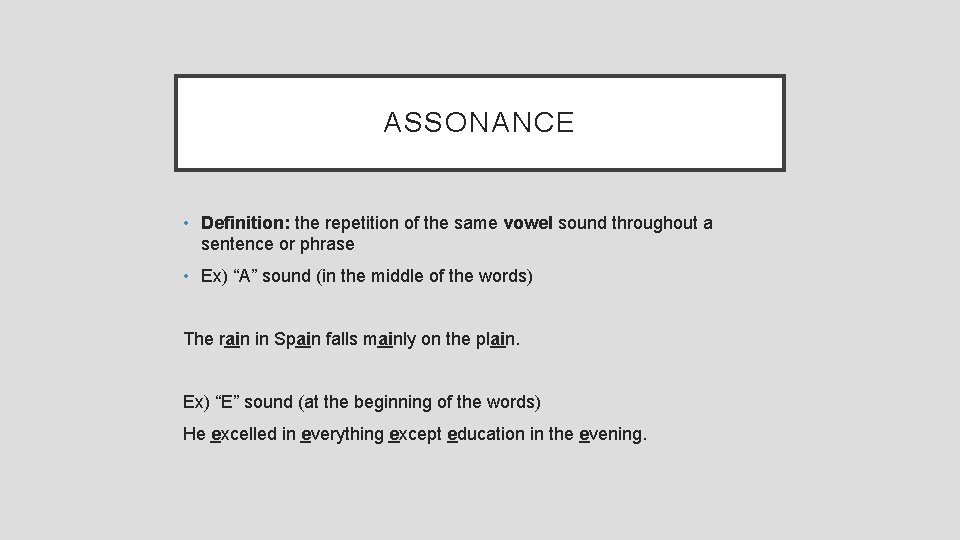
ASSONANCE • Definition: the repetition of the same vowel sound throughout a sentence or phrase • Ex) “A” sound (in the middle of the words) The rain in Spain falls mainly on the plain. Ex) “E” sound (at the beginning of the words) He excelled in everything except education in the evening.
ONOMATOPOEIA • Definition: the use of words that sound like the natural noises they name • EX: Crack, Bang, Pop • Desk Partner Brainstorm! In 5 minutes, write down as many onomatopoeia words as you can, working with your desk partner. • Afterwards we will mega-brainstorm a list together as a class!
REVIEW: BRINGING IT ALL TOGETHER • Khan Academy Video! • https: //www. youtube. com/watch? v=6 d. ACXPir. T 3 s
EXAMPLES: HANDOUT • Working with a partner, each person reads two poems out loud to the other person. • - which one is alliteration? Which one is onomatopoeia? WHY? Find some examples in the story and explain them to your partner.
SILENT READING • Individually, read your poetry text book silently for 15 minutes. Start on page 12. • Find 2 poems that use alliteration or assonance and 2 poems that use onomatopoeia.
SHARING • Share the poems you found with your partner. Did you choose the same ones? • Tell your partner why you choose these poems. What examples of the poetic devices did you find?
WRITING • Try writing your own onomatopoeia poem. • Use as many sound words as you can. • Your poem should be minimum 10 lines! • Add your completed rough draft to your poetry anthology envelope in your binder.
WRAP UP: • Why do poets use these poetic devices? Discuss with your partner and come up with a few reasons to share with the class.
WHY USE THESE POETIC DEVICES?