
Poetry Analysis Using TPCASTT TPCASTT Poetry STOP Dont

- Slides: 24
Poetry Analysis Using TPCASTT
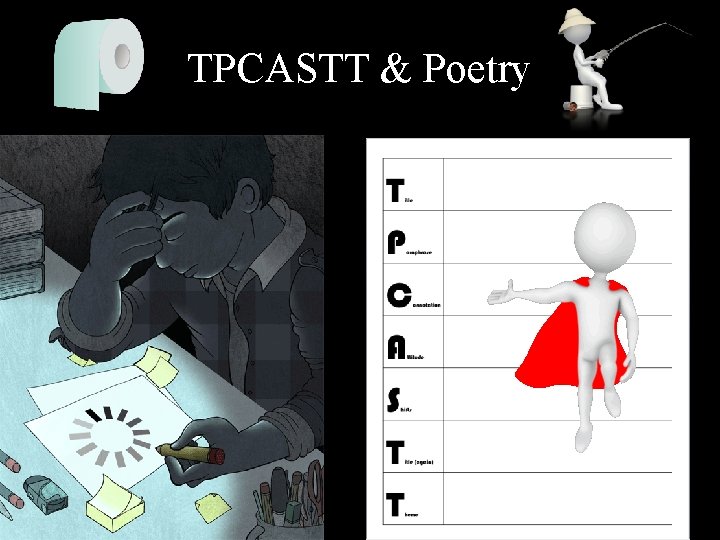
TPCASTT & Poetry
STOP! Don’t read ahead yet! We must first only look at the title!
T is for TITLE • Analyze the title first. • What do you predict this poem will be about? • Write down your predictions. • We will reflect on the title again after we have read the poem.
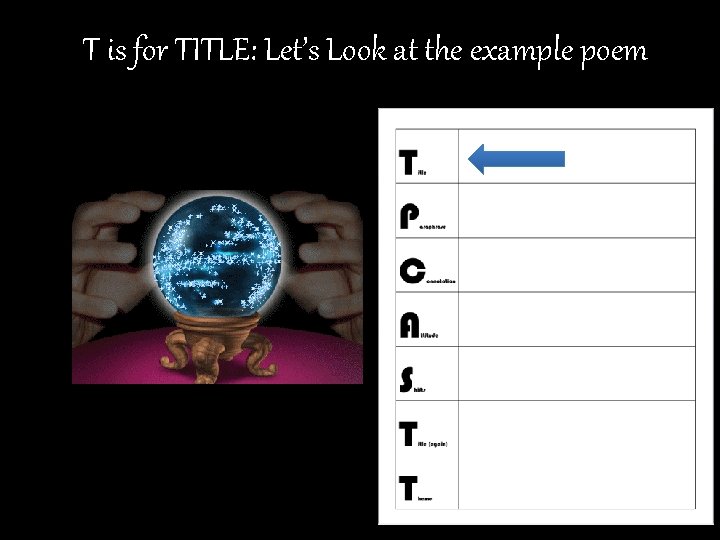
T is for TITLE: Let’s Look at the example poem
P is for PARAPHRASE • Paraphrasing is putting something in your own words. • After reading the poem, rewrite it in your own words. • This may be three sentences or a page, depending on the particular poem.
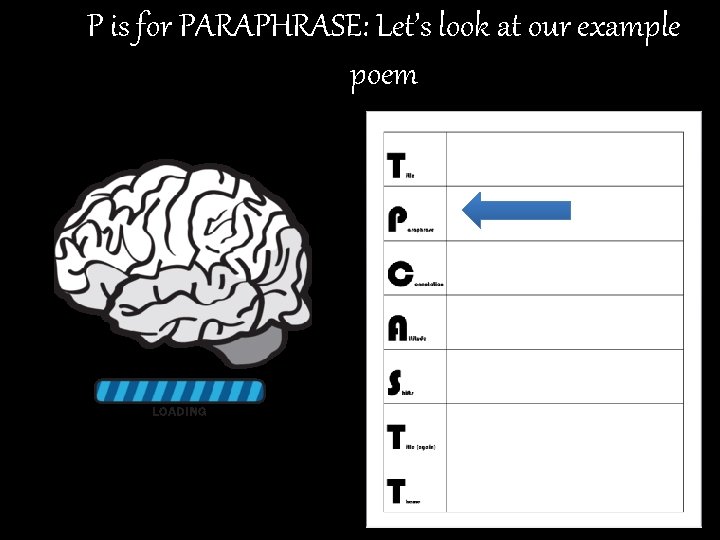
P is for PARAPHRASE: Let’s look at our example poem
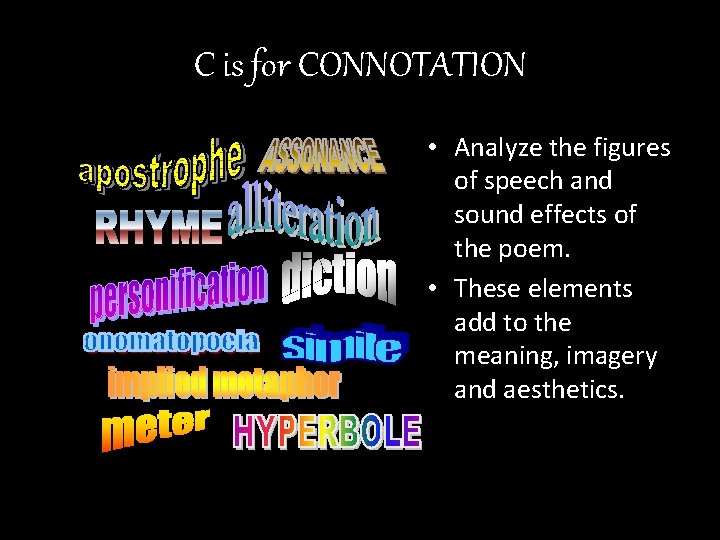
C is for CONNOTATION • Analyze the figures of speech and sound effects of the poem. • These elements add to the meaning, imagery and aesthetics.
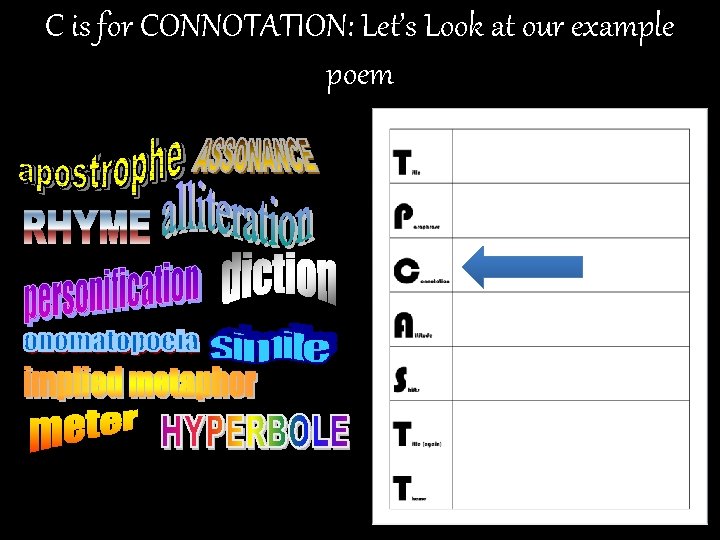
C is for CONNOTATION: Let’s Look at our example poem • Analyze the figures of speech and sound effects of the poem. • These elements add to the meaning, imagery and aesthetics.
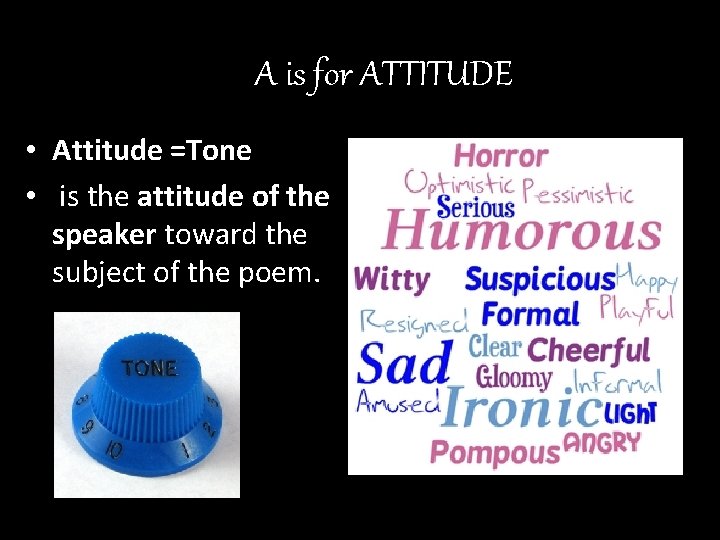
A is for ATTITUDE • Attitude =Tone • is the attitude of the speaker toward the subject of the poem.
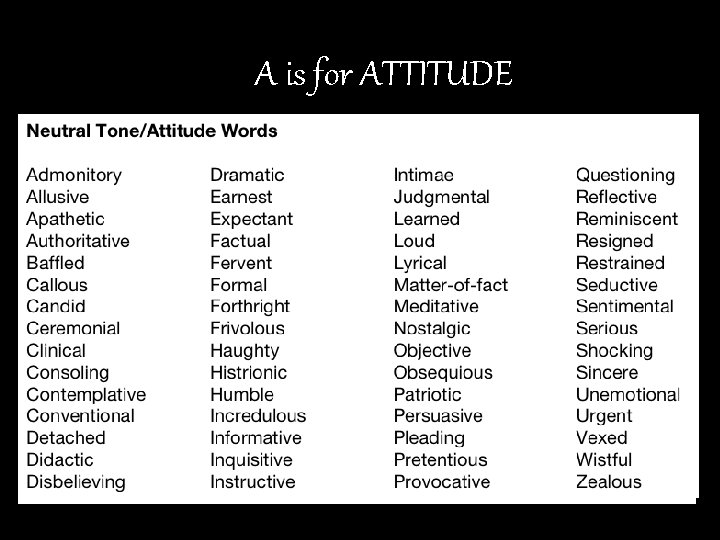
A is for ATTITUDE • Tone terms:
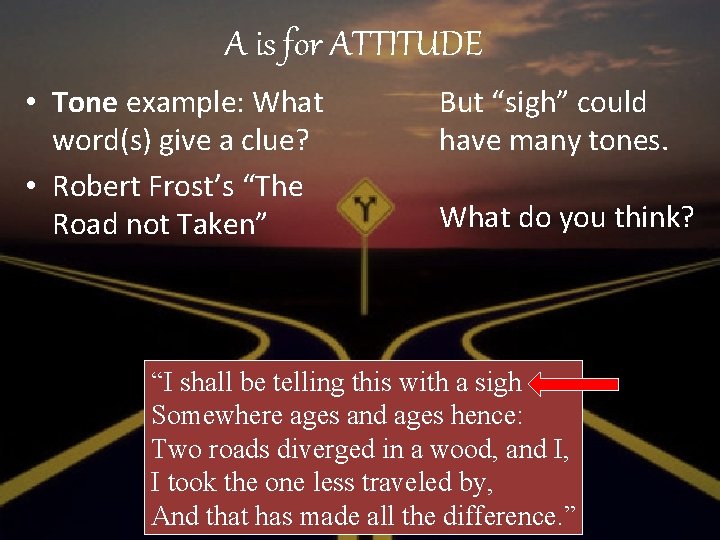
A is for ATTITUDE • Tone example: What word(s) give a clue? • Robert Frost’s “The Road not Taken” But “sigh” could have many tones. What do you think? “I shall be telling this with a sigh Somewhere ages and ages hence: Two roads diverged in a wood, and I, I took the one less traveled by, And that has made all the difference. ”
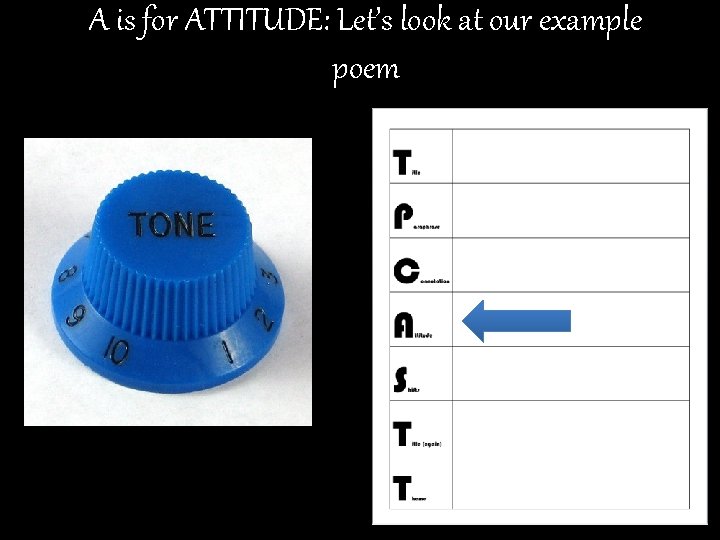
A is for ATTITUDE: Let’s look at our example poem
S is for SHIFT • If there is a change in… – Time – Tone – Speaker This should always be noted as this will also affect the meaning. There can be multiple shifts too!
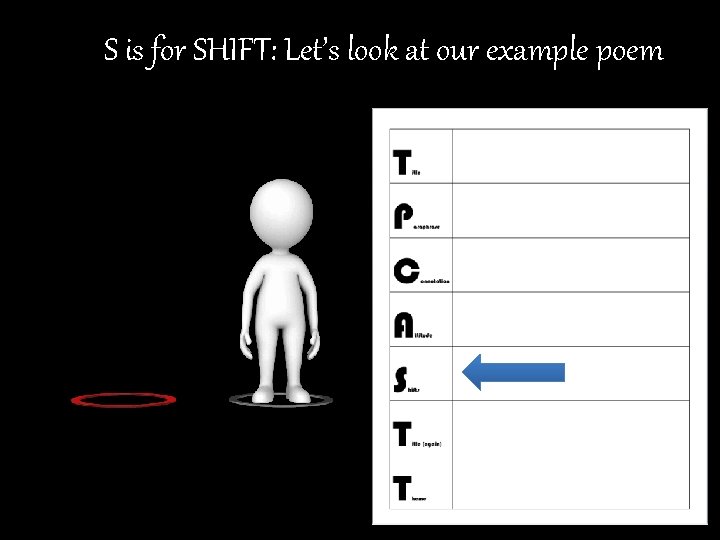
S is for SHIFT: Let’s look at our example poem • If there is a change in… – Time – Tone – Speaker This should always be noted as this will also affect the meaning.
T is for TITLE (again) • At this time, you should reconsider the title. • Were you right in your predictions? • What other meanings might the title have in light of your analysis?
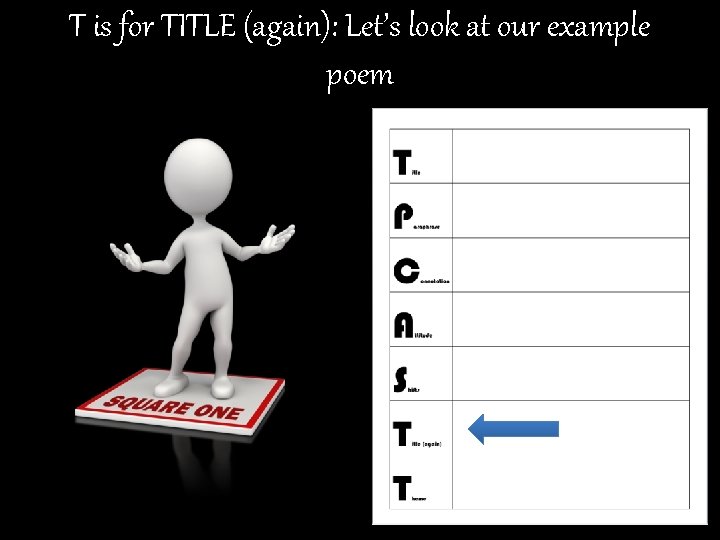
T is for TITLE (again): Let’s look at our example poem • At this time, you should reconsider the title. • Were you right in your predictions? • What other meanings might the title have in light of your analysis? • Next, the biggie….
T is for THEME • As you already know, theme is the general insight into life conveyed by the author through his/her work. • It does not make a judgment. example: “Don’t do drugs” is not a theme. • It merely states something that is true to life and the human condition.
How do I find the THEME? • Look at the other parts of TPCASTT. • What insight are all of these working together to convey? • What is the poet trying to say about life?
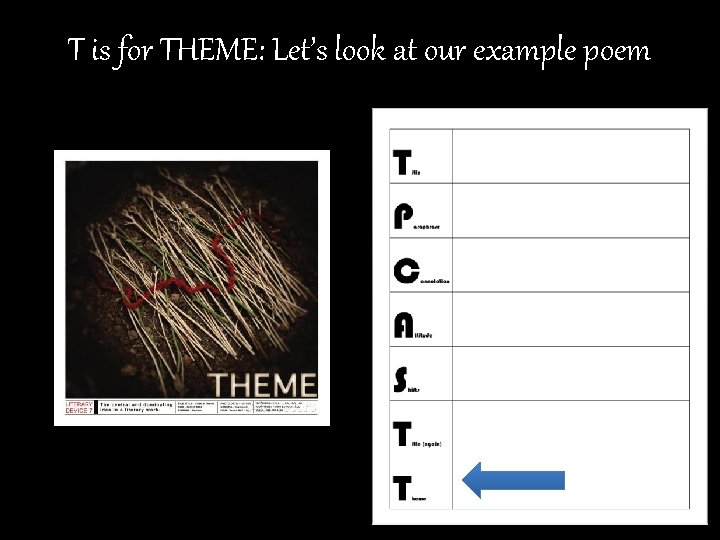
T is for THEME: Let’s look at our example poem
Quick Check! • What does TPCASTT stand for? • Tell a neighbor • Now tell another neighbor
Let’s Try One • In groups of 3, fill out the TPCASTT chart as best you can with a new Dada poem.
Let’s Compare Notes: Swap and find another team of 3 (no same members) • In groups of 3 again, compare what your first group thought about the poem. • Discuss any similarities or differences you have. • Try to come to a consensus on theme.
Ticket Out the Door • On a scratch of paper, write down what step you had the most difficulty with. • Explain why you think so, too.