
Poetic Terns and techniques Junior Cert Poetry Poetic
- Slides: 9
Poetic Terns and techniques Junior Cert Poetry
Poetic terms/Techniques • Speaker/ person: the voice in the poem. This is usually but not always the voice of the poet. • Title: name of the poem • Tone/Mood: how the poet feels about what she/he is writing (joyful, angry, bitter, self-pity etc. ) • Alliteration: when two or more words close to each other or on the same line begin with the same letter. • Safe side, burnt black, cold case
Poetic terms/Techniques • Assonance: When two or more words close to each other or on the same line have the same vowel sound(A, E, O, I, U) • The fat cat sat on the mat. • Simile: When two things are compared using the words ‘as, ‘like, or ‘than’. • As black as coal • He ran like the wind • Faster than the speed of light
Poetic terms/Techniques • Metaphor: when two things are compared without using the words ‘as’, ‘like’ or ‘than’. • You are a star • I turned to ice • My house is a wreck • Onomatopoeia: when a word sounds like what it is describing • The bees buzzed around the flower • I heard the pitter-patter of raindrops on the window
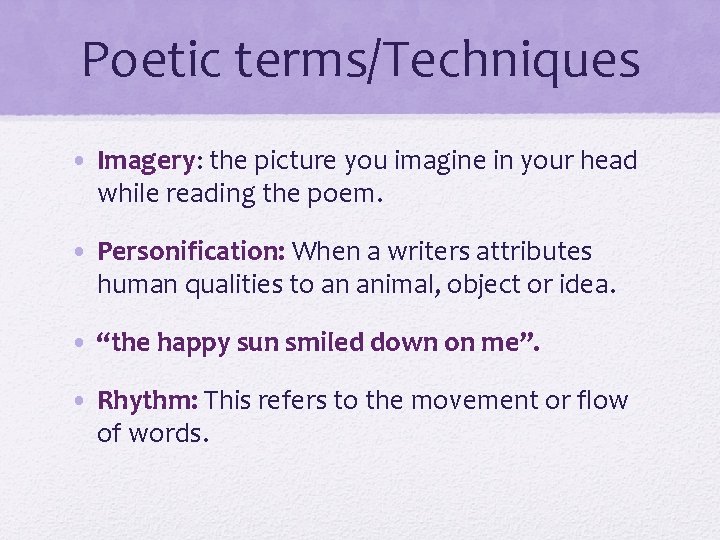
Poetic terms/Techniques • Imagery: the picture you imagine in your head while reading the poem. • Personification: When a writers attributes human qualities to an animal, object or idea. • “the happy sun smiled down on me”. • Rhythm: This refers to the movement or flow of words.
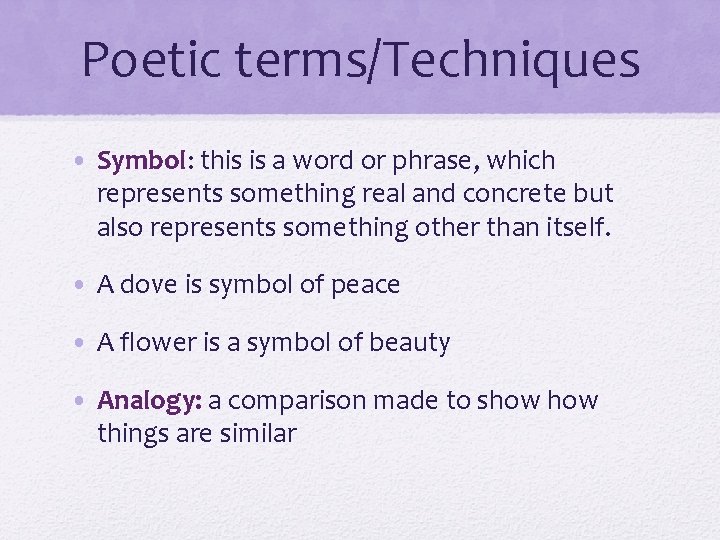
Poetic terms/Techniques • Symbol: this is a word or phrase, which represents something real and concrete but also represents something other than itself. • A dove is symbol of peace • A flower is a symbol of beauty • Analogy: a comparison made to show things are similar
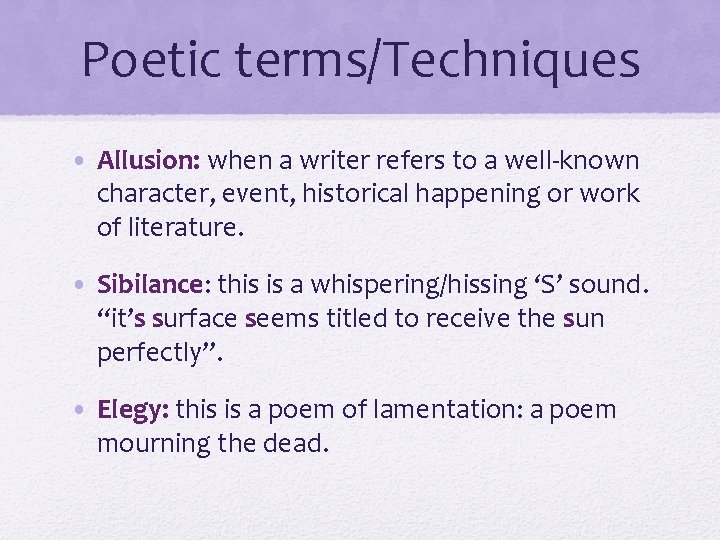
Poetic terms/Techniques • Allusion: when a writer refers to a well-known character, event, historical happening or work of literature. • Sibilance: this is a whispering/hissing ‘S’ sound. “it’s surface seems titled to receive the sun perfectly”. • Elegy: this is a poem of lamentation: a poem mourning the dead.
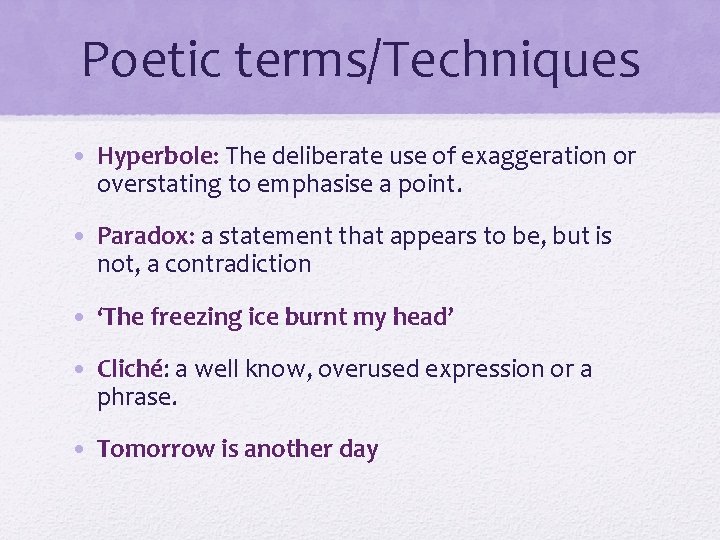
Poetic terms/Techniques • Hyperbole: The deliberate use of exaggeration or overstating to emphasise a point. • Paradox: a statement that appears to be, but is not, a contradiction • ‘The freezing ice burnt my head’ • Cliché: a well know, overused expression or a phrase. • Tomorrow is another day
Poetic terms/Techniques • Epiphany: this refers to a moment of insight/ understanding. • Irony: verbal irony occurs when one thing is said, but the opposite is meant. ‘irony of a situation occurs when a situation is very different from what the protagonist believes it to be