
Poetic Techniques Ms Deasy Hi Hello What is
- Slides: 34
Poetic Techniques Ms. Deasy Hi! Hello!
What is Poetry? - - Poetry is a type of literature based on words and rhythm. In poetry, words are put together to make different sounds, images and ideas. N. B! Not all poems rhyme. Poems can vary in length, style, techniques and themes.
Poetic Techniques There are many different types of poetic techniques. Poets use these techniques to emphasize a point. Poets also use these techniques to highlight a certain theme. Poets may also use these techniques to provoke an emotional reaction from the reader.
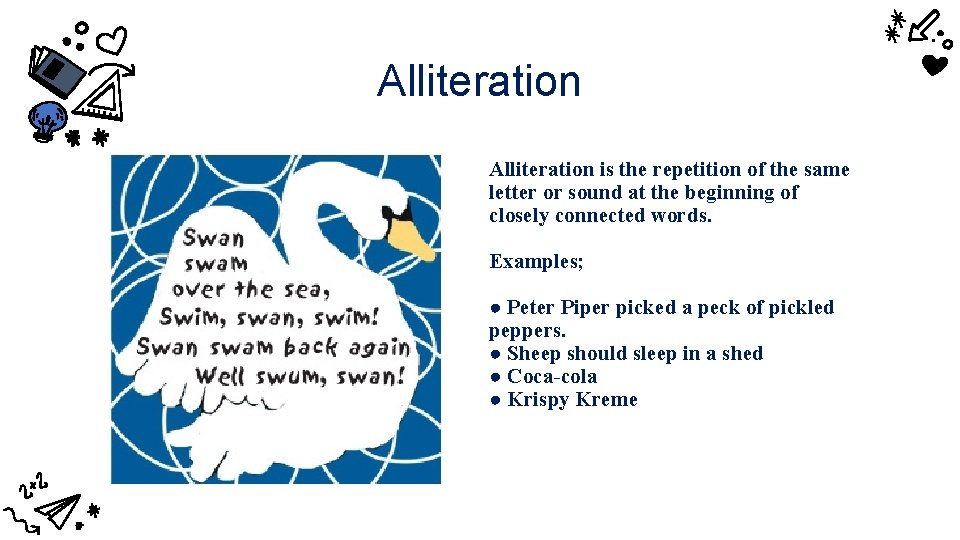
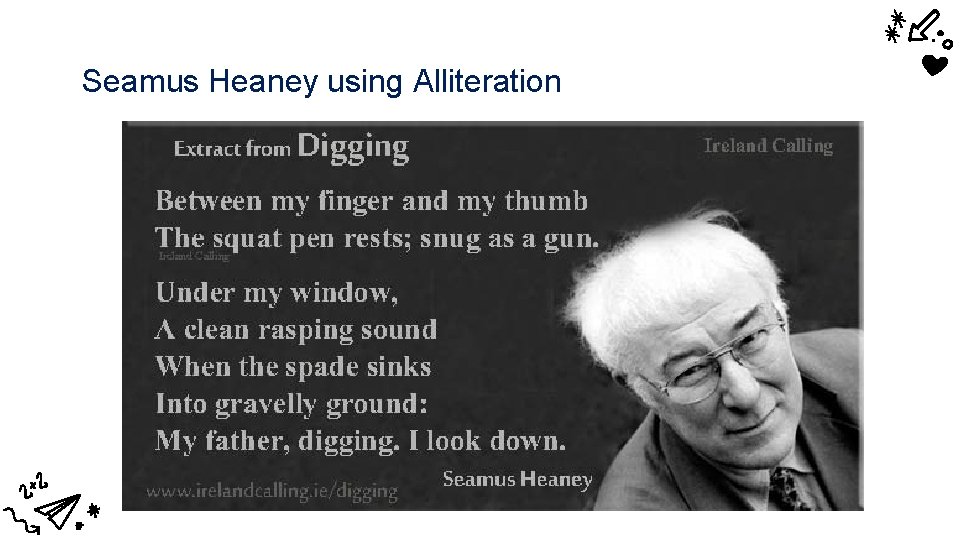
Alliteration is the repetition of the same letter or sound at the beginning of closely connected words. Examples; ● Peter Piper picked a peck of pickled peppers. ● Sheep should sleep in a shed ● Coca-cola ● Krispy Kreme
Seamus Heaney using Alliteration
Can you think of any examples of Alliteration?
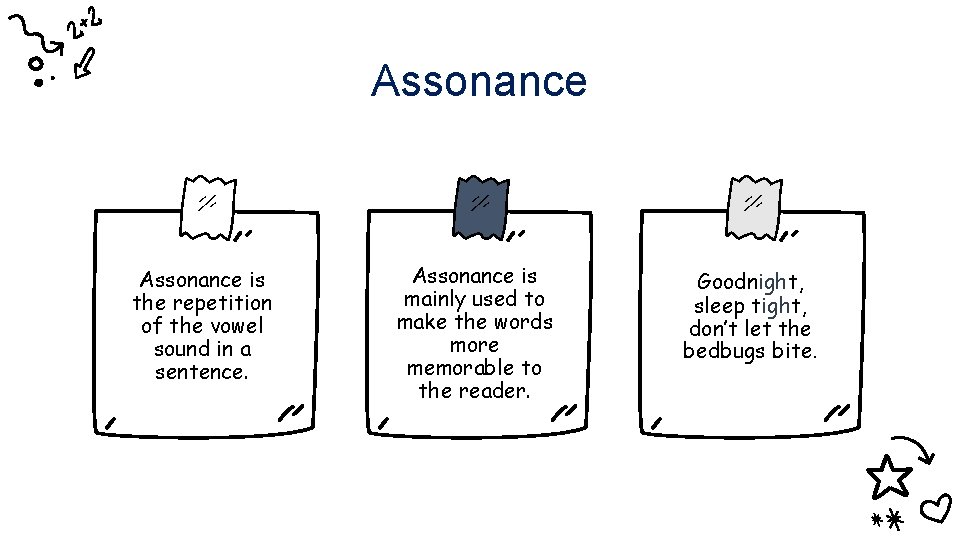
Assonance is the repetition of the vowel sound in a sentence. Assonance is mainly used to make the words more memorable to the reader. Goodnight, sleep tight, don’t let the bedbugs bite.
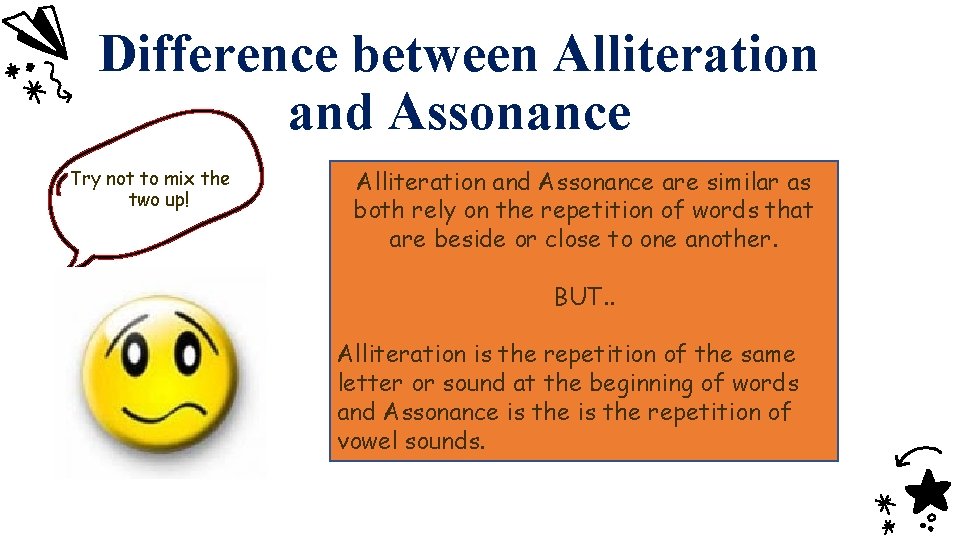
Difference between Alliteration and Assonance Try not to mix the two up! Alliteration and Assonance are similar as both rely on the repetition of words that are beside or close to one another. BUT. . Alliteration is the repetition of the same letter or sound at the beginning of words and Assonance is the repetition of vowel sounds.
Allusion A reference to another writer or to something else which is not really part of the main body of the poem. ● “He was a real Romeo with the ladies. ” ● Romeo was a character in Shakespeare’s play, Romeo and Juliet, and was very romantic in expressing his love for Juliet.
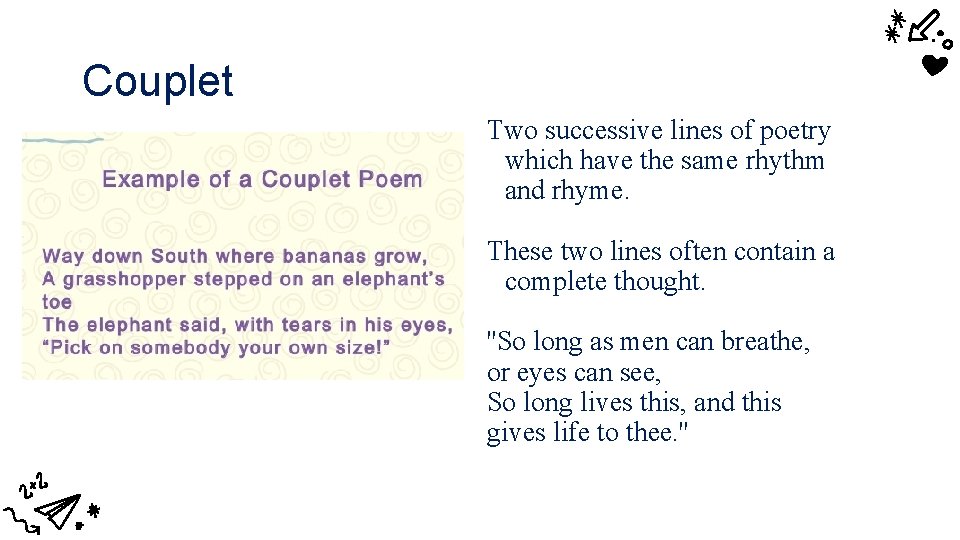
Couplet Two successive lines of poetry which have the same rhythm and rhyme. These two lines often contain a complete thought. ''So long as men can breathe, or eyes can see, So long lives this, and this gives life to thee. ''
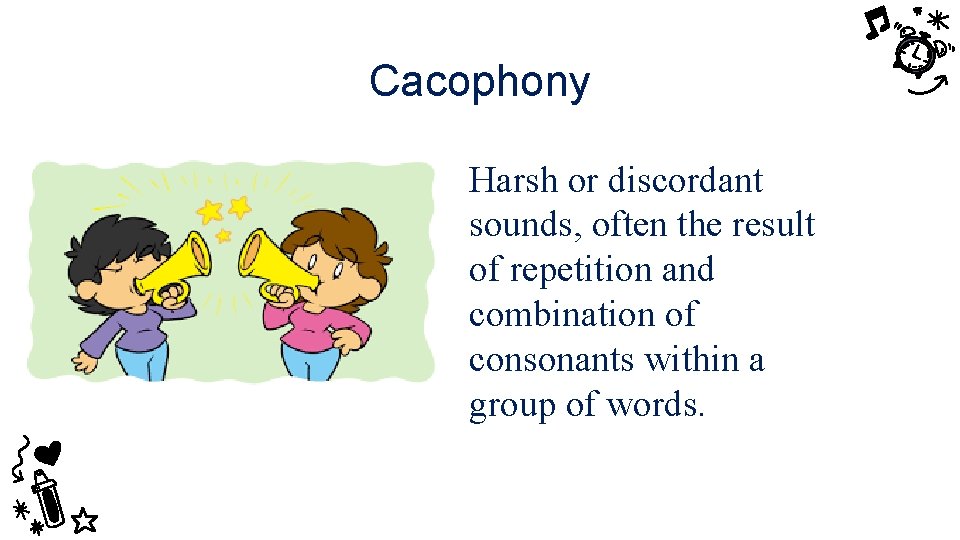
Cacophony Harsh or discordant sounds, often the result of repetition and combination of consonants within a group of words.
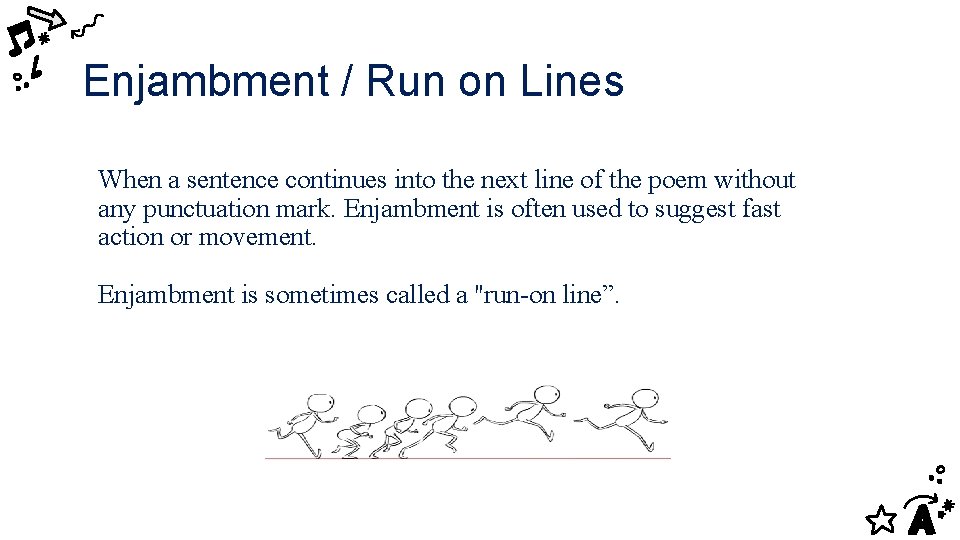
Enjambment / Run on Lines When a sentence continues into the next line of the poem without any punctuation mark. Enjambment is often used to suggest fast action or movement. Enjambment is sometimes called a ''run-on line”.
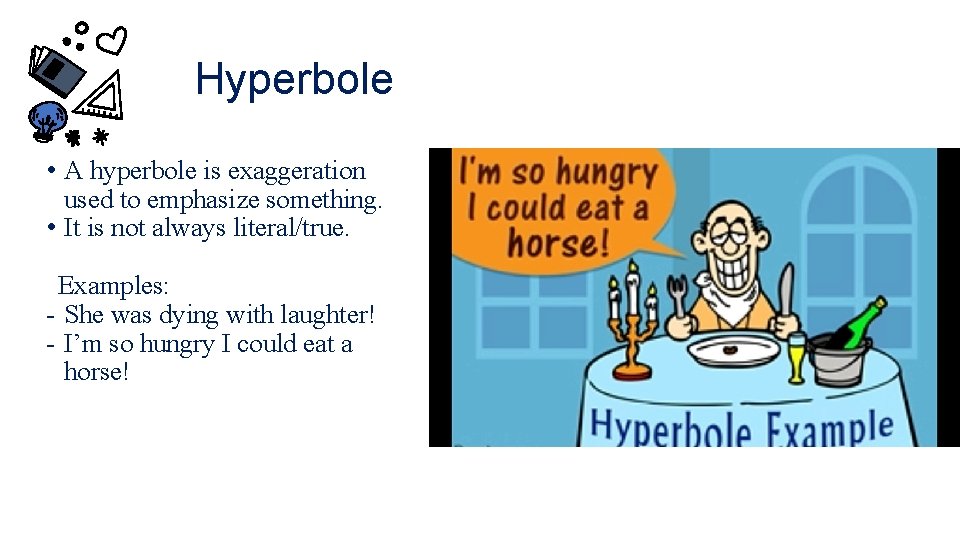
Hyperbole • A hyperbole is exaggeration used to emphasize something. • It is not always literal/true. Examples: - She was dying with laughter! - I’m so hungry I could eat a horse!
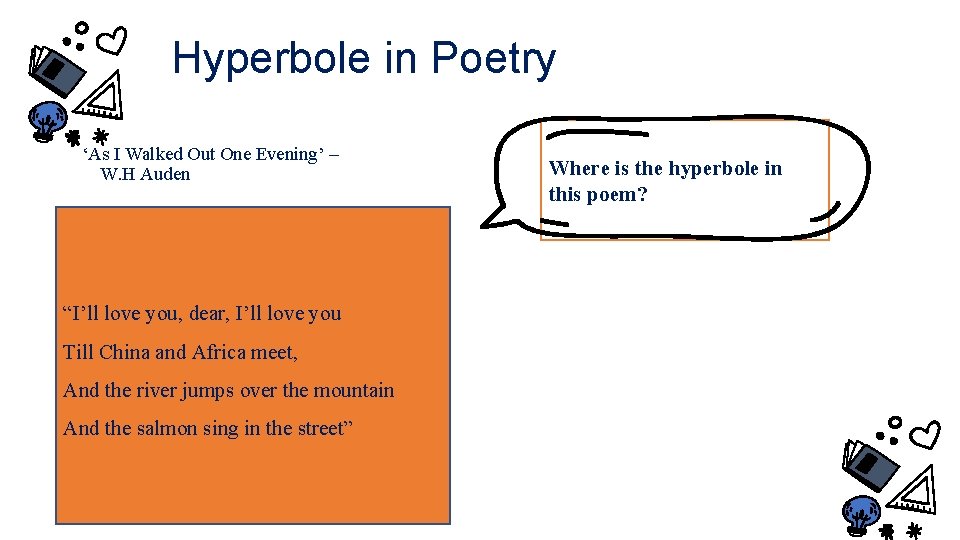
Hyperbole in Poetry ‘As I Walked Out One Evening’ – W. H Auden “I’ll love you, dear, I’ll love you Till China and Africa meet, And the river jumps over the mountain And the salmon sing in the street” Where is the hyperbole in this poem?
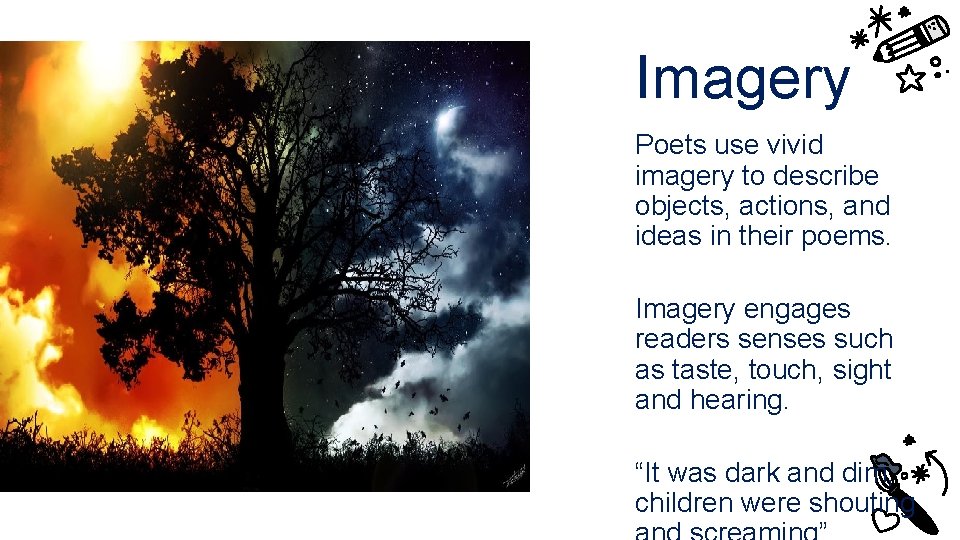
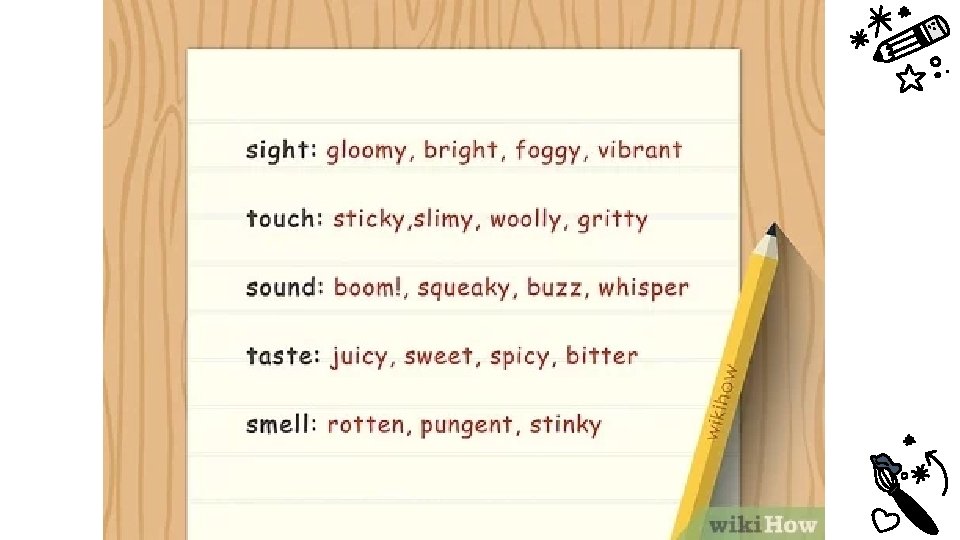
Imagery Poets use vivid imagery to describe objects, actions, and ideas in their poems. Imagery engages readers senses such as taste, touch, sight and hearing. “It was dark and dim, children were shouting
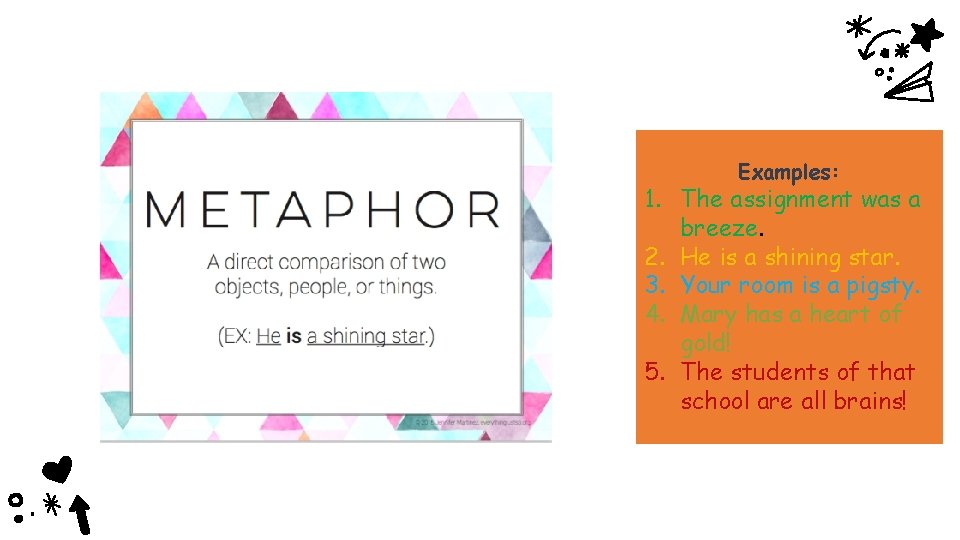
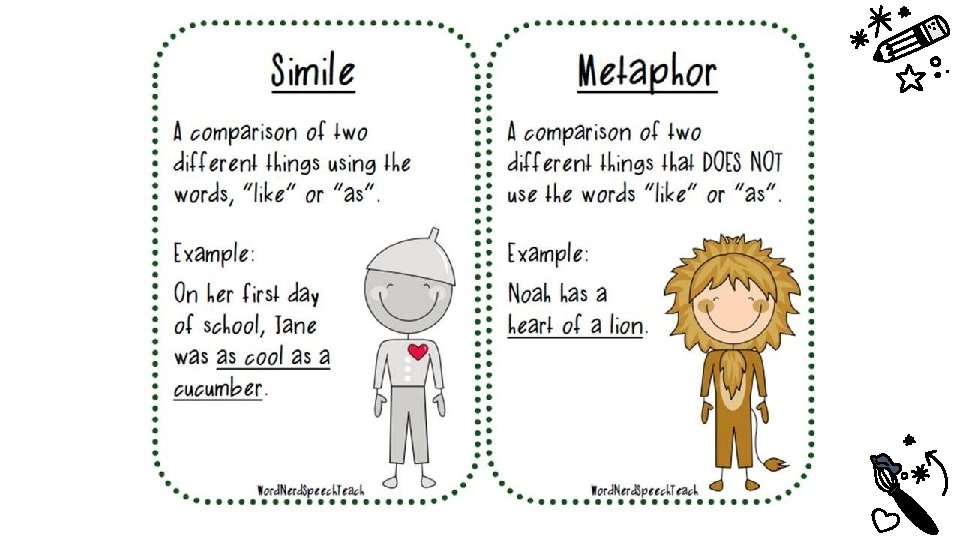
Examples: 1. The assignment was a breeze. 2. He is a shining star. 3. Your room is a pigsty. 4. Mary has a heart of gold! 5. The students of that school are all brains!
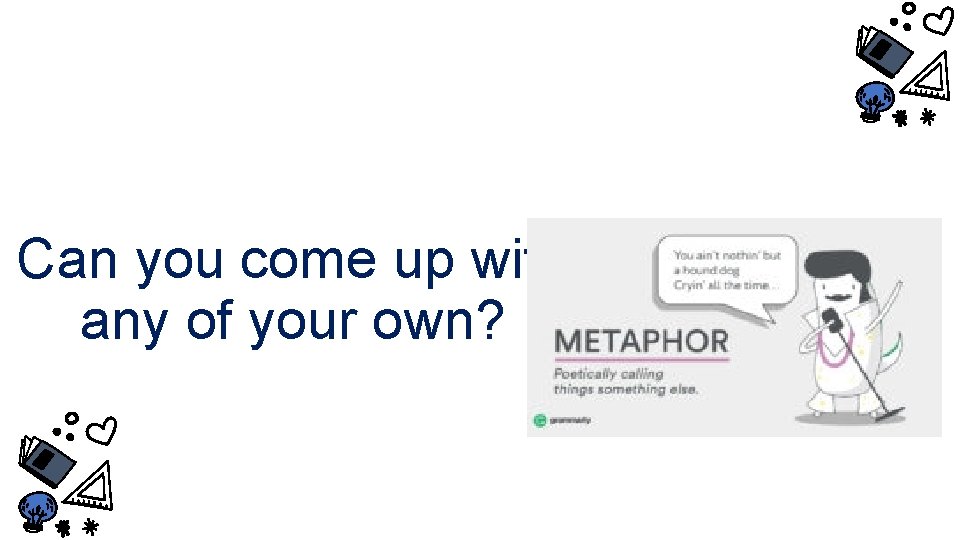
Can you come up with any of your own?
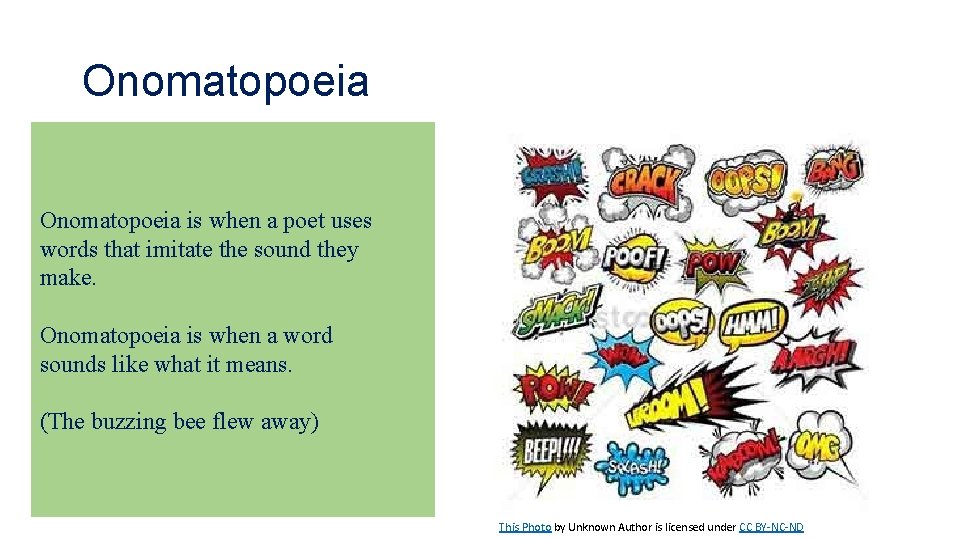
Onomatopoeia is when a poet uses words that imitate the sound they make. Onomatopoeia is when a word sounds like what it means. (The buzzing bee flew away) This Photo by Unknown Author is licensed under CC BY-NC-ND
Onomatopoeia ‘Thud’, ‘crash’, ‘bang’ and ‘buzz’ are all examples. Can you think of any more?
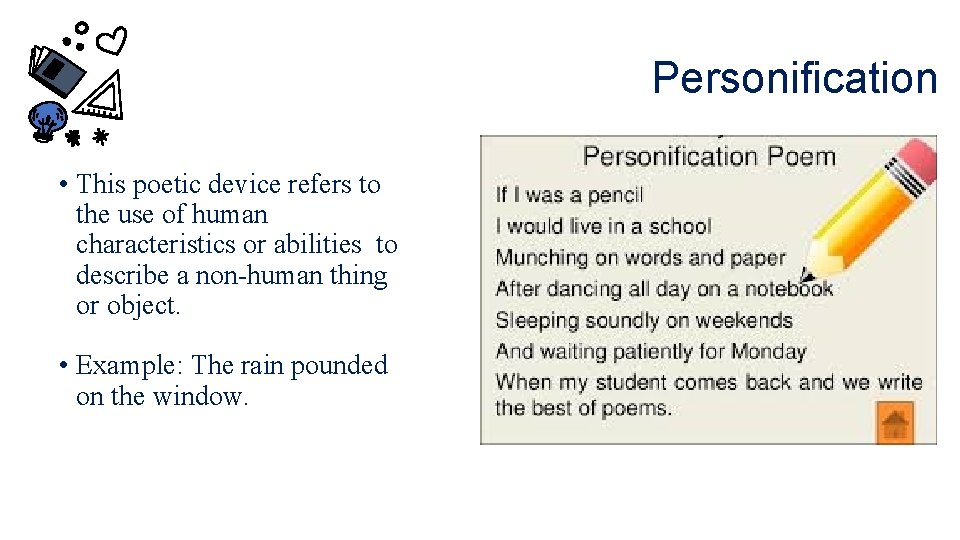
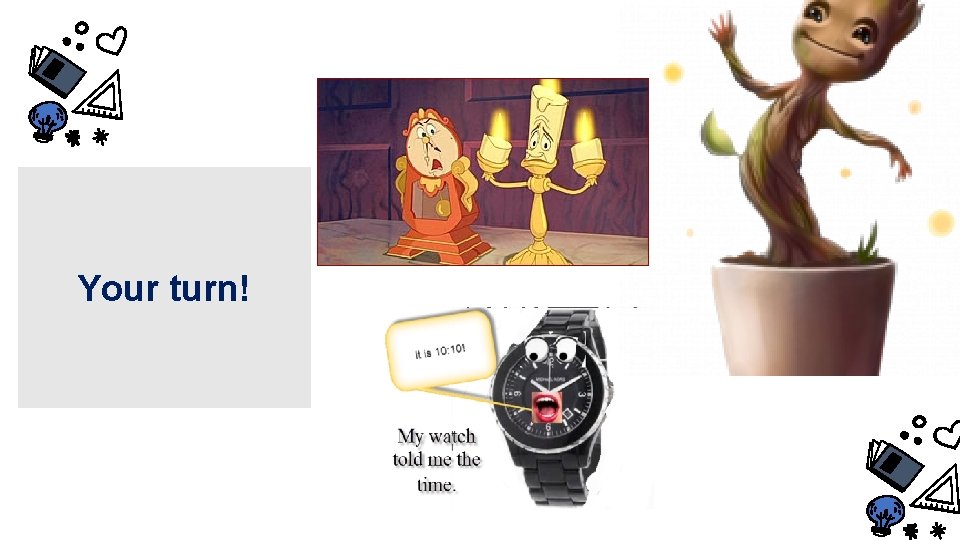
Personification • This poetic device refers to the use of human characteristics or abilities to describe a non-human thing or object. • Example: The rain pounded on the window.
Your turn!
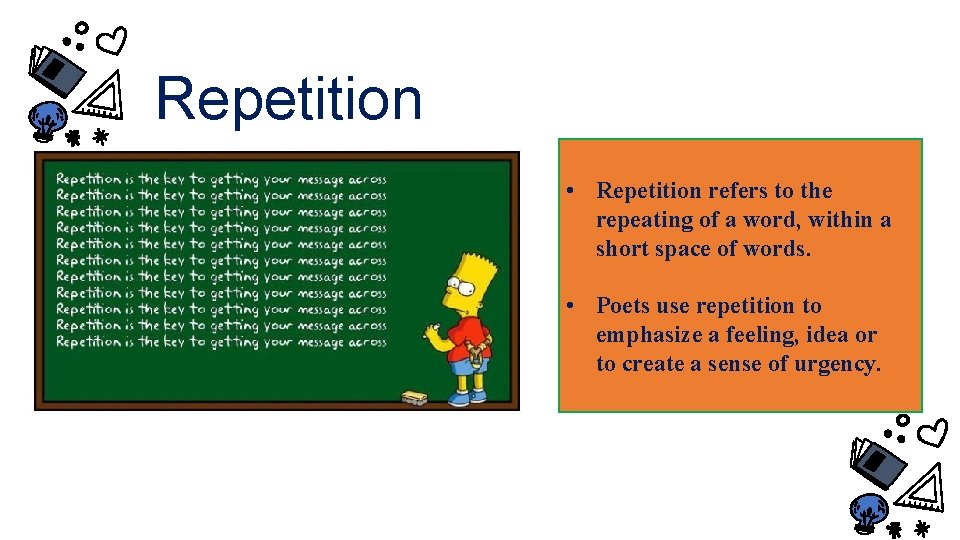
Repetition • Repetition refers to the repeating of a word, within a short space of words. • Poets use repetition to emphasize a feeling, idea or to create a sense of urgency.
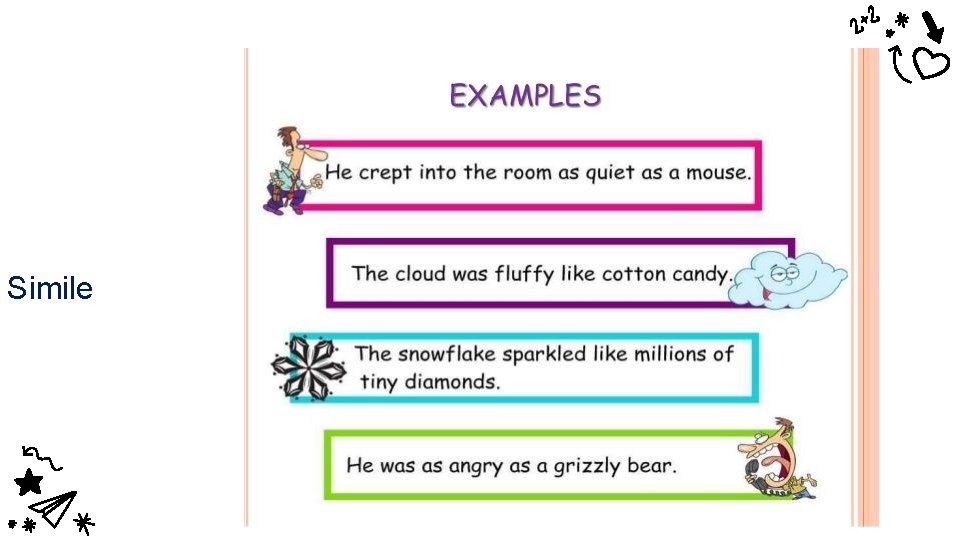
Simile • A simile is a figure of speech that compares two things, using the words ‘like’ or ‘as’. 1. 2. 3. 4. 5. 6. 7. As brave as a lion. They fought like cats and dogs. He is as strong as an ox. As light as a feather. As cold as ice. As black as coal. Last night, I slept like a log.
Simile
Your turn to come up with some similes
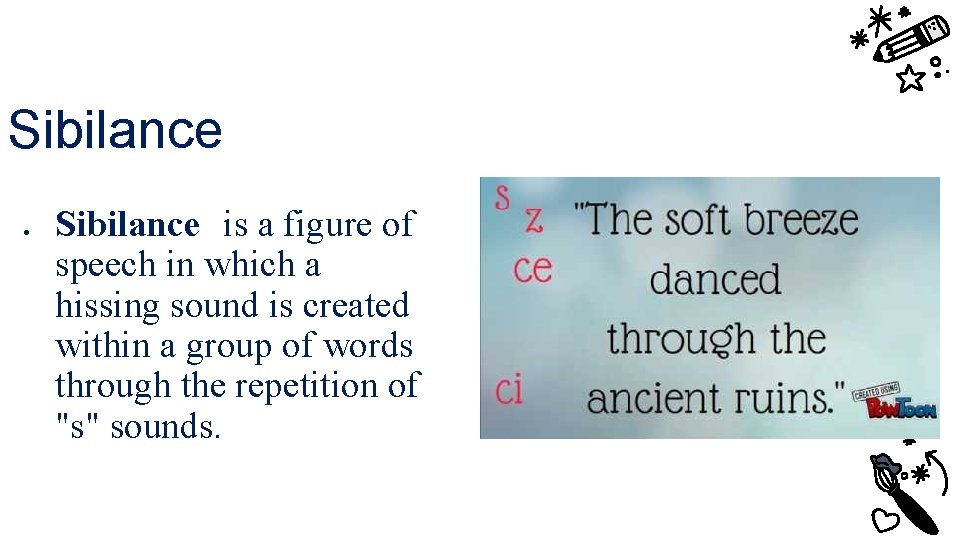
Sibilance ● Sibilance is a figure of speech in which a hissing sound is created within a group of words through the repetition of "s" sounds.
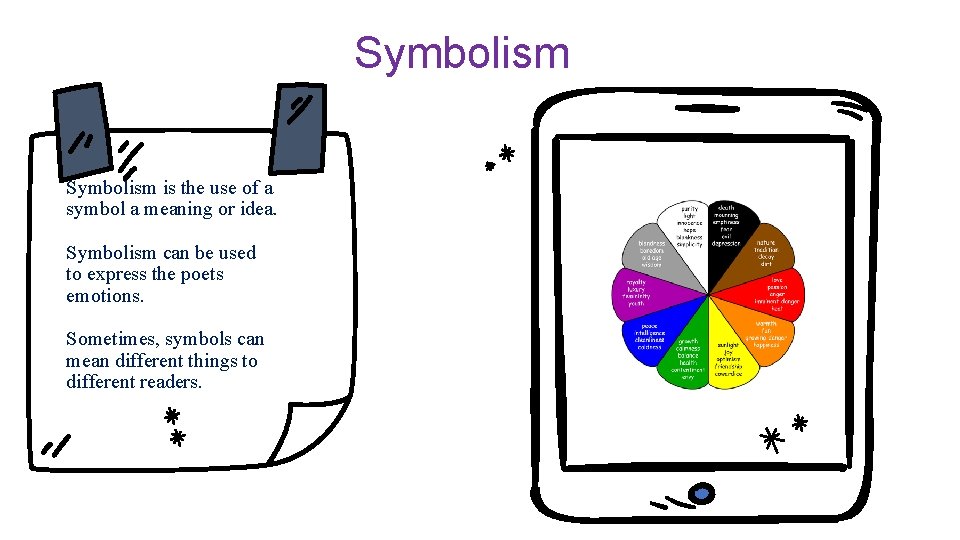
Symbolism is the use of a symbol a meaning or idea. Symbolism can be used to express the poets emotions. Sometimes, symbols can mean different things to different readers.
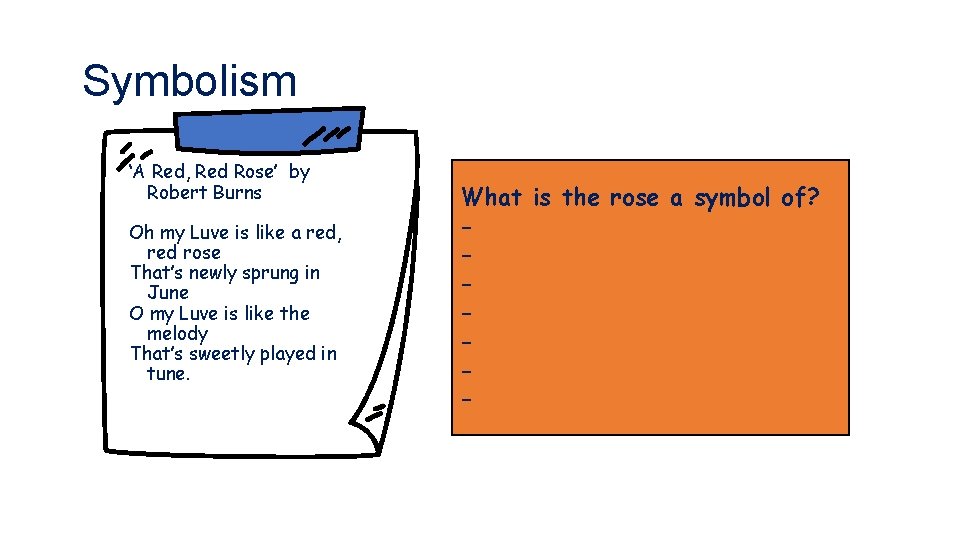
Symbolism ‘A Red, Red Rose’ by Robert Burns Oh my Luve is like a red, red rose That’s newly sprung in June O my Luve is like the melody That’s sweetly played in tune. What is the rose a symbol of? -
Theme The main message of the poem – what the poem is about. It is not the story of the poem.
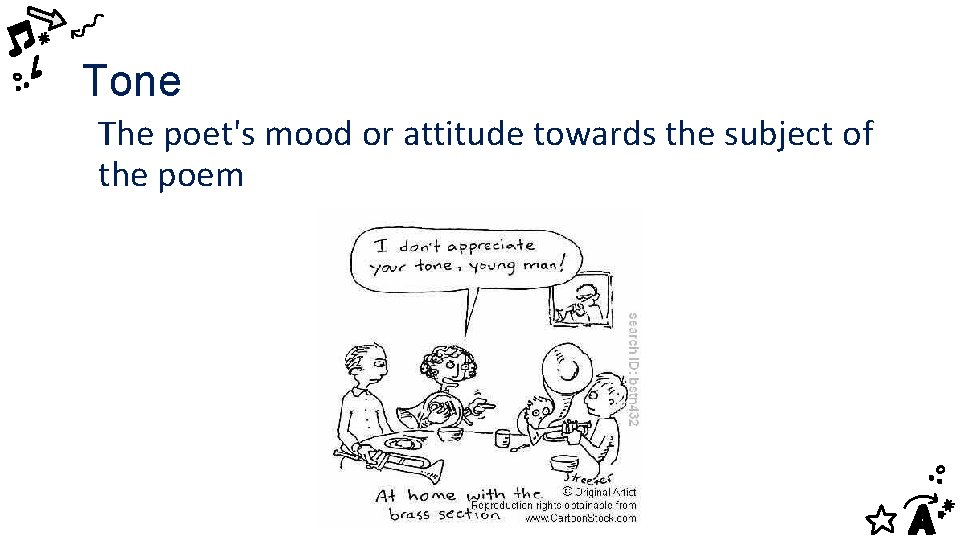
Tone The poet's mood or attitude towards the subject of the poem
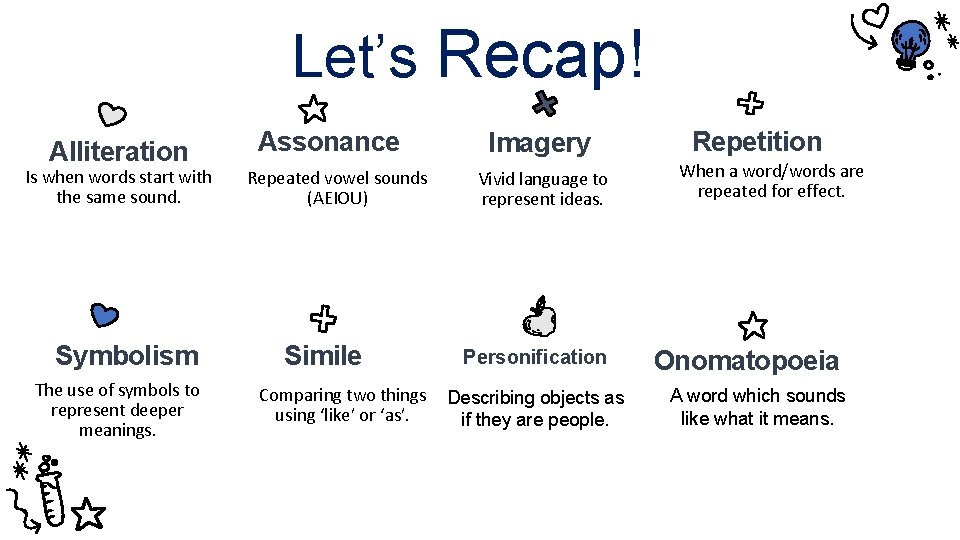
Let’s Recap! Alliteration Is when words start with the same sound. Symbolism The use of symbols to represent deeper meanings. Assonance Repeated vowel sounds (AEIOU) Simile Comparing two things using ‘like’ or ‘as’. Imagery Vivid language to represent ideas. Personification Describing objects as if they are people. Repetition When a word/words are repeated for effect. Onomatopoeia A word which sounds like what it means.
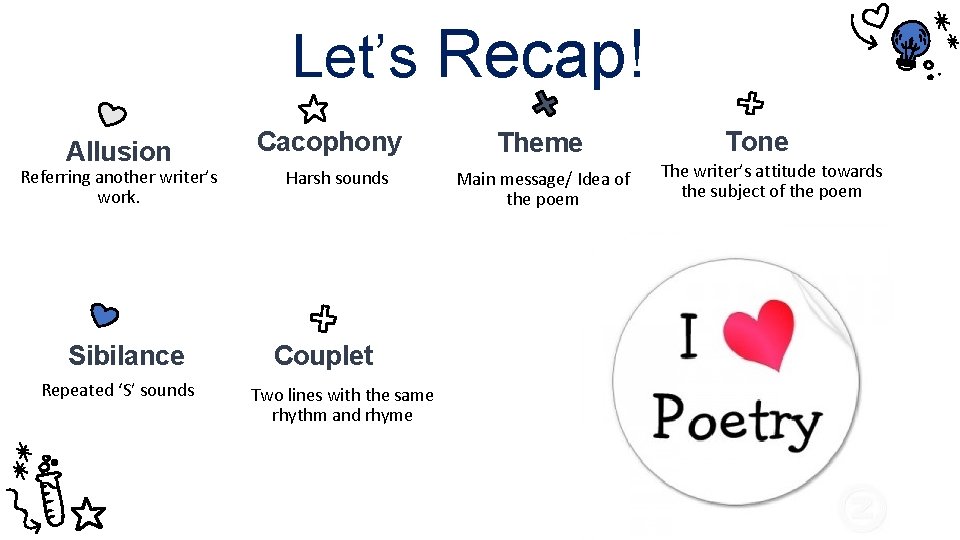
Let’s Recap! Allusion Referring another writer’s work. Sibilance Repeated ‘S’ sounds Cacophony Harsh sounds Couplet Two lines with the same rhythm and rhyme Theme Main message/ Idea of the poem Tone The writer’s attitude towards the subject of the poem