
Poaceae Gramineae An ReIntroduction What is a Grass





- Slides: 33
Poaceae Gramineae An Re-Introduction
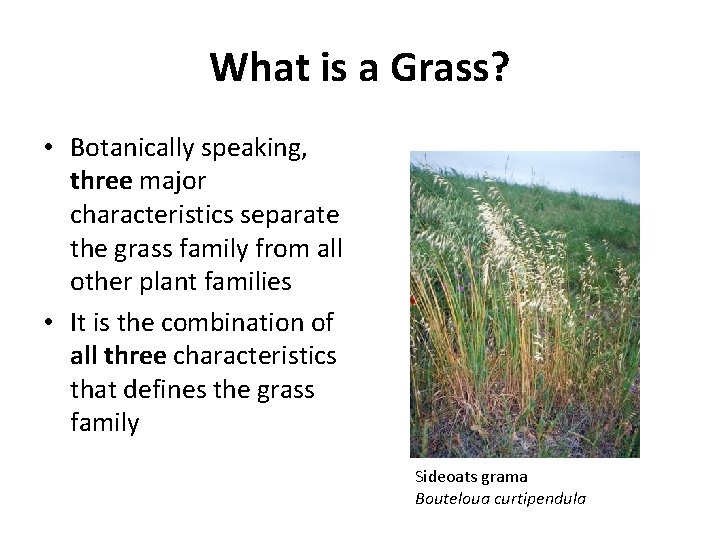
What is a Grass? • Botanically speaking, three major characteristics separate the grass family from all other plant families • It is the combination of all three characteristics that defines the grass family Sideoats grama Bouteloua curtipendula
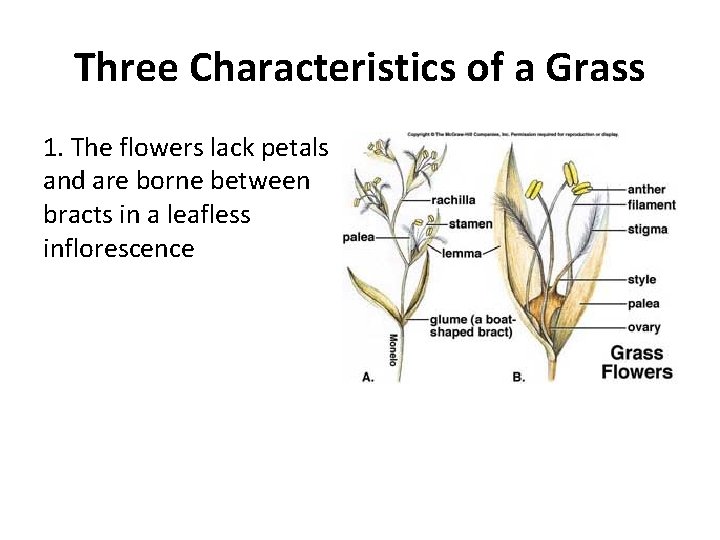
Three Characteristics of a Grass 1. The flowers lack petals and are borne between bracts in a leafless inflorescence
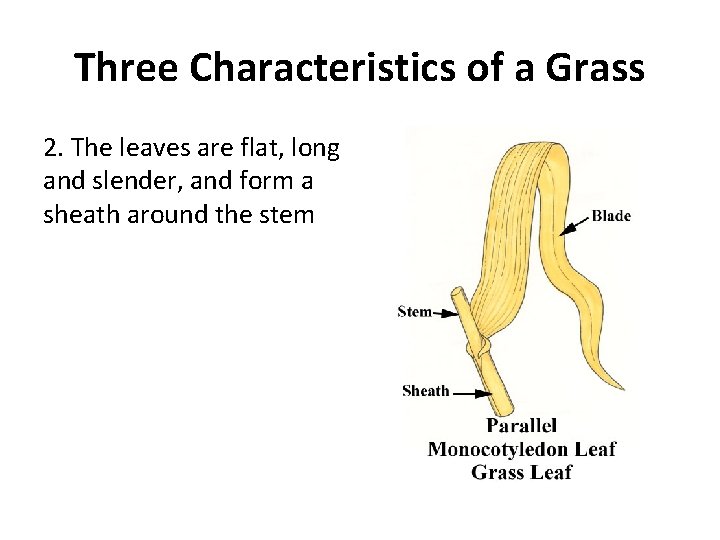
Three Characteristics of a Grass 2. The leaves are flat, long and slender, and form a sheath around the stem
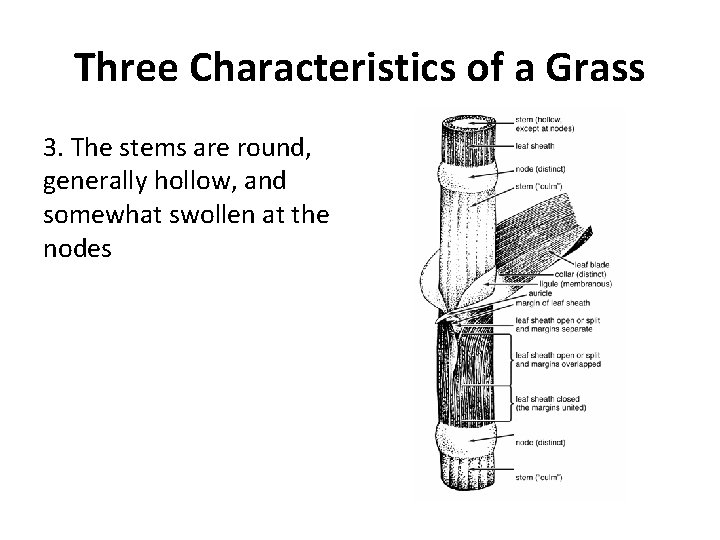
Three Characteristics of a Grass 3. The stems are round, generally hollow, and somewhat swollen at the nodes
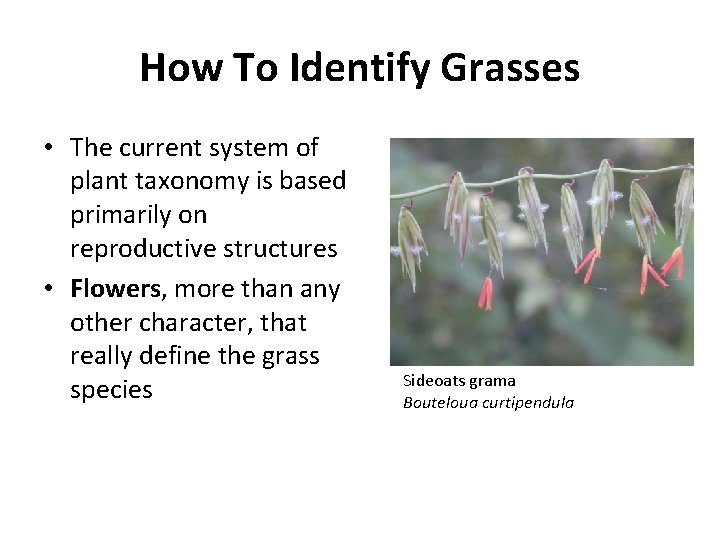
How To Identify Grasses • The current system of plant taxonomy is based primarily on reproductive structures • Flowers, more than any other character, that really define the grass species Sideoats grama Bouteloua curtipendula
How To Identify Grasses • Grasses are difficult to identify because many of their reproductive and vegetative structures are unique to the family – Also very small, making observation extremely tedious
How To Identify Grasses • Need a good understanding of what these structures are, and where they are located
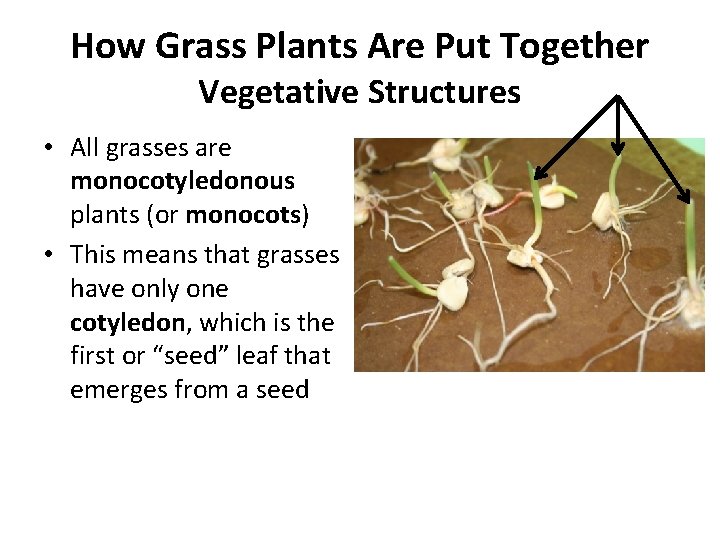
How Grass Plants Are Put Together Vegetative Structures • All grasses are monocotyledonous plants (or monocots) • This means that grasses have only one cotyledon, which is the first or “seed” leaf that emerges from a seed
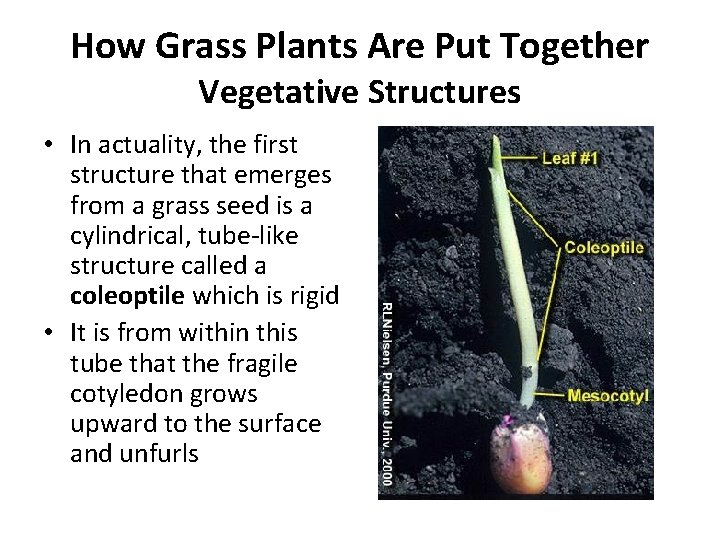
How Grass Plants Are Put Together Vegetative Structures • In actuality, the first structure that emerges from a grass seed is a cylindrical, tube-like structure called a coleoptile which is rigid • It is from within this tube that the fragile cotyledon grows upward to the surface and unfurls
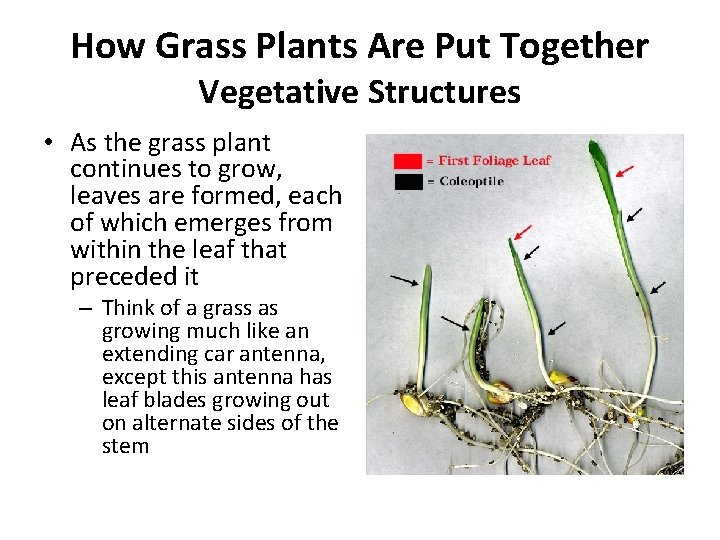
How Grass Plants Are Put Together Vegetative Structures • As the grass plant continues to grow, leaves are formed, each of which emerges from within the leaf that preceded it – Think of a grass as growing much like an extending car antenna, except this antenna has leaf blades growing out on alternate sides of the stem
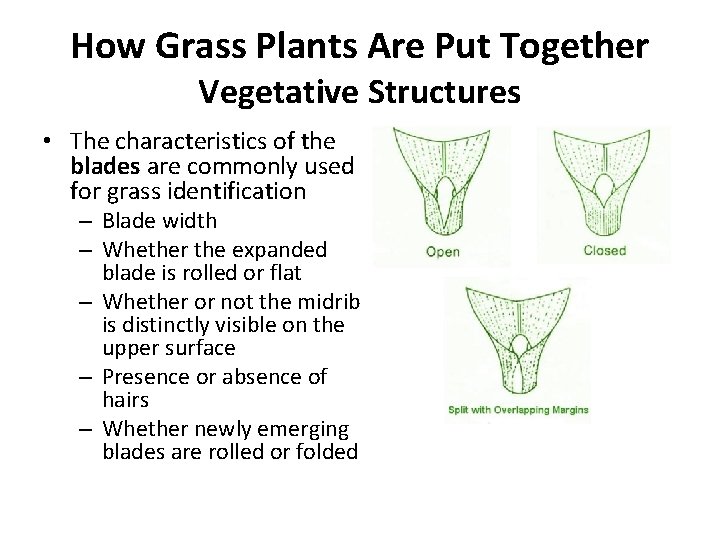
How Grass Plants Are Put Together Vegetative Structures • The characteristics of the blades are commonly used for grass identification – Blade width – Whether the expanded blade is rolled or flat – Whether or not the midrib is distinctly visible on the upper surface – Presence or absence of hairs – Whether newly emerging blades are rolled or folded
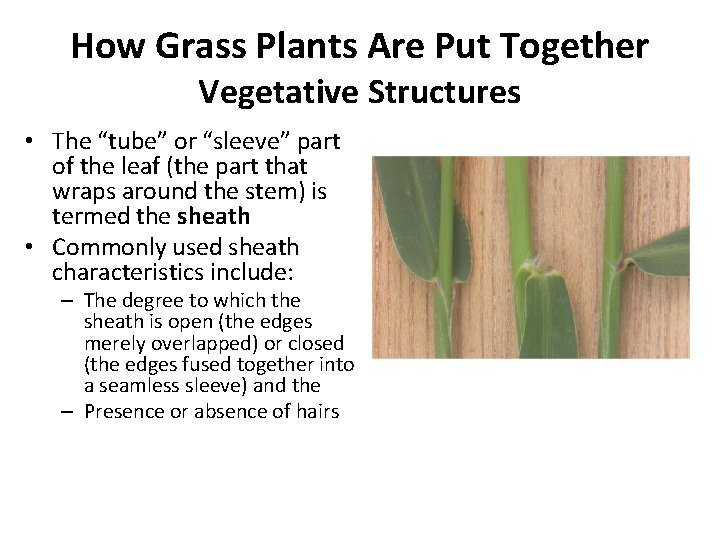
How Grass Plants Are Put Together Vegetative Structures • The “tube” or “sleeve” part of the leaf (the part that wraps around the stem) is termed the sheath • Commonly used sheath characteristics include: – The degree to which the sheath is open (the edges merely overlapped) or closed (the edges fused together into a seamless sleeve) and the – Presence or absence of hairs
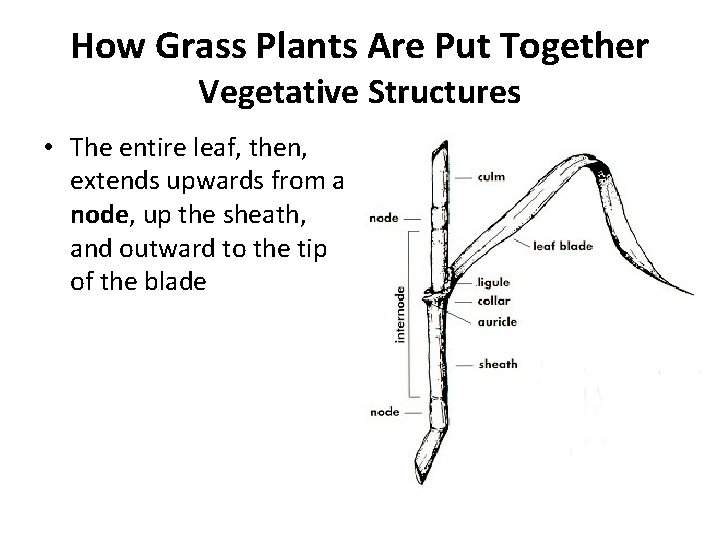
How Grass Plants Are Put Together Vegetative Structures • The entire leaf, then, extends upwards from a node, up the sheath, and outward to the tip of the blade
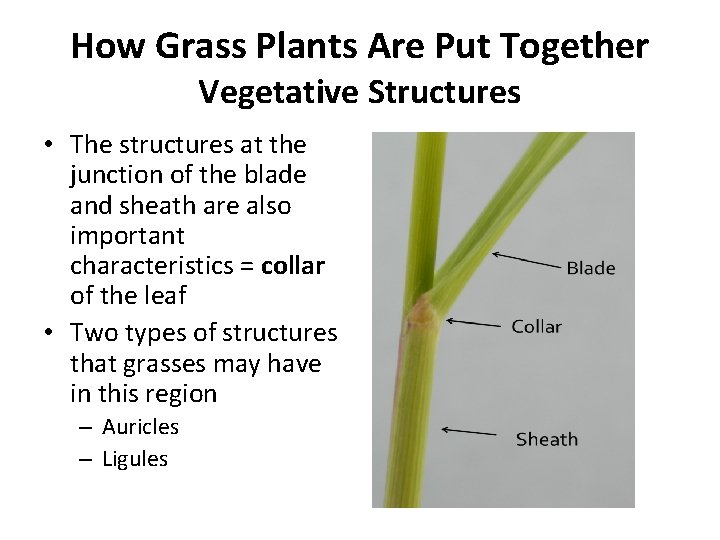
How Grass Plants Are Put Together Vegetative Structures • The structures at the junction of the blade and sheath are also important characteristics = collar of the leaf • Two types of structures that grasses may have in this region – Auricles – Ligules
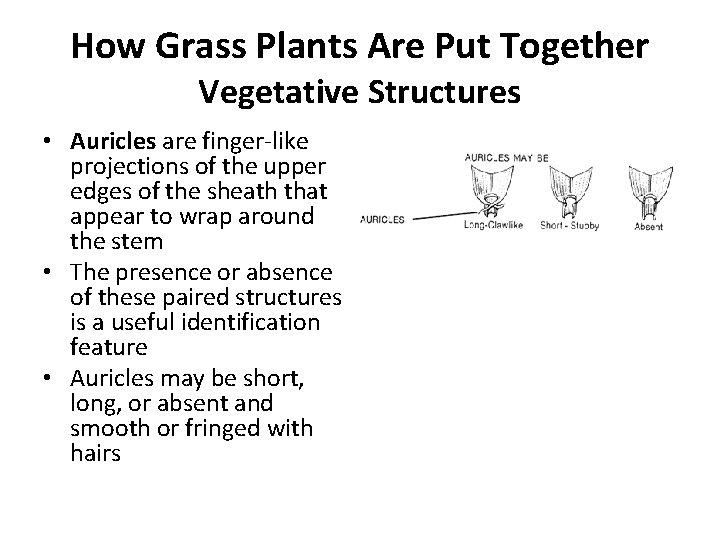
How Grass Plants Are Put Together Vegetative Structures • Auricles are finger-like projections of the upper edges of the sheath that appear to wrap around the stem • The presence or absence of these paired structures is a useful identification feature • Auricles may be short, long, or absent and smooth or fringed with hairs
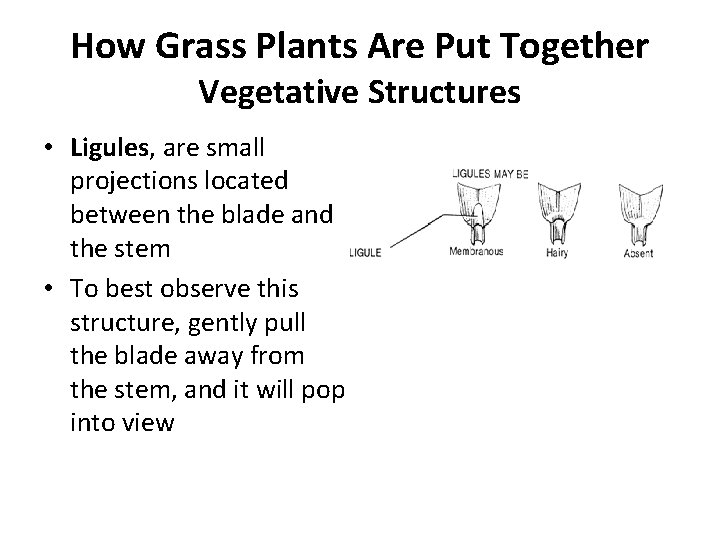
How Grass Plants Are Put Together Vegetative Structures • Ligules, are small projections located between the blade and the stem • To best observe this structure, gently pull the blade away from the stem, and it will pop into view
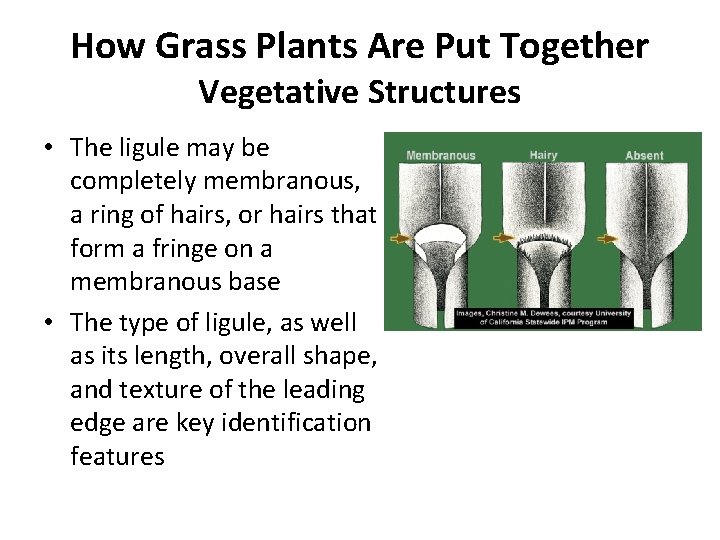
How Grass Plants Are Put Together Vegetative Structures • The ligule may be completely membranous, a ring of hairs, or hairs that form a fringe on a membranous base • The type of ligule, as well as its length, overall shape, and texture of the leading edge are key identification features
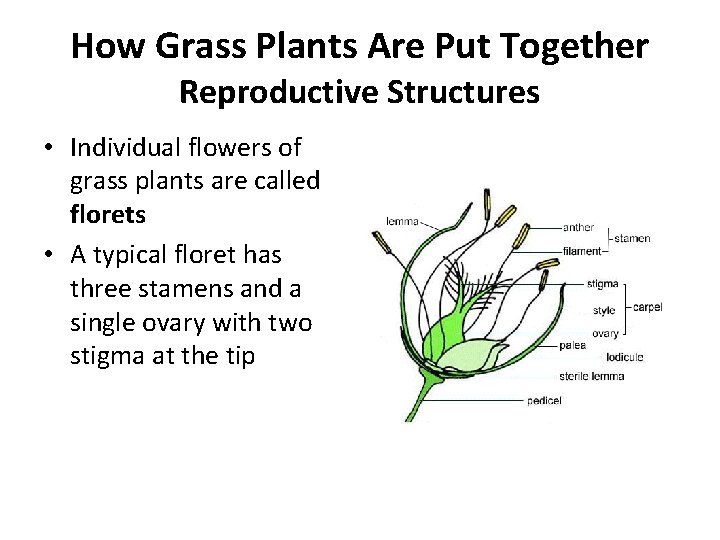
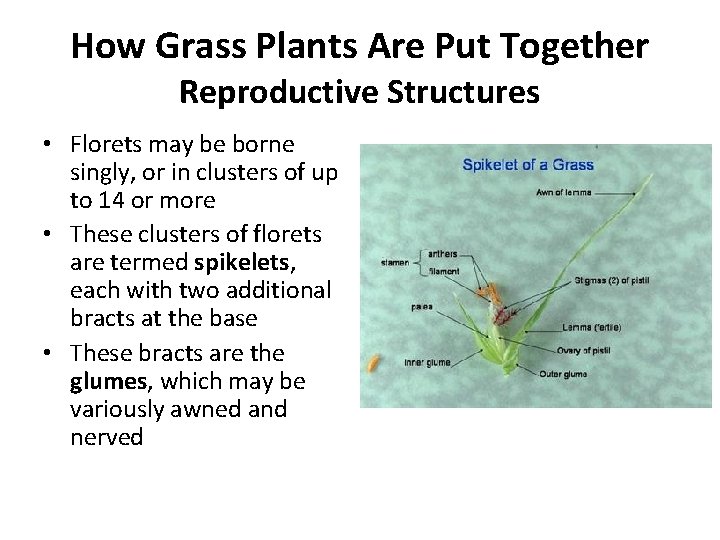
How Grass Plants Are Put Together Reproductive Structures • Individual flowers of grass plants are called florets • A typical floret has three stamens and a single ovary with two stigma at the tip
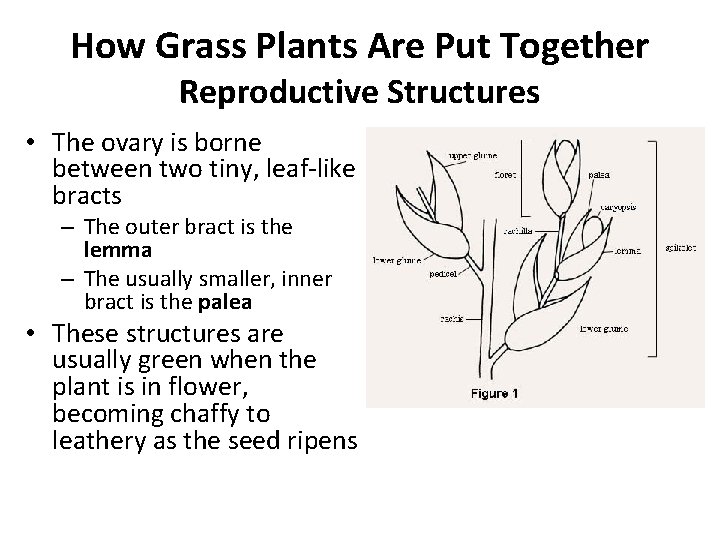
How Grass Plants Are Put Together Reproductive Structures • The ovary is borne between two tiny, leaf-like bracts – The outer bract is the lemma – The usually smaller, inner bract is the palea • These structures are usually green when the plant is in flower, becoming chaffy to leathery as the seed ripens
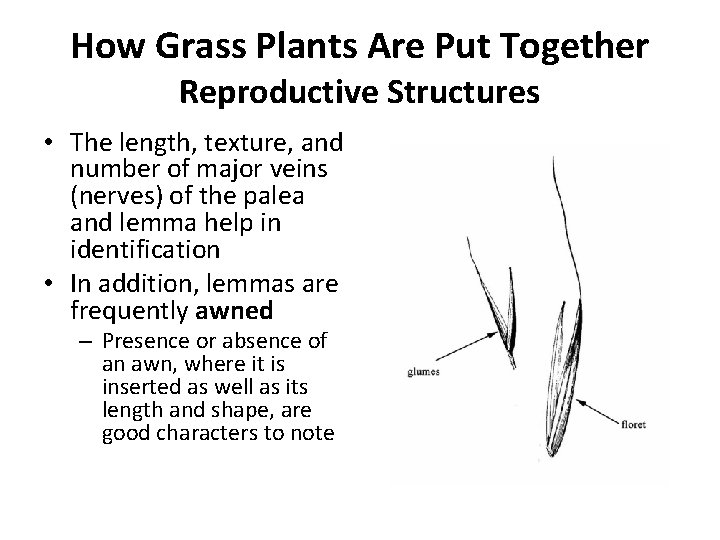
How Grass Plants Are Put Together Reproductive Structures • The length, texture, and number of major veins (nerves) of the palea and lemma help in identification • In addition, lemmas are frequently awned – Presence or absence of an awn, where it is inserted as well as its length and shape, are good characters to note
How Grass Plants Are Put Together Reproductive Structures • Florets may be borne singly, or in clusters of up to 14 or more • These clusters of florets are termed spikelets, each with two additional bracts at the base • These bracts are the glumes, which may be variously awned and nerved
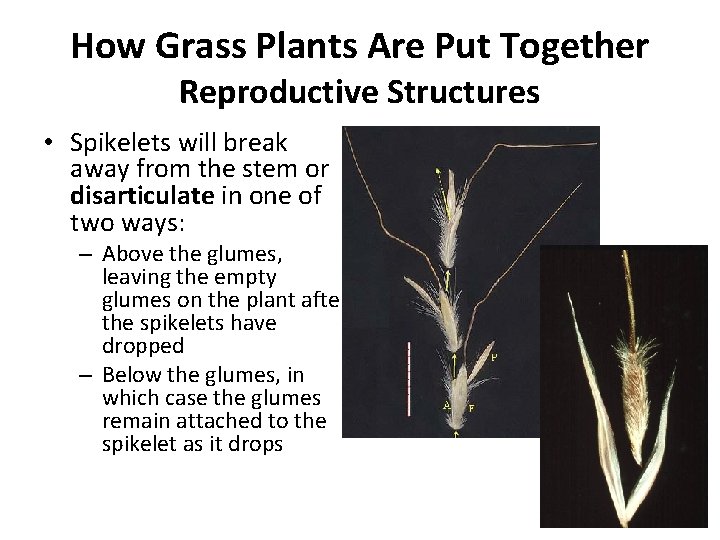
How Grass Plants Are Put Together Reproductive Structures • Spikelets will break away from the stem or disarticulate in one of two ways: – Above the glumes, leaving the empty glumes on the plant after the spikelets have dropped – Below the glumes, in which case the glumes remain attached to the spikelet as it drops
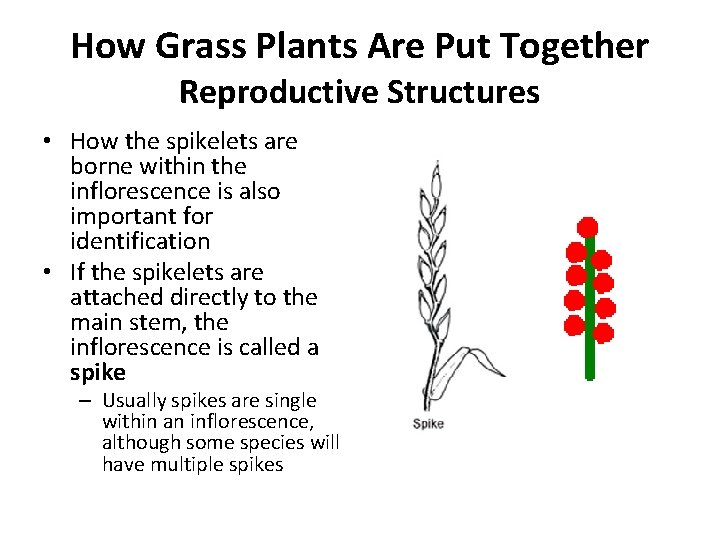
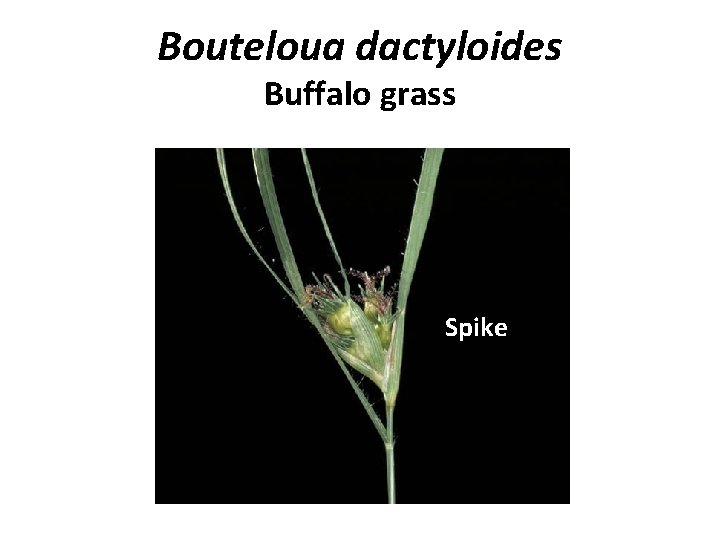
How Grass Plants Are Put Together Reproductive Structures • How the spikelets are borne within the inflorescence is also important for identification • If the spikelets are attached directly to the main stem, the inflorescence is called a spike – Usually spikes are single within an inflorescence, although some species will have multiple spikes
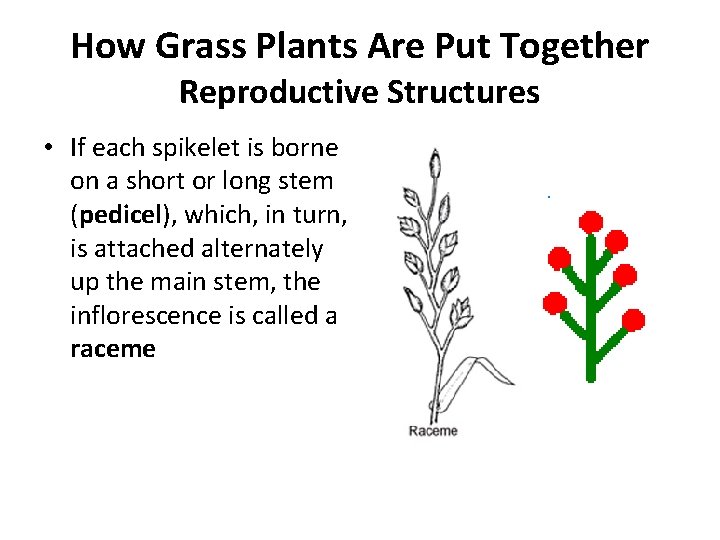
How Grass Plants Are Put Together Reproductive Structures • If each spikelet is borne on a short or long stem (pedicel), which, in turn, is attached alternately up the main stem, the inflorescence is called a raceme
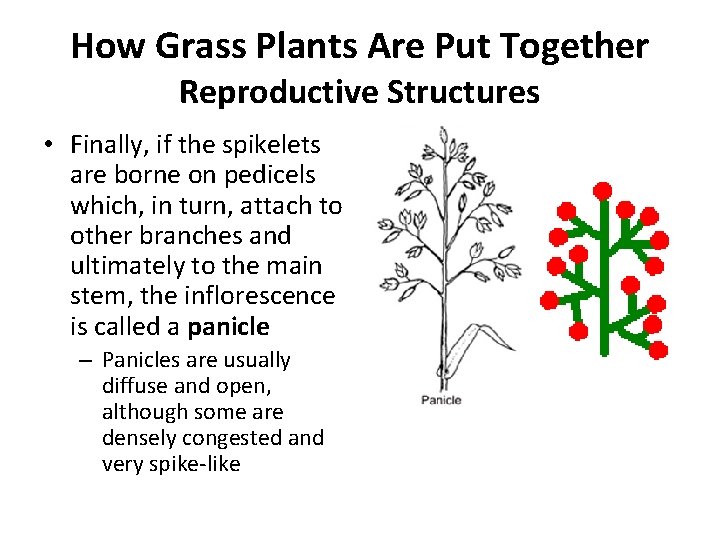
How Grass Plants Are Put Together Reproductive Structures • Finally, if the spikelets are borne on pedicels which, in turn, attach to other branches and ultimately to the main stem, the inflorescence is called a panicle – Panicles are usually diffuse and open, although some are densely congested and very spike-like
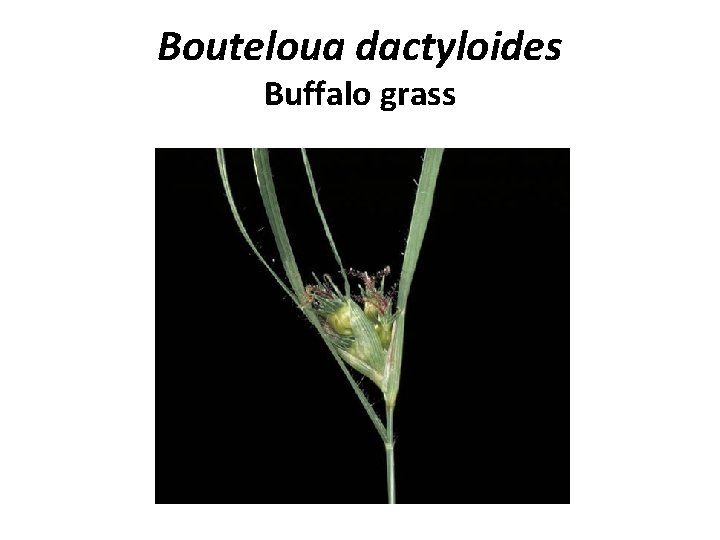
Bouteloua dactyloides Buffalo grass
Bouteloua dactyloides Buffalo grass Spike