
PNEUMATICS Chapter 5 Secondary Air Treatment RBTC1359 01
PNEUMATICS Chapter 5 Secondary Air Treatment RBTC-1359 -01
Objectives Chapter 5 SECONDARY AIR TREATMENT � Methods of Air Treatment � Contaminant Separation � Contaminant Filtration � Filter Classification � Media Types � Surface Filters � Mesh Particle Size � Depth Filters � Dry Filters � Wetted Filters � Oil bath filters � Adsorption Filters � Absorption Filters � Lubricating the Air � Heavy Lubricators � Fine Lubricators
Introduction Chapter 5 Secondary Air Treatment �Definition: �Primary Treatment (Chapter 4) = Cleaning or filtering air as it enters a compressor. �Secondary Air Treatment (Chapter 5) = Removing any contaminants that were carried over through the first part of the system
Methods of Air Treatment 5. 01 �Air is drawn from various surroundings will sometimes remain in the air through the first stages of compressing �These contaminants are in the form of smoke, dust or dirt or lubricating oil picked up from the cylinder walls �Remaining moisture contributes to rust and corrosion �Secondary treatment is accomplished through : �ABSORPTION �ADSORPTION
Contaminant Separation 5. 03 �Separation of contaminants is accomplished by: �GRAVITY SEPARATION �CENTRIFUGAL SEPARATION �INERTIAL SEPARATION
GRAVITY SEPARATION 5. 03 �Accomplished by rapid deceleration �Separators �Scrubbers �Filters �Receivers �This Gravity Separation takes time and only removes the larger particles from air
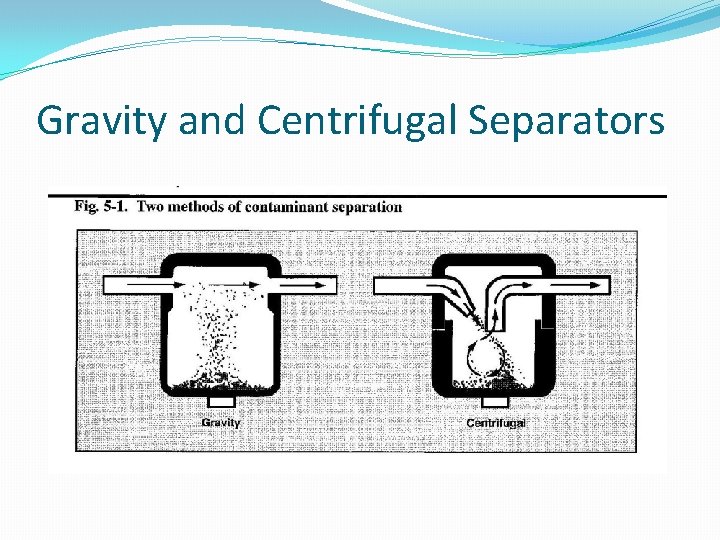
Gravity and Centrifugal Separators
Centrifugal Separation 5. 04 �Cyclone or Centrifugal or Inertial separators use centrifugal force to throw solid and liquid (heavier) particles to the outside. �These units are best fitted for high volume aps �Commonly on intakes for centrifugal compressors �Inertial separators (Impingement Separators) depend on changing direction in a hurry using dispersion plates to allow heavier particles to impinge on the plates or baffles
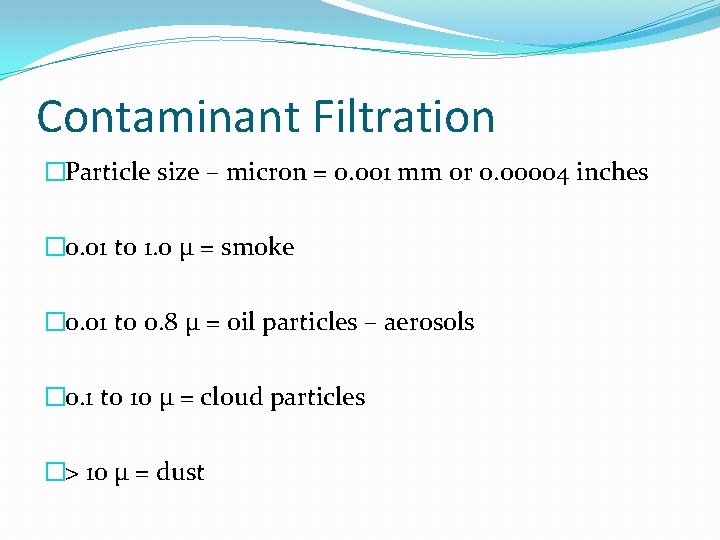
Contaminant Filtration �Particle size – micron = 0. 001 mm or 0. 00004 inches � 0. 01 to 1. 0 μ = smoke � 0. 01 to 0. 8 μ = oil particles – aerosols � 0. 1 to 10 μ = cloud particles �> 10 μ = dust

Filter Classification 5. 11 �Two Basic SOLIDS type filters �SURFACE – regular pattern – narrow range but removes smaller particles as contaminants buildup �DEPTH – irregular pattern – large openings up front scaling to smaller openings at back �Common to use both �Nominal Rating – a filter is classified by the percentage of particles of a given size that it can stop �Absolute Rating - It stops 100% of a given particle size �All are rated by airflow rates

Classifying continued �Dirt Capacity = amount, size, type and concentration �Multiple filters should be used to remove specific amounts and sizes of contaminants �MAXIMUM ALLOWABLE PRESSURE DROP
Migration – 5. 15 �Contaminant Migration refers to an excess situation where the filter allows the collected particles to pass through �Abrasion Migration refers to particles passing around the seals of the filter in the housing �Medium Migration refers to the breakdown point of the filter itself – this allows for CONTAMINANT RELEASE
Types of Media 5. 19 �SURFACE FILTERS: �Strainers – metal cloth, disks, screens �Sintered metal powders �Thin, felted fibers �Thin membranes �Woven cloth
Media �DEPTH FILTER MEDIA: �Felted or matted nonmetallic fibers �Packed fibers �Oil bath �Activated carbon and other dessicants �papers
SURFACE FILTERS/STRAINERS 5. 21 �SS - Wire mesh in pneumatic systems �Catch larger particles �SS Wire �Mesh refers to size of opening �Limited by the size of particles they can remove �Two types of weave: �Square Weave – for use where air is clean �Dutch Twill – better for air ‘cuz openings are smaller
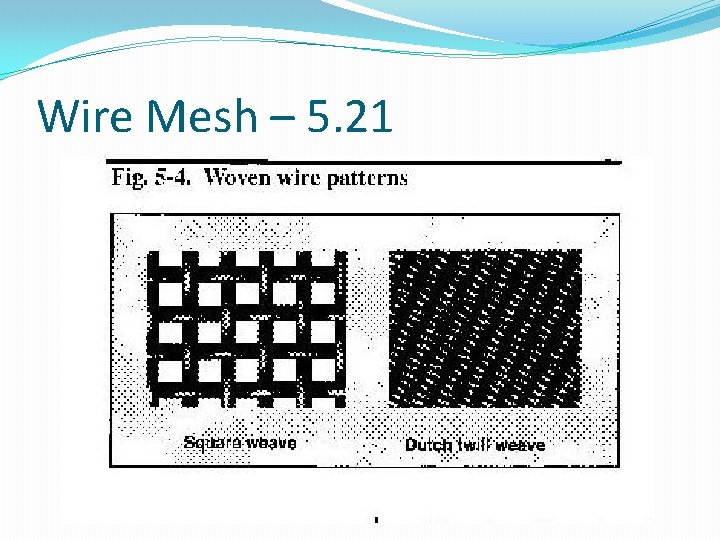
Wire Mesh – 5. 21
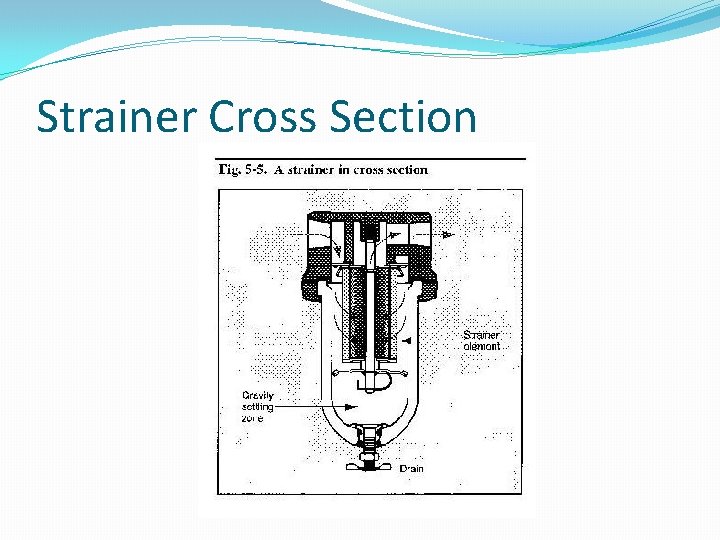
Strainer Cross Section
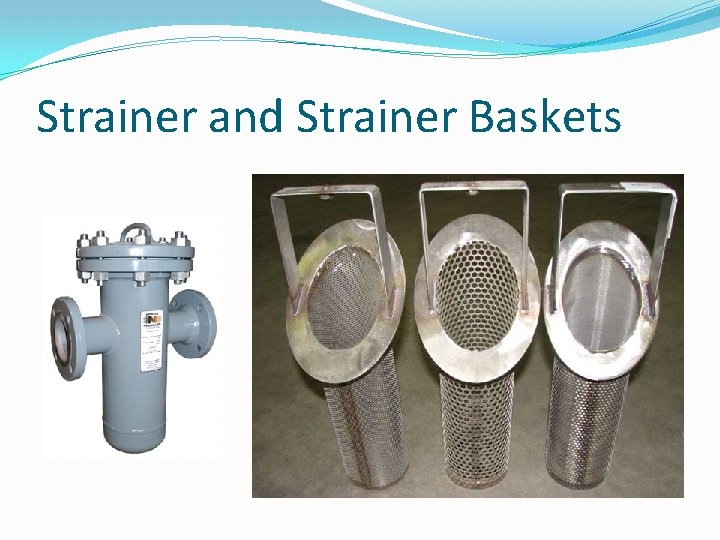
Strainer and Strainer Baskets
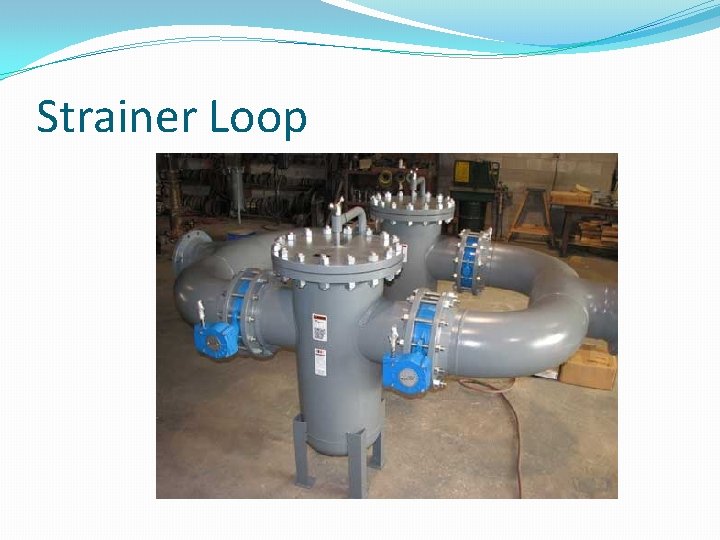
Strainer Loop
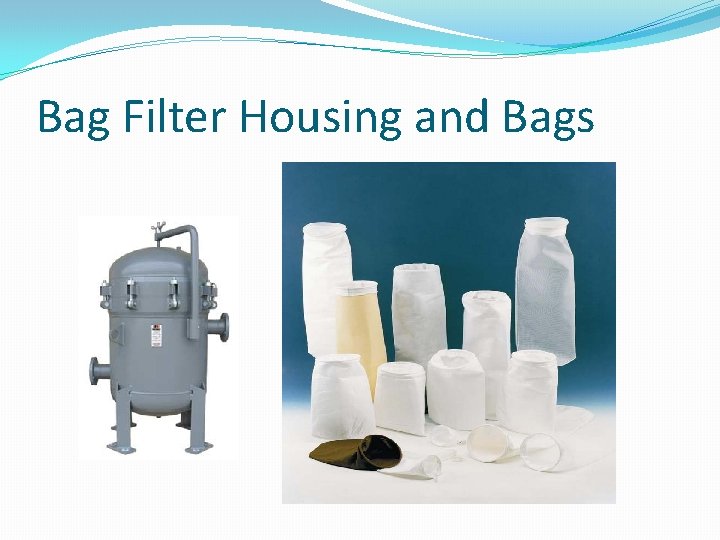
Bag Filter Housing and Bags
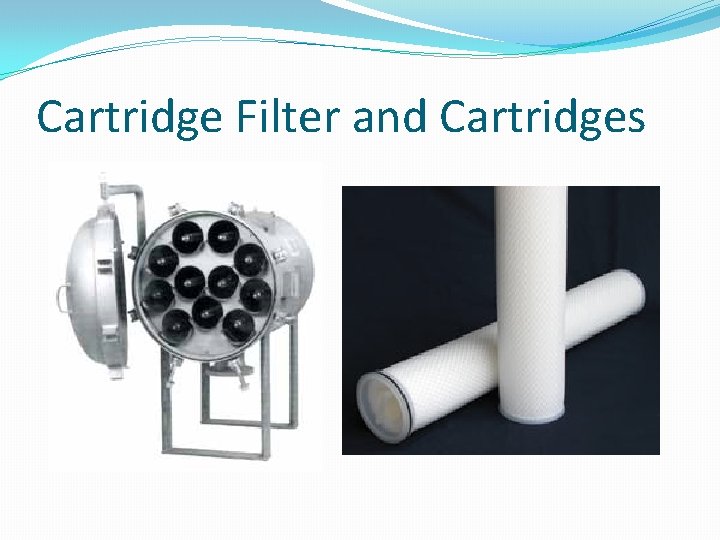
Cartridge Filter and Cartridges
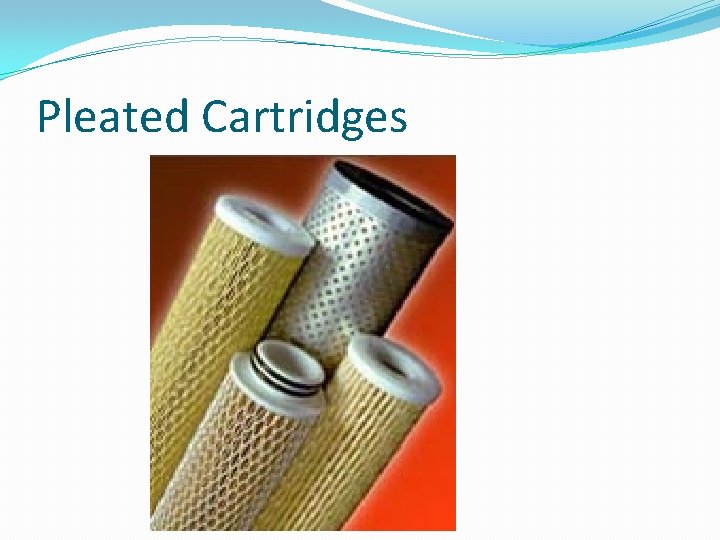
Pleated Cartridges
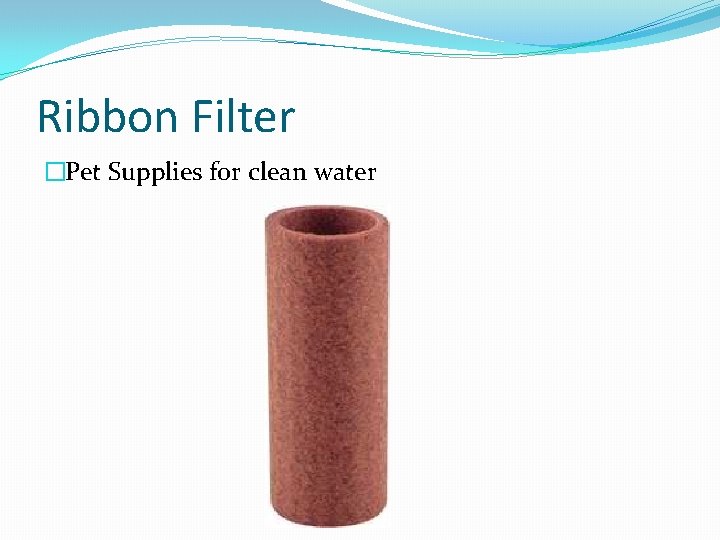
Ribbon Filter �Pet Supplies for clean water

Mesh Relation �MESH PARTICLE SIZE µ = micron � 325 30 µ (0. 0012 inches) � 550 11 µ (0. 0004 inches) � 750 6 µ (0. 00025 inches) � 1000 3. 5 µ (0. 00014 inches)
Depth Filters 5. 25 �Matted and or packed type filters �Two Types – either Dry or Wetted or Oil Bath �Commonly used for � Compressor intake to stop large particles � To collect moisture, oil and solids � Just prior to end use of air � 1) Dry Filters depend on the medium – don’t back wash � 2) Wetted Filters depend on a coating of oil – can be cleaned repeatedly

Oil Bath 5. 28 � 3) A version of a “wetted” filter �Benefits include: � Large volumes � Remove 100% of particles 3 μ and larger � Easy to clean � For intake of lubricated reciprocal compressor
Filter Requirements 5. 29 �Intake for lubricated Reciprocating Compressors �Require 100% of > 10 µ �Un-lubricated Compressors �Require removal 100% of > 5 µ �Dynamic Compressors �Require removal 100% of < 5 µ to protect impellers
Other Filters 5. 30 �Metal Powder – bronze (sometimes SS) for corrosion resistance �Surface Filter �Removal down to 2 µ possible �Remove 90% of free moisture � 5. 32 Felted Fibers – masses of fibers matted together � 5. 33 Unfelted Cotton � 5. 34 Filter papers
Adsorption Filters 5. 36 �Vapor coalesces on the media – the drops settle to bottom �Use carbon or powdered chemicals �Same as desiccant dehydrators �Difficult to regenerate �Use replaceable media
Absorption Filters 5. 38 �Chemical reaction with vapor �Commonly changes color to indicate replacement
Lubricating the compressed air 5. 39 �Common to need lube added to compressed air to reduce wear and corrosion �Some pneumatic components require perfectly dry air �Two types – Heavy or Fine Lubricators �
Heavy and Fine Lubricators �HEAVY LUBRICATORS 5. 41 �Supply fine suspended oil mist and heavy droplets �Can use a wick type supplier �Can use a venturi pick-up 5. 44 �FINE LUBRICATORS 5. 45 �Add a fine suspended oil mist into air �Used for multiple equipment systems
- Slides: 32