
PMC1 Milk Quality and Mastitis Basic Principles Lennart
P-MC-1 Milk Quality and Mastitis Basic Principles Lennart Petersson IBA Inc. , Millbury, MA
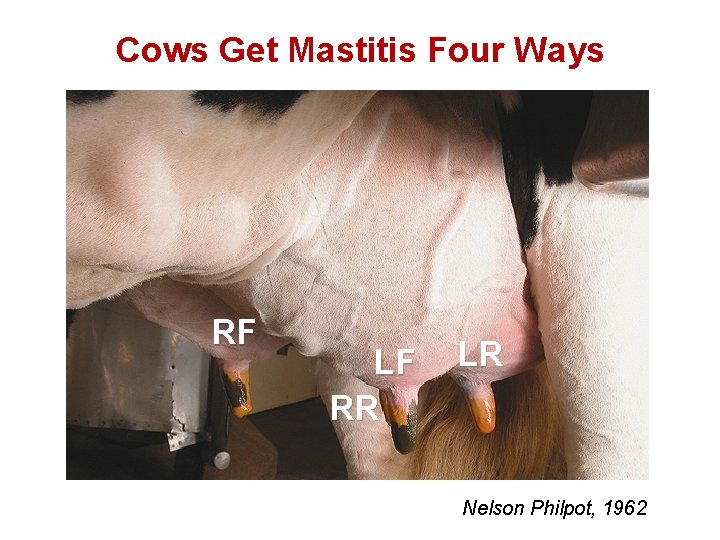
Cows Get Mastitis Four Ways RF LF RR LR Nelson Philpot, 1962
Three Ways Cows Get Mastitis § Contagious organisms spreading through the herd. § Environmental organisms infecting milking cows. § Cows becoming infected during the dry period.
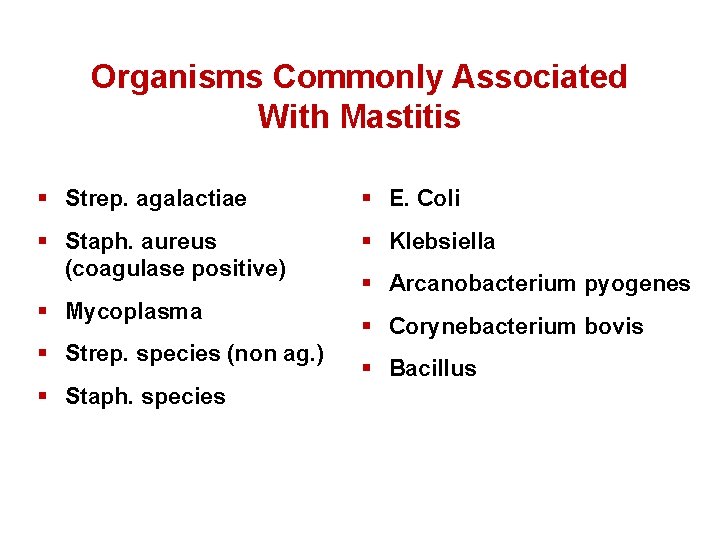
Organisms Commonly Associated With Mastitis § Strep. agalactiae § E. Coli § Staph. aureus (coagulase positive) § Klebsiella § Mycoplasma § Strep. species (non ag. ) § Staph. species § Arcanobacterium pyogenes § Corynebacterium bovis § Bacillus
Other Organisms Associated With Mastitis § Pseudomonas § Yeast § Pasteurella § Prototheca § Proteus § Other bacteria
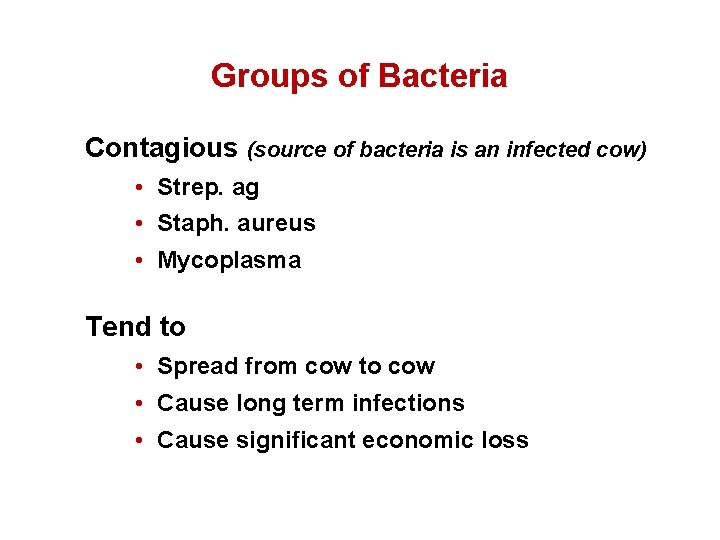
Groups of Bacteria Contagious (source of bacteria is an infected cow) • Strep. ag • Staph. aureus • Mycoplasma Tend to • Spread from cow to cow • Cause long term infections • Cause significant economic loss
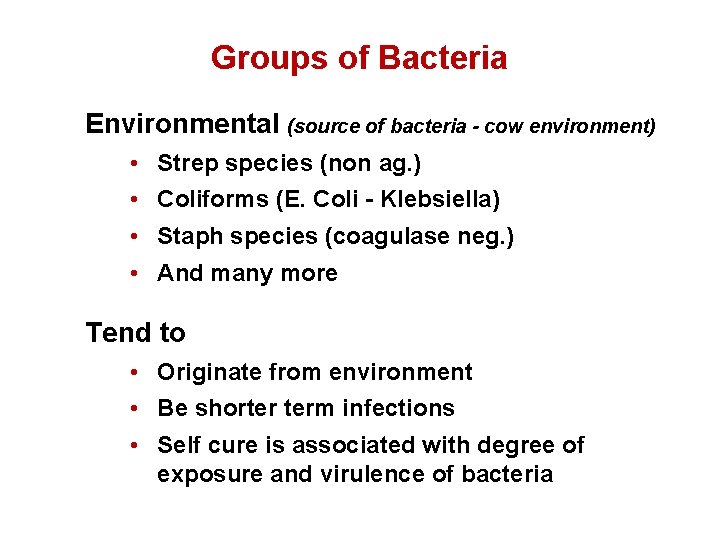
Groups of Bacteria Environmental (source of bacteria - cow environment) • Strep species (non ag. ) • Coliforms (E. Coli - Klebsiella) • Staph species (coagulase neg. ) • And many more Tend to • Originate from environment • Be shorter term infections • Self cure is associated with degree of exposure and virulence of bacteria
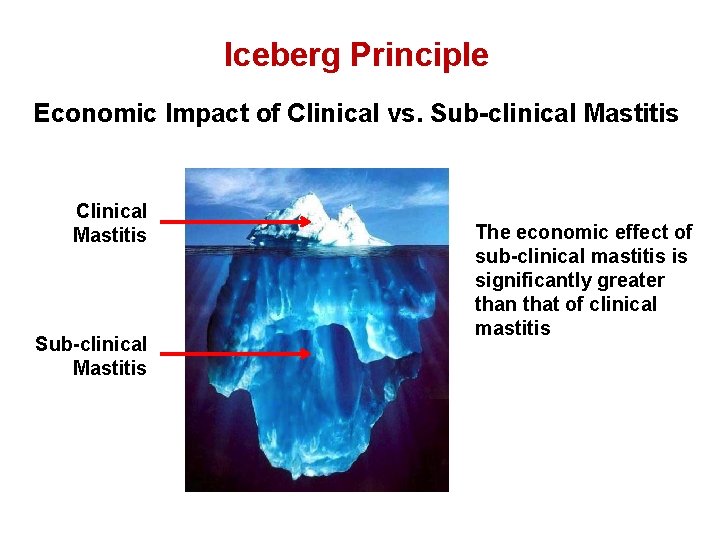
Iceberg Principle Economic Impact of Clinical vs. Sub-clinical Mastitis Clinical Mastitis Sub-clinical Mastitis The economic effect of sub-clinical mastitis is significantly greater than that of clinical mastitis
Many factors may be related to mastitis Weather Facilities – Wet and dirty bedding – Manure Milking machines Sanitation – Improper udder preparation Transfer from other infected cows And others … However, it is mainly because of their effect on bacteria Changes in numbers Changes in types Facilitate entry into the udder
When you know the organisms are present in a dairy operation, identify a specific approach. ü Use diagnostic tools to determine the area of greatest opportunity ü Concentrate efforts in area(s) where the producer will have the greatest return – prioritize recommendations
If we can determine the source of most infections, we can more effectively and economically target control measures.
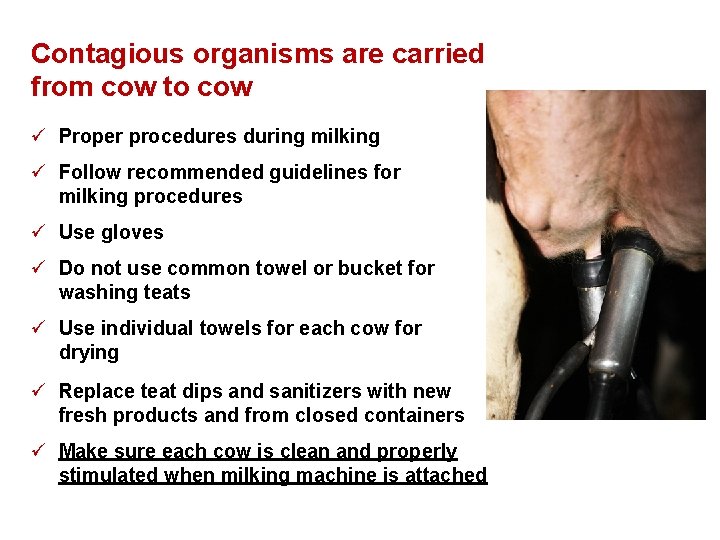
Contagious organisms are carried from cow to cow ü Proper procedures during milking ü Follow recommended guidelines for milking procedures ü Use gloves ü Do not use common towel or bucket for washing teats ü Use individual towels for each cow for drying ü Replace teat dips and sanitizers with new fresh products and from closed containers ü Make sure each cow is clean and properly stimulated when milking machine is attached
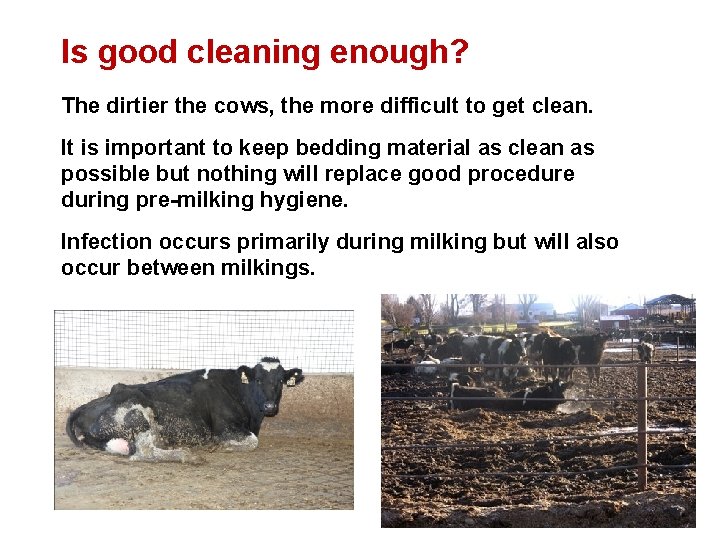
Is good cleaning enough? The dirtier the cows, the more difficult to get clean. It is important to keep bedding material as clean as possible but nothing will replace good procedure during pre-milking hygiene. Infection occurs primarily during milking but will also occur between milkings.
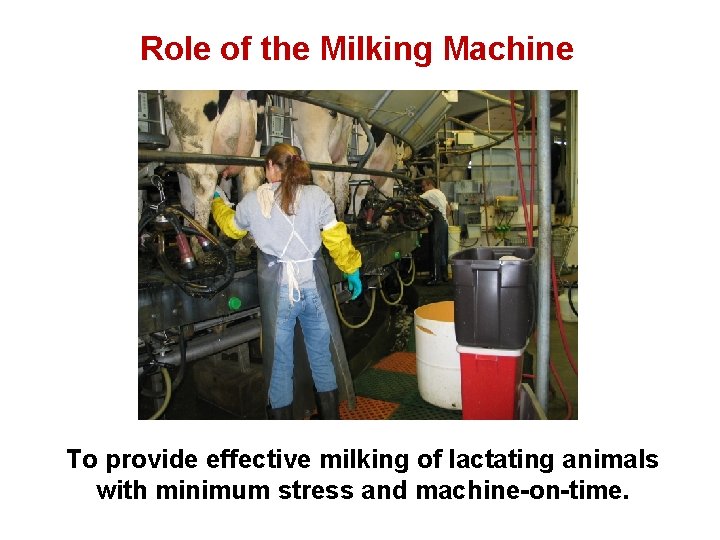
Role of the Milking Machine To provide effective milking of lactating animals with minimum stress and machine-on-time.
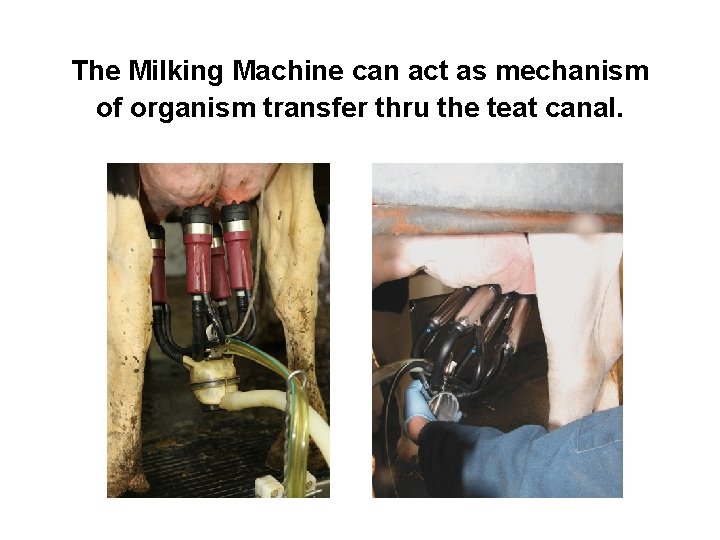
The Milking Machine can act as mechanism of organism transfer thru the teat canal.
Take Home Message § Make sure cows are properly stimulated before milking unit is attached. § Follow recommended pre-milking procedures and prep-lag-time before milking unit is attached. § Milk should be flowing when unit is attached. § Milking unit should be removed without overmilking. § Detachers should be set to remove the milking with low “Milk Flow” and short “Delay Time”.
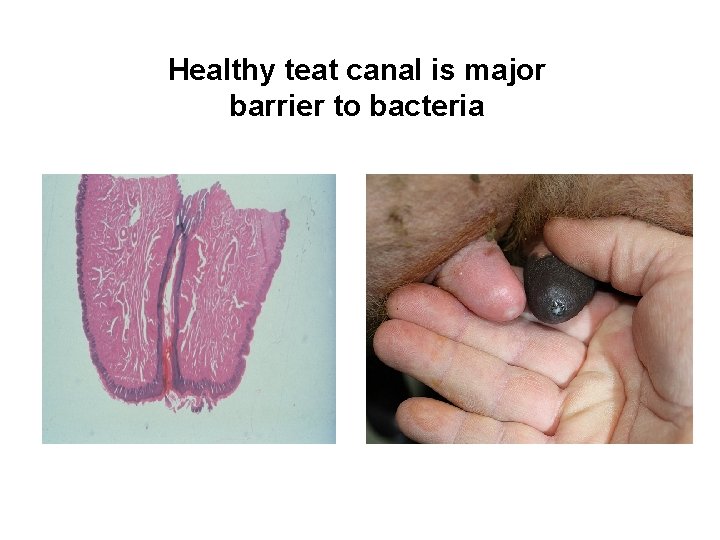
Healthy teat canal is major barrier to bacteria Physical Damage Chemical injury Freezing
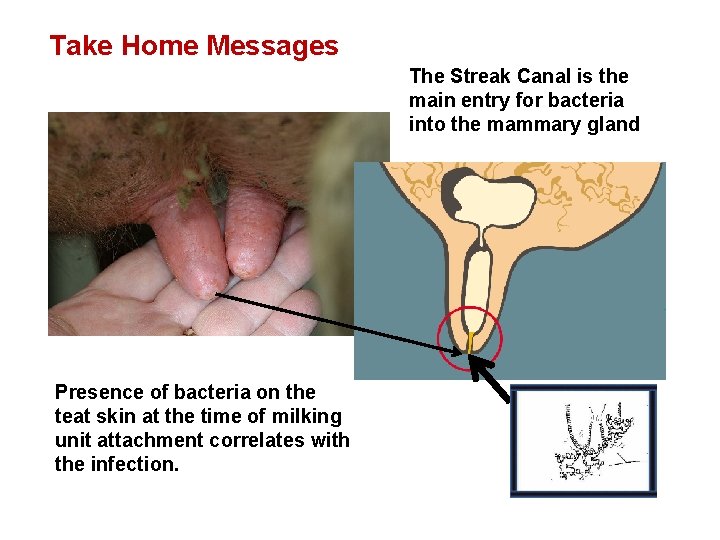
Take Home Messages The Streak Canal is the main entry for bacteria into the mammary gland Many things put Bacteria on the teat Presence of bacteria on the teat skin at the time of milking unit attachment correlates with the infection.
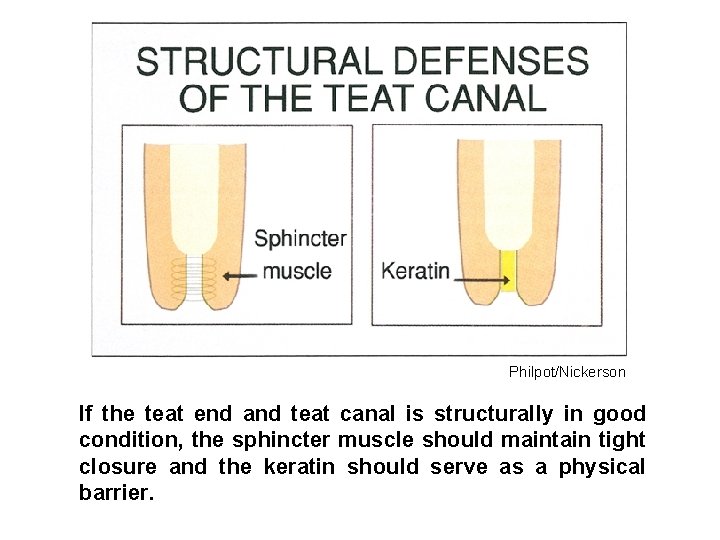
Philpot/Nickerson If the teat end and teat canal is structurally in good condition, the sphincter muscle should maintain tight closure and the keratin should serve as a physical barrier.
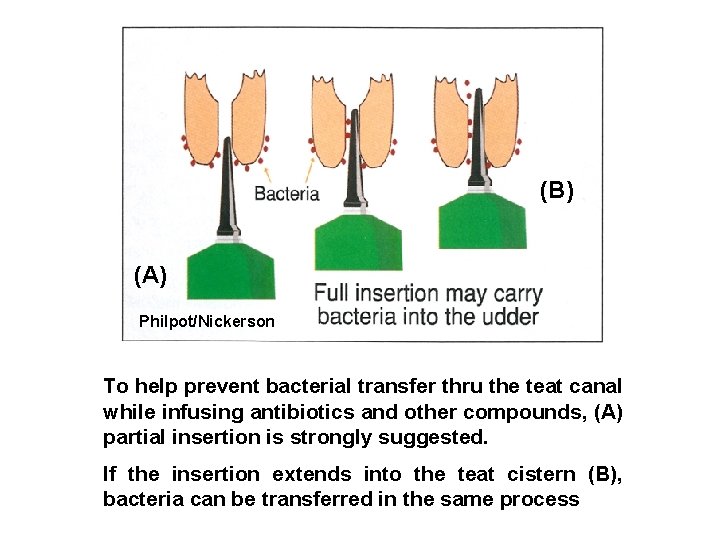
(B) (A) Philpot/Nickerson To help prevent bacterial transfer thru the teat canal while infusing antibiotics and other compounds, (A) partial insertion is strongly suggested. If the insertion extends into the teat cistern (B), bacteria can be transferred in the same process
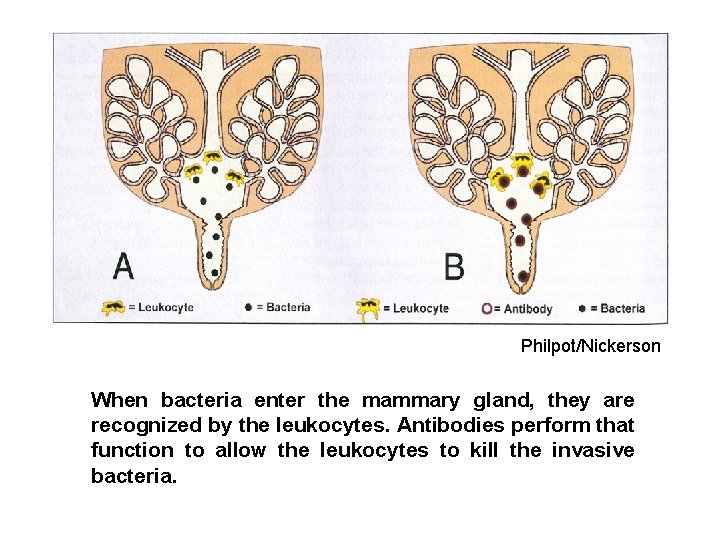
What Happens when Bacteria get past the teat canal ? Philpot/Nickerson When bacteria enter the mammary gland, they are recognized by the leukocytes. Antibodies perform that function to allow the leukocytes to kill the invasive bacteria.
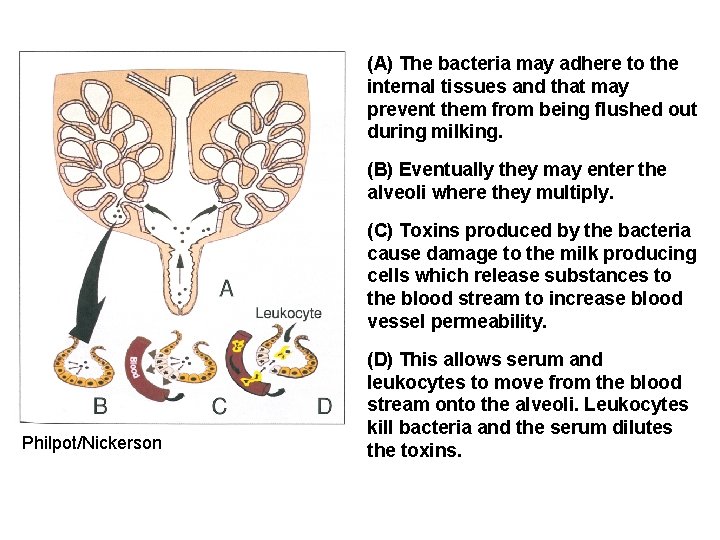
(A) The bacteria may adhere to the internal tissues and that may prevent them from being flushed out during milking. (B) Eventually they may enter the alveoli where they multiply. (C) Toxins produced by the bacteria cause damage to the milk producing cells which release substances to the blood stream to increase blood vessel permeability. Philpot/Nickerson (D) This allows serum and leukocytes to move from the blood stream onto the alveoli. Leukocytes kill bacteria and the serum dilutes the toxins.
Philpot/Nickerson
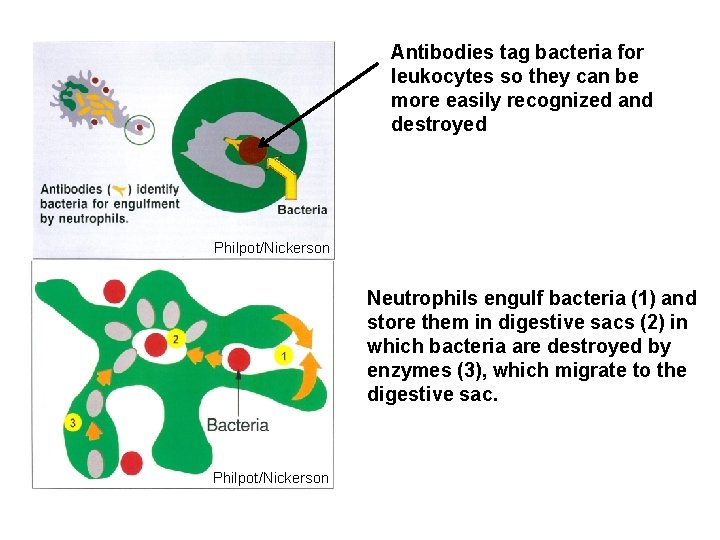
Antibodies tag bacteria for leukocytes so they can be more easily recognized and destroyed Philpot/Nickerson Neutrophils engulf bacteria (1) and store them in digestive sacs (2) in which bacteria are destroyed by enzymes (3), which migrate to the digestive sac. Philpot/Nickerson
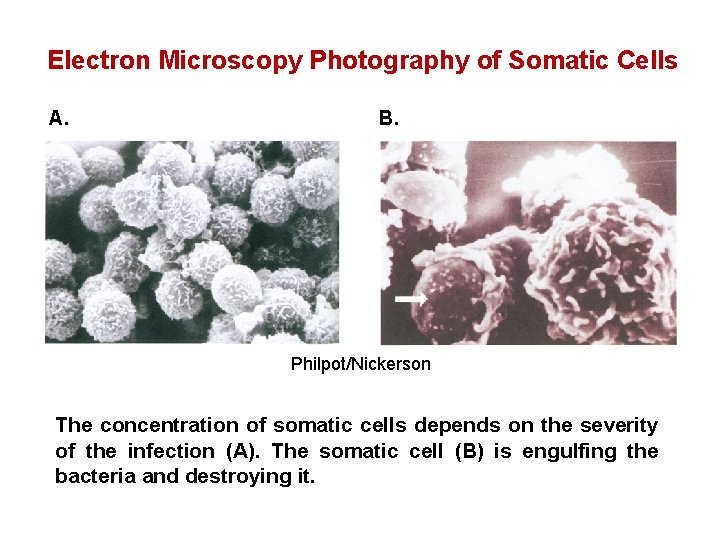
Electron Microscopy Photography of Somatic Cells A. B. Philpot/Nickerson The concentration of somatic cells depends on the severity of the infection (A). The somatic cell (B) is engulfing the bacteria and destroying it.
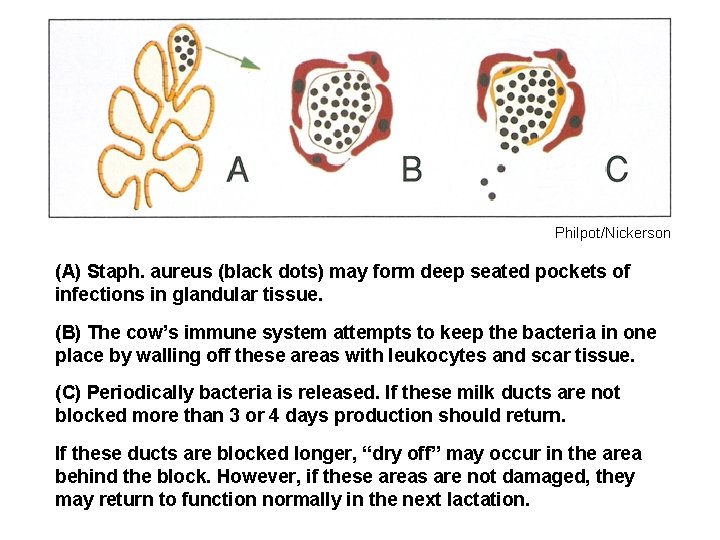
Philpot/Nickerson (A) Staph. aureus (black dots) may form deep seated pockets of infections in glandular tissue. (B) The cow’s immune system attempts to keep the bacteria in one place by walling off these areas with leukocytes and scar tissue. (C) Periodically bacteria is released. If these milk ducts are not blocked more than 3 or 4 days production should return. If these ducts are blocked longer, “dry off” may occur in the area behind the block. However, if these areas are not damaged, they may return to function normally in the next lactation.
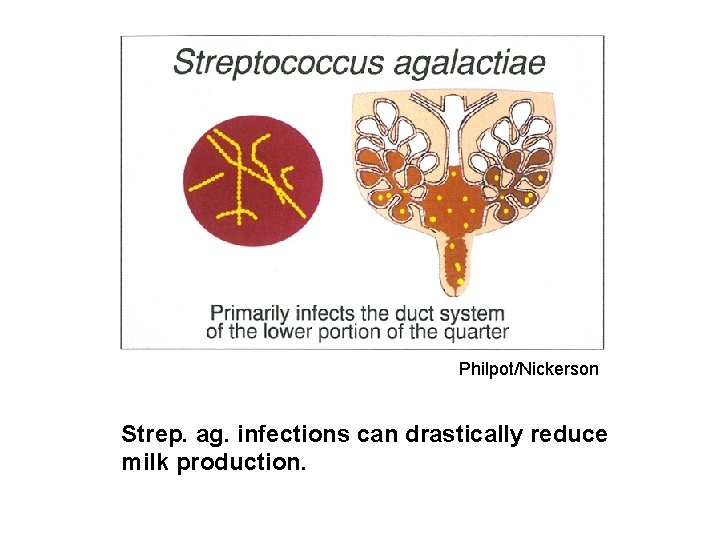
Philpot/Nickerson Strep. ag. infections can drastically reduce milk production.
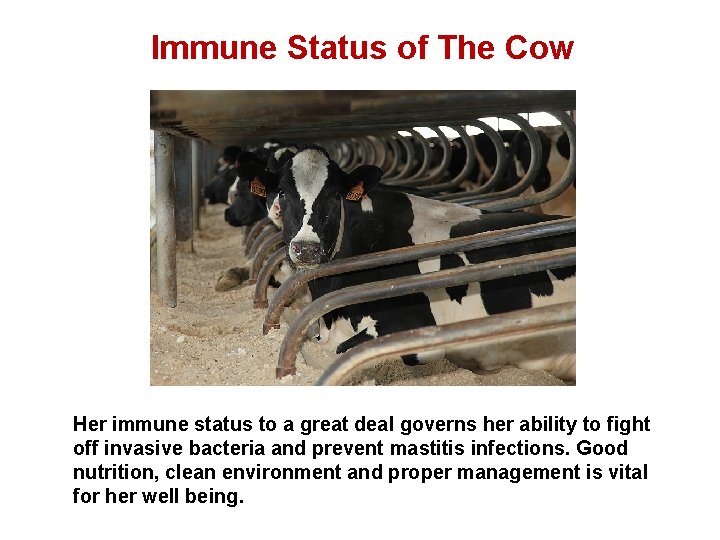
Immune Status of The Cow Her immune status to a great deal governs her ability to fight off invasive bacteria and prevent mastitis infections. Good nutrition, clean environment and proper management is vital for her well being.
Immune Status of the Cow Stress Nutritional factors • Immune suppression at calving – may also be a hormonal factor • Over-crowding • Ventilation • Many others… • Well balanced rations from good quality feed components • Vitamin E and Selenium well documented • Others… Presence of other disease factors Example: Hoof disorders These factors are real and affect disease, but correcting a factor in this area alone will not likely solve a major mastitis problem. Need to go back and look at the basics.
Factors to consider in application of some common control procedures.
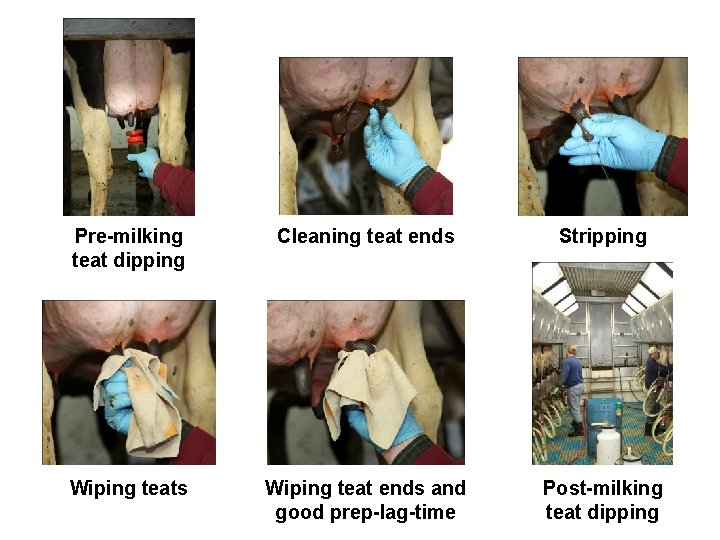
Pre-milking teat dipping Cleaning teat ends Stripping Wiping teats Wiping teat ends and good prep-lag-time Post-milking teat dipping
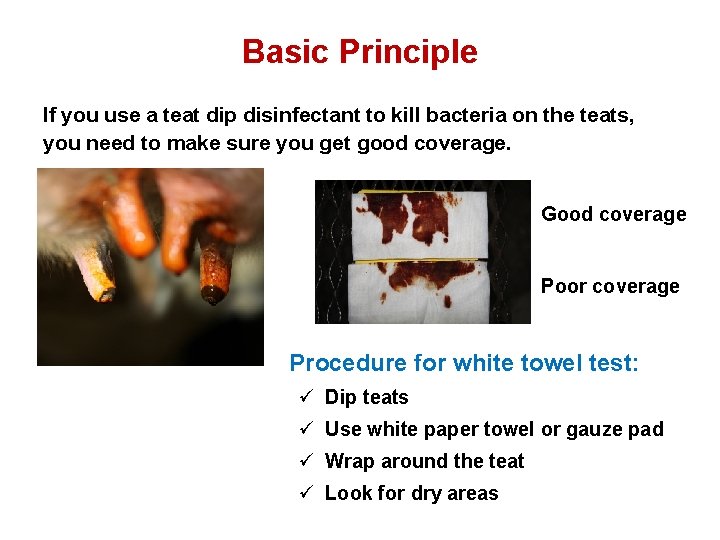
Basic Principle If you use a teat dip disinfectant to kill bacteria on the teats, you need to make sure you get good coverage. Good coverage Poor coverage Procedure for white towel test: ü Dip teats ü Use white paper towel or gauze pad ü Wrap around the teat ü Look for dry areas
Remember Pre- and post-milking teat dipping works well for preventing new infections. It has no effect on existing infections. Prevention – Prevention
Effect of Post-milking Teat Dipping on SCC Post-milking teat dipping is primarily affective against contagious organisms. If herd problem is primarily environmental infections and you change the post-dip but nothing happens…. you shouldn’t be surprised.
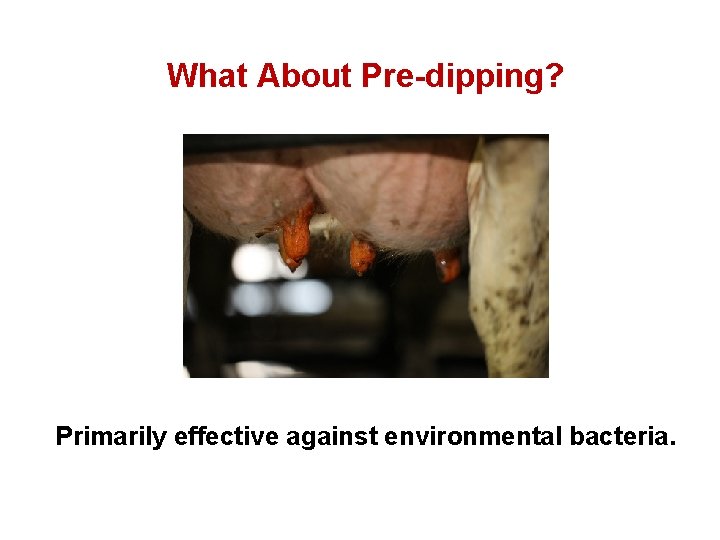
What About Pre-dipping? Primarily effective against environmental bacteria.
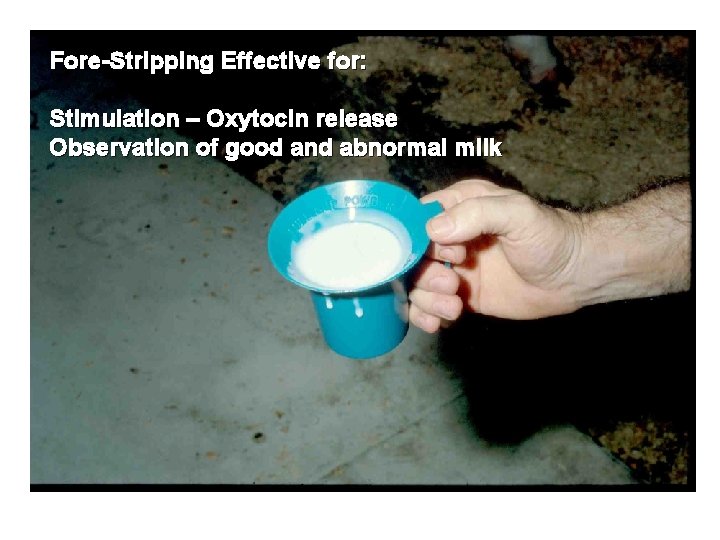
Fore-Stripping Effective for: Stimulation – Oxytocin release Observation of good and abnormal milk
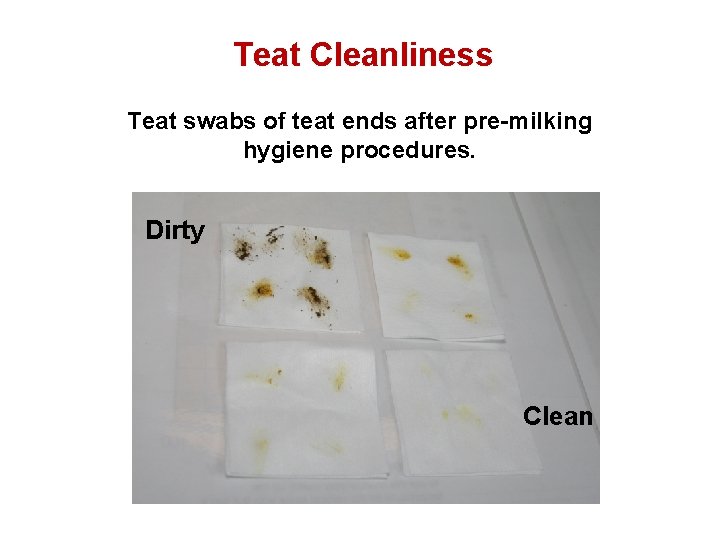
Teat Cleanliness Teat swabs of teat ends after pre-milking hygiene procedures. Dirty Clean
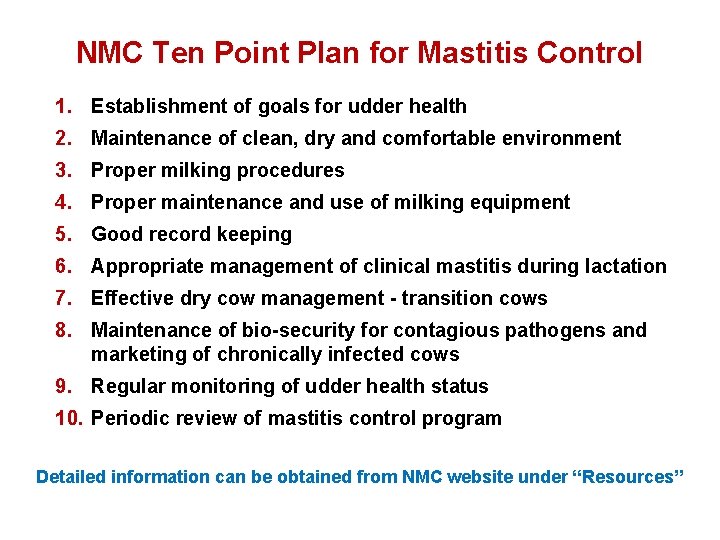
NMC Ten Point Plan for Mastitis Control 1. Establishment of goals for udder health 2. Maintenance of clean, dry and comfortable environment 3. Proper milking procedures 4. Proper maintenance and use of milking equipment 5. Good record keeping 6. Appropriate management of clinical mastitis during lactation 7. Effective dry cow management - transition cows 8. Maintenance of bio-security for contagious pathogens and marketing of chronically infected cows 9. Regular monitoring of udder health status 10. Periodic review of mastitis control program Detailed information can be obtained from NMC website under “Resources”
Resource Information and References Winning the Fight Against Mastitis, W. Nelson Philpot and Stephen C. Nickerson, Westfalia Surge © 2000. NMC Website: http: //www. nmconline. org/resources
- Slides: 40