
PM D PMD Plans Detector Issues and solution


- Slides: 14
PM D PMD Plans • Detector Issues and solution • Plans for LS 1 29 June 2012
Present PMD Status PMD has been in the SUPERSAFE state for last few months because: • SOR problem (which may not be directly related to PMD DAQ • High beam luminosity
Detector issues (before the Technical Stop) – One FRT top was not working properly which disables the 5 -chains of the detector – Low voltage problem for the one quadrant of the detector. – PMD busy at the start of run when there was a abrupt stop of previous run due to any reason. – Sync trigger to be tested
Follow up during the Technical Stop this week • Planned follow up : – One CROCUS FRT was replaced and is working fine. – One faulty cable of 3486 (48 V power module) was repaired and now it is ok. – Sync trigger is tested by Roberto on 26/06 afternoon and which is working fine. – Roberto simulated the PMD and other detector getting busy in previous run and then in new run the start of run problem was solved by sync trigger sent to PMD.
Present planning for PMD • Testing in the standalone runs this week and with the beam next week • Depending on the test results we can decide to: • Run the PMD with rest of the subsystems for sometime • Or we can keep it in supersafe for now and get into the run in September to be ready for the p. A run in November. • We monitor PMD performance closely during this time and during the next Technical stop and fix all the issues before the p. A run.
Rate limitation • PMD has the L 1 rejection time of 13μsec which makes our detector work at maximum rate of 76 KHz. • Right now this is the maximum rate which MCH group could achieve with CROCUS (PMD is following the same electronics.
Following the plans for muon arm: We are in contact with Bruno regarding the development in muon arm. They plan to have a prototype by the end of 2014. So at present there is no other solution to increase the rate capability.
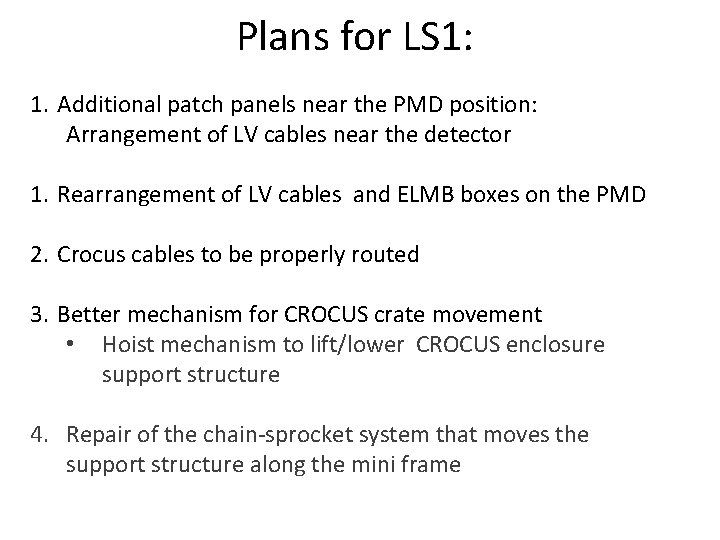
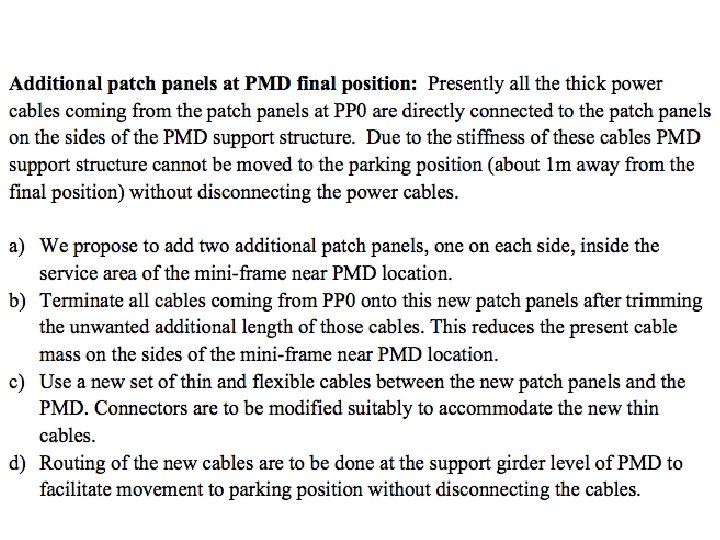
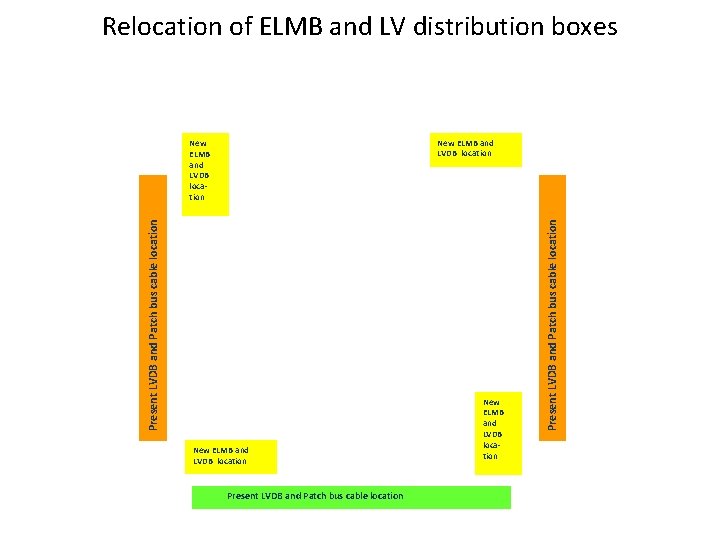
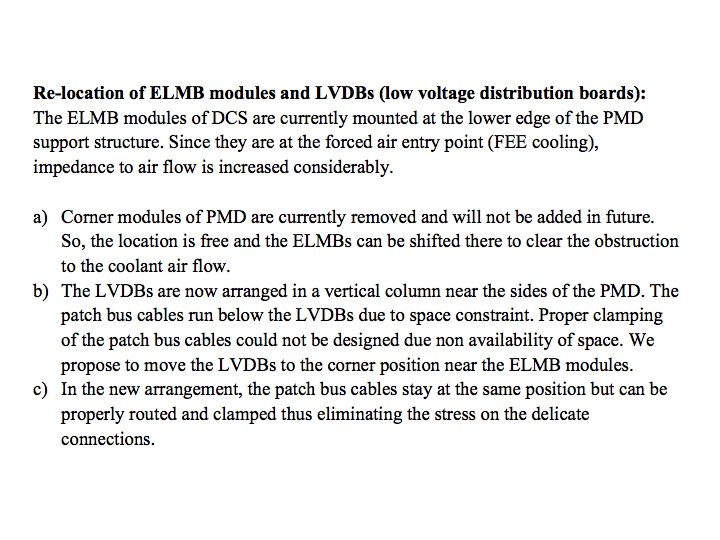
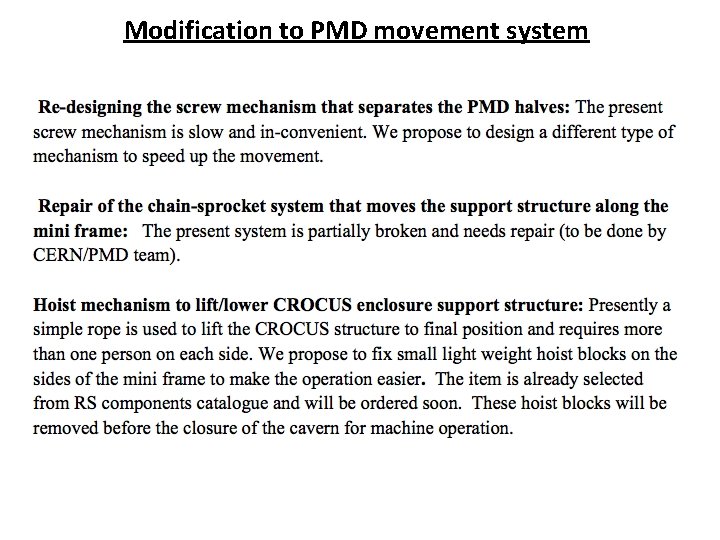
Plans for LS 1: 1. Additional patch panels near the PMD position: Arrangement of LV cables near the detector 1. Rearrangement of LV cables and ELMB boxes on the PMD 2. Crocus cables to be properly routed 3. Better mechanism for CROCUS crate movement • Hoist mechanism to lift/lower CROCUS enclosure support structure 4. Repair of the chain-sprocket system that moves the support structure along the mini frame
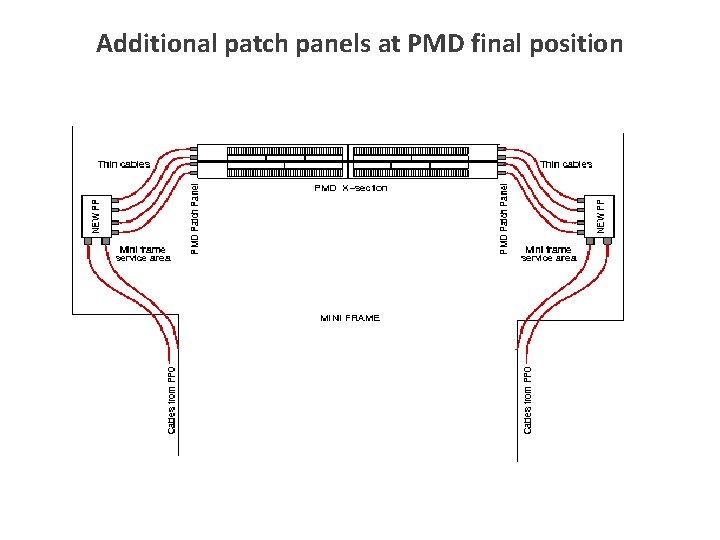
Additional patch panels at PMD final position
Relocation of ELMB and LV distribution boxes Present LVDB and Patch bus cable location New ELMB and LVDB location
Modification to PMD movement system
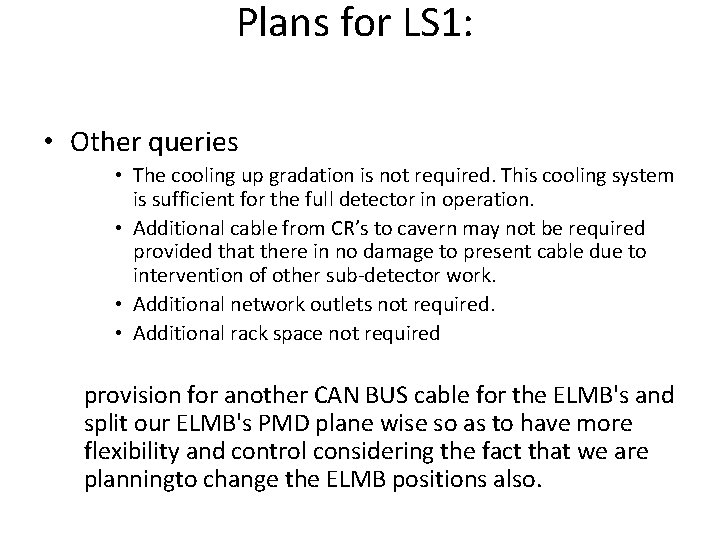
Plans for LS 1: • Other queries • The cooling up gradation is not required. This cooling system is sufficient for the full detector in operation. • Additional cable from CR’s to cavern may not be required provided that there in no damage to present cable due to intervention of other sub-detector work. • Additional network outlets not required. • Additional rack space not required provision for another CAN BUS cable for the ELMB's and split our ELMB's PMD plane wise so as to have more flexibility and control considering the fact that we are planningto change the ELMB positions also.