
PLT 303 ELECTRICAL DRIVES CHAPTER 3 AC MOTOR


- Slides: 41
PLT 303 : ELECTRICAL DRIVES CHAPTER 3: AC MOTOR (part 1)
Induction Motor / Asynchronous Motor PLT 303 – ELECTRICAL DRIVES 2
What you should know after this lecture • Types of induction motor (IM) • Construction of IM • Mechanism of IM • Advantages and disadvantages of IM • Application of IM • Speed and slip 3
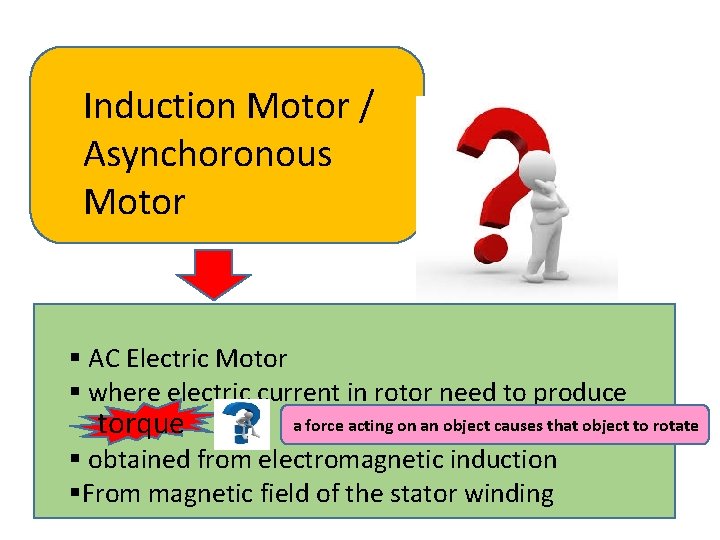
Induction Motor / Asynchoronous Motor § AC Electric Motor § where electric current in rotor need to produce torque a force acting on an object causes that object to rotate § obtained from electromagnetic induction §From magnetic field of the stator winding EET 428 – Power Electronic Drives 4
WHY AC MOTOR ? q. Rugged and reliable q. Easy to maintain qinexpensive q power density ( output power to weight) are higher than dc motors q. Industrial -90% induction motor q Used : robot, actuator etc 5
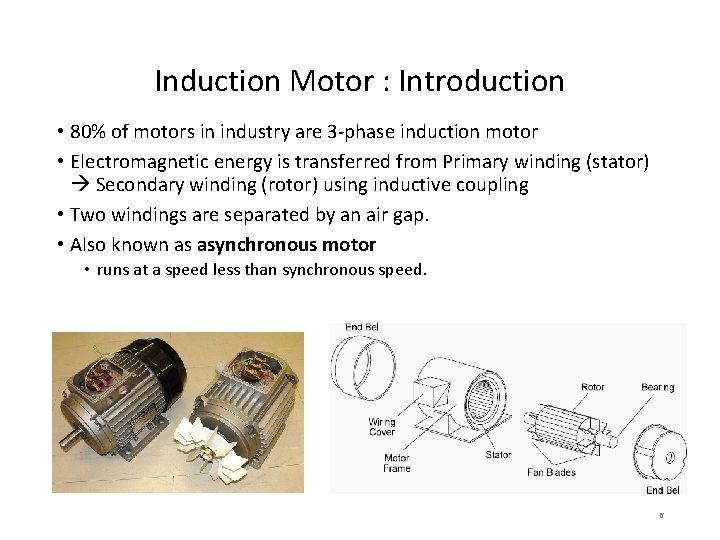
Induction Motor : Introduction • 80% of motors in industry are 3 -phase induction motor • Electromagnetic energy is transferred from Primary winding (stator) Secondary winding (rotor) using inductive coupling • Two windings are separated by an air gap. • Also known as asynchronous motor • runs at a speed less than synchronous speed. 6
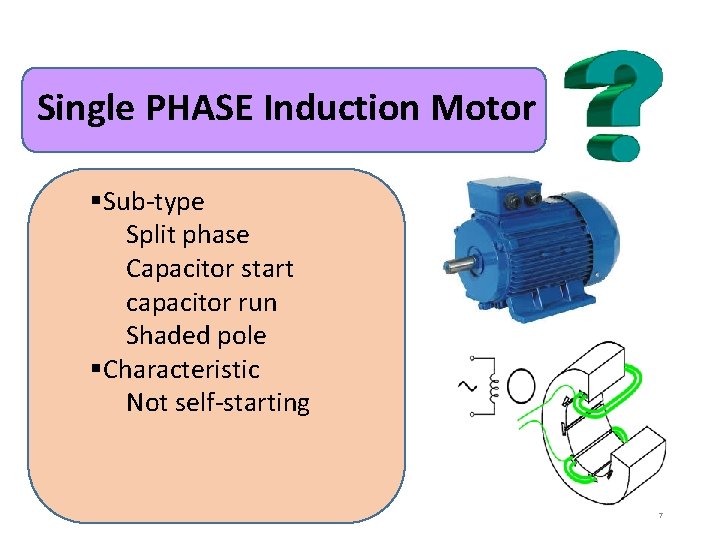
1 - PHASE INDUCTION MOTOR Single PHASE Induction Motor §Sub-type Split phase Capacitor start capacitor run Shaded pole §Characteristic Not self-starting 7
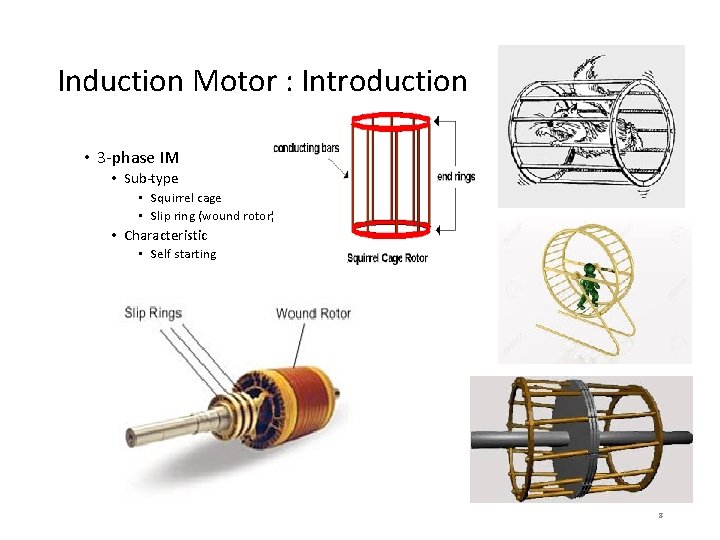
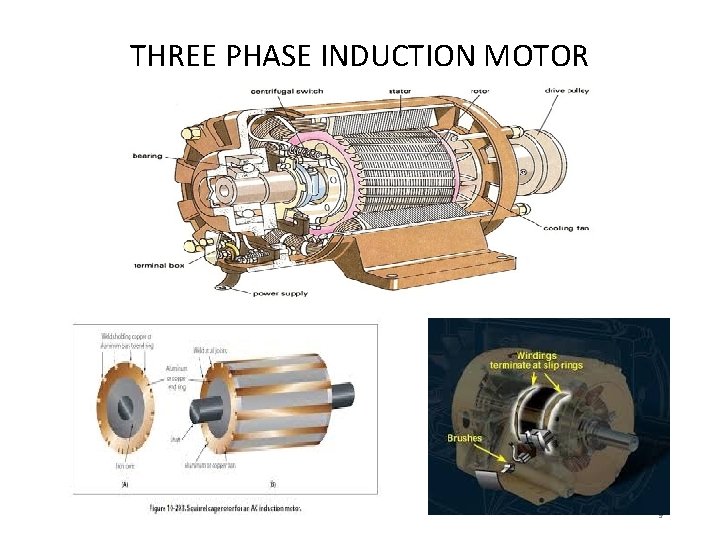
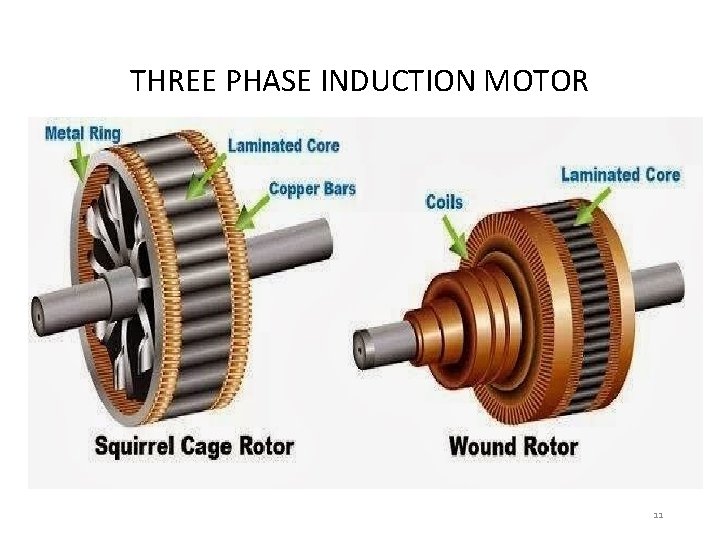
Induction Motor : Introduction • 3 -phase IM • Sub-type • Squirrel cage • Slip ring (wound rotor) • Characteristic • Self starting 8
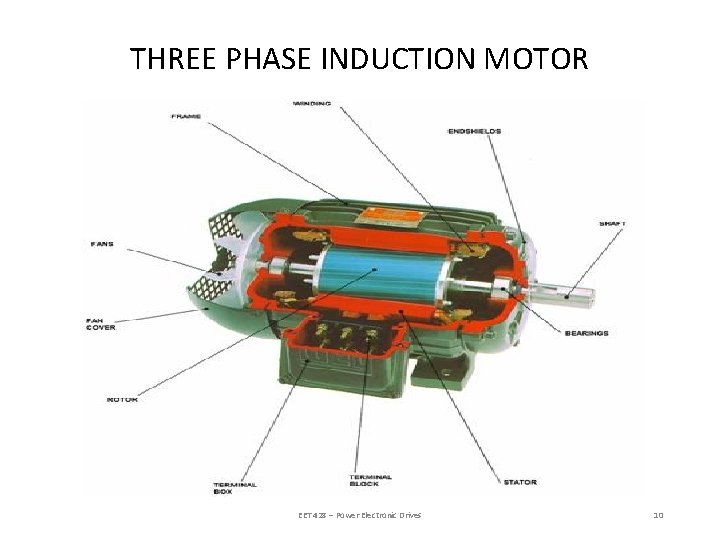
THREE PHASE INDUCTION MOTOR 9
THREE PHASE INDUCTION MOTOR EET 428 – Power Electronic Drives 10
THREE PHASE INDUCTION MOTOR 11
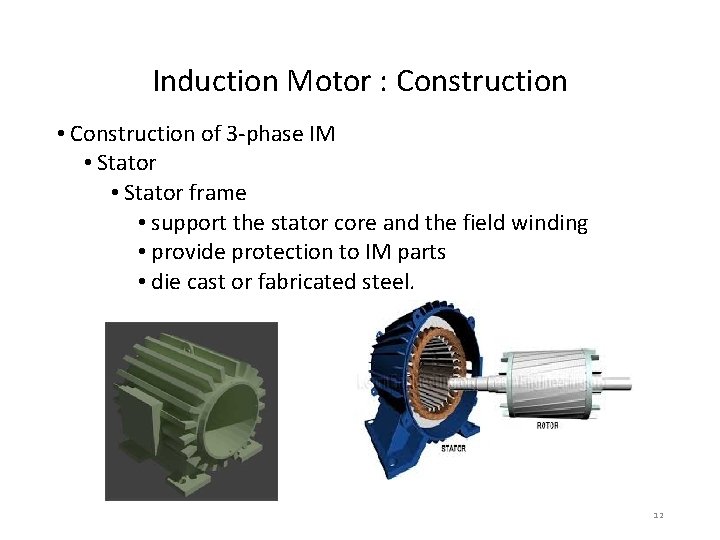
Induction Motor : Construction • Construction of 3 -phase IM • Stator frame • support the stator core and the field winding • provide protection to IM parts • die cast or fabricated steel. 12
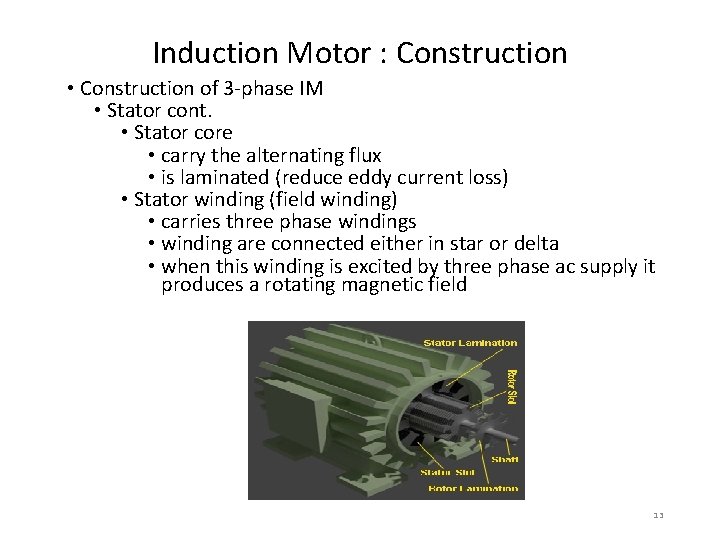
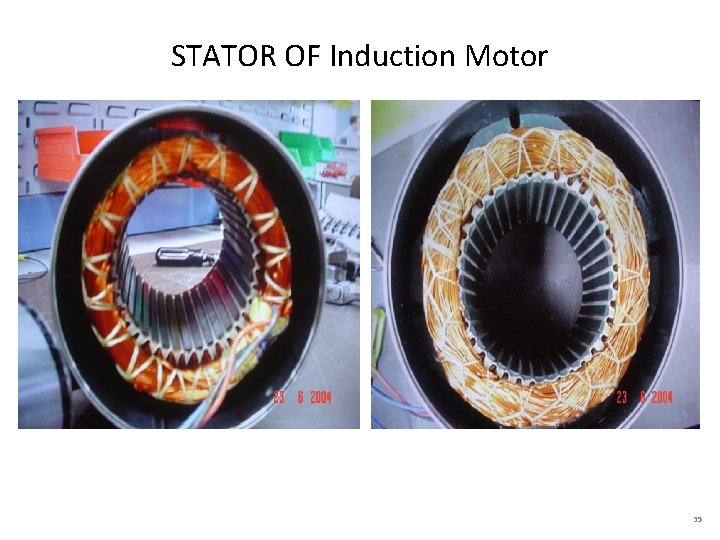
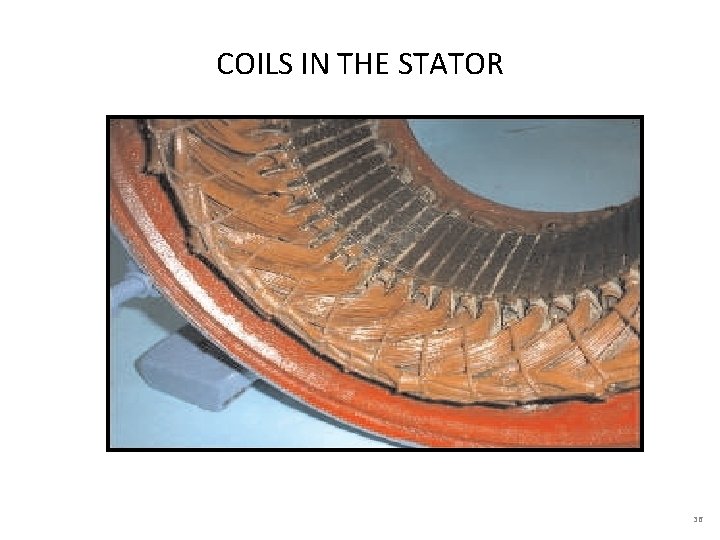
Induction Motor : Construction • Construction of 3 -phase IM • Stator cont. • Stator core • carry the alternating flux • is laminated (reduce eddy current loss) • Stator winding (field winding) • carries three phase windings • winding are connected either in star or delta • when this winding is excited by three phase ac supply it produces a rotating magnetic field 13
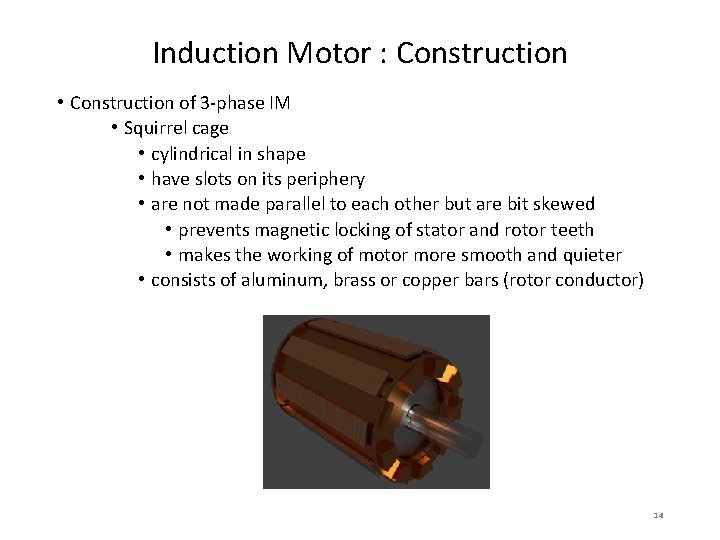
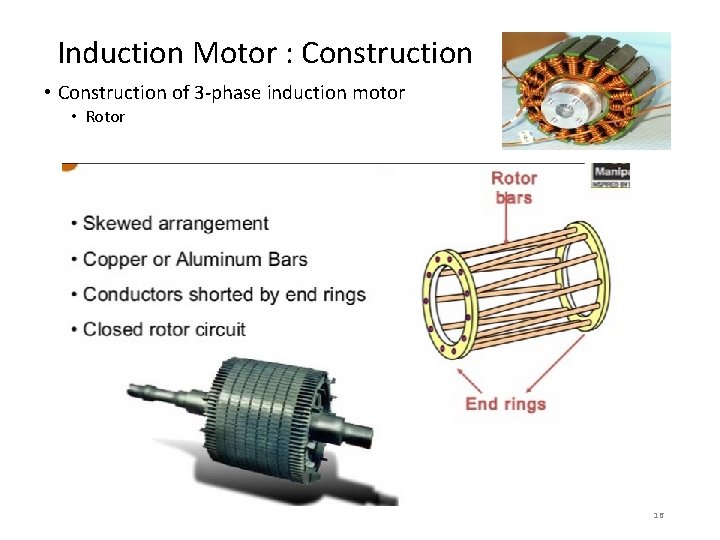
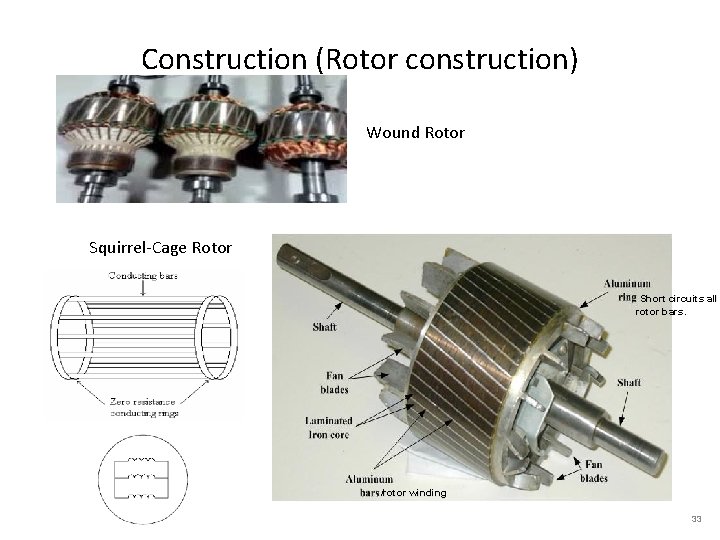
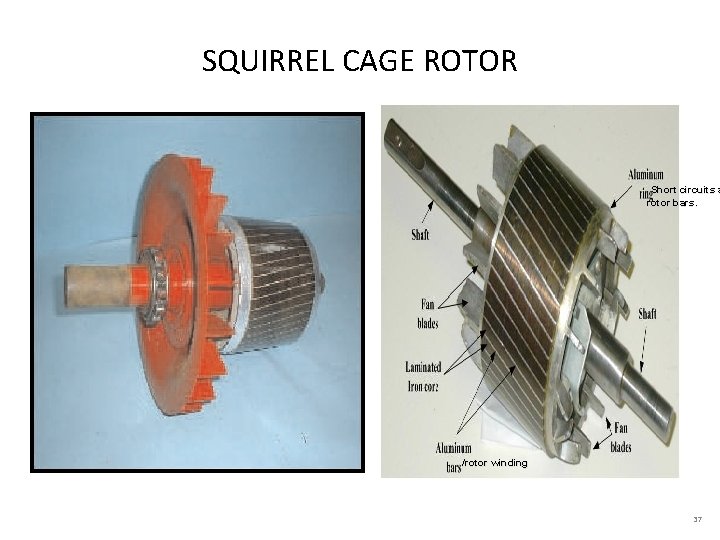
Induction Motor : Construction • Construction of 3 -phase IM • Squirrel cage • cylindrical in shape • have slots on its periphery • are not made parallel to each other but are bit skewed • prevents magnetic locking of stator and rotor teeth • makes the working of motor more smooth and quieter • consists of aluminum, brass or copper bars (rotor conductor) 14
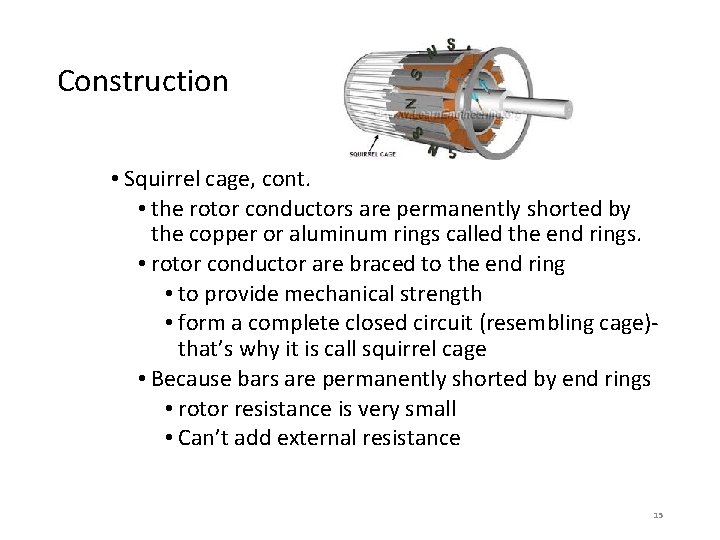
Construction • Squirrel cage, cont. • the rotor conductors are permanently shorted by the copper or aluminum rings called the end rings. • rotor conductor are braced to the end ring • to provide mechanical strength • form a complete closed circuit (resembling cage)- that’s why it is call squirrel cage • Because bars are permanently shorted by end rings • rotor resistance is very small • Can’t add external resistance 15
Induction Motor : Construction • Construction of 3 -phase induction motor • Rotor 16
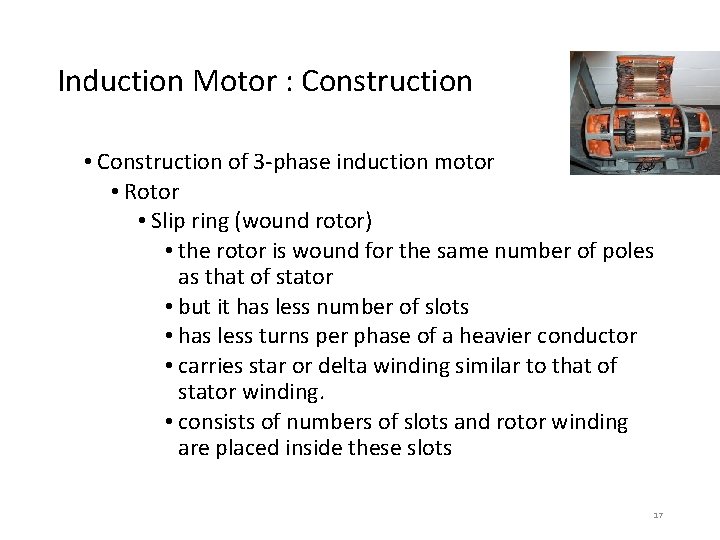
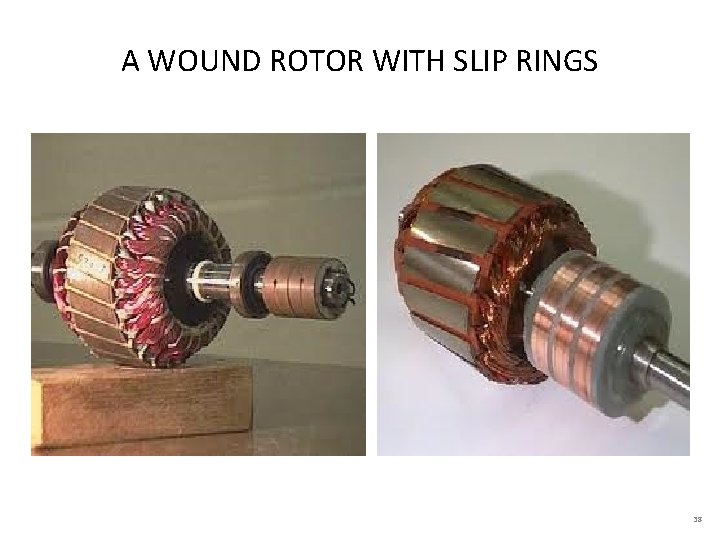
Induction Motor : Construction • Construction of 3 -phase induction motor • Rotor • Slip ring (wound rotor) • the rotor is wound for the same number of poles as that of stator • but it has less number of slots • has less turns per phase of a heavier conductor • carries star or delta winding similar to that of stator winding. • consists of numbers of slots and rotor winding are placed inside these slots 17
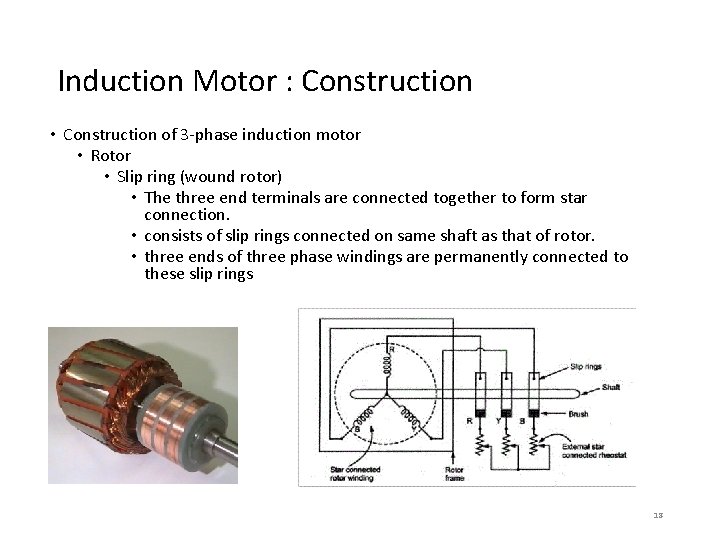
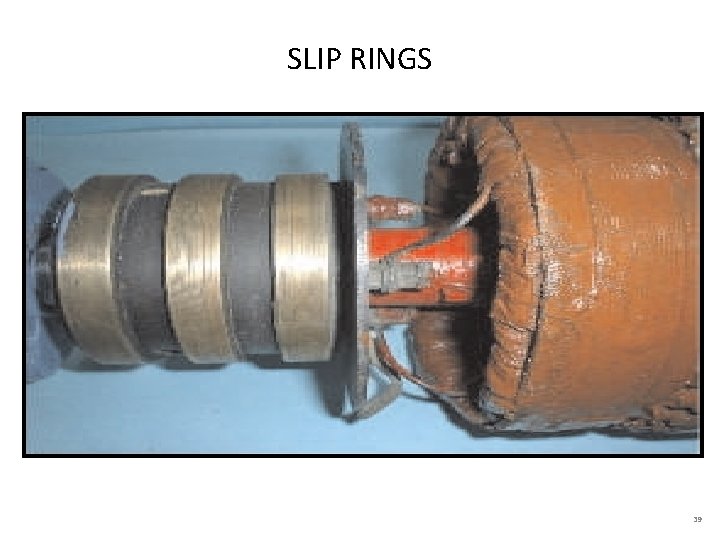
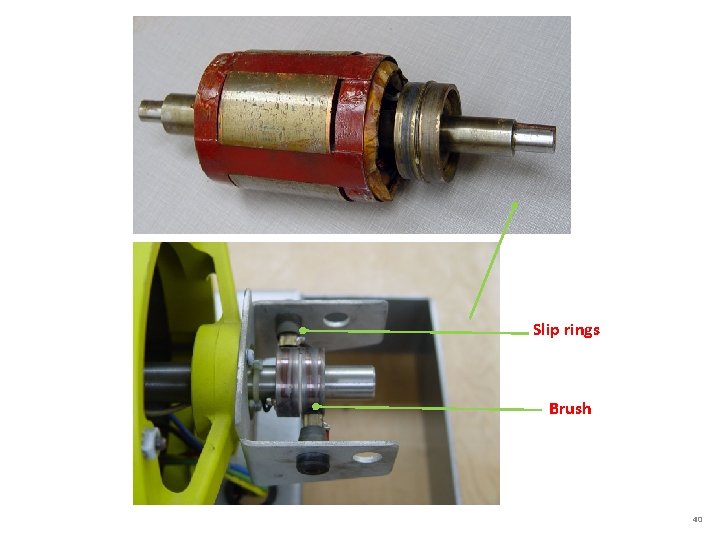
Induction Motor : Construction • Construction of 3 -phase induction motor • Rotor • Slip ring (wound rotor) • The three end terminals are connected together to form star connection. • consists of slip rings connected on same shaft as that of rotor. • three ends of three phase windings are permanently connected to these slip rings 18
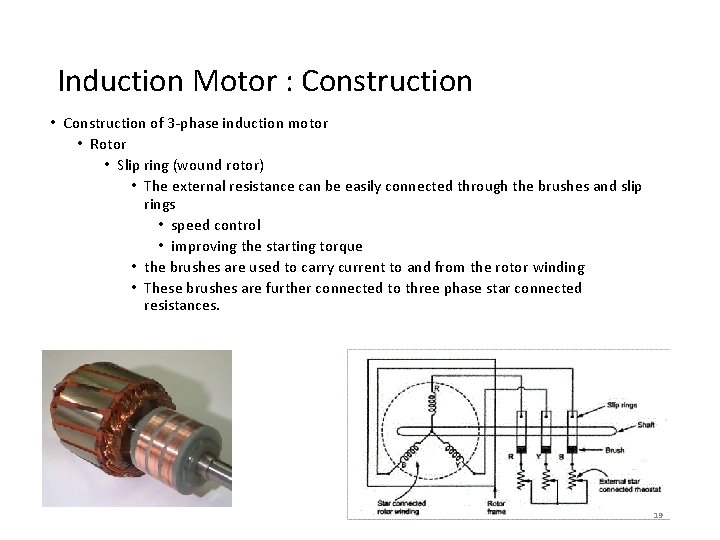
Induction Motor : Construction • Construction of 3 -phase induction motor • Rotor • Slip ring (wound rotor) • The external resistance can be easily connected through the brushes and slip rings • speed control • improving the starting torque • the brushes are used to carry current to and from the rotor winding • These brushes are further connected to three phase star connected resistances. 19
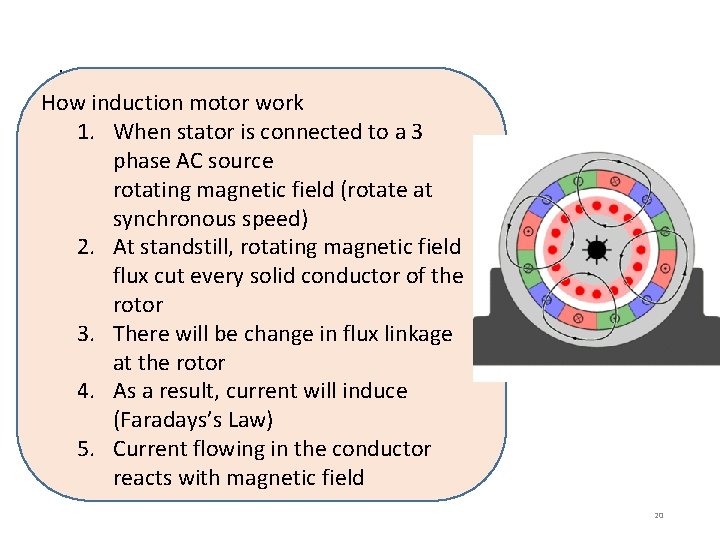
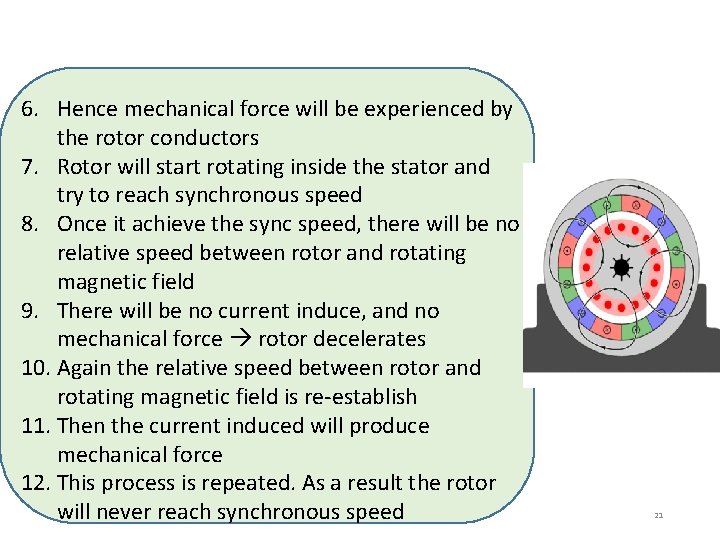
Induction Motor : Mechanism How induction motor work 1. When stator is connected to a 3 phase AC source rotating magnetic field (rotate at synchronous speed) 2. At standstill, rotating magnetic field flux cut every solid conductor of the rotor 3. There will be change in flux linkage at the rotor 4. As a result, current will induce (Faradays’s Law) 5. Current flowing in the conductor reacts with magnetic field 20
Induction Motor : Mechanism 6. Hence mechanical force will be experienced by the rotor conductors 7. Rotor will start rotating inside the stator and try to reach synchronous speed 8. Once it achieve the sync speed, there will be no relative speed between rotor and rotating magnetic field 9. There will be no current induce, and no mechanical force rotor decelerates 10. Again the relative speed between rotor and rotating magnetic field is re-establish 11. Then the current induced will produce mechanical force 12. This process is repeated. As a result the rotor will never reach synchronous speed 21
Induction Motor : Advantages VS Disadvantages Advantages v. Robust; No brushes. v. No contacts on rotor shaft v. High Power/Weight ratio v. Lower Cost/Power ratio v. Easy to manufacture Disadvantages v. Essentially a “fixed-speed” machine v. Speed is determined by the supply frequency v. To vary its speed need a variable frequency supply v. Almost maintenance free v. Except for bearing and other mechanical parts 22
Induction Motor Supply frequency However the supply frequency is no longer a big issue • Inverter configuration improved • Fast switching, high power switches • Sophisticated control strategy • Advance Microprocessor/DSP implementation 23
Induction Motor : Applications • Conveyer line (belt) drives • Roller table • Paper mills, • Traction • Electric vehicles • Elevators • Pulleys • Air conditioning • Any industrial process that requires variable-speed operation. 24
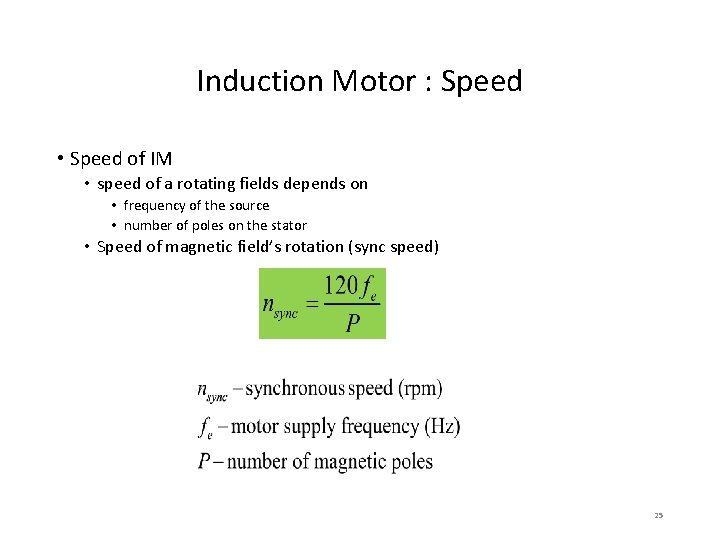
Induction Motor : Speed • Speed of IM • speed of a rotating fields depends on • frequency of the source • number of poles on the stator • Speed of magnetic field’s rotation (sync speed) 25
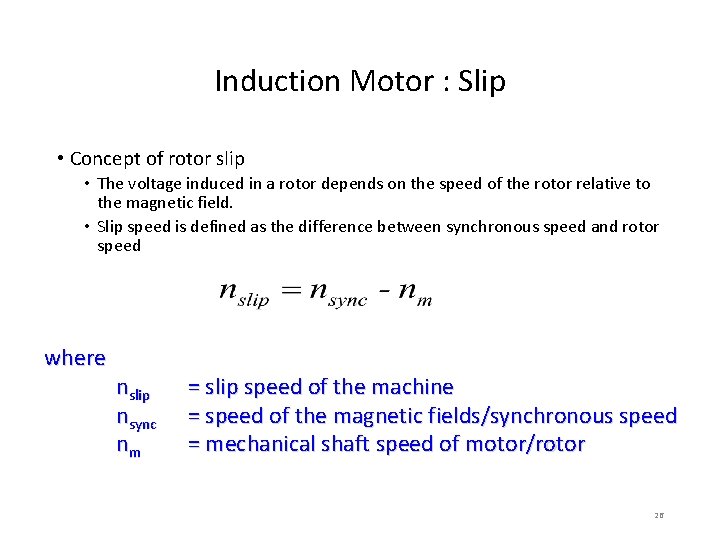
Induction Motor : Slip • Concept of rotor slip • The voltage induced in a rotor depends on the speed of the rotor relative to the magnetic field. • Slip speed is defined as the difference between synchronous speed and rotor speed where nslip nsync nm = slip speed of the machine = speed of the magnetic fields/synchronous speed = mechanical shaft speed of motor/rotor 26
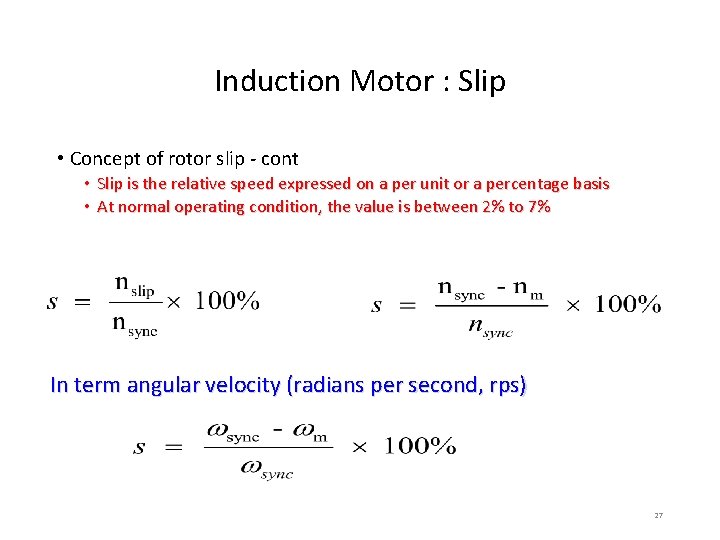
Induction Motor : Slip • Concept of rotor slip - cont • Slip is the relative speed expressed on a per unit or a percentage basis • At normal operating condition, the value is between 2% to 7% In term angular velocity (radians per second, rps) 27
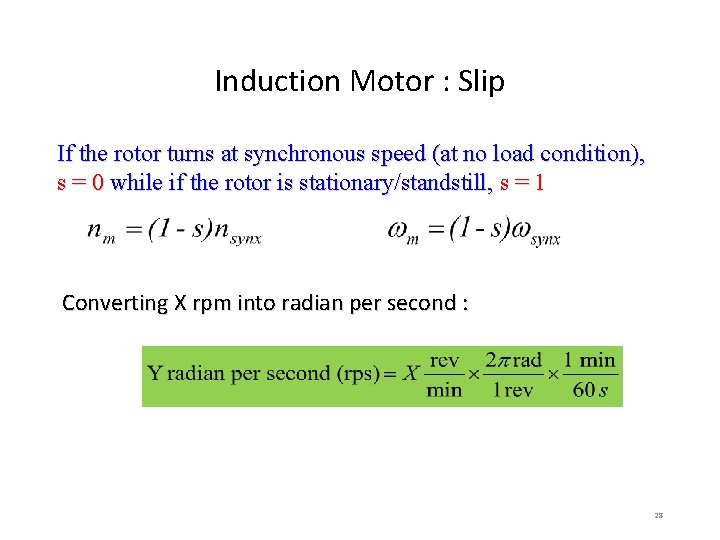
Induction Motor : Slip If the rotor turns at synchronous speed (at no load condition), s = 0 while if the rotor is stationary/standstill, s = 1 Converting X rpm into radian per second : 28
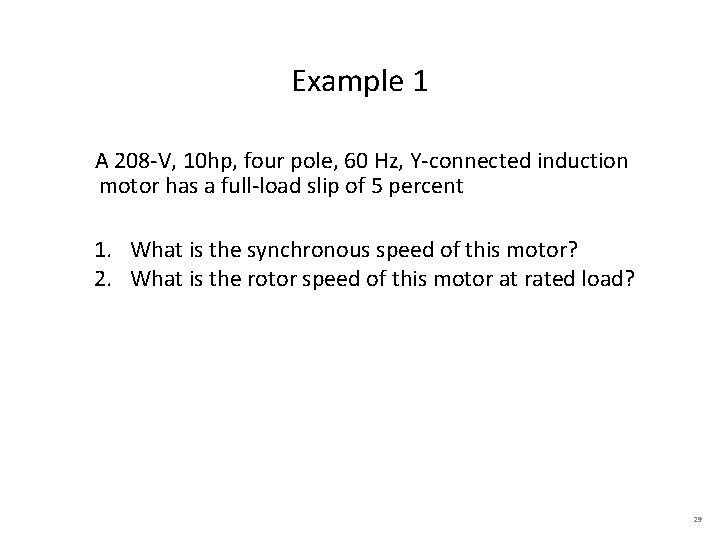
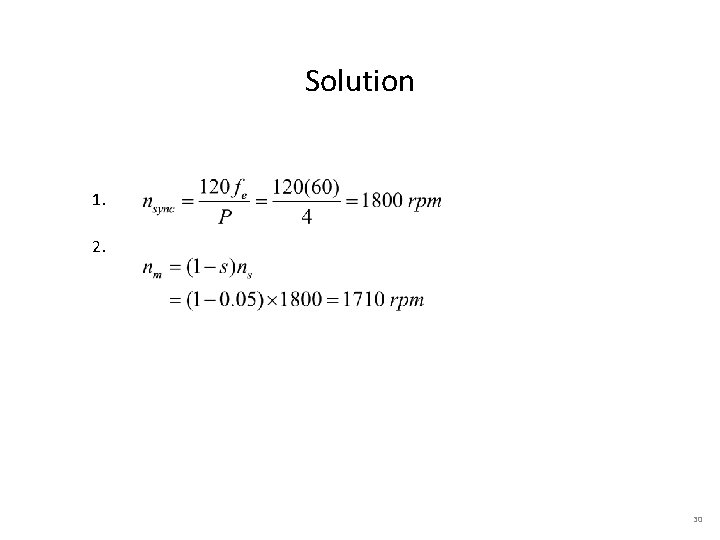
Example 1 A 208 -V, 10 hp, four pole, 60 Hz, Y-connected induction motor has a full-load slip of 5 percent 1. What is the synchronous speed of this motor? 2. What is the rotor speed of this motor at rated load? 29
Solution 1. 2. 30
EXTRA EXERCISE EET 428 – Power Electronic Drives 31
Induction Motor : Slip • Find out: • Why the slip is required in induction motor? • why the induction motor can’t operate at synchronous speed? 32
Construction (Rotor construction) Wound Rotor Squirrel-Cage Rotor Short circuits all rotor bars. /rotor winding 33
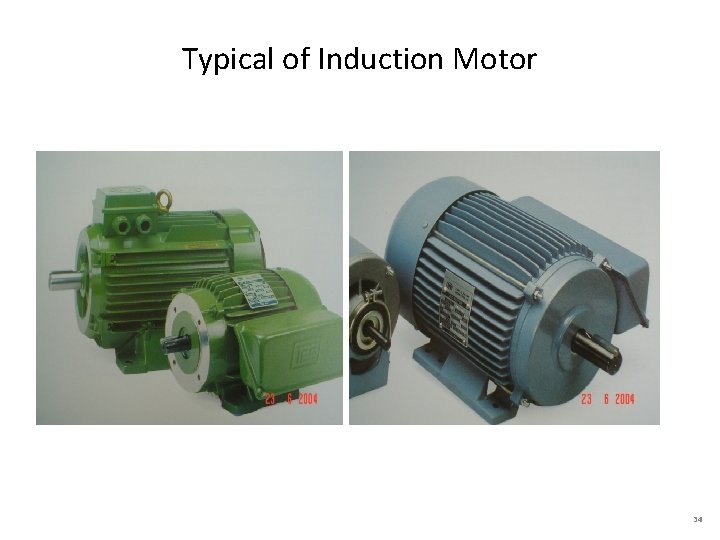
Typical of Induction Motor 34
STATOR OF Induction Motor 35
COILS IN THE STATOR 36
SQUIRREL CAGE ROTOR Short circuits a rotor bars. /rotor winding 37
A WOUND ROTOR WITH SLIP RINGS 38
SLIP RINGS 39
Slip rings Brush 40
Thank You “FAILURES ARE MADE ONLY BY THOSE WHO FAIL TO DARE, NOT BY THOSE WHO DARE TO FAIL” 41