
Plot Conflict and Sequence Literary Analysis Plot and
- Slides: 9
Plot, Conflict and Sequence Literary Analysis
Plot and Conflict • Plot is the series of events in a narrative or story. • Conflict is the struggle at the heart of the plot. • An internal conflict is a struggle within a characters mind. • An external conflict is a clash between a character and an outside force.
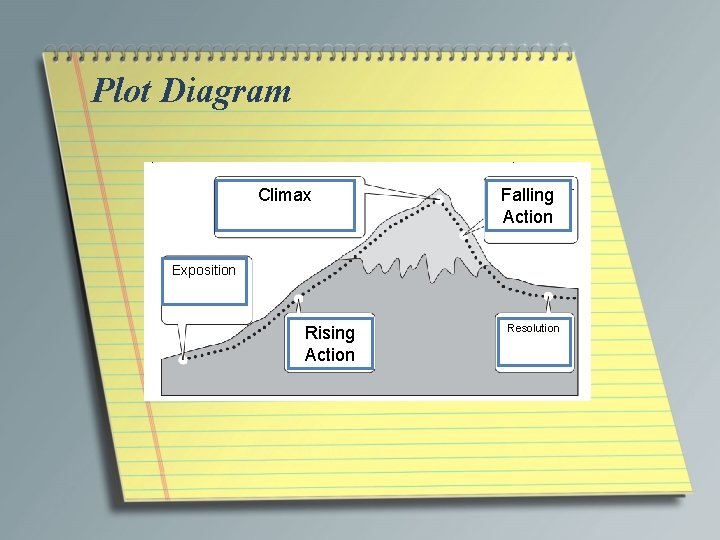
Plot Diagram Climax Falling Action Exposition Rising Action Resolution
Parts of Plot A. Exposition • the series of events in a narrative • introduces conflict >Characters and setting B. Rising Action • plot complications arise • suspense builds C. Climax • turning point of story • makes outcome of conflict clear
Parts of Plot D. Falling Action • suspense eases • tells outcome of the climax E. Resolution • story ending • ties up loose ends
Sequence and Time • Chronological order is the series of events in the order that they happen, one after another.
Flashback • Flashback is an account of an event that happened at an earlier point. What flashback does: • interrupts the story • tells what happened earlier • shows how past events led to the present • provides background
Flashback Strategies to recognize flashback: • Look for clue words and phrases • keep track of chronological order so I recognize the flashback.
Foreshadowing • Foreshadowing is the use of hints to suggest what will happen later. What foreshadowing does: • prepares reader for later events • creates suspense • makes you want to keep reading Strategies to recognize foreshadowing: • Notice repeated ideas and descriptions. • Notice characters acting strangely or unusually.