
Please line up in height order Business Communication
Please line up in height order Business Communication
Learning Objectives • Identify and explain internal and external methods of communication • Identify and apply the appropriate use of different methods of communication • To justify when different barriers to communications occur in different scenarios
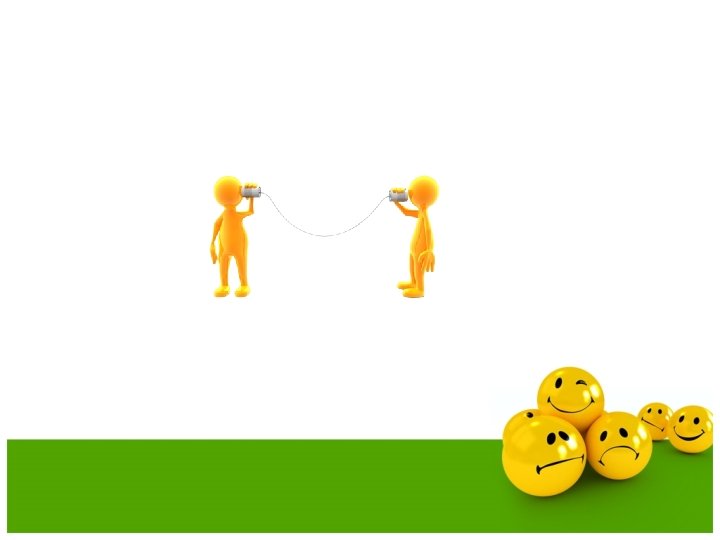
Communication - Defined The process by which a message or information is exchanged from a sender to a receiver
Why does a business need effective communication? • Motivates employees – helps them feel part of business • Easier to control and coordinate business activity – prevents different parts of business going in opposite directions • Makes successful decision making easier – decisions are based on more complete and accurate information • Better communication with customers will increase sales • Improve relationships with suppliers • Improves chances of obtaining finance – e. g. keeping bank up-to-date about how business is doing
Communication and motivation • Good communication is an important part of motivating employees • Motivational theorists recognise this: – Mayo emphasised importance of communication in meeting employees’ social needs – Maslow and Herzberg stressed importance of recognising employee’s achievements and self-esteem needs • Other reasons: – Ensures that everyone is working towards same company goals – Enables employees to be involved in decision-making – Employees can offer feedback and give suggestions – People are motivated by having clear targets set for them – Recognise employee achievements

Rally Robin Who Goes First? Tallest Person in pair The Topic Examples of types of communication methods, and when they would be used? Define; Communication Transferring information from one part of the business to another that leads to some outcome, changed behaviour or changed practice Time 7 Seconds think time Take it in turns to give answers Write answers on the white boards Keep going until asked to stop Resources; White boards and pens Example –Telephones; Personal use Calling a supplier Telephone ordering / customer service
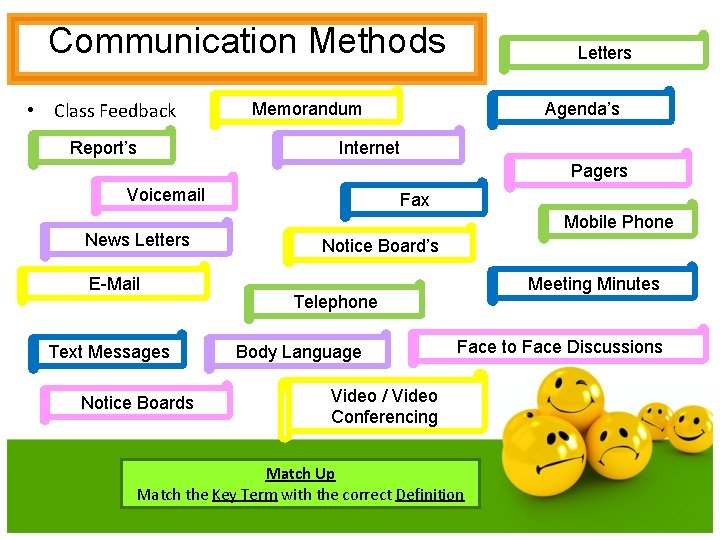
Communication Methods • Class Feedback Report’s Letters Memorandum Agenda’s Internet Pagers Voicemail News Letters E-Mail Text Messages Notice Boards Fax Mobile Phone Notice Board’s Meeting Minutes Telephone Body Language Face to Face Discussions Video / Video Conferencing Match Up Match the Key Term with the correct Definition
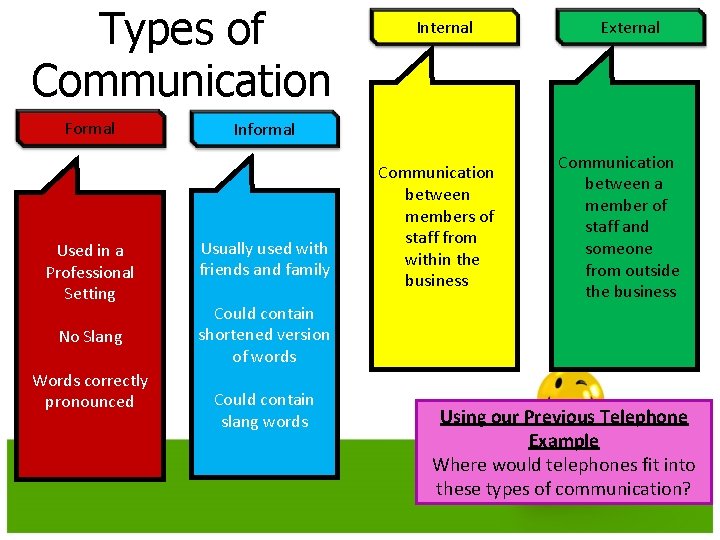
Types of Communication Formal Used in a Professional Setting No Slang Words correctly pronounced Internal External Informal Usually used with friends and family Could contain shortened version of words Could contain slang words Communication between members of staff from within the business Communication between a member of staff and someone from outside the business Using our Previous Telephone Example Where would telephones fit into these types of communication?
Internal & External Types of Communication In Pairs Write the forms of communication listed on the board into the correct category. If you think some could be in both, place them in the middle. Join another pair Discuss the differences Justify your answers Whole Class Are there any methods of communication that your pairs disagree on? Justify the reasons for placement…. . Resources; Large blank Diagram Set of cut outs Glue
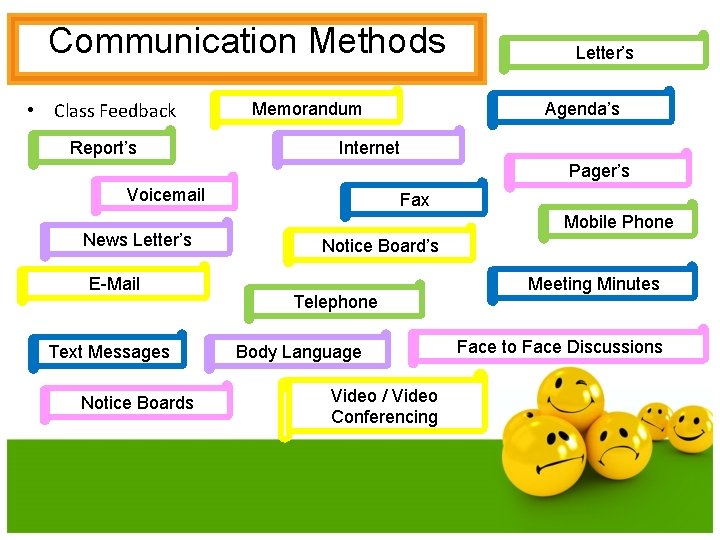
Communication Methods • Class Feedback Report’s Memorandum Letter’s Agenda’s Internet Pager’s Voicemail News Letter’s E-Mail Text Messages Notice Boards Fax Mobile Phone Notice Board’s Telephone Body Language Video / Video Conferencing Meeting Minutes Face to Face Discussions
Learning Objectives TBAT • Identify and explain internal and external methods of communication • Identify and apply the appropriate use of different methods of communication • To justify when different barriers to communications occur in different scenarios
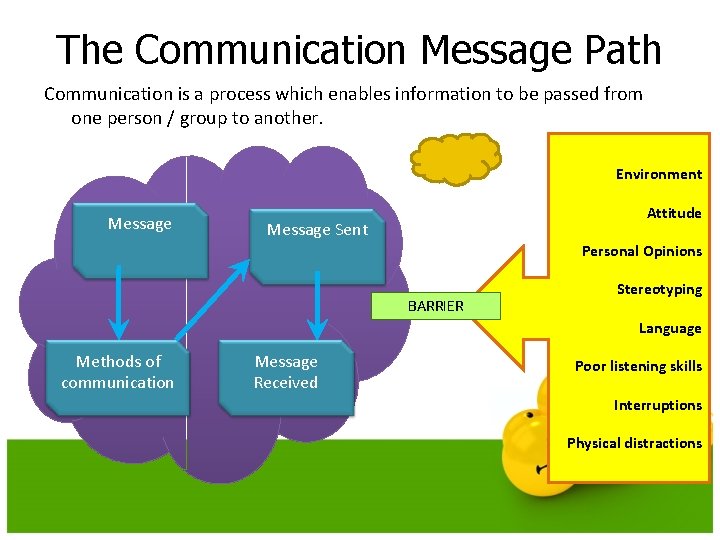
The Communication Message Path Communication is a process which enables information to be passed from one person / group to another. Environment Message Attitude Message Sent Personal Opinions BARRIER Stereotyping Language Methods of communication Message Received Poor listening skills Interruptions Physical distractions
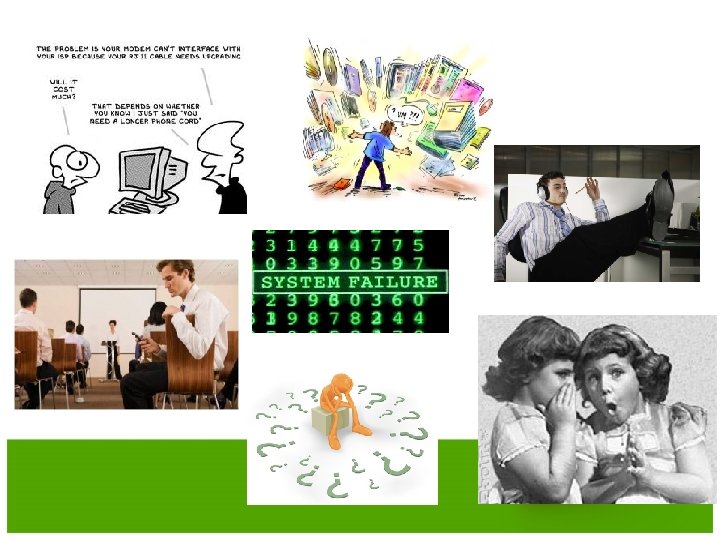
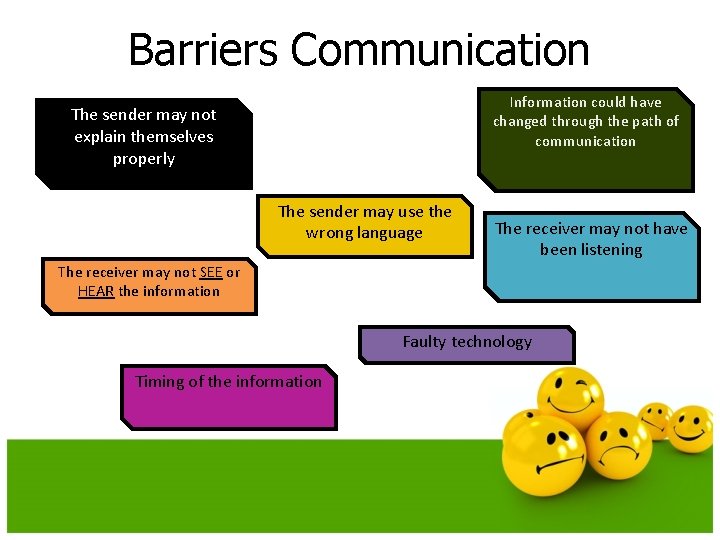
Barriers Communication Information could have changed through the path of communication The sender may not explain themselves properly The sender may use the wrong language The receiver may not have been listening The receiver may not SEE or HEAR the information Faulty technology Timing of the information
Barriers to Communication Manager Supplier • Using the A 3 paper provided you are to show the following for each scenario; 1. Communication Method Path 2. Method of communication used 3. Barrier to Communication 4. If the message path is an internal or external method of communicating 5. Label each path for each scenario • One team member is to complete the justification handout (1 per group) – You must justify each choice Worker Customer
Barriers to Communication Scenario 1 Mrs Smith has bought a TV from the local second hand TV shop. After 2 weeks the screen no longer shows a picture and she wants it repaired. Scenario 2 Jane in the accounts department has realised that JJ Stationery have invoiced them for 10 packs of pens but they only received 9. She would like a credit note. Scenario 3 Mr Jones works for a large supermarket chain, he has an urgent query about his salary, that must be resolved. Extension In each scenario there is the opportunity to continue the message path (e. g. Supplier to Worker to Manager). Using another colour pen, can you show these? )
Learning Objectives TBAT • Identify and explain internal and external methods of communication • Identify and apply the appropriate use of different methods of communication • To justify when different barriers to communications occur in different scenarios
Stereotyping would be the most common barrier to communication, during a telephone call between a Manager and Supplier? A potential customer would like to gain information about a product sold at the local Comet store. They assume writing a letter to the store is the most effective way of communicating. True False A supplier is chasing payment of an outstanding invoice, they choose to telephone and leave a message with the receptionist. After not hearing back, she calls again to find that the message did not get to the finance department. She assumes the barrier that has impacted on this message is faulty technology. Is this the most likely choice?
• 1. From reading the case study, describe the purposes of a trade union. Relating what you have learnt about communication barriers andby methods; • 2. Using an example, methods, explain what is meant the word ‘noise’ in communication theory. Read the case study about Unison. • 3. Describe the differences between internal and external communications and formalatand communications. Answer the questions theinformal end. Your answers will bethe evaluated at the end of the lesson!! • 4. Evaluate importance of efficient communication procedures for a large trade union.
- Slides: 20