
PLEASE DO NOW What are Earthquakes The shaking
- Slides: 24
PLEASE DO NOW
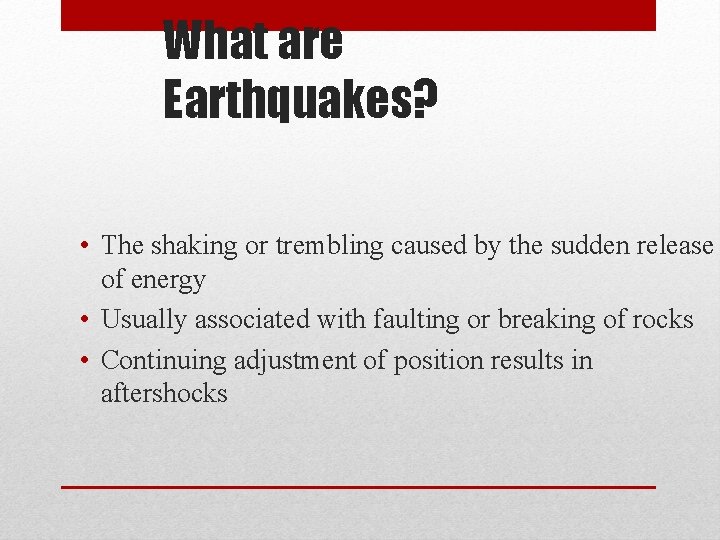
What are Earthquakes? • The shaking or trembling caused by the sudden release of energy • Usually associated with faulting or breaking of rocks • Continuing adjustment of position results in aftershocks
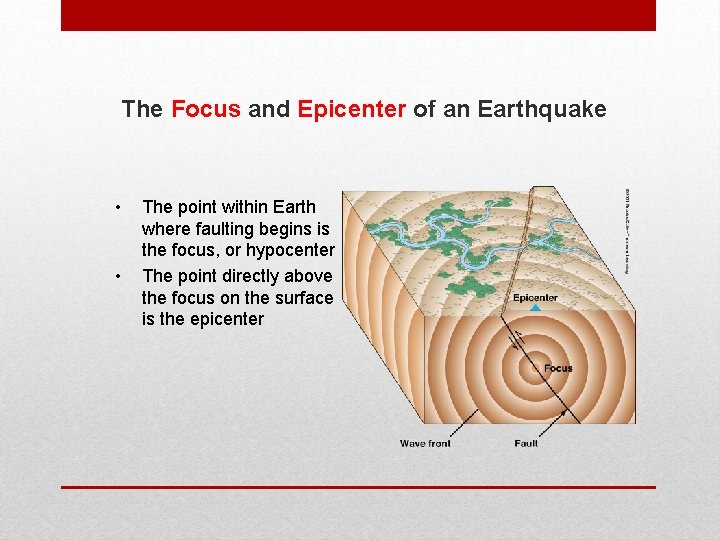
The Focus and Epicenter of an Earthquake • • The point within Earth where faulting begins is the focus, or hypocenter The point directly above the focus on the surface is the epicenter
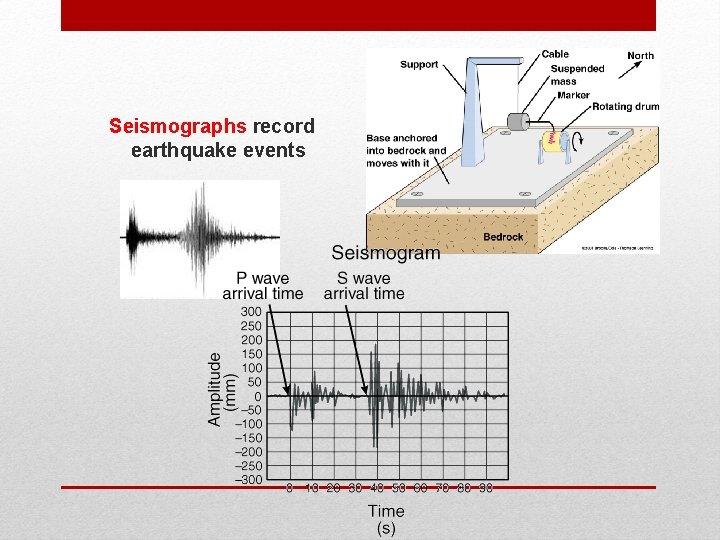
Seismographs record earthquake events
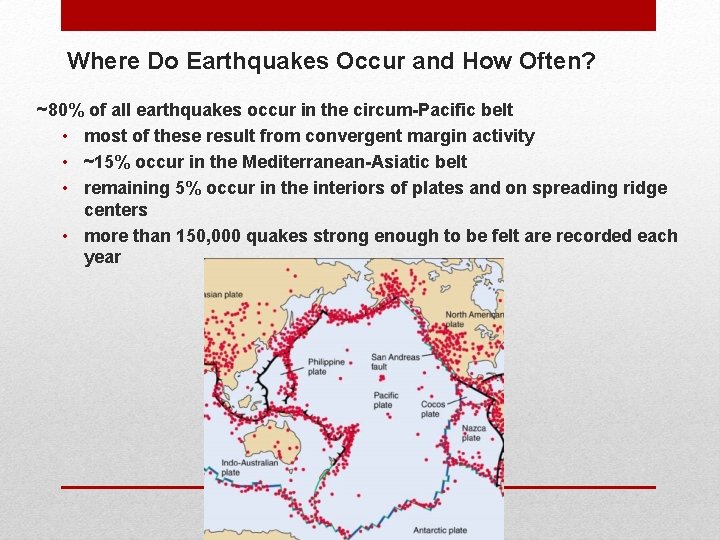
Where Do Earthquakes Occur and How Often? ~80% of all earthquakes occur in the circum-Pacific belt • most of these result from convergent margin activity • ~15% occur in the Mediterranean-Asiatic belt • remaining 5% occur in the interiors of plates and on spreading ridge centers • more than 150, 000 quakes strong enough to be felt are recorded each year
What are Seismic Waves? • Response of material to the arrival of energy fronts released by rupture • Two types: • Body waves • P and S • Surface waves • R and L
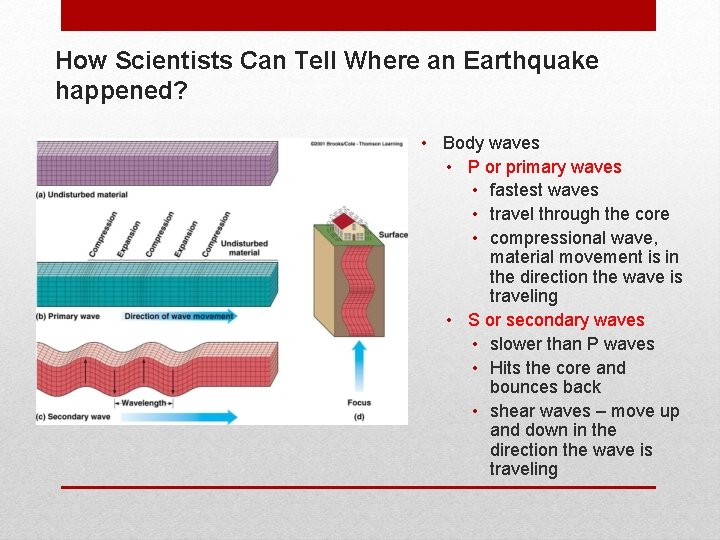
How Scientists Can Tell Where an Earthquake happened? • Body waves • P or primary waves • fastest waves • travel through the core • compressional wave, material movement is in the direction the wave is traveling • S or secondary waves • slower than P waves • Hits the core and bounces back • shear waves – move up and down in the direction the wave is traveling
Surface Waves: R and L waves • Surface Waves • Travel just below or along the ground’s surface • Slower than body waves; rolling and side-to-side movement • Especially damaging to buildings • P and S waves travel from the epicenter and move outward like ripples in water • Surface waves travel from the focus point and head straight upward to the crust
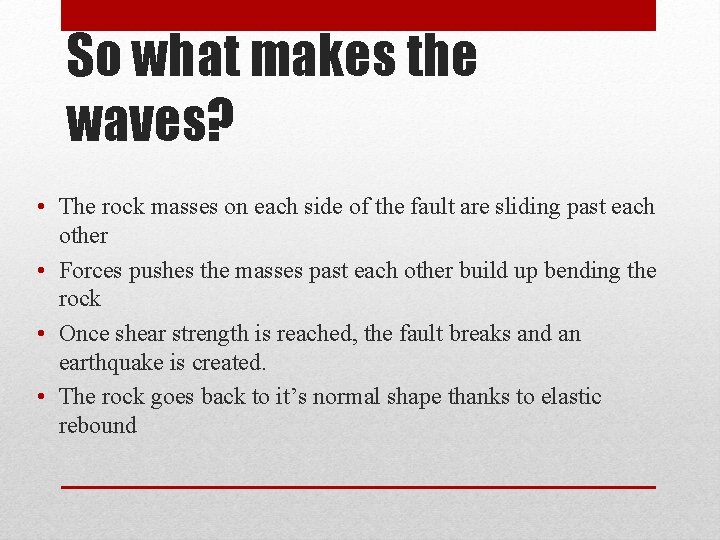
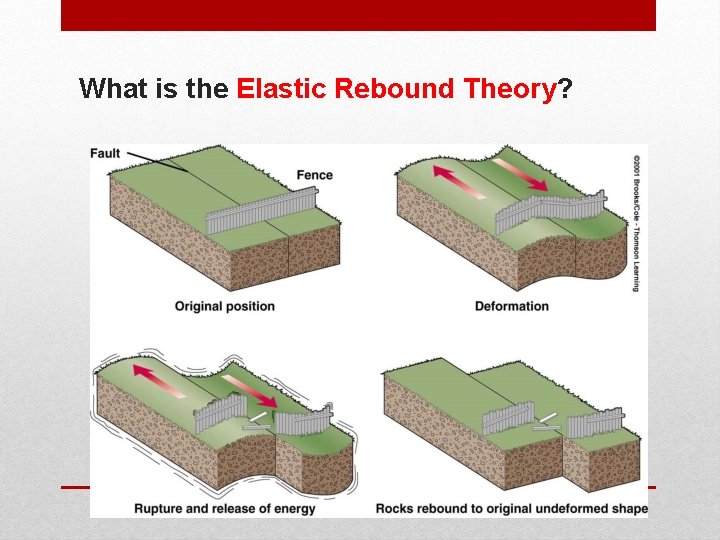
So what makes the waves? • The rock masses on each side of the fault are sliding past each other • Forces pushes the masses past each other build up bending the rock • Once shear strength is reached, the fault breaks and an earthquake is created. • The rock goes back to it’s normal shape thanks to elastic rebound
What is the Elastic Rebound Theory?
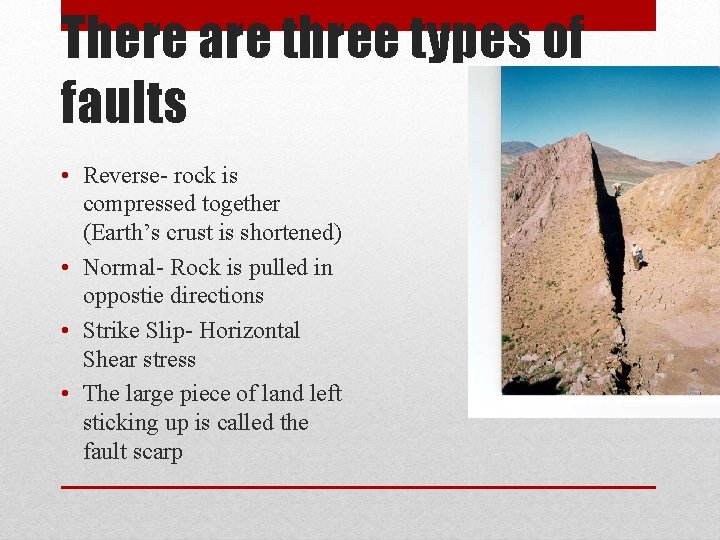
There are three types of faults • Reverse- rock is compressed together (Earth’s crust is shortened) • Normal- Rock is pulled in oppostie directions • Strike Slip- Horizontal Shear stress • The large piece of land left sticking up is called the fault scarp
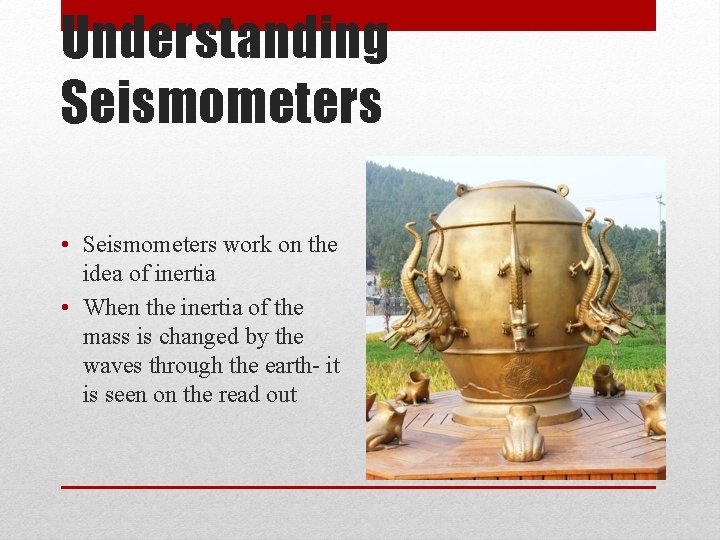
Understanding Seismometers • Seismometers work on the idea of inertia • When the inertia of the mass is changed by the waves through the earth- it is seen on the read out
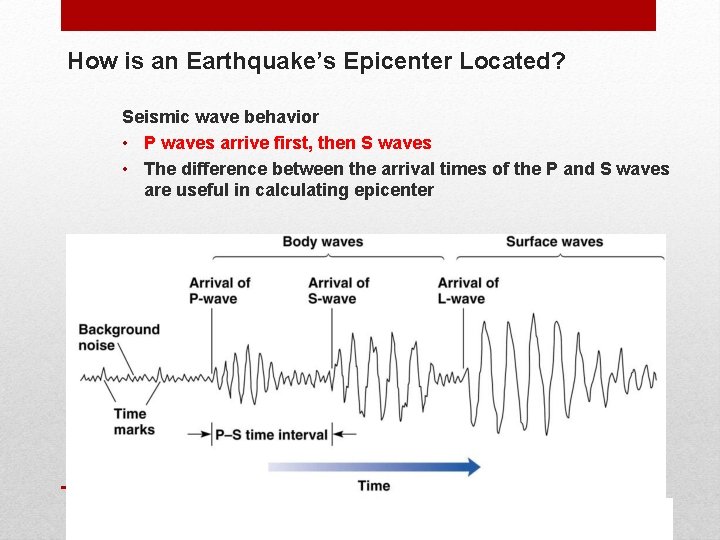
Interpreting Results • Seismograms are the written or mechanical record of earthquake waves • Since p waves move the fastest, they show up first • S waves arrive next and are shown as the second typically larger jump of the needle • L waves or surface waves are the last to be recorded
How is an Earthquake’s Epicenter Located? Seismic wave behavior • P waves arrive first, then S waves • The difference between the arrival times of the P and S waves are useful in calculating epicenter
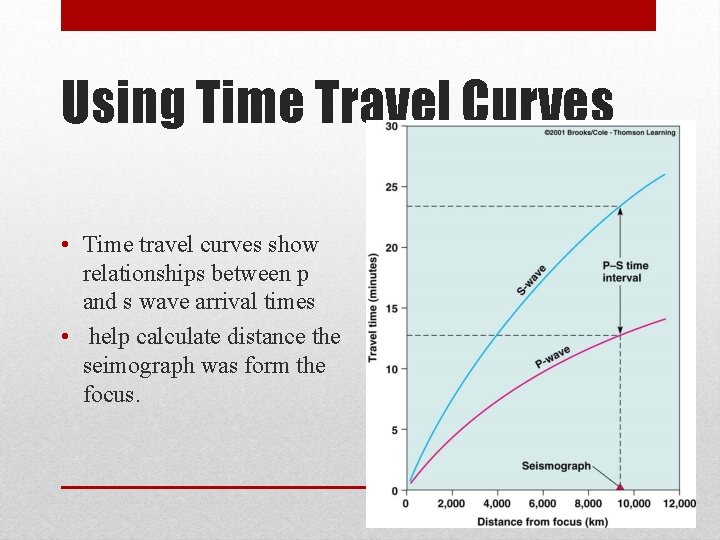
Using Time Travel Curves • Time travel curves show relationships between p and s wave arrival times • help calculate distance the seimograph was form the focus.
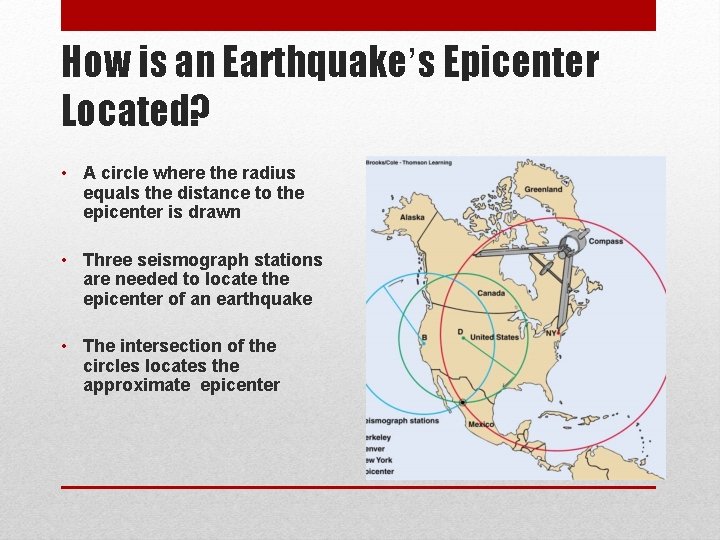
How is an Earthquake’s Epicenter Located? • A circle where the radius equals the distance to the epicenter is drawn • Three seismograph stations are needed to locate the epicenter of an earthquake • The intersection of the circles locates the approximate epicenter
Thursday, March 1 st
Modified Mercalli Intensity Scale • Mercalli Scale- current intensity scale used in the United States to rate earthquakes. • No quantitative data. • Based on observed effects. • Most damage usually occurs closest to the epicenter, but not always.
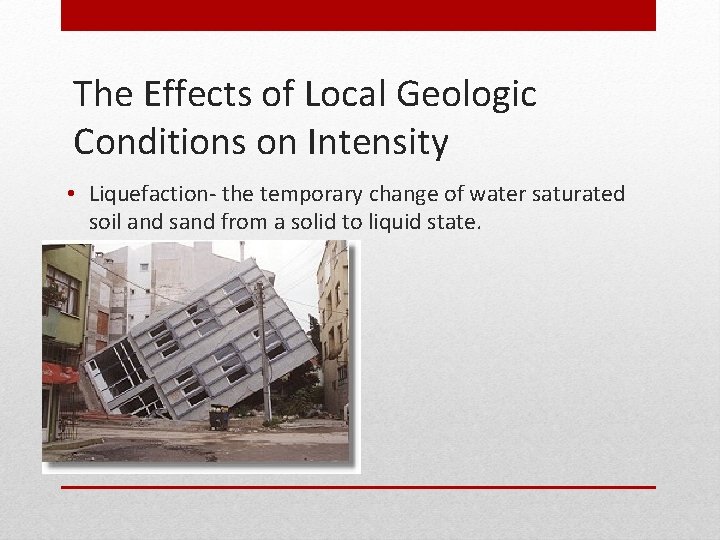
The Effects of Local Geologic Conditions on Intensity • Liquefaction- the temporary change of water saturated soil and sand from a solid to liquid state.
Earthquake Magnitude • Magnitude: measure of the amplitude of the seismic waves recorded on a seismogram. • Charles Richter developed the first earthquake magnitude scale in the 1930’s. • His idea was to record the amplitude, or the swing of the stylus. • The wider the swing, the stronger the earthquake.
Magnitude Scale • Magnitude scale is logarithmic, based on the powers of 10. • Seismic wave amplitudes increase by 10 times for each unit of the scale. • For example, the measured amplitude in a magnitude 6 earthquake is 10 times the measured amplitude in a magnitude 5 earthquake.
• Forces that are produced by plate movement are transmitted all the way across the plate • If an earthquake occurs on the interior of the plate, there is a weakness in the crust • In these areas, the forces that build up within the plates cause the rocks to break, causing an earthquake. Do Earthquakes ALWAYS occur at boundaries?
• Risk- the potential impact of a natural hazard on people or property • Hazard- a natural event, like an earthquake, that has the potential to do damage or harm. • Size, hazard, frequency, and how close they occur to people and population density affect risk • Places such as Southern Alaska (near a subduction zone), and San Francisco (near a fault boundary) have an increased risk of an earthquake Areas of risk in the US
• Earthquake are common along a transform fault, divergent and convergent boundaries • Transform fault- two plates slide past each other • Ex. San Andreas in California • The depth of the earthquake foci match the types of boundaries • Shallow- focus= at mid-ocean ridges and transform • Deep-focus= occur subduction zones Earthquake Patterns and Plate Tectonics