
Platyhelminthes The Flatworms Pechenik 34 000 spp Brusca
Platyhelminthes The Flatworms • Pechenik: 34, 000 spp (Brusca & Brusca: 20, 000 spp) Characteristics: • Triploblastic – Ectoderm, mesoderm, endoderm • • • Acoelomate Bilateral symmetry (w some cephalization) Protonephridia = Organs for excretion/osmoregulation Flatness allows diffusion for gas exchange 80% are parasitic Simultaneous hermaphrodites (monoecious)

Opisthaptor Ectoparasite One host Monogenea Turbellaria Trematoda Acetabulum endoparasite Mollusc/vertebrate life cycle Cestoda Free living Microtriches Scolex Proglottids Cilia lost from ectoderm (parasitic lifestyle) Phylum Platyhelminthes

Class Turbellaria
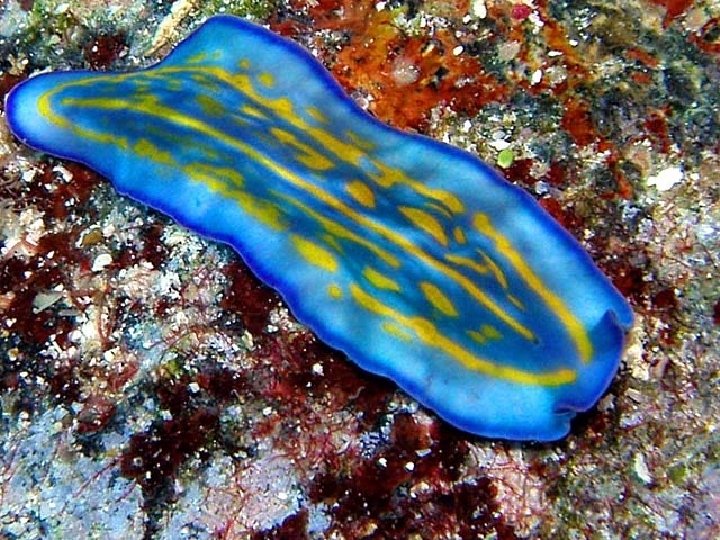
Class Turbellaria
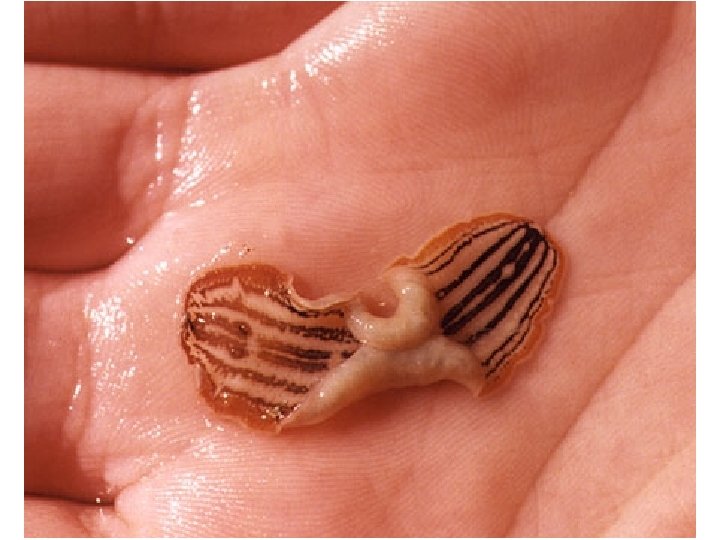
Class Turbellaria
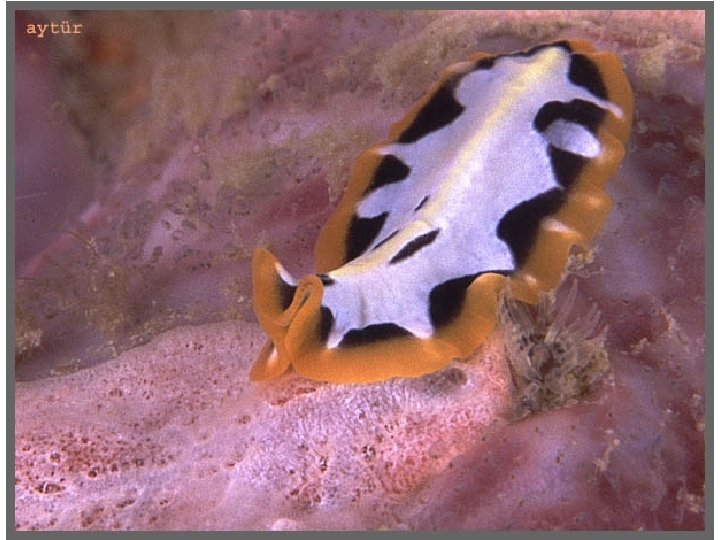
Class Turbellaria
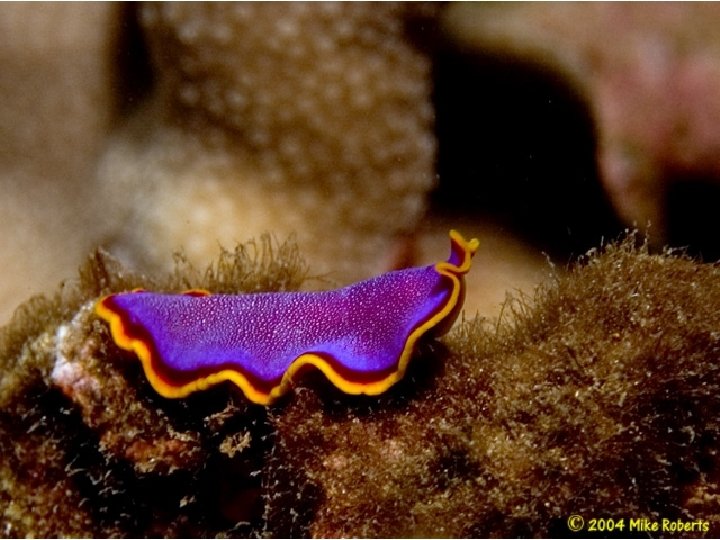
Class Turbellaria
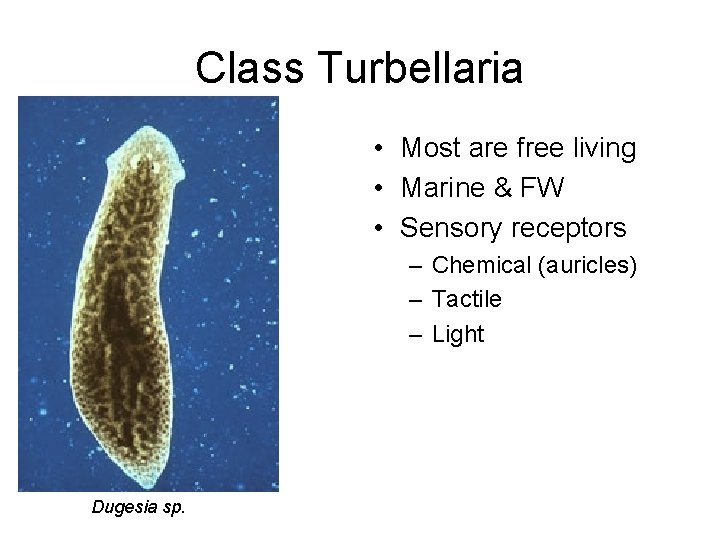
Class Turbellaria • Most are free living • Marine & FW • Sensory receptors – Chemical (auricles) – Tactile – Light Dugesia sp.
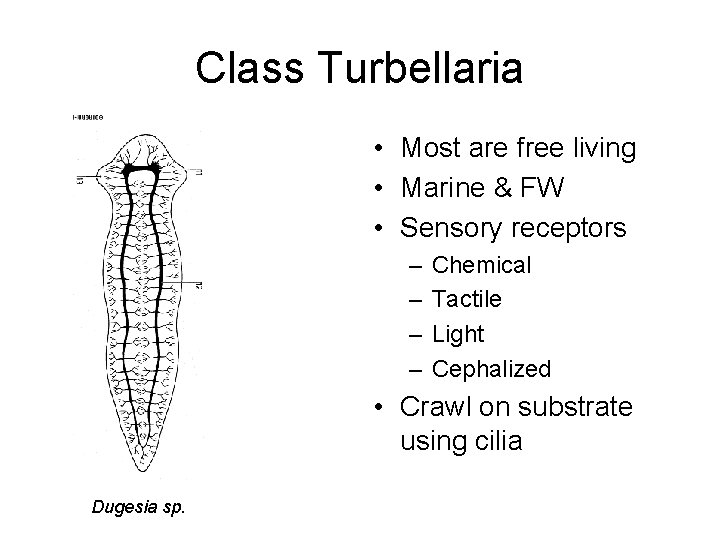
Class Turbellaria • Most are free living • Marine & FW • Sensory receptors – – Chemical Tactile Light Cephalized • Crawl on substrate using cilia Dugesia sp.

Class Turbellaria • Incomplete digestive tract Pharynx

Class Monogenea haptor opisthaptor

Class Monogenea Ectoparasites of fish skin and gills Only 1 host
Monogenea Reproduction: Eggs → oncomiracidium larva → attach to fish Larva similar to cestode oncosphere Adults resemble digene trematoda (convergent evolution – life cycles very different)
- Slides: 13