
Platform work how does it impact on working


- Slides: 17
Platform work – how does it impact on working and employment conditions? EFTA Consultative meeting Brussels, 19 March 2019 Sara Riso (Research Manager)
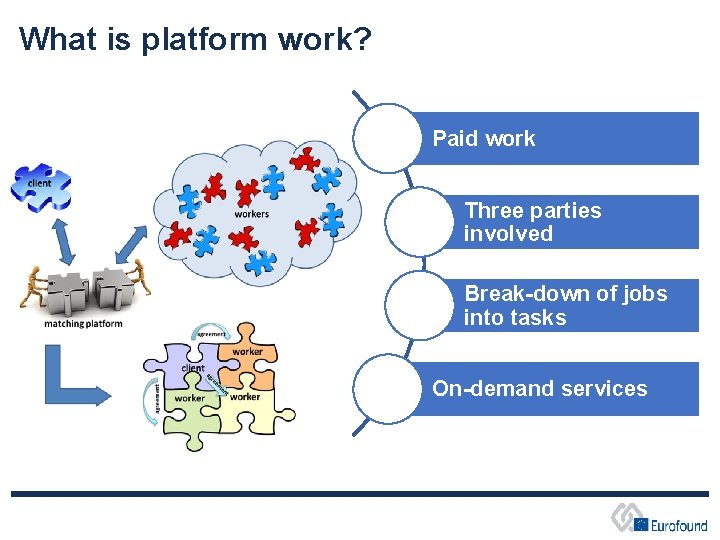
What is platform work? Paid work Three parties involved Break-down of jobs into tasks On-demand services
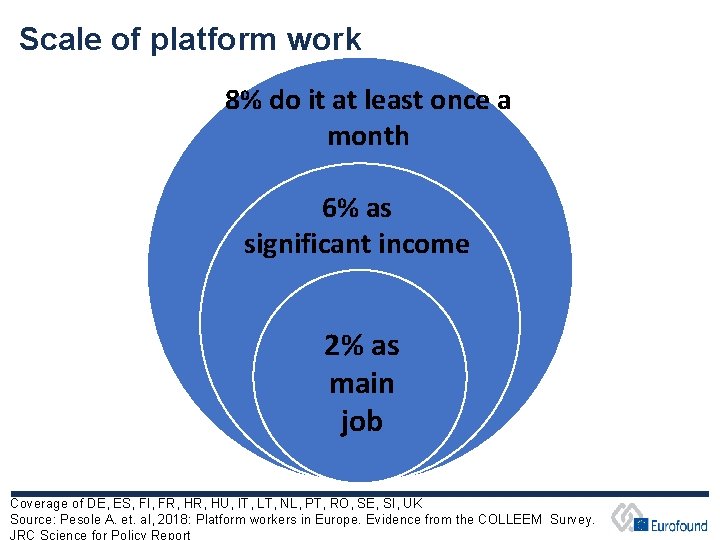
Scale of platform work 8% do it at least once a month 6% as significant income 2% as main job Coverage of DE, ES, FI, FR, HU, IT, LT, NL, PT, RO, SE, SI, UK Source: Pesole A. et. al, 2018: Platform workers in Europe. Evidence from the COLLEEM Survey.
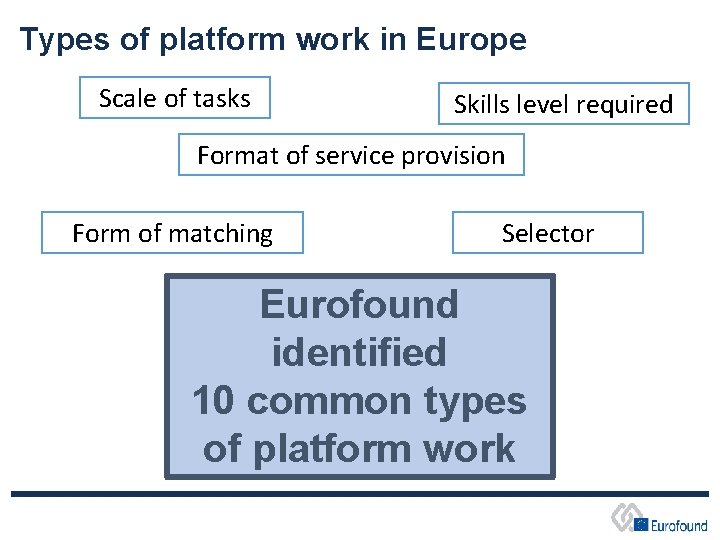
Types of platform work in Europe Scale of tasks Skills level required Format of service provision Form of matching Selector Eurofound identified 10 common types of platform work
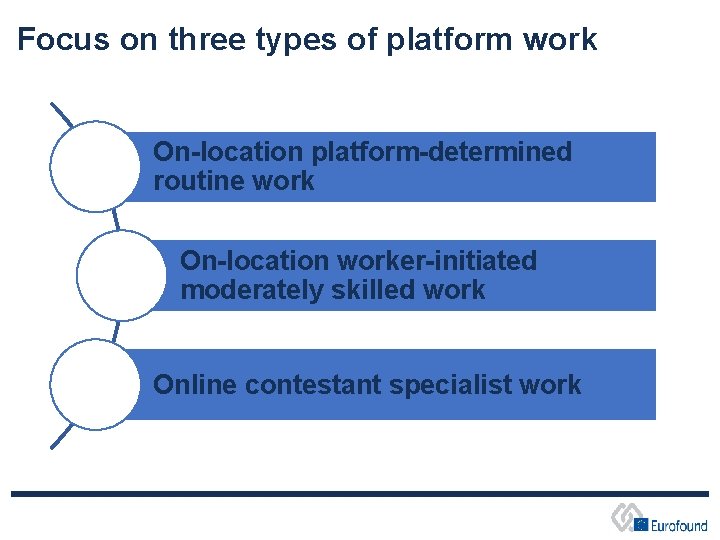
Focus on three types of platform work On-location platform-determined routine work On-location worker-initiated moderately skilled work Online contestant specialist work
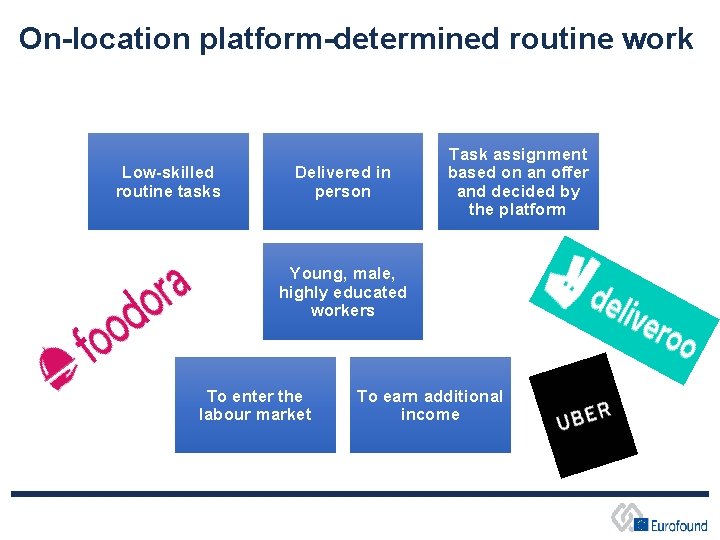
On-location platform-determined routine work Low-skilled routine tasks Delivered in person Task assignment based on an offer and decided by the platform Young, male, highly educated workers To enter the labour market To earn additional income
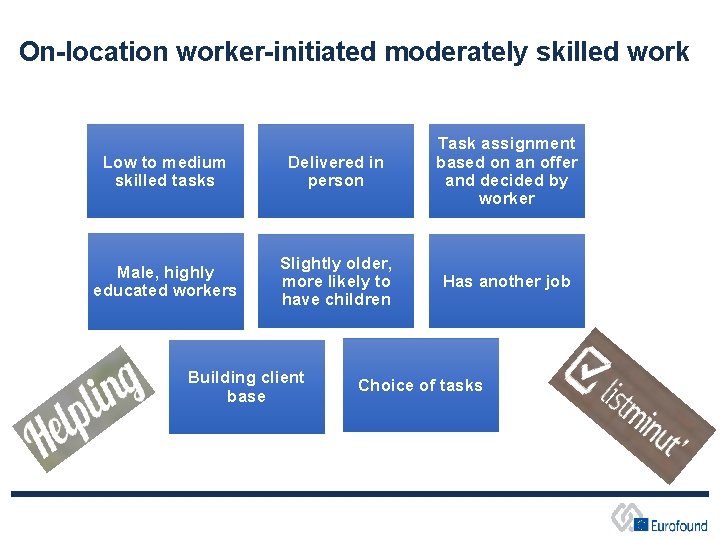
On-location worker-initiated moderately skilled work Low to medium skilled tasks Delivered in person Task assignment based on an offer and decided by worker Male, highly educated workers Slightly older, more likely to have children Has another job Building client base Choice of tasks
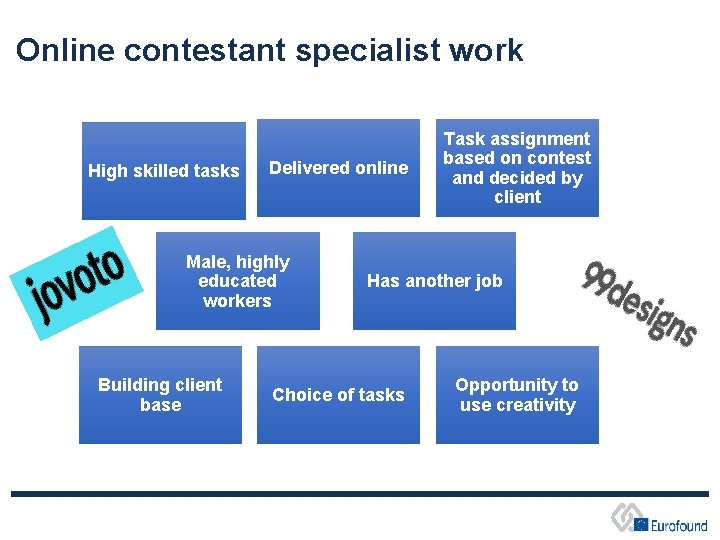
Online contestant specialist work High skilled tasks Delivered online Male, highly educated workers Building client base Task assignment based on contest and decided by client Has another job Choice of tasks Opportunity to use creativity
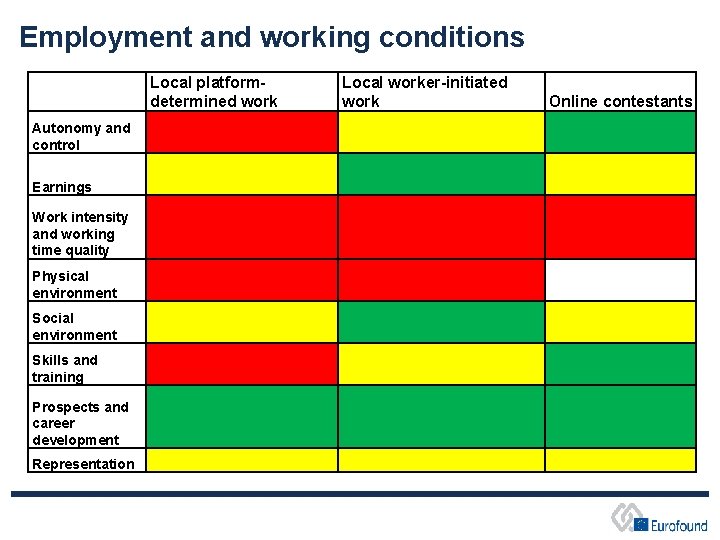
Employment and working conditions Autonomy and control Earnings Work intensity and working time quality Physical environment Social environment Skills and training Prospects and career development Representation Local platformdetermined work Local worker-initiated work Online contestants
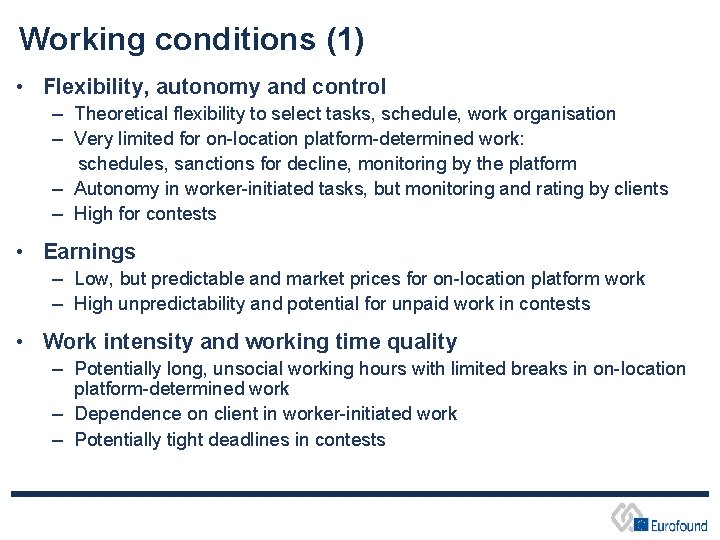
Working conditions (1) • Flexibility, autonomy and control – Theoretical flexibility to select tasks, schedule, work organisation – Very limited for on-location platform-determined work: schedules, sanctions for decline, monitoring by the platform – Autonomy in worker-initiated tasks, but monitoring and rating by clients – High for contests • Earnings – Low, but predictable and market prices for on-location platform work – High unpredictability and potential for unpaid work in contests • Work intensity and working time quality – Potentially long, unsocial working hours with limited breaks in on-location platform-determined work – Dependence on client in worker-initiated work – Potentially tight deadlines in contests
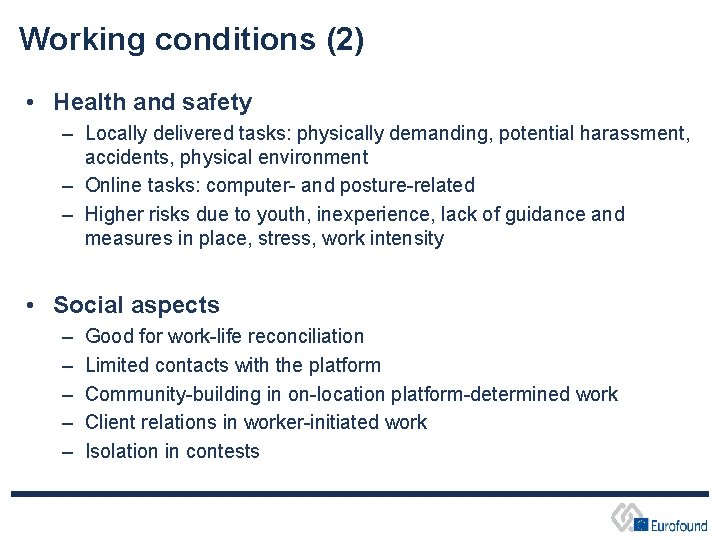
Working conditions (2) • Health and safety – Locally delivered tasks: physically demanding, potential harassment, accidents, physical environment – Online tasks: computer- and posture-related – Higher risks due to youth, inexperience, lack of guidance and measures in place, stress, work intensity • Social aspects – – – Good for work-life reconciliation Limited contacts with the platform Community-building in on-location platform-determined work Client relations in worker-initiated work Isolation in contests
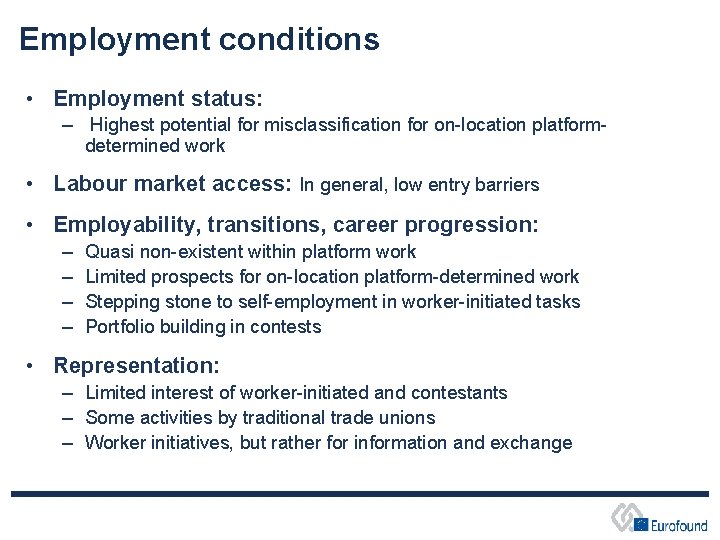
Employment conditions • Employment status: – Highest potential for misclassification for on-location platformdetermined work • Labour market access: In general, low entry barriers • Employability, transitions, career progression: – – Quasi non-existent within platform work Limited prospects for on-location platform-determined work Stepping stone to self-employment in worker-initiated tasks Portfolio building in contests • Representation: – Limited interest of worker-initiated and contestants – Some activities by traditional trade unions – Worker initiatives, but rather for information and exchange
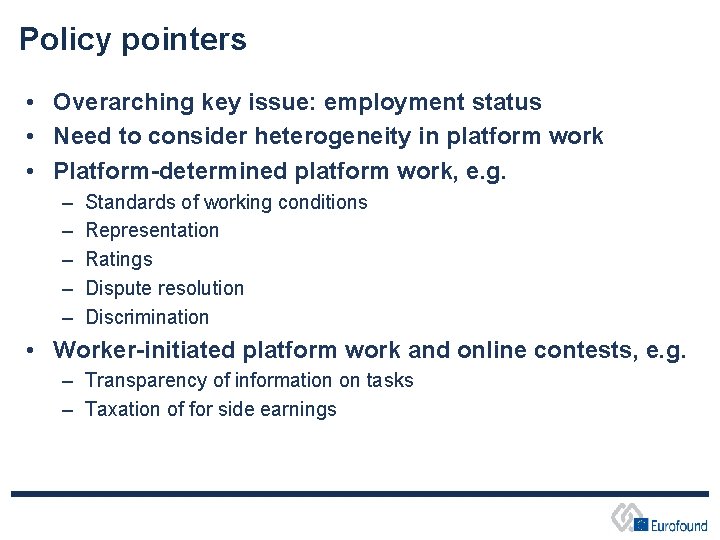
Policy pointers • Overarching key issue: employment status • Need to consider heterogeneity in platform work • Platform-determined platform work, e. g. – – – Standards of working conditions Representation Ratings Dispute resolution Discrimination • Worker-initiated platform work and online contests, e. g. – Transparency of information on tasks – Taxation of for side earnings
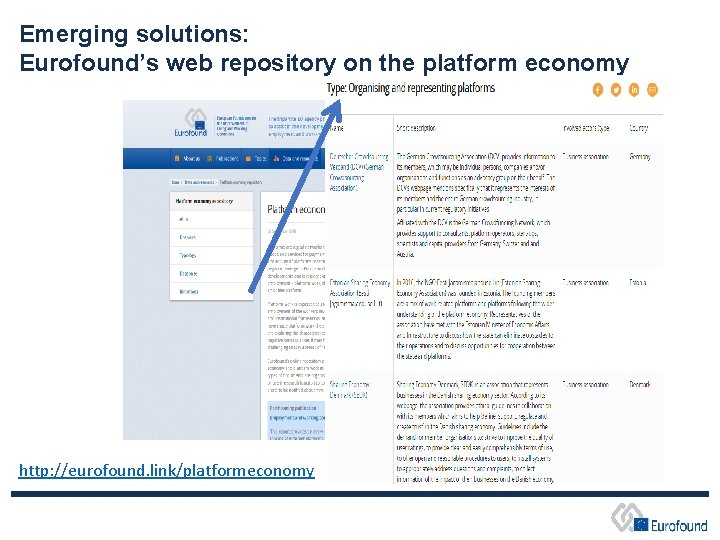
Emerging solutions: Eurofound’s web repository on the platform economy http: //eurofound. link/platformeconomy
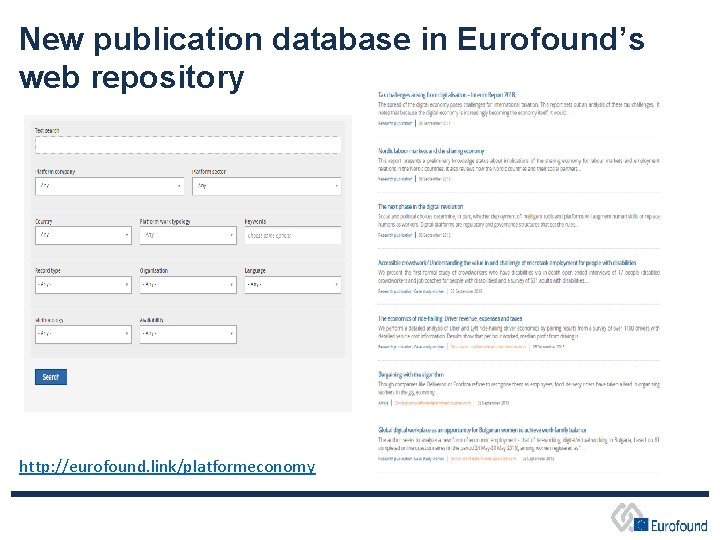
New publication database in Eurofound’s web repository http: //eurofound. link/platformeconomy
Further reading http: //eurofound. link/ef 18001
Thank you for your attention! Sara. riso@eurofound. europa. eu