
Platform governance Managing tensions Governance management models Hierarchy



- Slides: 18
Platform governance Managing tensions
Governance, management models • Hierarchy or market • Network • Platform ecosystem: one kind of network • Information infrastructure: another
Main issues • Managing platform ecosystems • Network effects – multi-sided markets • Tensions • Architectures
Variety of platform ecosystems • Consumer platforms: Android, i. Phone, Vipps, finn. no, Uber, Airbnb, … • Industry platforms : Veracity, Cognite, Kognifai, …. • https: //www. veracity. com • Platform ecosystems in user organizations: NRK, Helse SørØst, … • Governance model evolves as platform ecosystem evolves • Platforms and cloud symbioses • Integration of platforms: information infrastructures
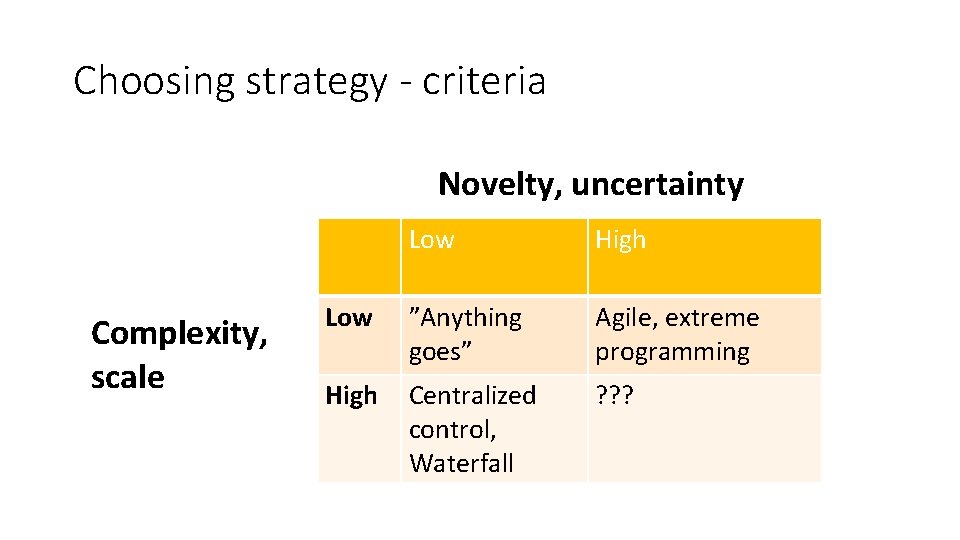
Choosing strategy - criteria Novelty, uncertainty Complexity, scale Low High Low ”Anything goes” Agile, extreme programming High Centralized control, Waterfall ? ? ?
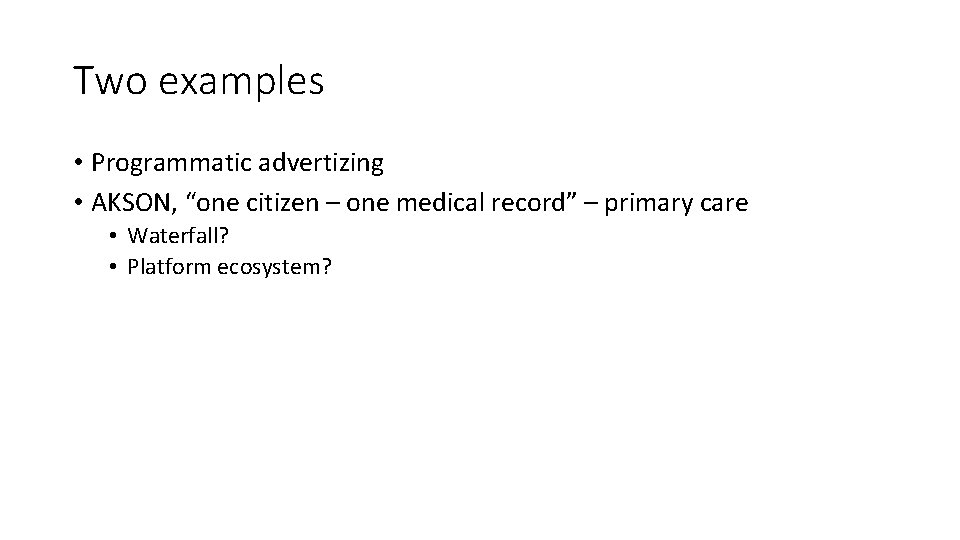
Two examples • Programmatic advertizing • AKSON, “one citizen – one medical record” – primary care • Waterfall? • Platform ecosystem?
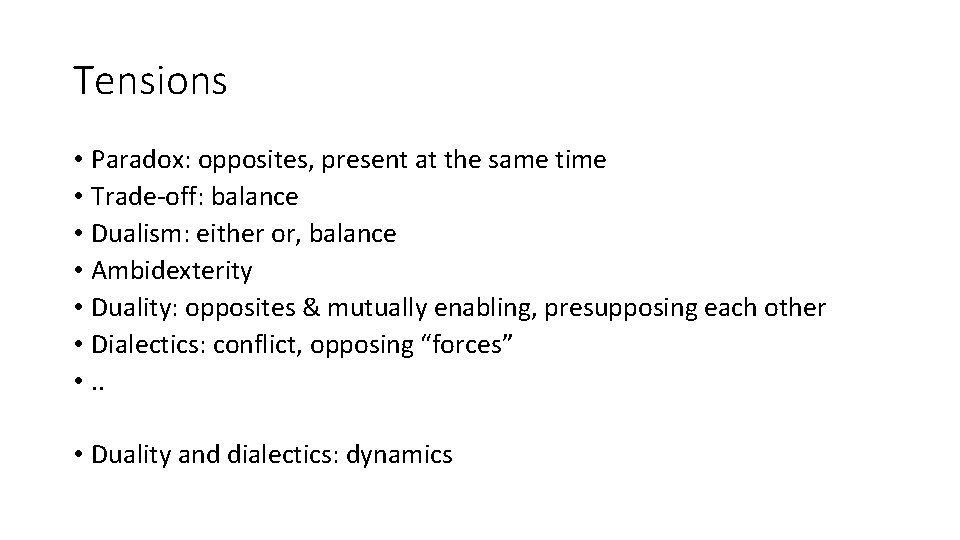
Tensions • Paradox: opposites, present at the same time • Trade-off: balance • Dualism: either or, balance • Ambidexterity • Duality: opposites & mutually enabling, presupposing each other • Dialectics: conflict, opposing “forces” • . . • Duality and dialectics: dynamics
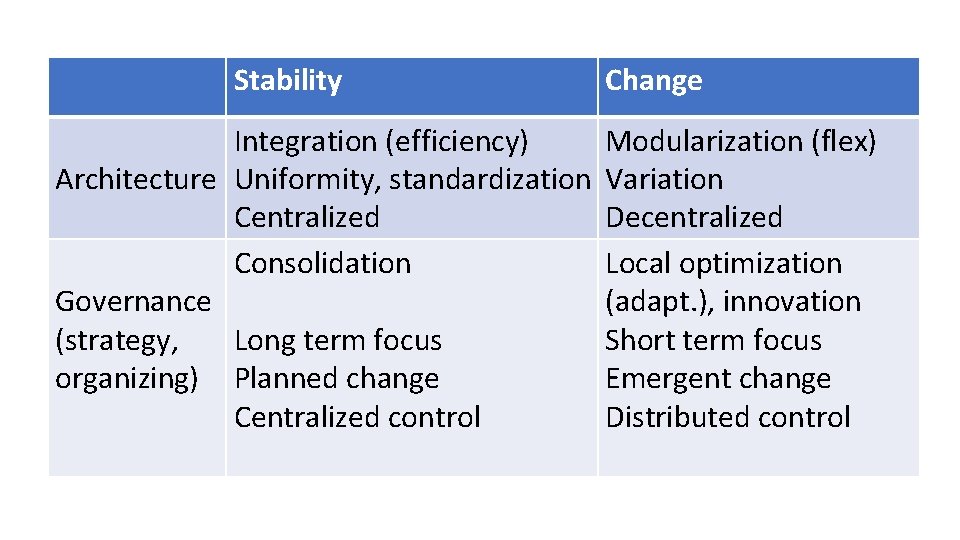
Stability Integration (efficiency) Architecture Uniformity, standardization Centralized Consolidation Governance (strategy, Long term focus organizing) Planned change Centralized control Change Modularization (flex) Variation Decentralized Local optimization (adapt. ), innovation Short term focus Emergent change Distributed control
Duality • Complex machine/system • Adapt to changing environment (technologies, user requirements, . . ) • All components cannot be change at the same time • To keep some stable, others must change • To change some, others must stay stable
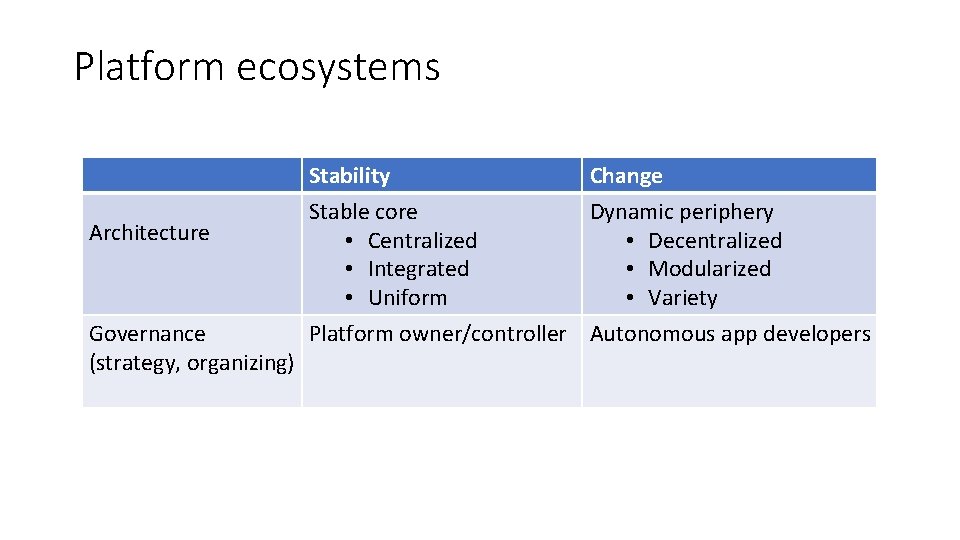
Platform ecosystems Architecture Stability Stable core • Centralized • Integrated • Uniform Change Dynamic periphery • Decentralized • Modularized • Variety Governance Platform owner/controller Autonomous app developers (strategy, organizing)
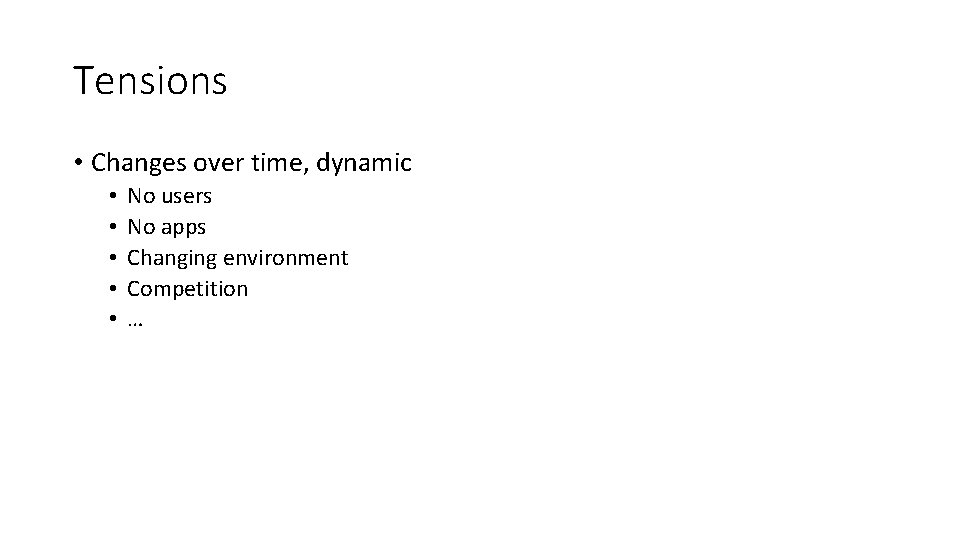
Tensions • Changes over time, dynamic • • • No users No apps Changing environment Competition …
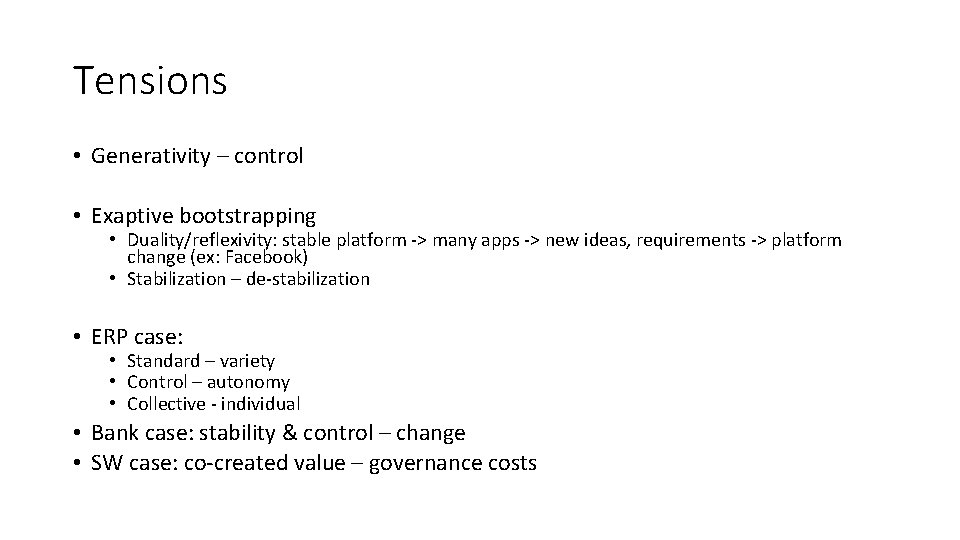
Tensions • Generativity – control • Exaptive bootstrapping • Duality/reflexivity: stable platform -> many apps -> new ideas, requirements -> platform change (ex: Facebook) • Stabilization – de-stabilization • ERP case: • Standard – variety • Control – autonomy • Collective - individual • Bank case: stability & control – change • SW case: co-created value – governance costs
Governance mechanisms • Rules: who gets access to what • Prices • Support/collaboration • “Distributed tuning”
Consumer platforms • Uber, Airbnb, vipps, finn. no • User accout • Personal data • Credit card • Taxi drivers, . . • Certification rules
Software platforms • Platform wide or dyadic governance • Partner levels • Certification • Technical barriers/control. Ex: i. Phone • Governance costs • Variety among platform types (consumer, industry, user organizations)
More specific governance ”parameters” • Governance structure • Resources and documentation • Accessibility and control • Trust and perceived risks • Pricing • External relationships
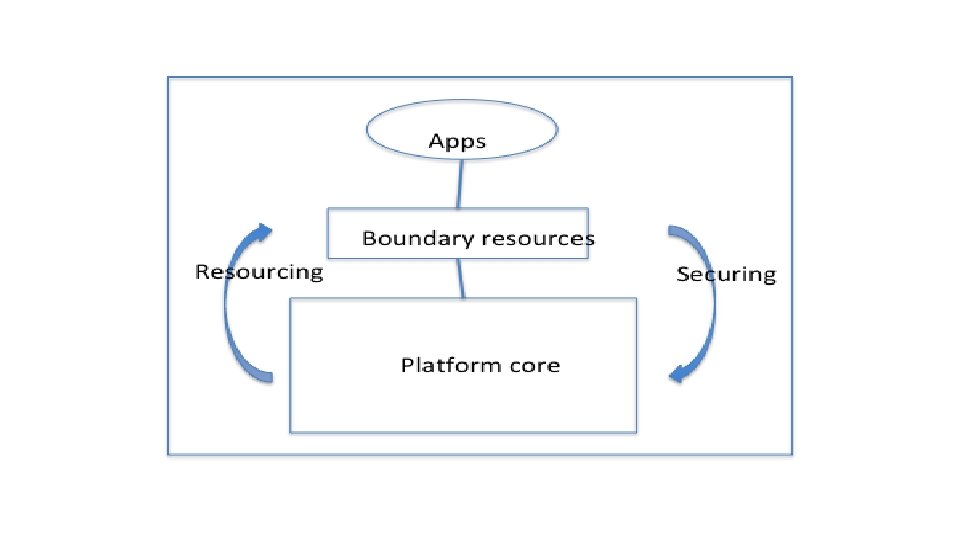
“Governing through technology” • Boundary resources • Ex: i. Phone • Download apps from i. Tunes • Certificates