
PlatesForm and function Chris Colton Judy Orson Learning





- Slides: 57
Plates—Form and function Chris Colton, Judy Orson
Learning outcomes • At the end of this lecture you will be able to: • Outline the evolution of plates • Describe the function of compression holes • List different functions of plates
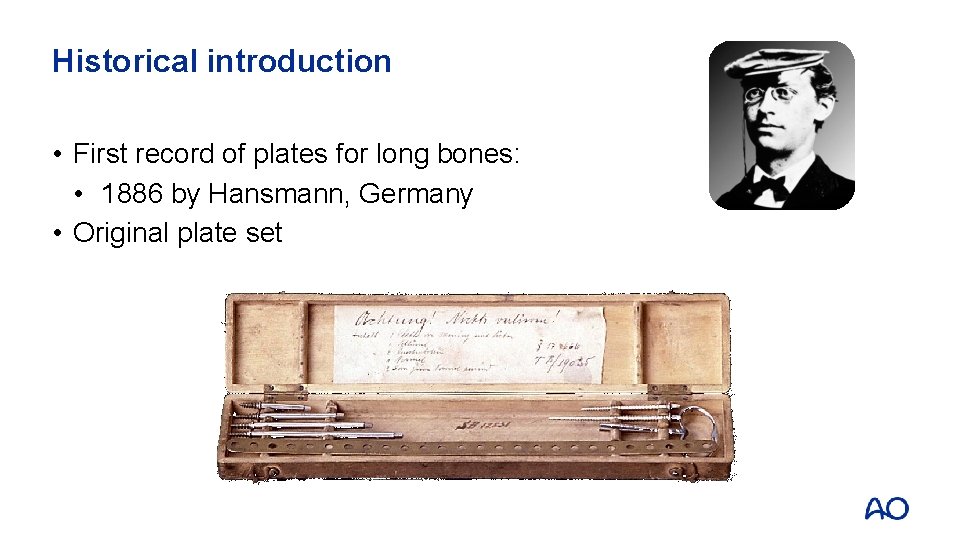
Historical introduction • First record of plates for long bones: • 1886 by Hansmann, Germany • Original plate set
Plates—forms: evolution • Used as standard technique of osteosynthesis throughout the skeleton • Applied to different anatomical locations • different shapes • different sizes of plates
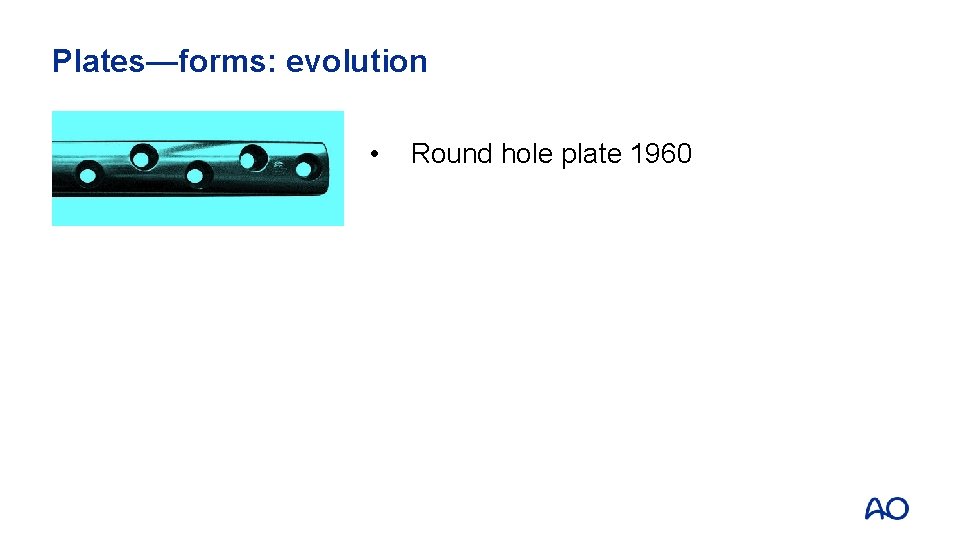
Plates—forms: evolution • Round hole plate 1960
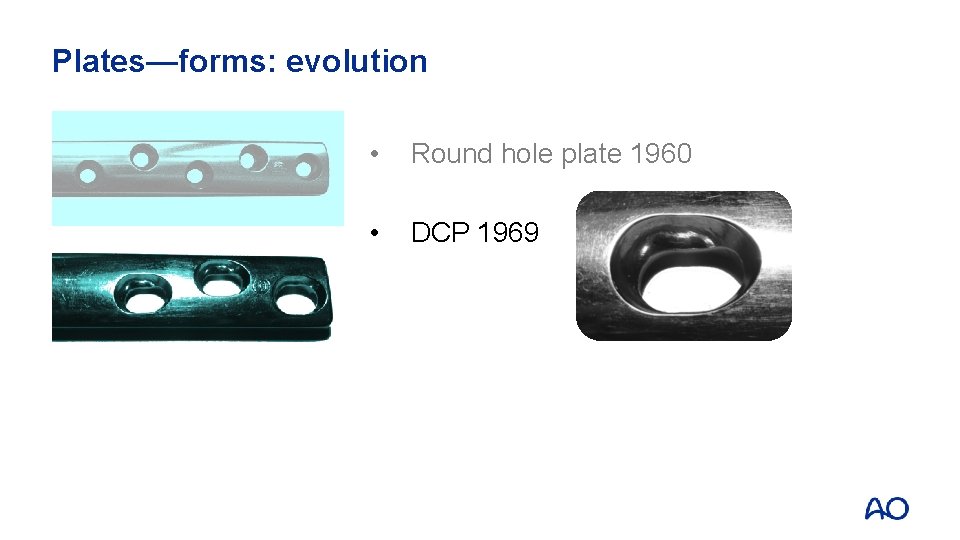
Plates—forms: evolution • Round hole plate 1960 • DCP 1969
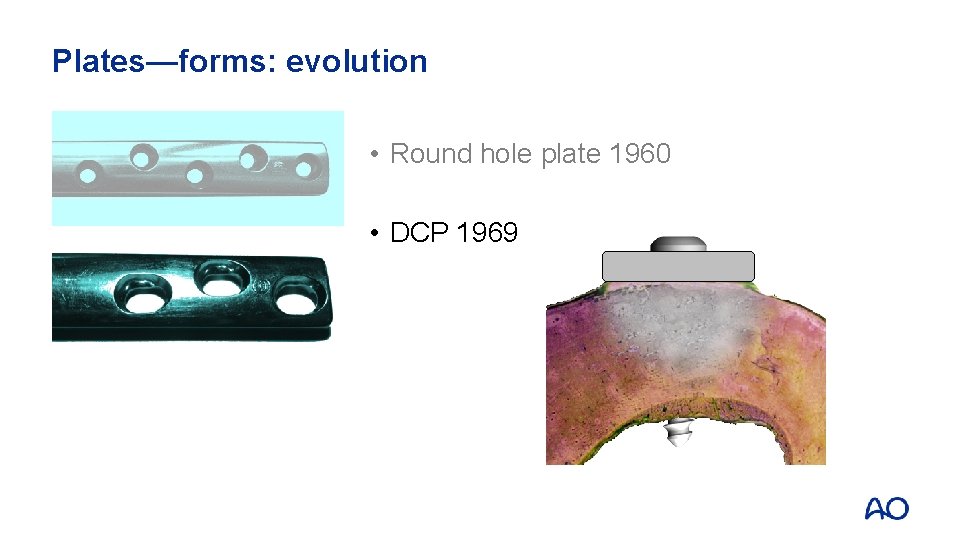
Plates—forms: evolution • Round hole plate 1960 • DCP 1969
Plates—forms: evolution • Round hole plate 1960 • DCP 1969 • LC DCP 1994 • “footprint”
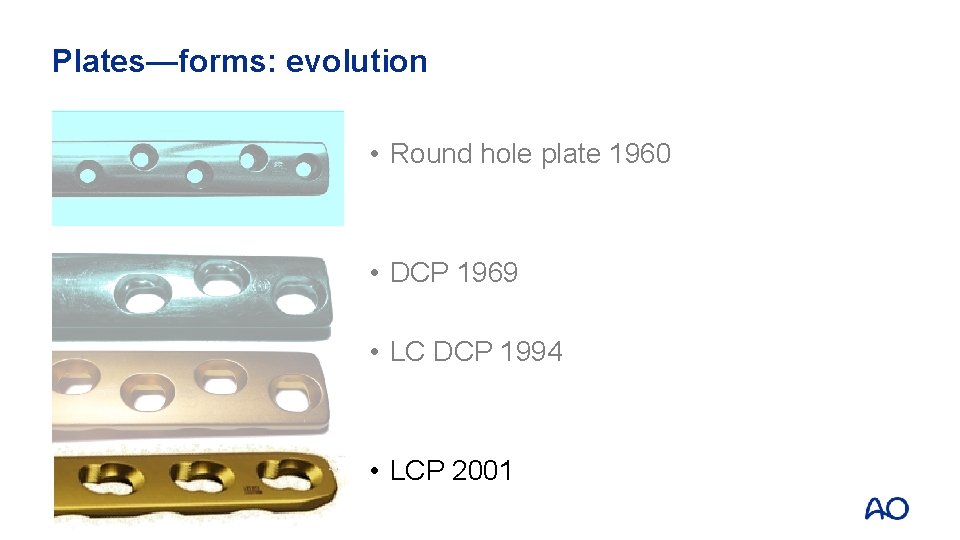
Plates—forms: evolution • Round hole plate 1960 • DCP 1969 • LC DCP 1994 • LCP 2001
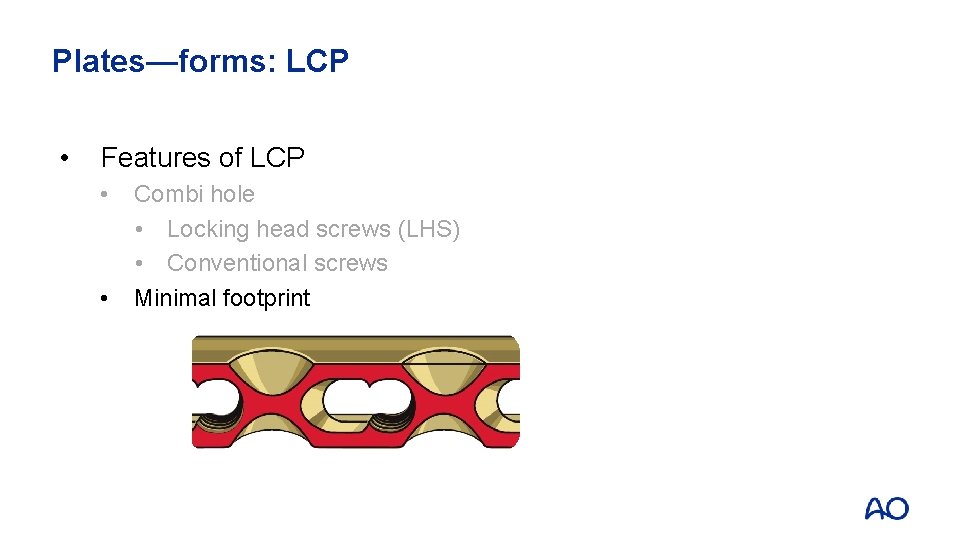
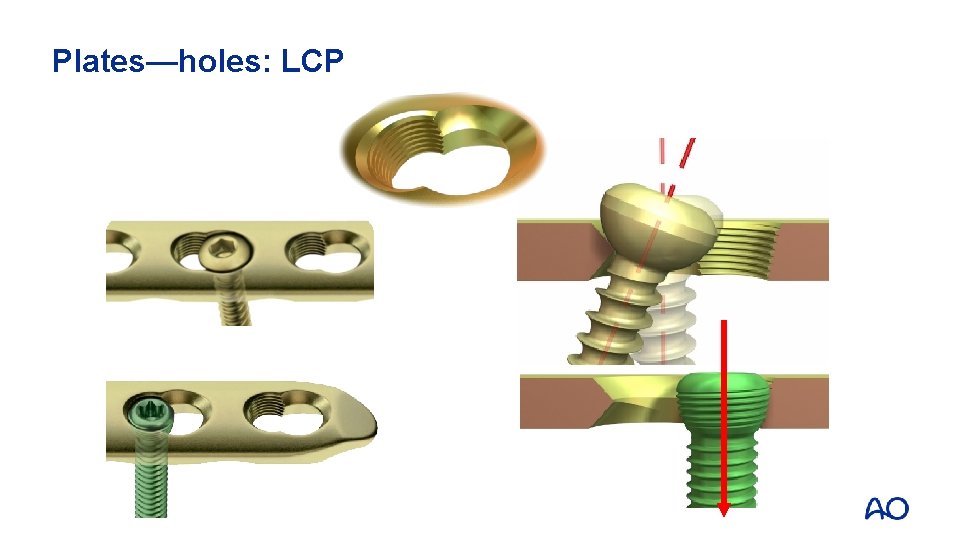
Plates—forms: LCP • Features of LCP • Combi hole: • Locking head screws (LHS) • Conventional screws Standard hole segment Threaded hole segment
Plates—forms: LCP • Features of LCP • • Combi hole • Locking head screws (LHS) • Conventional screws Minimal footprint
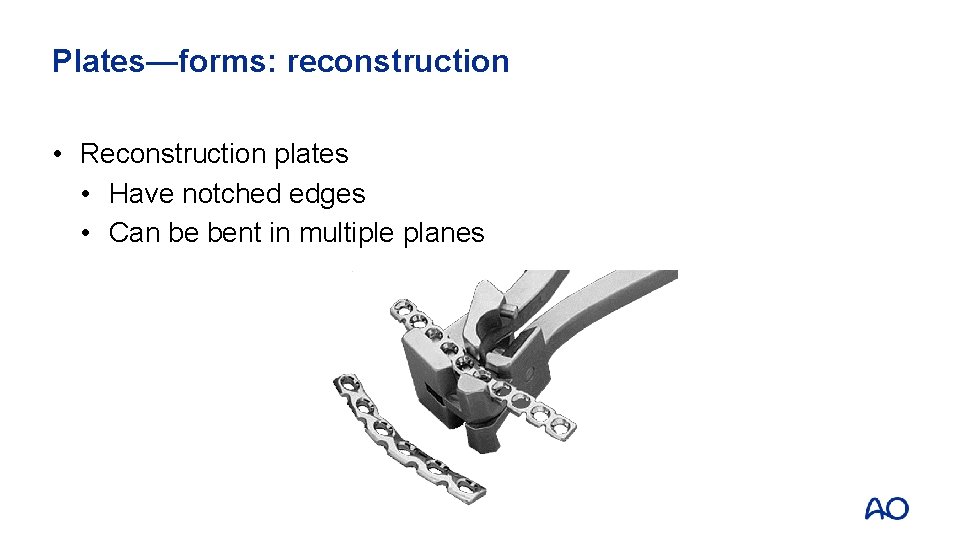
Plates—forms: reconstruction • Reconstruction plates • Have notched edges • Can be bent in multiple planes
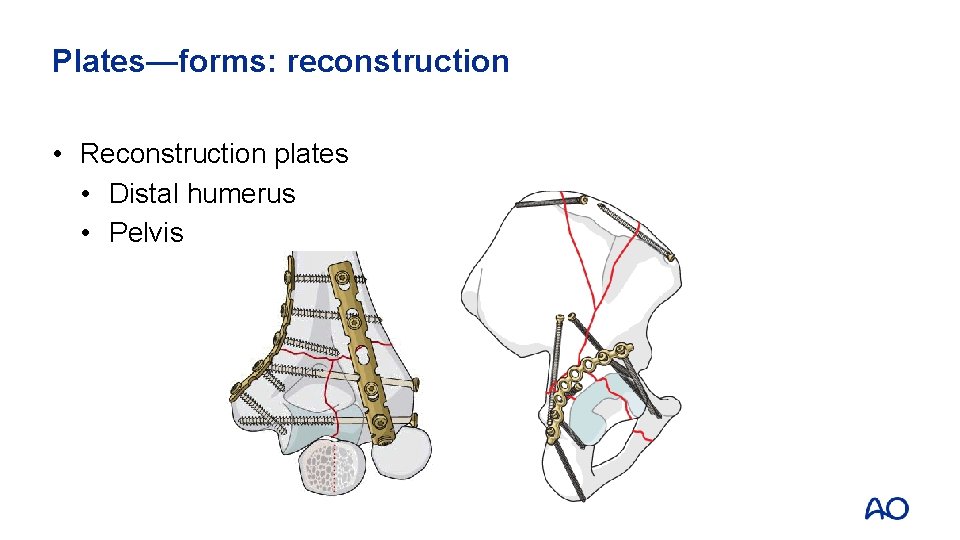
Plates—forms: reconstruction • Reconstruction plates • Distal humerus • Pelvis
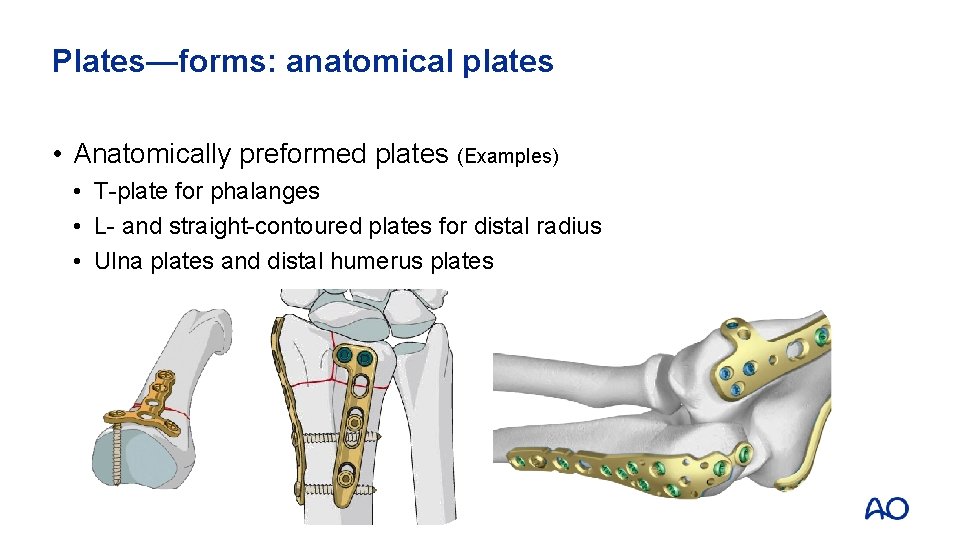
Plates—forms: anatomical plates • Anatomically preformed plates (Examples) • T-plate for phalanges • L- and straight-contoured plates for distal radius • Ulna plates and distal humerus plates
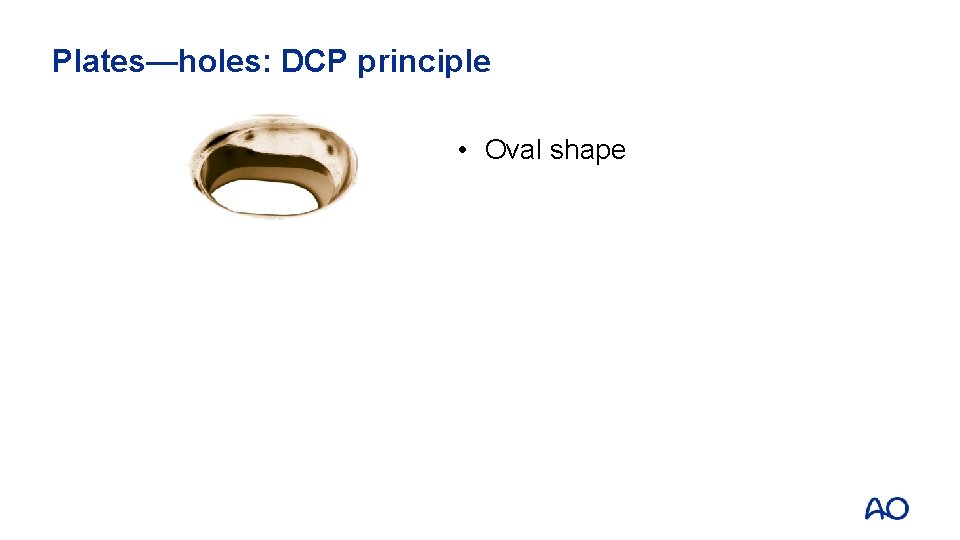
Plates—holes: DCP principle • Oval shape
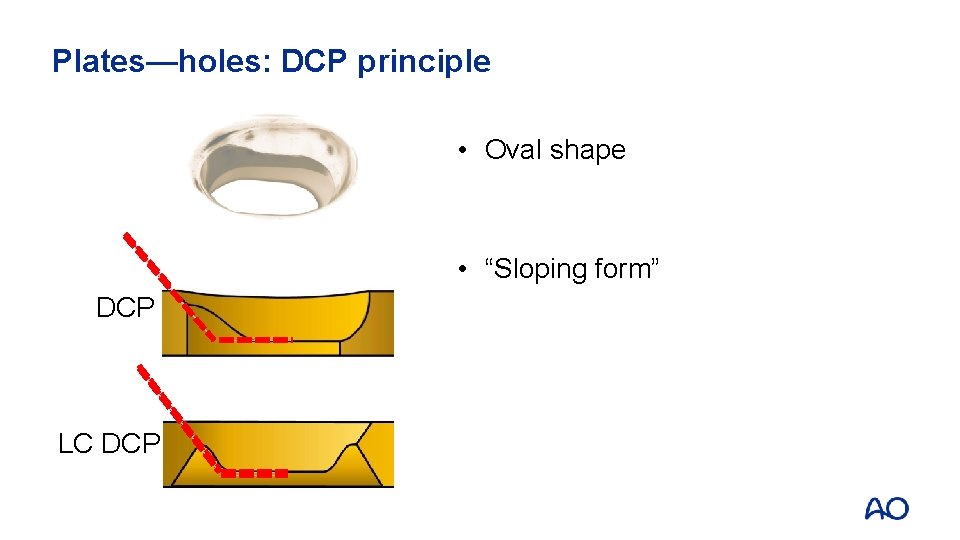
Plates—holes: DCP principle • Oval shape • “Sloping form” DCP LC DCP
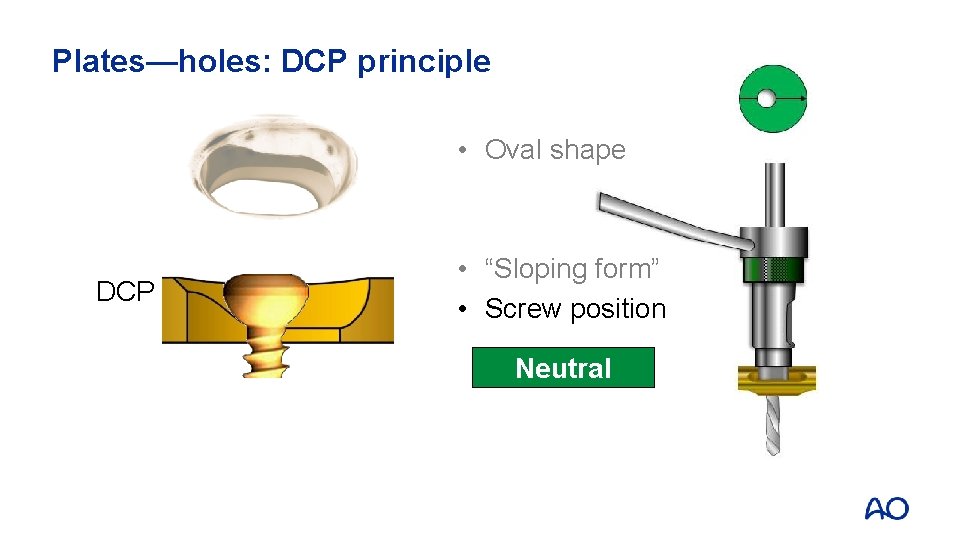
Plates—holes: DCP principle • Oval shape DCP • “Sloping form” • Screw position Neutral
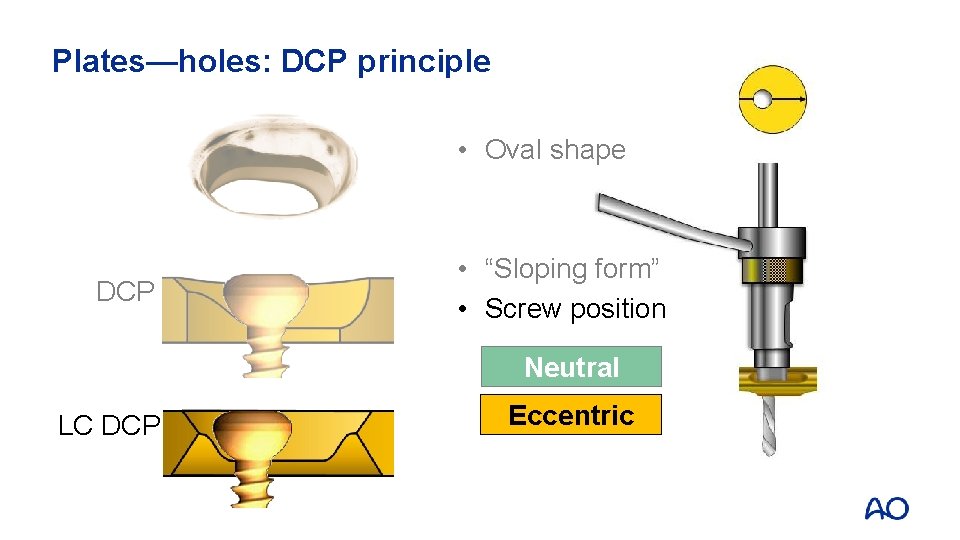
Plates—holes: DCP principle • Oval shape DCP • “Sloping form” • Screw position Neutral LC DCP Eccentric
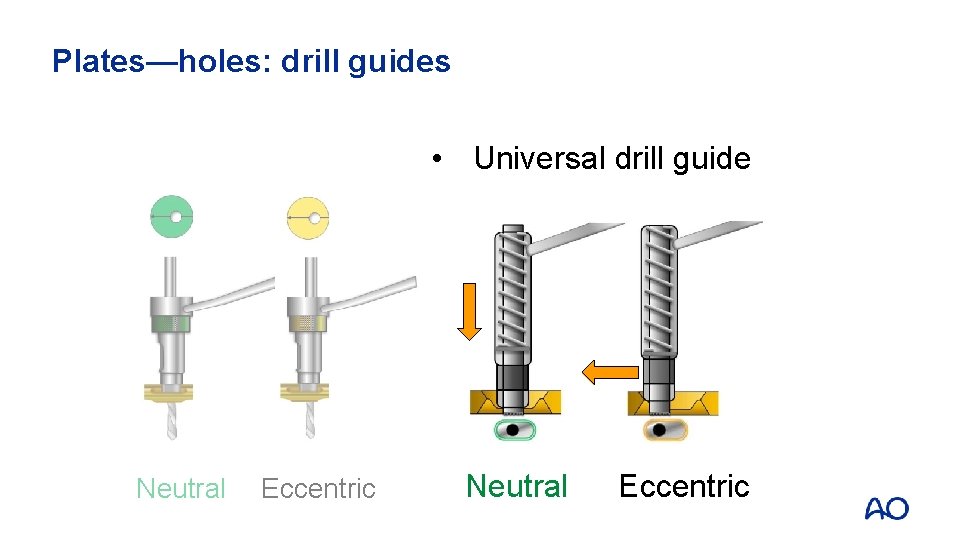
Plates—holes: drill guides • Universal drill guide Neutral Eccentric
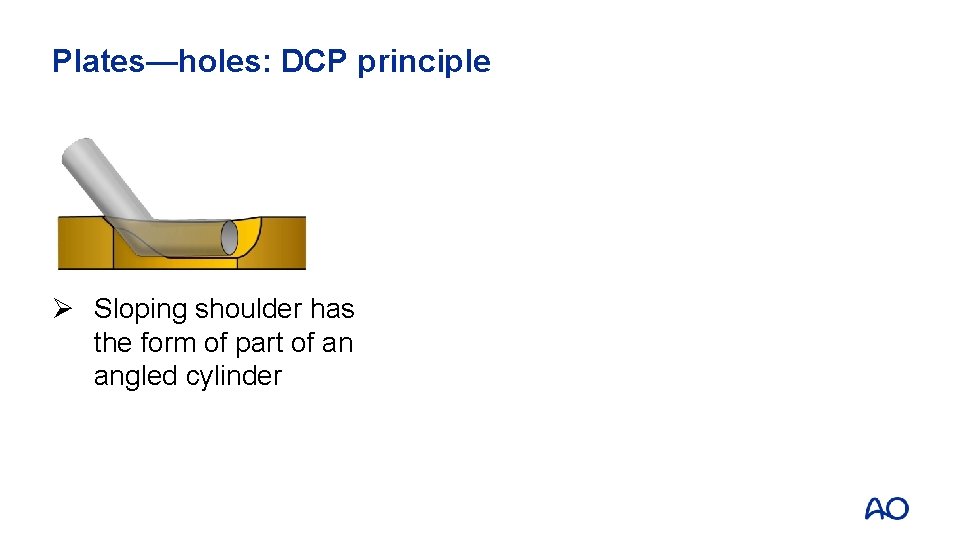
Plates—holes: DCP principle Ø Sloping shoulder has the form of part of an angled cylinder
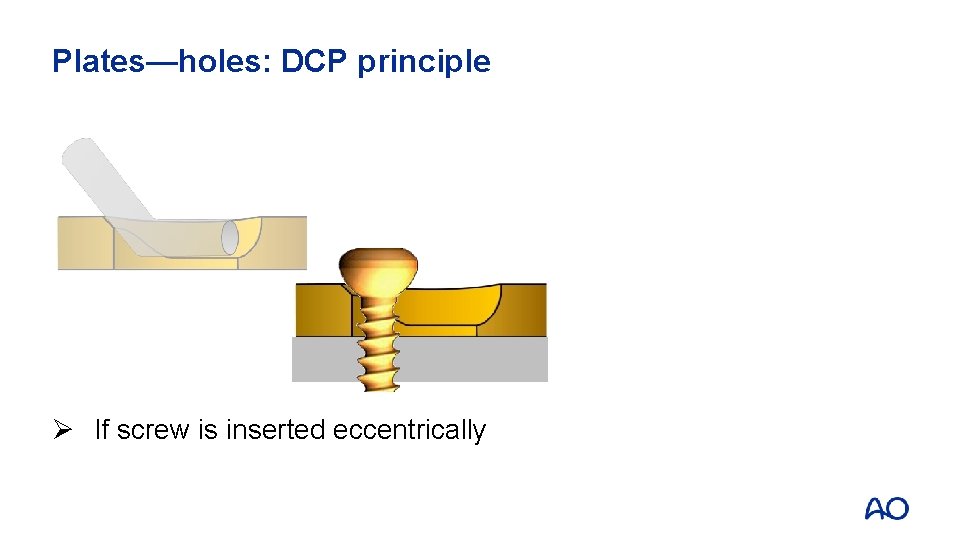
Plates—holes: DCP principle Ø If screw is inserted eccentrically
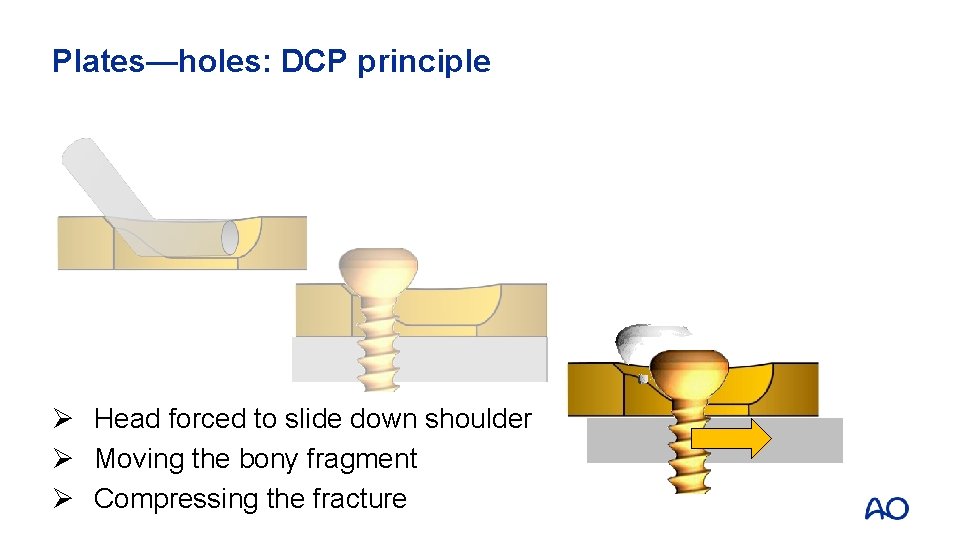
Plates—holes: DCP principle Ø Head forced to slide down shoulder Ø Moving the bony fragment Ø Compressing the fracture
Plates—holes: LCP
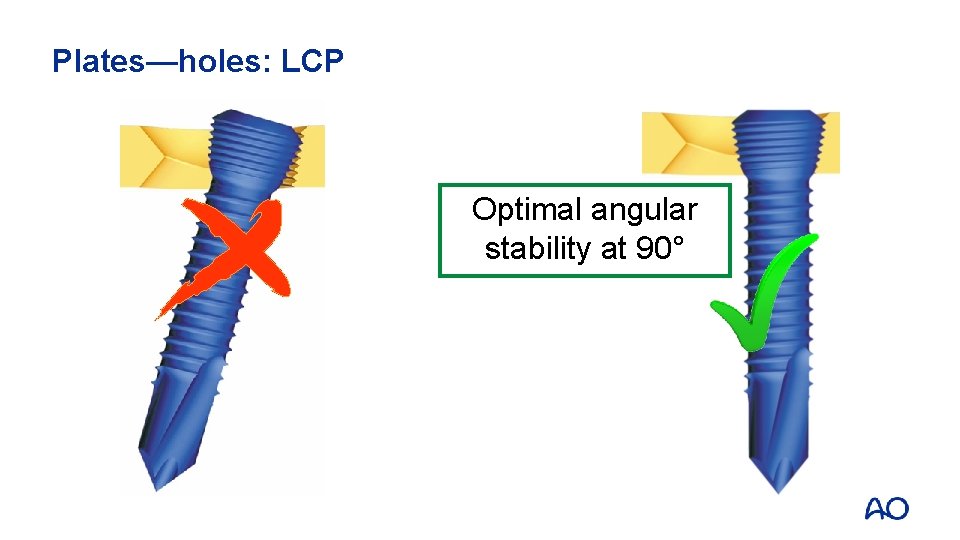
Plates—holes: LCP Optimal angular stability at 90°
Plates—holes: LCP • Threaded holes with range of angulation • Variable angles • Distal radius plate
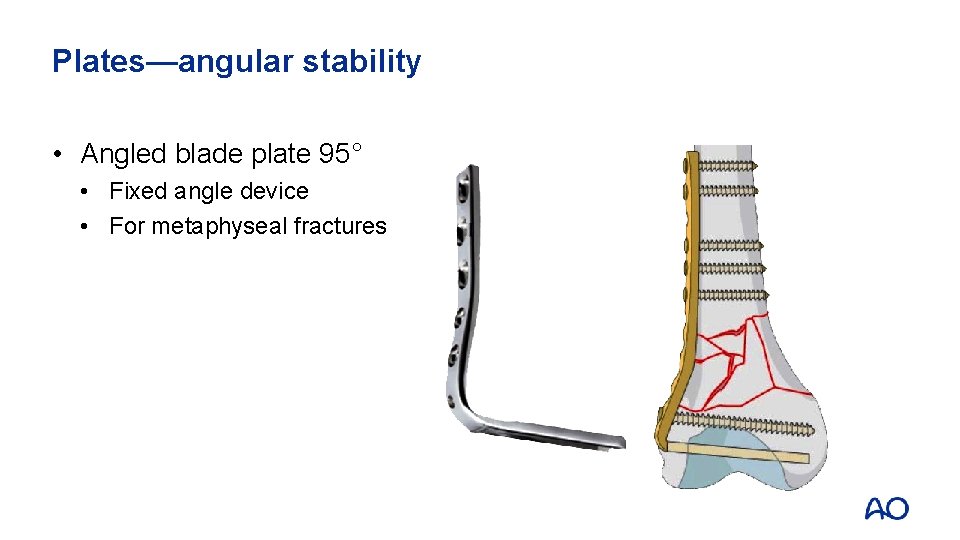
Plates—angular stability • Angled blade plate 95° • Fixed angle device • For metaphyseal fractures
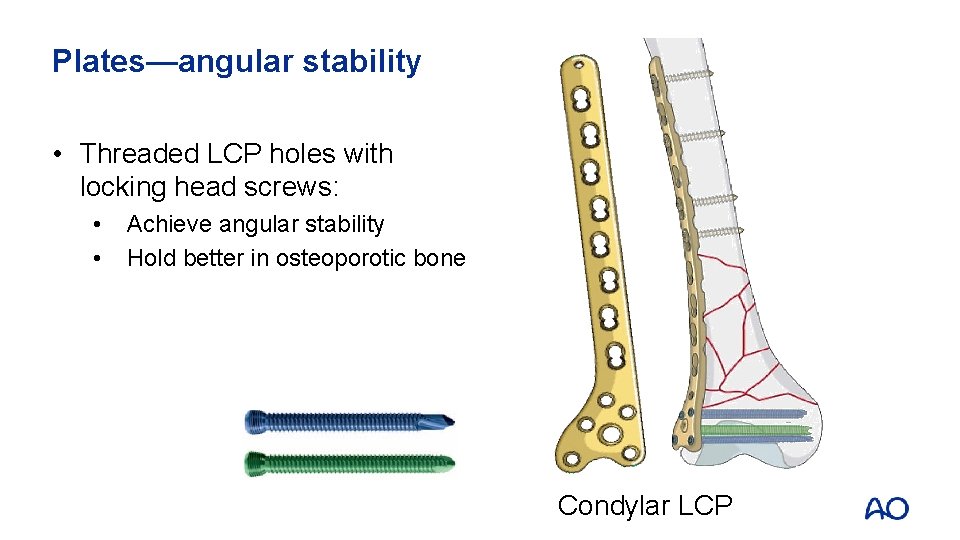
Plates—angular stability • Threaded LCP holes with locking head screws: • • Achieve angular stability Hold better in osteoporotic bone Condylar LCP
Plates—functions • • • Compression Neutralization/protection Buttress Bridging/internal fixator Tension band
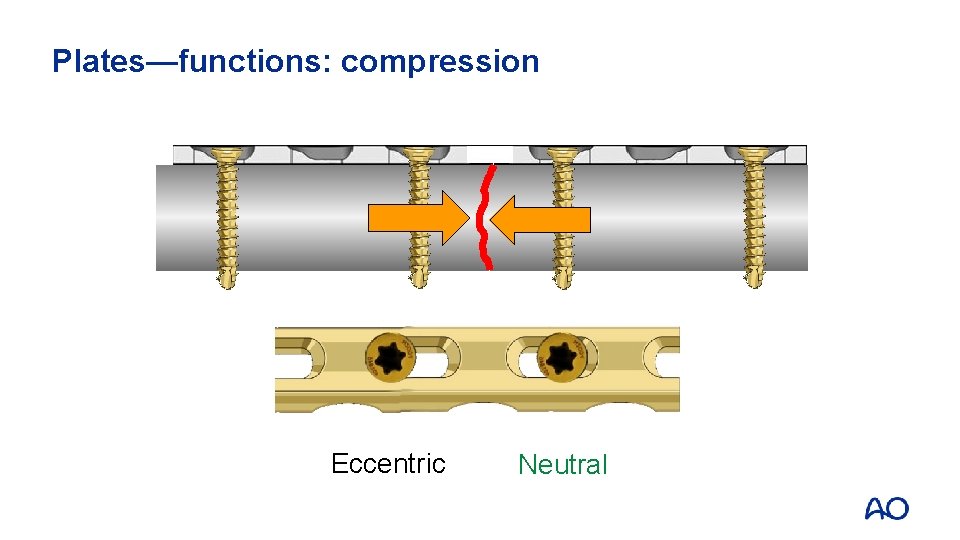
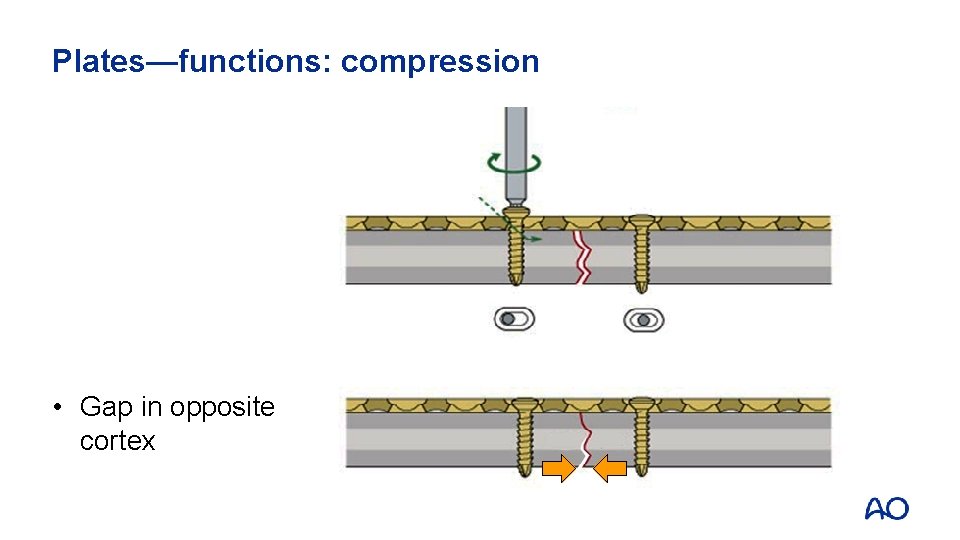
Plates—functions: compression Eccentric Neutral
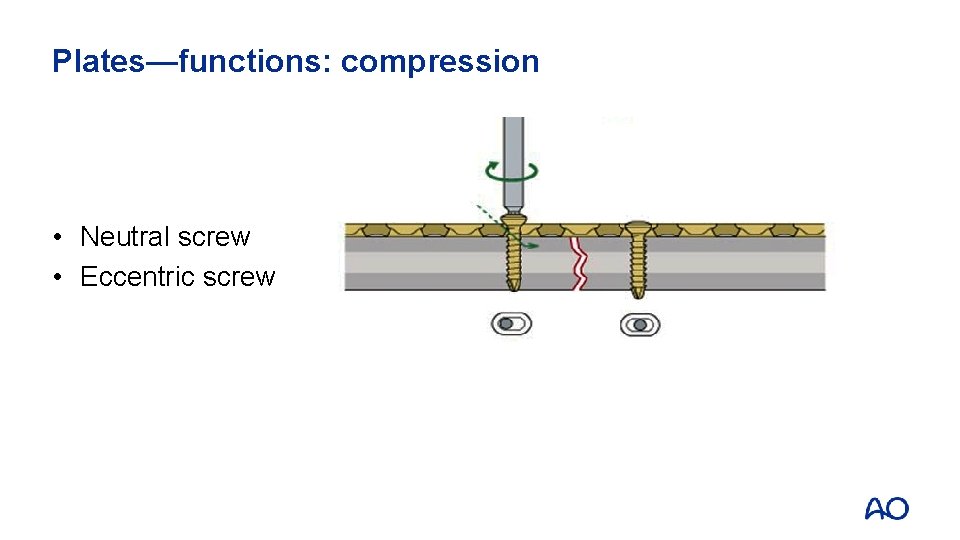
Plates—functions: compression • Neutral screw • Eccentric screw
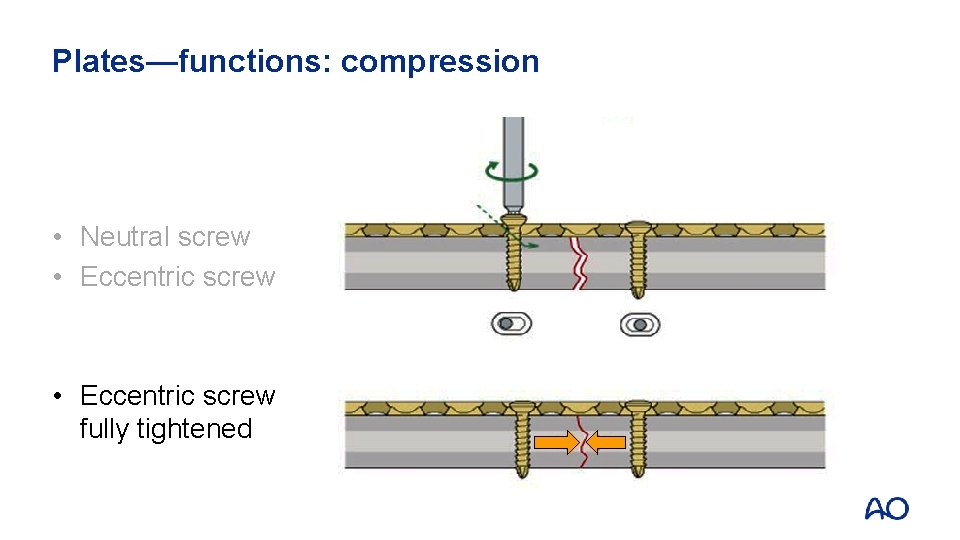
Plates—functions: compression • Neutral screw • Eccentric screw fully tightened
Plates—functions: compression • Gap in opposite cortex
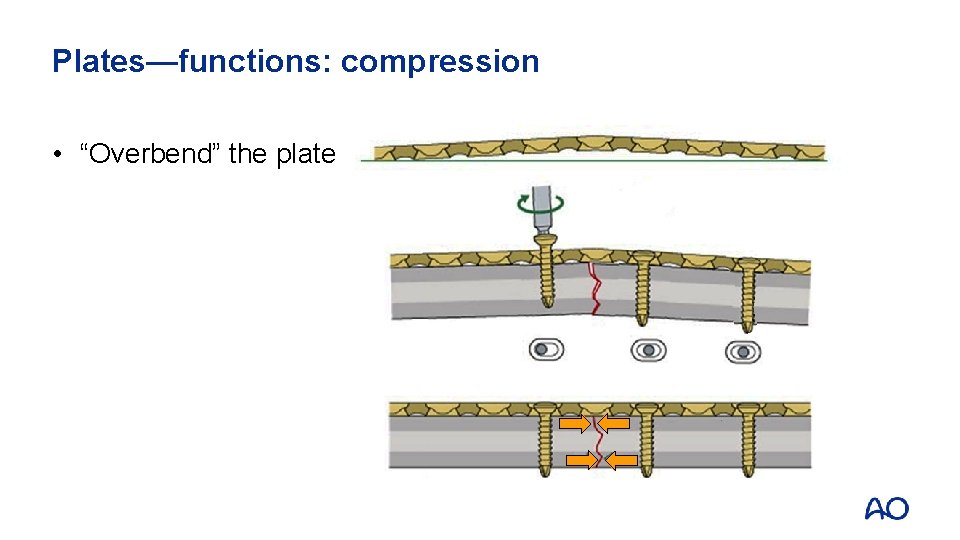
Plates—functions: compression • “Overbend” the plate
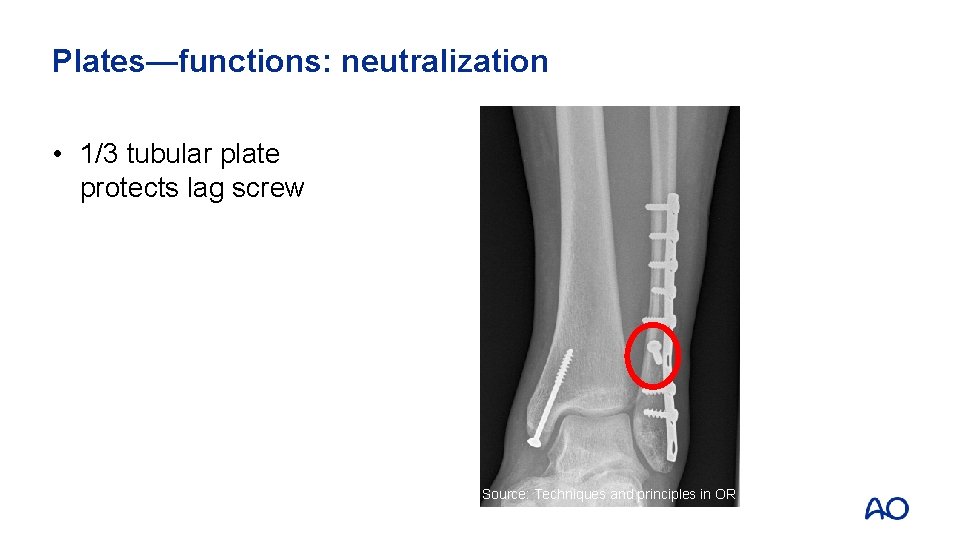
Plates—functions: neutralization • 1/3 tubular plate protects lag screw Source: Techniques and principles in OR
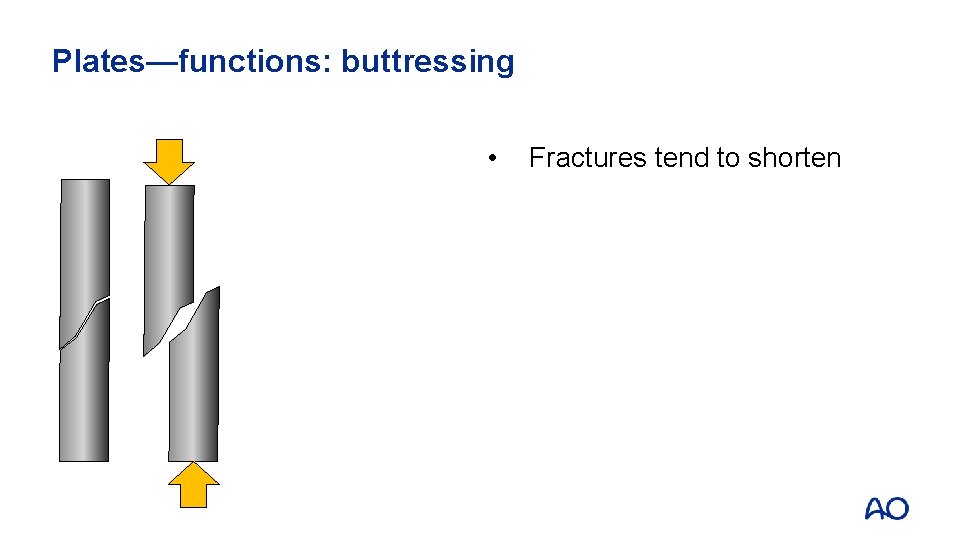
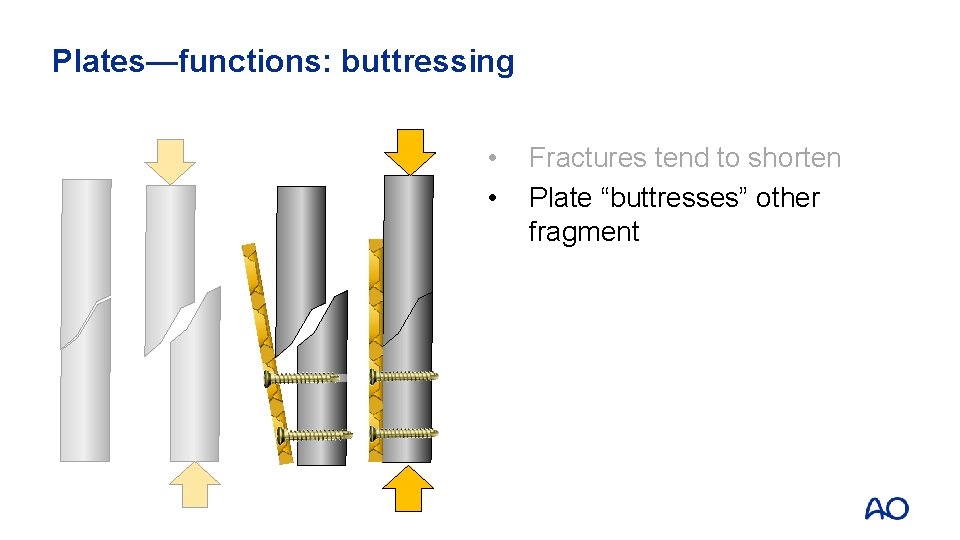
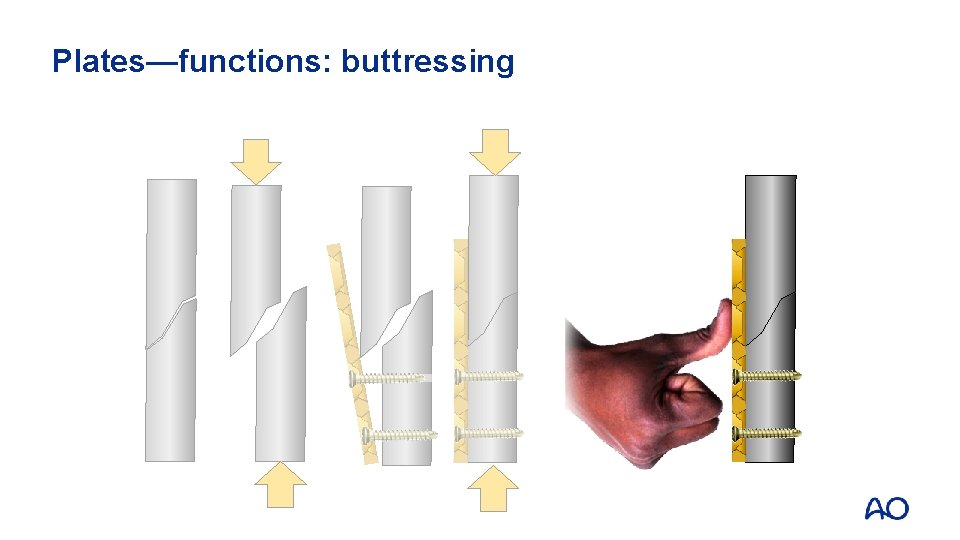
Plates—functions: buttressing • Fractures tend to shorten
Plates—functions: buttressing • • Fractures tend to shorten Plate “buttresses” other fragment
Plates—functions: buttressing
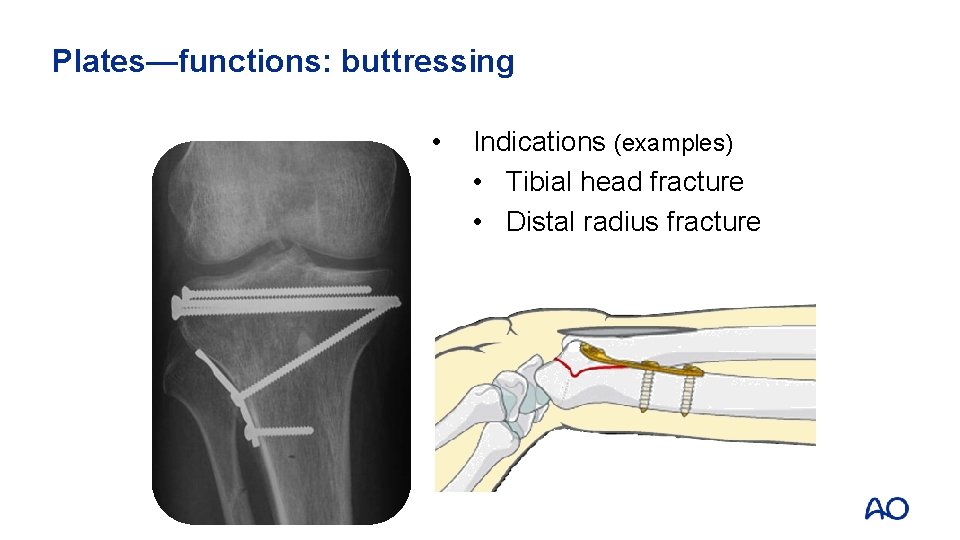
Plates—functions: buttressing • Indications (examples) • Tibial head fracture • Distal radius fracture
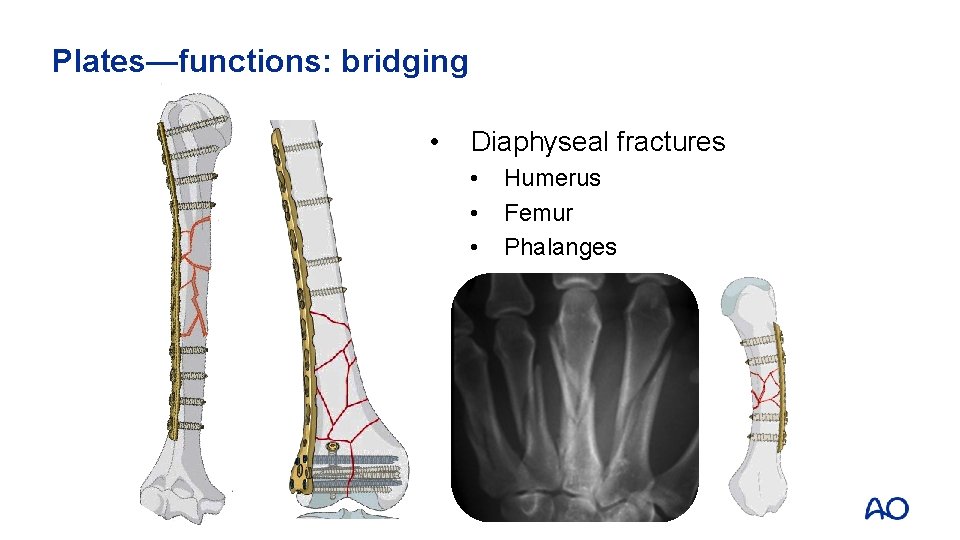
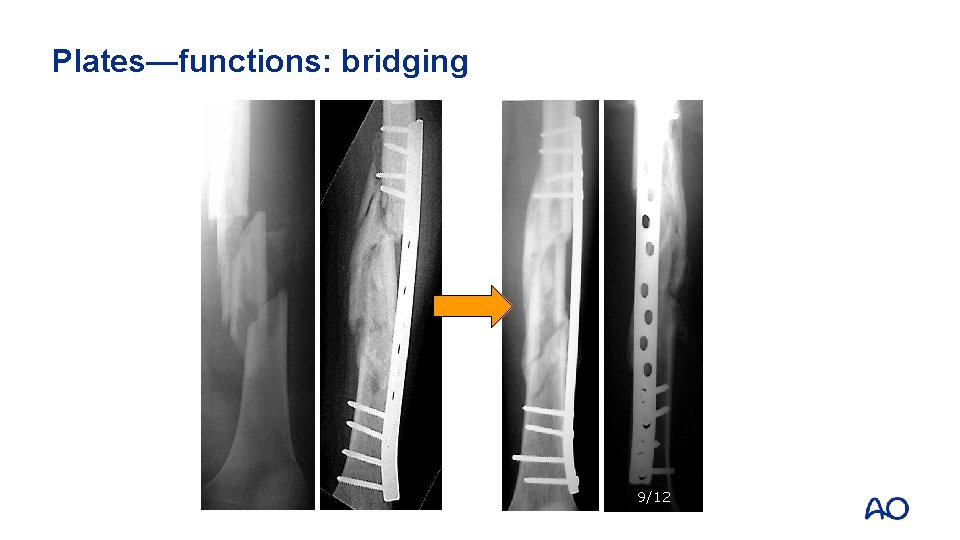
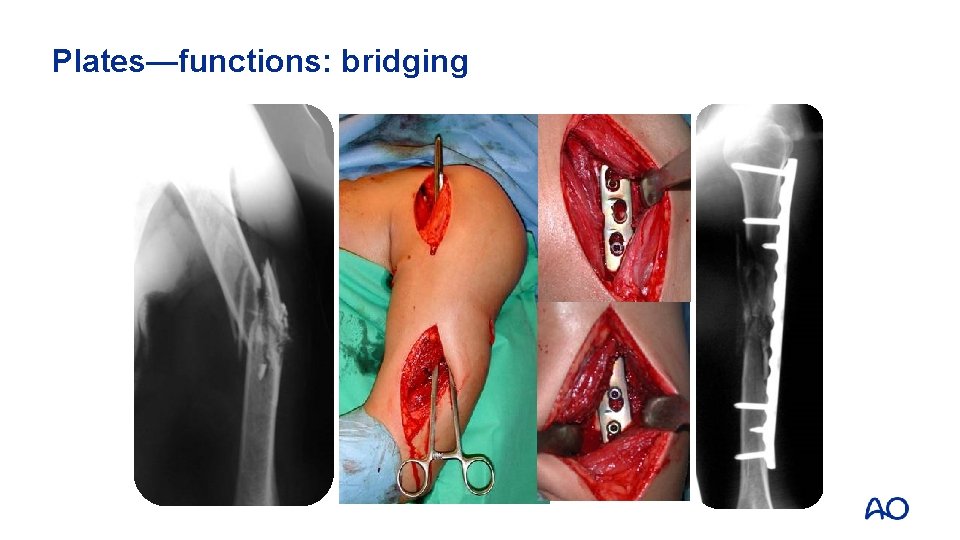
Plates—functions: bridging • Diaphyseal fractures • • • Humerus Femur Phalanges
Plates—functions: bridging 9/12
Plates—functions: bridging
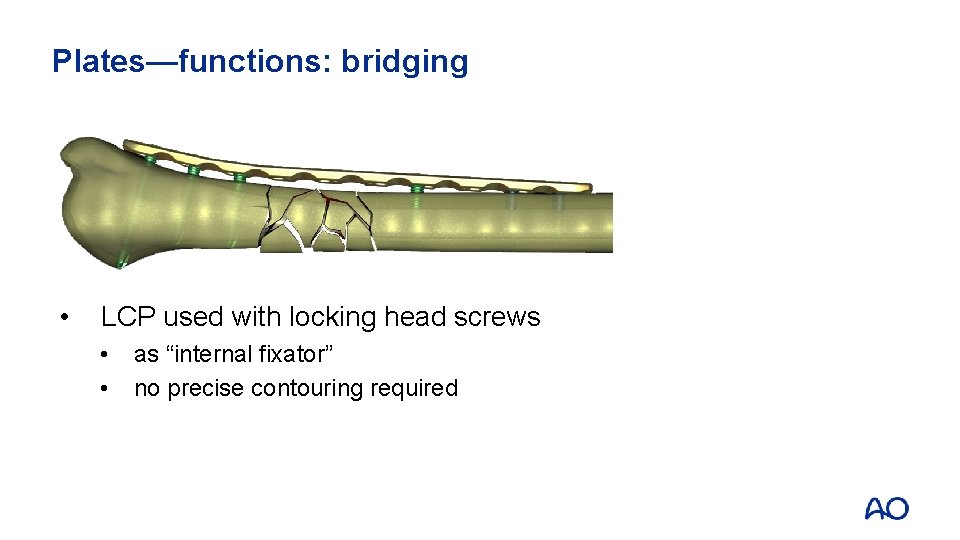
Plates—functions: bridging • LCP used with locking head screws • • as “internal fixator” no precise contouring required
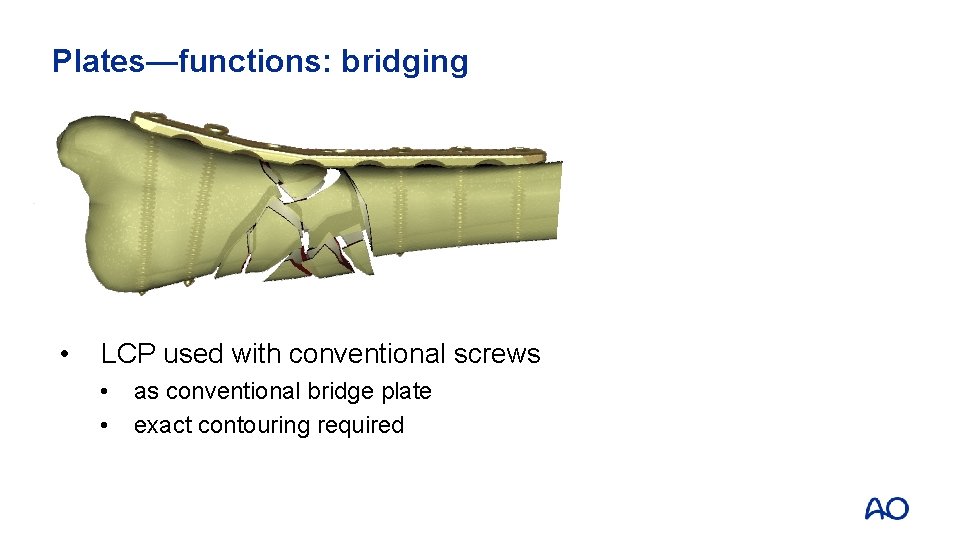
Plates—functions: bridging • LCP used with conventional screws • • as conventional bridge plate exact contouring required
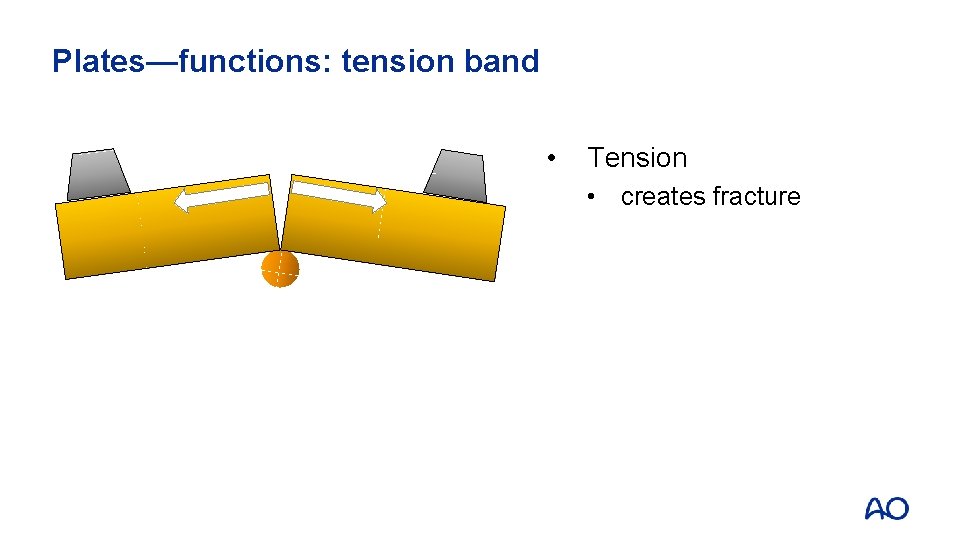
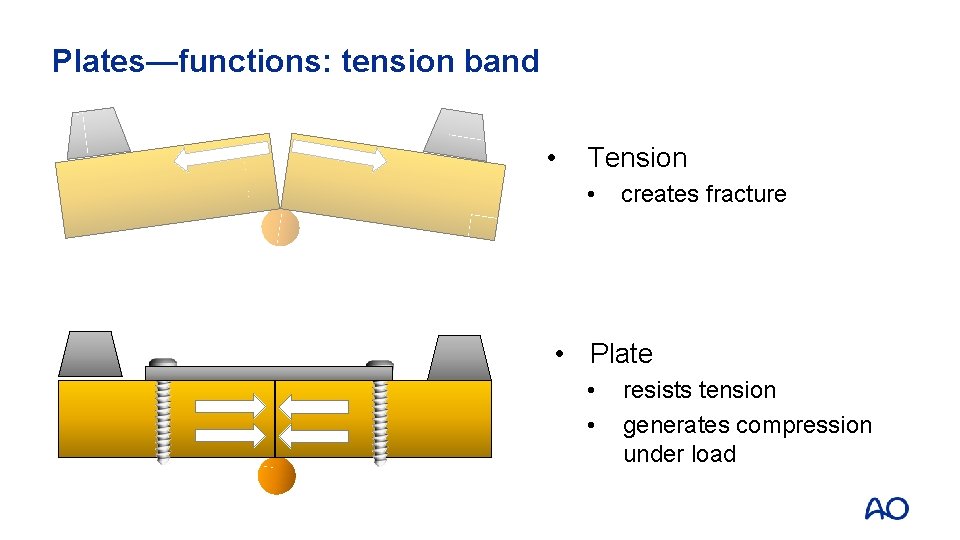
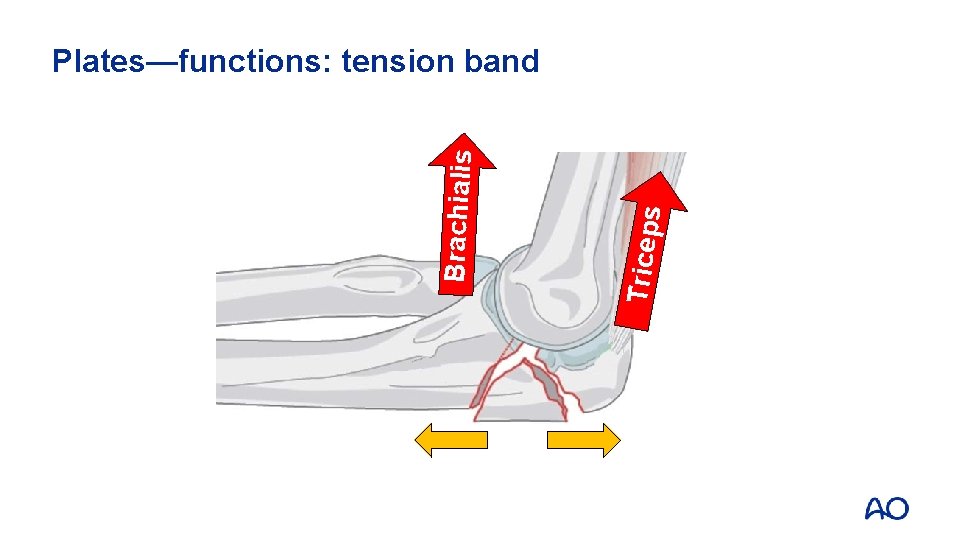
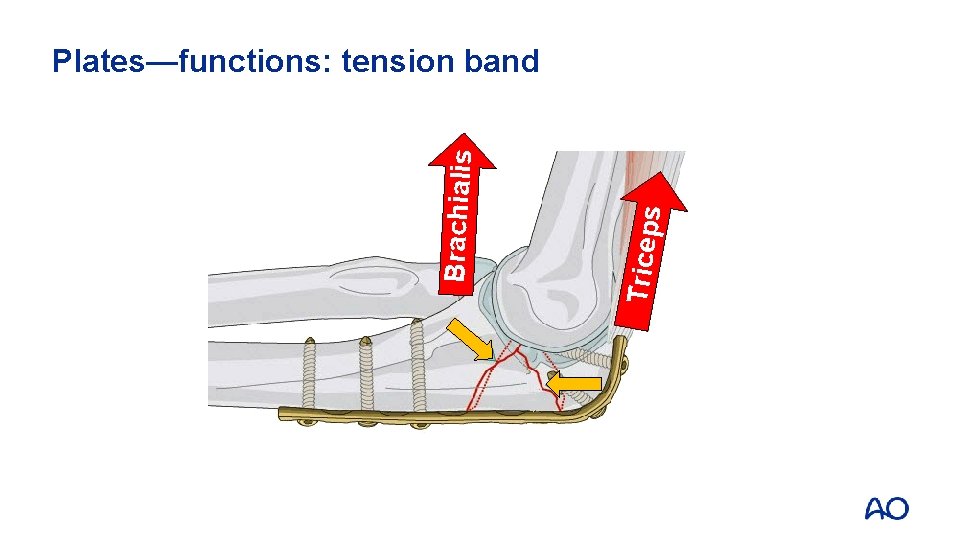
Plates—functions: tension band • Tension • creates fracture
Plates—functions: tension band • Tension • creates fracture • Plate • • resists tension generates compression under load
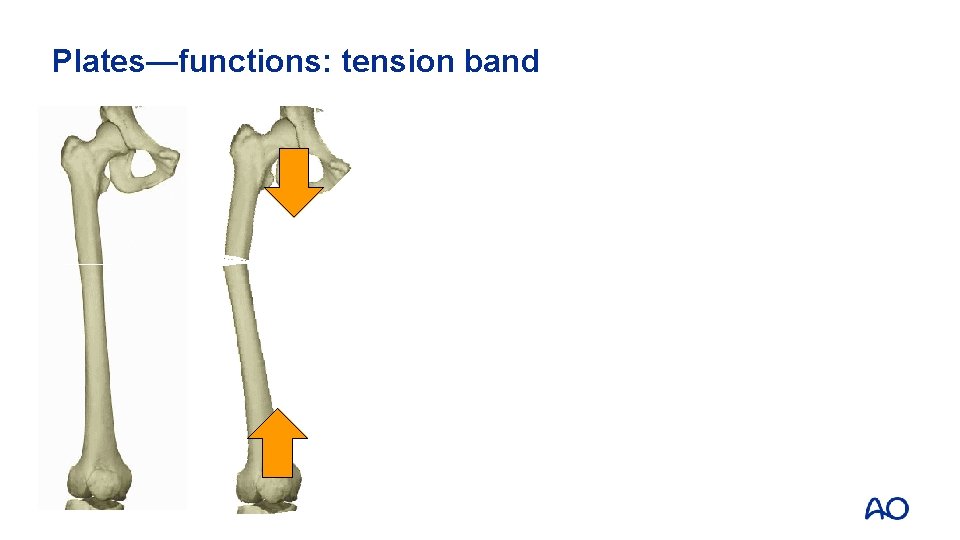
Plates—functions: tension band
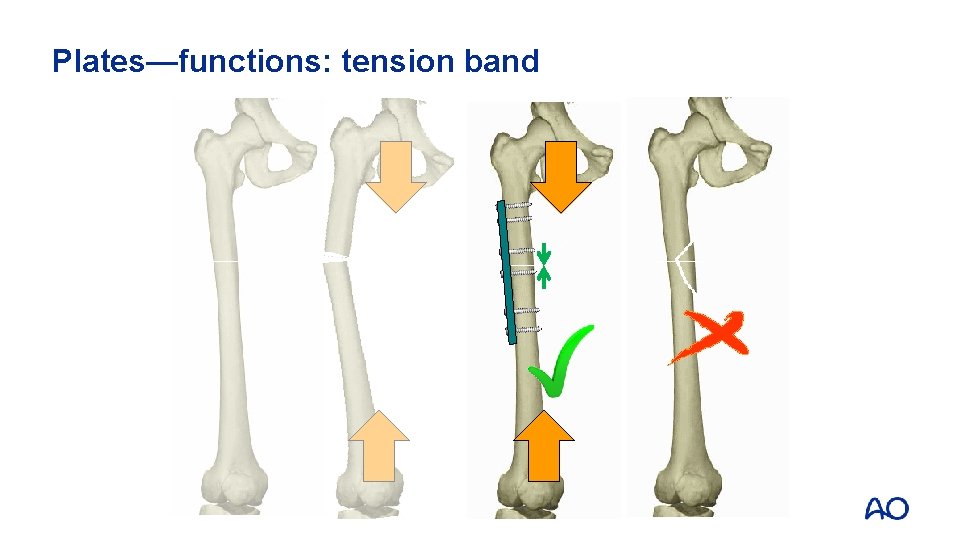
Plates—functions: tension band
Triceps Brachialis Plates—functions: tension band
Triceps Brachialis Plates—functions: tension band
Questions
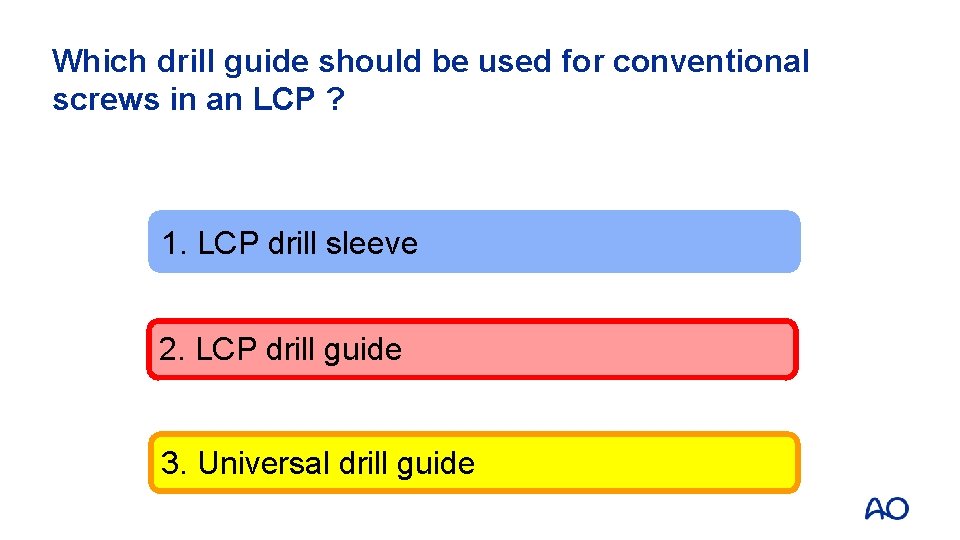
Which drill guide should be used for conventional screws in an LCP ? 1. LCP drill sleeve 2. LCP drill guide 3. Universal drill guide
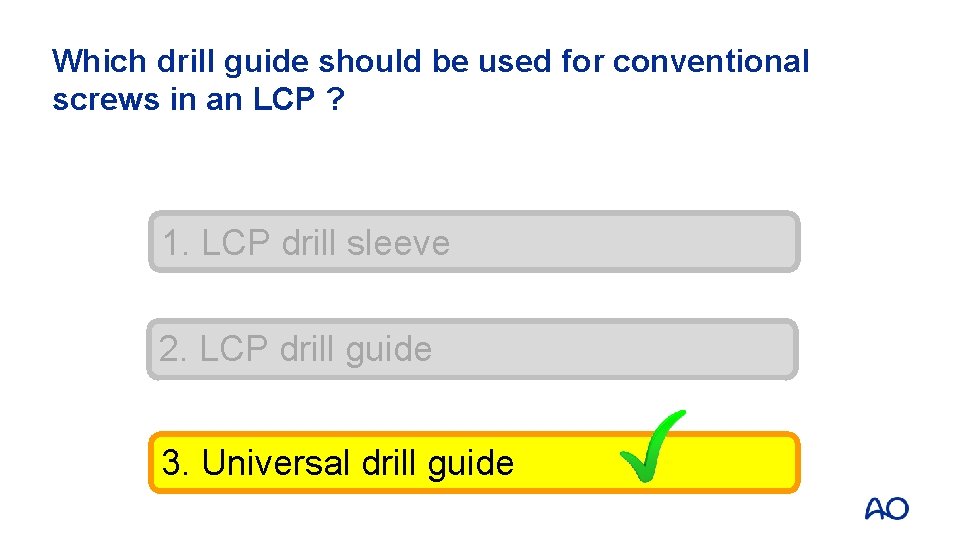
Which drill guide should be used for conventional screws in an LCP ? 1. LCP drill sleeve 2. LCP drill guide 3. Universal drill guide
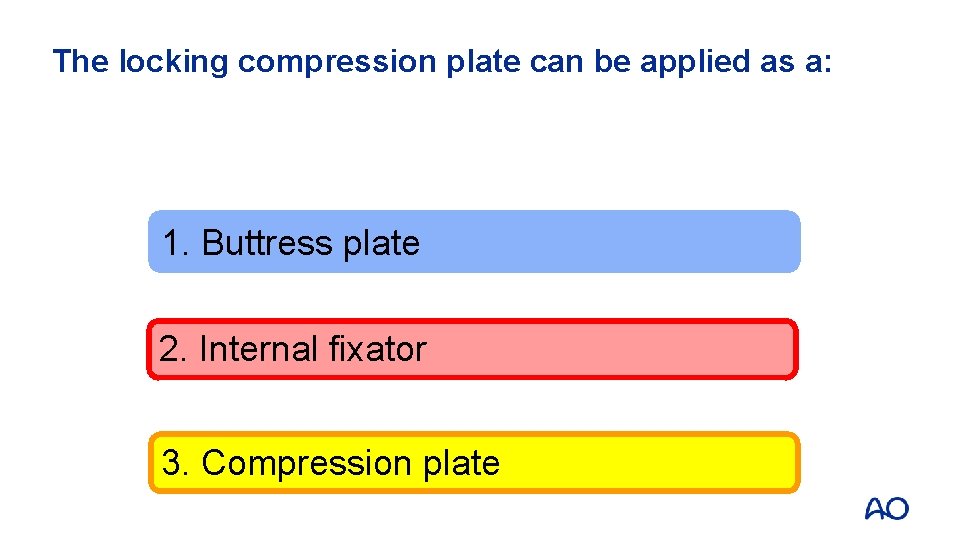
The locking compression plate can be applied as a: 1. Buttress plate 2. Internal fixator 3. Compression plate
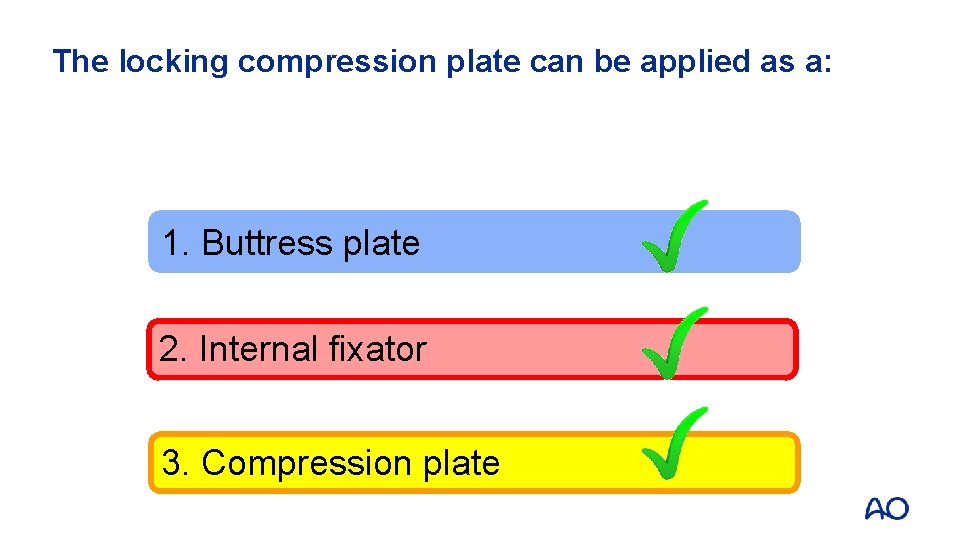
The locking compression plate can be applied as a: 1. Buttress plate 2. Internal fixator 3. Compression plate
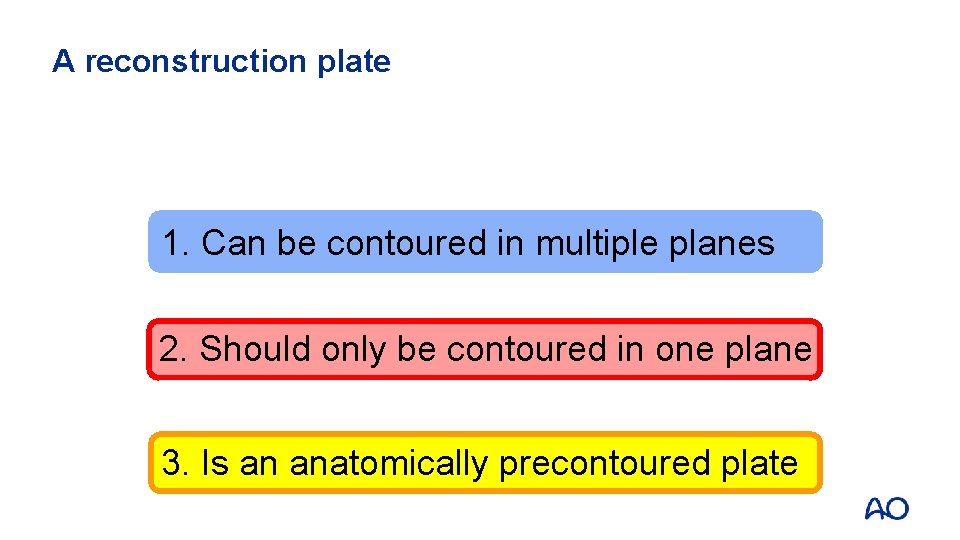
A reconstruction plate 1. Can be contoured in multiple planes 2. Should only be contoured in one plane 3. Is an anatomically precontoured plate
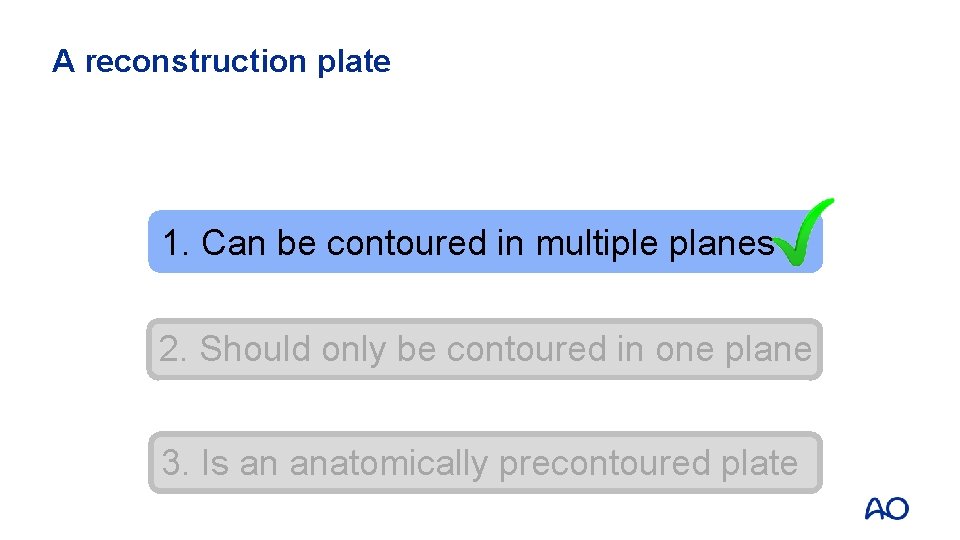
A reconstruction plate 1. Can be contoured in multiple planes 2. Should only be contoured in one plane 3. Is an anatomically precontoured plate
Summary You should now be able to: • Outline the evolution of plates • Describe the function of compression holes • List different functions of plates