
PLATELET CONCENTRATE FROM WHOLE BLOOD OR COLLECTED BY
PLATELET CONCENTRATE, FROM WHOLE BLOOD OR COLLECTED BY APHERESIS? Zahra shakeri niya MSc Student Of Hematology
Platelet concentrate (PC) • Whole blood • Apheresis PRP (Platelet-Rich. Plasma) BC (buffy coat)
PRP METHOD � Whole blood is centrifuged softly to collect PRP, which in turn is spun hard to sediment and isolate the platelets. � multiple units(5 -10) are pooled to make an adult dose.
BC METHOD � Whole blood centrifuged hard, forming of leukocytes and platelets, The BClayer is isolated, and pools 4 -5 BCs are made. Following soft-spin centrifugation, the platelets-rich supernatant is harvested, so that the unit is ready.

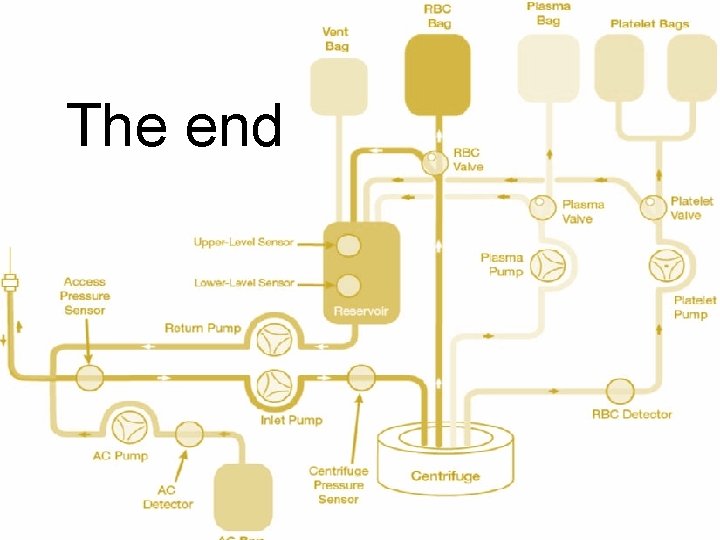
APHERESIS METHOD � Apheresis is a procedure in which whole blood draw, centrifuged, collect platelets and returns the remainder to the donor � Equivalent of 6 -8 random-donor platelets, so decrease donor exposure for a patient.

DONOR SELECTION CRITERIA �
DONATION FREQUENCY �Every � No 2 days more than 2 times in 7 days � No more than 24 times in 12 months
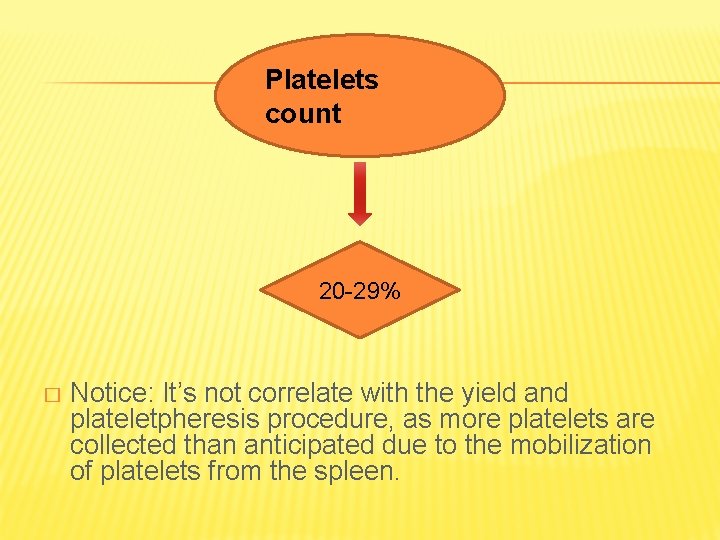
Platelets count 20 -29% � Notice: It’s not correlate with the yield and plateletpheresis procedure, as more platelets are collected than anticipated due to the mobilization of platelets from the spleen.
ADVERSE EFFECTS OF APHERESIS Citrate toxicity (Hypocalcemia) 2. Vascular access complication (hematoma, sepsis, phlebitis, neuropathy) 3. Vasovagal reactions 4. Allergic reaction (ethylene oxide) 5. Air embolus and another things is rare Notice: long-term plateletpheresis made thrombocytopenia and immune suppression 1.
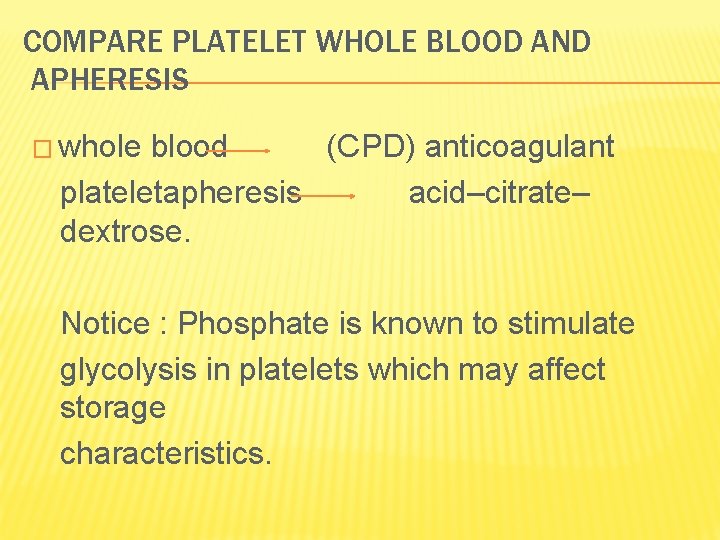
COMPARE PLATELET WHOLE BLOOD AND APHERESIS � whole blood (CPD) anticoagulant plateletapheresis acid–citrate– dextrose. Notice : Phosphate is known to stimulate glycolysis in platelets which may affect storage characteristics.
� hypotonic shock response from the same donor on day 5 1. 32 ± 13% for PRP 2. 57 ± 14% for apheresis platelets � PH on day 5 1. 7. 30 ± 0. 12 for BC-derived PCs 2. 7. 04 ± 0. 21 for apheresis PCs
� Activation markers CD 62 P and CD 63, and the apoptosis marker phosphatidyl serine exposure, showed minor differences during storage.
� Recovery When collected from and reinfused to the same volunteer 1. 35. 2 ± 6. 7% for PRP-derived platelets 2. 36. 8 ± 5. 3% for apheresis � Survival at 72 hours 1. 44. 1 ± 18. 6% for PRP 2. 53. 8 ± 10. 5% for apheresis
� Recovery on day 5 1. 34. 8% for BC method 2. 28. 1% for apheresis � Survival 1. 6. 9 days for BC-derived platelets 2. 5. 4 days for apheresis platelets
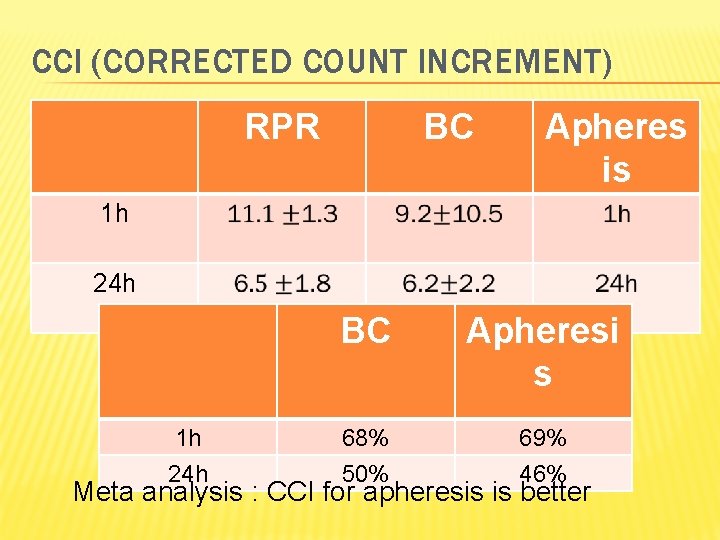
CCI (CORRECTED COUNT INCREMENT) RPR BC Apheres is 1 h 24 h BC Apheresi s 1 h 68% 69% 24 h 50% 46% Meta analysis : CCI for apheresis is better
SAFETY FOR PATHENT � Apheresis : one donor � Whole blood-derived concentrate : multiple donor , exposure (viral transmission) � And bacterial contamination is higher
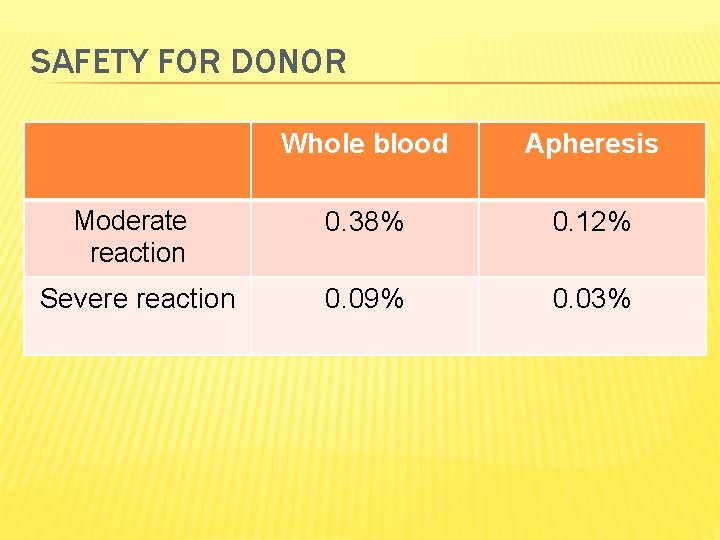
SAFETY FOR DONOR Whole blood Apheresis Moderate reaction 0. 38% 0. 12% Severe reaction 0. 09% 0. 03%
The end
- Slides: 18