
Platelet Aggregation Mrs Ibtisam H Alaswad Mr Mohammed

Platelet Aggregation Mrs. Ibtisam H. Alaswad Mr. Mohammed A. Jaber
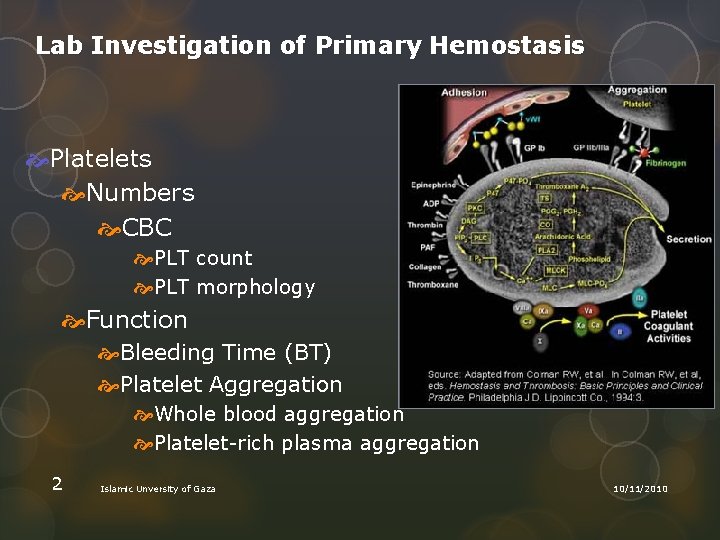
Lab Investigation of Primary Hemostasis Platelets Numbers CBC PLT count PLT morphology Function Bleeding Time (BT) Platelet Aggregation Whole blood aggregation Platelet rich plasma aggregation 2 Islamic Unversity of Gaza 10/11/2010
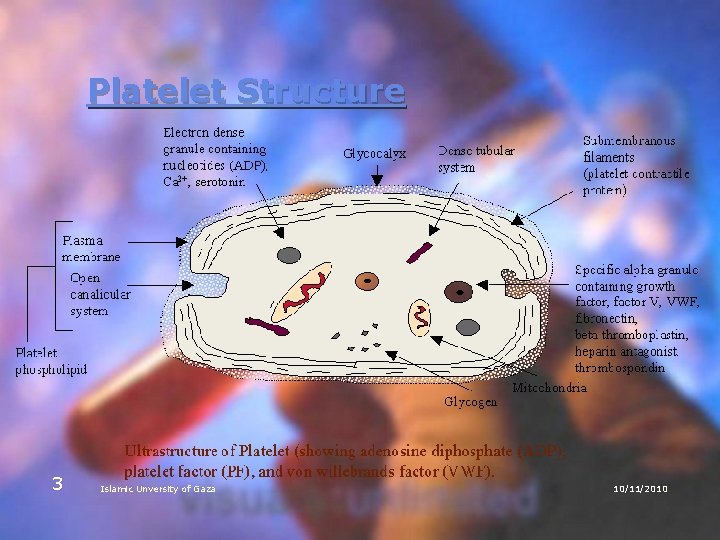
Platelet Structure 3 Islamic Unversity of Gaza 10/11/2010
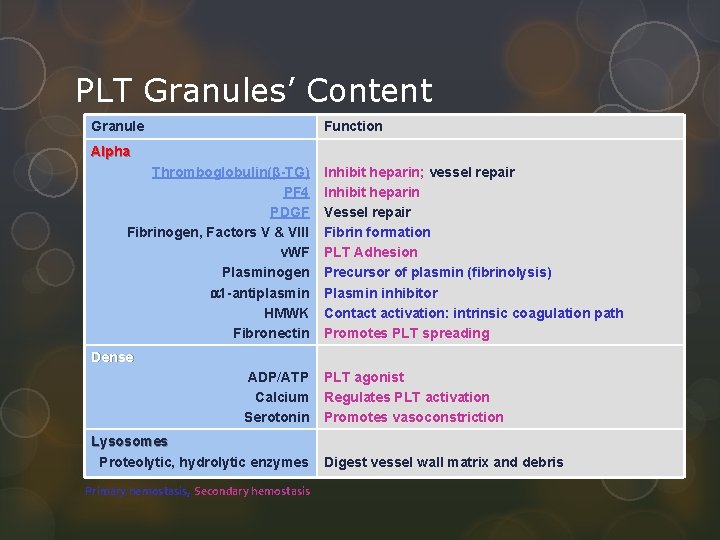
PLT Granules’ Content Granule Function Alpha Thromboglobulin(β-TG) PF 4 PDGF Fibrinogen, Factors V & VIII v. WF Plasminogen a 1 -antiplasmin HMWK Fibronectin Inhibit heparin; vessel repair Inhibit heparin Vessel repair Fibrin formation PLT Adhesion Precursor of plasmin (fibrinolysis) Plasmin inhibitor Contact activation: intrinsic coagulation path Promotes PLT spreading Dense ADP/ATP Calcium Serotonin Lysosomes Proteolytic, hydrolytic enzymes Primary hemostasis, Secondary hemostasis PLT agonist Regulates PLT activation Promotes vasoconstriction Digest vessel wall matrix and debris
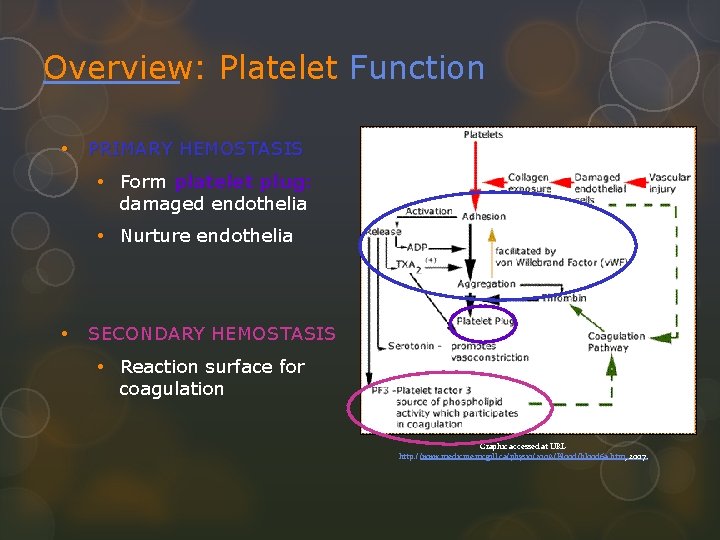
Overview: Platelet Function • PRIMARY HEMOSTASIS • Form platelet plug: damaged endothelia • Nurture endothelia • SECONDARY HEMOSTASIS • Reaction surface for coagulation Graphic accessed at URL http: //www. medicine. mcgill. ca/physio/209 A/Blood/blood 6 a. htm , 2007.
Platelet Plug Formation: Adhesion Platelets bind to exposed adhesive subendothelial connective tissue Collagen v. WF Fibronectin Mechanism components v. WF: links PLT to endothelial binding site PLT receptor GPIb Collagen fibers Actin contracts & pseudopods form REVERSIBLE Facilitates activation
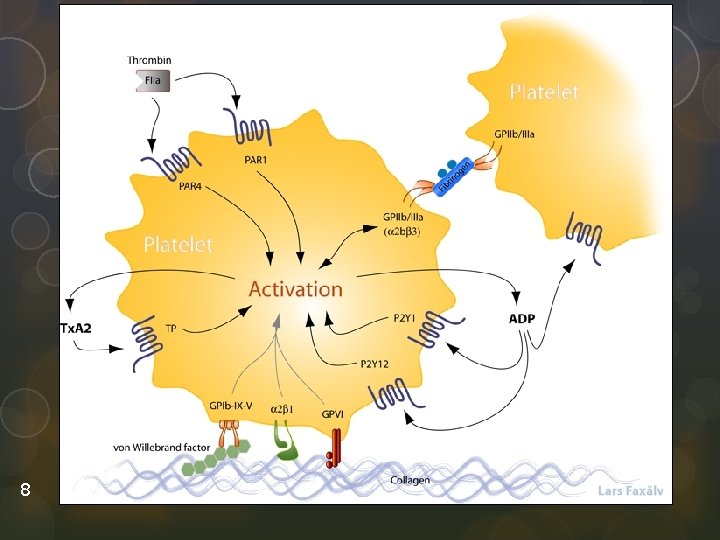
Platelet Activation After PLT adhesion A change in PLT shape Generation of biologically active mediators Degranulation The specificity of PLT activation and signal transduction is maintained by the presence of PLT receptors that recognize the appropriate PLT agonists. Thrombin ADP Islamic Unversity of Gaza 10/11/2010 7
8 Islamic Unversity of Gaza 10/11/2010
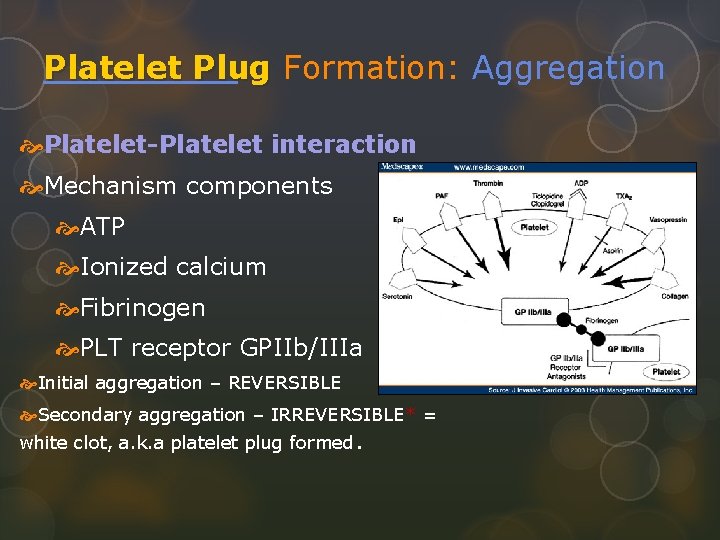
Platelet Plug Formation: Aggregation Platelet-Platelet interaction Mechanism components ATP Ionized calcium Fibrinogen PLT receptor GPIIb/IIIa Initial aggregation – REVERSIBLE Secondary aggregation – IRREVERSIBLE* = white clot, a. k. a platelet plug formed.
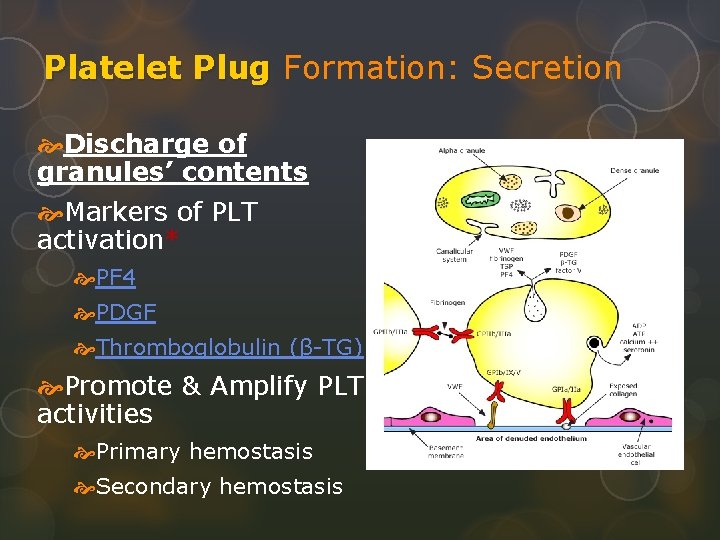
Platelet Plug Formation: Secretion Discharge of granules’ contents Markers of PLT activation* PF 4 PDGF Thromboglobulin (β TG) Promote & Amplify PLT activities Primary hemostasis Secondary hemostasis
Inherited Platelet Disorders Qualitative disorders Adhesion Bernard Soulier syndrome ( GP Ib IX ) Platelet type (Pseudo ) von Willebrand disease ( GP Ib receptor) * Collagen receptor deficiency (GP VI) Aggregation Glanzmann thrombasthenia (Gp IIb IIIa) Secretion Dense (δ) granule defects (storage pool deficiency) α granule defects (gray platelet syndrome) Platelet procoagulant activity Scott syndrome PF 3 Islamic Unversity of Gaza 10/11/2010 11
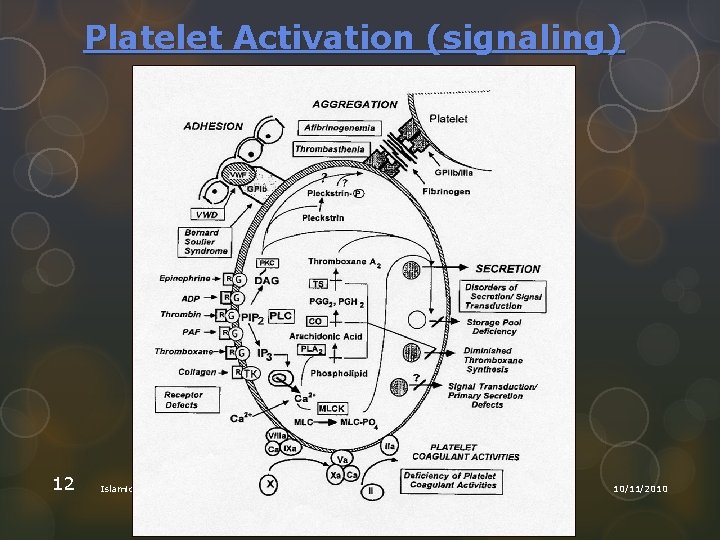
Platelet Activation (signaling) 12 Islamic Unversity of Gaza 10/11/2010
Platelet Aggregometry Platelet aggregation is an essential part of the investigation of any patient with a suspected platelet dysfunction. Principle We are using Aggregating agents to induce platelet aggregation or cause platelets to release endogenous ADP, or both. Platelet aggregation is studied by means of a platelet aggregometer, Used Principle: 1. Photo optical Method 2. Electrical Impedance Method 3. luminescence technology (Platelet Lumiaggregometry) 13 Islamic Unversity of Gaza 10/11/2010
Aggregating Agents (agonist) Collagen* ADP* Epinephrine* Arachidonic acid* The antibiotic ristocetin* Thrombin Serotonin Snake venoms, antigen antibody complexes, soluble fibrin monomer complexes, and fibrin(ogen) degradation products (FDPs). 14 Islamic Unversity of Gaza 10/11/2010
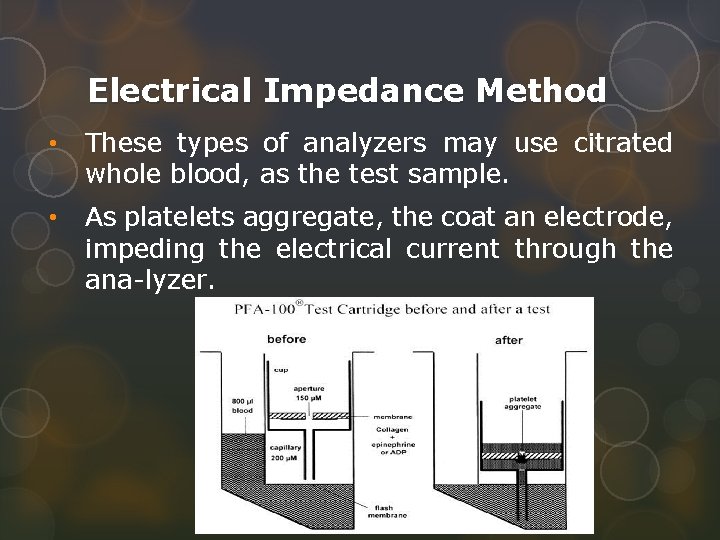
Electrical Impedance Method • These types of analyzers may use citrated whole blood, as the test sample. • As platelets aggregate, the coat an electrode, impeding the electrical current through the ana lyzer.
luminescence technology (Platelet Lumiaggregometry) • The lumiaggregometer may be used to simultaneously measure platelet aggregation and secretion. The instrument records both aggregation and secretion of dense granule ATP. • The ATP is measured by its reaction with firefly luciferin to give chemiluminescence. The resulting light emission is detected, amplified, and recorded by the instrument. • Performed by using whole blood or PRP. • This modification of aggregation is particularly sensitive to ATP release, and is as sensitive measure of platelet activation.
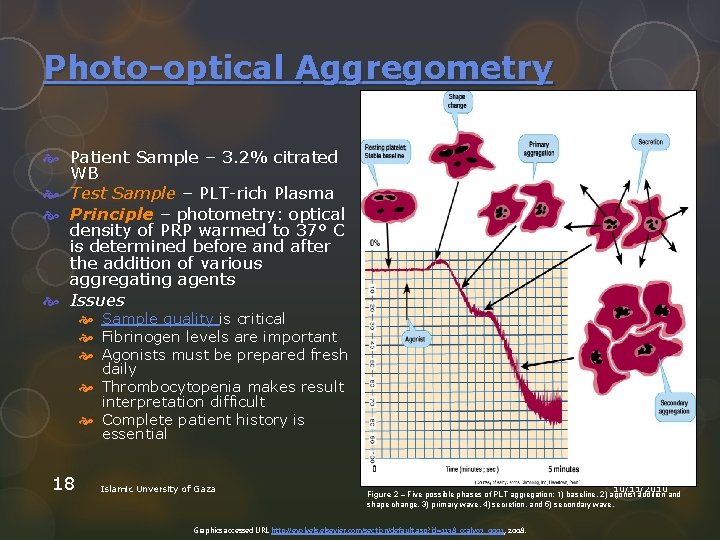
Photo-optical Aggregometry Patient Sample – 3. 2% citrated WB Test Sample – PLT rich Plasma Principle – photometry: optical density of PRP warmed to 37° C is determined before and after the addition of various aggregating agents Issues Sample quality is critical Fibrinogen levels are important Agonists must be prepared fresh daily Thrombocytopenia makes result interpretation difficult Complete patient history is essential 18 Islamic Unversity of Gaza Figure 1 - Platelet-rich plasma in an optical aggregometer. Platelet count is approximately 200 × 109/L, and platelets are maintained in suspension by a magnetic stir bar turning at 1000 rpm. (Courtesy of Kathy Jacobs, Chronolog, Inc. , Havertown, PA. ) 10/11/2010 Figure 2 – Five possible phases of PLT aggregation: 1) baseline, 2) agonist addition and shape change, 3) primary wave, 4) secretion, and 5) secondary wave. Graphics accessed URL http: //evolvels. elsevier. com/section/default. asp? id=1138_ccalvo 7_0001, 2008.
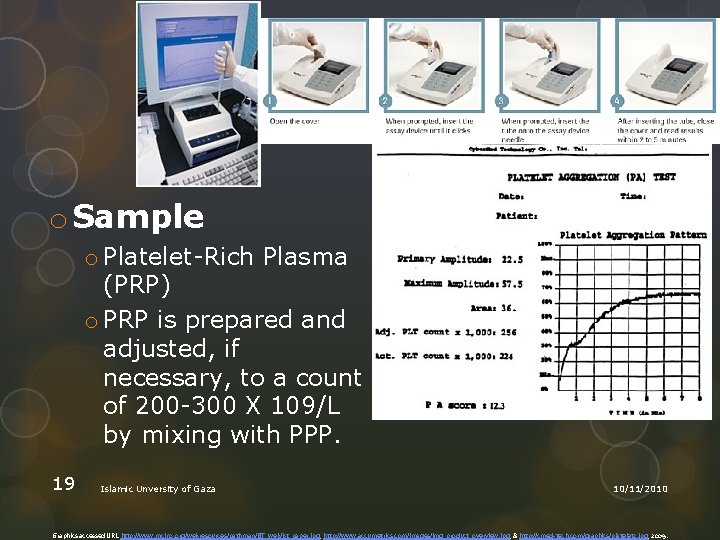
o Sample o Platelet Rich Plasma (PRP) o PRP is prepared and adjusted, if necessary, to a count of 200 300 X 109/L by mixing with PPP. 19 Islamic Unversity of Gaza 10/11/2010 Graphics accessed URL http: //www. mclno. org/webresources/pathman/BT_web/bt_paper. jpg, http: //www. accumetrics. com/images/img_product_overview. jpg, & http: //cmed-tech. com/graphics/platelet 2. jpg, 2009.
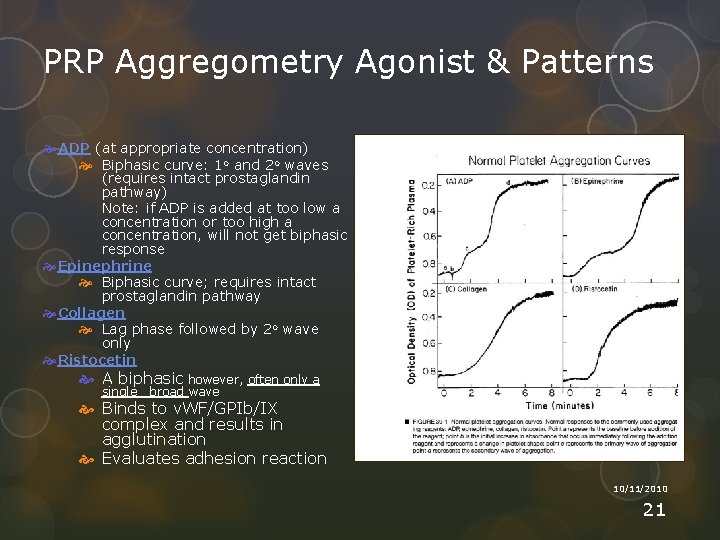
PRP Aggregometry Agonist & Patterns ADP (at appropriate concentration) Biphasic curve: 1 o and 2 o waves (requires intact prostaglandin pathway) Note: if ADP is added at too low a concentration or too high a concentration, will not get biphasic response Epinephrine Biphasic curve; requires intact prostaglandin pathway Collagen Lag phase followed by 2 o wave only Ristocetin A biphasic however, often only a single broad wave Binds to v. WF/GPIb/IX complex and results in agglutination Evaluates adhesion reaction 10/11/2010 21
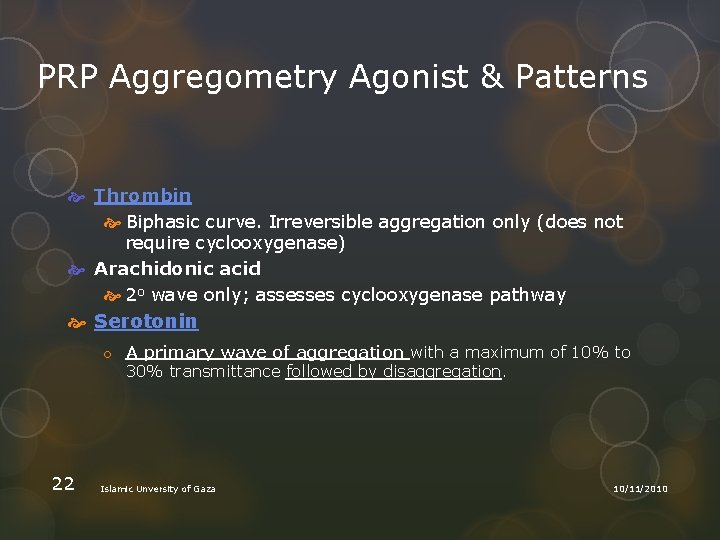
PRP Aggregometry Agonist & Patterns Thrombin Biphasic curve. Irreversible aggregation only (does not require cyclooxygenase) Arachidonic acid 2 o wave only; assesses cyclooxygenase pathway Serotonin o A primary wave of aggregation with a maximum of 10% to 30% transmittance followed by disaggregation. 22 Islamic Unversity of Gaza 10/11/2010
Interpretation Platelet aggregation occurs as a two step process, known as primary and secondary waves of aggregation. The primary wave of aggregation is observed when platelets adhere to one another in the presence of an external agent (agonist) such as ADP, epinephrine, or ristocetin. Secondary aggregation is characterized as the aggregation that occurs after the platelets have been stimulated to secrete the substances contained in their organelles. It should be noted that some agonists will stimulate primary aggregation and some will stimulate secondary aggregation. Others will stimulate both primary and secondary aggregation, yielding a "biphasic" aggregation curve. 23 Islamic Unversity of Gaza 10/11/2010
Interpretation In addition, different concentrations of the same agonist can produce varying patterns of primary and secondary aggregation. For example, low concentrations of ADP induce biphasic aggregation (i. e. , both a primary and a secondary wave of aggregation); very low concentrations of ADP (l. 5 ug/ml. final concentration) induce a primary wave followed by disaggregation; And high concentrations of ADP (10 ug/ml, final concentration) induce a single, broad wave of aggregation" (Fig. ) A biphasic aggregation response to ADP will not be seen in patients with platelet release disorders. Patients with Glanzrnann's thrombasthenia show incomplete aggregation with ADP regardless of the final concentration. 24 Islamic Unversity of Gaza 10/11/2010
Interpretation In patients with severe von Willebrand disease, aggregation to ristocetin is characteristically absent. Decreased to normal aggregation to ristocetin can be seen in patients with mild von Willebrand disease. Correction of the abnormal ristocetin aggregation curves can be seen by the addition of normal, platelet poor plasma to the patient's platelet rich plasma. Abnormal ristocetin induced platelet aggregation may also occur in patients with 1. Bernard Soulier syndrome, 2. Platelet storage pool defects 3. Idiopathic thrombocytopenia purpura (ITP). 25 Islamic Unversity of Gaza 10/11/2010
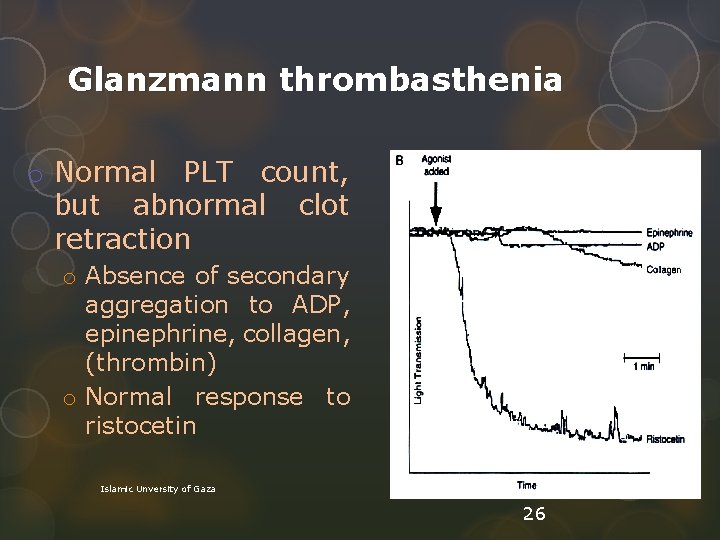
Glanzmann thrombasthenia o Normal PLT count, but abnormal clot retraction o Absence of secondary aggregation to ADP, epinephrine, collagen, (thrombin) o Normal response to ristocetin Islamic Unversity of Gaza 10/11/2010 26
Bernard-Soulier syndrome o Platelet aggregation test o Failure to aggregate in the presence of ristocetin o Aggregation by other agonists (ADP, collagen, epinephrine): normal o Response to low dose thrombin: may be delayed Islamic Unversity of Gaza 10/11/2010 27
Platelet storage granule defects o Dense (δ) granule defects ~ storage pool deficiency o α granule defects ~ gray platelet syndrome o Heterogeneous group of disorders o Mild to moderate bleeding diathesis o Abnormalities in platelet aggregation Islamic Unversity of Gaza 10/11/2010 28
Comment In evaluating patients with suspected platelet disorders, the aggregating agents most commonly used are ADP in varying concentrations, collagen, epinephrine, and ristocetin, Aspirin, aspirin compounds, and anti inflammatory drugs inhibit the secondary wave of aggregation by inhibiting the release reaction of the platelet. Reduced or absent aggregation as well as disaggregation curves may be observed in patients taking medication containing aspirin. Other medications or substances have also been identified as inhibiting platelet function, such as ibuprofen, red wine, and a variety of herbs. Patients should be questioned carefully about possible ingestion of these substances before interpreting abnormal aggregation results. 29 Islamic Unversity of Gaza 10/11/2010
Comment The intensity of platelet aggregation may be estimated by recording the change in absorbance as a percentage of the difference in absorbance between platelet rich and platelet poor plasma. This has limited usefulness because absorbance is dependent on the size and density of platelet clumping and the number of platelets that aggregate. 30 Islamic Unversity of Gaza 10/11/2010
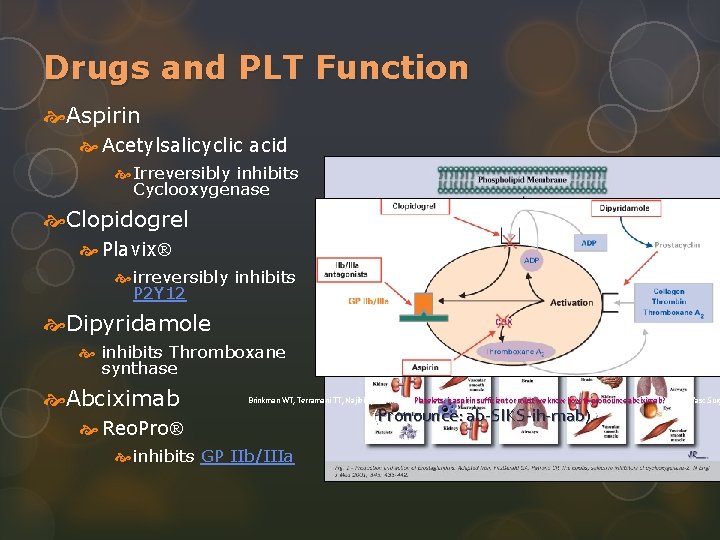
Drugs and PLT Function Aspirin Acetylsalicyclic acid Irreversibly inhibits Cyclooxygenase Clopidogrel Plavix irreversibly inhibits P 2 Y 12 Dipyridamole inhibits Thromboxane synthase Abciximab Brinkman WT, Terramani TT, Najibi S, Chaikof EL. Platelets: is aspirin sufficient or must we know how to pronounce abciximab? Semin Vasc Surg Reo. Pro inhibits GP IIb/IIIa (Pronounce: ab-SIKS-ih-mab) •
- Slides: 29