
Plate Tectonics Unit 2 Physical Connections Video introduction
- Slides: 44
Plate Tectonics Unit 2 – Physical Connections
Video introduction • The Early Earth and Plate Tectonics: https: //www. youtube. com/watch? v=QDqsklt Cix. A
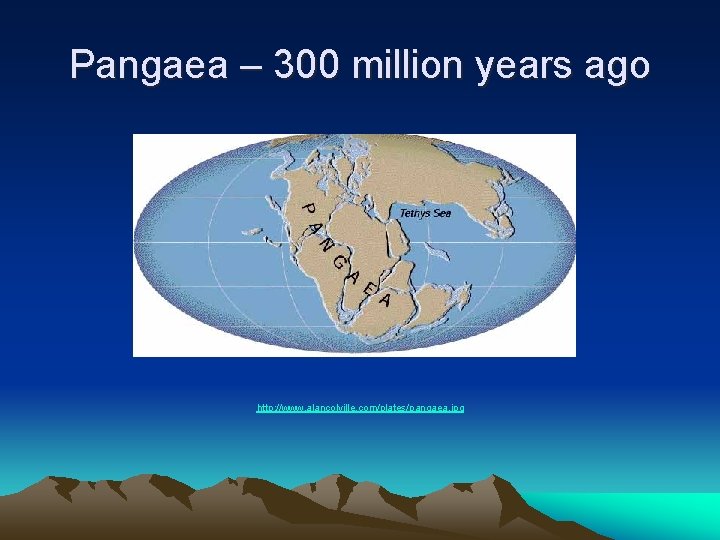
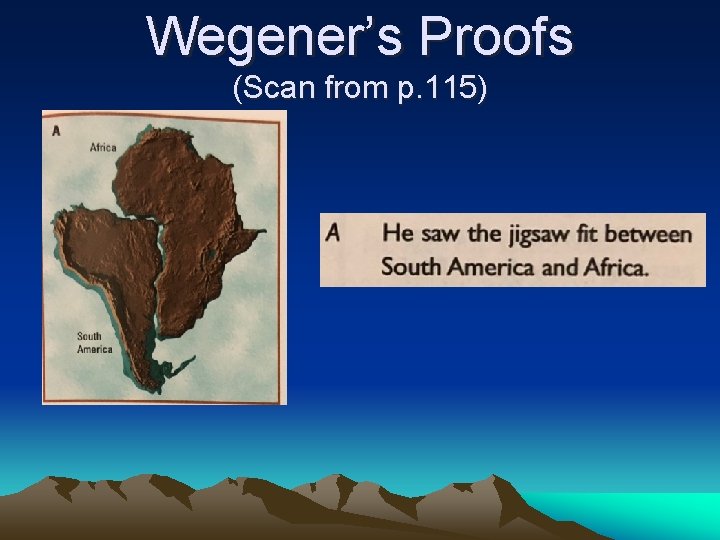
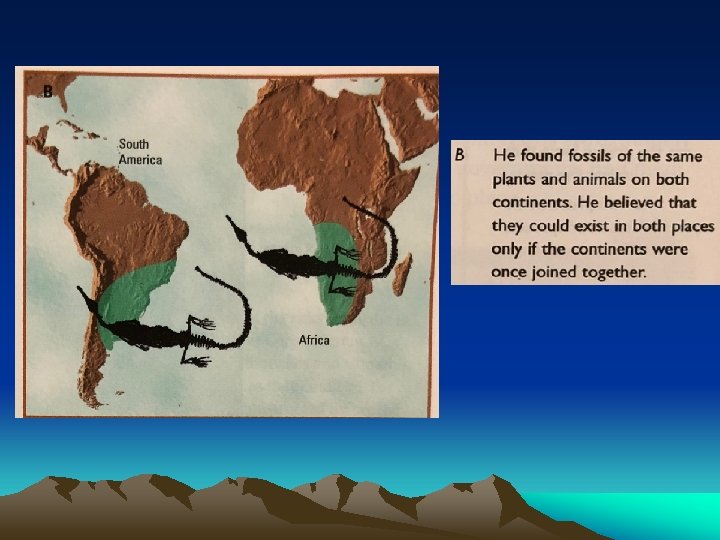
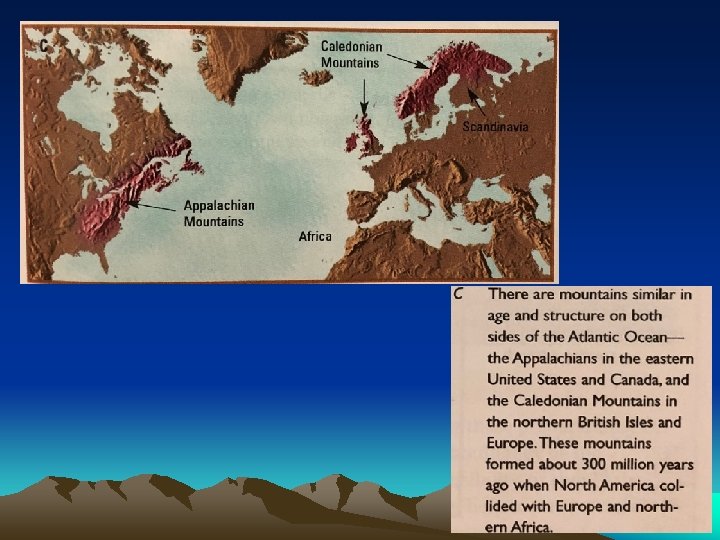
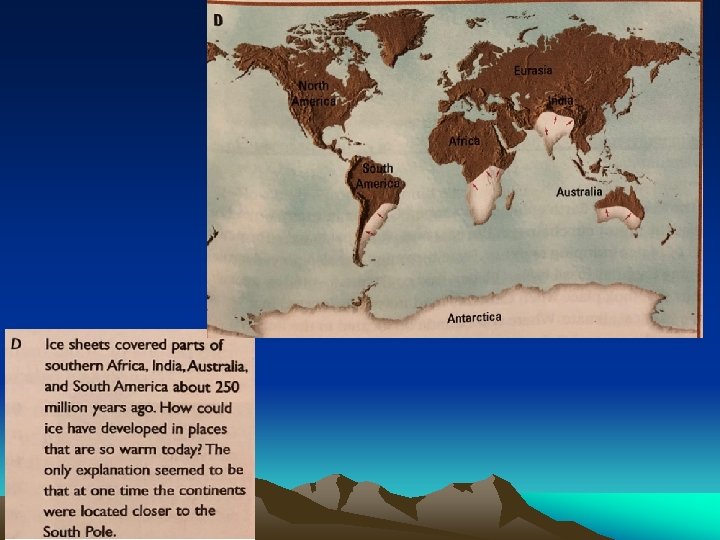
Continental Drift • In 1915, Alfred Wegener, a German scientist, stated that all of the Earths land masses are constantly in motion. He also stated that 300 million years ago all they collided to form one supercontinent. He called it Pangaea. • Wegener tried to prove his theory of continental drift using 4 ‘proofs’.
Pangaea – 300 million years ago http: //www. alancolville. com/plates/pangaea. jpg
Wegener’s Proofs (Scan from p. 115)
• Most scientists at the time did not accept Wegener’s theory of continental drift because he could not explain what force was powerful enough to move the continents.
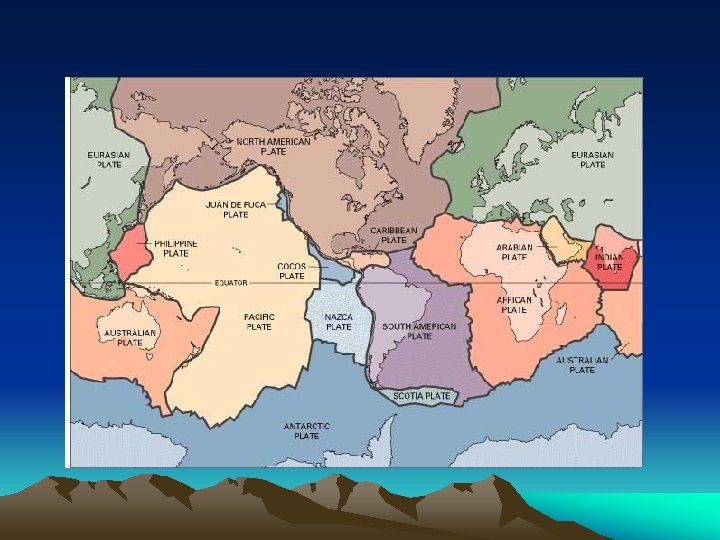
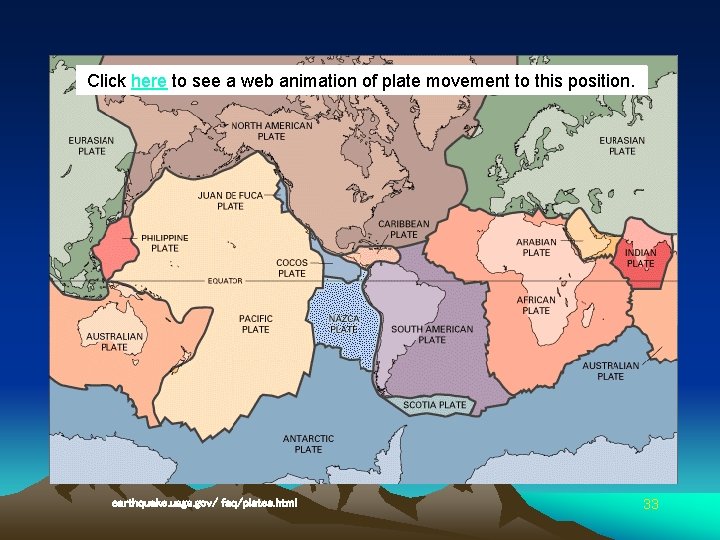
Plate tectonics • 1968 J. Tuzo Wilson, a Canadian, helped spark interest in a new, more complete theory known as plate tectonics. – New technology existed that was not around in Wegener’s time. – 20 Plates made up of both ocean and continent – They move over a weak layer of hot rock, which flows like slow moving plastic – It is thought that an unequal distribution of heat causes convection currents to move these plates.
Remember, there are two types of crust: Oceanic crust, which extends all over the earth and is broken into the 12 large and many smaller plates; and, Continental crust, which “rides around” on top of the oceanic crustal plates 11
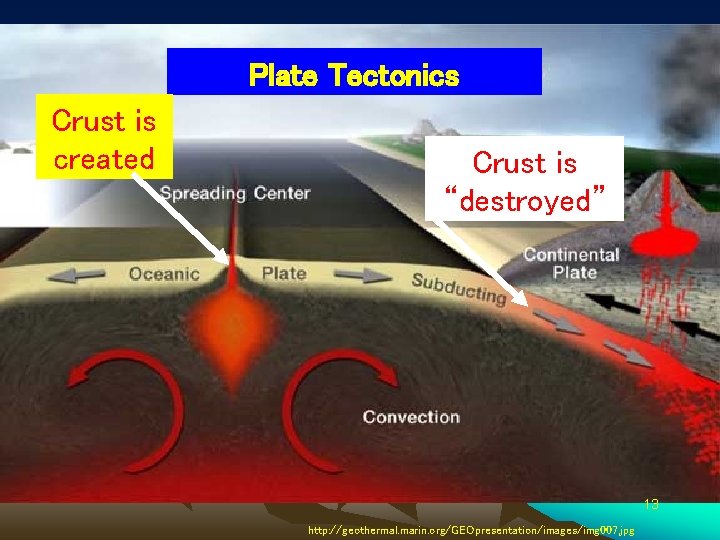
Plate Tectonics Crust is created Crust is “destroyed” 13 http: //geothermal. marin. org/GEOpresentation/images/img 007. jpg
There are three basic plate movements or boundaries. 1. Divergent: where the plates move apart. 2. Convergent: two plates come together. There are 3 types 3. Transform: two plates slide past each other Earthquakes frequently occur at all three boundaries/movements. 14
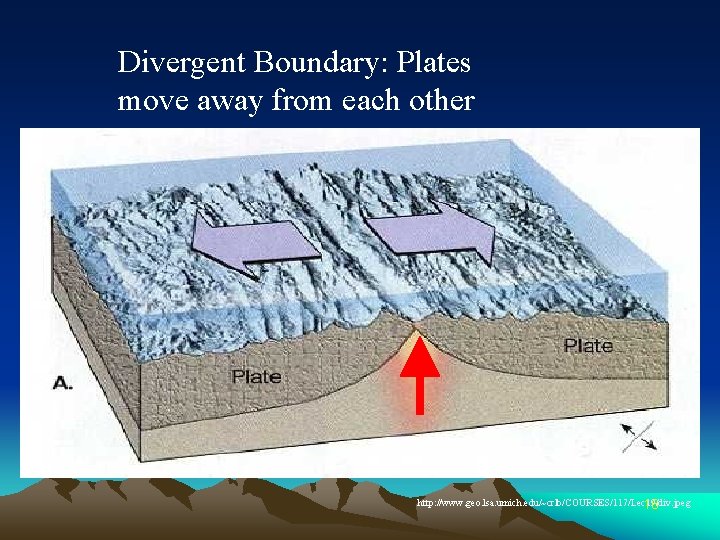
1. Divergent: where the plates move apart • new magma wells up to the surface forming new crust (a ridge). This is called sea floor spreading. • the Mid-Atlantic ridge is a prime example.
Divergent Boundary: Plates move away from each other http: //www. geo. lsa. umich. edu/~crlb/COURSES/117/Lec 19/div. jpeg 16
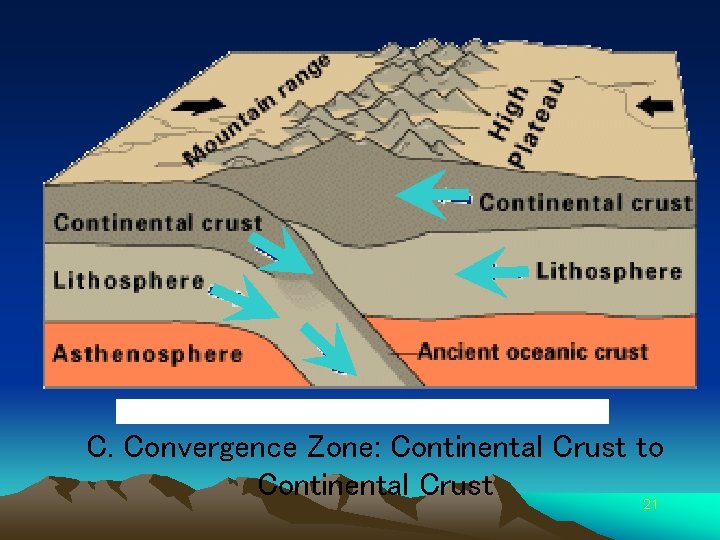
2. Convergent: • two plates come together • There are 3 types: 1) Continental Crust to Continental Crust 2)Continental Crust to Oceanic Crust 3)Oceanic Crust to Oceanic Crust. 17
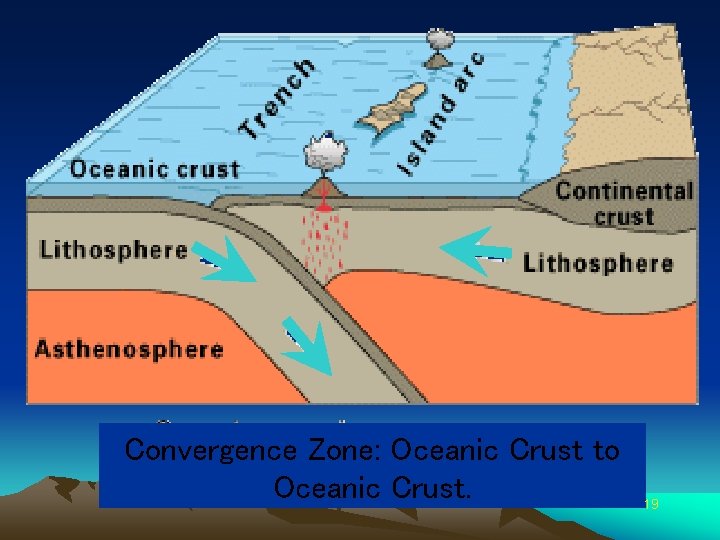
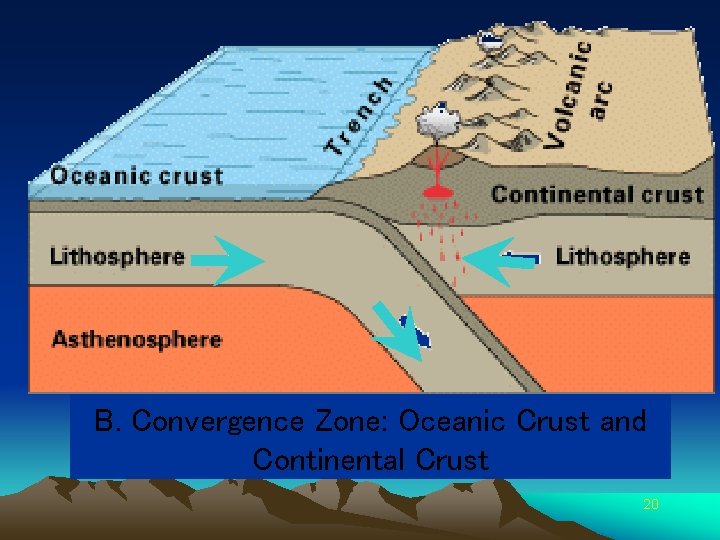
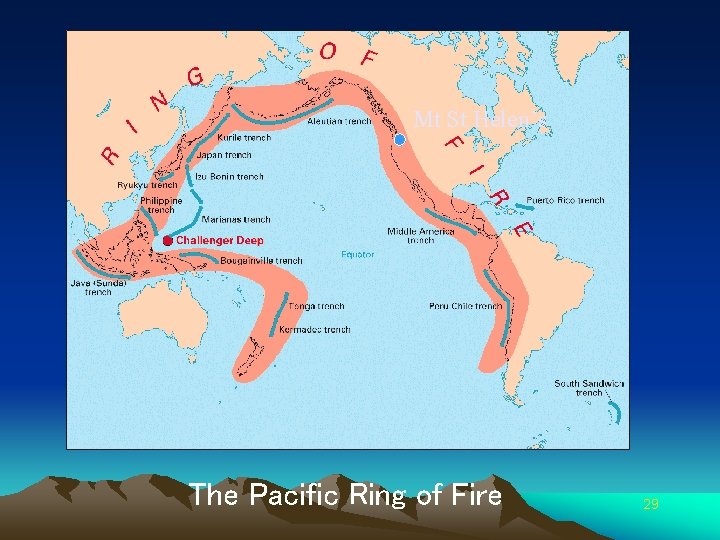
• one plate goes under (subducts) the other plate, creating a subduction zone • the crust at the leading edge of the subducting plate melts back into the mantle • the Pacific Rim of Fire is a good example of this. It’s a string of volcanoes and sites of seismic activity, or earthquakes, around the edges of the Pacific Ocean
Convergence Zone: Oceanic Crust to Oceanic Crust. 19
B. Convergence Zone: Oceanic Crust and Continental Crust 20
C. Convergence Zone: Continental Crust to Continental Crust 21
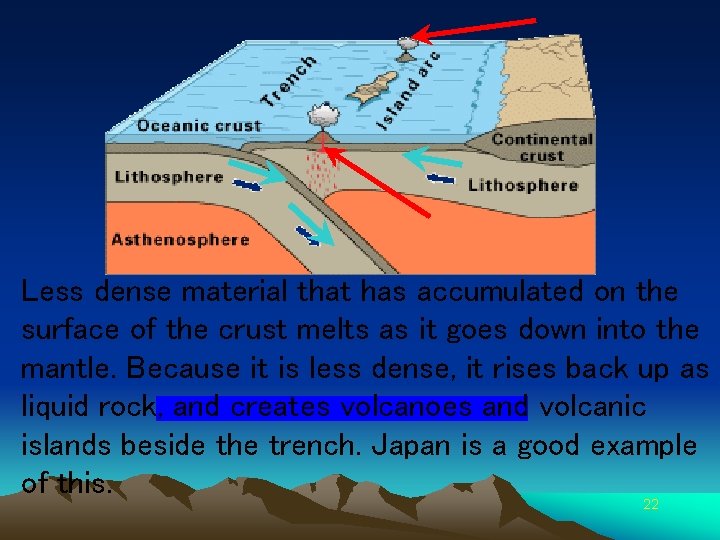
Less dense material that has accumulated on the surface of the crust melts as it goes down into the mantle. Because it is less dense, it rises back up as liquid rock, and creates volcanoes and volcanic islands beside the trench. Japan is a good example of this. 22
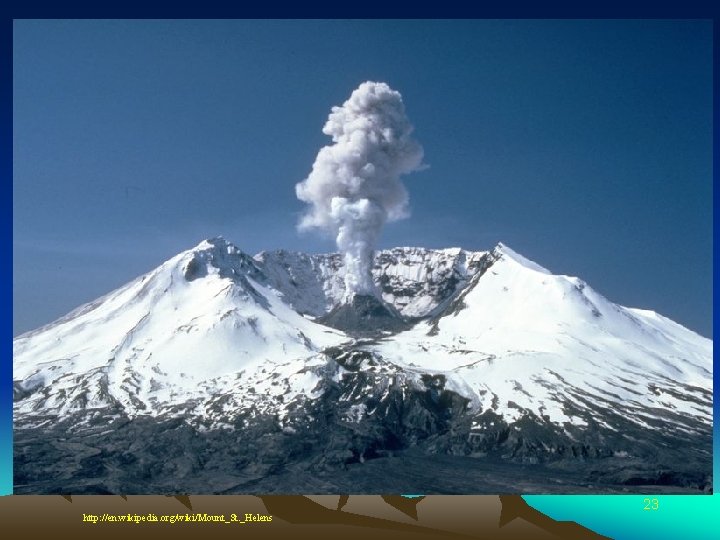
23 http: //en. wikipedia. org/wiki/Mount_St. _Helens
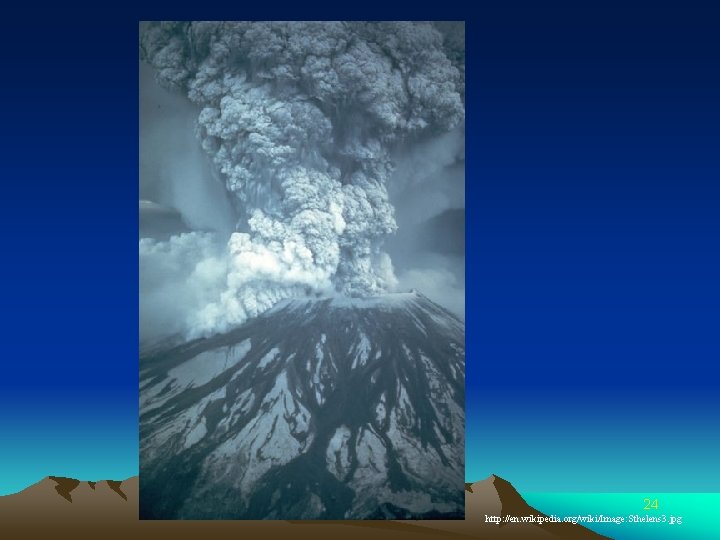
24 http: //en. wikipedia. org/wiki/Image: Sthelens 3. jpg
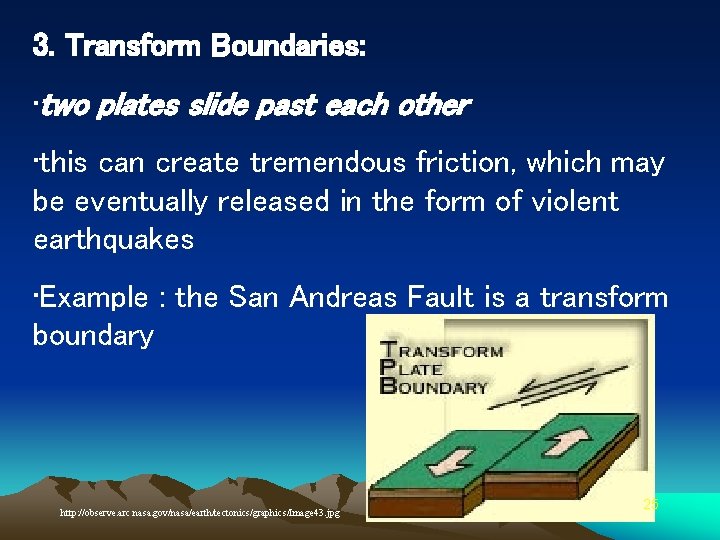
3. Transform Boundaries: • two plates slide past each other • this can create tremendous friction, which may be eventually released in the form of violent earthquakes • Example : the San Andreas Fault is a transform boundary http: //observe. arc. nasa. gov/nasa/earth/tectonics/graphics/Image 43. jpg 25
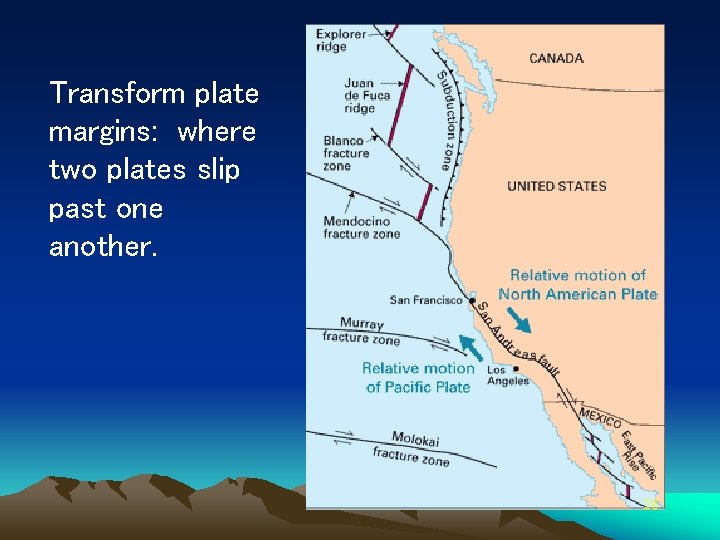
Transform plate margins: where two plates slip past one another. 26
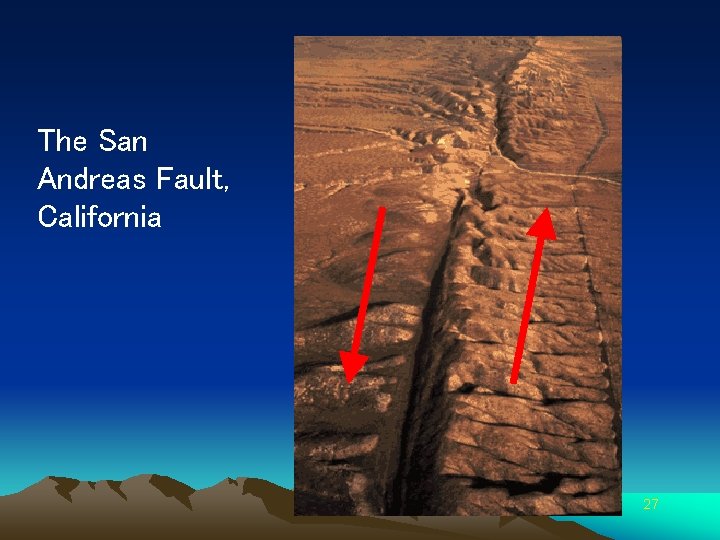
The San Andreas Fault, California 27
The Ring of Fire • A string of volcanoes and earthquakes, around the edges of the Pacific Ocean. • The edges of several tectonic plates meet • This includes the West Coast of Canada. Several ‘mountains’ in British Columbia are actually dormant (asleep) volcanoes.
Mt St Helen’s The Pacific Ring of Fire 29
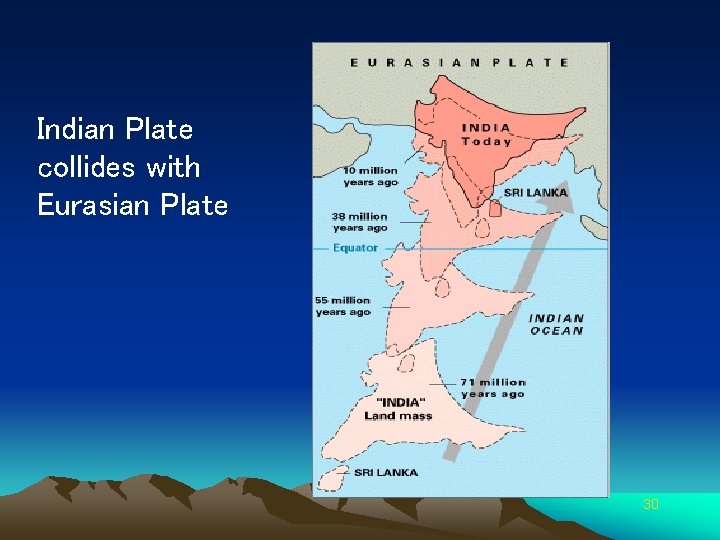
Indian Plate collides with Eurasian Plate 30
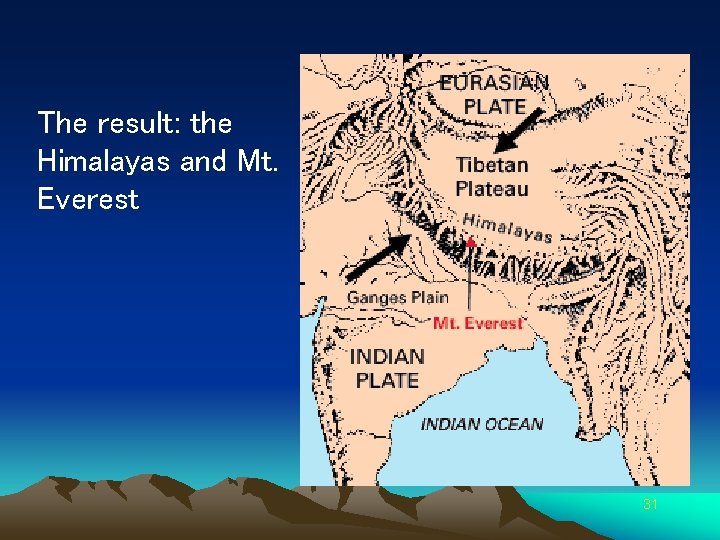
The result: the Himalayas and Mt. Everest 31
Mountain Formation Video
Click here to see a web animation of plate movement to this position. earthquake. usgs. gov/ faq/plates. html 33
Impacts on Canada • The movement of the Earth’s plates has shaped Canada in may ways: – Appalachian and Western Cordillera mountains were formed by plates bumping together. – Oil, gas, and coal deposits were formed when Canada’s land mass was located in a tropical climate
Geologic Time • • Cenozoic Mesozoic Paleozoic Precambrian
Cenozoic (recent life) • 66 million years to present – Ice sheets cover much of the earth – Continents take on their present shape – Formation of the Rocky Mountains Biological Events – Human beings develop – Age of mammals – Modern forms of life evolve
Mesozoic (middle life) • 245 million to 66 million years – Shallow seas in the interior of North America Biological Events – Age of reptiles, such as dinosaurs – First flowering plants – First birds and mammals
Paleozoic (ancient life) • 570 – 245 million years – Appalachians formed – Periods when large parts of North America are covered by shallow seas. – – Age of amphibians and fish First insects Large swamps-coal formed from this vegetation First plants and animals appear on land
Precambrian (earliest Life) • 4. 6 Billion years ago – 570 million years – Rock shield formations: Canadian Shield, Brazilian Shield, African Shield and the Australian Shield. Biological Events – First single and multi-celled organisms
Pair Work on Geological Eras Every student needs to write down the answers 1. Using the information from your notes, answer the questions below. a)How old is the earth? b)What percentage of the earth's age does each era represent? c) What is the name of the era in which we live? 2. a) Draw a line 20 cm long on a piece of paper. b) Divide the line into eras based on the percentages calculated in question 1 b.
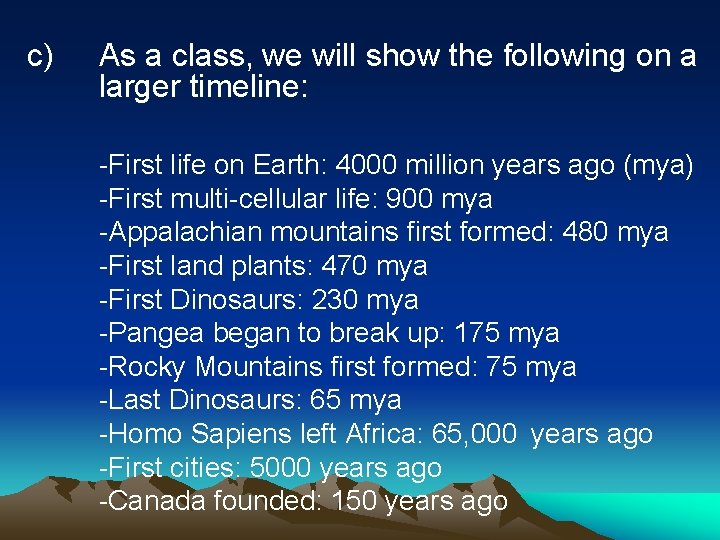
c) As a class, we will show the following on a larger timeline: -First life on Earth: 4000 million years ago (mya) -First multi-cellular life: 900 mya -Appalachian mountains first formed: 480 mya -First land plants: 470 mya -First Dinosaurs: 230 mya -Pangea began to break up: 175 mya -Rocky Mountains first formed: 75 mya -Last Dinosaurs: 65 mya -Homo Sapiens left Africa: 65, 000 years ago -First cities: 5000 years ago -Canada founded: 150 years ago
3. Geologists believe that Canada was located closer to the equator during the early part of the Paleozoic era. Why has this tropical location been important to Canada? (Hint: consider the transportation and winter heating needs of Canadians)
The ‘Time Traveler’ Story • Prepare a short children’s story about a time traveler named _______, who travels through the geologic eras. The time traveler must travel through every era and must interact in some way with the environment that indicates the geologic and biologic changes that occur during that era (information from notes and online). The story should be written creatively. • Trustworthy websites https: //earthhow. com/earth-timeline-geological-history-events/ https: //ucmp. berkeley. edu/help/timeform. html https: //www. newscientist. com/article/dn 17453 -timeline-the-evolution-of-life/
• http: //www. youtube. com/watch? v=SY 3 MZ _w. NFW 8