
Plate Tectonics Structure of the Earth Layers by
Plate Tectonics
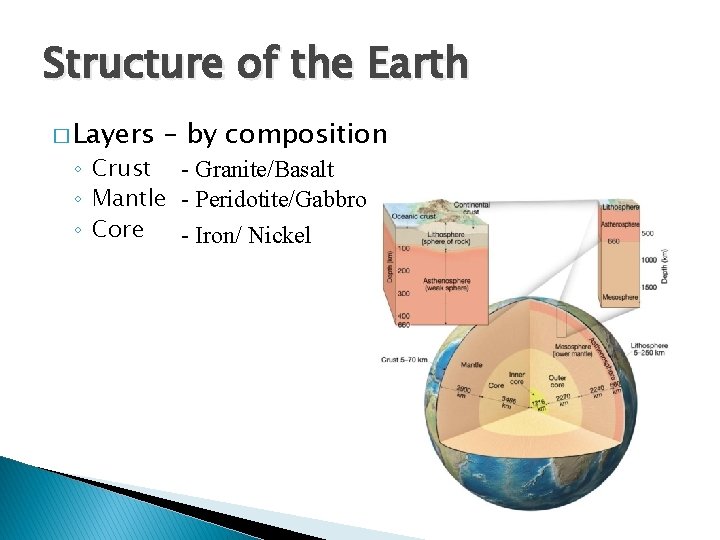
Structure of the Earth � Layers – by composition ◦ Crust - Granite/Basalt ◦ Mantle - Peridotite/Gabbro ◦ Core - Iron/ Nickel
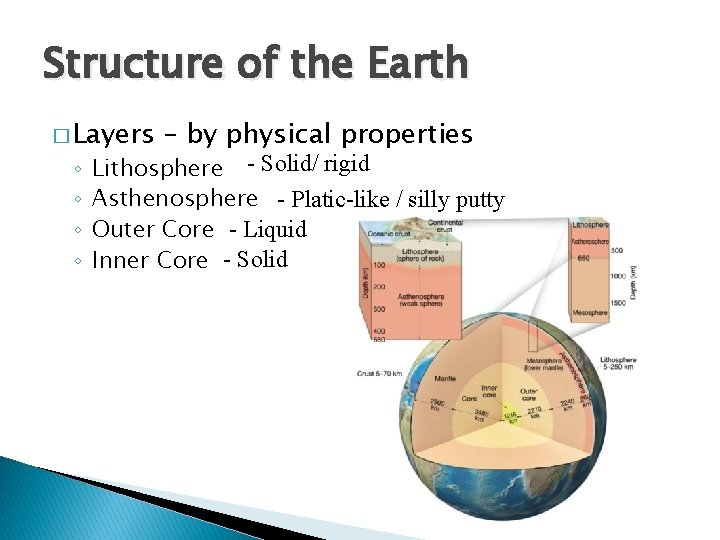
Structure of the Earth � Layers ◦ ◦ – by physical properties Lithosphere - Solid/ rigid Asthenosphere - Platic-like / silly putty Outer Core - Liquid Inner Core - Solid
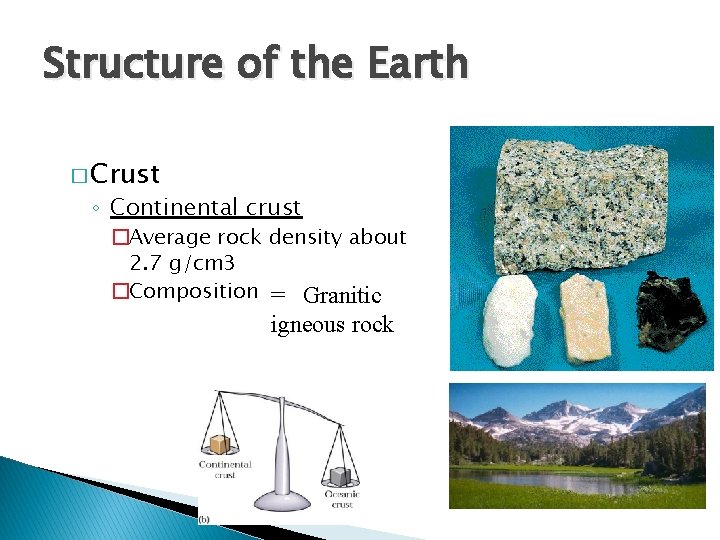
Structure of the Earth � Crust ◦ Continental crust �Average rock density about 2. 7 g/cm 3 �Composition = Granitic igneous rock
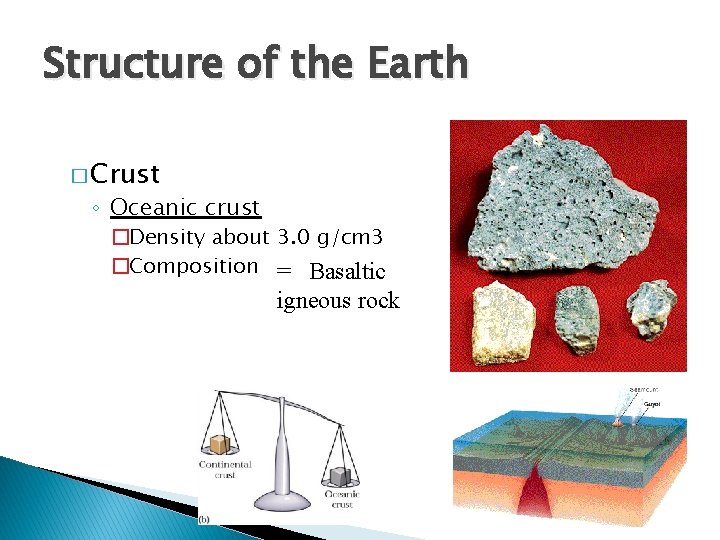
Structure of the Earth � Crust ◦ Oceanic crust �Density about 3. 0 g/cm 3 �Composition = Basaltic igneous rock
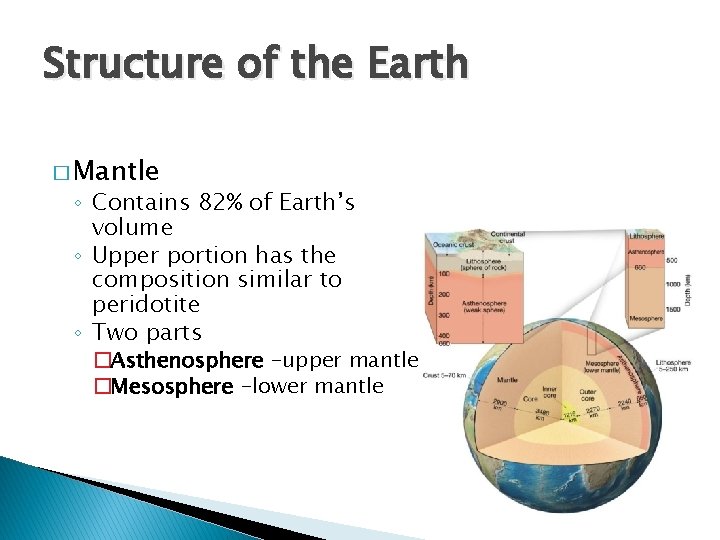
Structure of the Earth � Mantle ◦ Contains 82% of Earth’s volume ◦ Upper portion has the composition similar to peridotite ◦ Two parts �Asthenosphere -upper mantle �Mesosphere -lower mantle
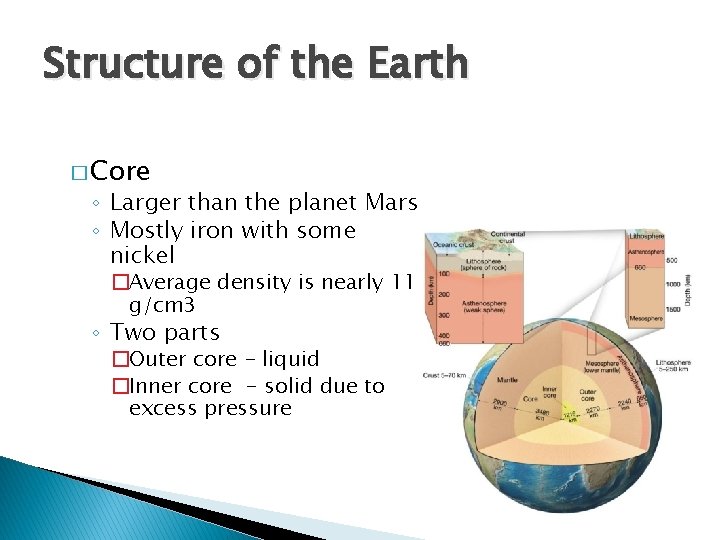
Structure of the Earth � Core ◦ Larger than the planet Mars ◦ Mostly iron with some nickel �Average density is nearly 11 g/cm 3 ◦ Two parts �Outer core - liquid �Inner core - solid due to excess pressure
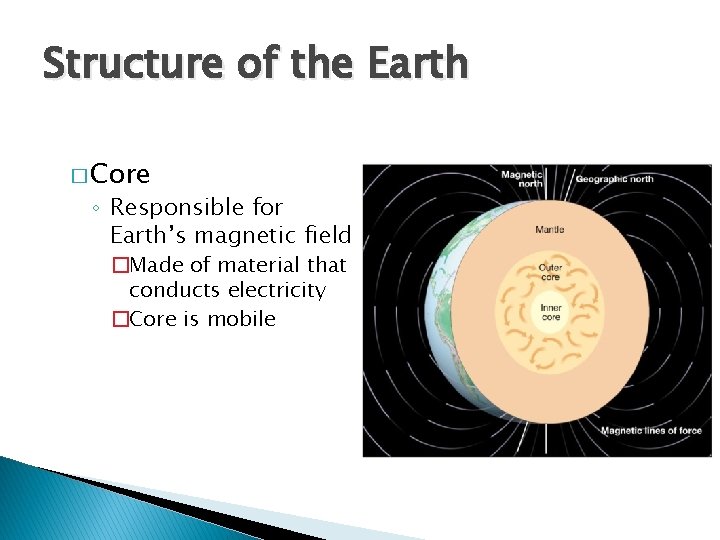
Structure of the Earth � Core ◦ Responsible for Earth’s magnetic field �Made of material that conducts electricity �Core is mobile
Structure of the Earth � How ? ? do we know what is inside the Earth? ?
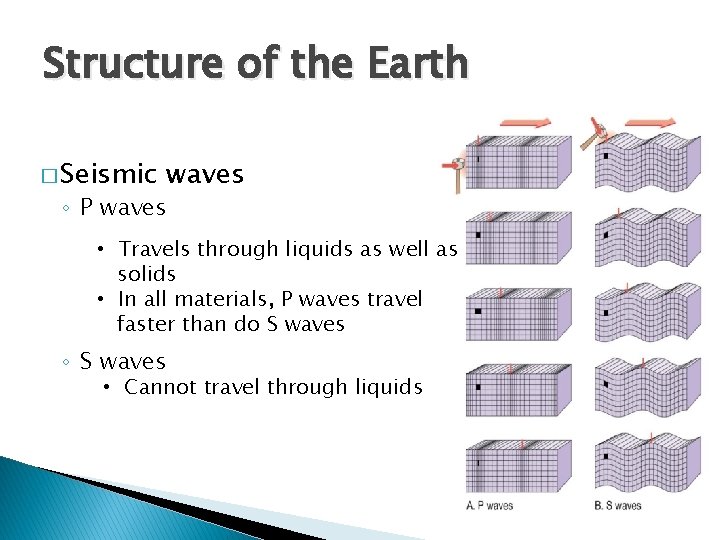
Structure of the Earth � Seismic waves ◦ P waves • Travels through liquids as well as solids • In all materials, P waves travel faster than do S waves ◦ S waves • Cannot travel through liquids
Structure of the Earth � Seismic waves ◦ Seismic waves refract (bend) as they pass from solid to plastic-like to liquid material. ◦ P & S wave shadow zones created by this.

P wave shadow zone
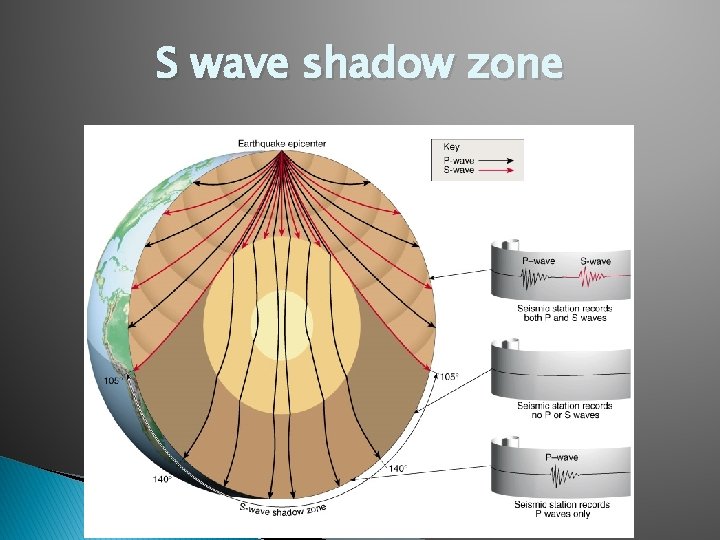
S wave shadow zone
Early Evidence
Continental Drift � Researchers noted geographic fit of continents, e. g. Africa and S. America � Seuss, 1885, proposed super continent by studying fossils, rocks, mountains � Alfred Wegener - First proposed his continental drift hypothesis in 1915
Continental Drift Wegener’s Hypothesis: � All land was joined together as one Supercontinent called Pangaea which began breaking apart about 200 million years ago moving. � Pangaea Activity link � http: //www. saskschools. ca/curr_content/ rbtboxes/mcrust/objects/pangea. html
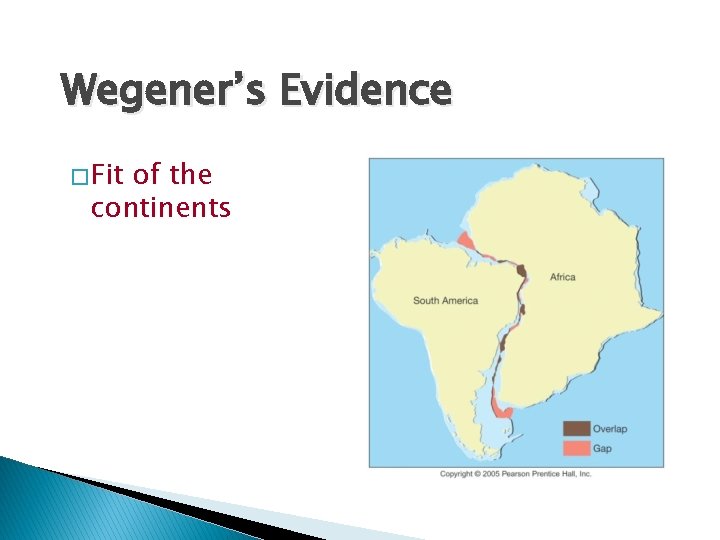
Wegener’s Evidence � Fit of the continents
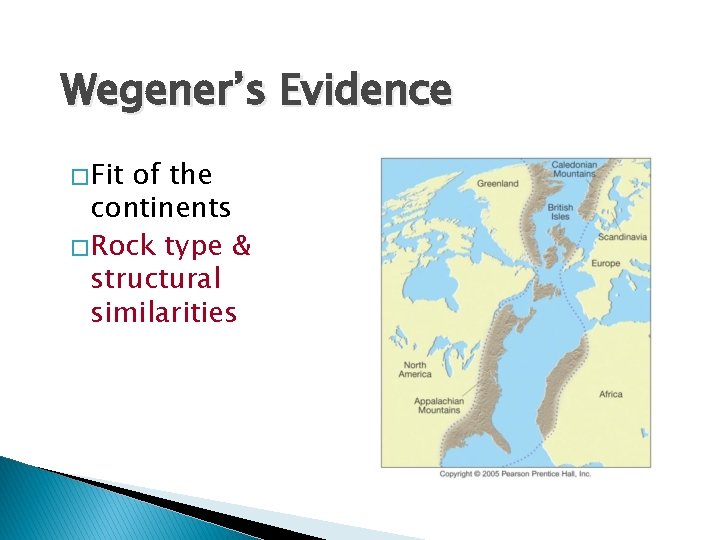
Wegener’s Evidence � Fit of the continents � Rock type & structural similarities
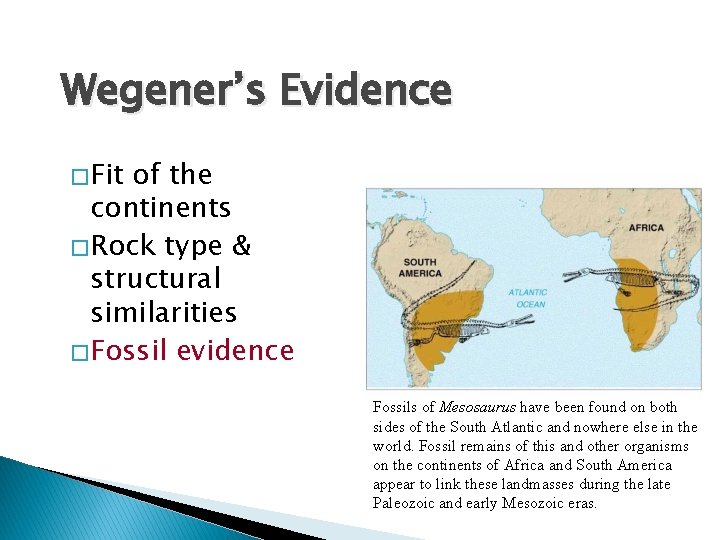
Wegener’s Evidence � Fit of the continents � Rock type & structural similarities � Fossil evidence Fossils of Mesosaurus have been found on both sides of the South Atlantic and nowhere else in the world. Fossil remains of this and other organisms on the continents of Africa and South America appear to link these landmasses during the late Paleozoic and early Mesozoic eras.
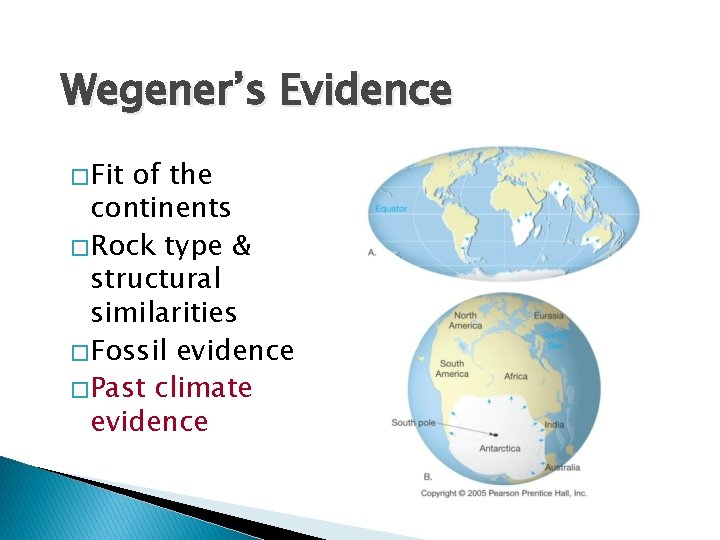
Wegener’s Evidence � Fit of the continents � Rock type & structural similarities � Fossil evidence � Past climate evidence

Modern Evidence New Technology adds new evidence.
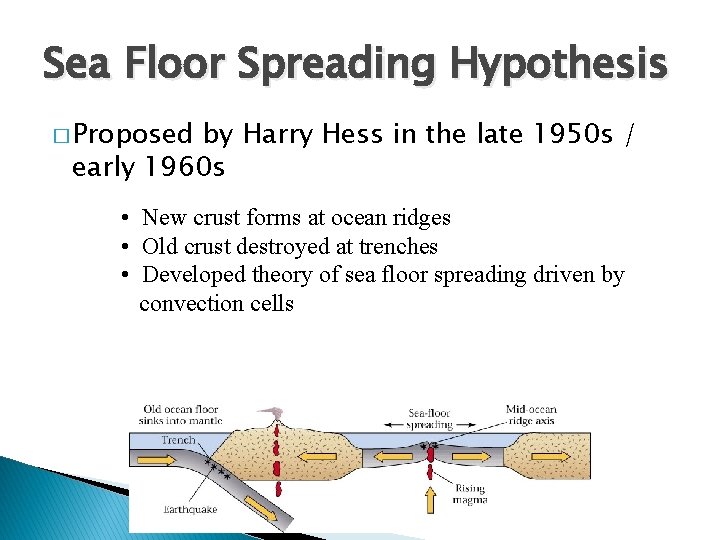
Sea Floor Spreading Hypothesis � Proposed by Harry Hess in the late 1950 s / early 1960 s • New crust forms at ocean ridges • Old crust destroyed at trenches • Developed theory of sea floor spreading driven by convection cells
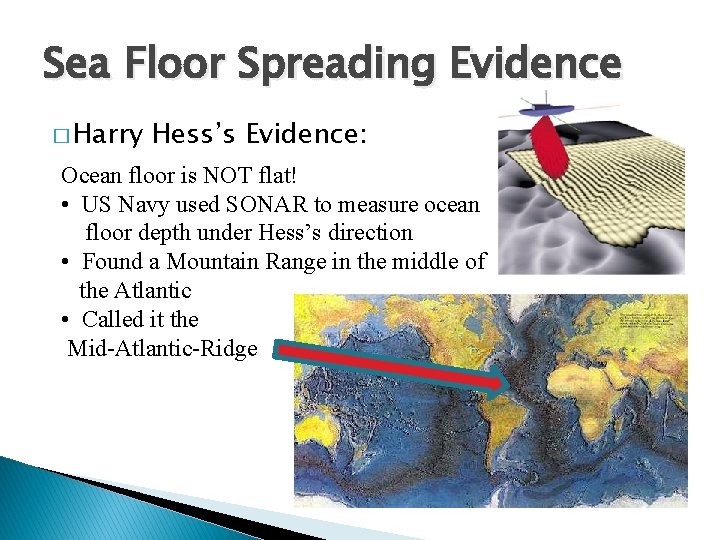
Sea Floor Spreading Evidence � Harry Hess’s Evidence: Ocean floor is NOT flat! • US Navy used SONAR to measure ocean floor depth under Hess’s direction • Found a Mountain Range in the middle of the Atlantic • Called it the Mid-Atlantic-Ridge
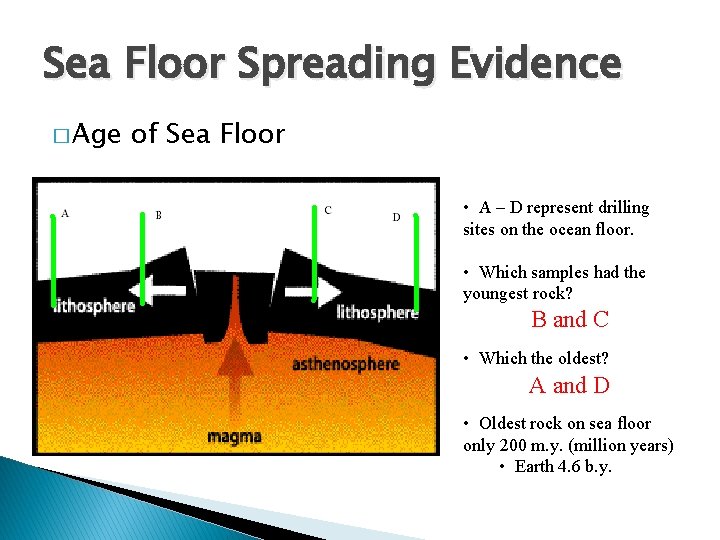
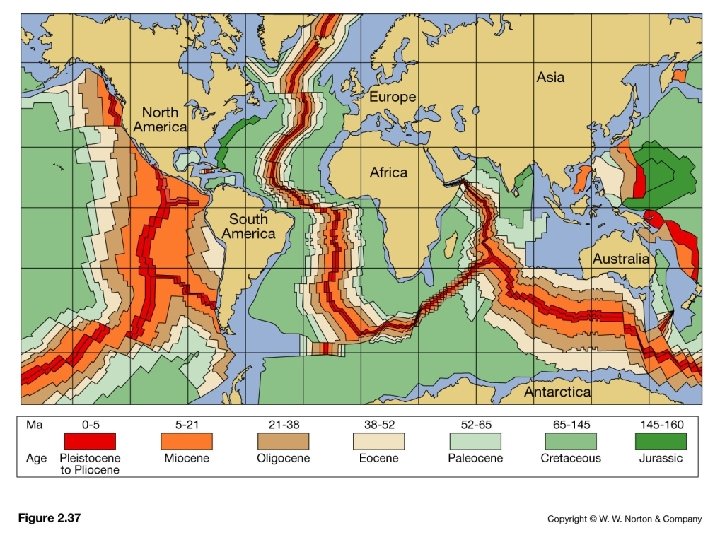
Sea Floor Spreading Evidence � Age of Sea Floor • A – D represent drilling sites on the ocean floor. • Which samples had the youngest rock? B and C • Which the oldest? A and D • Oldest rock on sea floor only 200 m. y. (million years) • Earth 4. 6 b. y.
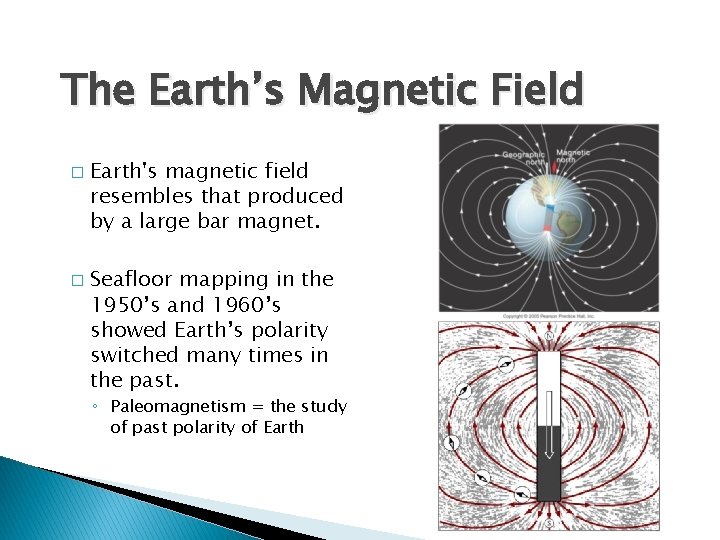
The Earth’s Magnetic Field � � Earth's magnetic field resembles that produced by a large bar magnet. Seafloor mapping in the 1950’s and 1960’s showed Earth’s polarity switched many times in the past. ◦ Paleomagnetism = the study of past polarity of Earth
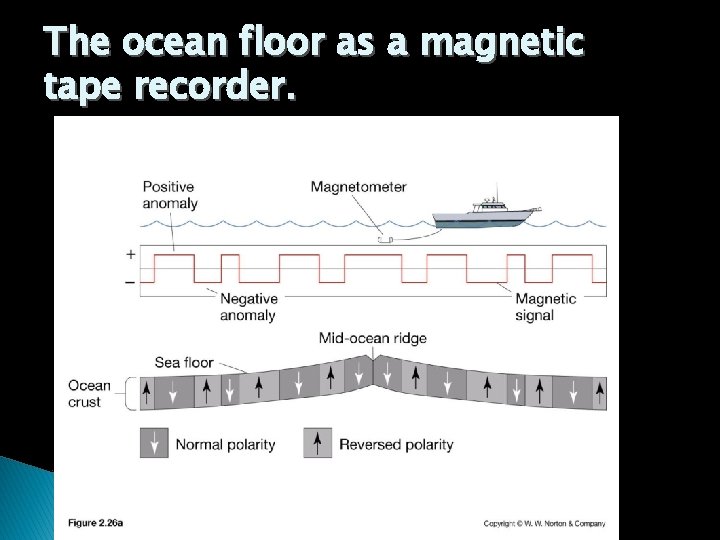
The ocean floor as a magnetic tape recorder.
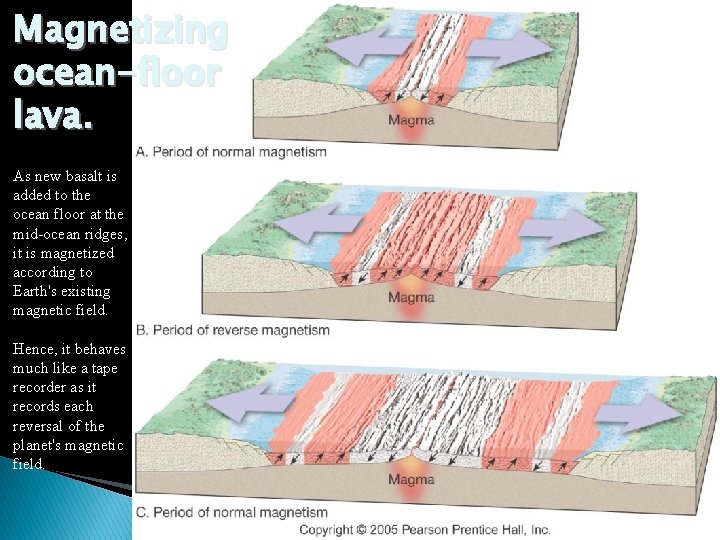
Magnetizing ocean-floor lava. As new basalt is added to the ocean floor at the mid-ocean ridges, it is magnetized according to Earth's existing magnetic field. Hence, it behaves much like a tape recorder as it records each reversal of the planet's magnetic field.
Sea Floor Spreading Evidence � Hot spots ◦ Caused by rising plumes of mantle material ◦ Volcanoes can form over them (Hawaiian Island chain) ◦ Most mantle plumes are long-lived structures and at least some originate at great depth, perhaps at the mantle-core boundary
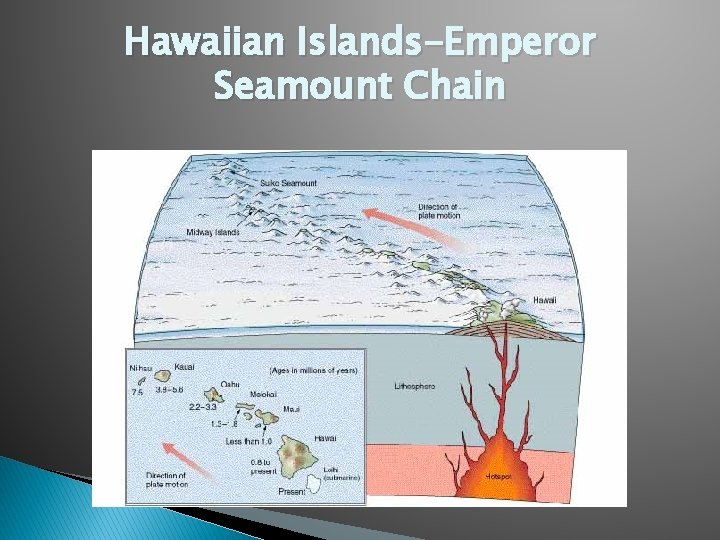
Hawaiian Islands-Emperor Seamount Chain
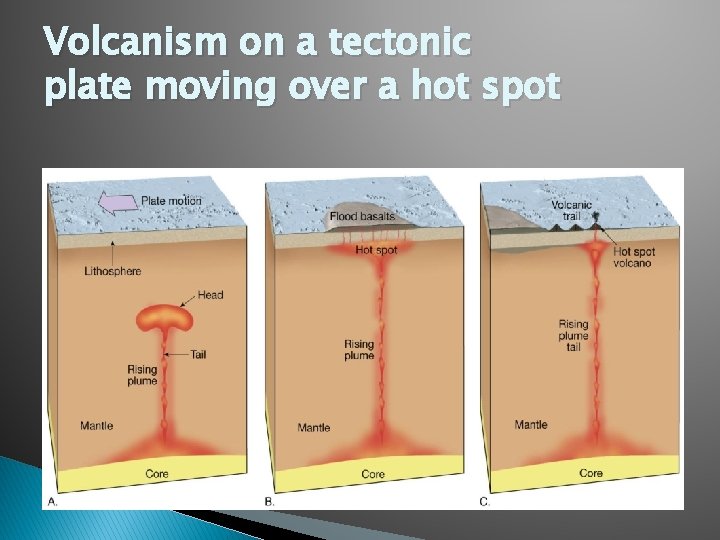
Volcanism on a tectonic plate moving over a hot spot
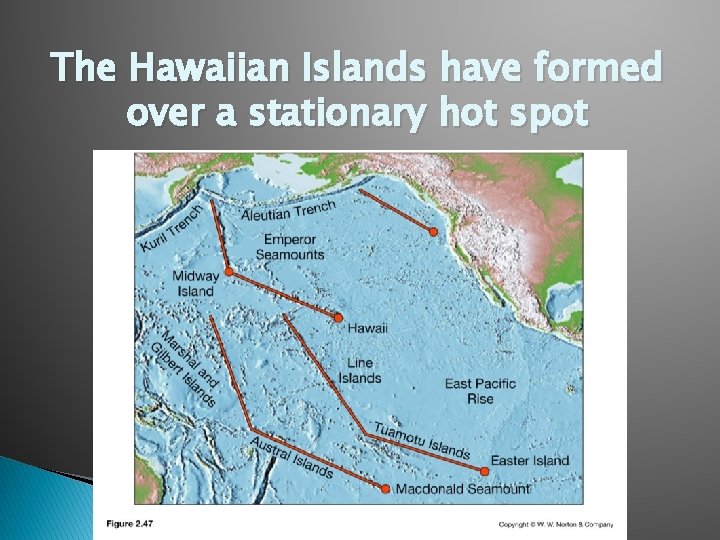
The Hawaiian Islands have formed over a stationary hot spot
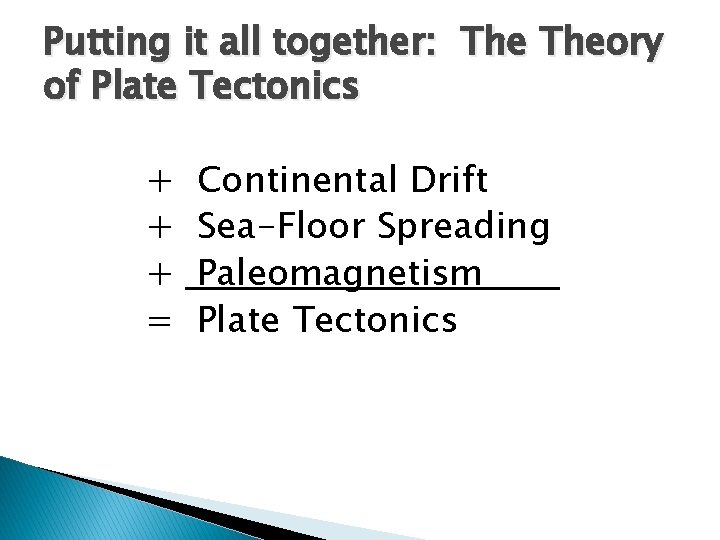
Putting it all together: Theory of Plate Tectonics + + + = Continental Drift Sea-Floor Spreading Paleomagnetism Plate Tectonics
Plate Tectonics A New Theory
Plate Tectonics � Earth’s lithosphere is broken up into plates � Hot, weak asthenosphere allows for plates to move � Plates are in motion and continually changing in shape and size ◦ Move very slowly 2 – 5 cm/yr
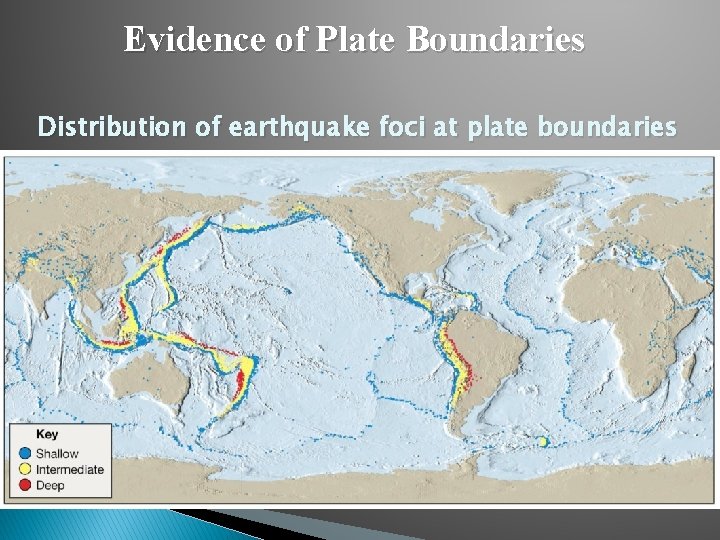
Evidence of Plate Boundaries Distribution of earthquake foci at plate boundaries
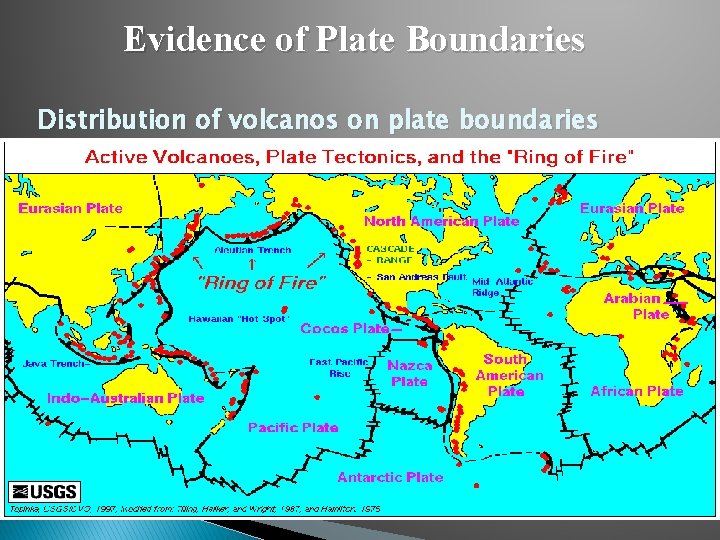
Evidence of Plate Boundaries Distribution of volcanos on plate boundaries
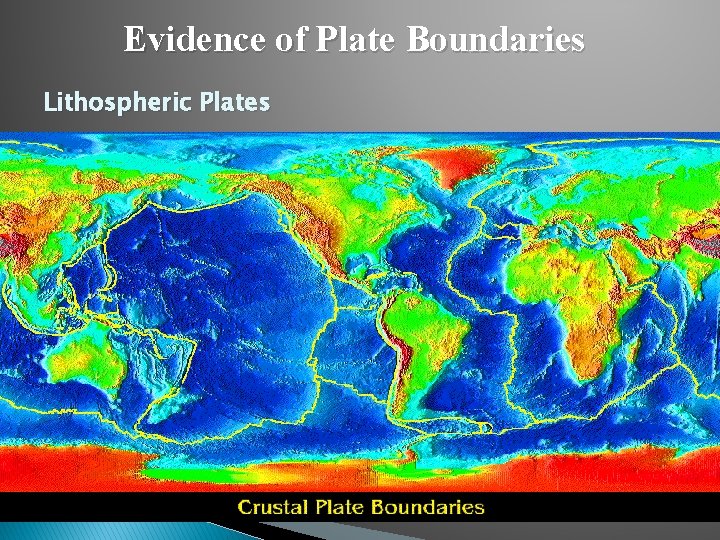
Evidence of Plate Boundaries Lithospheric Plates
Plate Tectonics � Plate boundaries ◦ All major interactions among individual plates occur along their boundaries ◦ These interactions cause consequences such as: �Earthquakes �Volcanic eruptions
Plate Tectonics � Plate boundaries ◦ 3 Types of plate boundaries 1. Divergent plate boundaries 2. Convergent plate boundaries 3. Transform fault boundaries
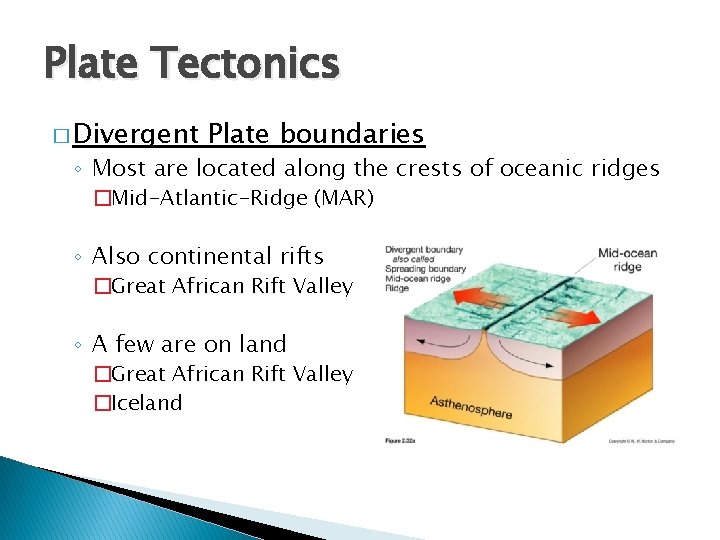
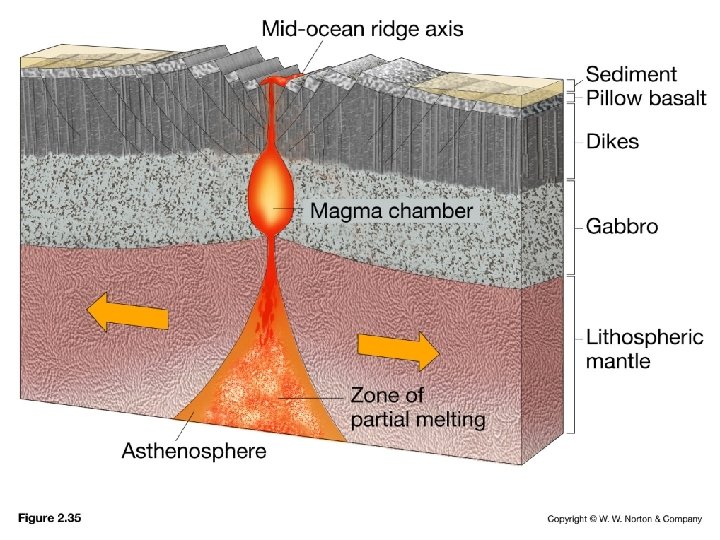
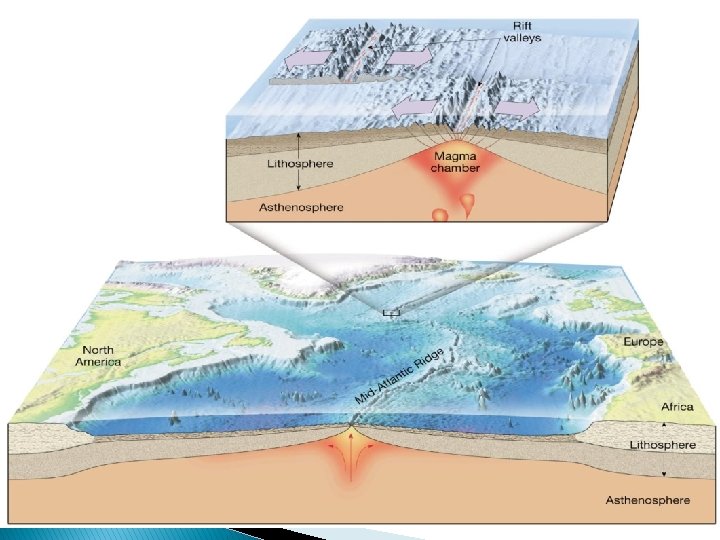
Plate Tectonics � Divergent Plate boundaries ◦ Most are located along the crests of oceanic ridges �Mid-Atlantic-Ridge (MAR) ◦ Also continental rifts �Great African Rift Valley ◦ A few are on land �Great African Rift Valley �Iceland
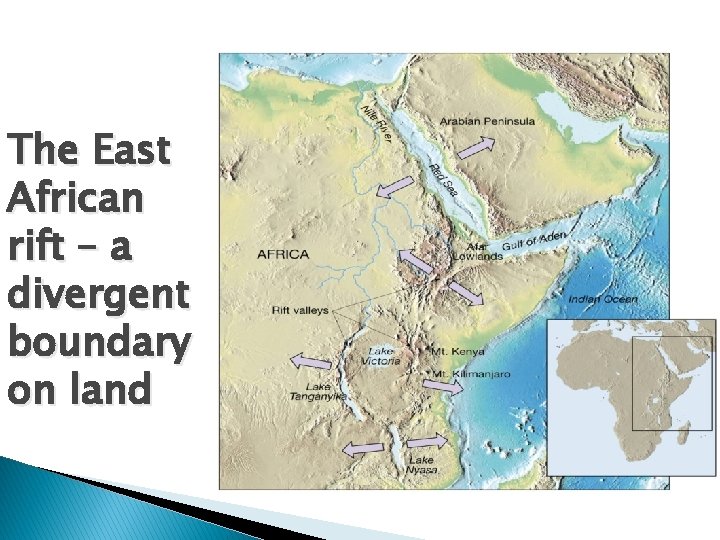
The East African rift – a divergent boundary on land
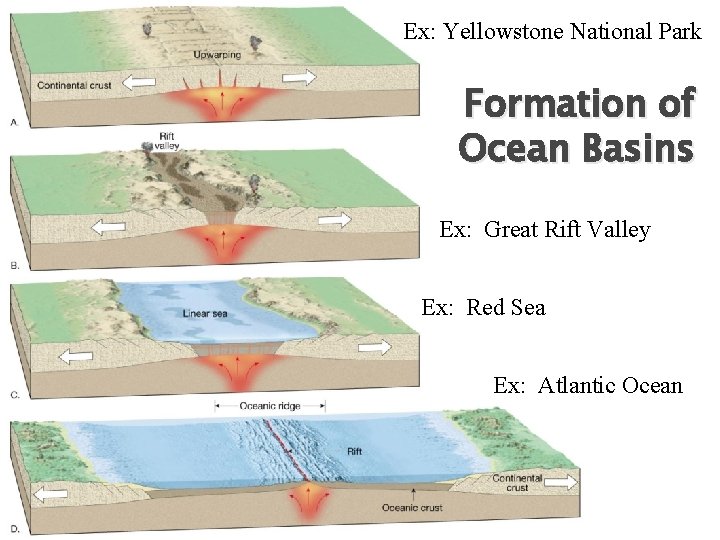
Ex: Yellowstone National Park Formation of Ocean Basins Ex: Great Rift Valley Ex: Red Sea Ex: Atlantic Ocean
Plate Tectonics � Convergent plate boundaries ◦ Where two plates collide ◦ 3 Types 1. Oceanic-Continental convergence 2. Oceanic-oceanic convergence 3. Continental-continental convergence
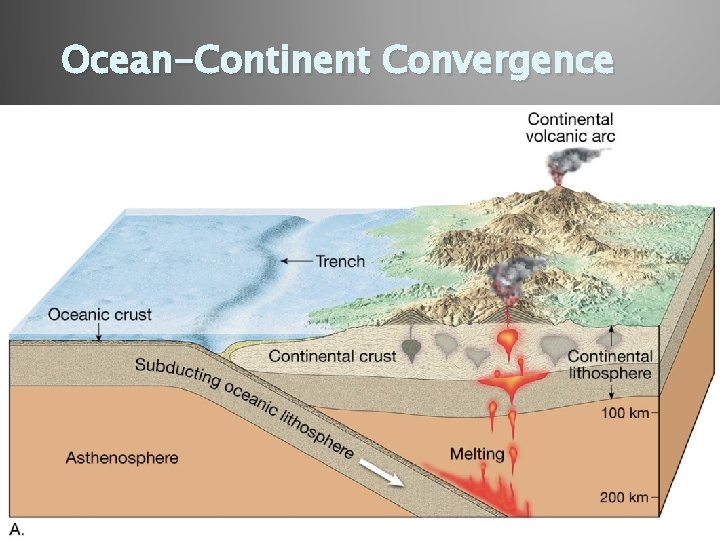
Ocean-Continent Convergence
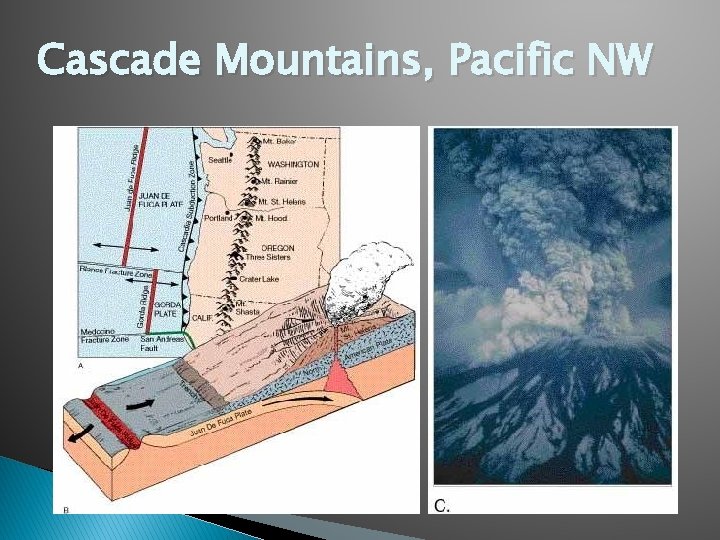
Cascade Mountains, Pacific NW
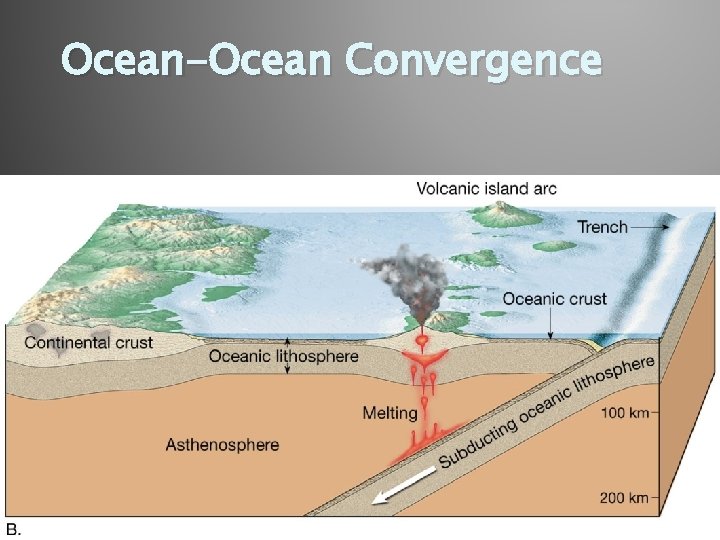
Ocean-Ocean Convergence
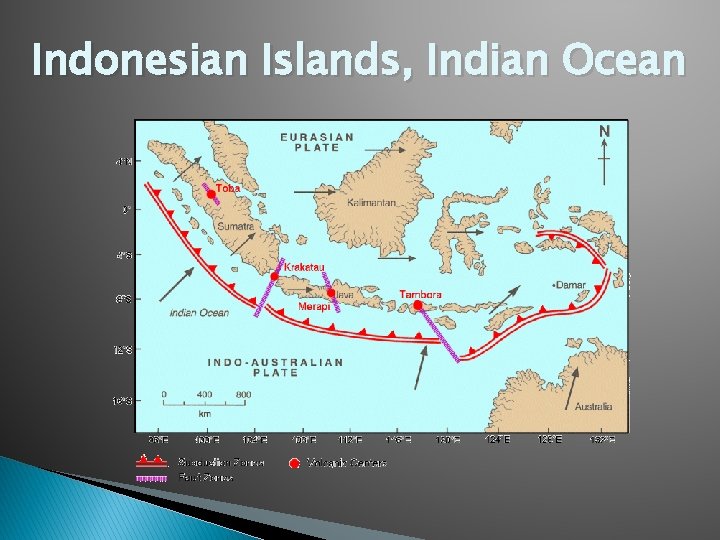
Indonesian Islands, Indian Ocean
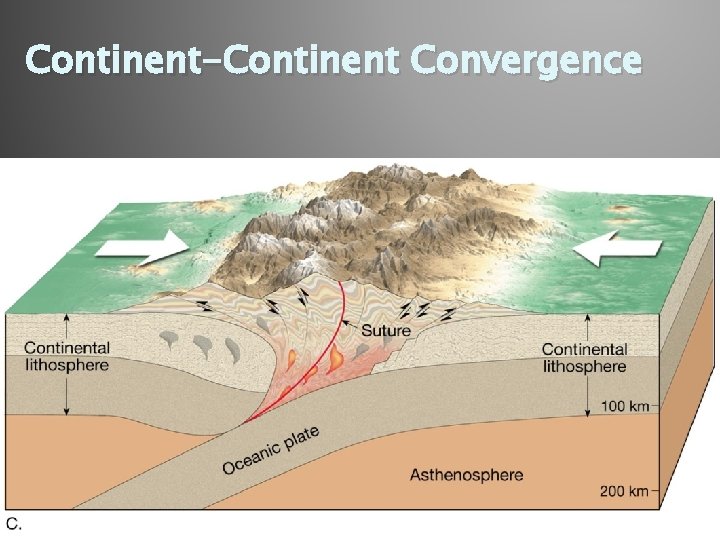
Continent-Continent Convergence
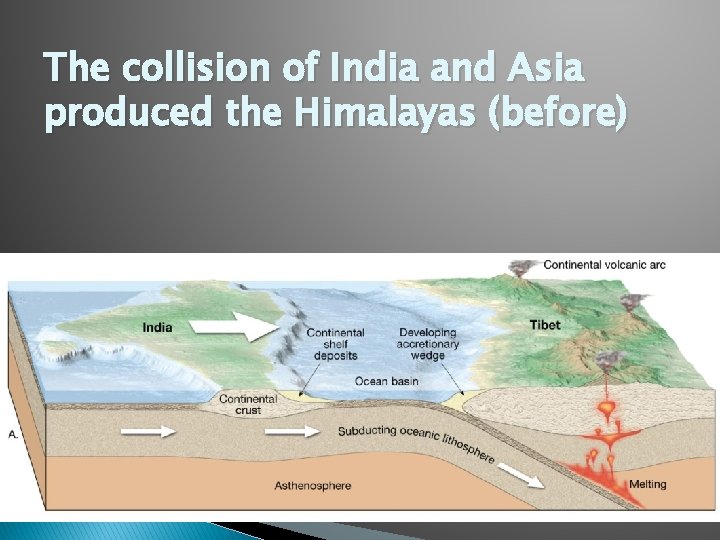
The collision of India and Asia produced the Himalayas (before)
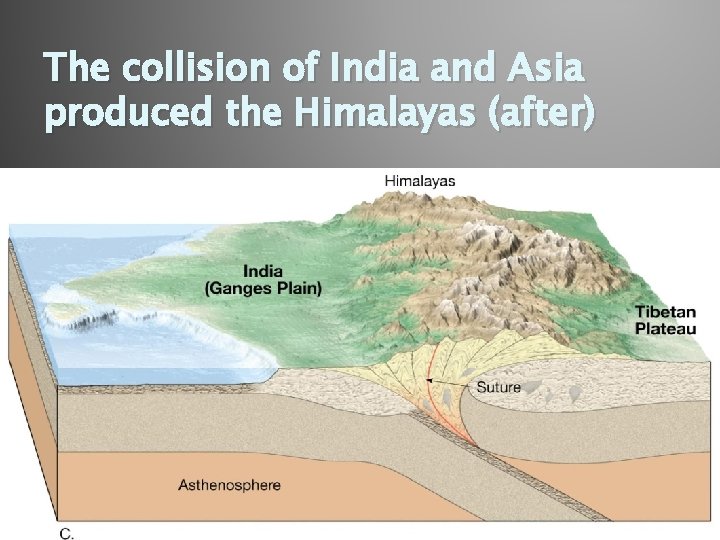
The collision of India and Asia produced the Himalayas (after)
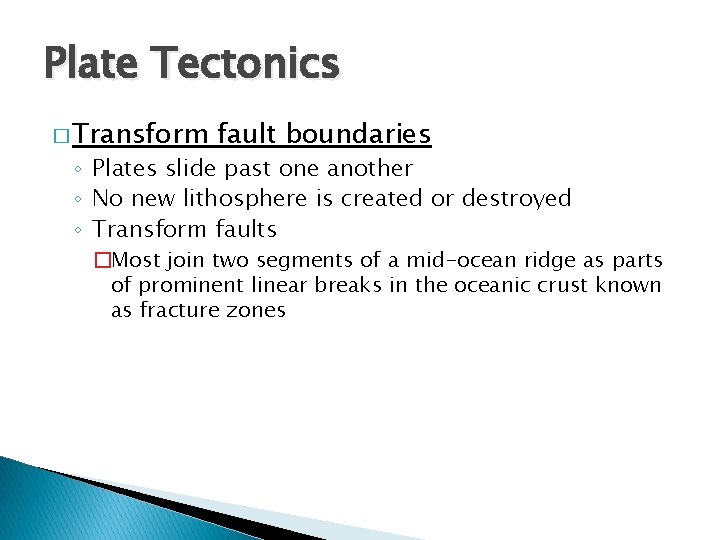
Plate Tectonics � Transform fault boundaries ◦ Plates slide past one another ◦ No new lithosphere is created or destroyed ◦ Transform faults �Most join two segments of a mid-ocean ridge as parts of prominent linear breaks in the oceanic crust known as fracture zones

Transform Faults
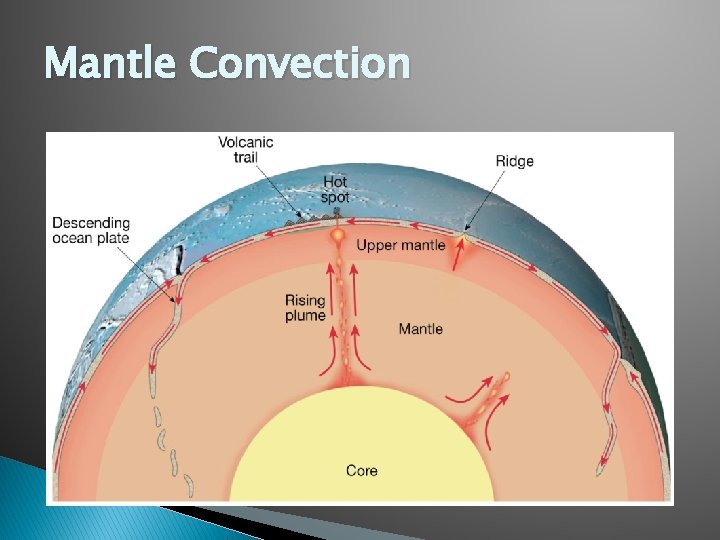
Mantle Convection

~ End ~
- Slides: 57