
Plate Tectonics Pangea 1912 Alfred Wegener Theory All
- Slides: 22
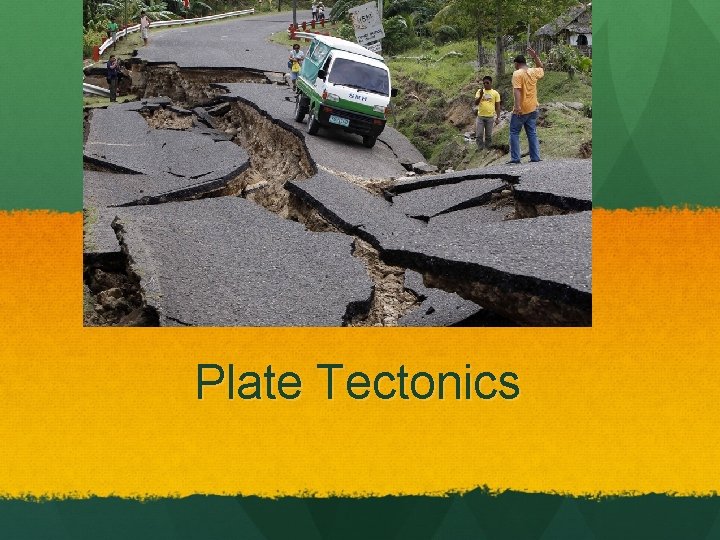
Plate Tectonics
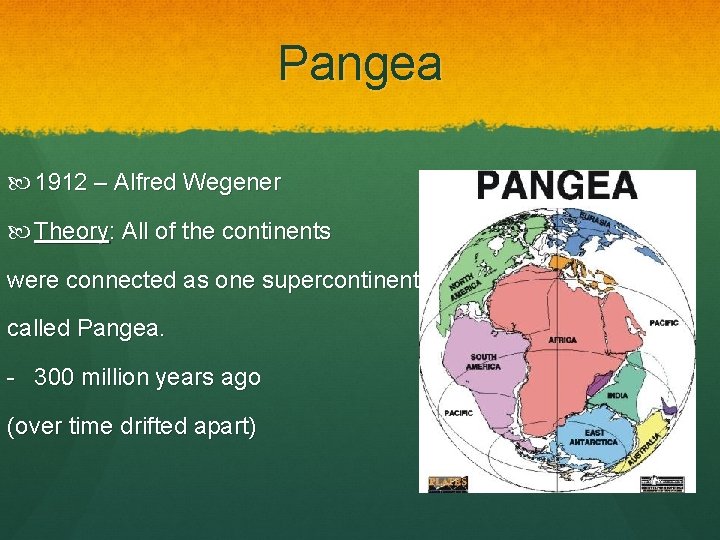
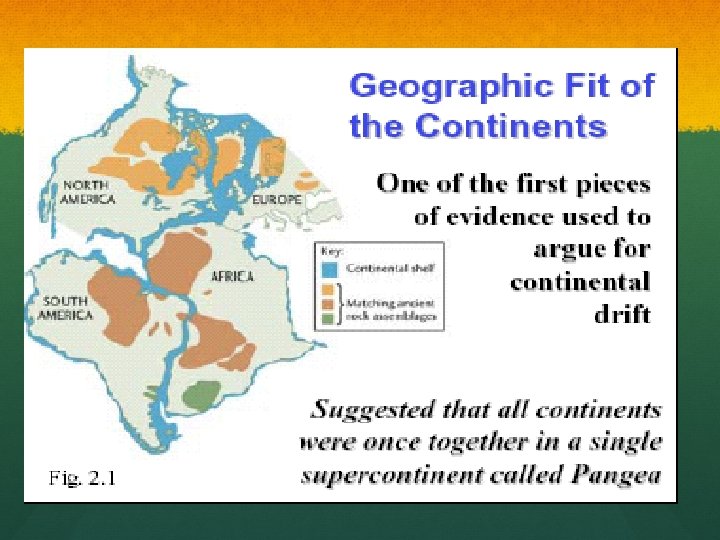
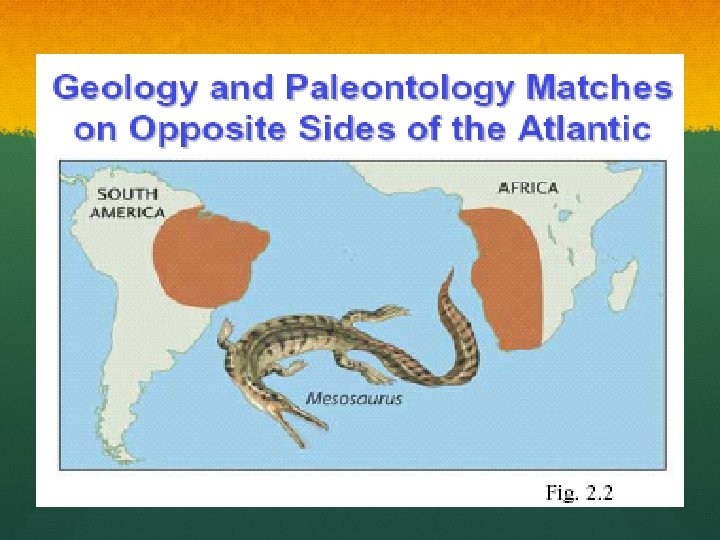
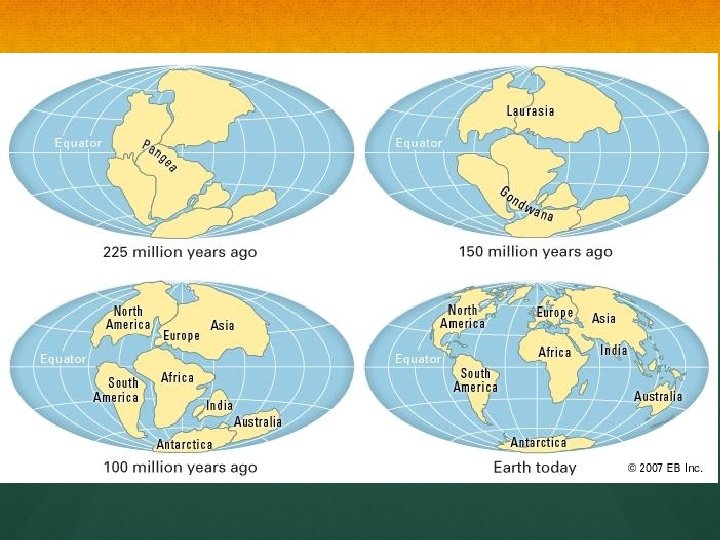
Pangea 1912 – Alfred Wegener Theory: All of the continents were connected as one supercontinent called Pangea. - 300 million years ago (over time drifted apart)
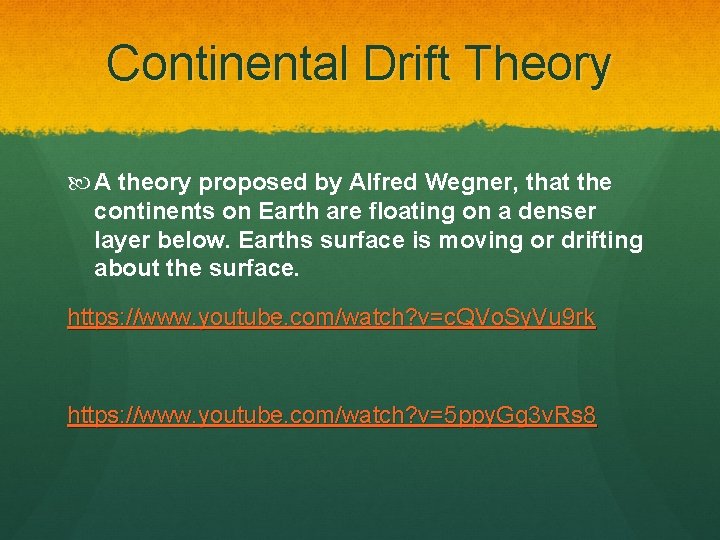
Continental Drift Theory A theory proposed by Alfred Wegner, that the continents on Earth are floating on a denser layer below. Earths surface is moving or drifting about the surface. https: //www. youtube. com/watch? v=c. QVo. Sy. Vu 9 rk https: //www. youtube. com/watch? v=5 ppy. Gg 3 v. Rs 8
Ice Age and Plate Tectonics https: //www. youtube. com/watch? v=Hf 74 Sp 0 Xe 6 Q&f eature
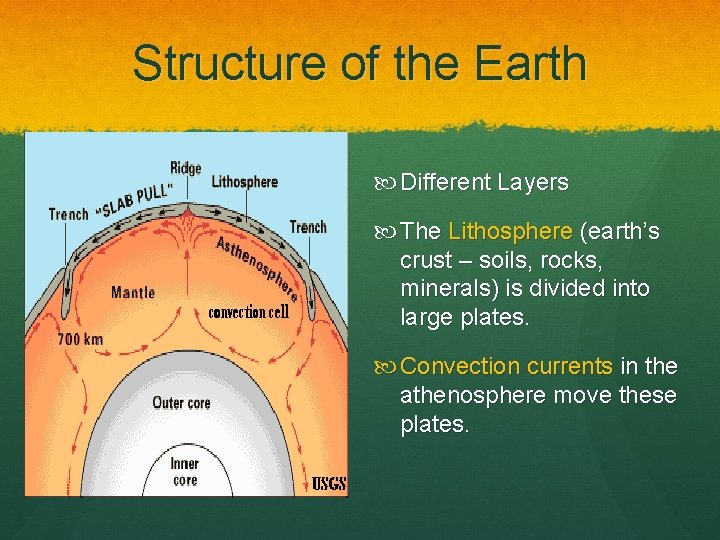
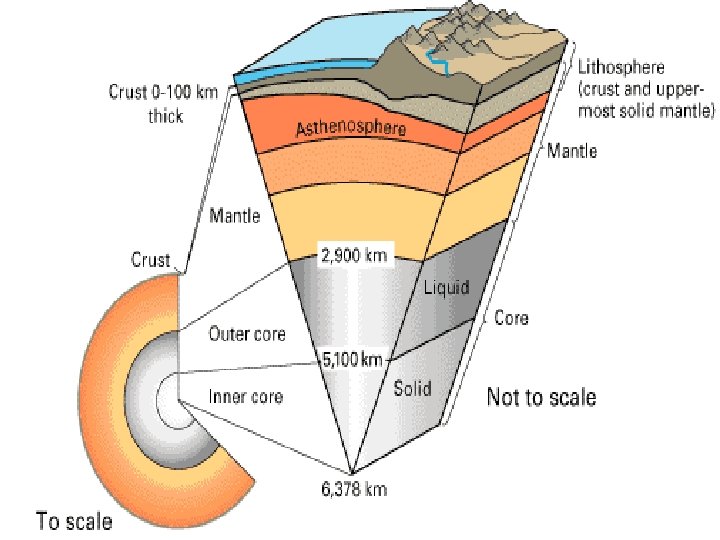
Structure of the Earth Different Layers The Lithosphere (earth’s crust – soils, rocks, minerals) is divided into large plates. Convection currents in the athenosphere move these plates.
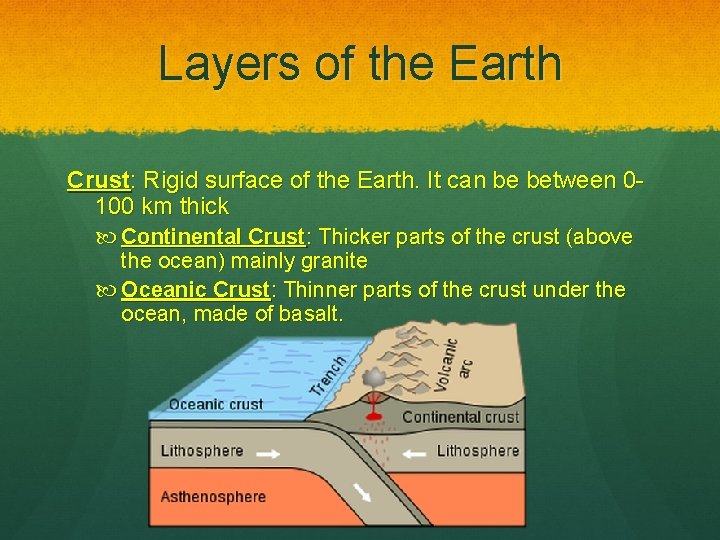
Layers of the Earth Crust: Rigid surface of the Earth. It can be between 0100 km thick Continental Crust: Thicker parts of the crust (above the ocean) mainly granite Oceanic Crust: Thinner parts of the crust under the ocean, made of basalt.
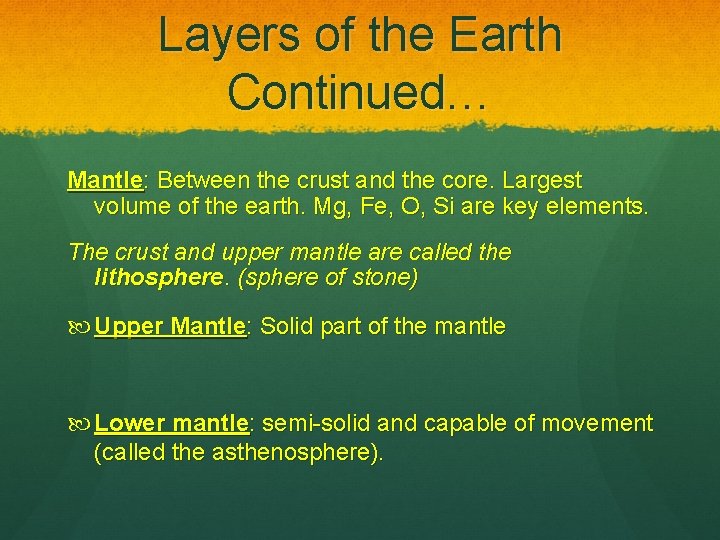
Layers of the Earth Continued… Mantle: Between the crust and the core. Largest volume of the earth. Mg, Fe, O, Si are key elements. The crust and upper mantle are called the lithosphere. (sphere of stone) Upper Mantle: Solid part of the mantle Lower mantle: semi-solid and capable of movement (called the asthenosphere).
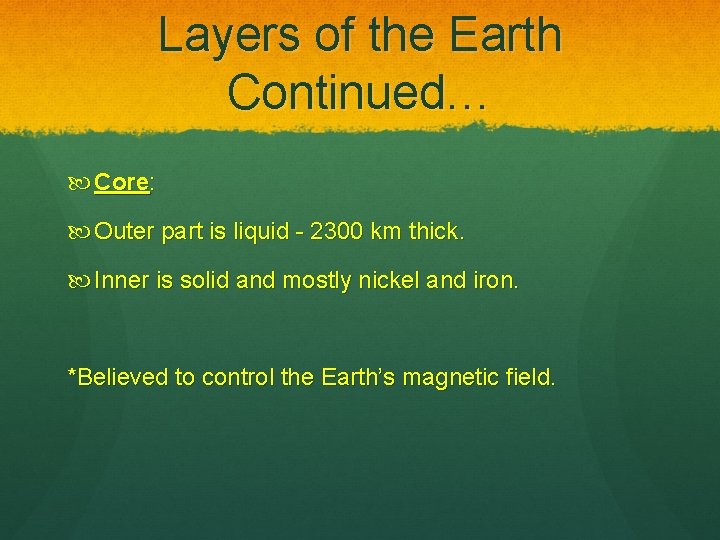
Layers of the Earth Continued… Core: Outer part is liquid - 2300 km thick. Inner is solid and mostly nickel and iron. *Believed to control the Earth’s magnetic field.
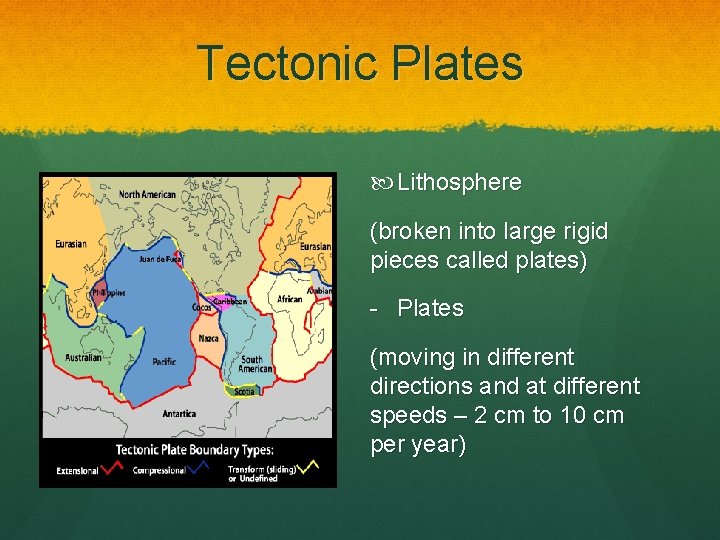
Tectonic Plates Lithosphere (broken into large rigid pieces called plates) - Plates (moving in different directions and at different speeds – 2 cm to 10 cm per year)
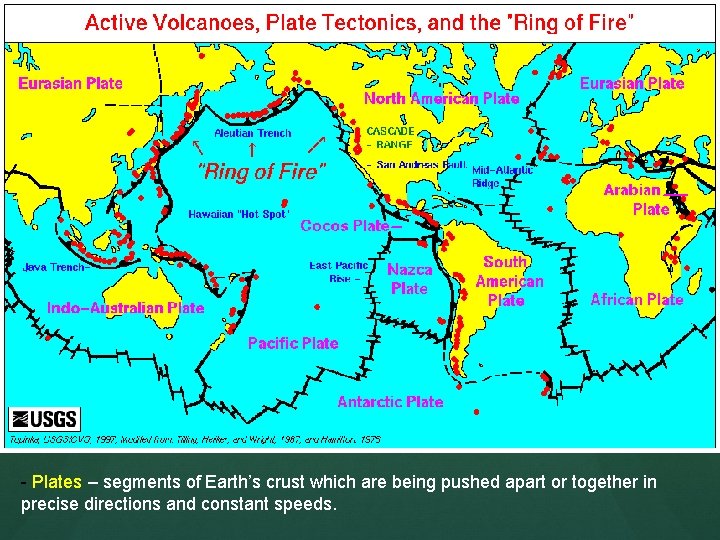
- Plates – segments of Earth’s crust which are being pushed apart or together in precise directions and constant speeds.
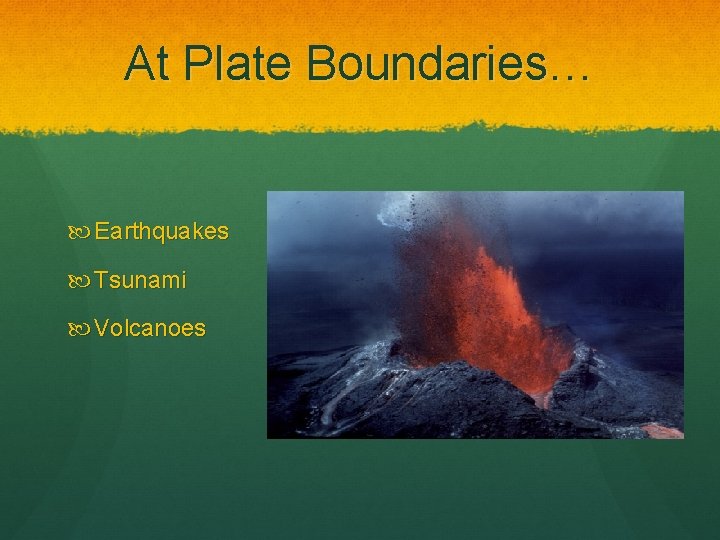
At Plate Boundaries… Earthquakes Tsunami Volcanoes
Plates Meet at Plate Boundaries 3 Main Plate Boundaries. 1) Convergent Boundary 2) Divergent Boundary 3) Transform Boundary
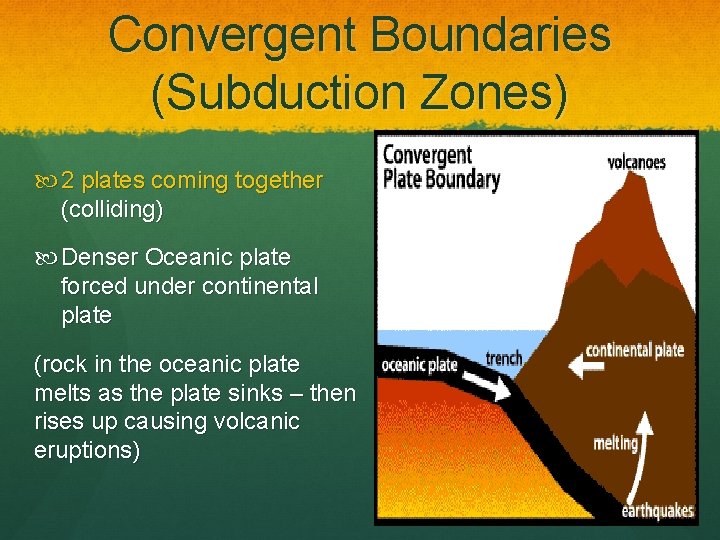
Convergent Boundaries (Subduction Zones) 2 plates coming together (colliding) Denser Oceanic plate forced under continental plate (rock in the oceanic plate melts as the plate sinks – then rises up causing volcanic eruptions)
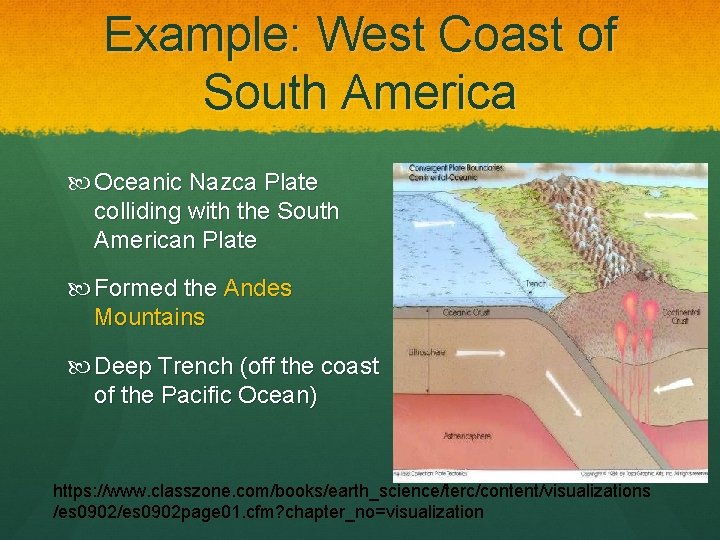
Example: West Coast of South America Oceanic Nazca Plate colliding with the South American Plate Formed the Andes Mountains Deep Trench (off the coast of the Pacific Ocean) https: //www. classzone. com/books/earth_science/terc/content/visualizations /es 0902 page 01. cfm? chapter_no=visualization
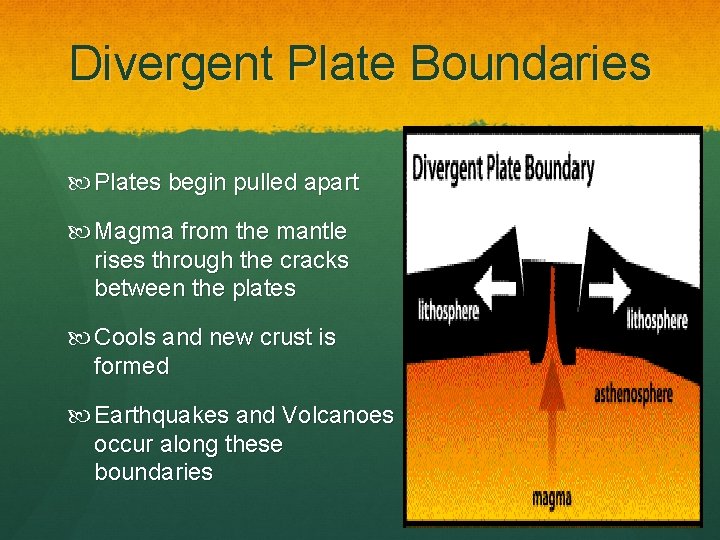
Divergent Plate Boundaries Plates begin pulled apart Magma from the mantle rises through the cracks between the plates Cools and new crust is formed Earthquakes and Volcanoes occur along these boundaries
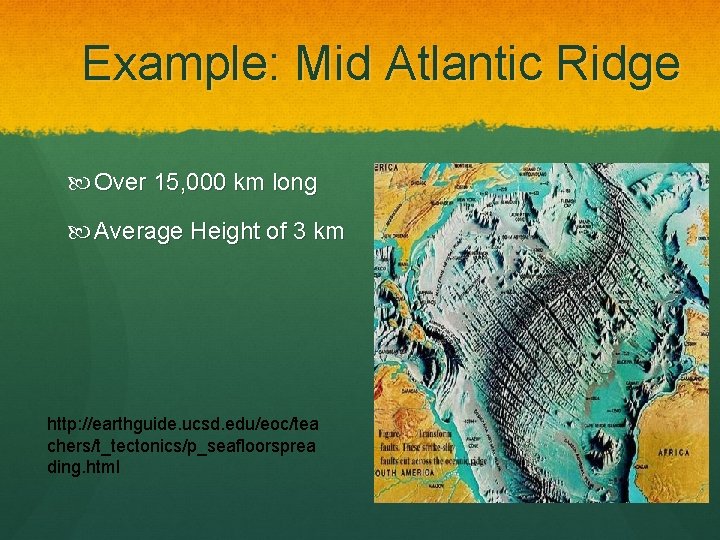
Example: Mid Atlantic Ridge Over 15, 000 km long Average Height of 3 km http: //earthguide. ucsd. edu/eoc/tea chers/t_tectonics/p_seafloorsprea ding. html
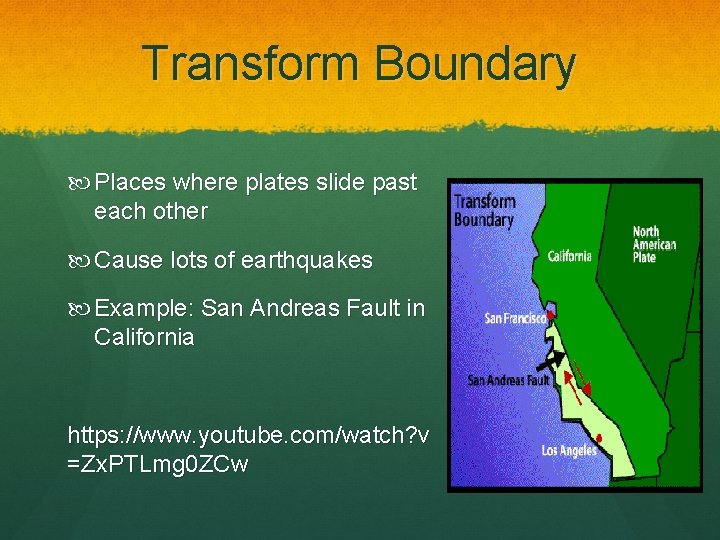
Transform Boundary Places where plates slide past each other Cause lots of earthquakes Example: San Andreas Fault in California https: //www. youtube. com/watch? v =Zx. PTLmg 0 ZCw
Bill Nye – Summary of Plate Tectonics and Continental Drift http: //www. watchknowlearn. org/Video. aspx? Video. ID =698&Category. ID=2464