
Plate Tectonics Pangaea The ancient 225 million years
- Slides: 31
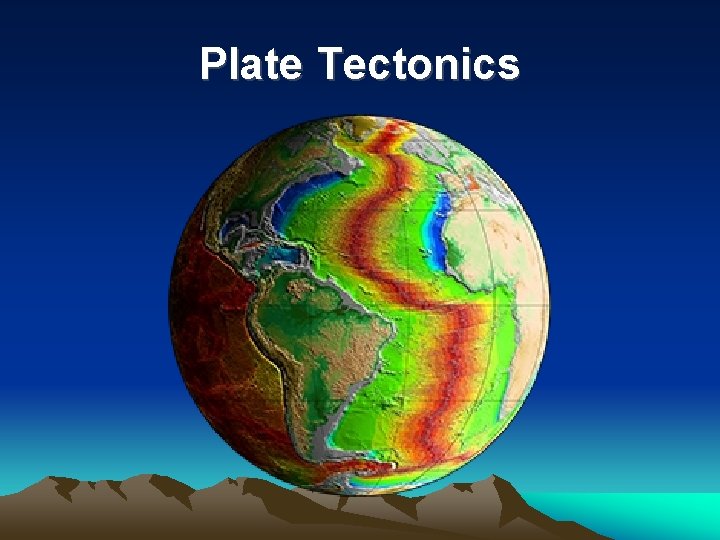
Plate Tectonics
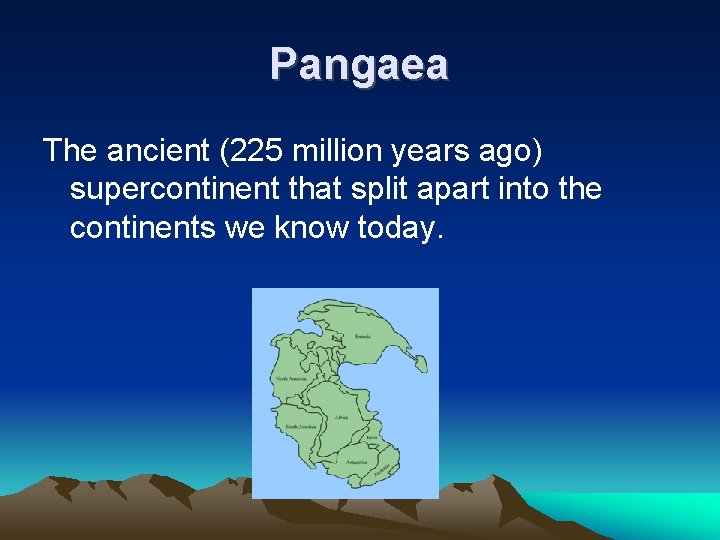
Pangaea The ancient (225 million years ago) supercontinent that split apart into the continents we know today.
Continental Drift The theory used to explain the movement of the continents on earth. It was first proposed by Alfred Wegner less than 100 years ago (1912) animation
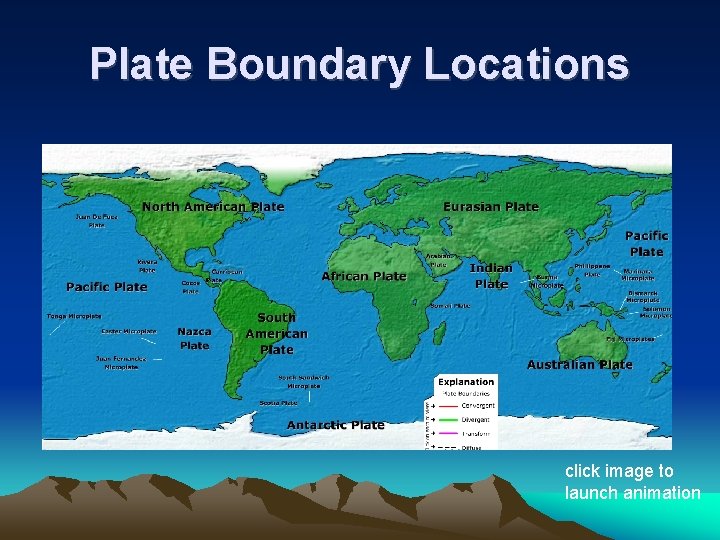
Plate Boundaries The term “plate boundary” refers to the edges where the different plates on earth are touching. illustration Each of the plates have a name.
There are Three Types of Plate Boundaries Convergent areas of plates that are moving toward each other. Large and destructive earthquakes occur hear animation
There are Three Types of Plate Boundaries Divergent areas of plates that are moving away from each other animation
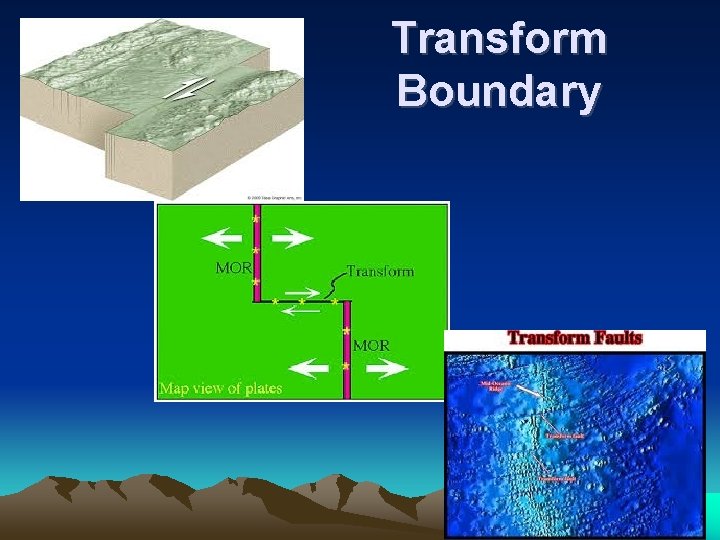
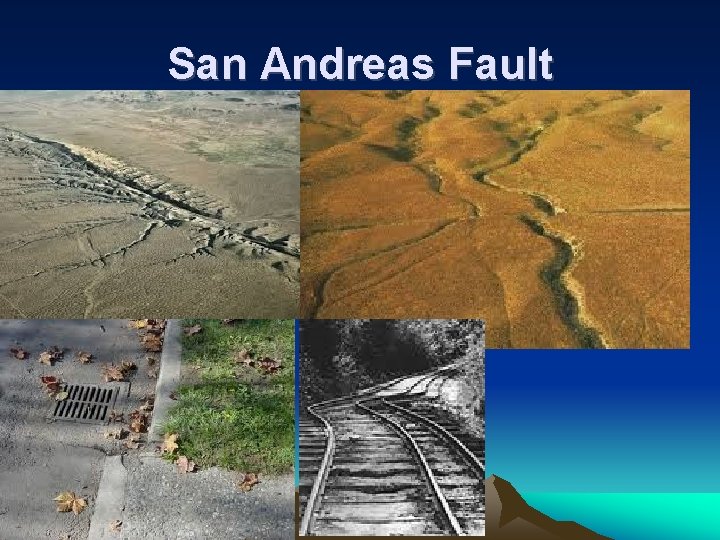
There are Three Types of Plate Boundaries Transform areas of plates that are sliding past each other; results in the large and destructive earthquakes image
Plate Boundary Locations click image to launch animation
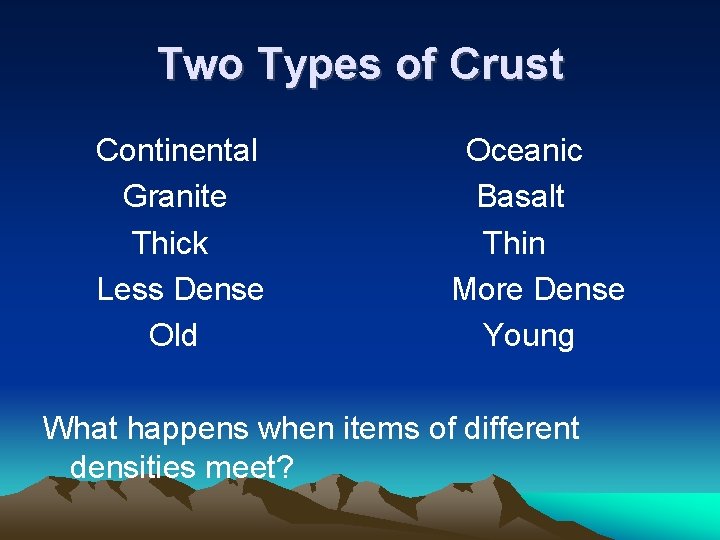
Two Types of Crust Continental Granite Thick Less Dense Old Oceanic Basalt Thin More Dense Young What happens when items of different densities meet?
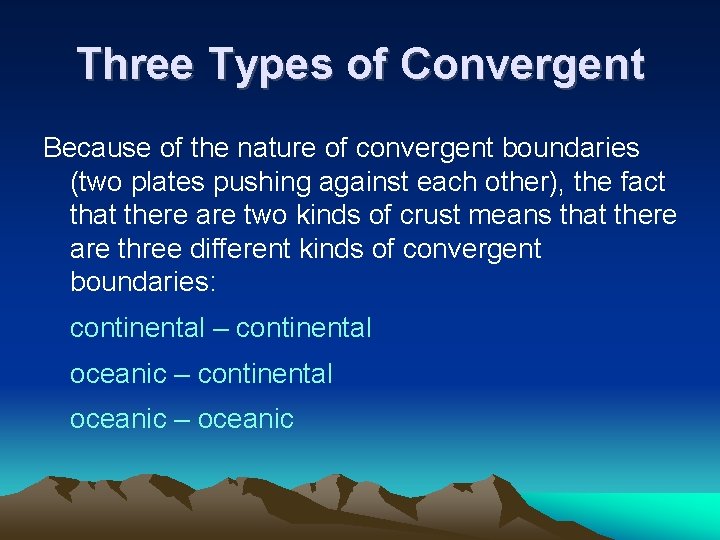
Three Types of Convergent Because of the nature of convergent boundaries (two plates pushing against each other), the fact that there are two kinds of crust means that there are three different kinds of convergent boundaries: continental – continental oceanic – oceanic
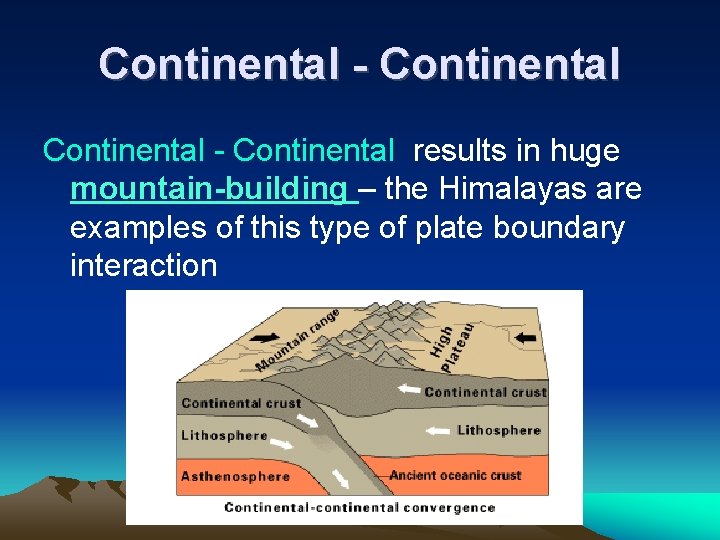
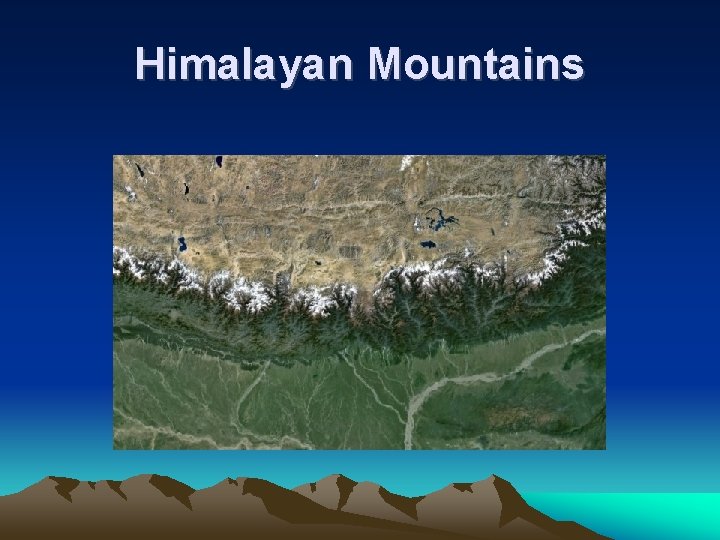
Continental - Continental results in huge mountain-building – the Himalayas are examples of this type of plate boundary interaction
Himalayan Mountains
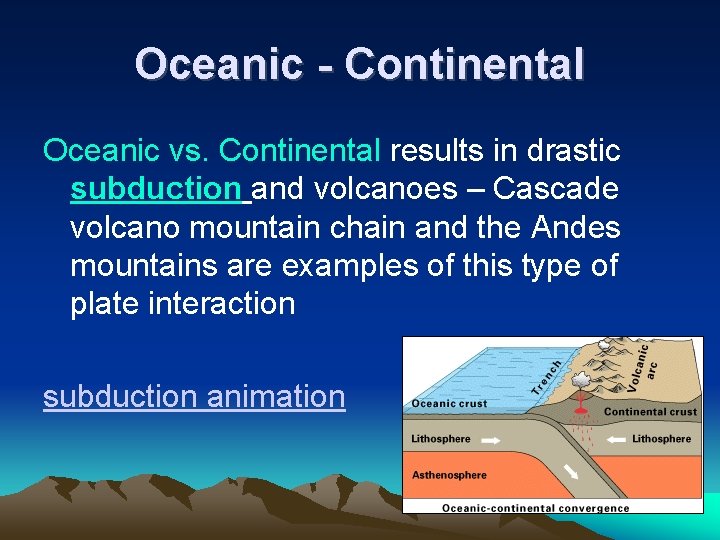
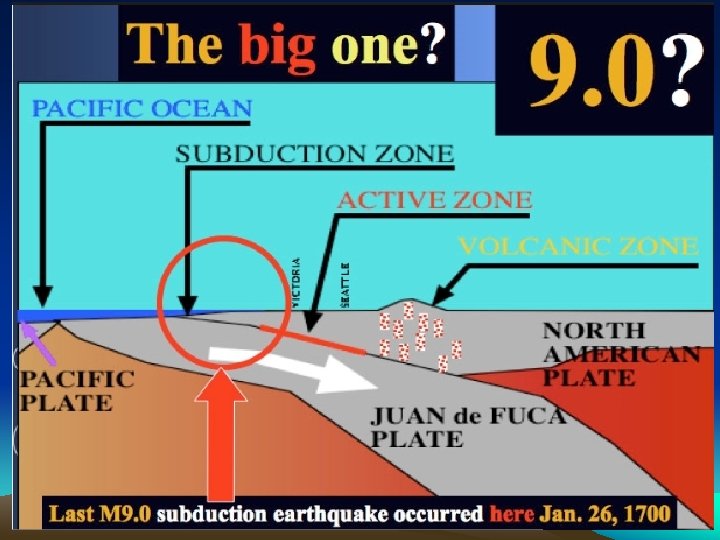
Oceanic - Continental Oceanic vs. Continental results in drastic subduction and volcanoes – Cascade volcano mountain chain and the Andes mountains are examples of this type of plate interaction subduction animation
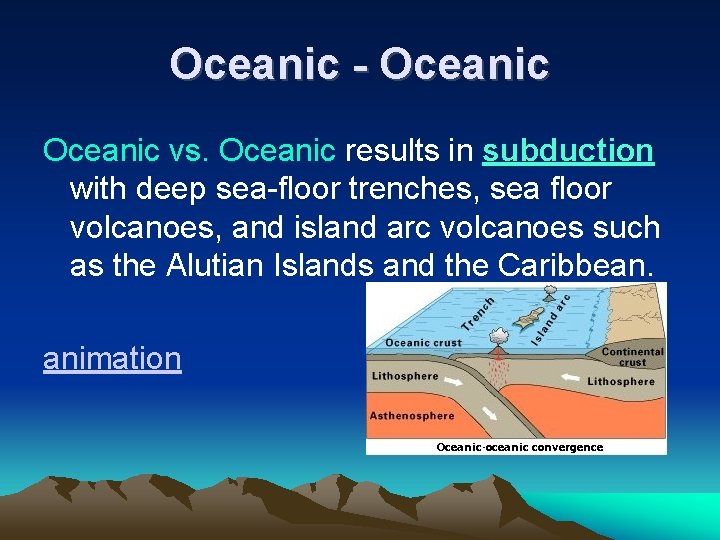
Oceanic - Oceanic vs. Oceanic results in subduction with deep sea-floor trenches, sea floor volcanoes, and island arc volcanoes such as the Alutian Islands and the Caribbean. animation
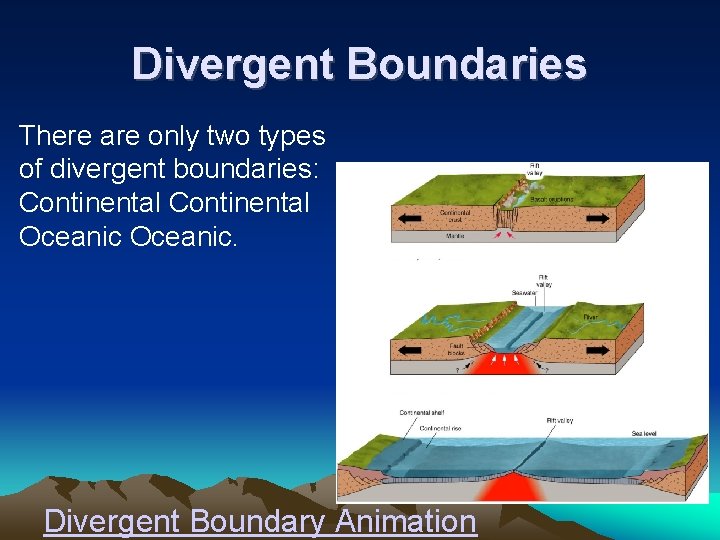
Divergent Boundaries There are only two types of divergent boundaries: Continental Oceanic. Divergent Boundary Animation
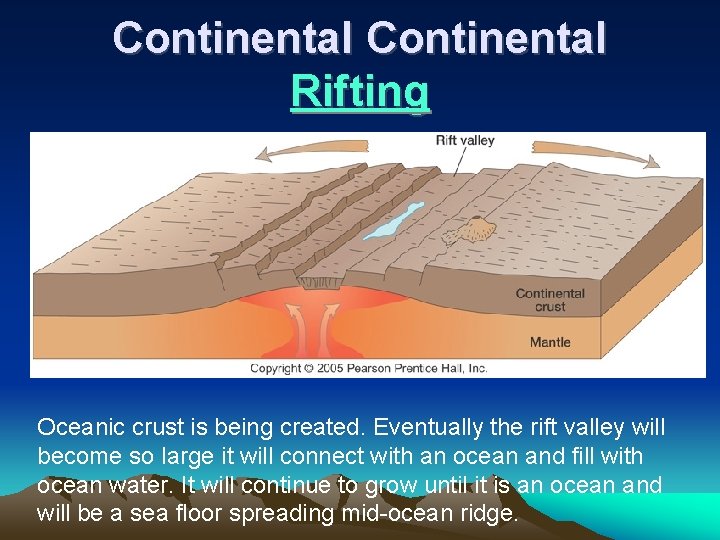
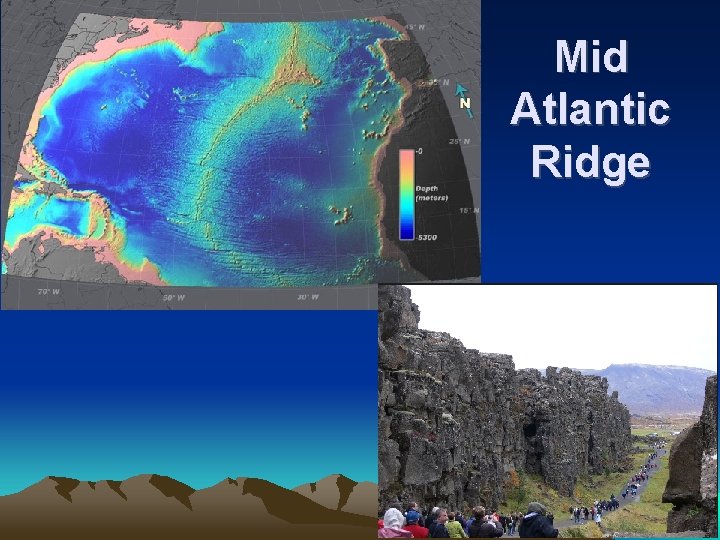
Continental Rifting Oceanic crust is being created. Eventually the rift valley will become so large it will connect with an ocean and fill with ocean water. It will continue to grow until it is an ocean and will be a sea floor spreading mid-ocean ridge.
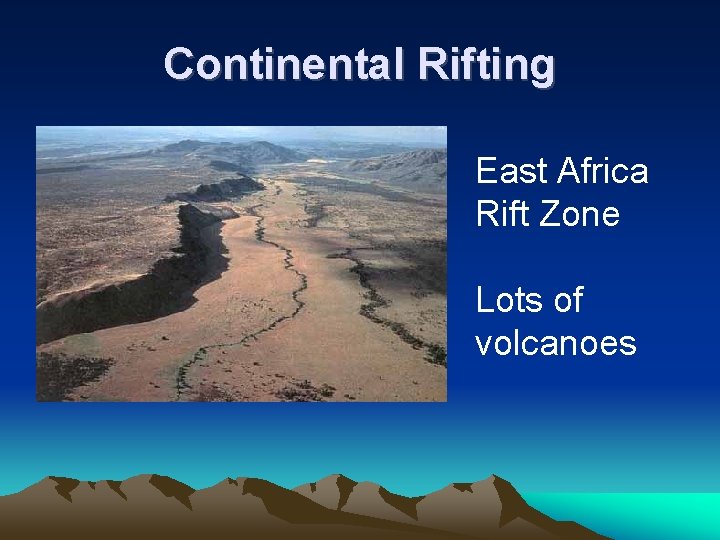
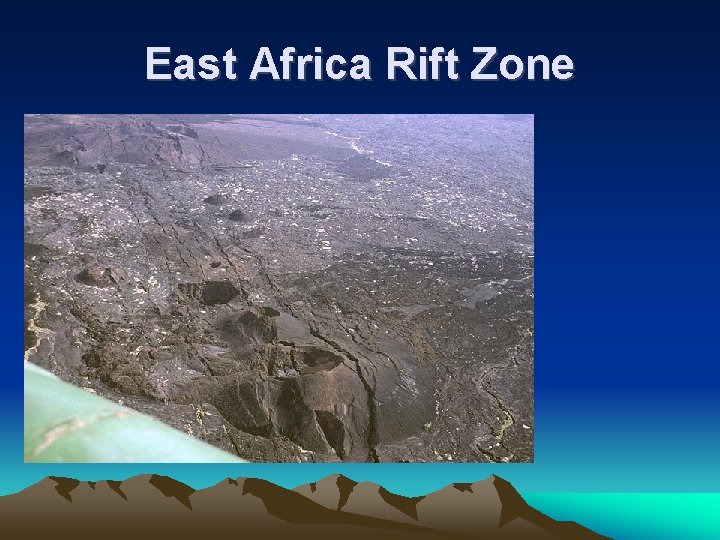
Continental Rifting East Africa Rift Zone Lots of volcanoes
East Africa Rift Zone
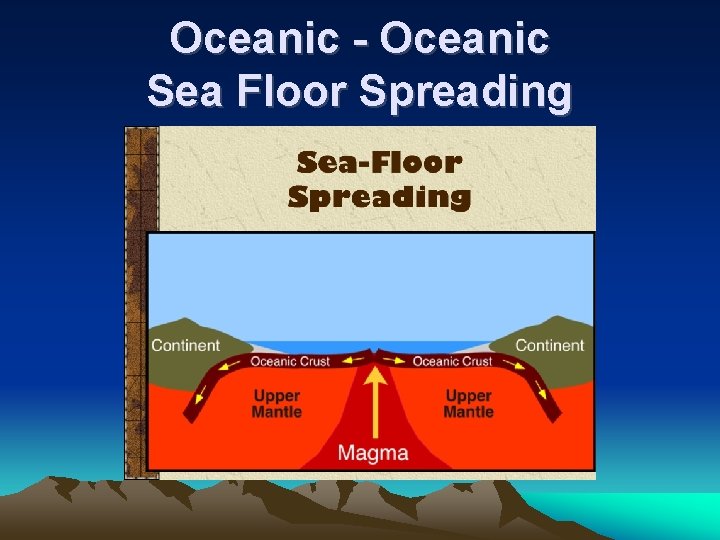
Oceanic - Oceanic Sea Floor Spreading
Mid Atlantic Ridge
Transform Boundary
San Andreas Fault
Let’s Review What are three type of plate boundaries? convergent divergent transform
Let’s Review Which type of plate boundary has three subtypes? convergent
Let’s Review Which type of convergent boundary results in the highest mountains? continental - continental
Let’s Review Which type of convergent boundary results in island building? oceanic - oceanic
Let’s Review Which type of plate boundary results in the largest, most destructive earthquakes? transform
Think About It What kind of crust is always involved in the formation of volcanoes? oceanic
Think About It The Ring of Fire is a large ring of volcanoes here on Earth. It is found on the edges of the Pacific plate. What kind of plate interaction is occurring? oceanic – continental ; subduction of the Pacific plate
More Great Science from The Science Vault If you enjoyed this powerpoint, you might like these other best-selling products: Chemical Bonding Go Fish: making chemical bonding less abstract and more fun; several different games allow for differentiation for all ability levels, grades 8 – 12 Scientific Method/Experimental Design Unit: a full-fledged unit with powerpoints, worksheets, and quizzes – great to start off the year, or review throughout the year Continental Drift and Plate Tectonics Powerpoint – 50 interactive slides that introduce continental drift and plate tectonics. Includes links to websites for flash animations The Life Cycle of Stars Powerpoint – gorgeous photos and videos bring this powerpoint alive for your students © Jan Parker, The Science Vault, 2009 – for purchaser’s classroom use only. Please do not distribute. For more great science and class management materials, follow me at http: //www. thesciencevault. net or on twitter @thesciencevault or head on over to my Tp. T store: http: //www. teacherspayteachers. com/Store/The-Science-Vault