
Plate Tectonics Last 30 Days Earthquakes Physical Features
- Slides: 23
Plate Tectonics
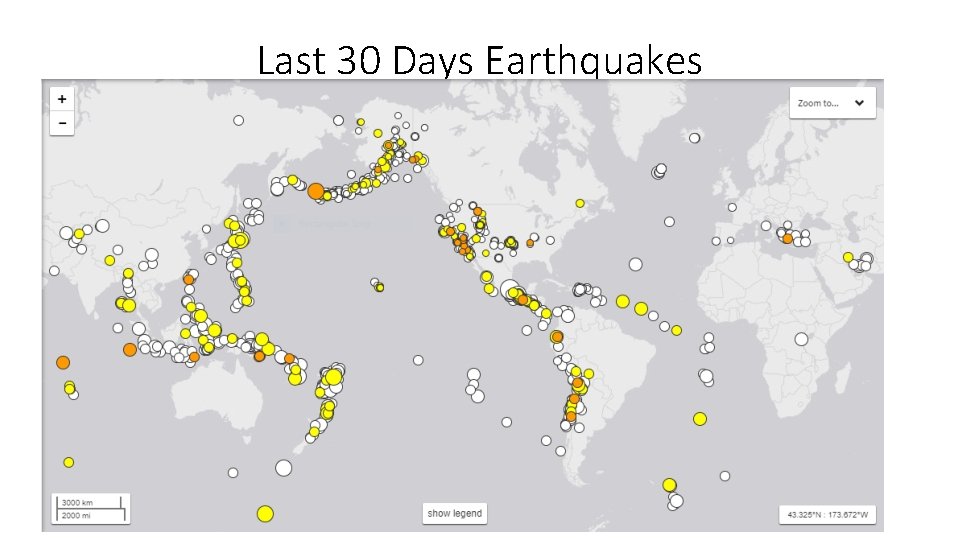
Last 30 Days Earthquakes
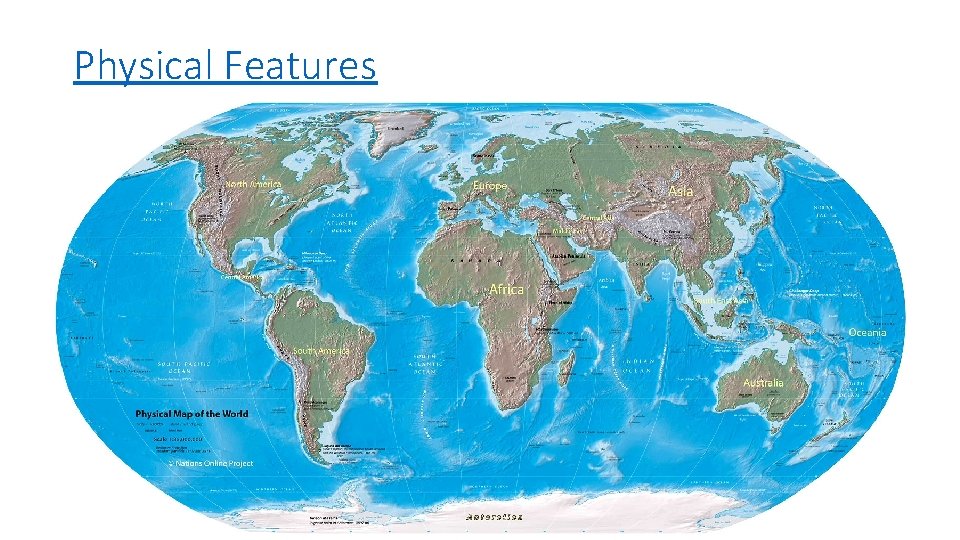
Physical Features
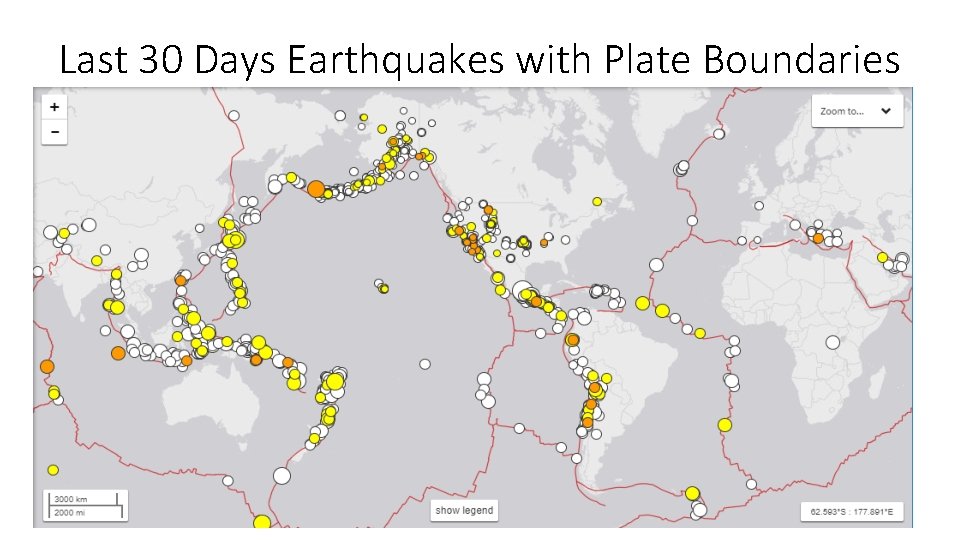
Last 30 Days Earthquakes with Plate Boundaries
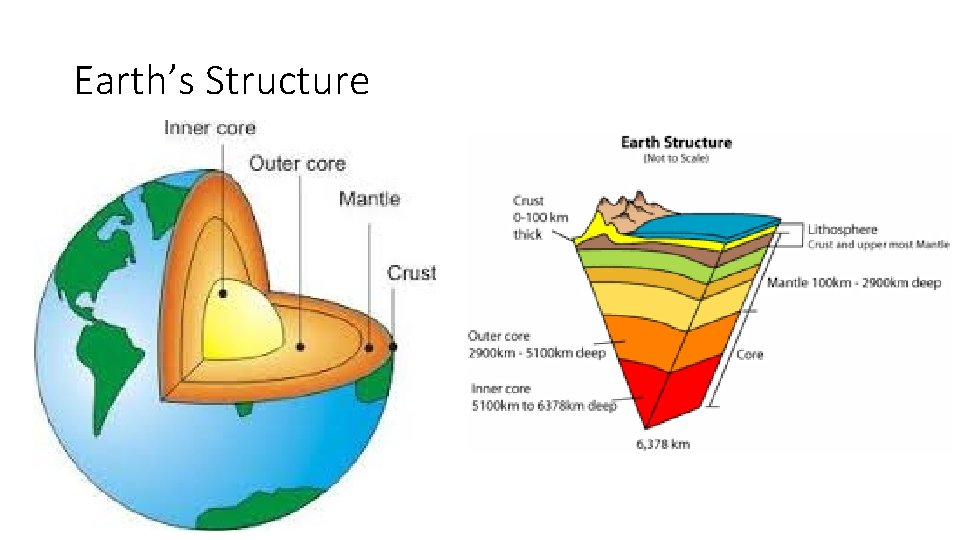
Earth’s Structure
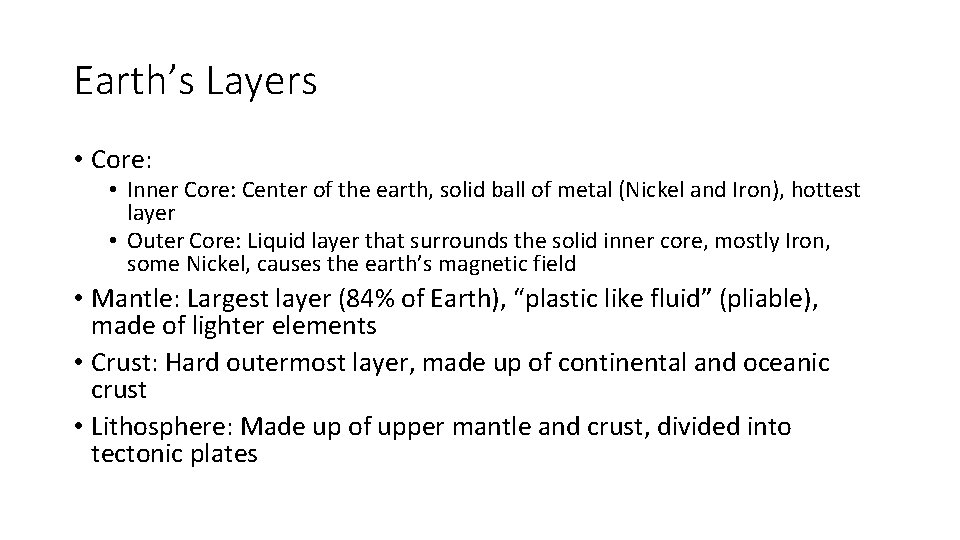
Earth’s Layers • Core: • Inner Core: Center of the earth, solid ball of metal (Nickel and Iron), hottest layer • Outer Core: Liquid layer that surrounds the solid inner core, mostly Iron, some Nickel, causes the earth’s magnetic field • Mantle: Largest layer (84% of Earth), “plastic like fluid” (pliable), made of lighter elements • Crust: Hard outermost layer, made up of continental and oceanic crust • Lithosphere: Made up of upper mantle and crust, divided into tectonic plates
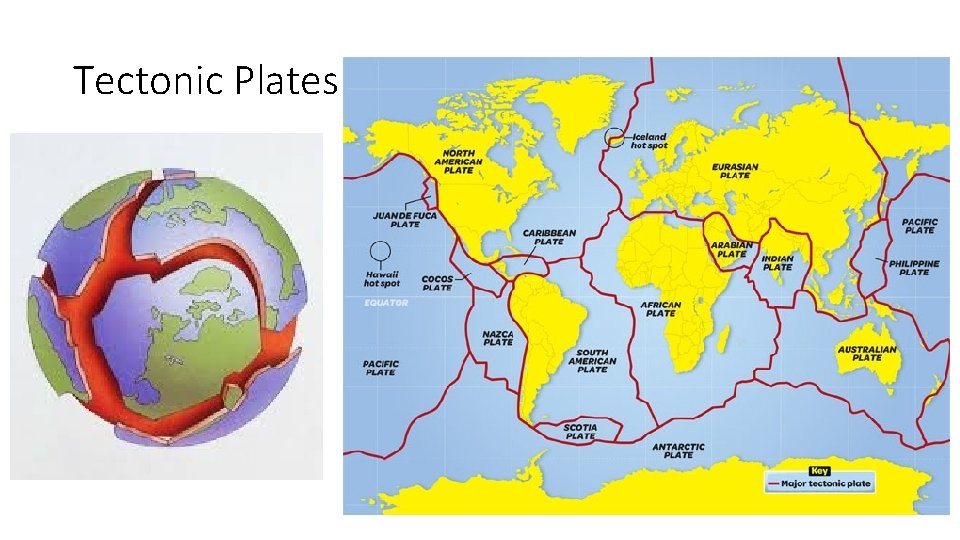
Tectonic Plates
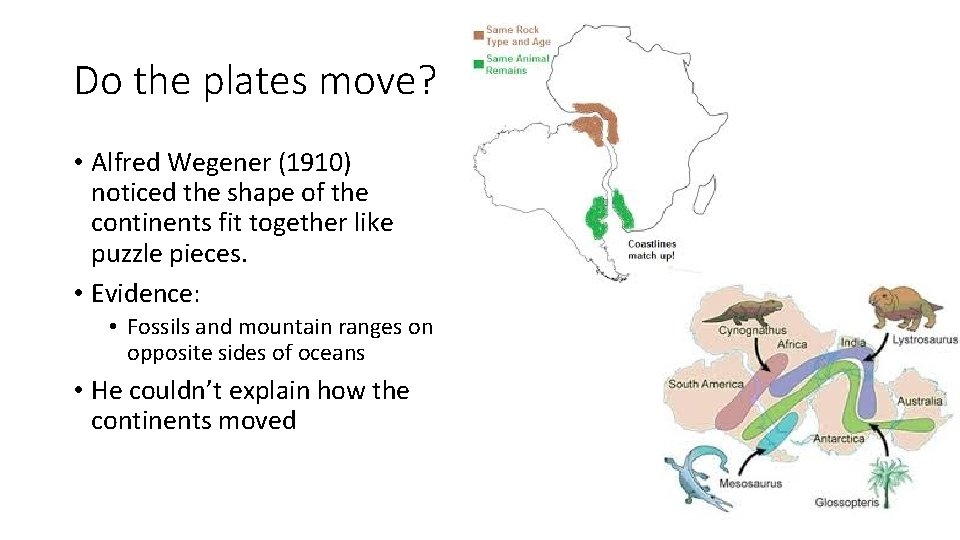
Do the plates move? • Alfred Wegener (1910) noticed the shape of the continents fit together like puzzle pieces. • Evidence: • Fossils and mountain ranges on opposite sides of oceans • He couldn’t explain how the continents moved
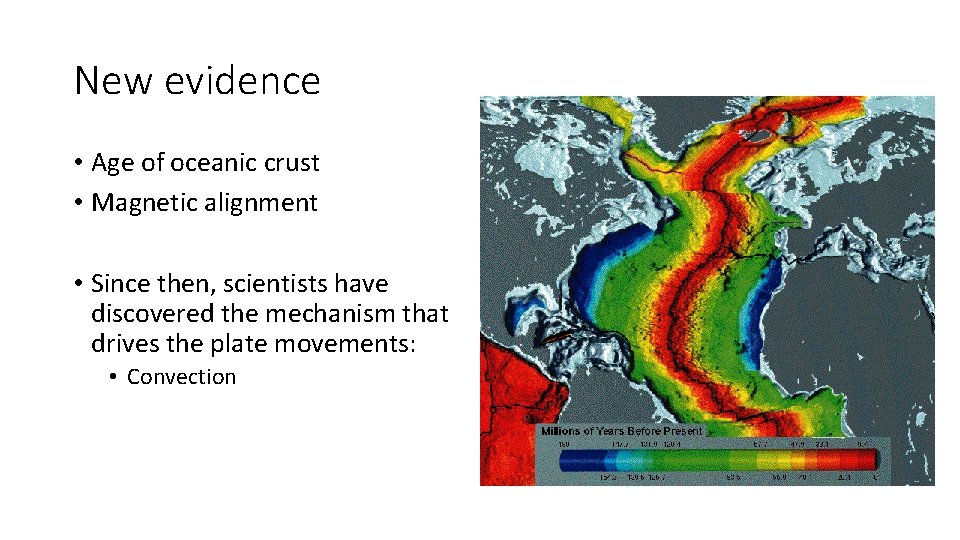
New evidence • Age of oceanic crust • Magnetic alignment • Since then, scientists have discovered the mechanism that drives the plate movements: • Convection
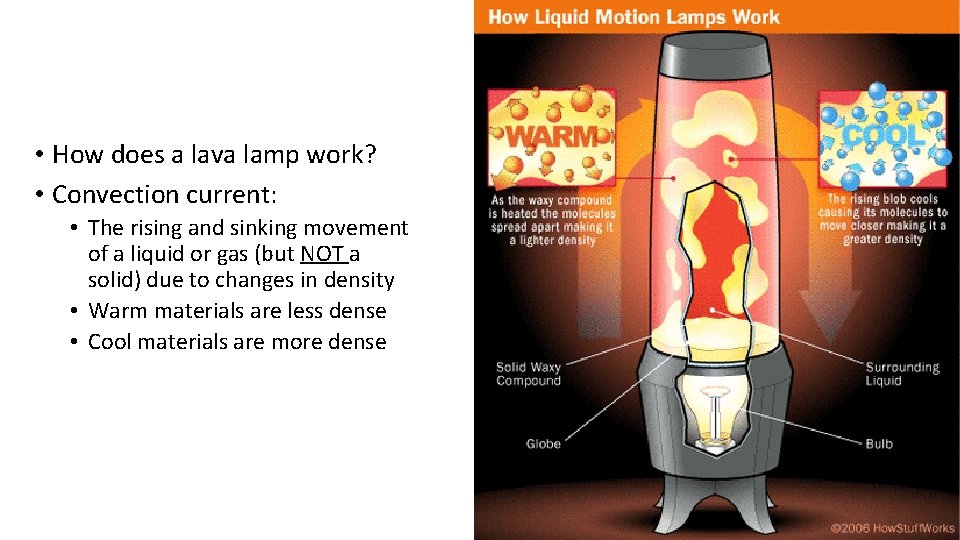
• How does a lava lamp work? • Convection current: • The rising and sinking movement of a liquid or gas (but NOT a solid) due to changes in density • Warm materials are less dense • Cool materials are more dense
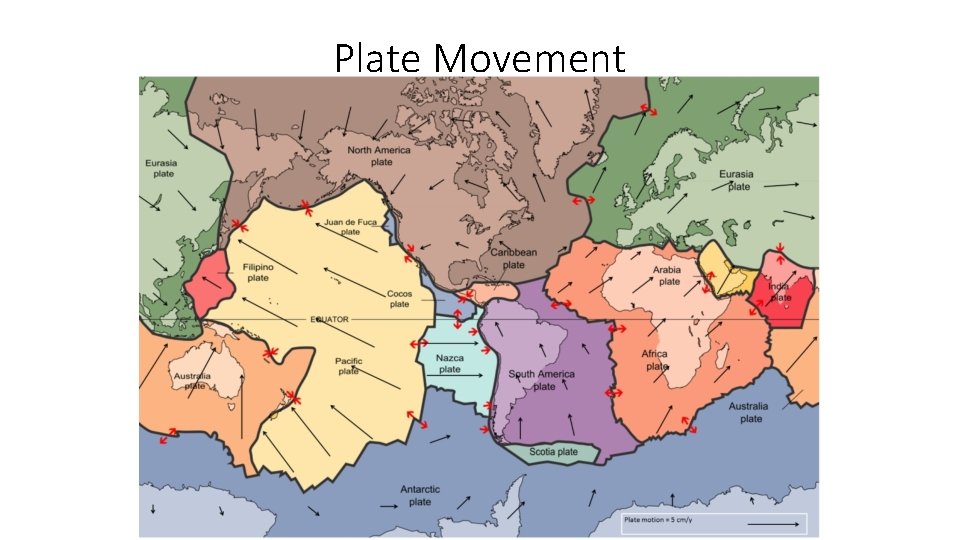
Plate Movement
Types of Crust • Oceanic Crust • Made of basalt • Thinner • More dense • Continental Crust • Made of granite • Thicker • Less dense • Plate Boundary • Where two tectonic plates meet • Convergent • When plates come together • Divergent • When plates move apart • Subduction • When the more dense plate turns downward and sinks into the mantle
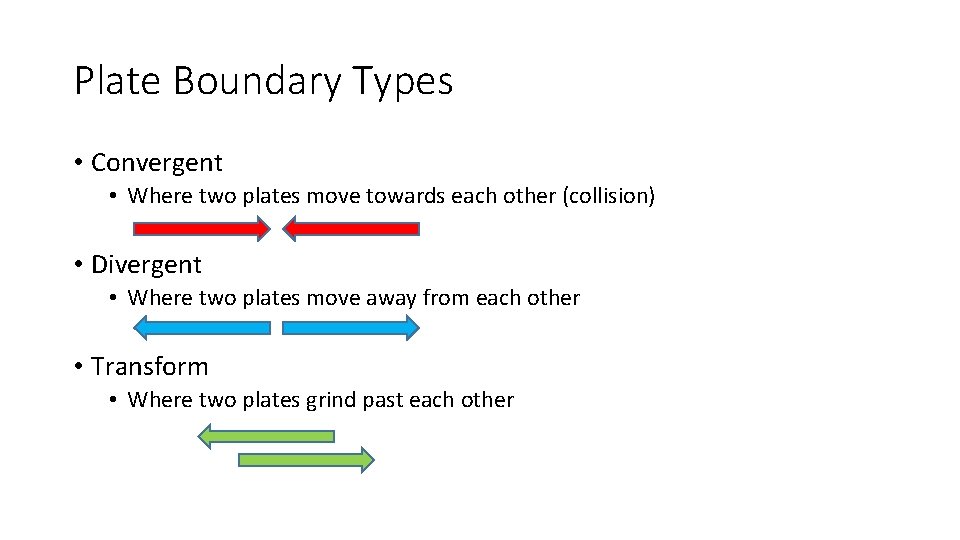
Plate Boundary Types • Convergent • Where two plates move towards each other (collision) • Divergent • Where two plates move away from each other • Transform • Where two plates grind past each other
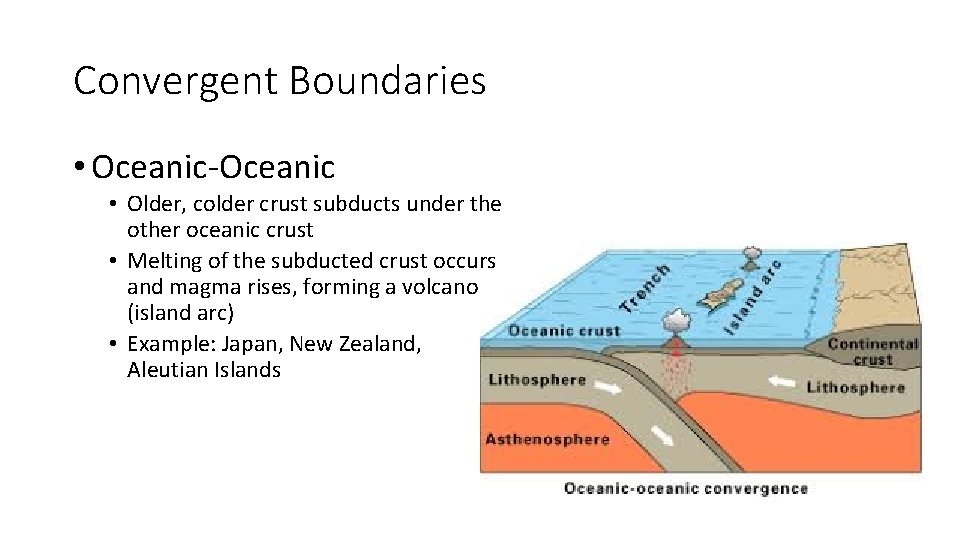
Convergent Boundaries • Oceanic-Oceanic • Older, colder crust subducts under the other oceanic crust • Melting of the subducted crust occurs and magma rises, forming a volcano (island arc) • Example: Japan, New Zealand, Aleutian Islands
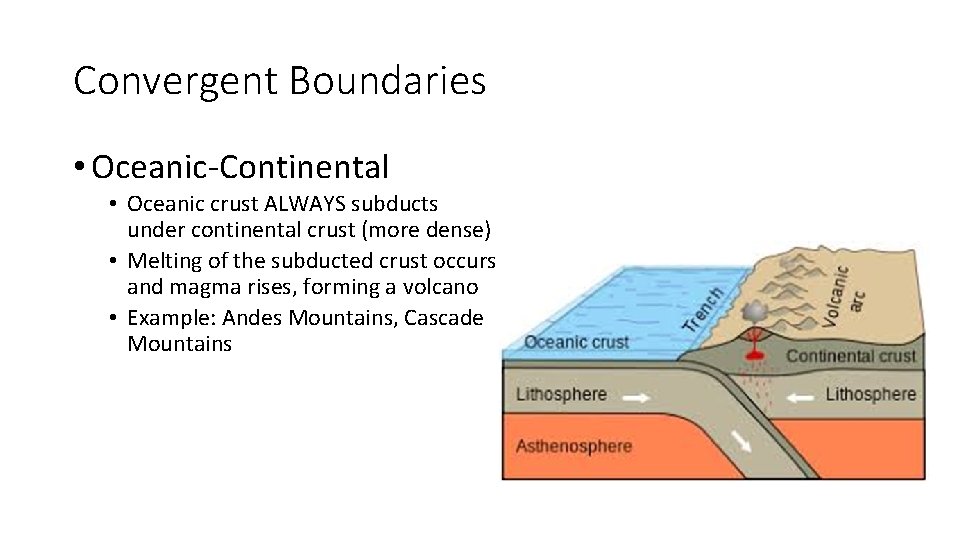
Convergent Boundaries • Oceanic-Continental • Oceanic crust ALWAYS subducts under continental crust (more dense) • Melting of the subducted crust occurs and magma rises, forming a volcano • Example: Andes Mountains, Cascade Mountains
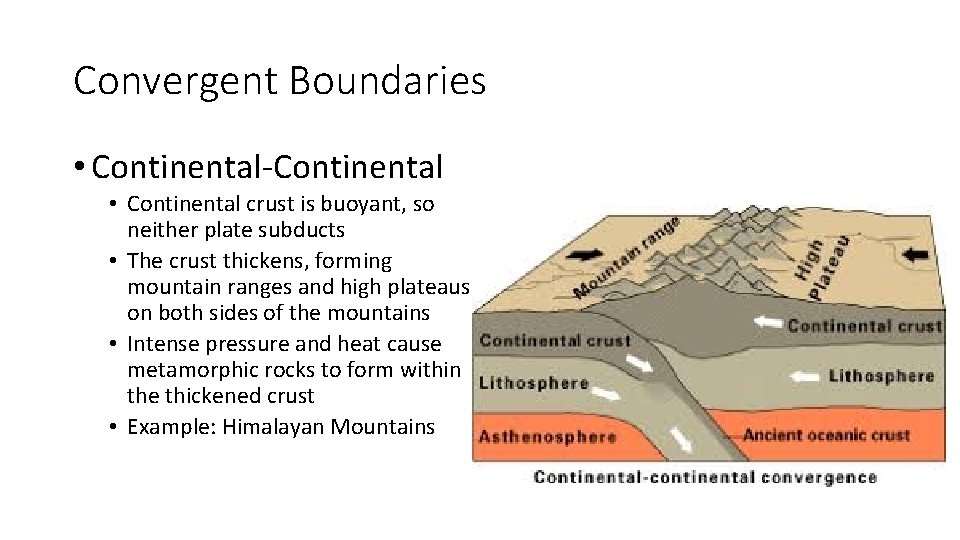
Convergent Boundaries • Continental-Continental • Continental crust is buoyant, so neither plate subducts • The crust thickens, forming mountain ranges and high plateaus on both sides of the mountains • Intense pressure and heat cause metamorphic rocks to form within the thickened crust • Example: Himalayan Mountains
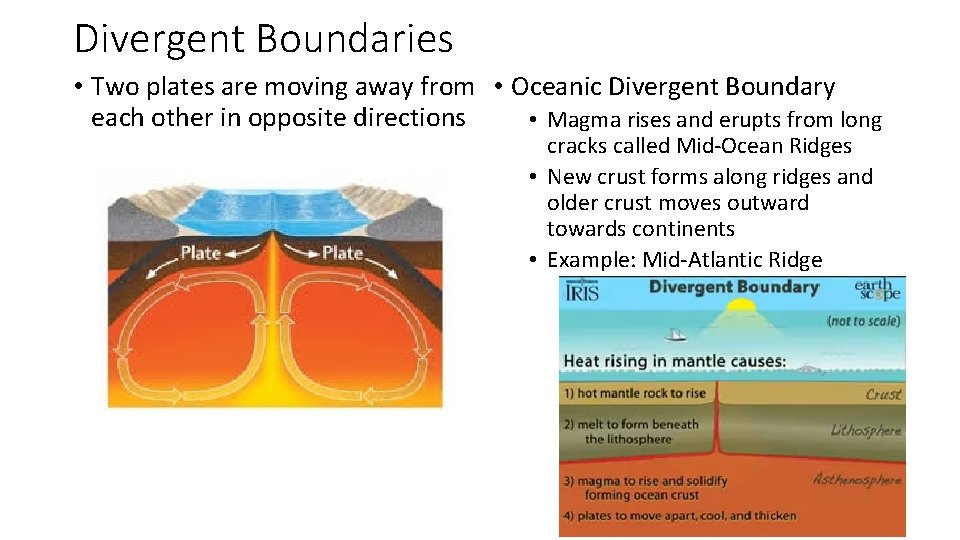
Divergent Boundaries • Two plates are moving away from • Oceanic Divergent Boundary each other in opposite directions • Magma rises and erupts from long cracks called Mid-Ocean Ridges • New crust forms along ridges and older crust moves outward towards continents • Example: Mid-Atlantic Ridge
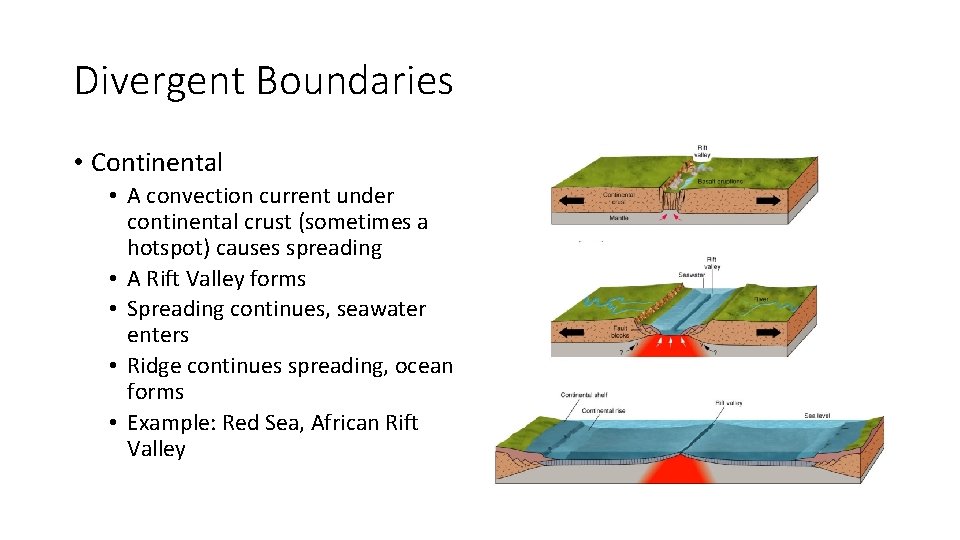
Divergent Boundaries • Continental • A convection current under continental crust (sometimes a hotspot) causes spreading • A Rift Valley forms • Spreading continues, seawater enters • Ridge continues spreading, ocean forms • Example: Red Sea, African Rift Valley
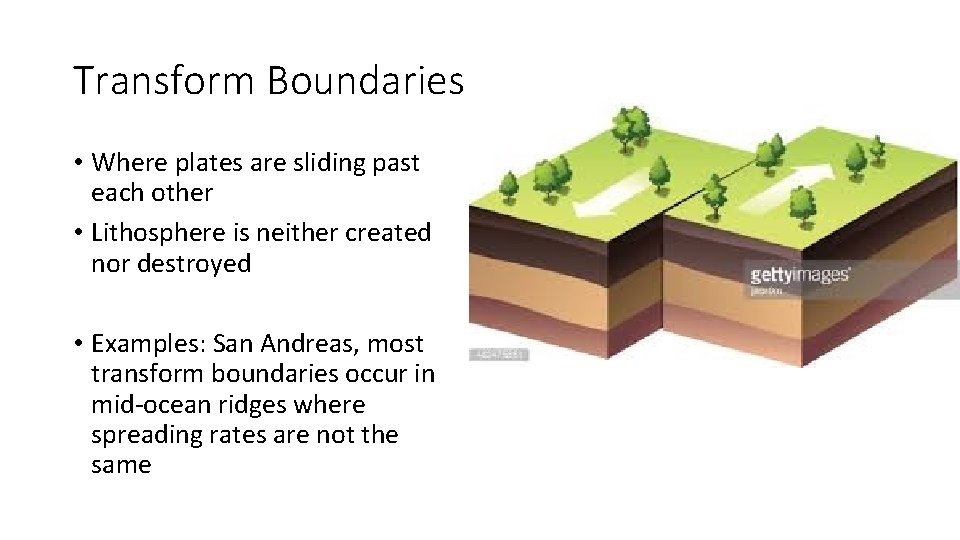
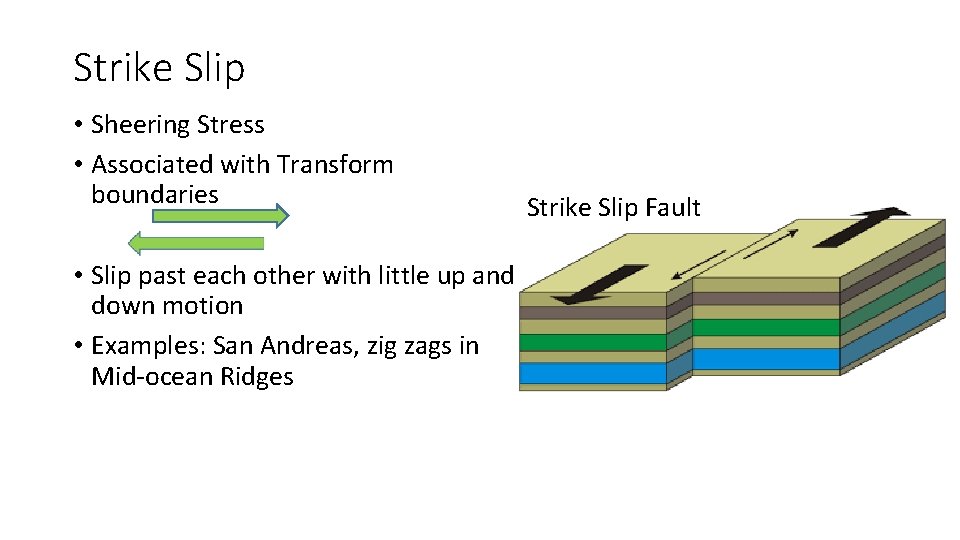
Transform Boundaries • Where plates are sliding past each other • Lithosphere is neither created nor destroyed • Examples: San Andreas, most transform boundaries occur in mid-ocean ridges where spreading rates are not the same
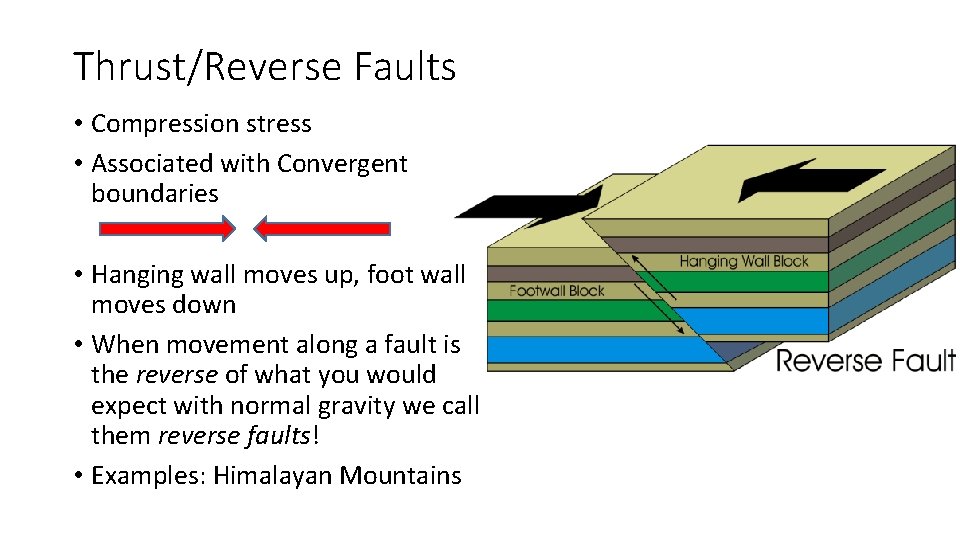
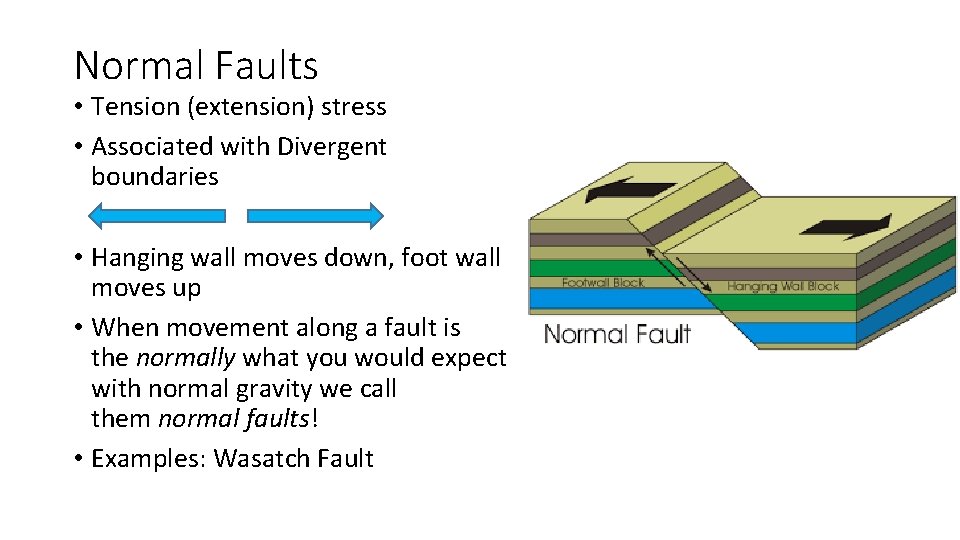
Faults • Fault: a fracture in the Earth’s crust • Foot wall • Hanging wall • Each type of plate boundary is associated with a type of fault: • Convergent ---→ Thrust/Reverse Faults • Divergent ---→ Normal Faults • Transform ---→ Strike Slip
Thrust/Reverse Faults • Compression stress • Associated with Convergent boundaries • Hanging wall moves up, foot wall moves down • When movement along a fault is the reverse of what you would expect with normal gravity we call them reverse faults! • Examples: Himalayan Mountains
Normal Faults • Tension (extension) stress • Associated with Divergent boundaries • Hanging wall moves down, foot wall moves up • When movement along a fault is the normally what you would expect with normal gravity we call them normal faults! • Examples: Wasatch Fault
Strike Slip • Sheering Stress • Associated with Transform boundaries • Slip past each other with little up and down motion • Examples: San Andreas, zig zags in Mid-ocean Ridges Strike Slip Fault