
Plate Tectonics IDEA THAT EARTHS SURFACE IS BROKEN
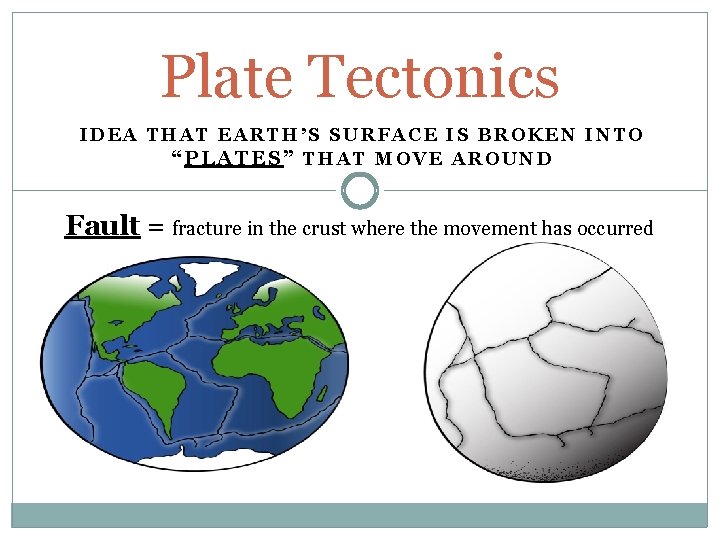
Plate Tectonics IDEA THAT EARTH’S SURFACE IS BROKEN INTO “PLATES” THAT MOVE AROUND Fault = fracture in the crust where the movement has occurred
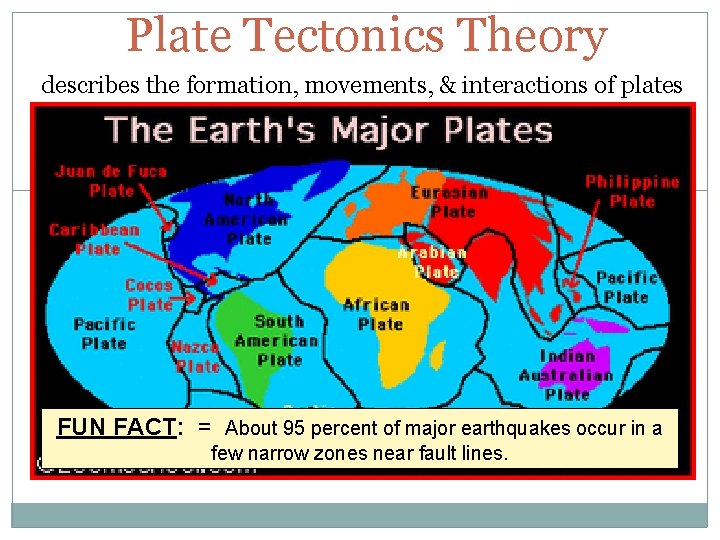
Plate Tectonics Theory describes the formation, movements, & interactions of plates FUN FACT: = About 95 percent of major earthquakes occur in a few narrow zones near fault lines.
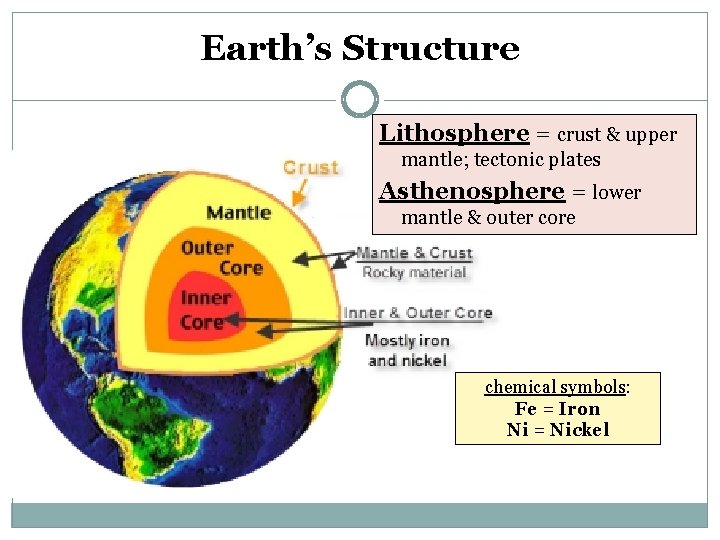
Earth’s Structure Lithosphere = crust & upper mantle; tectonic plates Asthenosphere = lower mantle & outer core chemical symbols: Fe = Iron Ni = Nickel
Alfred Wegener Considered the father of plate tectonics Proposed continental drift = Hypothesis that all the continents fit together as one mass, & around 200 million years ago, began to break apart from each other. Evidence for Continental Drift: Continental Puzzle (Pangaea) Matching fossils on different continents Matching rock types & mountains on different continents Ancient climates
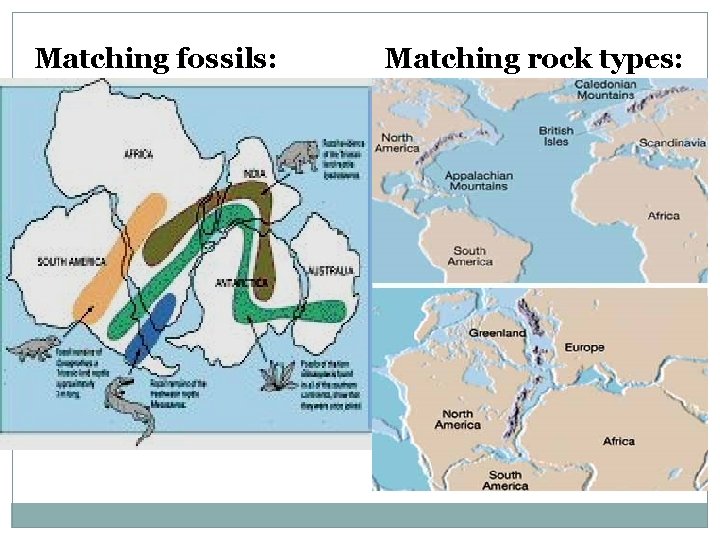
Matching fossils: Matching rock types:
There are more than 30, 000 earthquakes worldwide each year! Earthquakes = shaking of Earth because of a rapid release of energy usually because of movement of tectonic plates Most earthquakes last for less than a minute. Foreshocks = small earthquakes before an earthquake Aftershocks = small earthquakes after an earthquake
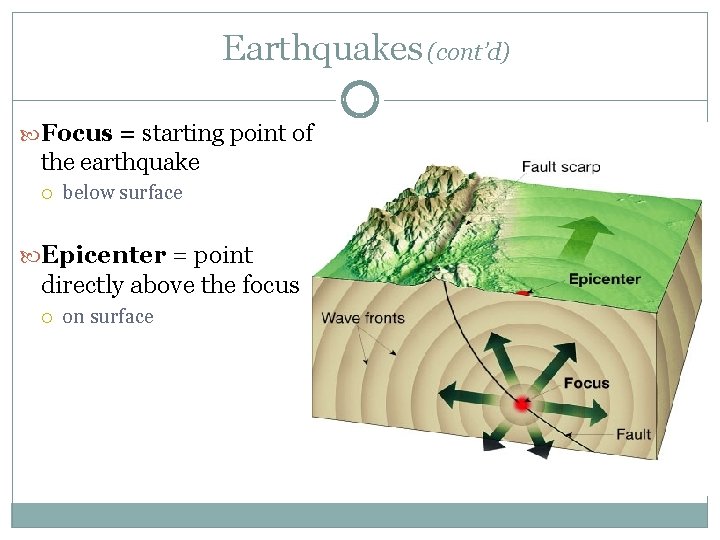
Earthquakes (cont’d) Focus = starting point of the earthquake below surface Epicenter = point directly above the focus on surface
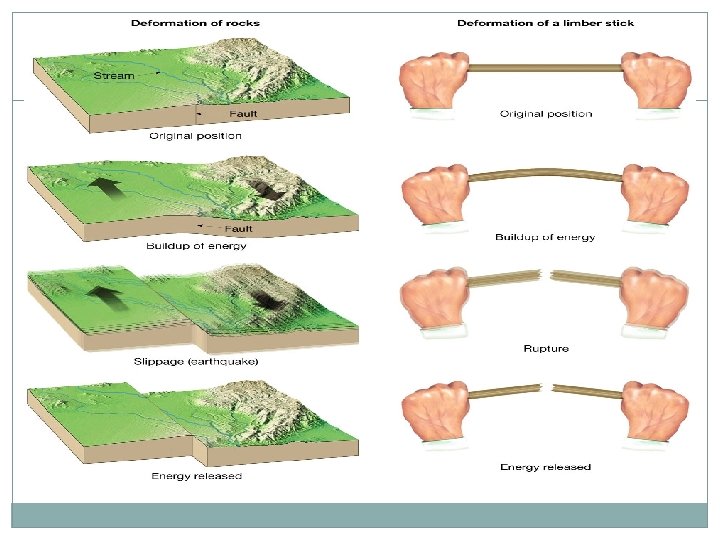
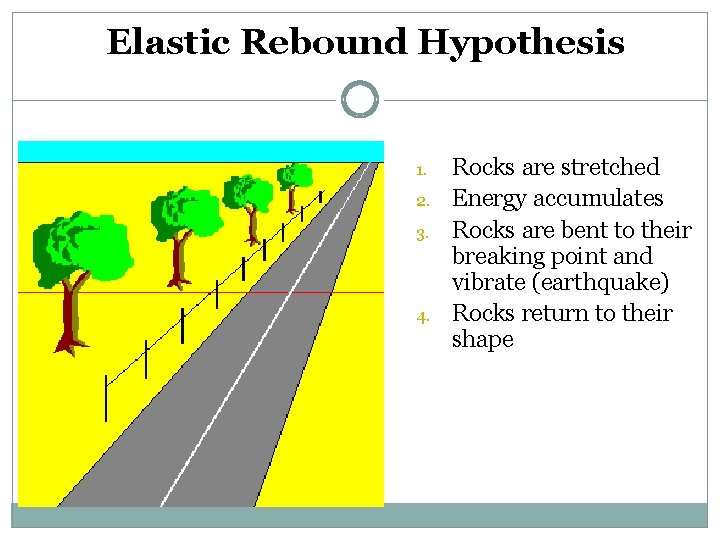
Elastic Rebound Hypothesis 1. 2. 3. 4. Rocks are stretched Energy accumulates Rocks are bent to their breaking point and vibrate (earthquake) Rocks return to their shape
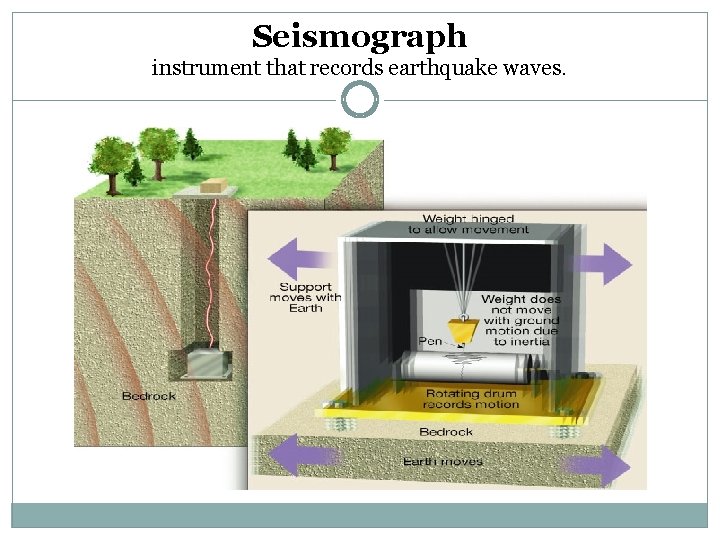
Seismograph instrument that records earthquake waves.
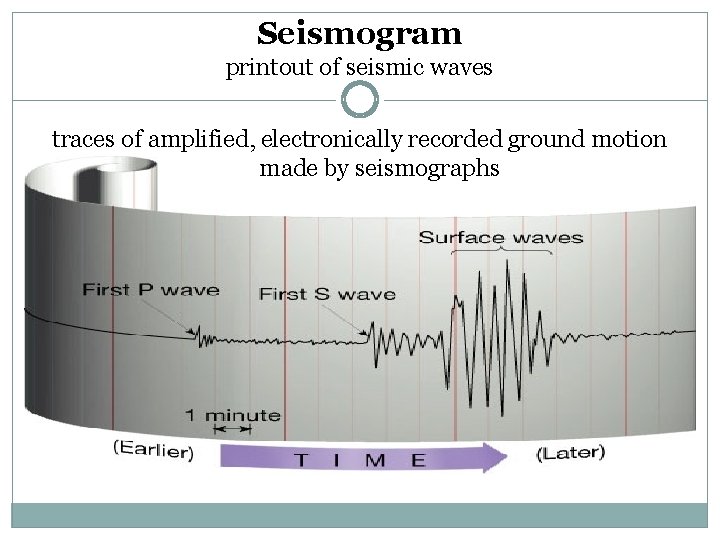
Seismogram printout of seismic waves traces of amplified, electronically recorded ground motion made by seismographs
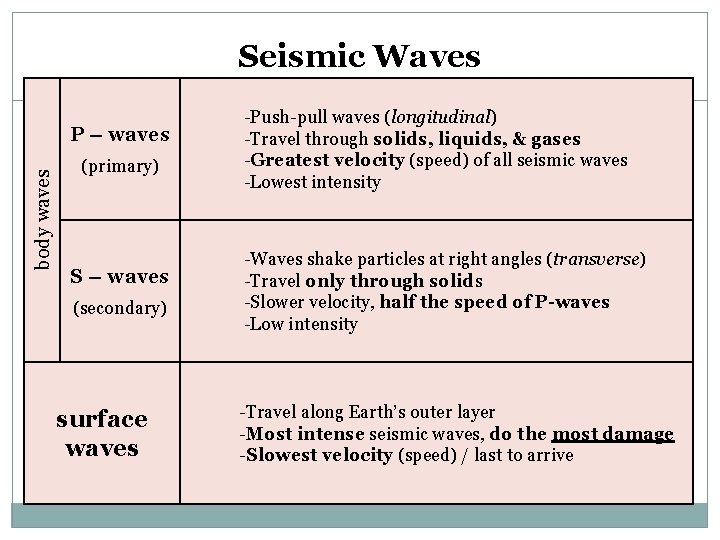
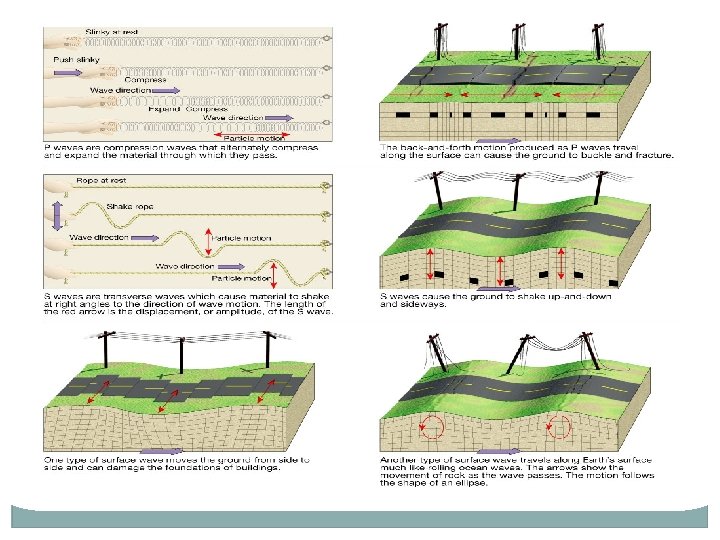
Seismic Waves body waves P – waves (primary) S – waves (secondary) surface waves -Push-pull waves (longitudinal) -Travel through solids, liquids, & gases -Greatest velocity (speed) of all seismic waves -Lowest intensity -Waves shake particles at right angles (transverse) -Travel only through solids -Slower velocity, half the speed of P-waves -Low intensity -Travel along Earth’s outer layer -Most intense seismic waves, do the most damage -Slowest velocity (speed) / last to arrive
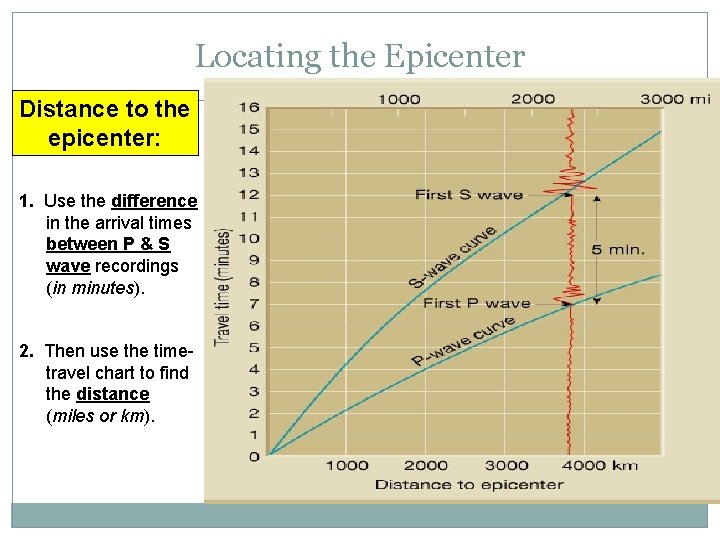
Locating the Epicenter Distance to the epicenter: 1. Use the difference in the arrival times between P & S wave recordings (in minutes). 2. Then use the timetravel chart to find the distance (miles or km).
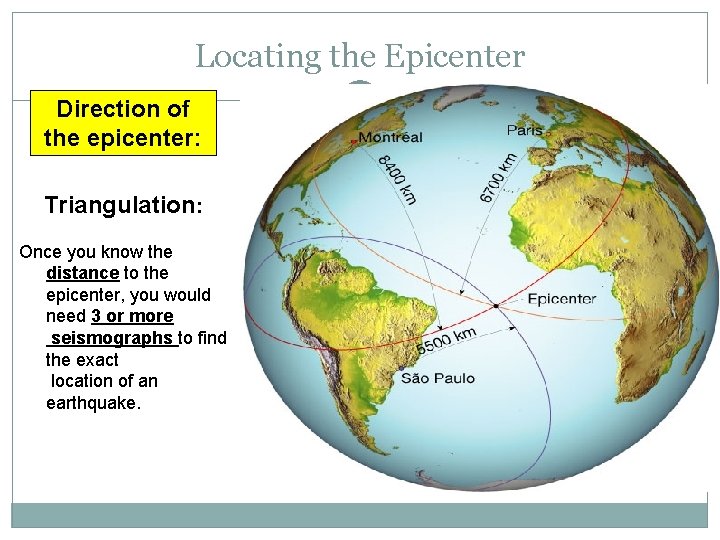
Locating the Epicenter Direction of the epicenter: Triangulation: Once you know the distance to the epicenter, you would need 3 or more seismographs to find the exact location of an earthquake.
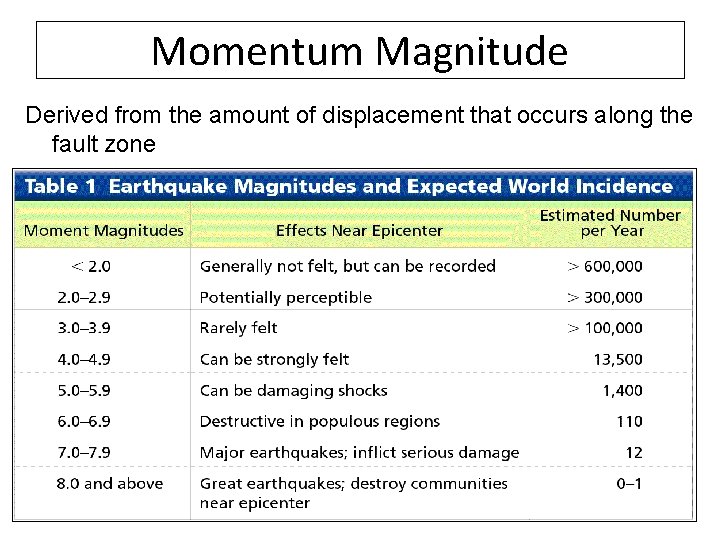
Momentum Magnitude Derived from the amount of displacement that occurs along the fault zone
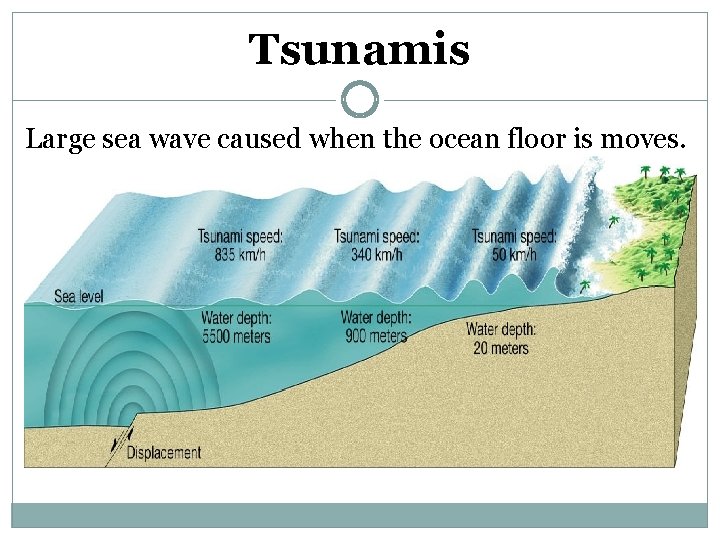
Tsunamis Large sea wave caused when the ocean floor is moves.
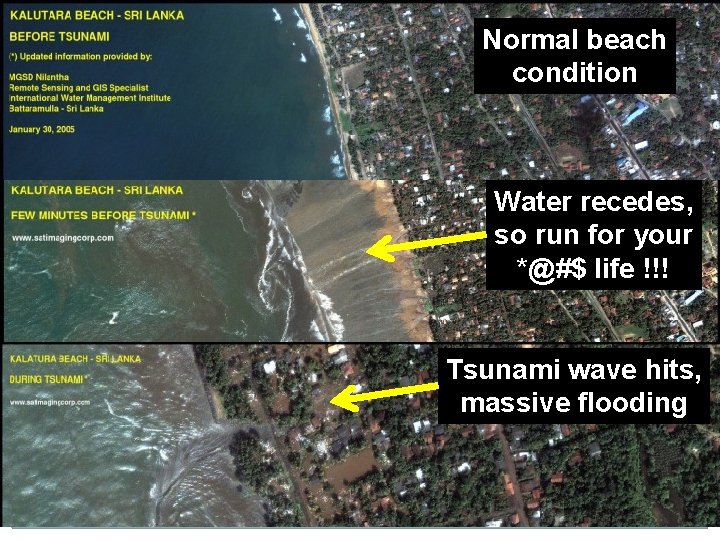
Normal beach condition Water recedes, so run for your *@#$ life !!! Tsunami wave hits, massive flooding
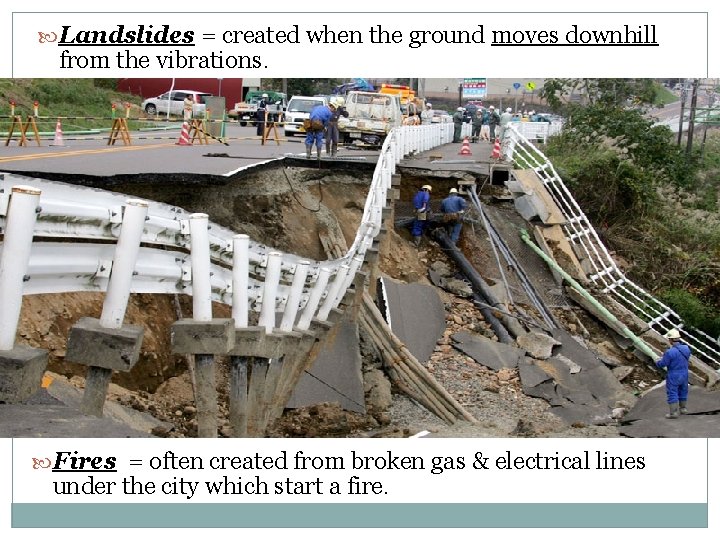
Landslides = created when the ground moves downhill from the vibrations. Fires = often created from broken gas & electrical lines under the city which start a fire.
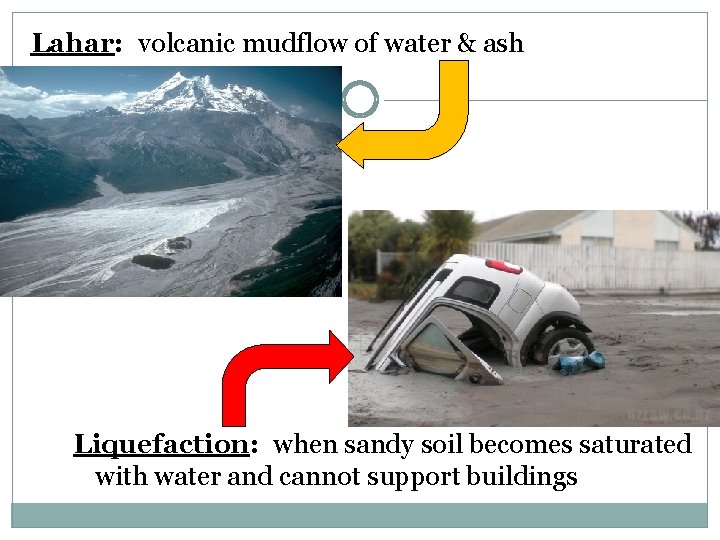
Lahar: volcanic mudflow of water & ash Liquefaction: when sandy soil becomes saturated with water and cannot support buildings
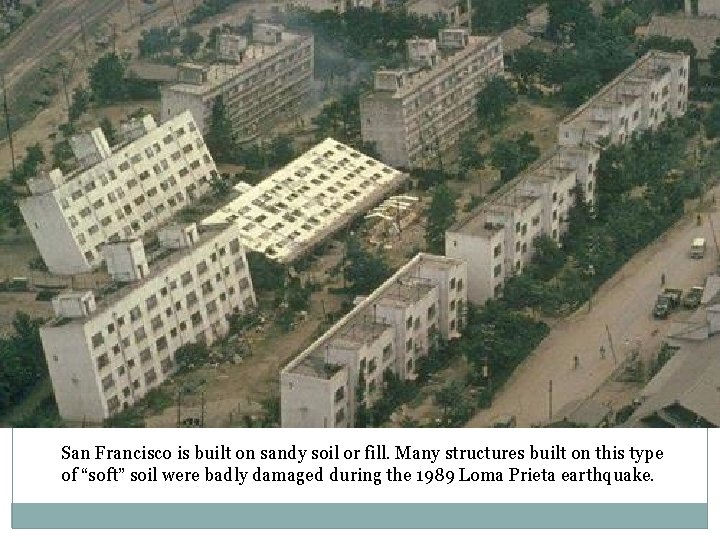
San Francisco is built on sandy soil or fill. Many structures built on this type of “soft” soil were badly damaged during the 1989 Loma Prieta earthquake.
Boundary Sec 9. 2 Movement: Structures: Examples: Divergent Convergent Transform
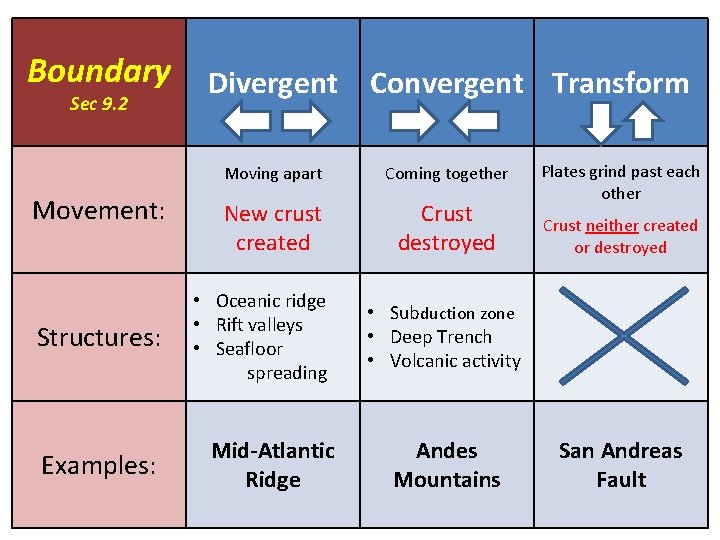
Boundary Sec 9. 2 Movement: Structures: Examples: Divergent Convergent Transform Moving apart Coming together New crust created Crust destroyed • Oceanic ridge • Rift valleys • Seafloor spreading Mid-Atlantic Ridge Plates grind past each other Crust neither created or destroyed • Subduction zone • Deep Trench • Volcanic activity Andes Mountains San Andreas Fault
Action Sec 9. 3 Convergent: p. 261 Divergent: p. 258 Ocean – Continent
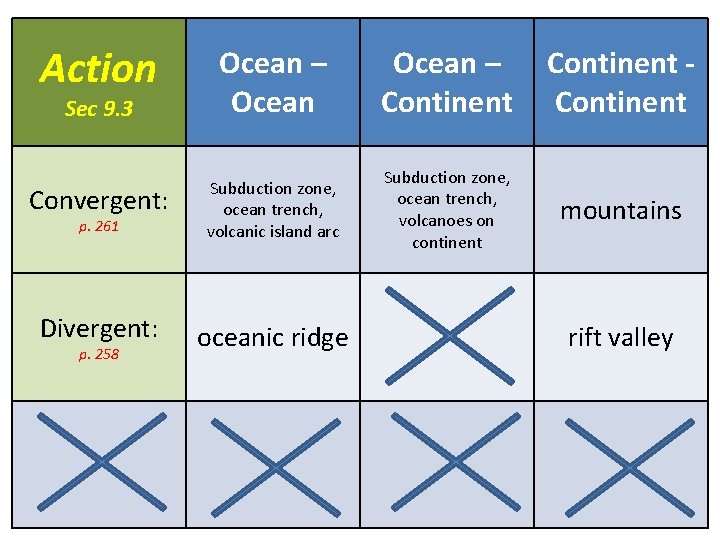
Action Ocean – Continent Convergent: Subduction zone, ocean trench, volcanic island arc Subduction zone, ocean trench, volcanoes on continent mountains Sec 9. 3 p. 261 Divergent: p. 258 oceanic ridge rift valley
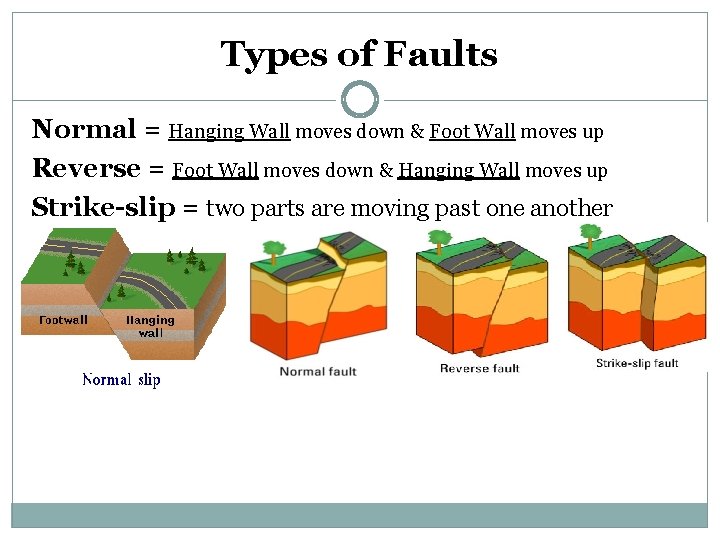
Types of Faults Normal = Hanging Wall moves down & Foot Wall moves up Reverse = Foot Wall moves down & Hanging Wall moves up Strike-slip = two parts are moving past one another
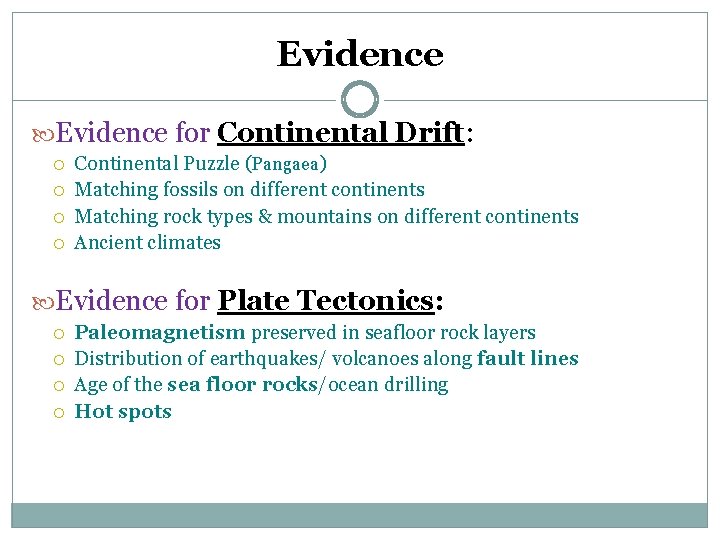
Evidence for Continental Drift: Continental Puzzle (Pangaea) Matching fossils on different continents Matching rock types & mountains on different continents Ancient climates Evidence for Plate Tectonics: Paleomagnetism preserved in seafloor rock layers Distribution of earthquakes/ volcanoes along fault lines Age of the sea floor rocks/ocean drilling Hot spots
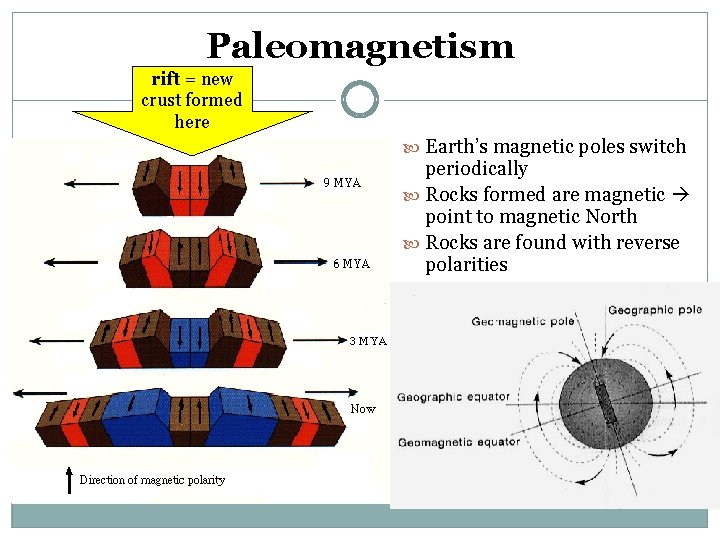
Paleomagnetism rift = new crust formed here Earth’s magnetic poles switch periodically Rocks formed are magnetic point to magnetic North Rocks are found with reverse polarities
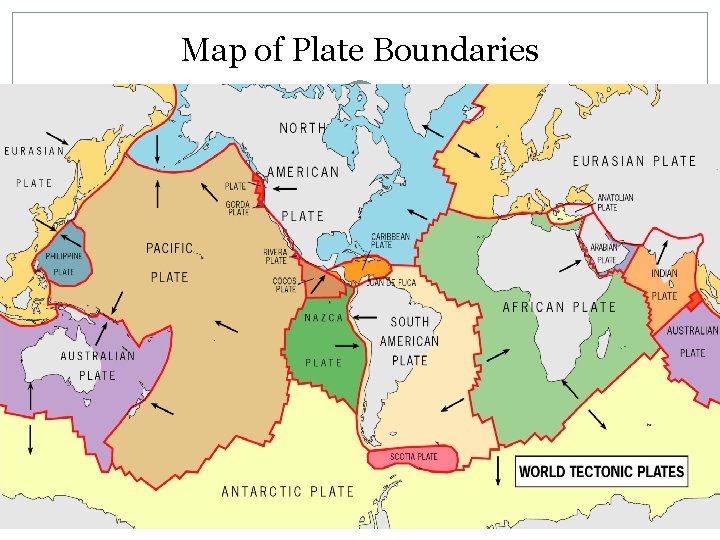
Map of Plate Boundaries
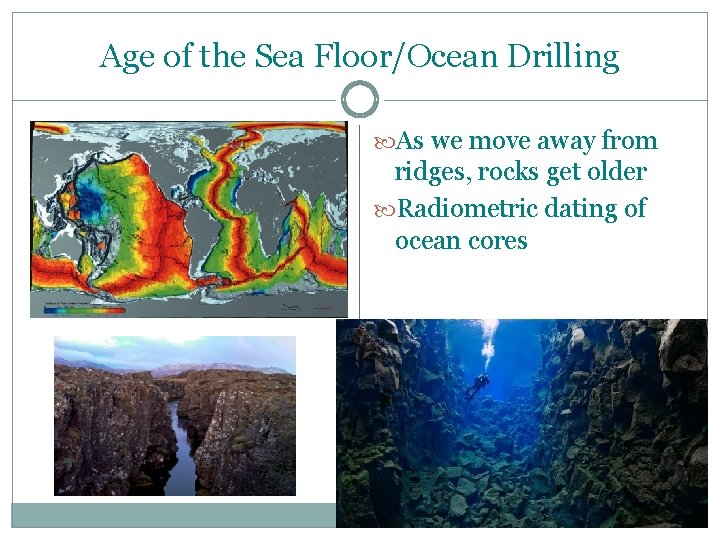
Age of the Sea Floor/Ocean Drilling As we move away from ridges, rocks get older Radiometric dating of ocean cores Benthic Foraminifera, Courtesy USGS
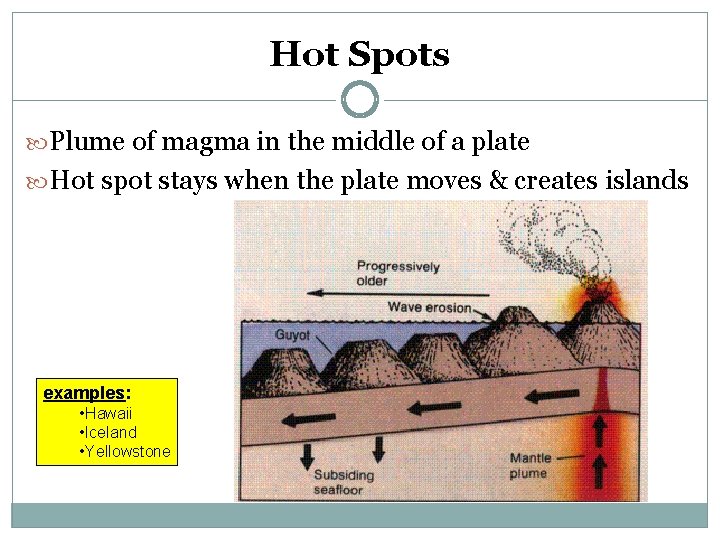
Hot Spots Plume of magma in the middle of a plate Hot spot stays when the plate moves & creates islands examples: • Hawaii • Iceland • Yellowstone
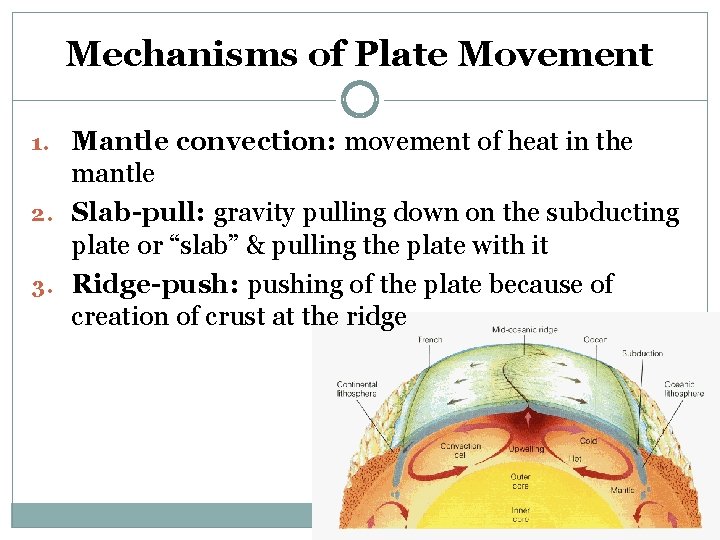
Mechanisms of Plate Movement 1. Mantle convection: movement of heat in the mantle 2. Slab-pull: gravity pulling down on the subducting plate or “slab” & pulling the plate with it 3. Ridge-push: pushing of the plate because of creation of crust at the ridge
- Slides: 33