
Plate Tectonics How do the plates move Continental


- Slides: 21
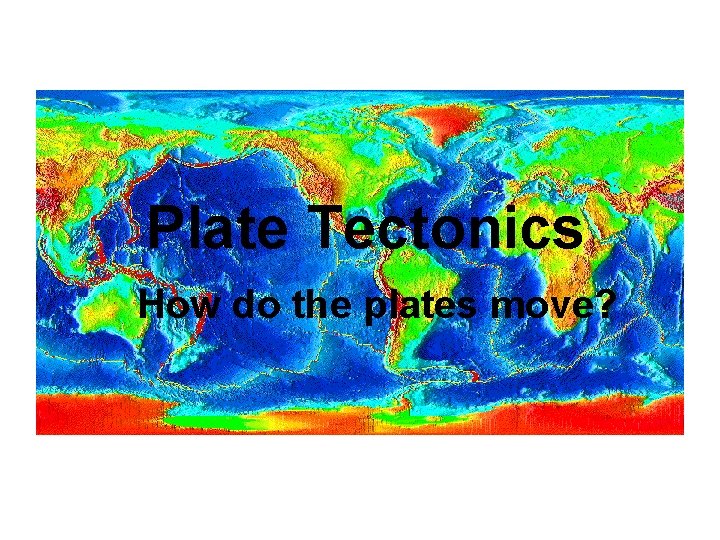
Plate Tectonics How do the plates move?
Continental Drift Hypothesis • In 1915, Alfred Wegener’s hypothesis about Continental Drift couldn’t explain the forces that could move continents. • Wegener wasn’t the first to notice how the continents fit together but he was one of the first to realize that the Earth’s surface had changed over time. • His hypothesis says that continents that are separated have been joined together at one point in the past and have been moving apart. • He thought that the continents plowed through the oceans as they moved.
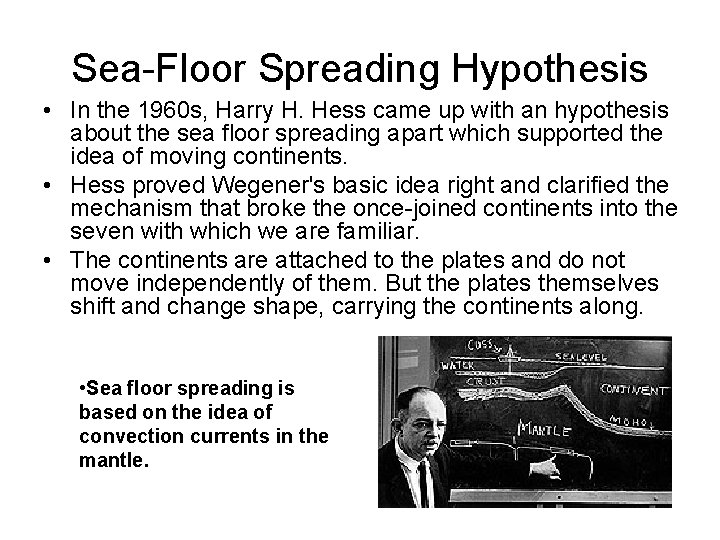
Sea-Floor Spreading Hypothesis • In the 1960 s, Harry H. Hess came up with an hypothesis about the sea floor spreading apart which supported the idea of moving continents. • Hess proved Wegener's basic idea right and clarified the mechanism that broke the once-joined continents into the seven with which we are familiar. • The continents are attached to the plates and do not move independently of them. But the plates themselves shift and change shape, carrying the continents along. • Sea floor spreading is based on the idea of convection currents in the mantle.
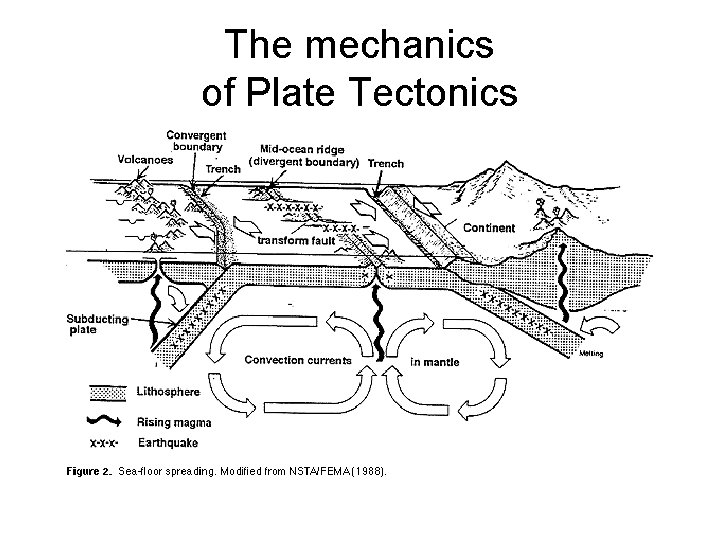
The theory of Plate Tectonics • The discovery of palaeomagnetism and the development of oceanography was a necessary step in the development of science which Wegener's idea awaited. • According to the plate tectonic model, the surface of the Earth consists of a series of relatively thin, but rigid, plates which are in constant motion driven by convection currents in the mantle.
The mechanics of Plate Tectonics
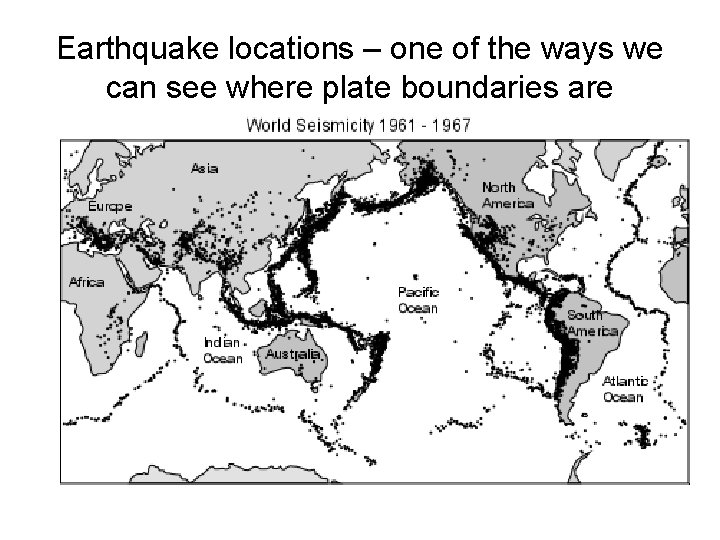
Earthquake locations – one of the ways we can see where plate boundaries are
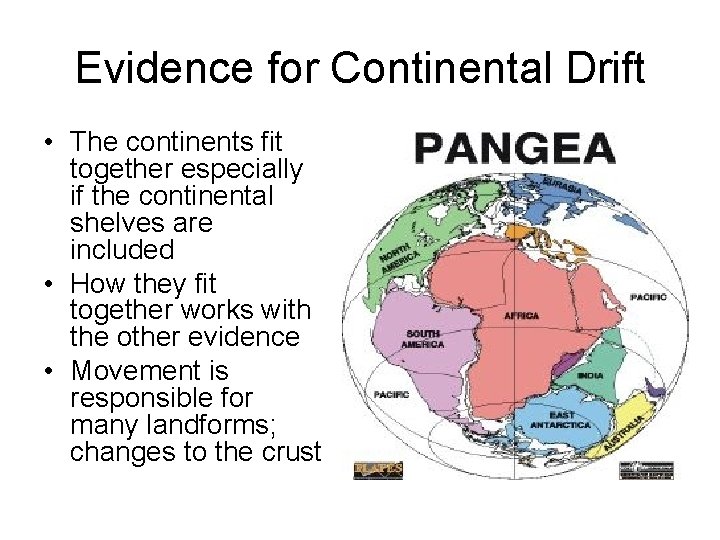
The breakup of Pangea
Evidence for Continental Drift • The continents fit together especially if the continental shelves are included • How they fit together works with the other evidence • Movement is responsible for many landforms; changes to the crust
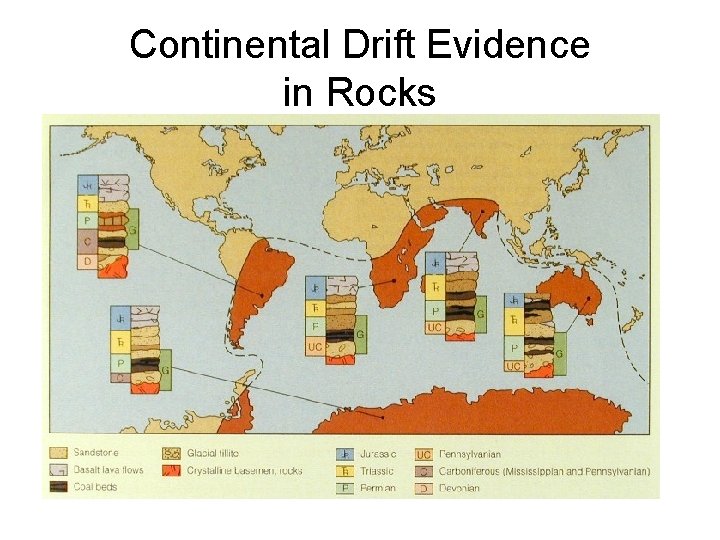
Continental Drift Evidence in Rocks
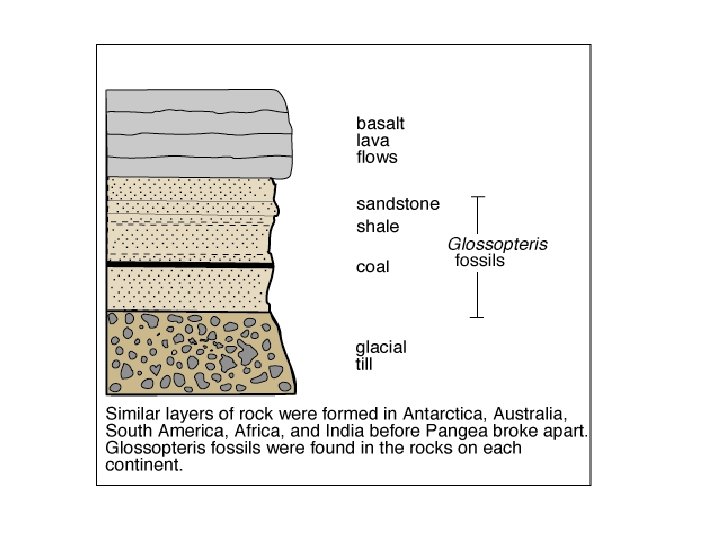
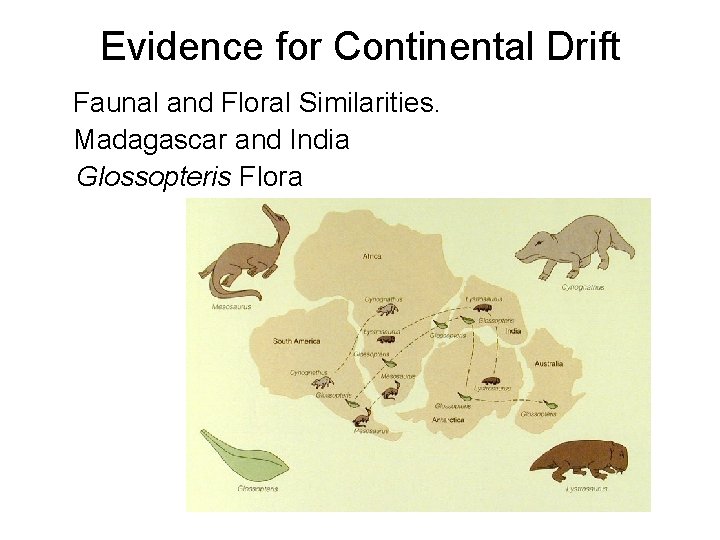
Evidence for Continental Drift Faunal and Floral Similarities. Madagascar and India Glossopteris Flora
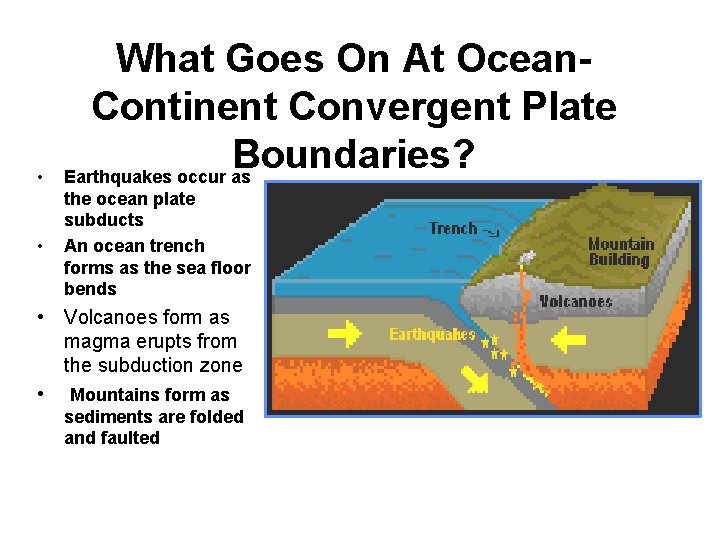
• • What Goes On At Ocean. Continent Convergent Plate Boundaries? Earthquakes occur as the ocean plate subducts An ocean trench forms as the sea floor bends • Volcanoes form as magma erupts from the subduction zone • Mountains form as sediments are folded and faulted
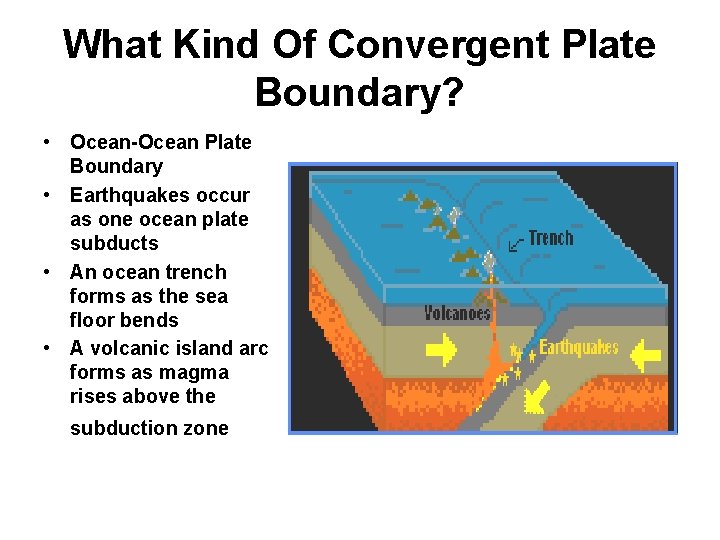
What Kind Of Convergent Plate Boundary? • Ocean-Ocean Plate Boundary • Earthquakes occur as one ocean plate subducts • An ocean trench forms as the sea floor bends • A volcanic island arc forms as magma rises above the subduction zone
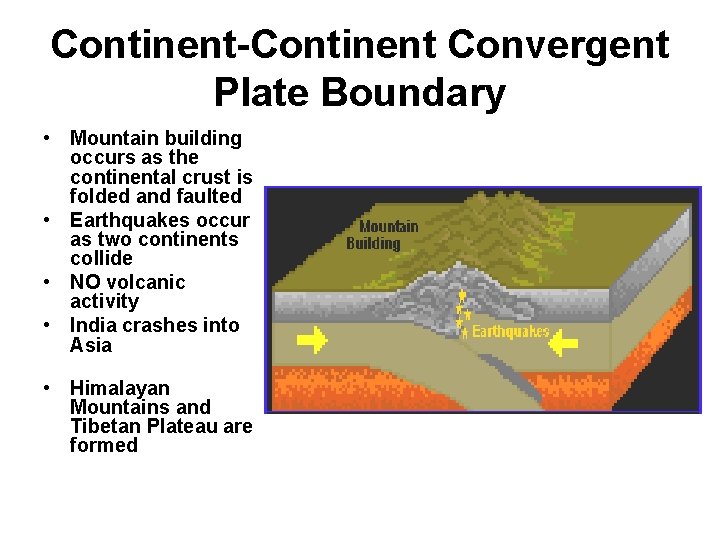
Continent-Continent Convergent Plate Boundary • Mountain building occurs as the continental crust is folded and faulted • Earthquakes occur as two continents collide • NO volcanic activity • India crashes into Asia • Himalayan Mountains and Tibetan Plateau are formed
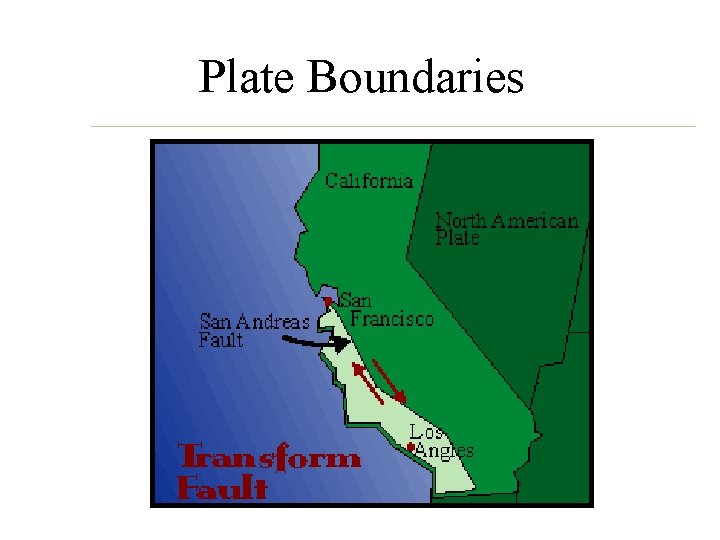
Plate Boundaries
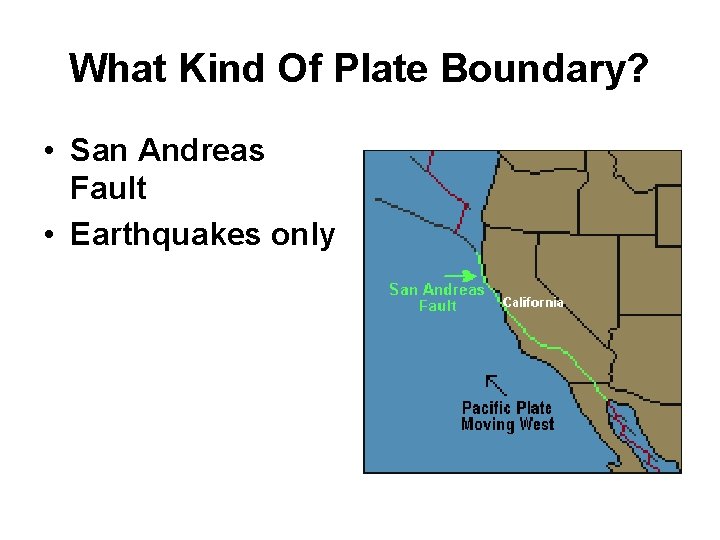
What Kind Of Plate Boundary? • San Andreas Fault • Earthquakes only
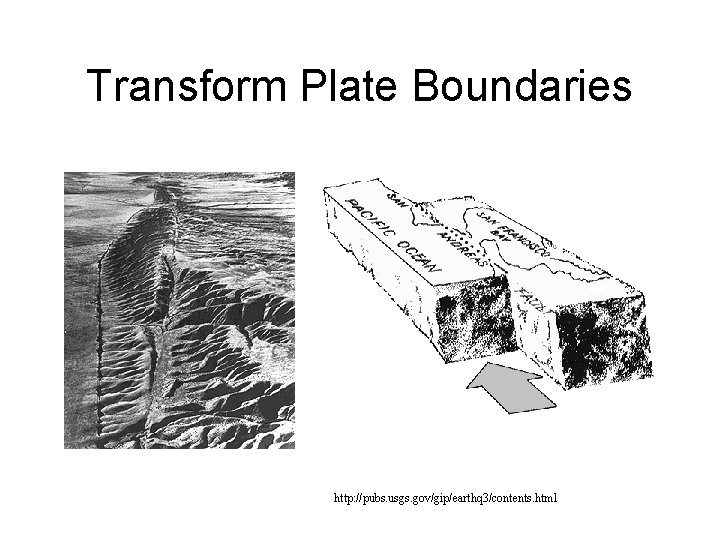
Transform Plate Boundaries http: //pubs. usgs. gov/gip/earthq 3/contents. html
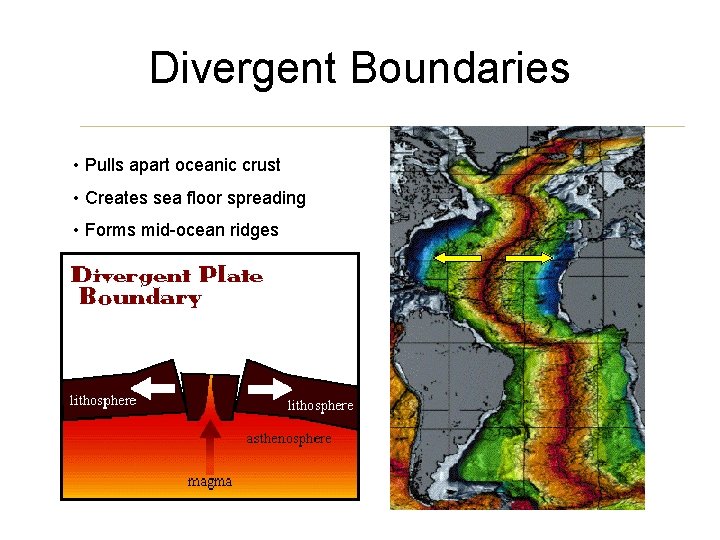
Divergent Boundaries • Pulls apart oceanic crust • Creates sea floor spreading • Forms mid-ocean ridges
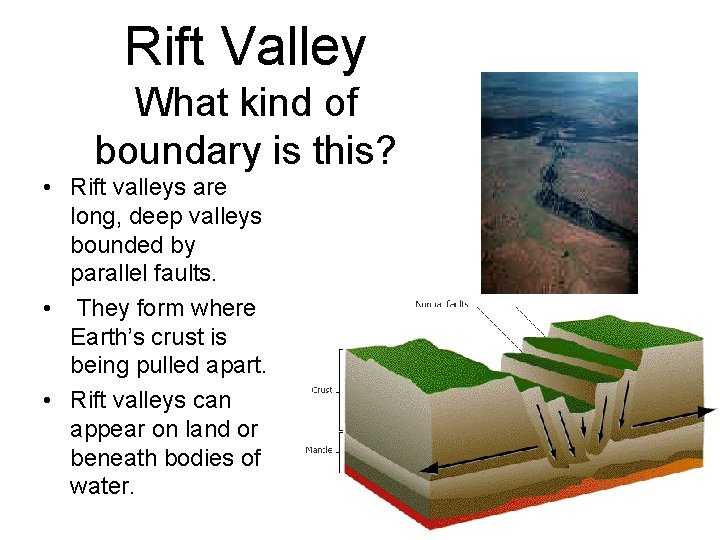
Rift Valley What kind of boundary is this? • Rift valleys are long, deep valleys bounded by parallel faults. • They form where Earth’s crust is being pulled apart. • Rift valleys can appear on land or beneath bodies of water.
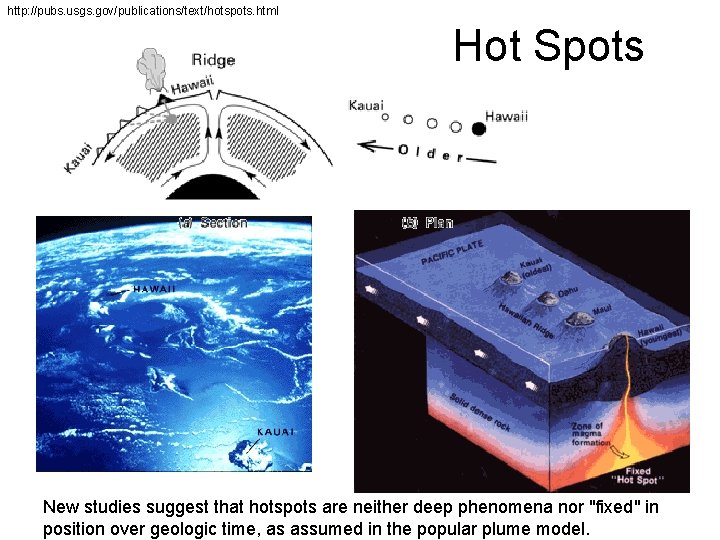
http: //pubs. usgs. gov/publications/text/hotspots. html Hot Spots New studies suggest that hotspots are neither deep phenomena nor "fixed" in position over geologic time, as assumed in the popular plume model.
What Moves the Plates? • Convection currents in the earth's mantle • Slab-pull in the trenches • Pushing out new crust from mid-ocean ridges