
Plate tectonics Convection currents in the mantle carry
- Slides: 20
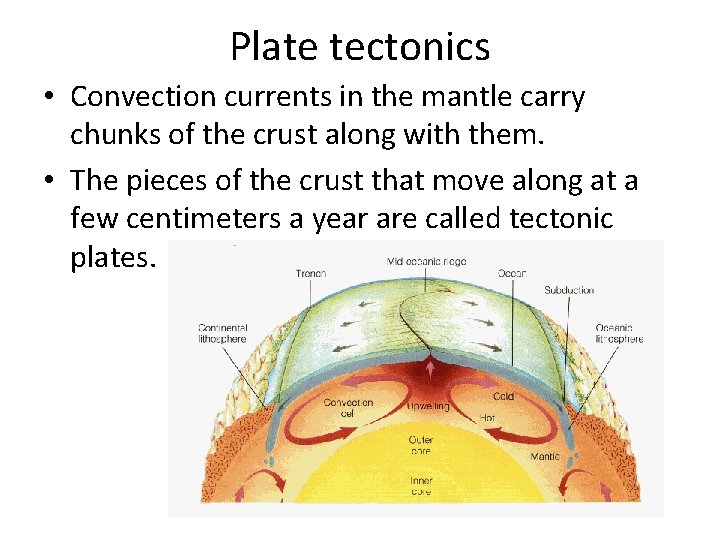
Plate tectonics • Convection currents in the mantle carry chunks of the crust along with them. • The pieces of the crust that move along at a few centimeters a year are called tectonic plates.
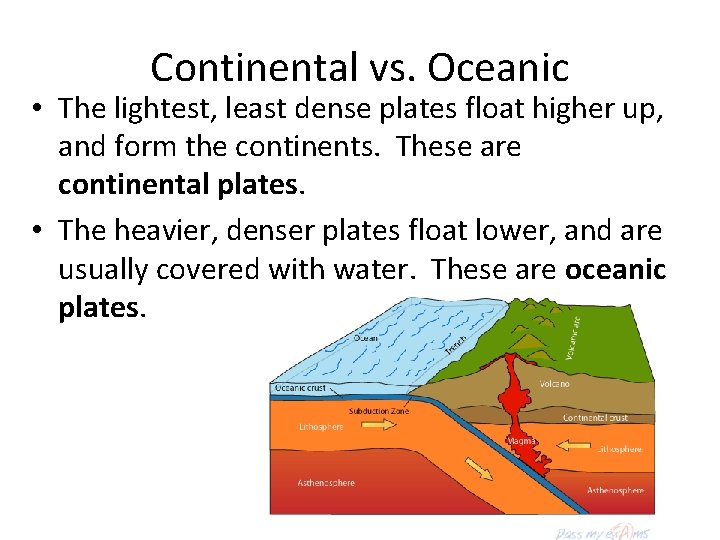
Continental vs. Oceanic • The lightest, least dense plates float higher up, and form the continents. These are continental plates. • The heavier, denser plates float lower, and are usually covered with water. These are oceanic plates.
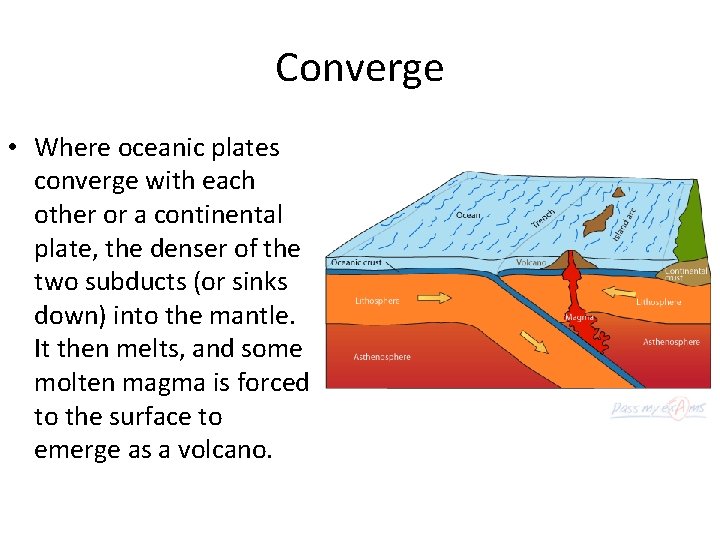
Converge • Where oceanic plates converge with each other or a continental plate, the denser of the two subducts (or sinks down) into the mantle. It then melts, and some molten magma is forced to the surface to emerge as a volcano.
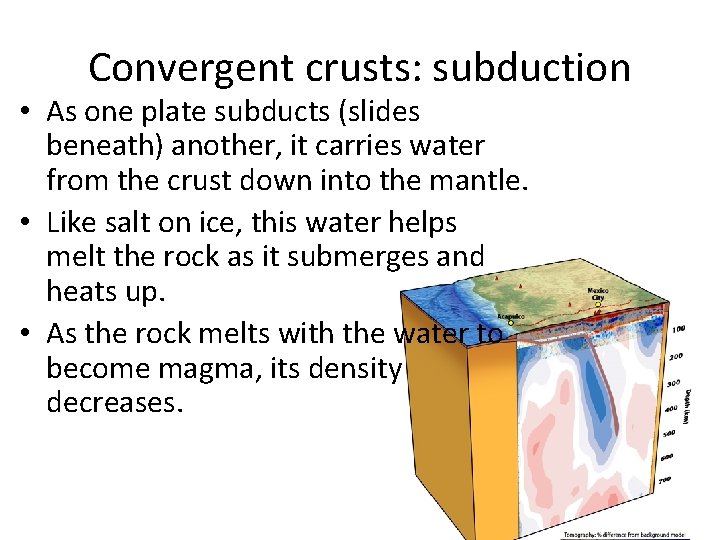
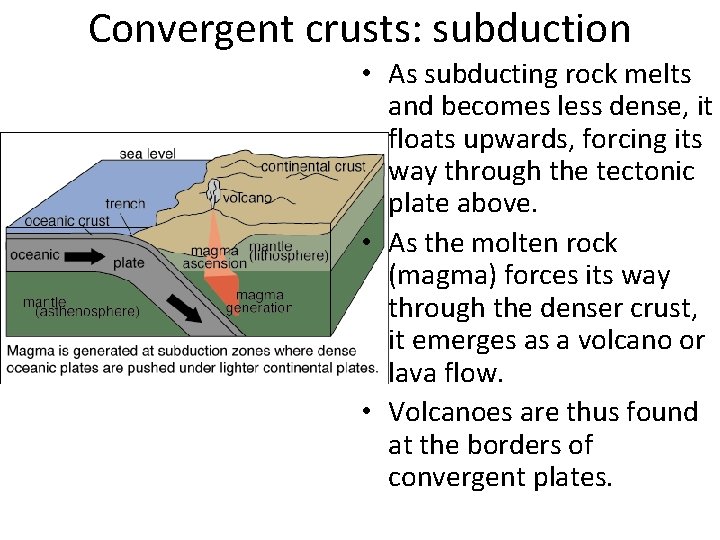
Convergent crusts: subduction • As one plate subducts (slides beneath) another, it carries water from the crust down into the mantle. • Like salt on ice, this water helps melt the rock as it submerges and heats up. • As the rock melts with the water to become magma, its density decreases.
Convergent crusts: subduction • As subducting rock melts and becomes less dense, it floats upwards, forcing its way through the tectonic plate above. • As the molten rock (magma) forces its way through the denser crust, it emerges as a volcano or lava flow. • Volcanoes are thus found at the borders of convergent plates.
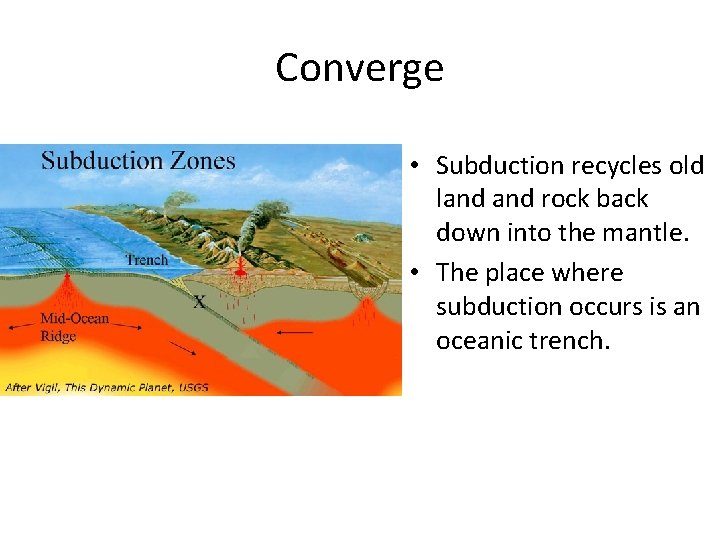
Converge • Subduction recycles old land rock back down into the mantle. • The place where subduction occurs is an oceanic trench.
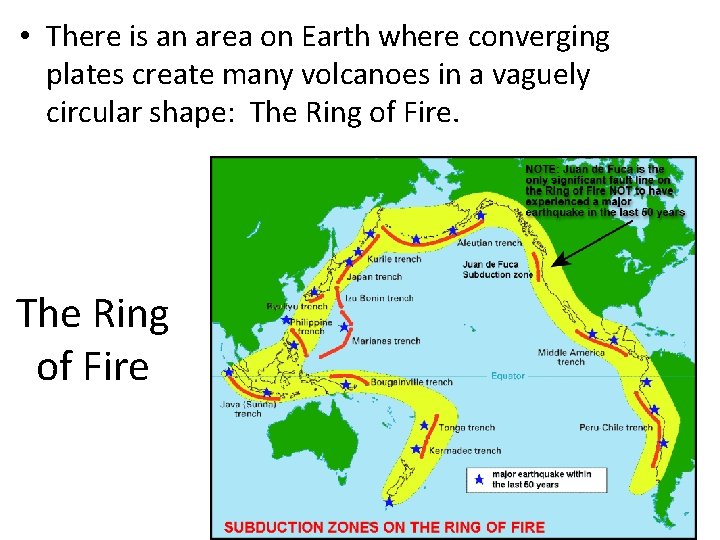
• There is an area on Earth where converging plates create many volcanoes in a vaguely circular shape: The Ring of Fire
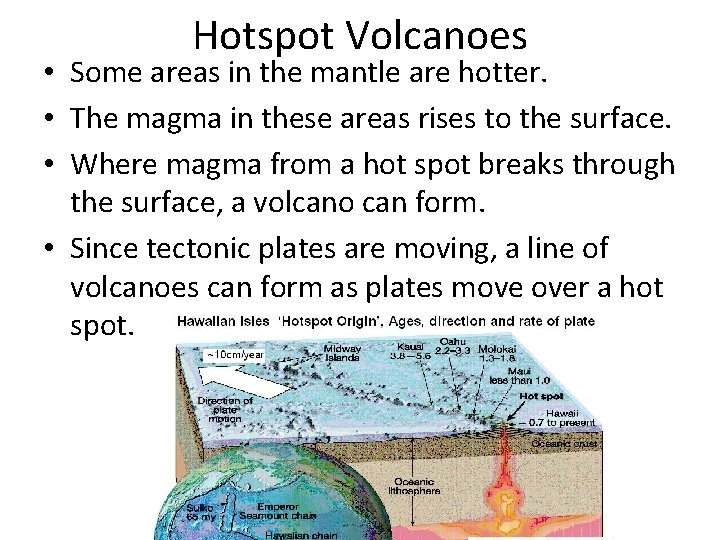
Hotspot Volcanoes • Some areas in the mantle are hotter. • The magma in these areas rises to the surface. • Where magma from a hot spot breaks through the surface, a volcano can form. • Since tectonic plates are moving, a line of volcanoes can form as plates move over a hot spot.
Converging crusts: continental • Unlike oceanic plates, continental plates are roughly equivalent in density. • Therefore, when continental plates converge, neither is dense enough to subduct beneath the other. • Instead, the plates buckle as they’re forced together, pushing each other higher into the atmosphere. • This is how mountains form, slowly, over millions of years as plates collide.
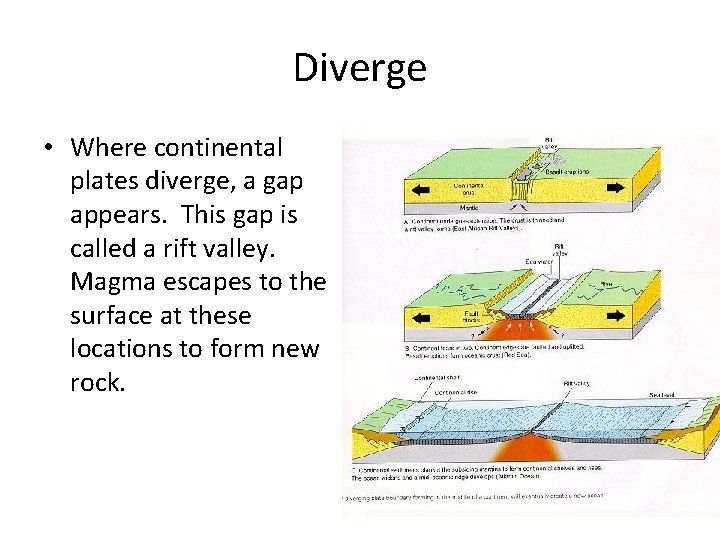
Diverge • Where continental plates diverge, a gap appears. This gap is called a rift valley. Magma escapes to the surface at these locations to form new rock.
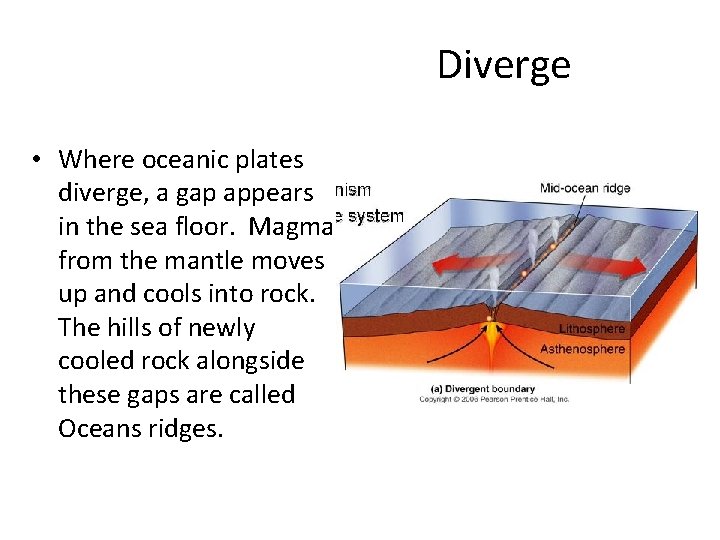
Diverge • Where oceanic plates diverge, a gap appears in the sea floor. Magma from the mantle moves up and cools into rock. The hills of newly cooled rock alongside these gaps are called Oceans ridges.
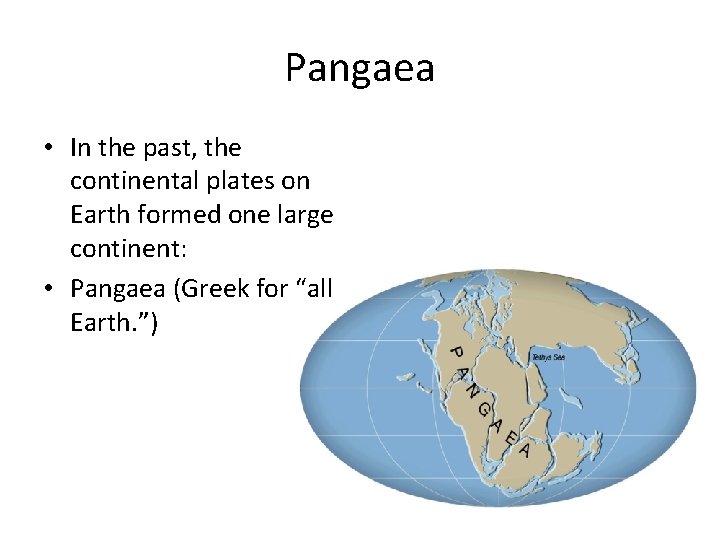
Pangaea • In the past, the continental plates on Earth formed one large continent: • Pangaea (Greek for “all Earth. ”)
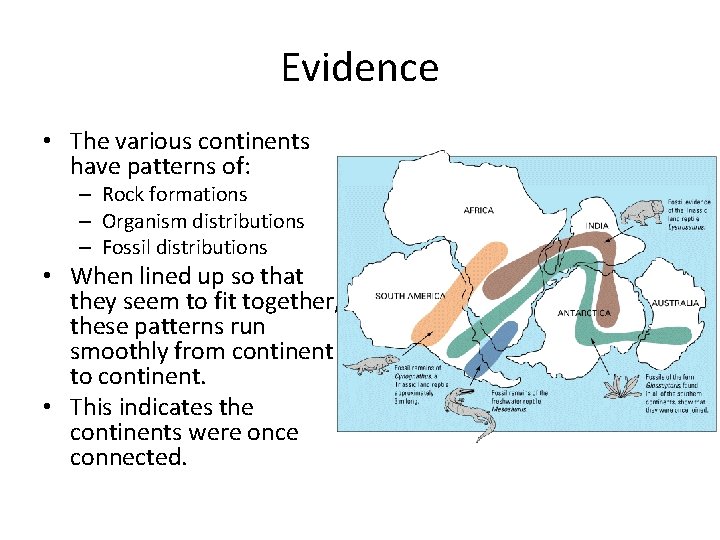
Evidence • The various continents have patterns of: – Rock formations – Organism distributions – Fossil distributions • When lined up so that they seem to fit together, these patterns run smoothly from continent to continent. • This indicates the continents were once connected.
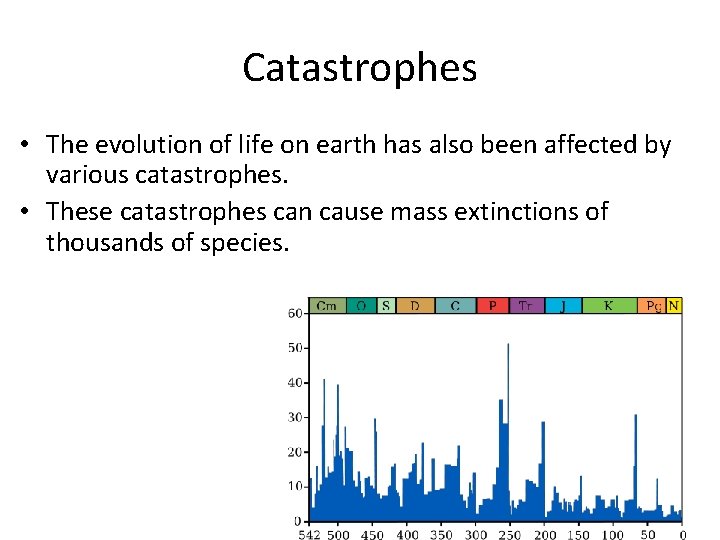
Catastrophes • The evolution of life on earth has also been affected by various catastrophes. • These catastrophes can cause mass extinctions of thousands of species.
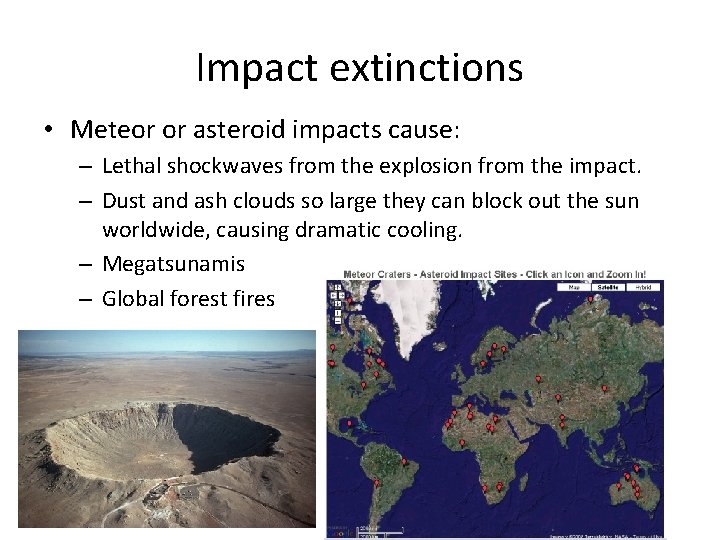
Impact extinctions • Meteor or asteroid impacts cause: – Lethal shockwaves from the explosion from the impact. – Dust and ash clouds so large they can block out the sun worldwide, causing dramatic cooling. – Megatsunamis – Global forest fires
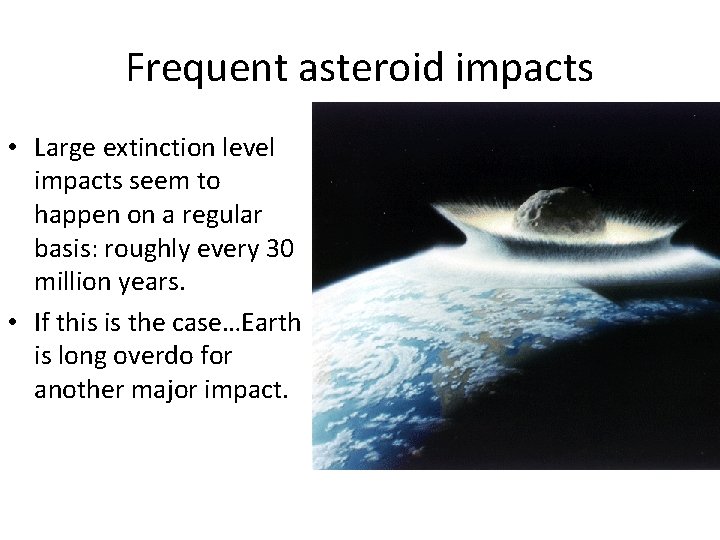
Frequent asteroid impacts • Large extinction level impacts seem to happen on a regular basis: roughly every 30 million years. • If this is the case…Earth is long overdo for another major impact.
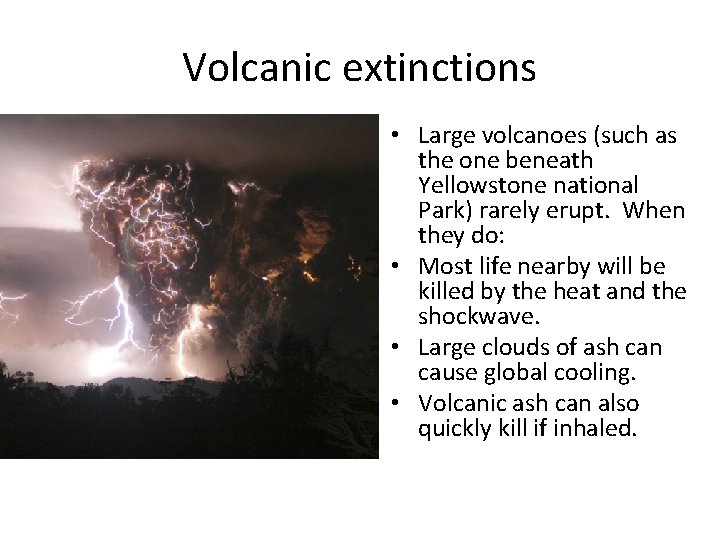
Volcanic extinctions • Large volcanoes (such as the one beneath Yellowstone national Park) rarely erupt. When they do: • Most life nearby will be killed by the heat and the shockwave. • Large clouds of ash can cause global cooling. • Volcanic ash can also quickly kill if inhaled.
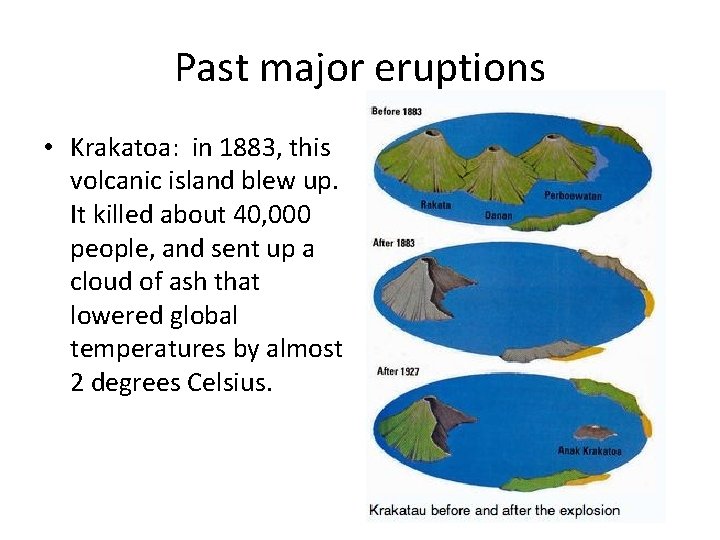
Past major eruptions • Krakatoa: in 1883, this volcanic island blew up. It killed about 40, 000 people, and sent up a cloud of ash that lowered global temperatures by almost 2 degrees Celsius.
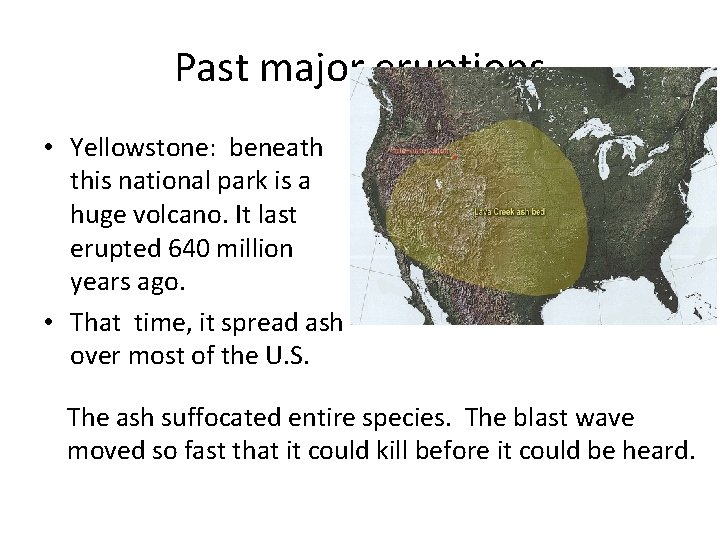
Past major eruptions • Yellowstone: beneath this national park is a huge volcano. It last erupted 640 million years ago. • That time, it spread ash over most of the U. S. The ash suffocated entire species. The blast wave moved so fast that it could kill before it could be heard.
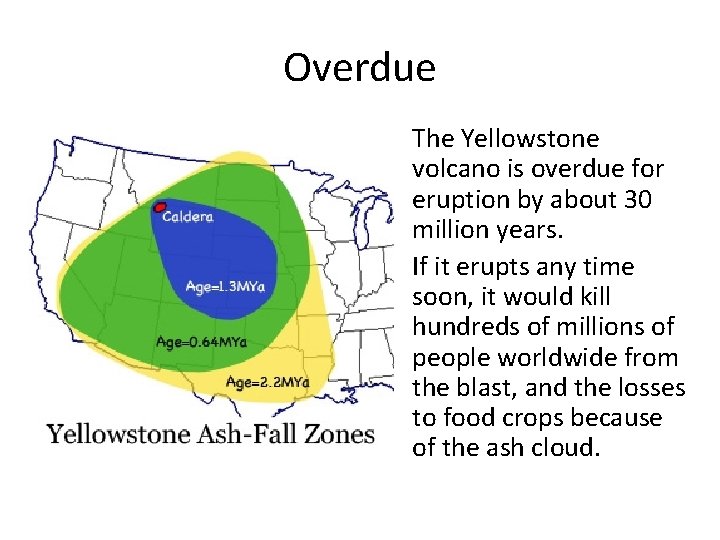
Overdue • The Yellowstone volcano is overdue for eruption by about 30 million years. • If it erupts any time soon, it would kill hundreds of millions of people worldwide from the blast, and the losses to food crops because of the ash cloud.