
Plate Tectonics Breakdown of the Earth n Composition
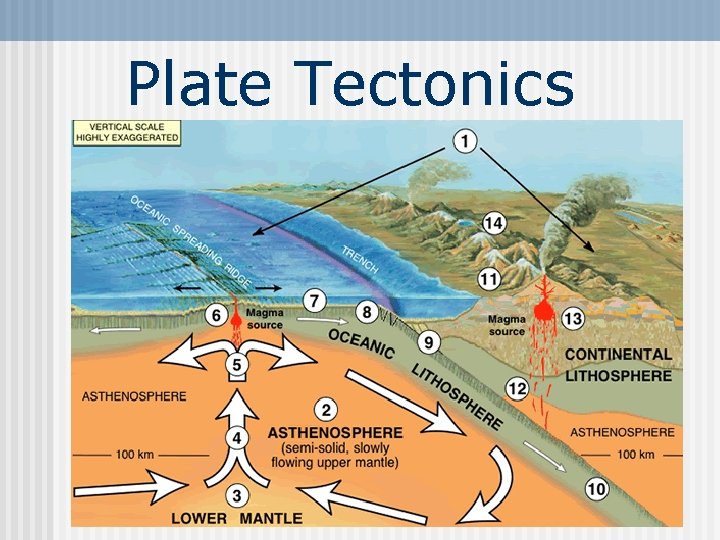
Plate Tectonics
Breakdown of the Earth n Composition n Crust Mantle Core n Structure n n n Lithosphere Asthenosphere Mesosphere Outer Core Inner Core
Crust n n n n Continental Crust n n n Outer most layer 5 – 100 km thick Less than 1% of Earth’s mass Minerals similar to granite, Less dense Average thickness 30 km Oceanic Crust n n Similar to basalt, dense 5 – 8 km thick
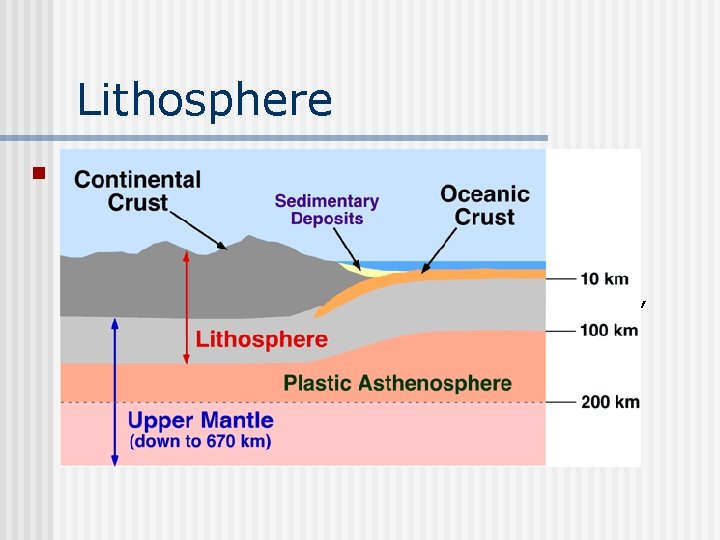
Lithosphere n Lithosphere: “rock sphere” n n Outermost rigid layer 15 – 300 km thick Made of crust and upper part of mantle Divided into pieces known as “tectonic plates”
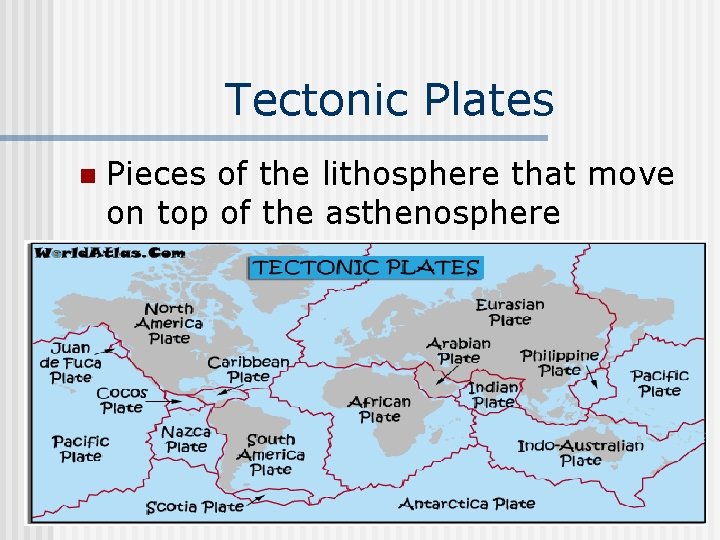
Tectonic Plates n Pieces of the lithosphere that move on top of the asthenosphere
Mantle n n n Found between crust and core 2, 900 km thick, 67% of Earth’s mass Contains iron and magnesium, similar to the mineral Olivine
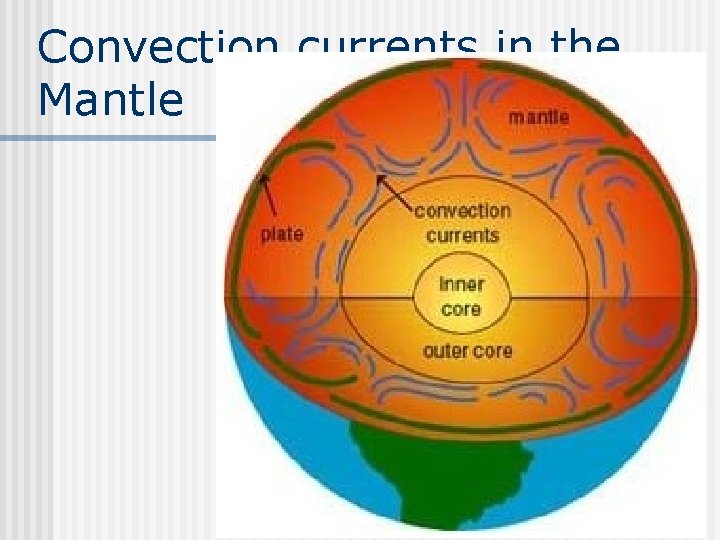
Convection currents in the Mantle
Mantle n Asthenosphere: “weak sphere” n n n Soft putty layer on which the lithosphere moves upon 250 km thick Mesosphere: “middle sphere” n n n Lower Mantle Strong interior structure 2, 550 km thick
Core n n n Outer core n n n Comprised of iron, nickel, sulfur and oxygen 3, 428 km thick Liquid layer 2, 200 km thick Inner core n n Solid layer 1, 228 km thick
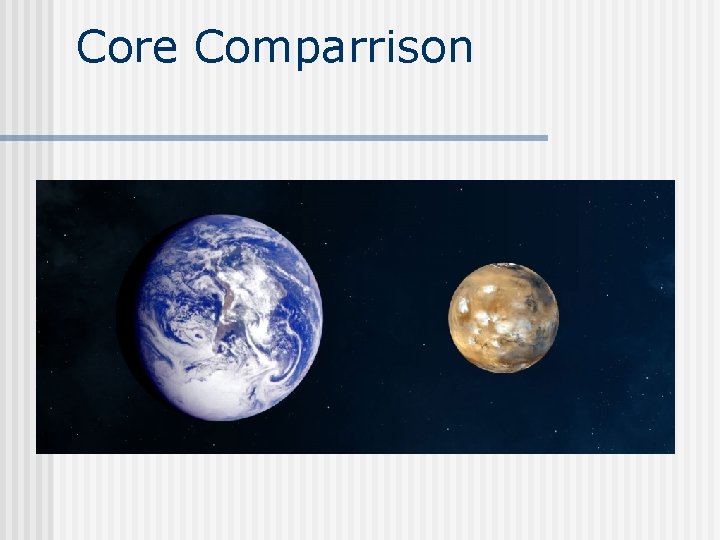
Core Comparrison
Liquid Rock of the Core n n n Pressure allows rock to be solid Outer core has less pressure and is able to spread out and become liquid. Class example
How do scientists know about the structure of the Earth’s interior? Measure different speed at which seismic waves travel. n Drilled to the center of the earth n Volcanoes allow us to see into the Earth n Viewed satellite images from space n
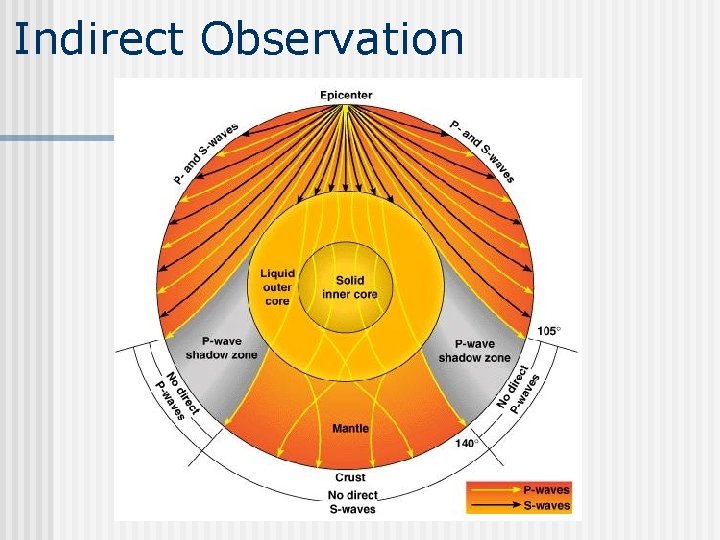
Indirect Observation
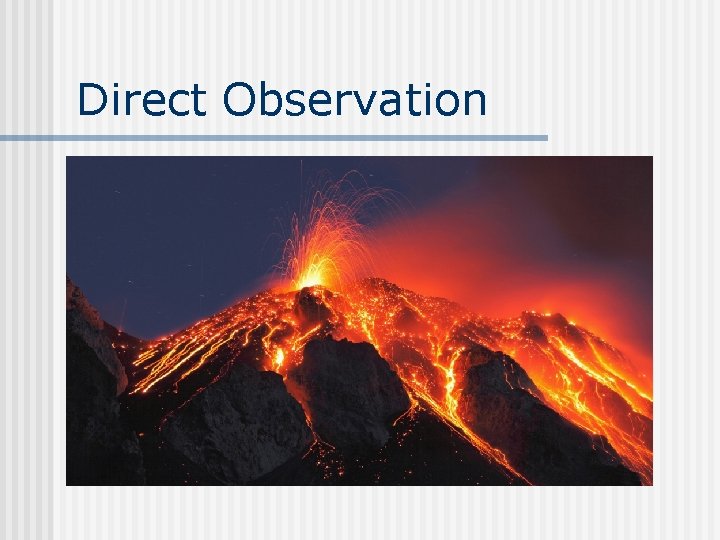
Direct Observation
- Slides: 14