
PLATE TECTONICS AND CONTINENTAL DRIFT GEOLOGY Geology is
- Slides: 19
PLATE TECTONICS AND CONTINENTAL DRIFT
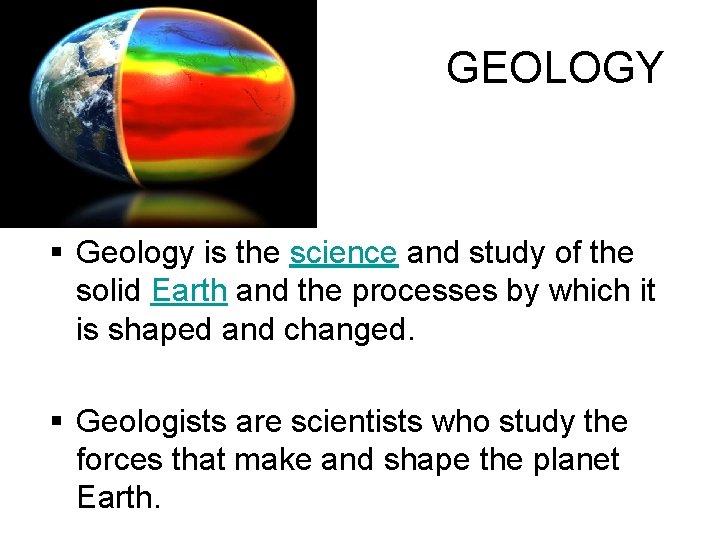
GEOLOGY § Geology is the science and study of the solid Earth and the processes by which it is shaped and changed. § Geologists are scientists who study the forces that make and shape the planet Earth.
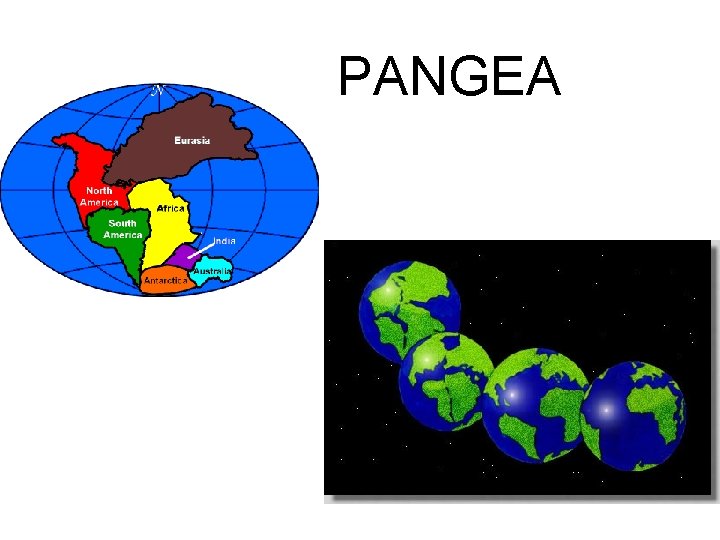
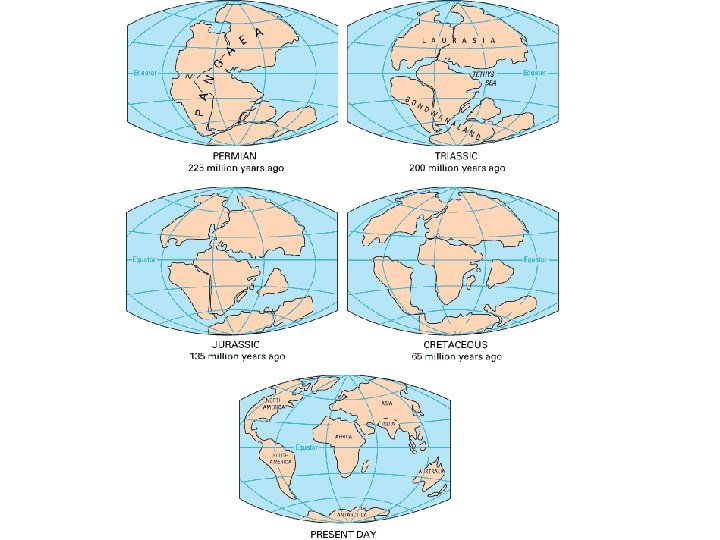
Theory of continental drift § Alfred Wegener first proposed theory of continental drift in 1912. § Continental drift is Wegener’s theory that all continents had once been joined together in a single landmass and have drifted apart since. § Wegener named this supercontinent Pangaea. § Wegener’s theory was rejected by scientists because he could not explain what force pushes or pulls continents.
PANGEA
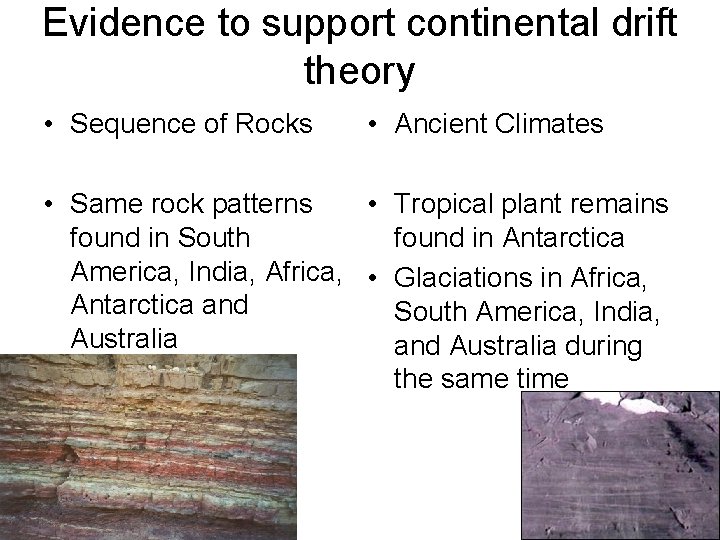
Evidence to support continental drift theory • Sequence of Rocks • Ancient Climates • Same rock patterns • Tropical plant remains found in South found in Antarctica America, India, Africa, • Glaciations in Africa, Antarctica and South America, India, Australia and Australia during the same time
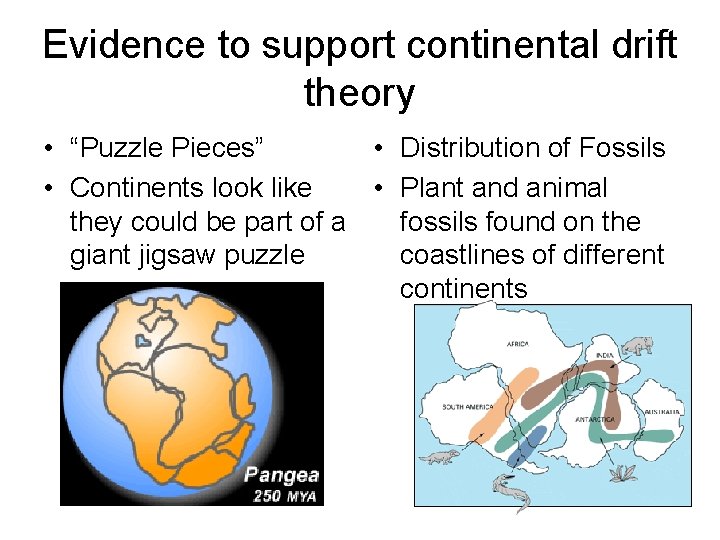
Evidence to support continental drift theory • “Puzzle Pieces” • Distribution of Fossils • Continents look like • Plant and animal they could be part of a fossils found on the giant jigsaw puzzle coastlines of different continents
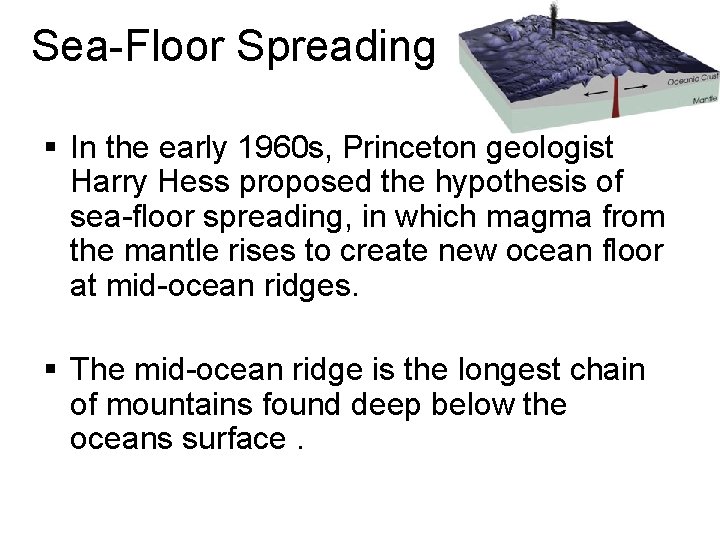
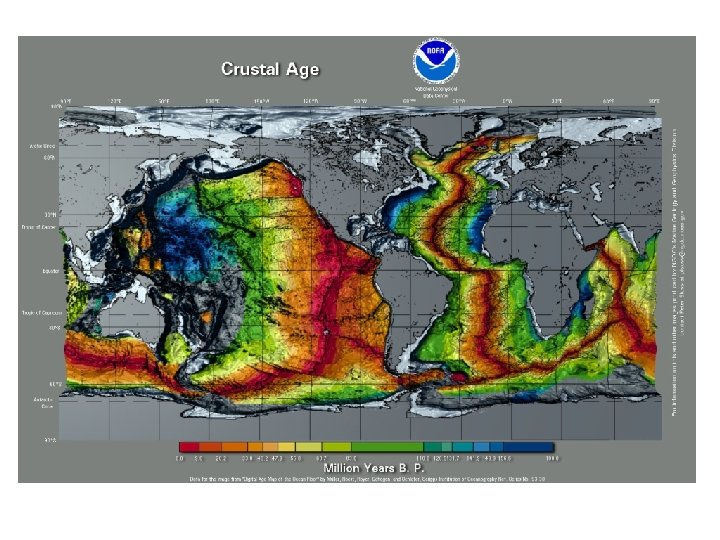
Sea-Floor Spreading § In the early 1960 s, Princeton geologist Harry Hess proposed the hypothesis of sea-floor spreading, in which magma from the mantle rises to create new ocean floor at mid-ocean ridges. § The mid-ocean ridge is the longest chain of mountains found deep below the oceans surface.
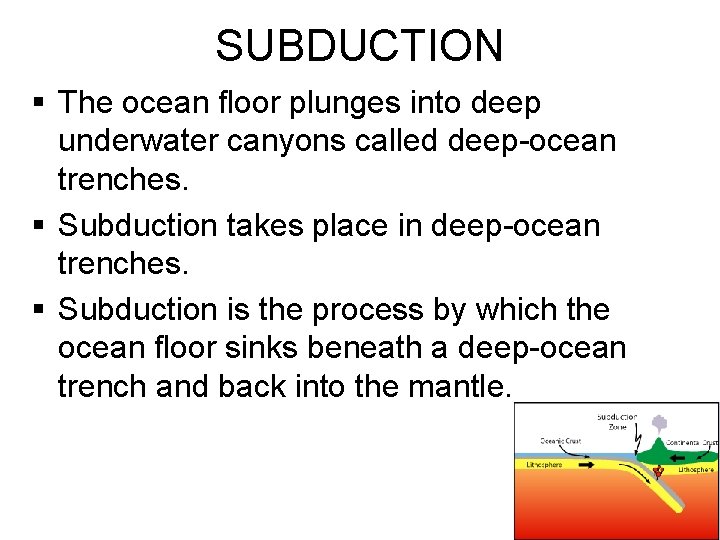
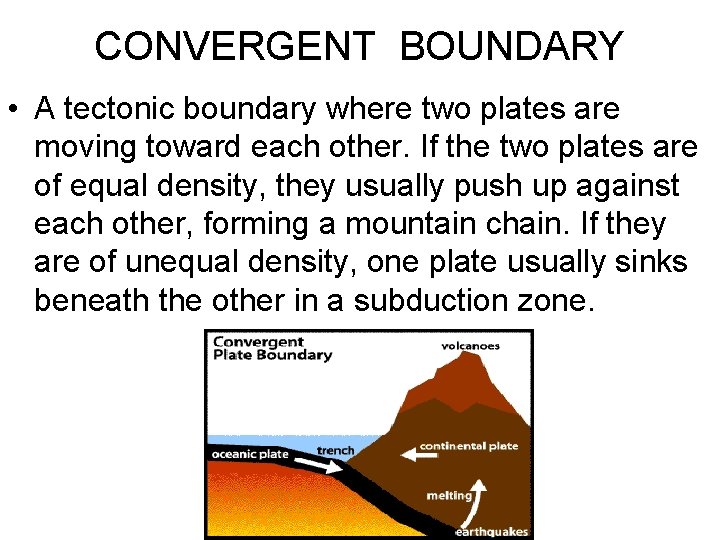
SUBDUCTION § The ocean floor plunges into deep underwater canyons called deep-ocean trenches. § Subduction takes place in deep-ocean trenches. § Subduction is the process by which the ocean floor sinks beneath a deep-ocean trench and back into the mantle.
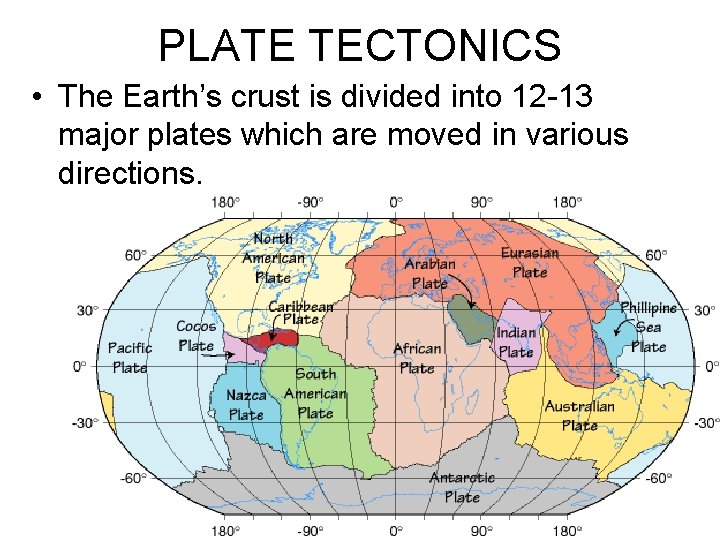
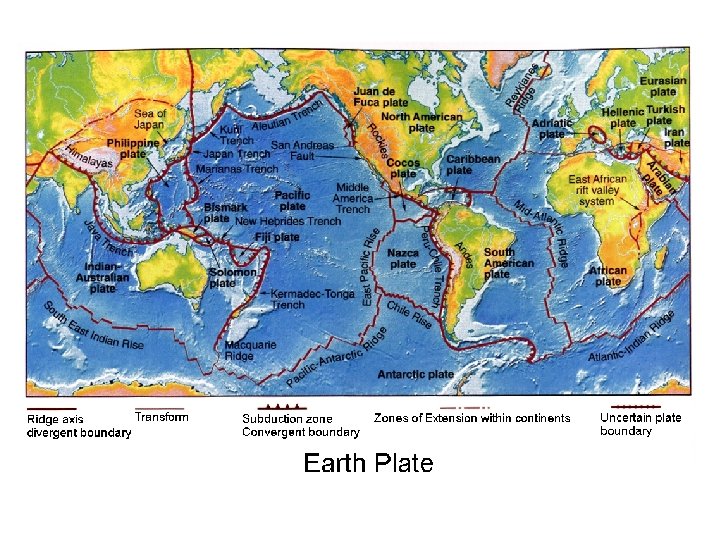
PLATE TECTONICS • The Earth’s crust is divided into 12 -13 major plates which are moved in various directions.
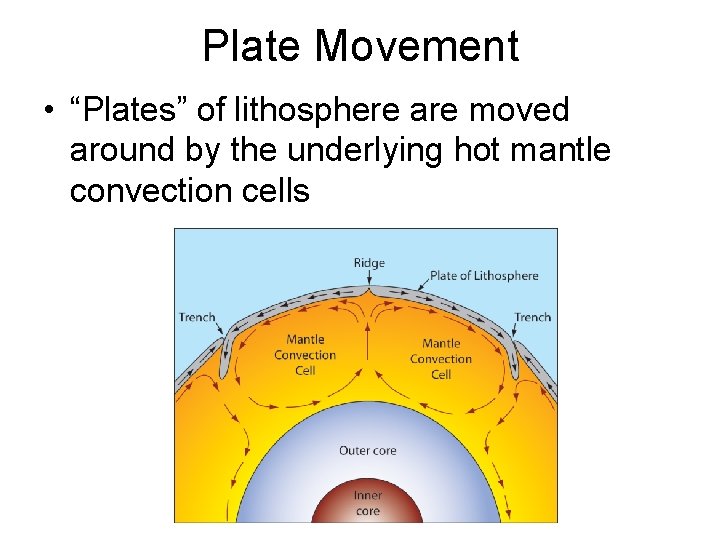
Plate Movement • “Plates” of lithosphere are moved around by the underlying hot mantle convection cells
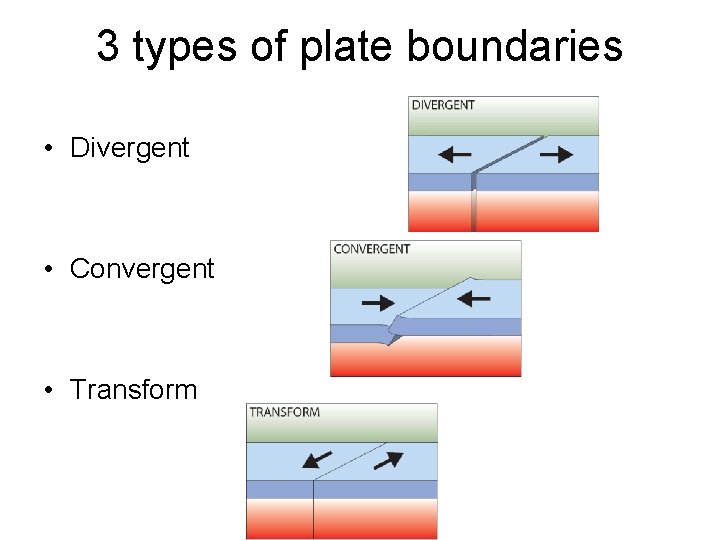
3 types of plate boundaries • Divergent • Convergent • Transform
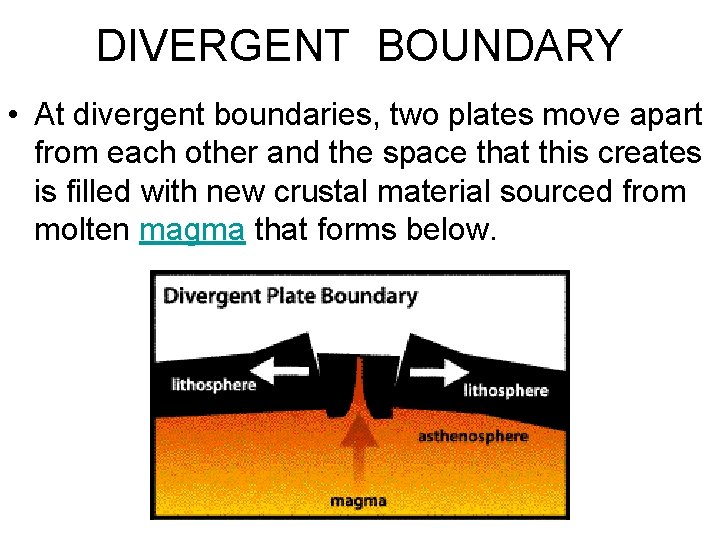
DIVERGENT BOUNDARY • At divergent boundaries, two plates move apart from each other and the space that this creates is filled with new crustal material sourced from molten magma that forms below.
CONVERGENT BOUNDARY • A tectonic boundary where two plates are moving toward each other. If the two plates are of equal density, they usually push up against each other, forming a mountain chain. If they are of unequal density, one plate usually sinks beneath the other in a subduction zone.
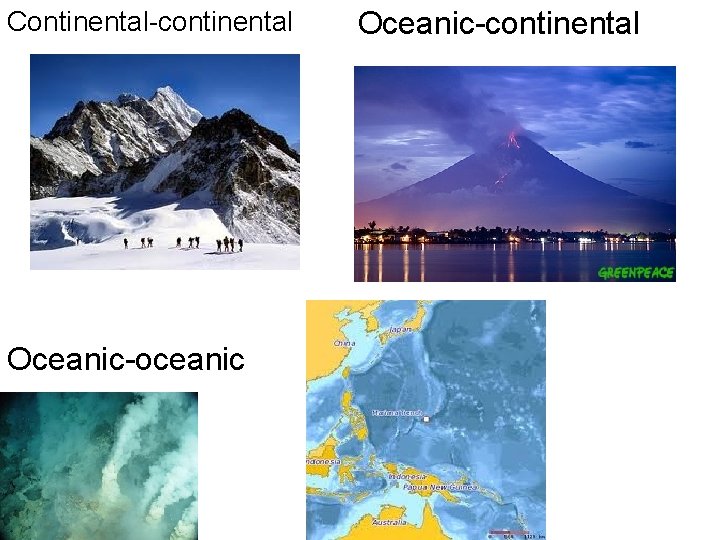
There are 3 types of convergent plate boundaries • Continent – Continent: When two continents meet head-on, neither is subducted because the continental rocks are relatively light. (forms mountains) • Ocean – Continent: When an oceanic plate pushes into and subducts under a continental plate ( creates volcanoes) • Ocean – Ocean: When two oceanic plates converge one is usually subducted under the other. (forms trenches)
Continental-continental Oceanic-oceanic Oceanic-continental
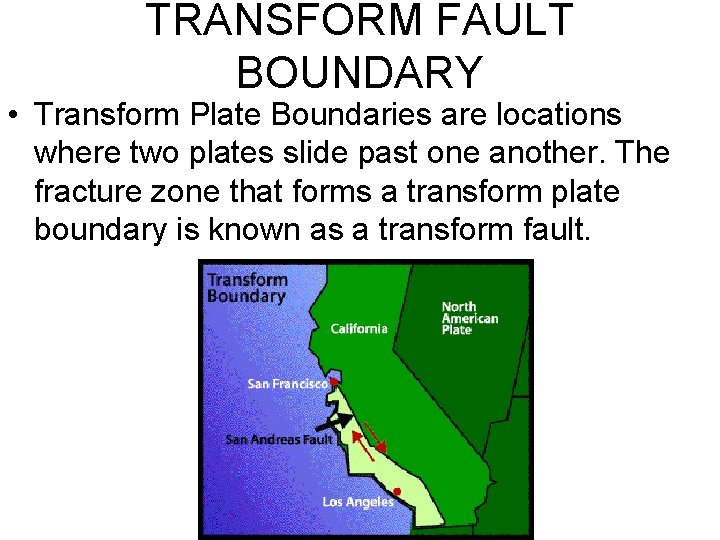
TRANSFORM FAULT BOUNDARY • Transform Plate Boundaries are locations where two plates slide past one another. The fracture zone that forms a transform plate boundary is known as a transform fault.