
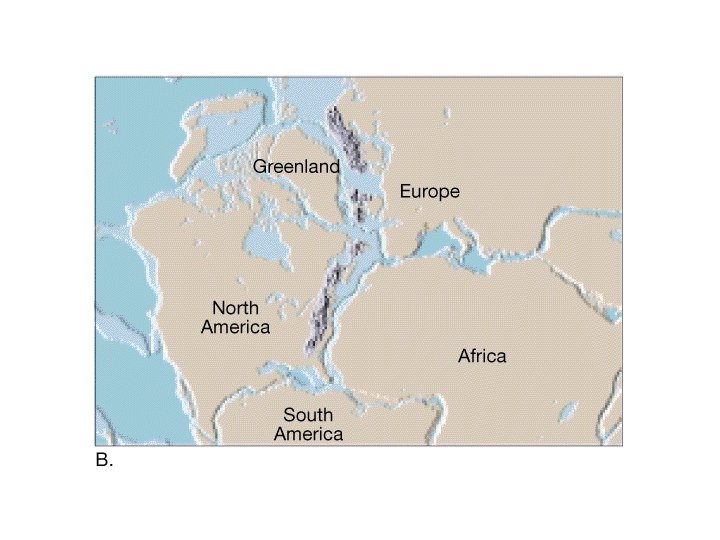
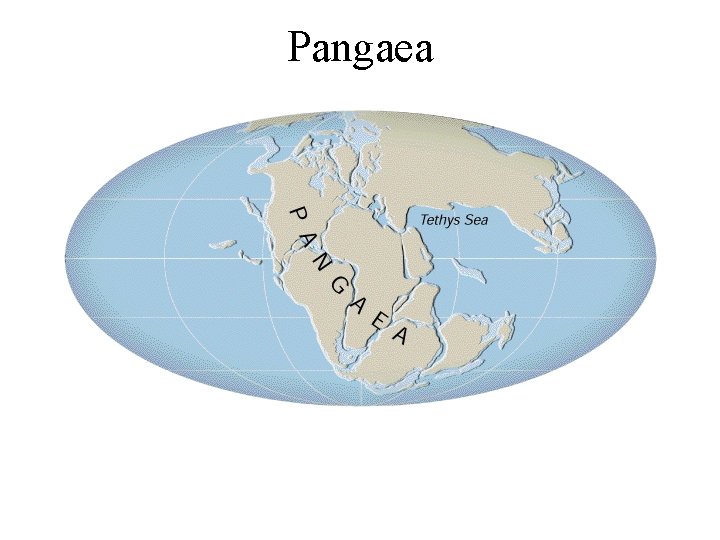
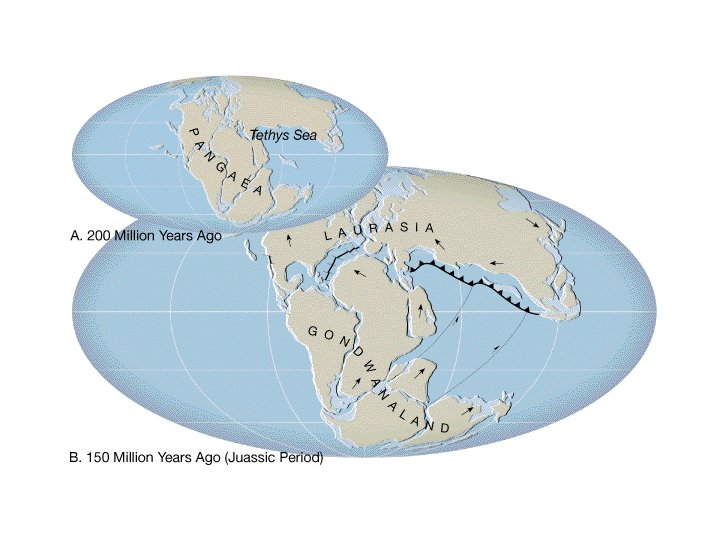
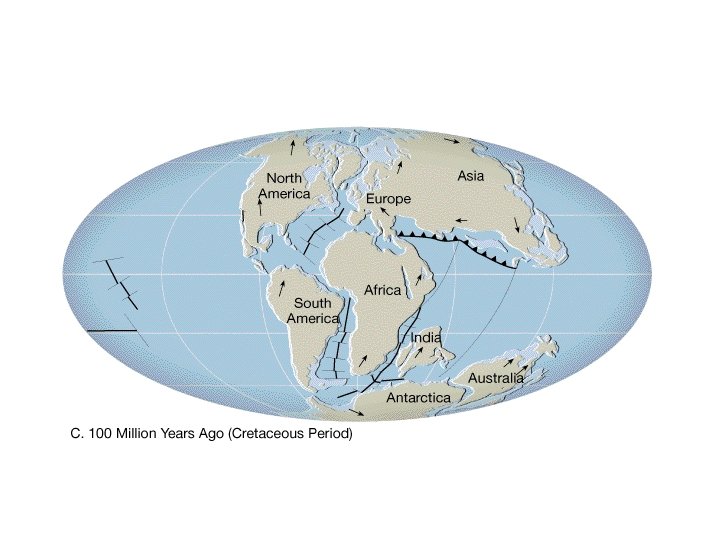
Plate Tectonics Alfred Wegener 1915 Continental Drift Pangaea






- Slides: 63
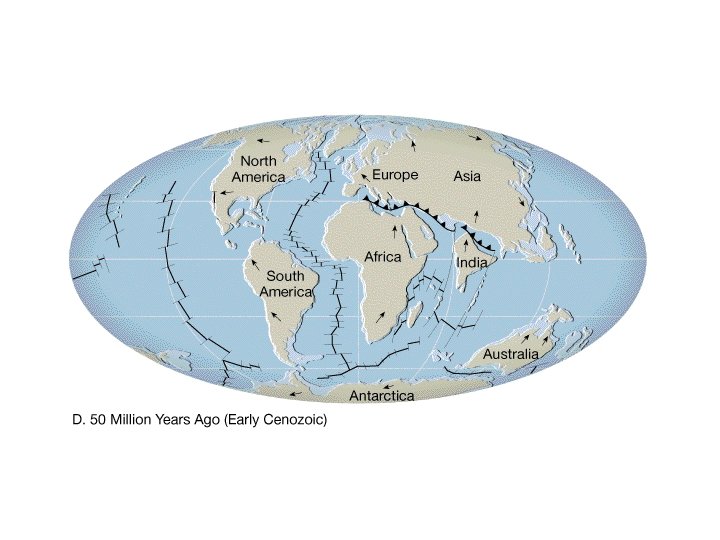
Plate Tectonics Alfred Wegener 1915 Continental Drift
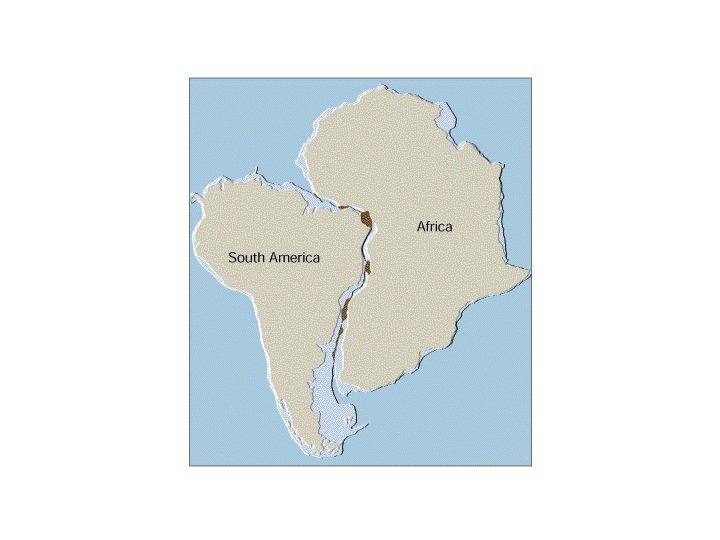
Pangaea
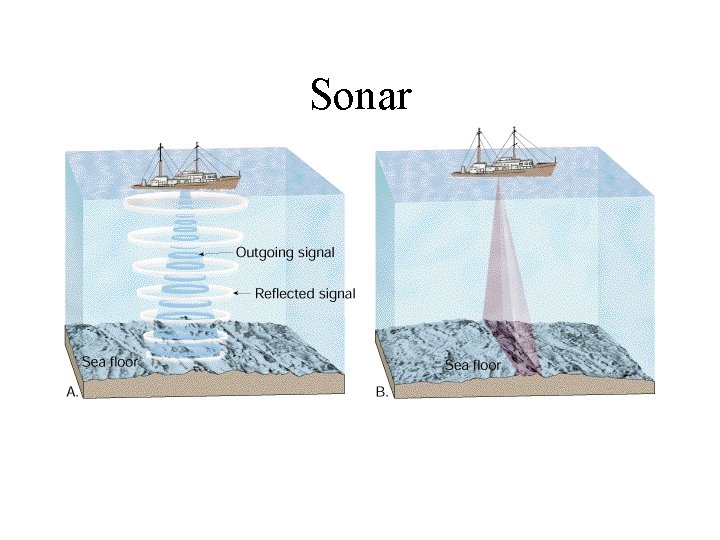
Sonar
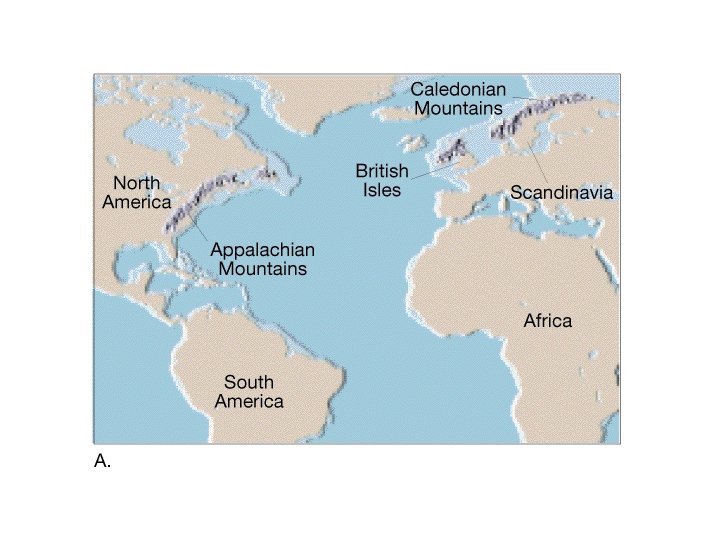
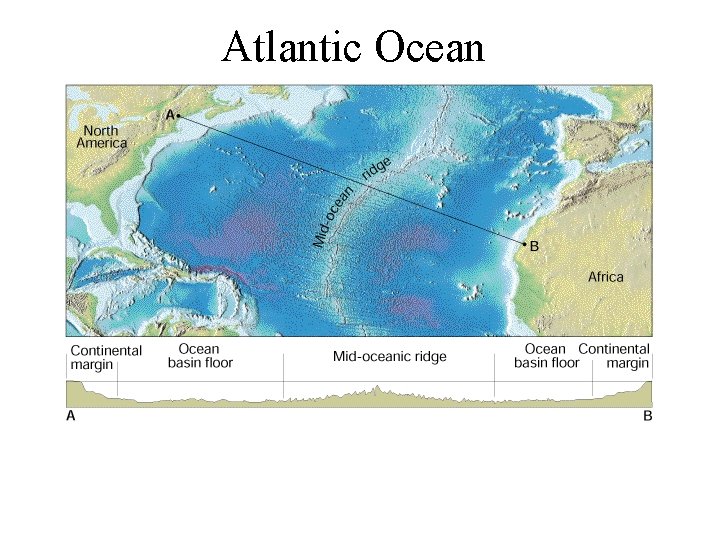
Atlantic Ocean
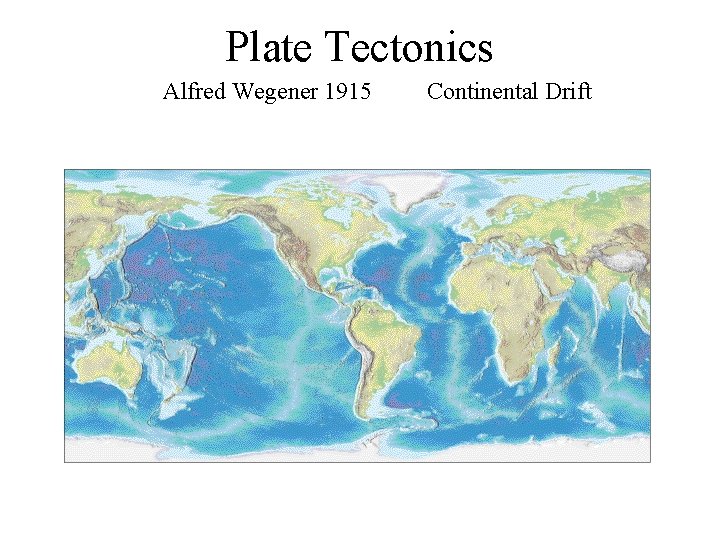
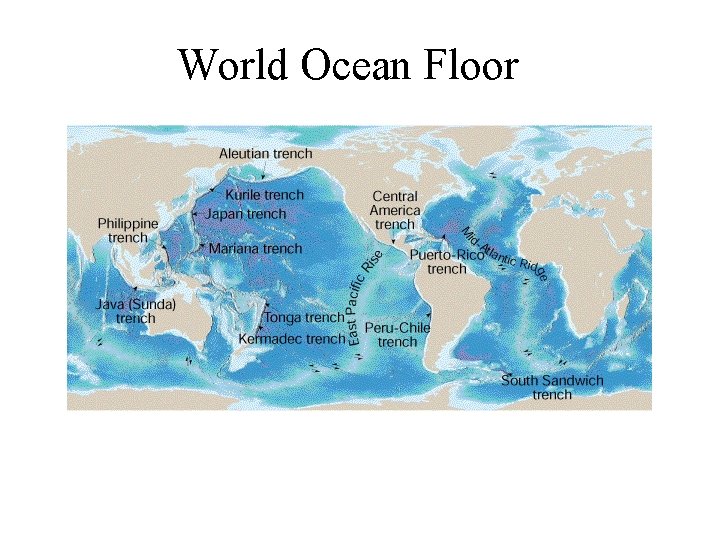
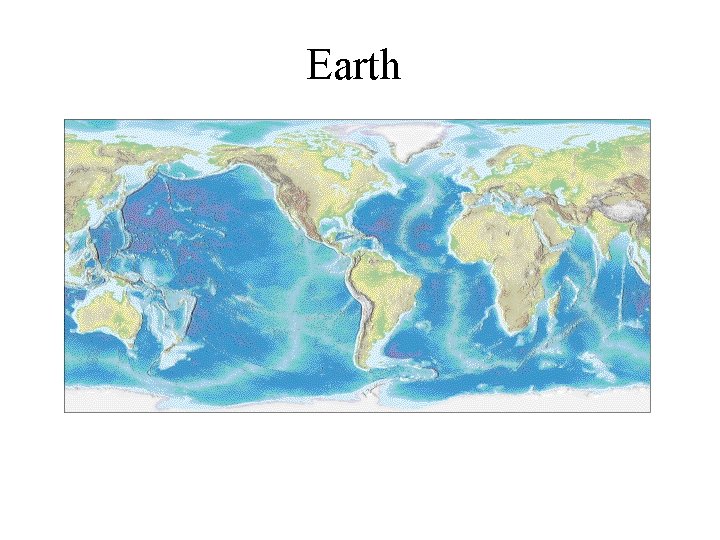
World Ocean Floor
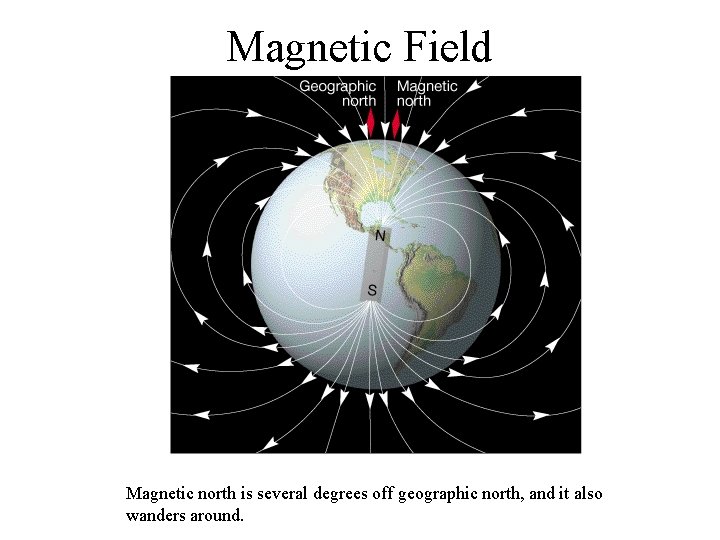
Magnetic Field Magnetic north is several degrees off geographic north, and it also wanders around.
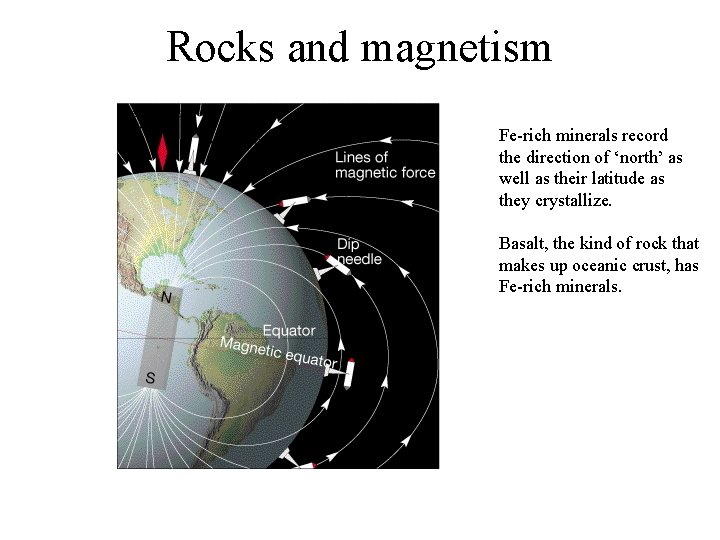
Rocks and magnetism Fe-rich minerals record the direction of ‘north’ as well as their latitude as they crystallize. Basalt, the kind of rock that makes up oceanic crust, has Fe-rich minerals.
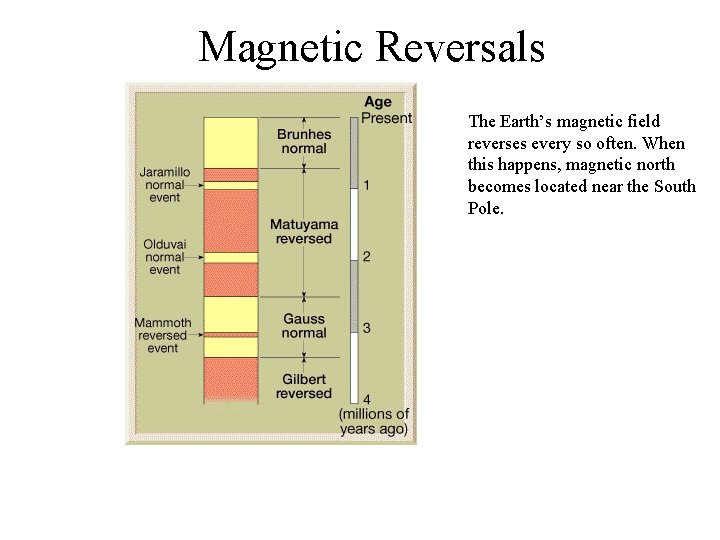
Magnetic Reversals The Earth’s magnetic field reverses every so often. When this happens, magnetic north becomes located near the South Pole.
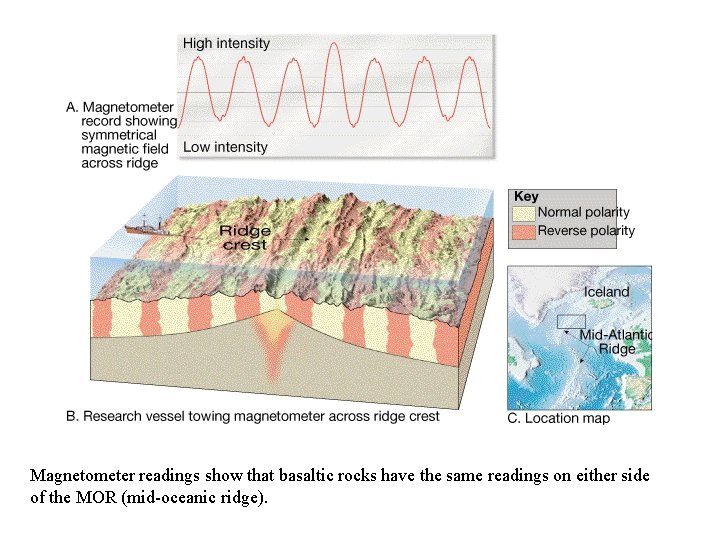
Magnetometer readings show that basaltic rocks have the same readings on either side of the MOR (mid-oceanic ridge).
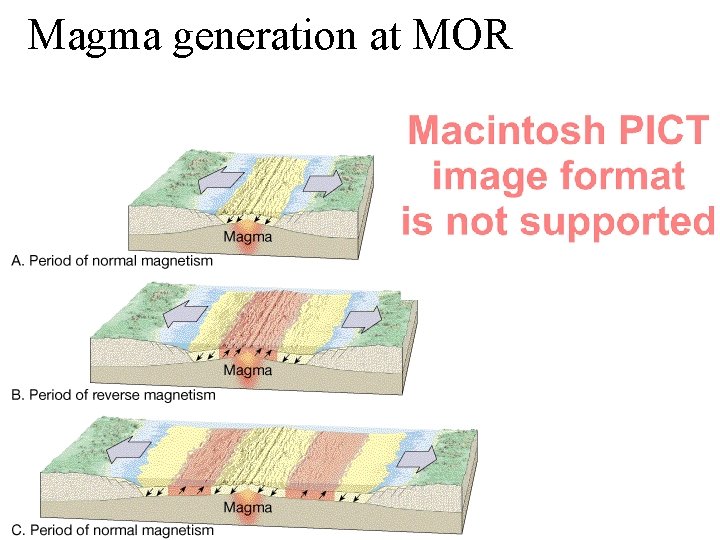
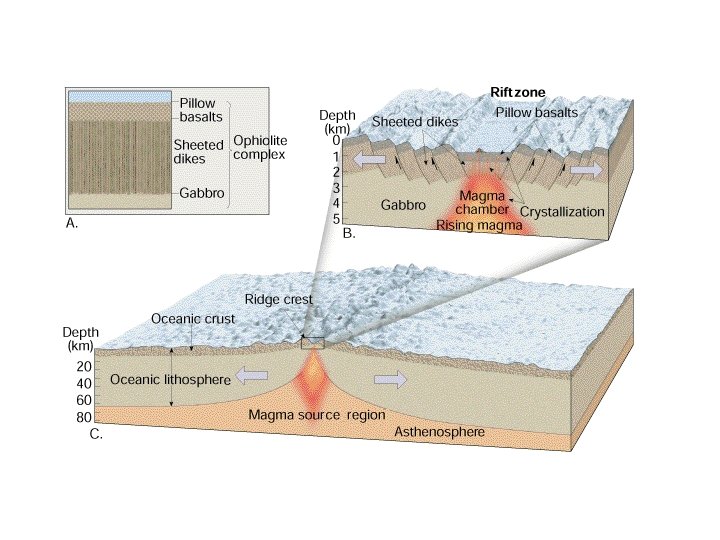
Magma generation at MOR
Basalts are youngest along the MOR, where they are generated, then get progressively older away from, and on either side of, the MOR.
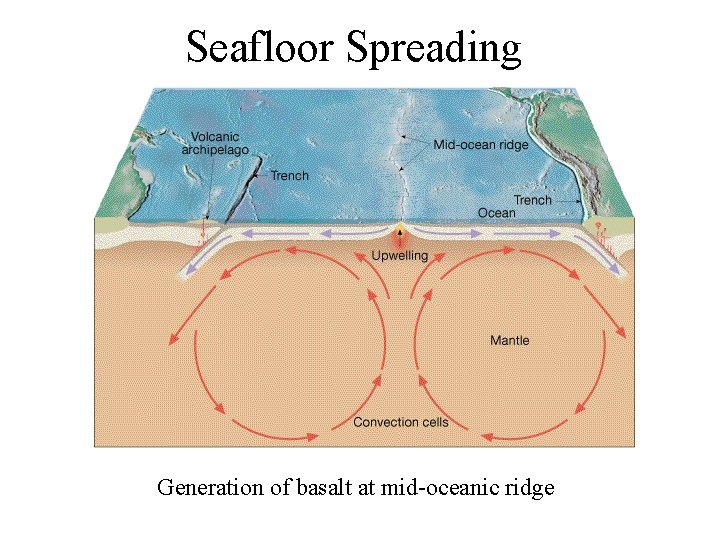
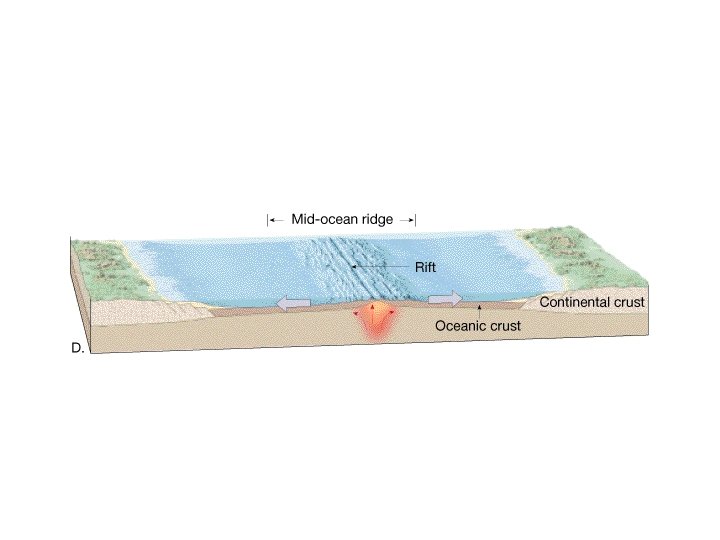
Seafloor Spreading Generation of basalt at mid-oceanic ridge
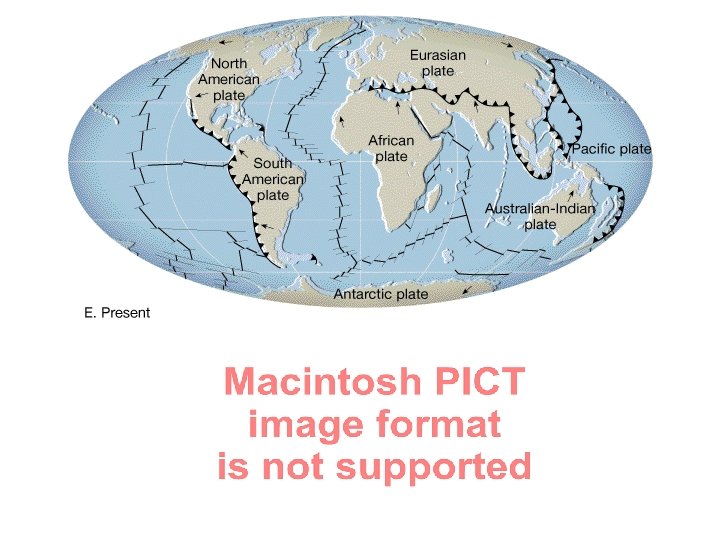
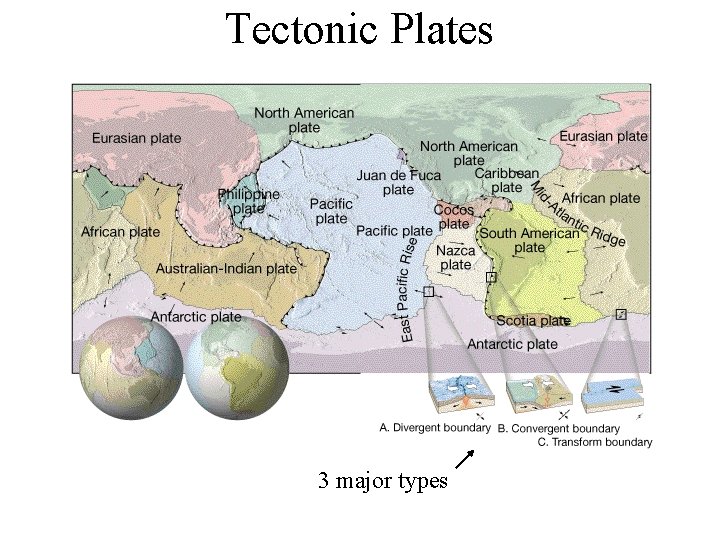
Tectonic Plates 3 major types
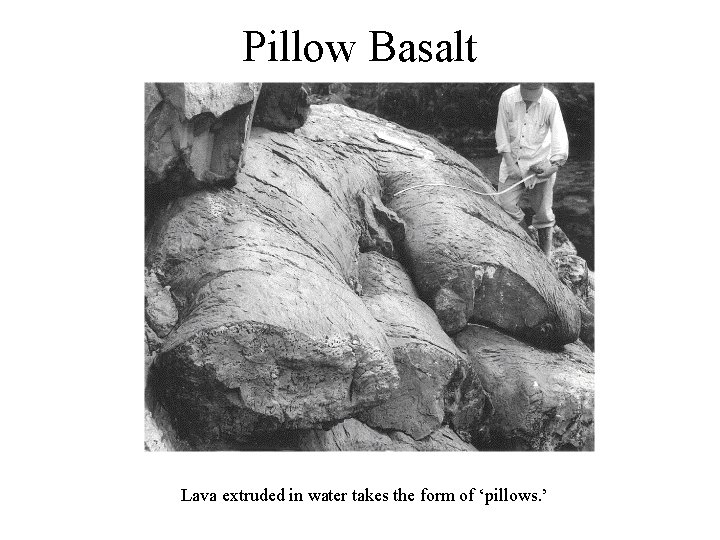
Pillow Basalt Lava extruded in water takes the form of ‘pillows. ’
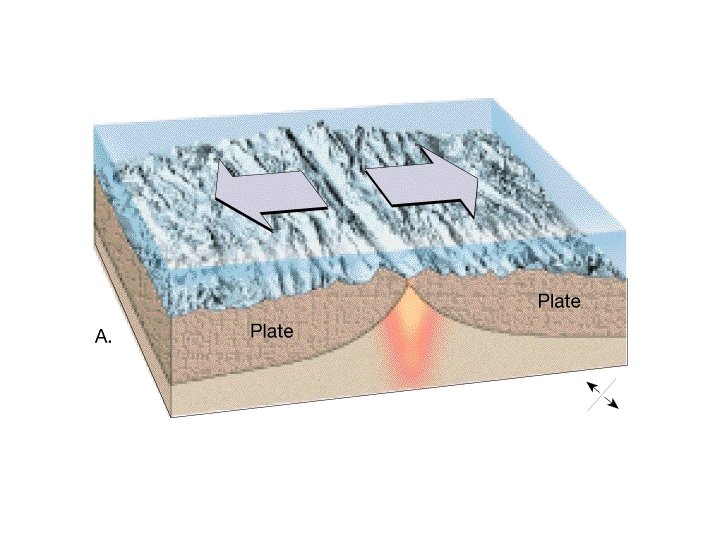
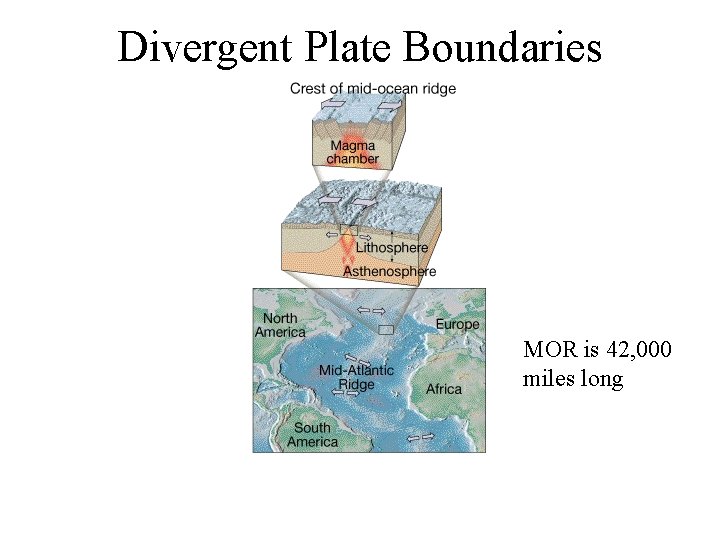
Divergent Plate Boundaries MOR is 42, 000 miles long
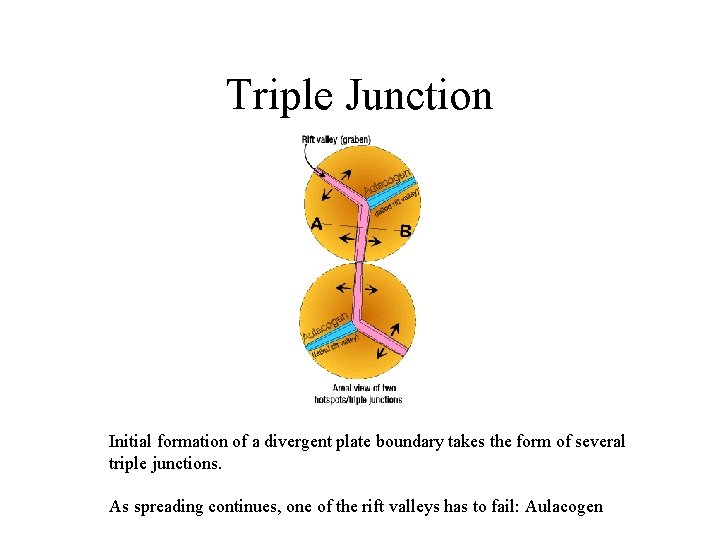
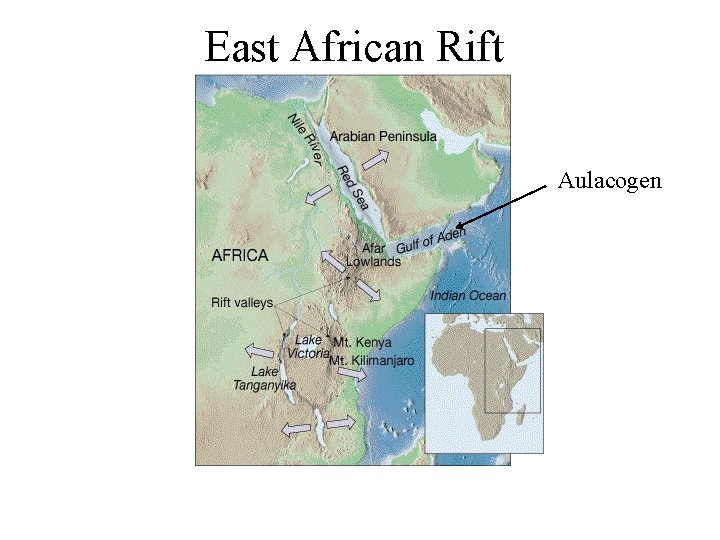
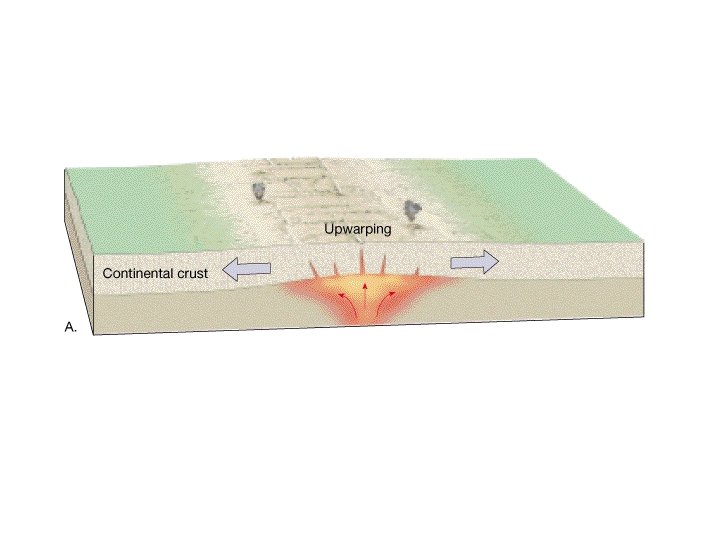
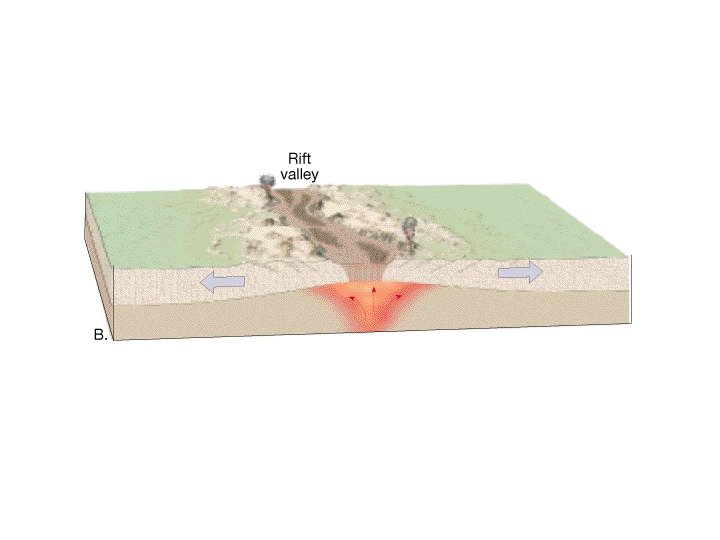
Triple Junction Initial formation of a divergent plate boundary takes the form of several triple junctions. As spreading continues, one of the rift valleys has to fail: Aulacogen
East African Rift Aulacogen
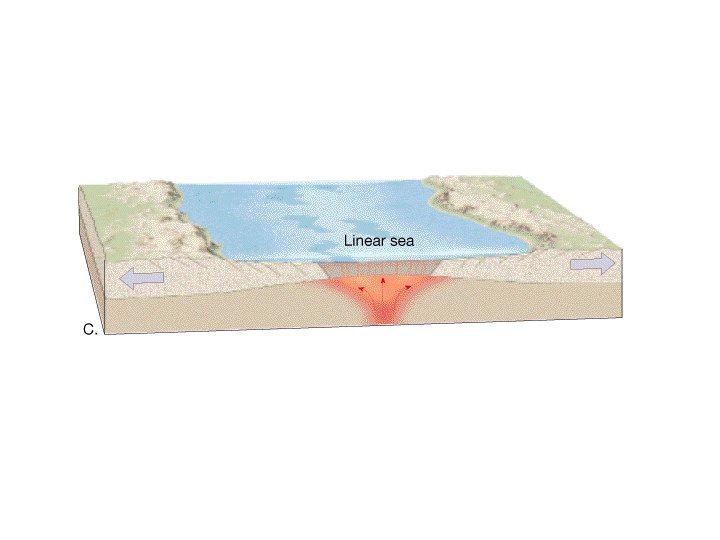
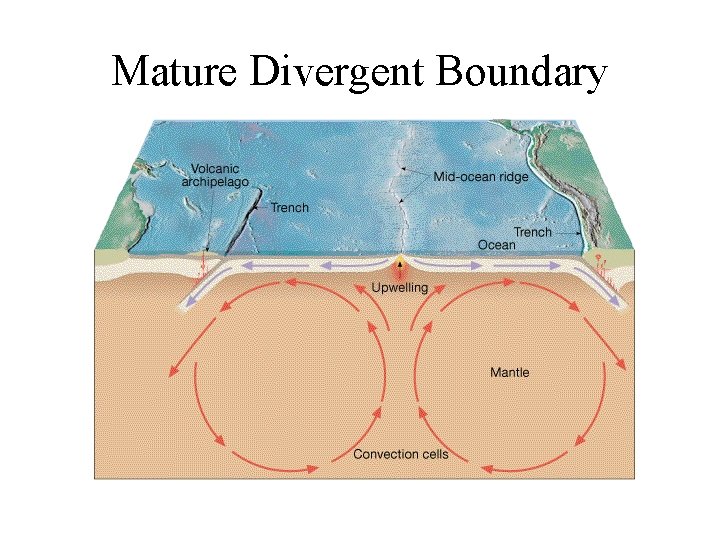
Mature Divergent Boundary
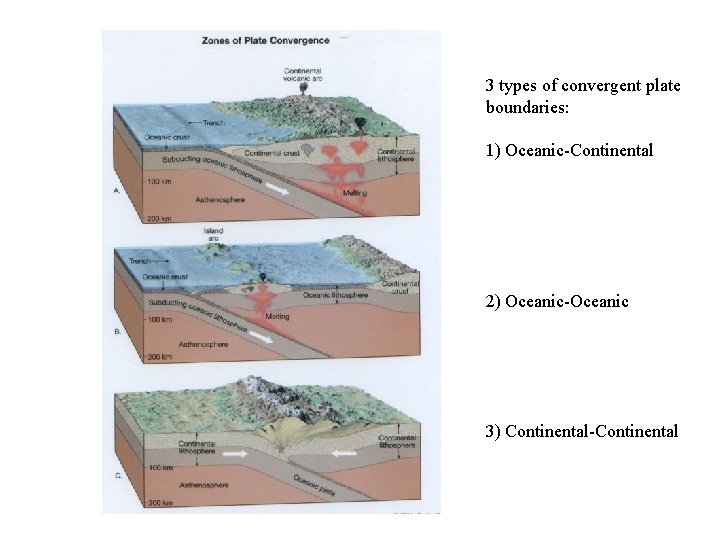
3 types of convergent plate boundaries: 1) Oceanic-Continental 2) Oceanic-Oceanic 3) Continental-Continental
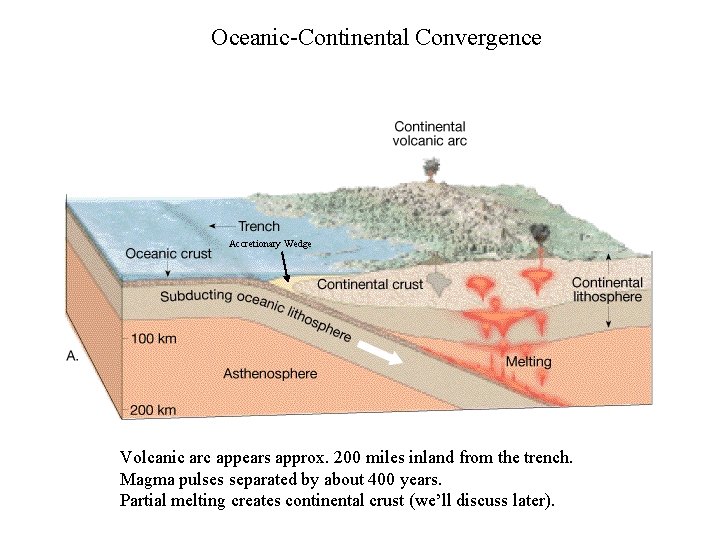
Oceanic-Continental Convergence Accretionary Wedge Volcanic arc appears approx. 200 miles inland from the trench. Magma pulses separated by about 400 years. Partial melting creates continental crust (we’ll discuss later).
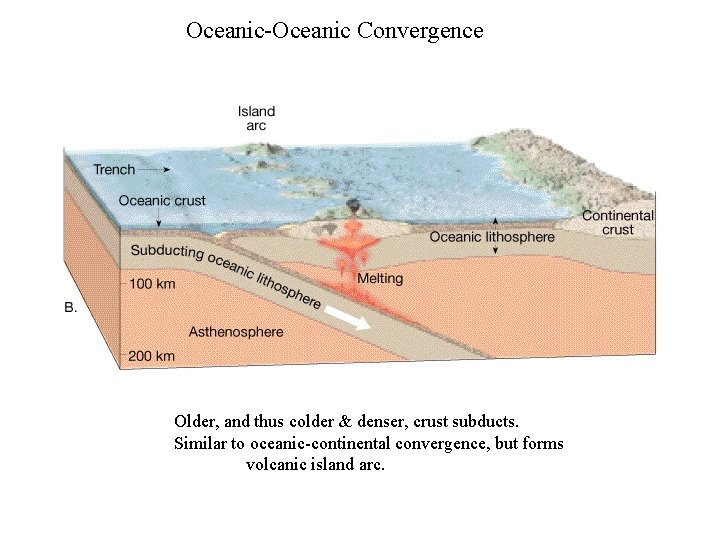
Oceanic-Oceanic Convergence Older, and thus colder & denser, crust subducts. Similar to oceanic-continental convergence, but forms volcanic island arc.
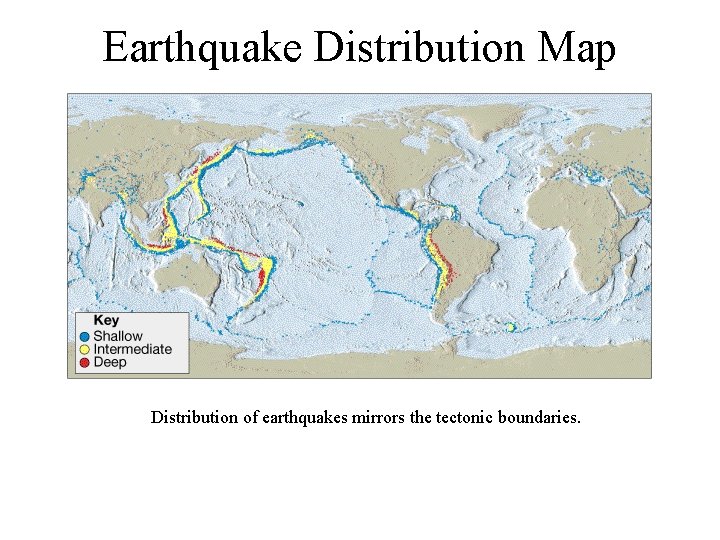
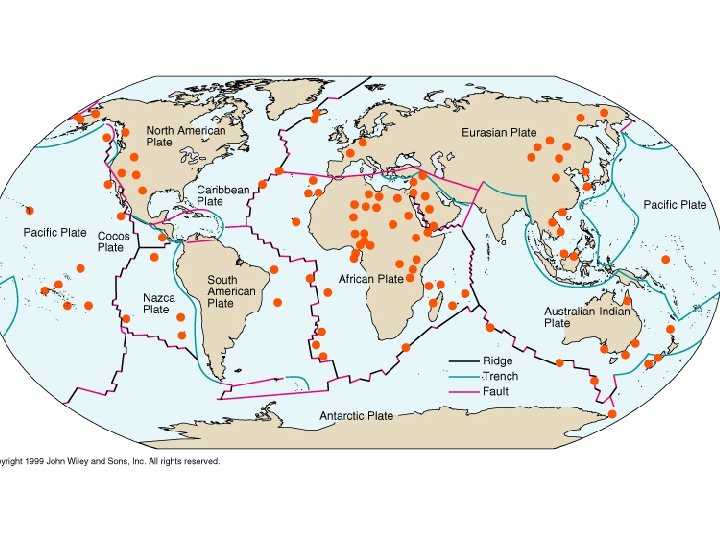
Earthquake Distribution Map Distribution of earthquakes mirrors the tectonic boundaries.
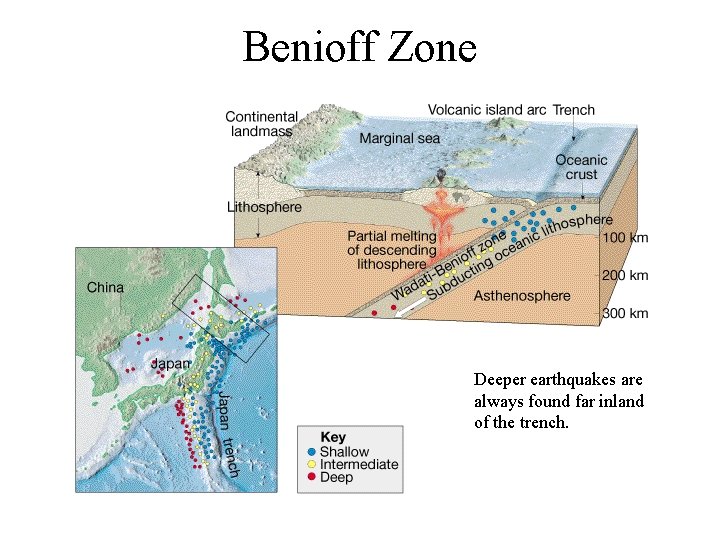
Benioff Zone Deeper earthquakes are always found far inland of the trench.
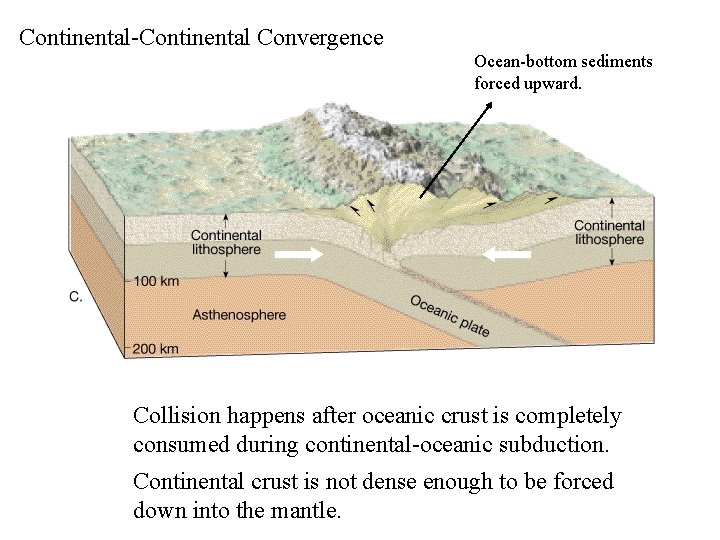
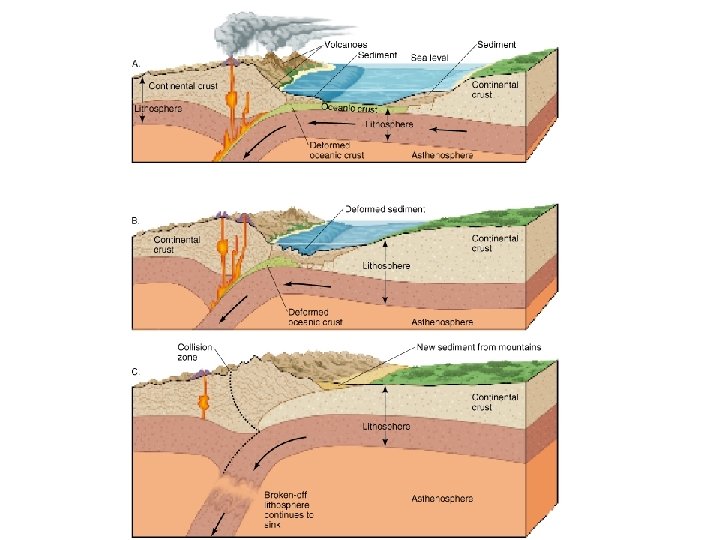
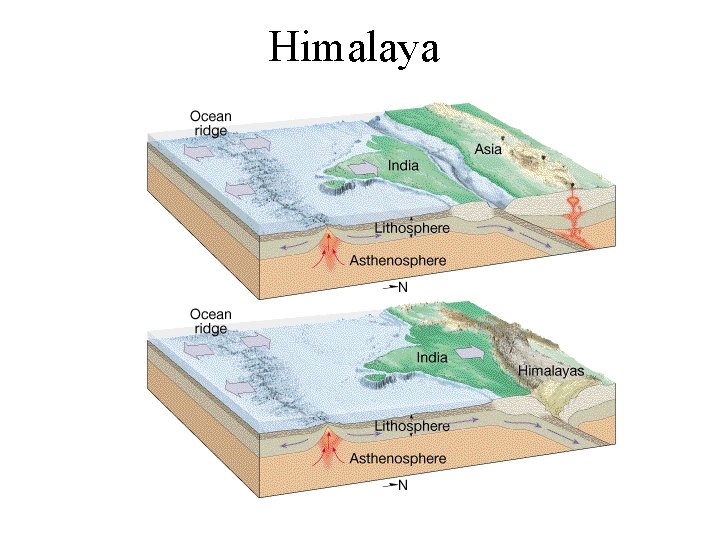
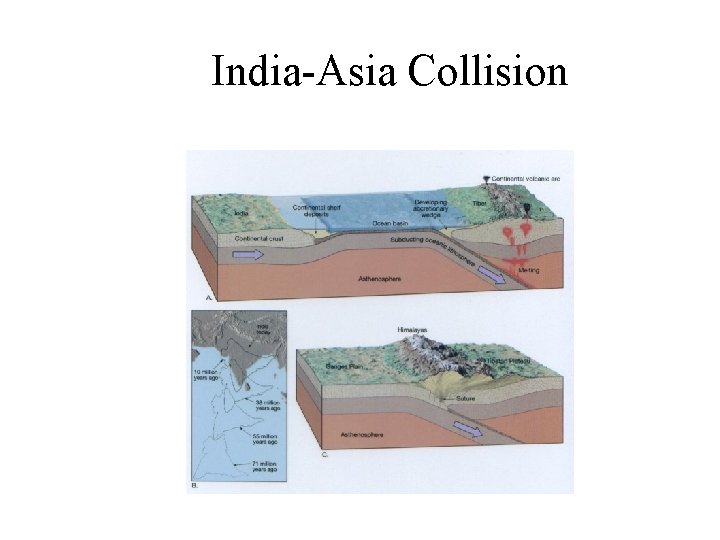
Continental-Continental Convergence Ocean-bottom sediments forced upward. Collision happens after oceanic crust is completely consumed during continental-oceanic subduction. Continental crust is not dense enough to be forced down into the mantle.
Collision
Himalaya
India-Asia Collision
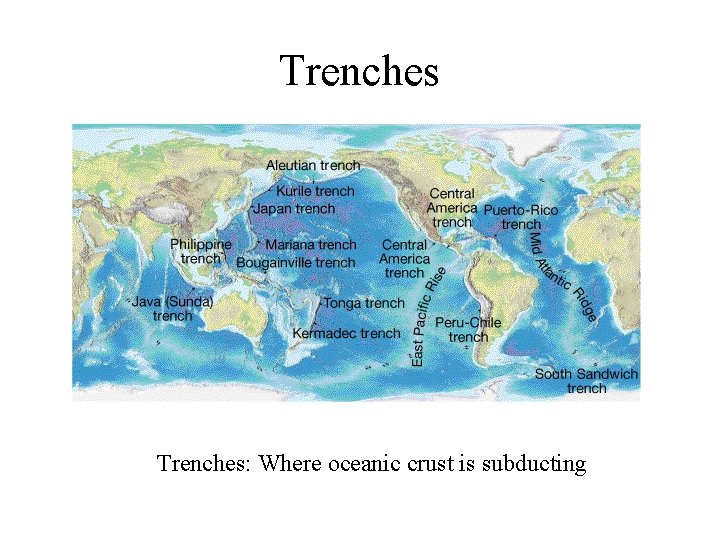
Trenches: Where oceanic crust is subducting
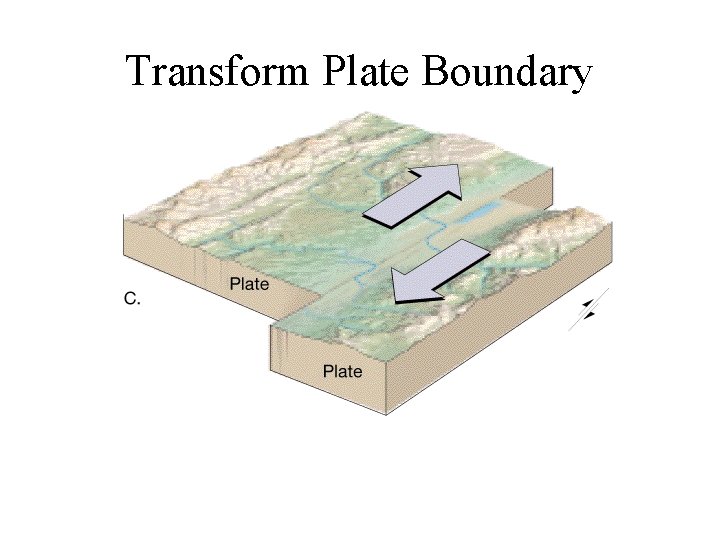
Transform Plate Boundary
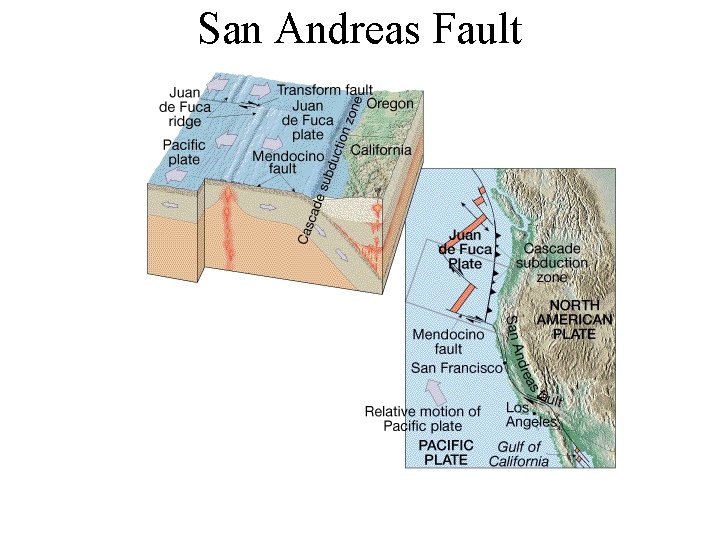
San Andreas Fault
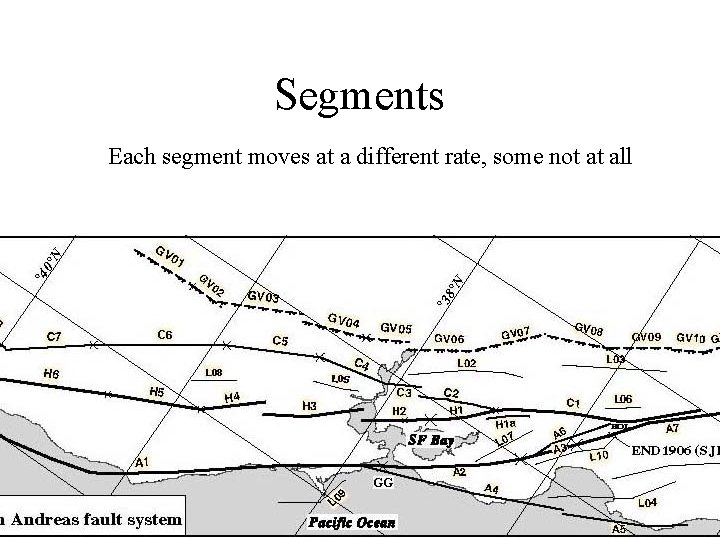
Segments Each segment moves at a different rate, some not at all
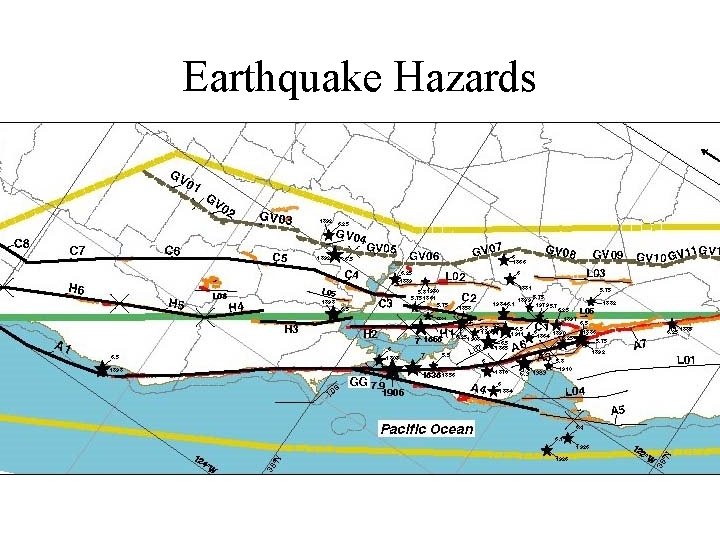
Earthquake Hazards
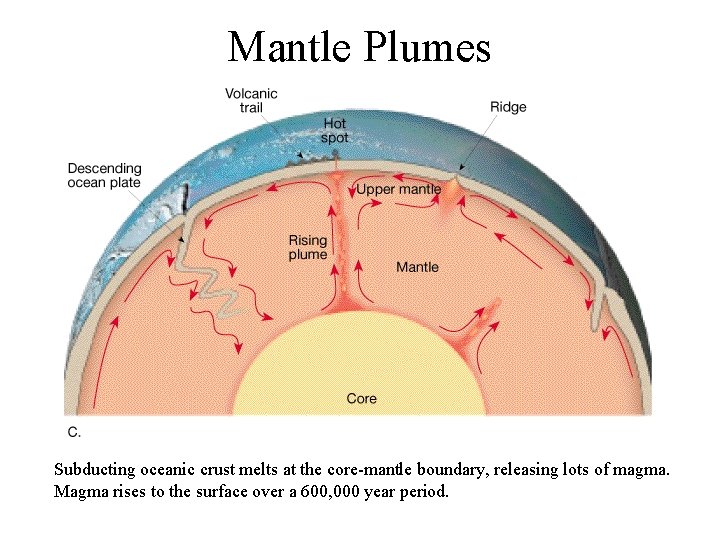
Mantle Plumes Subducting oceanic crust melts at the core-mantle boundary, releasing lots of magma. Magma rises to the surface over a 600, 000 year period.
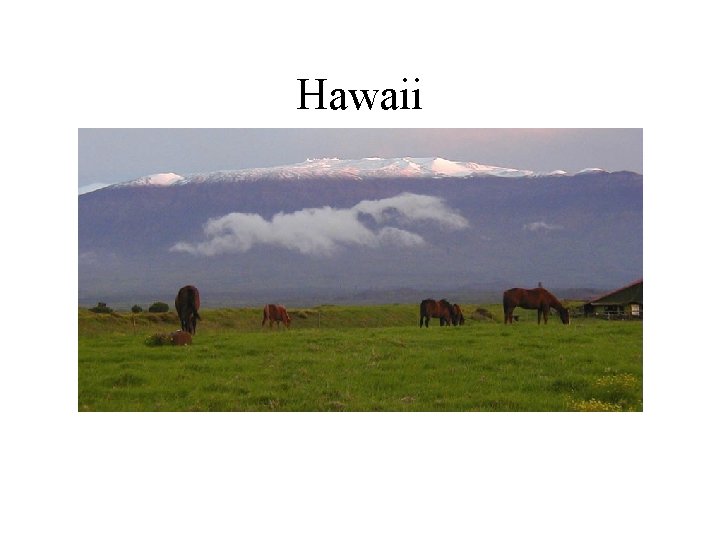
Hawaii
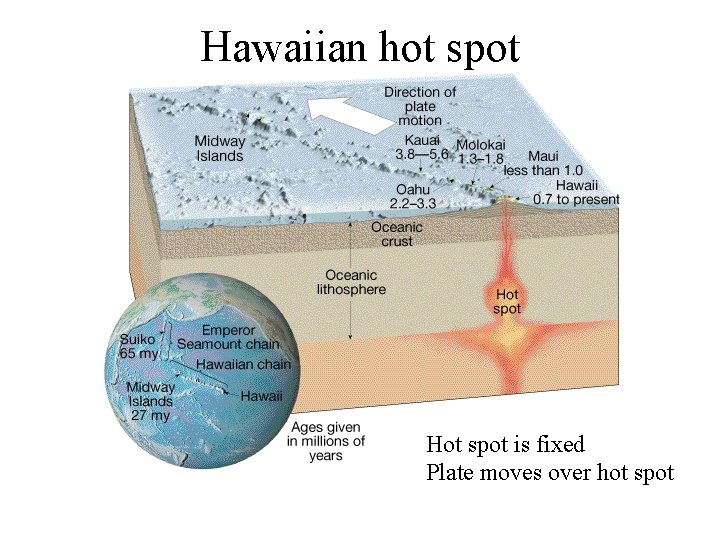
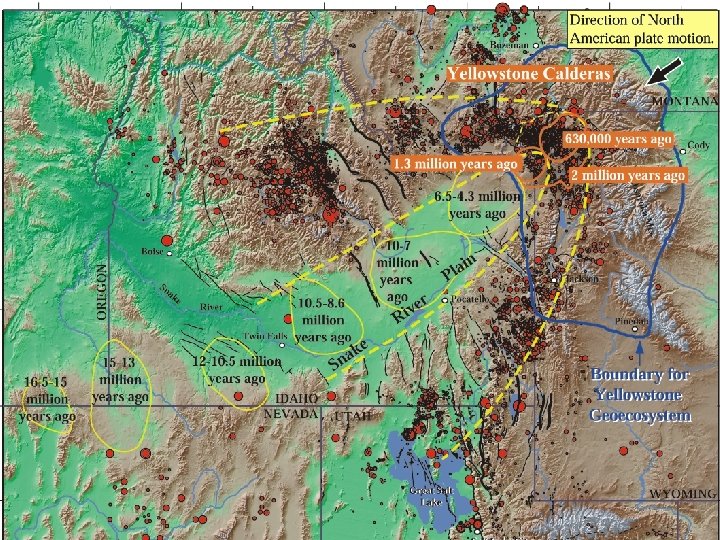
Hawaiian hot spot Hot spot is fixed Plate moves over hot spot
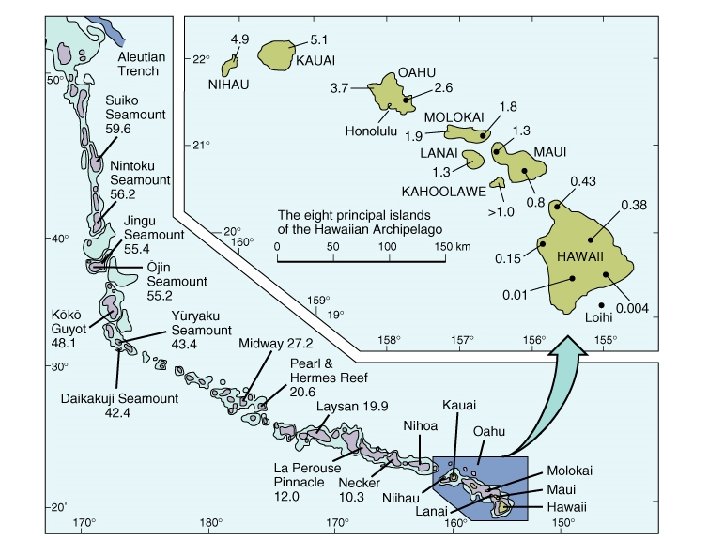
Hawaiian Hot Spot
Hot Spots
Earth