
Plate Composition using the Elements and Principles of

- Slides: 31
Plate Composition using the Elements and Principles of Art
Elements The basic building blocks • • • Line Shape/Form Space Texture Color
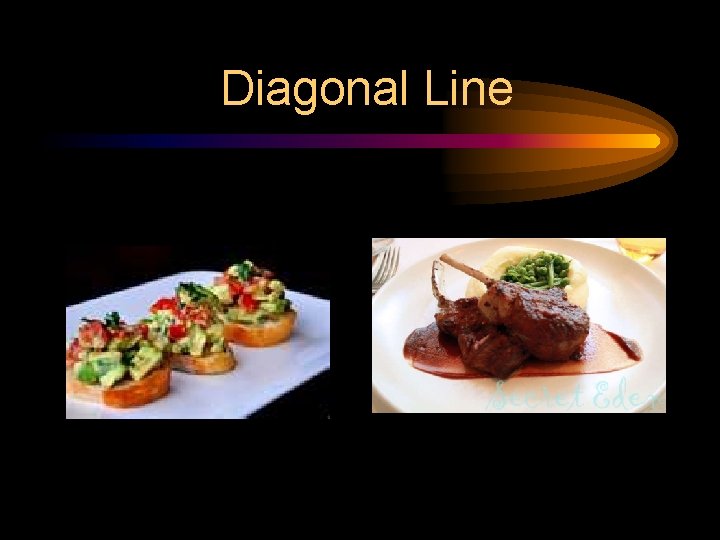
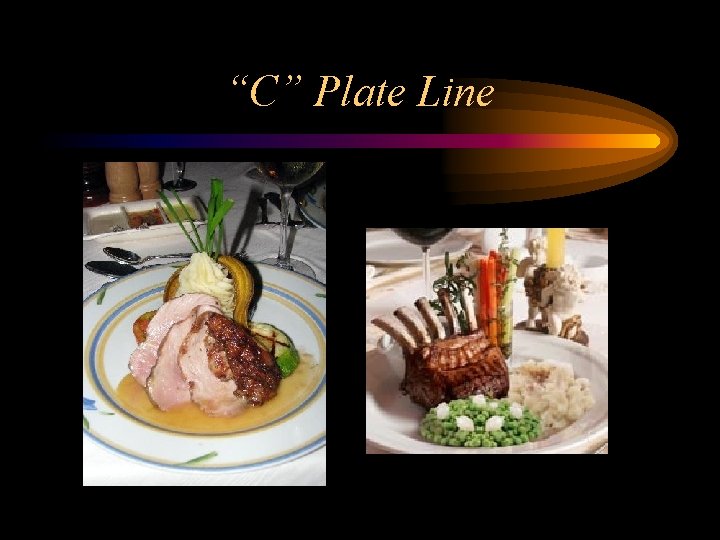
Lines • A mark made by a moving point. • Has greater length than width. • Directs the eye – horizontal, vertical, diagonal, curvy, zig-zag, etc. • Can be actual obvious lines or the borders or edges of shapes. • Strongest Line in plate design is a diagonal followed by the “C” design
Diagonal Line
“C” Plate Line
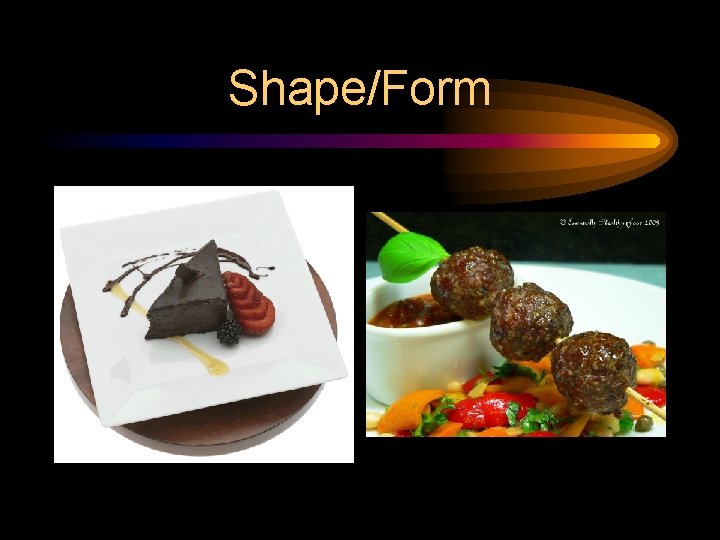
Shape/Form • A contained area. • Can be GEOMETRIC (man-made) ex. Square, triangle, circle, etc. • Can be ORGANIC (natural) • Shapes are 2 -Dimensional and flat. (circle) • Forms are 3 -Dimensional with height, width and depth. (sphere) • Used to create a sense of space and substance.
Shape/Form
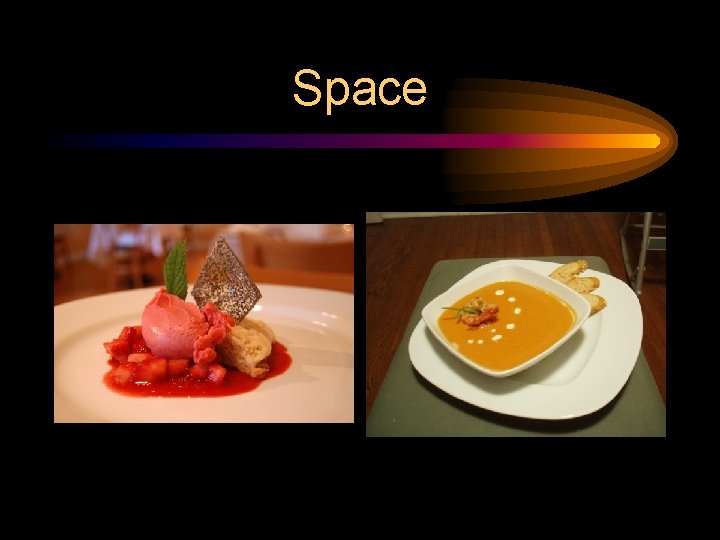
Space • The area used or unused in a composition. • Positive space – the area the objects/subject takes up. • Negative space – the area around, under, through and between. • Frame the food • Use negative space to make food the star
Space
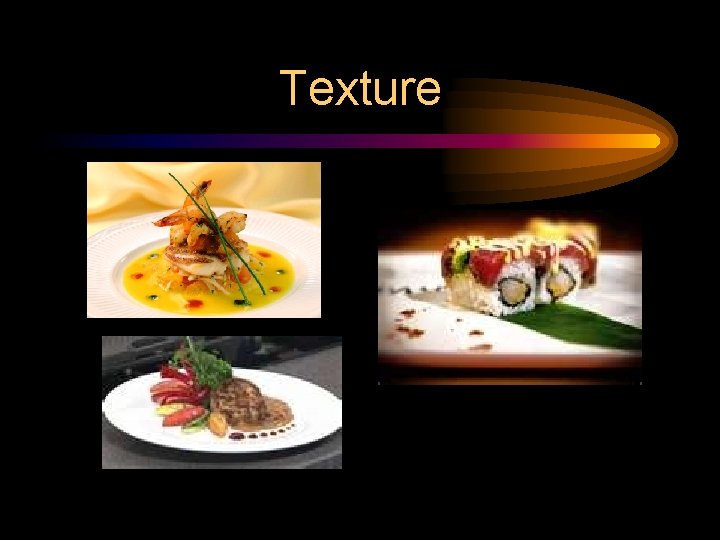
Texture • The surface quality. • How an object feels, or how it looks like it feels. • Rough, smooth, bumpy, gooey, sharp, etc. • Adds interest! Sense of sight and sense of touch involved.
Texture
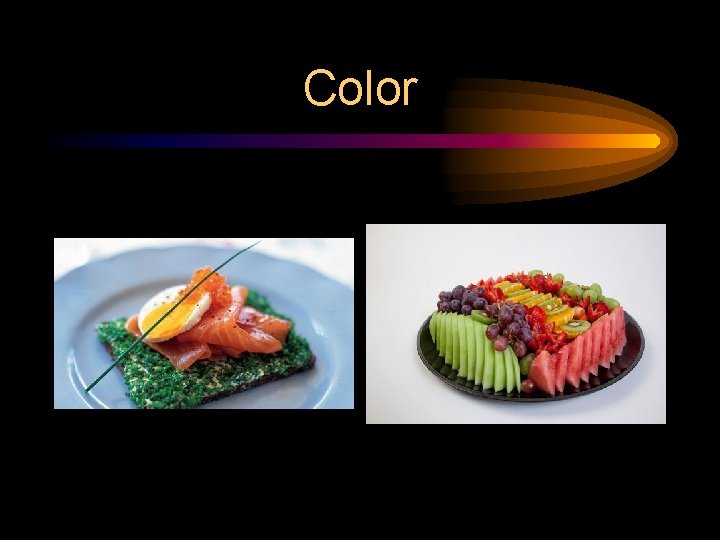
Color • • Artistic term is HUE Need light to see color. Primary, Secondary, Intermediates. Use color schemes to enhance appeal or make impact.
Color
Principles • The different arrangements – or compositions - of the ELEMENTS of design to create artistic, interesting, more visually powerful plates. • Principles
What are the Principles of Art Utilized in Food Plating? • Emphasis • Balance • Unity-Harmony • Contrast • Movement/ Rhythm • Seqencing and Facing • Pattern/Repetition
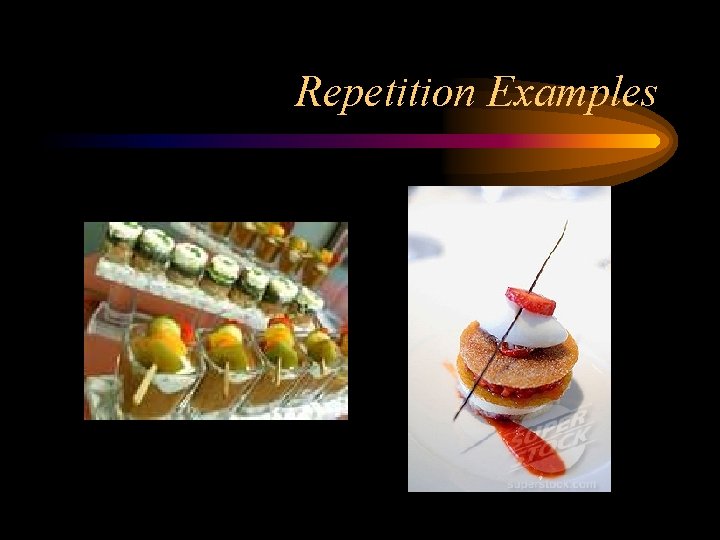
Pattern/Repetition • An element that occurs over and over again in a composition. • Can repeat the element in a consistent pattern. • Can repeat the element in a variation of the pattern.
Repetition Examples
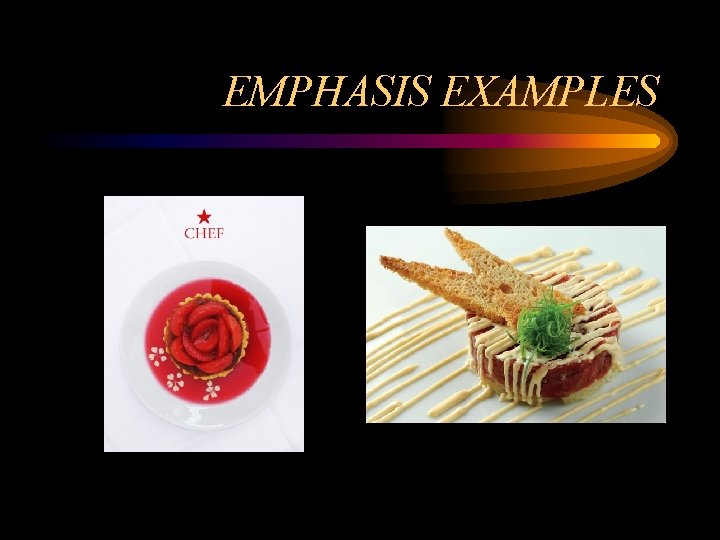
EMPHASIS or Focal Point Emphasis in a composition refers to developing points of interest to pull the viewer's eye to important parts of the plate.
EMPHASIS EXAMPLES
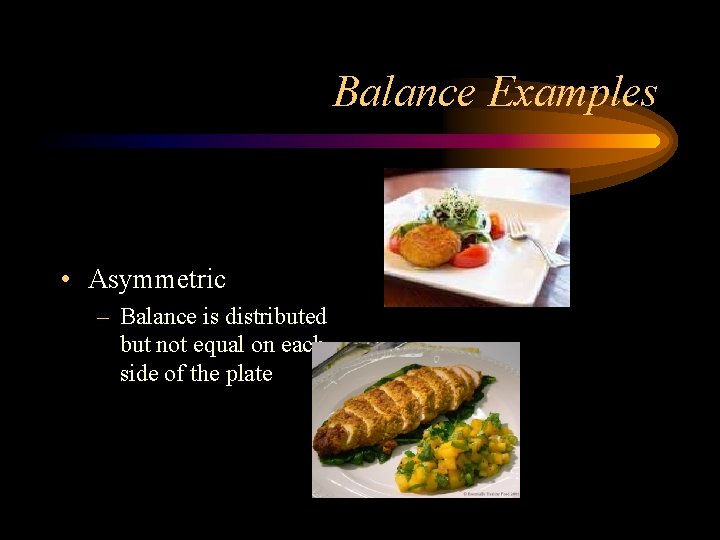
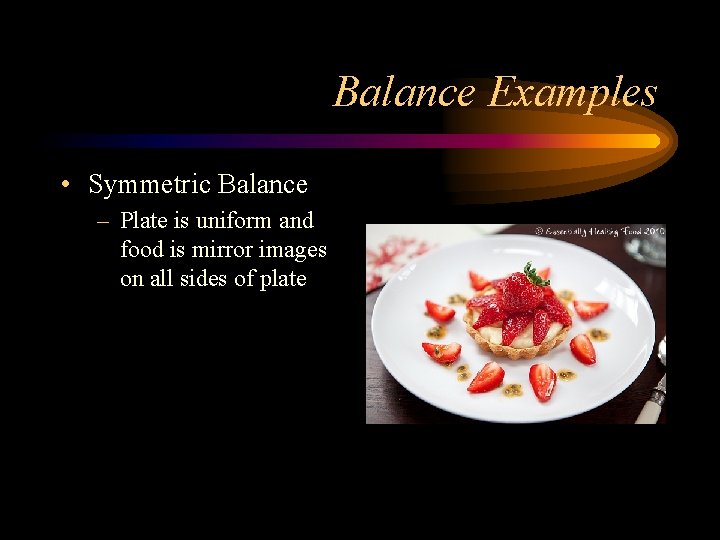
Balance is a sense of stability in the body of work. Balance can be created by repeating same shapes and by creating a feeling of equal weight.
Balance Examples • Asymmetric – Balance is distributed but not equal on each side of the plate
Balance Examples • Symmetric Balance – Plate is uniform and food is mirror images on all sides of plate
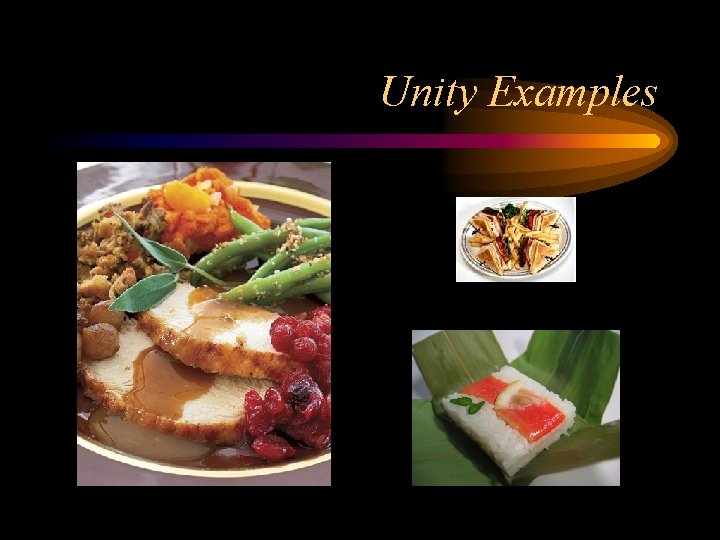
Unity is when all the parts harmonize and seem to fit together.
Unity Examples
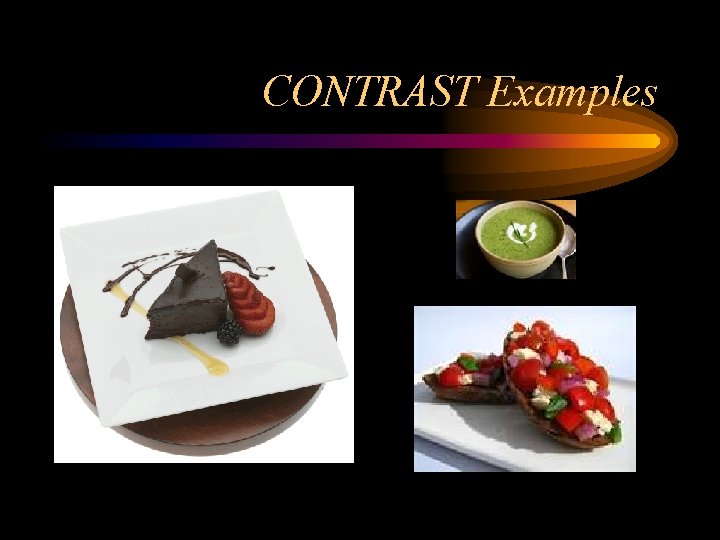
CONTRAST Contrast refers to the opposites and differences in the work. You can achieve variety by using different shapes, textures, colors and height in your work.
CONTRAST Examples
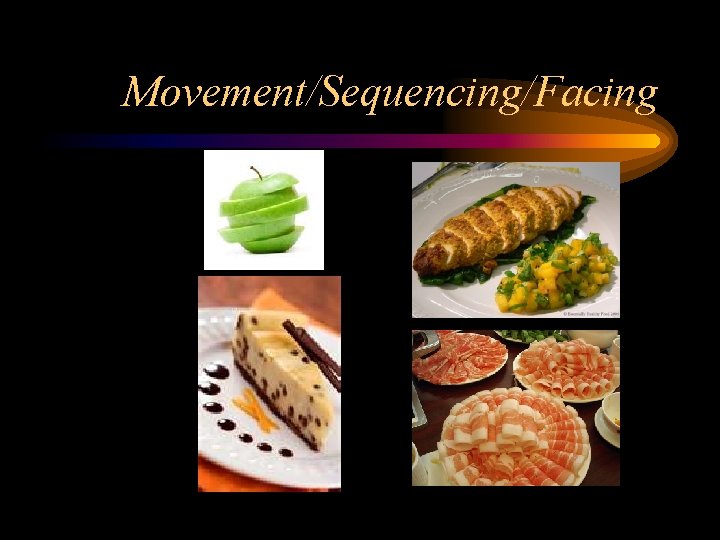
Movement adds excitement to your work by showing action and directing the viewers eye throughout the picture plane. Rhythm is a type of movement in plating that you can achieve through sequencing, facing and garnish
Movement/Sequencing/Facing
Elements and Principles in Plating Composition • The Elements and Principles are used in making plate “POP”. Why care? – Increase customer satisfaction – Cost effective – Help with portion control – Increase your profits$$$
Advice from Gordon Ramsey • Keep your presentation clean and simple • Use an odd number of ingredients on the plate to avoid symmetry “eyeballs" • Never go for looks rather than flavor. This includes the use of herbs as a garnish, unless they go with the meal
Advice from Gordon Ramsey • Avoid moving things around once they’re on the plate, as this will simply make a mess • Visualize what your dish will look like before you start arranging it on the plate • Don’t clutter the plate