
Plate Boundary Notes Using the Powerpoint to help
Plate Boundary Notes • Using the Powerpoint to help you, take notes into your flipbook on the plate boundaries. You need to include the following notes – Boundary Definition – Boundary Arrows – Example from the boundary map

Plate Boundaries
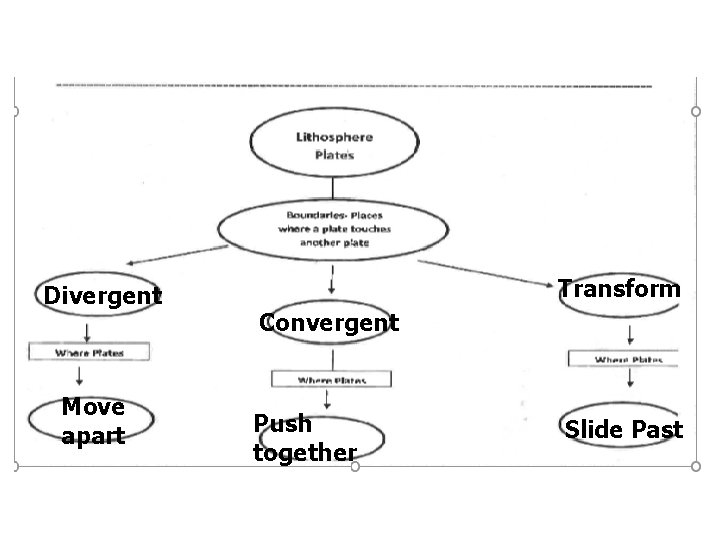
Divergent Boundary Divergent Move away From each other Move apart Transform Boundary Transform Convergent Collide with each Push other together Slide Past
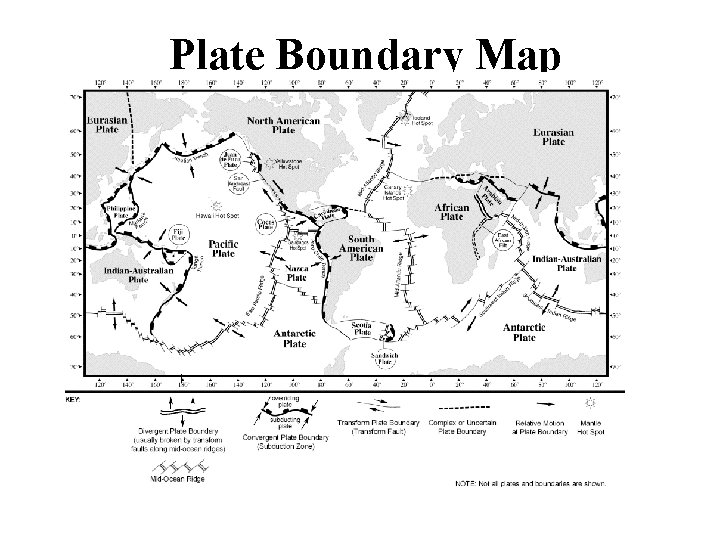
Plate Boundary Map
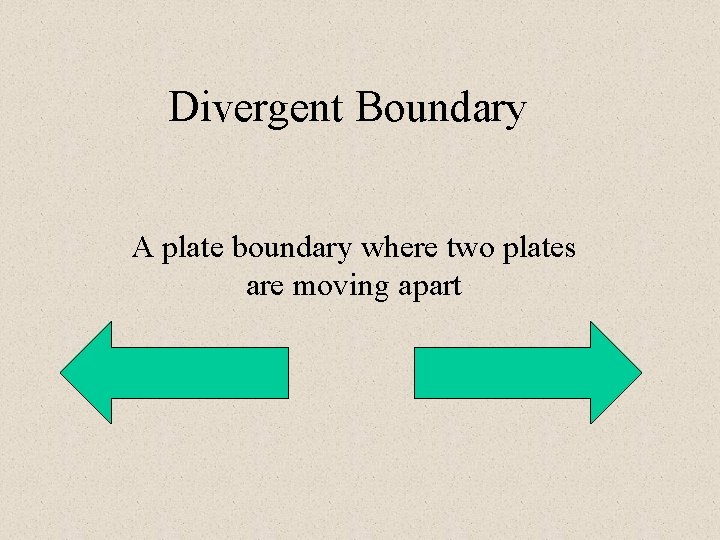
Divergent Boundary A plate boundary where two plates are moving apart
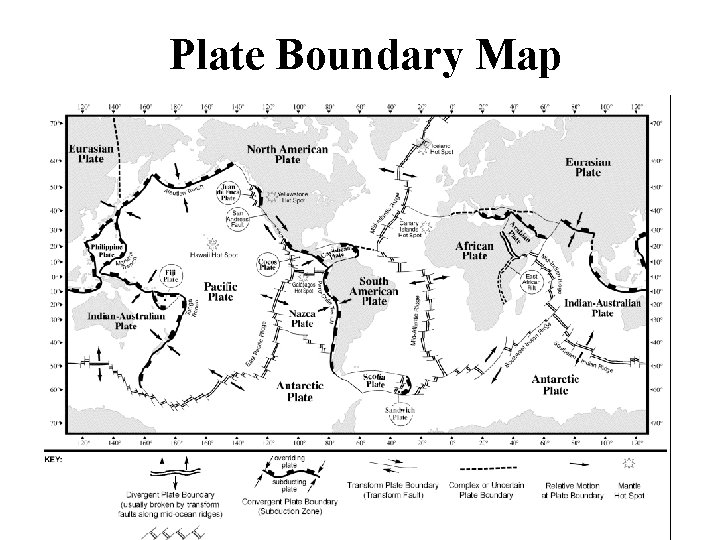
Plate Boundary Map
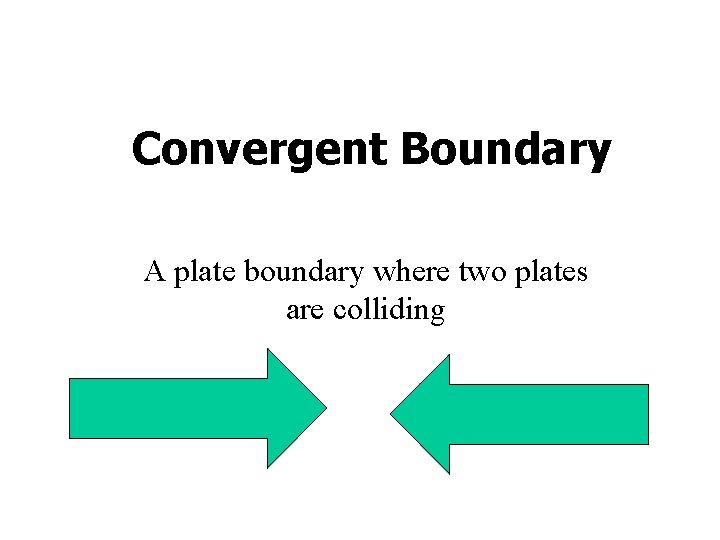
Convergent Boundary A plate boundary where two plates are colliding
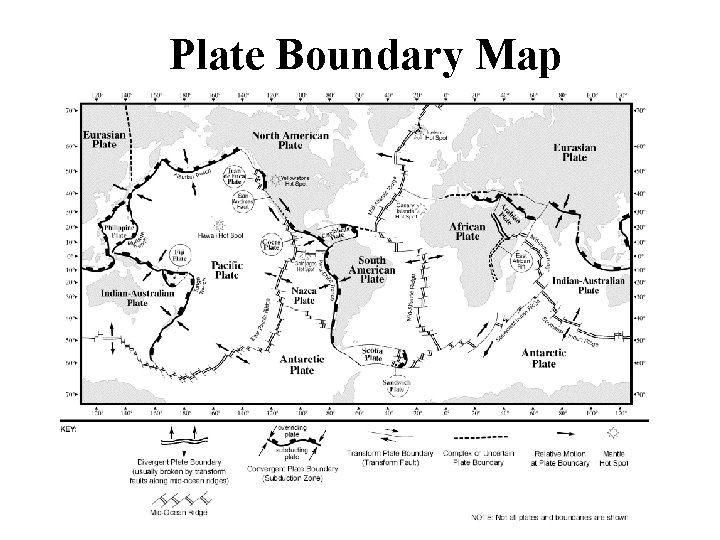
Plate Boundary Map
The Mariana Trench • The Mariana Trench is formed from a convergent boundary of the Philippine Plate and Pacific Plate • It the deepest part of the ocean. • Only a few people have ever gone to the bottom.
The Mariana Trench • You are going to watch a video about the Mariana Trench. • On a piece of loose leaf paper, record 10 things that surprised about the Trench • https: //www. youtube. com/watch? v=DWPDsg. Tia. E
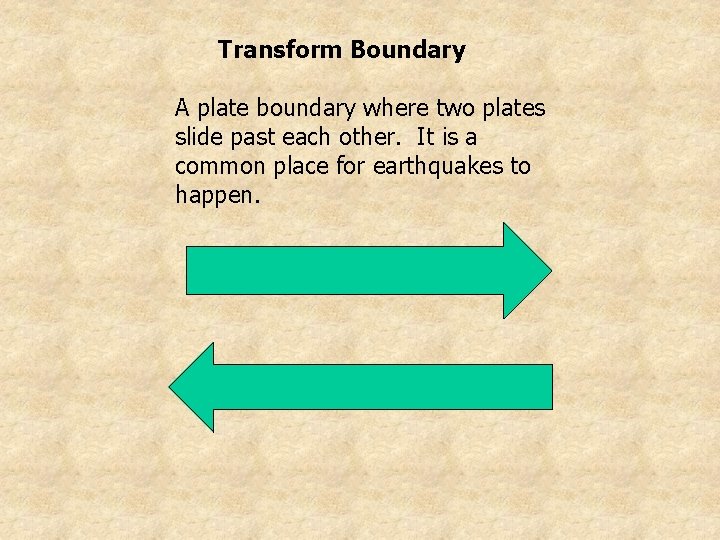
Transform Boundary A plate boundary where two plates slide past each other. It is a common place for earthquakes to happen.
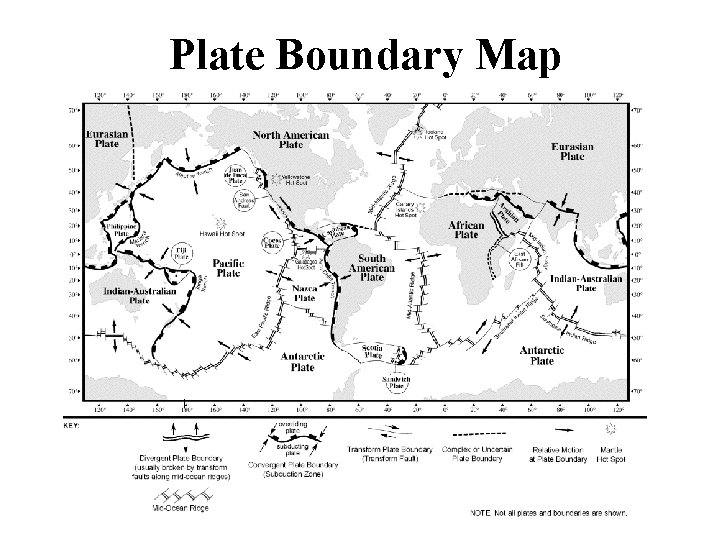
Plate Boundary Map
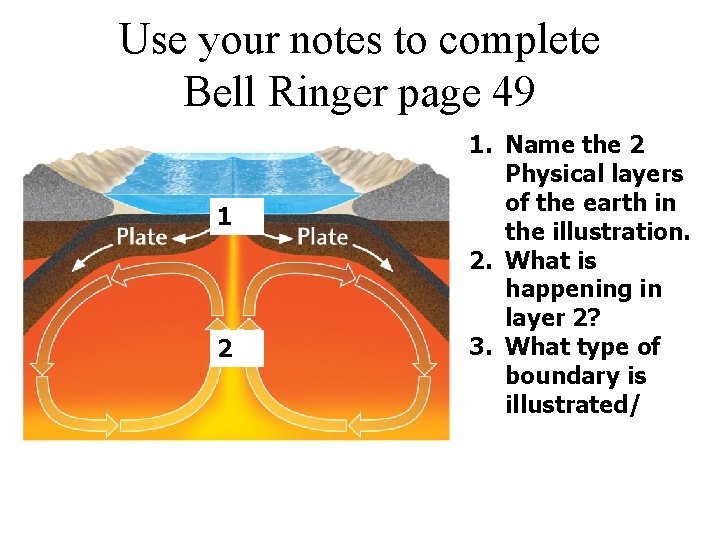
Use your notes to complete Bell Ringer page 49 1 2 1. Name the 2 Physical layers of the earth in the illustration. 2. What is happening in layer 2? 3. What type of boundary is illustrated/
Using the powerpoint and the cut outs, take notes on each type of stress • On your flipbook, record the following: – Definition of type of stress – Tape illustration to the flipbook
Stress is the amount of force per unit area on a given material.
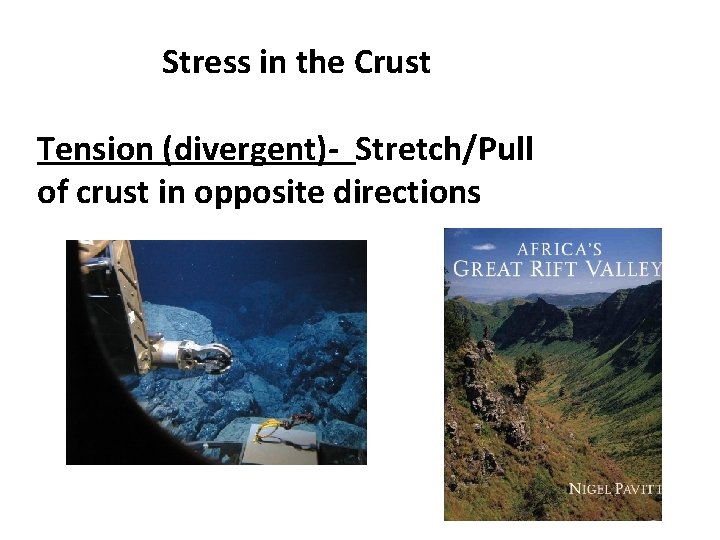
Stress in the Crust Tension (divergent)- Stretch/Pull of crust in opposite directions
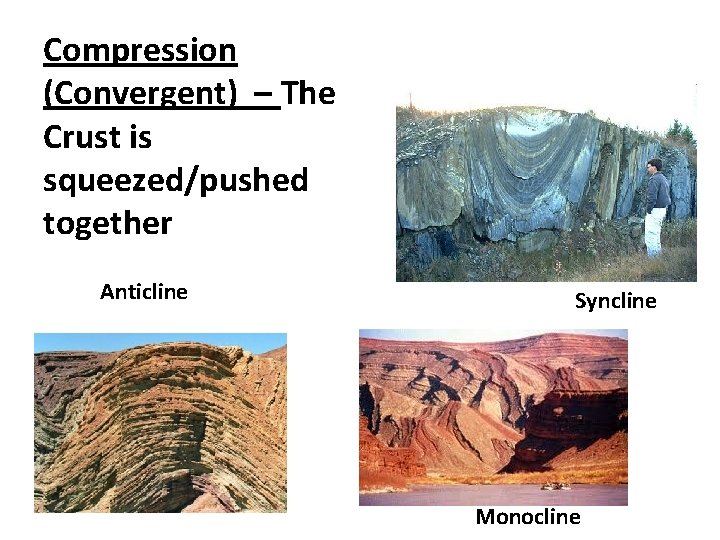
Compression (Convergent) – The Crust is squeezed/pushed together Anticline Syncline Monocline
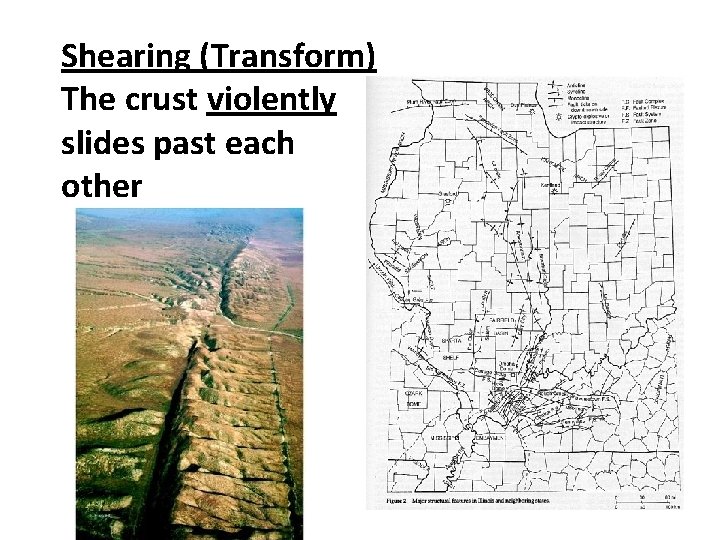
Shearing (Transform) The crust violently slides past each other
Other Work, if not finished complete for homework 1. 2. 3. 4. Inside the earth work sheet Plate Boundary Review (both sides) Reading about Earthquakes – complete back Reading about indirection observations – complete back
- Slides: 19