
Plate Boundaries Where two plates meet http science
Plate Boundaries Where two plates meet. http: //science. discovery. com/videos/100 -greatestdiscoveries-shorts-plate-tectonics. html
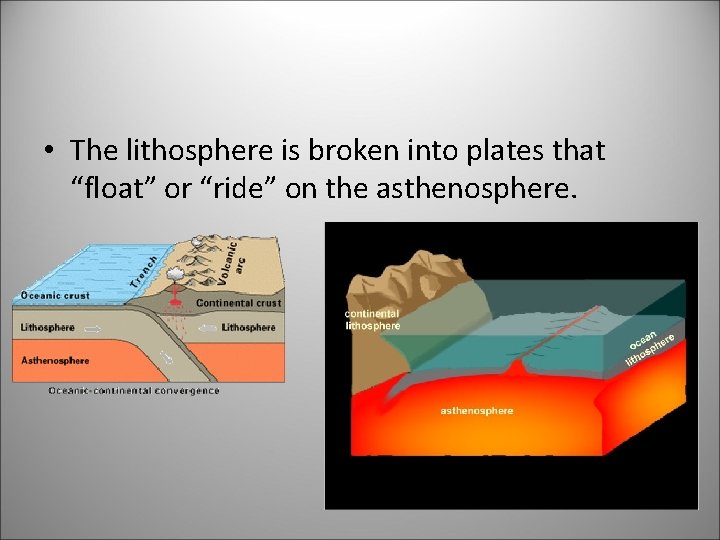
• The lithosphere is broken into plates that “float” or “ride” on the asthenosphere.
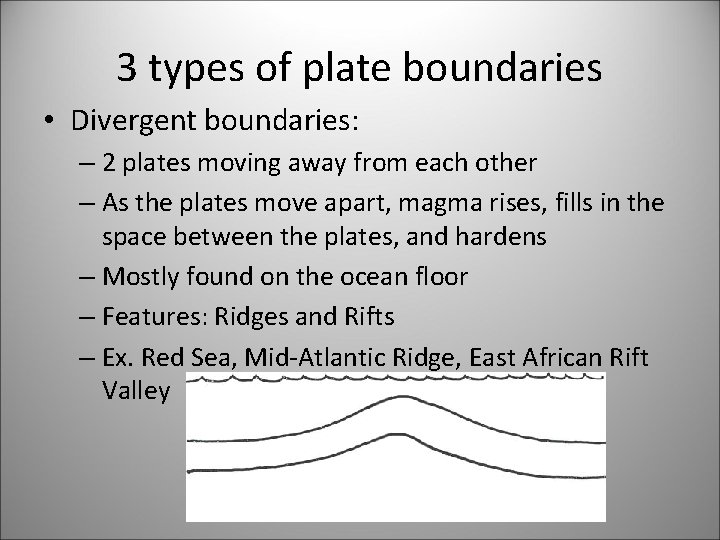
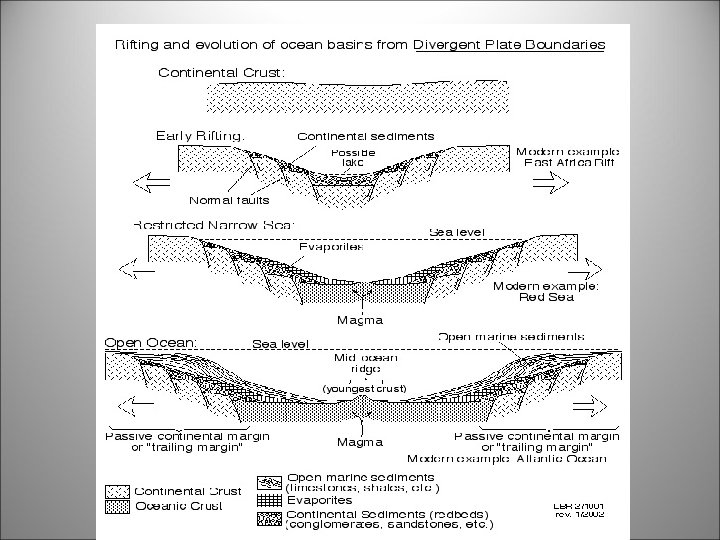
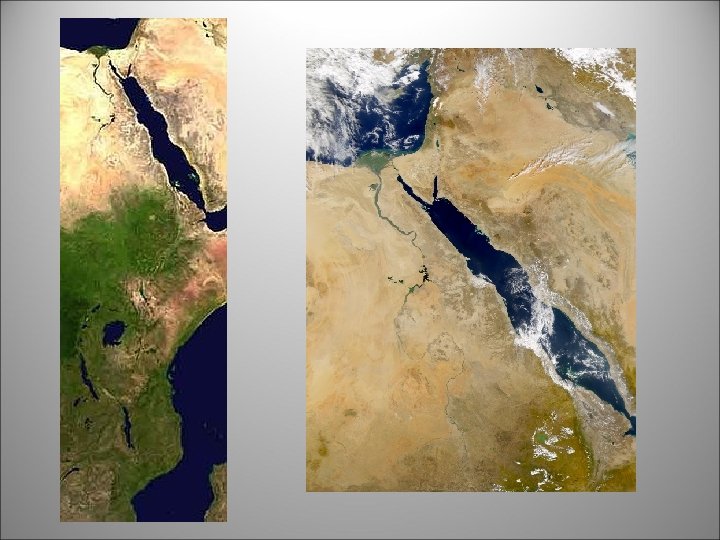
3 types of plate boundaries • Divergent boundaries: – 2 plates moving away from each other – As the plates move apart, magma rises, fills in the space between the plates, and hardens – Mostly found on the ocean floor – Features: Ridges and Rifts – Ex. Red Sea, Mid-Atlantic Ridge, East African Rift Valley
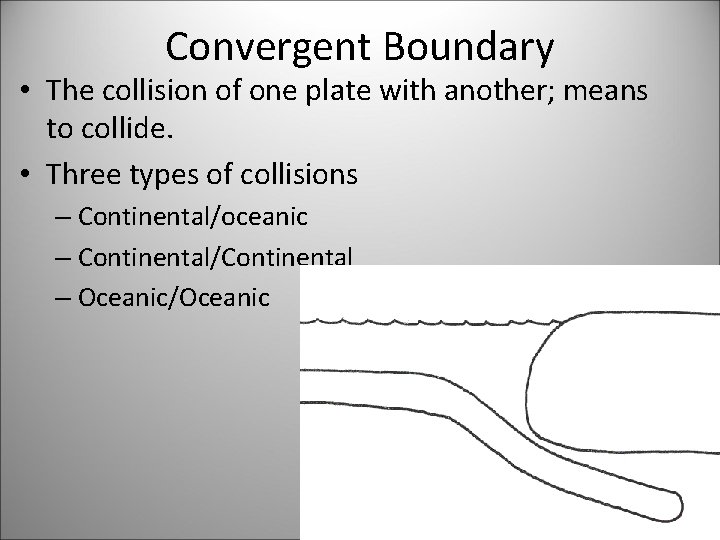
Convergent Boundary • The collision of one plate with another; means to collide. • Three types of collisions – Continental/oceanic – Continental/Continental – Oceanic/Oceanic
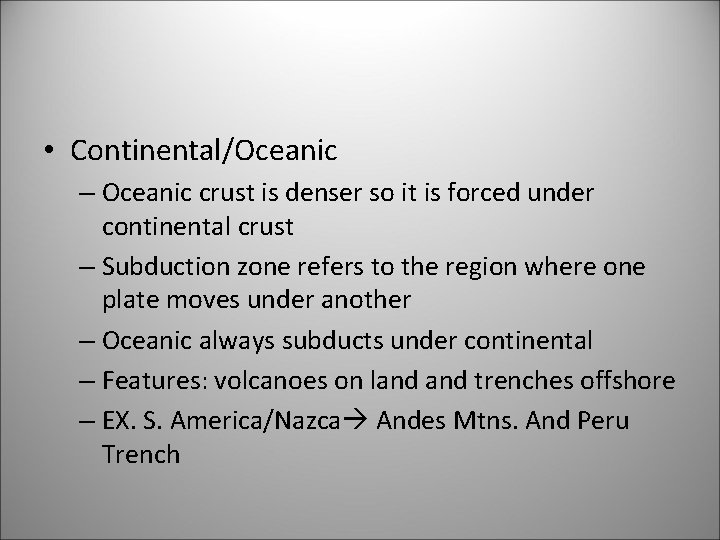
• Continental/Oceanic – Oceanic crust is denser so it is forced under continental crust – Subduction zone refers to the region where one plate moves under another – Oceanic always subducts under continental – Features: volcanoes on land trenches offshore – EX. S. America/Nazca Andes Mtns. And Peru Trench
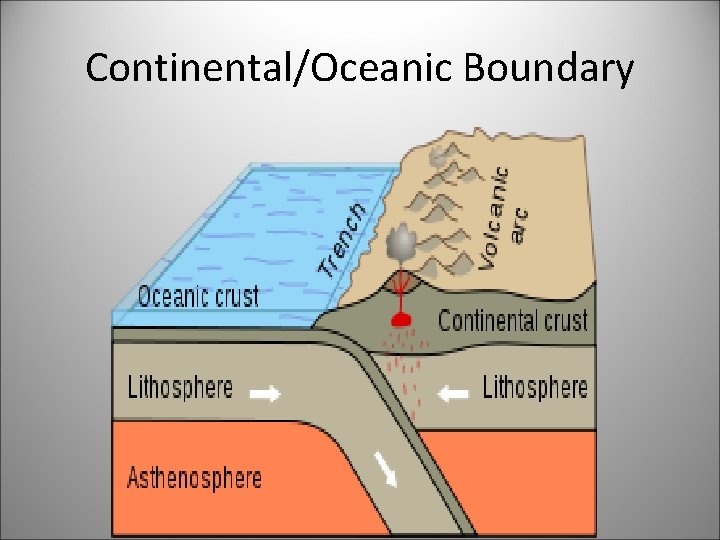
Continental/Oceanic Boundary
• Continental/continental – Colliding edges are crumpled and uplifted producing mountain ranges – Neither will subduct – Not volcanic – Ex. NC + Africa Appalachian Mtns. India + Eurasia Himalayas
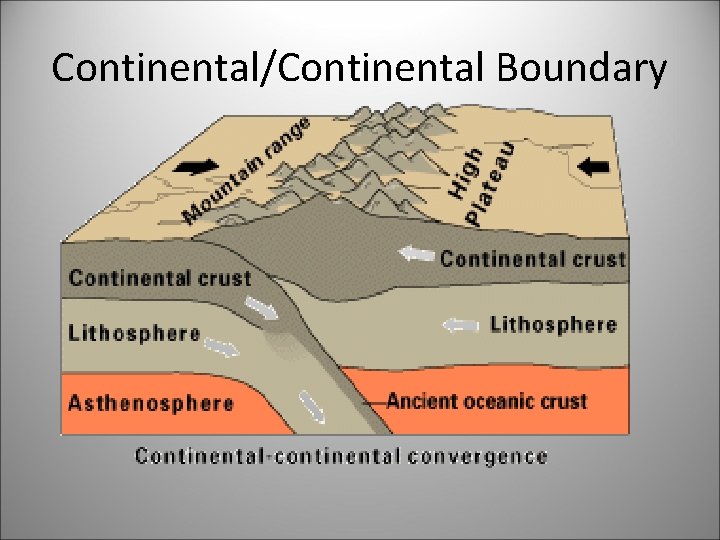
Continental/Continental Boundary
• Oceanic/Oceanic – One of the plates must subduct under the other – Features: trenches, volcanic island arcs – Ex. Japan, Philippines, West Indies
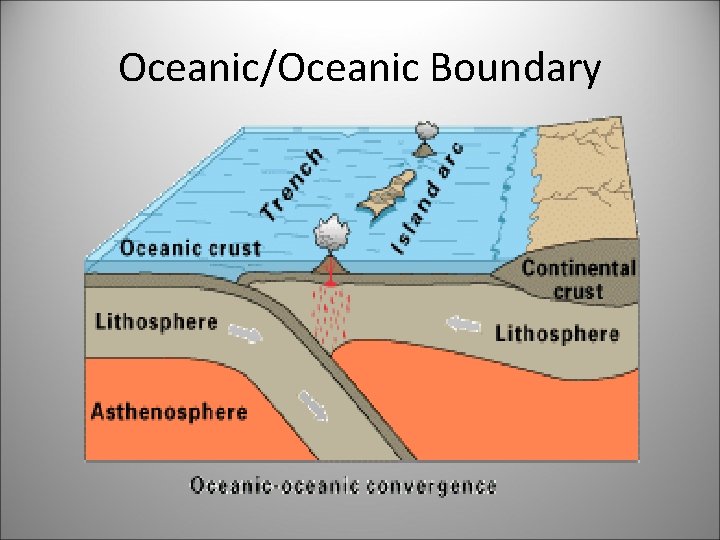
Oceanic/Oceanic Boundary
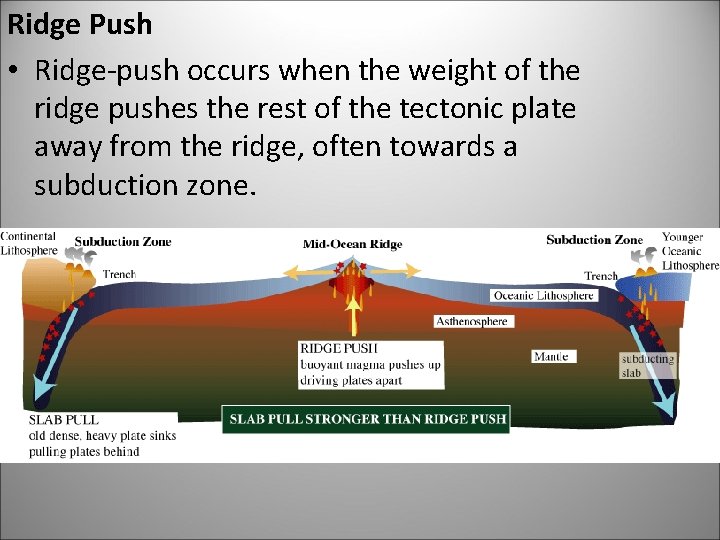
Ridge Push • Ridge-push occurs when the weight of the ridge pushes the rest of the tectonic plate away from the ridge, often towards a subduction zone.
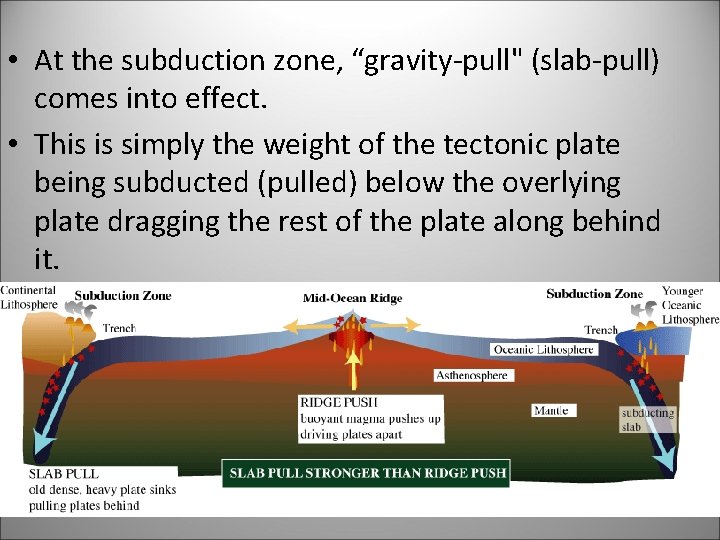
• At the subduction zone, “gravity-pull" (slab-pull) comes into effect. • This is simply the weight of the tectonic plate being subducted (pulled) below the overlying plate dragging the rest of the plate along behind it.
Transform Fault Boundaries • 2 plates scrape past each other • Features: Earthquakes, Strike/slip fault • Ex. San Andreas Fault, also found as connectors of mid-ocean ridges
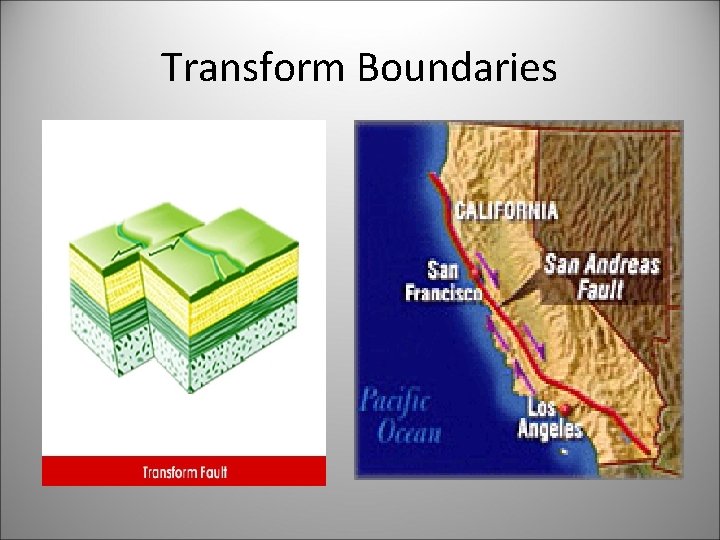
Transform Boundaries
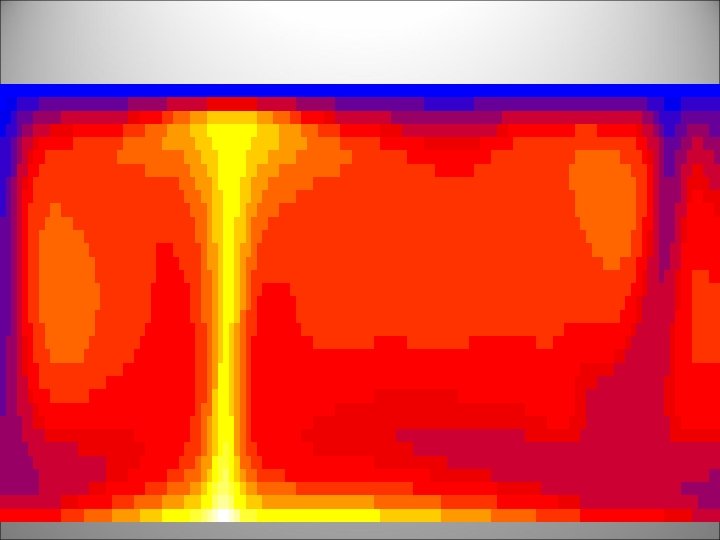
What causes plates to move? • Convection currents: cycle of hot material rising, cool material sinking. – Heat from the core causes magma to rise to the asthenosphere and move along the boundary of the asthenosphere and the lithosphere. – As the magma cools, it sinks toward the core. – This slow cyclic movement causes the plates to move like groceries on a conveyor belt.
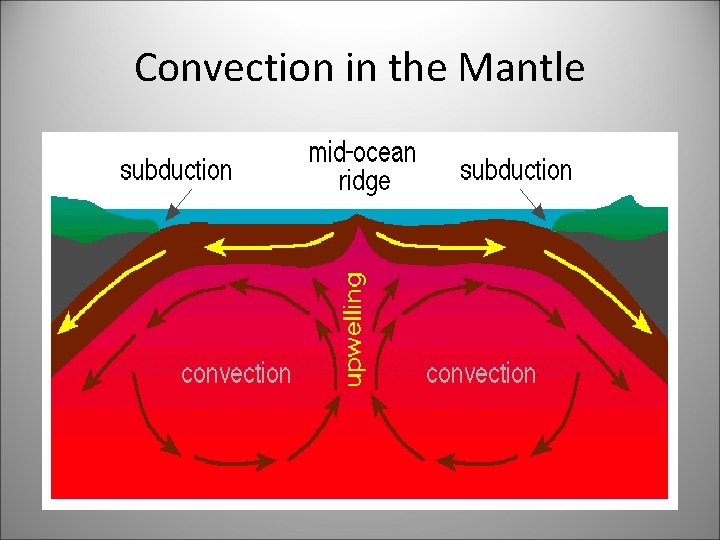
Convection in the Mantle
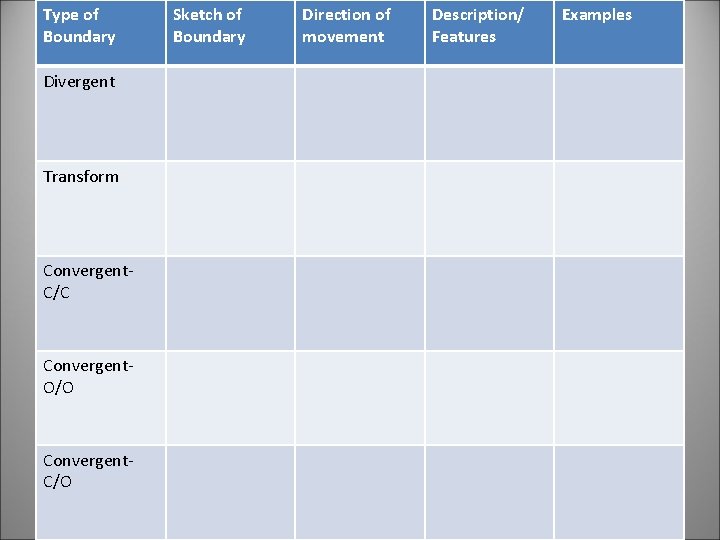
Type of Boundary Divergent Transform Convergent. C/C Convergent. O/O Convergent. C/O Sketch of Boundary Direction of movement Description/ Features Examples
- Slides: 21