
Plate Boundaries Review Places where plates move apart

Plate Boundaries Review ¢ ¢ ¢ Places where plates move apart are called _______ boundaries. divergent When continental plates diverge a rift valley ______ is formed. When two oceanic plates converge what is an island arc and a trench created? _________ The Appalachians formed mainly from continental plate collisions and therefore a _____ mountain range. folded Convection currents The force moving the plates is ______.

Open Book Pop Quiz 25 minutes to complete ¢ No talking ¢ If you are caught talking it will be considered cheating and you will receive a Zero and after school detention. ¢
Igneous Rocks-’Fire’ Rocks • https: //www. youtube. com/watch? v=Pr. N 7 jygu 4 c. Q • What are igneous rocks? • Write 3 facts from the video.
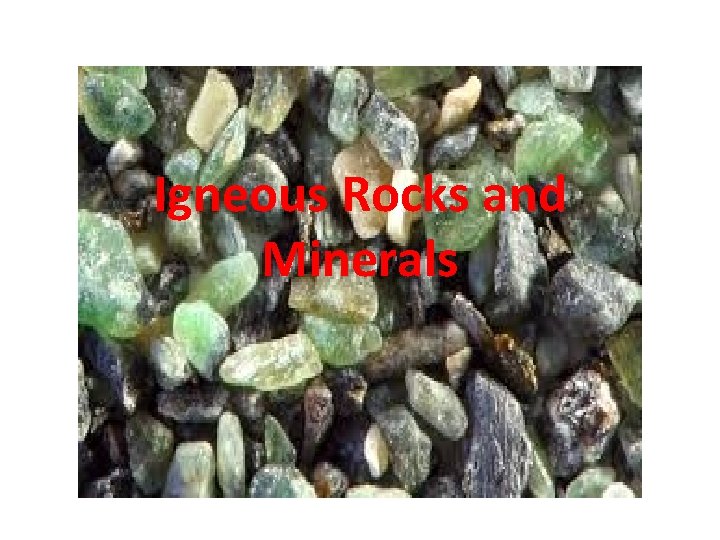
Igneous Rocks and Minerals
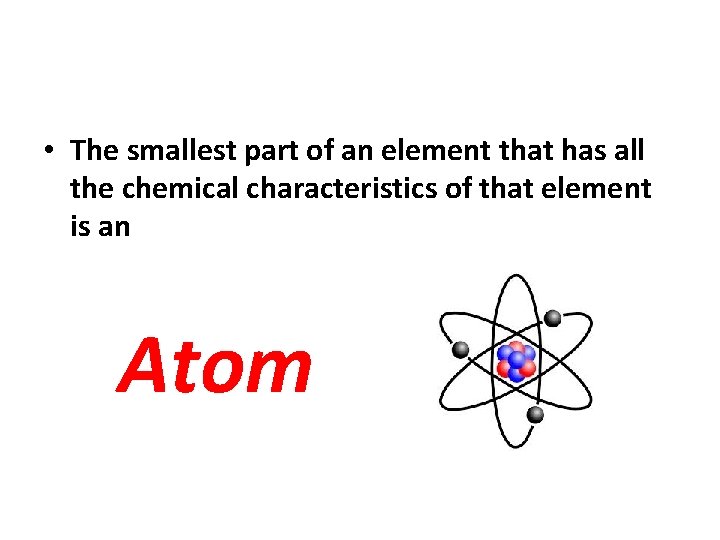
• The smallest part of an element that has all the chemical characteristics of that element is an Atom
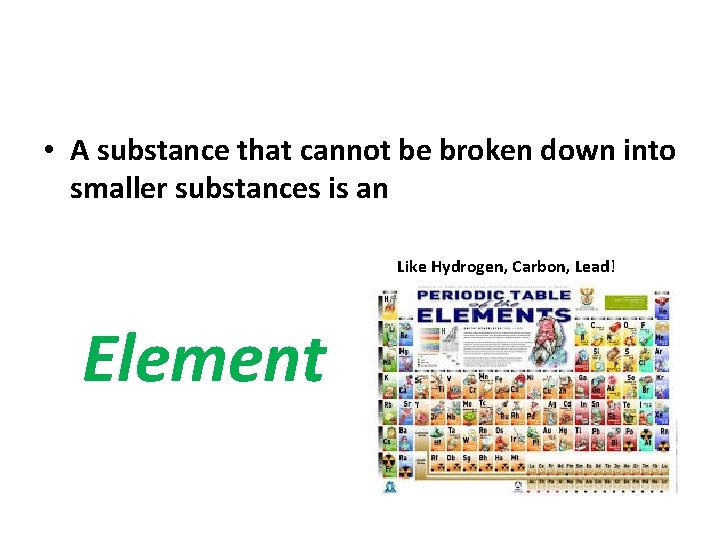
• A substance that cannot be broken down into smaller substances is an Like Hydrogen, Carbon, Lead! Element
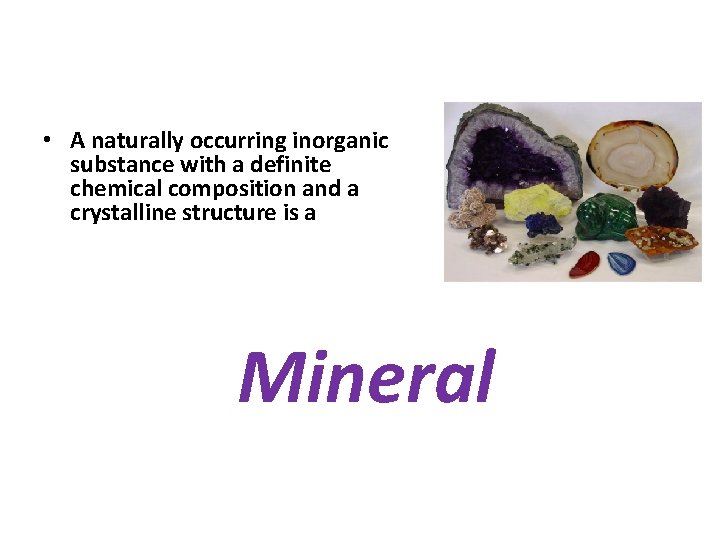
• A naturally occurring inorganic substance with a definite chemical composition and a crystalline structure is a Mineral
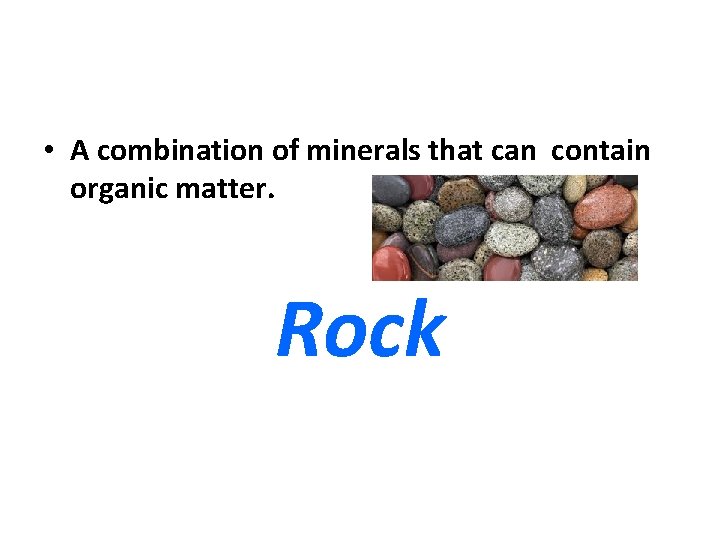
• A combination of minerals that can contain organic matter. Rock
In your notes • ORGANIZE THE BUILDING BLOCKS OF ROCKS
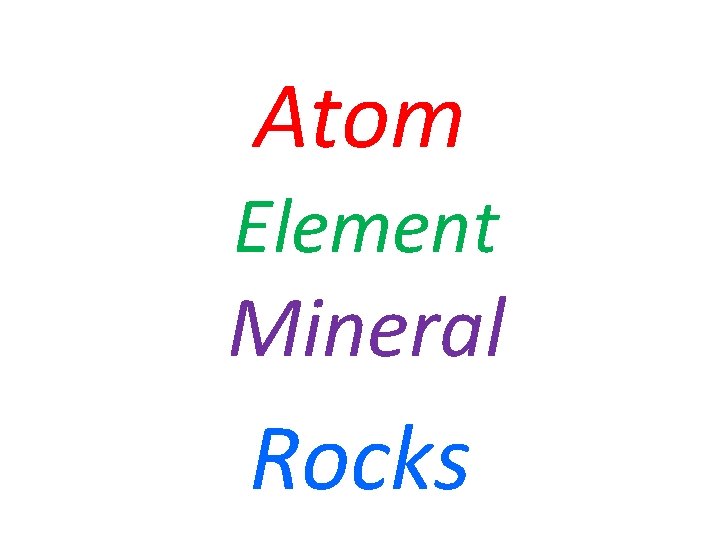
Atom Element Mineral Rocks
Warm-Up • Arrange the following in order from smallest to largest: • Mineral • Rock • Atom • Element
IGNEOUS ROCKS • Form by solidification (crystallization) of melted minerals • At the surface, LAVA hardens to form EXTRUSIVE rocks with tiny (FINE-GRAINED) crystals or GLASSY (no crystal) TEXTURES • Beneath the surface, MAGMA hardens to form INTRUSIVE rocks with easily visible (COARSE-GRAINED) crystal texture.
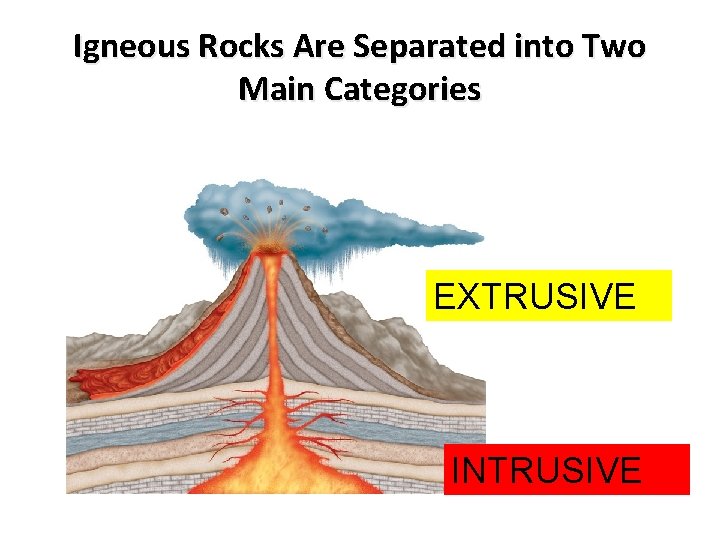
Igneous Rocks Are Separated into Two Main Categories EXTRUSIVE INTRUSIVE
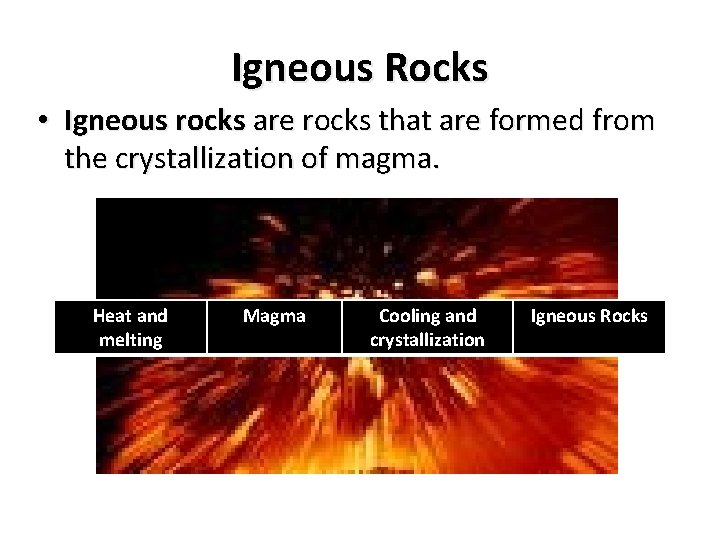
Igneous Rocks • Igneous rocks are rocks that are formed from the crystallization of magma. Heat and melting Magma Cooling and crystallization Igneous Rocks
Igneous Rocks are Categorized by Texture • Texture is determined by cooling time – Glassy Cooled very fast Cooled fast – Fine Grained – Course Grained Cooled slowly – Very Course Grained Cooled very slowly
Rocks Melt into Magma or Lava • Magma is molten (melted) rock below the ground. • Lava is molten rock above the ground • The heat that melts rock comes from the mantle.
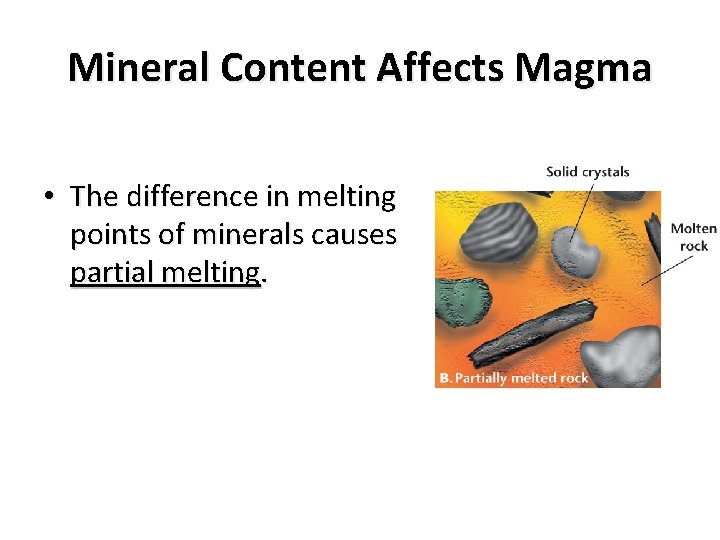
Mineral Content Affects Magma • The difference in melting points of minerals causes partial melting.
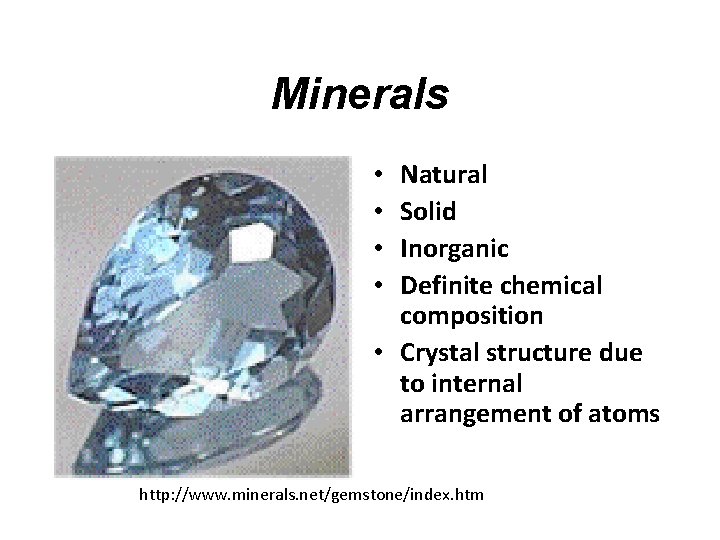
Minerals Natural Solid Inorganic Definite chemical composition • Crystal structure due to internal arrangement of atoms • • http: //www. minerals. net/gemstone/index. htm
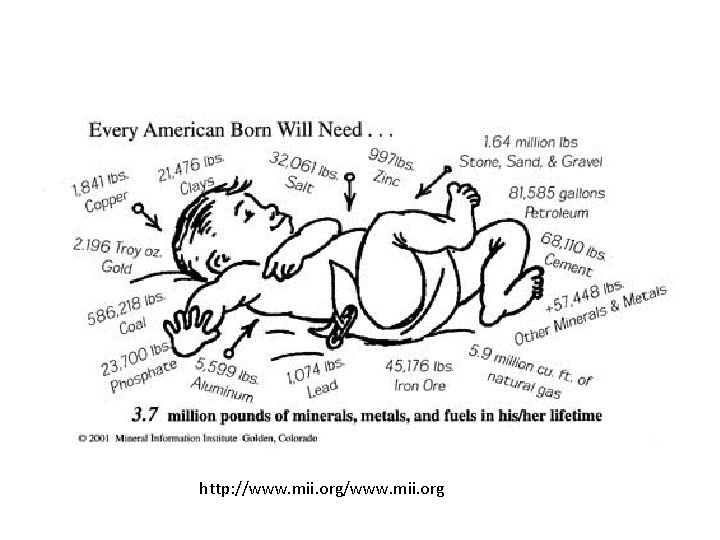
http: //www. mii. org
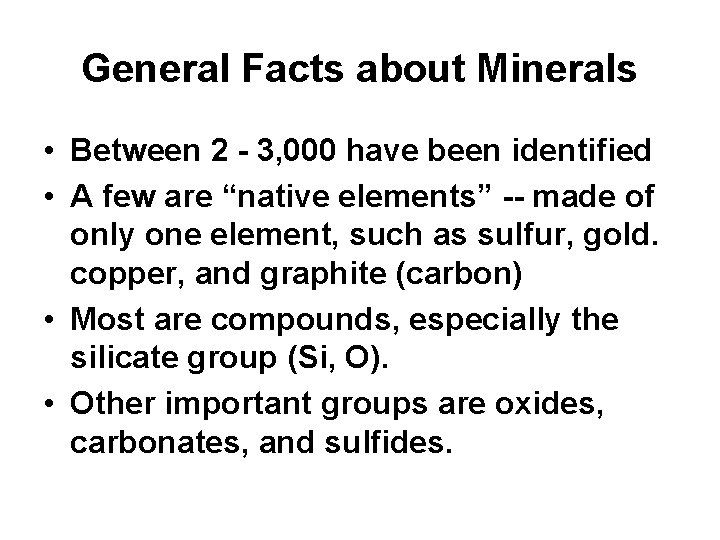
General Facts about Minerals • Between 2 - 3, 000 have been identified • A few are “native elements” -- made of only one element, such as sulfur, gold. copper, and graphite (carbon) • Most are compounds, especially the silicate group (Si, O). • Other important groups are oxides, carbonates, and sulfides.
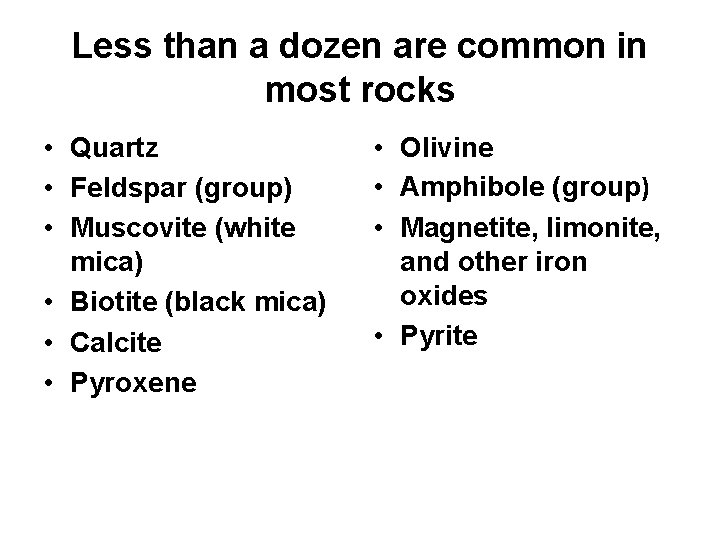
Less than a dozen are common in most rocks • Quartz • Feldspar (group) • Muscovite (white mica) • Biotite (black mica) • Calcite • Pyroxene • Olivine • Amphibole (group) • Magnetite, limonite, and other iron oxides • Pyrite
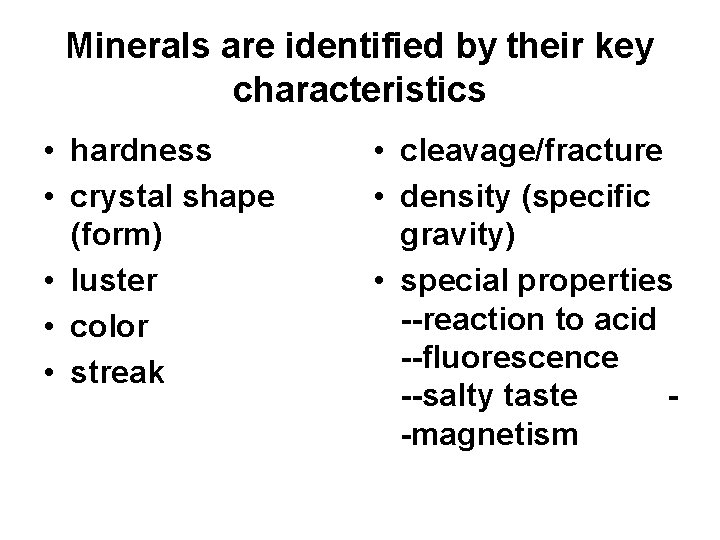
Minerals are identified by their key characteristics • hardness • crystal shape (form) • luster • color • streak • cleavage/fracture • density (specific gravity) • special properties --reaction to acid --fluorescence --salty taste -magnetism
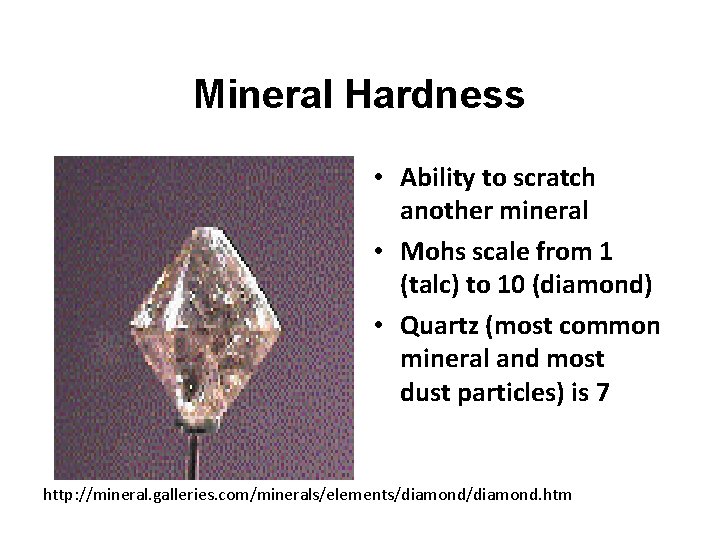
Mineral Hardness • Ability to scratch another mineral • Mohs scale from 1 (talc) to 10 (diamond) • Quartz (most common mineral and most dust particles) is 7 http: //mineral. galleries. com/minerals/elements/diamond. htm
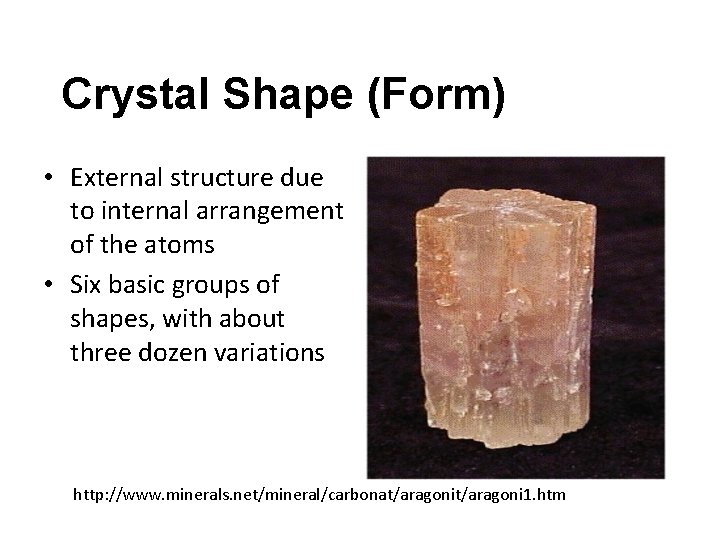
Crystal Shape (Form) • External structure due to internal arrangement of the atoms • Six basic groups of shapes, with about three dozen variations http: //www. minerals. net/mineral/carbonat/aragoni 1. htm
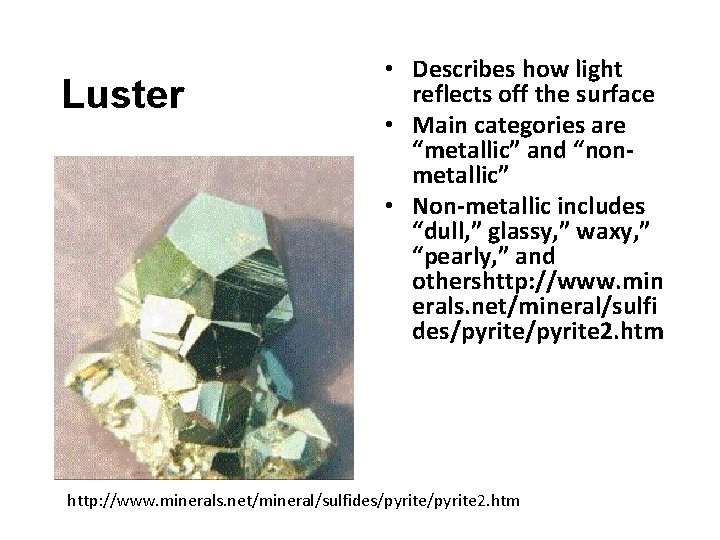
Luster • Describes how light reflects off the surface • Main categories are “metallic” and “nonmetallic” • Non-metallic includes “dull, ” glassy, ” waxy, ” “pearly, ” and othershttp: //www. min erals. net/mineral/sulfi des/pyrite 2. htm http: //www. minerals. net/mineral/sulfides/pyrite 2. htm
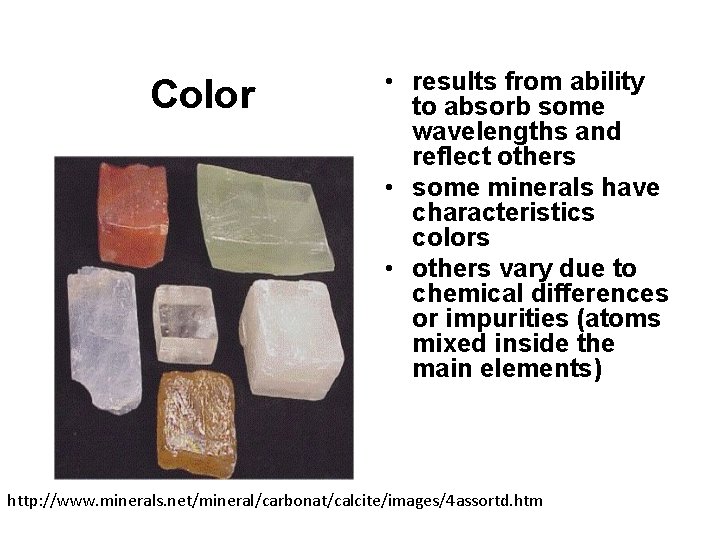
Color • results from ability to absorb some wavelengths and reflect others • some minerals have characteristics colors • others vary due to chemical differences or impurities (atoms mixed inside the main elements) http: //www. minerals. net/mineral/carbonat/calcite/images/4 assortd. htm
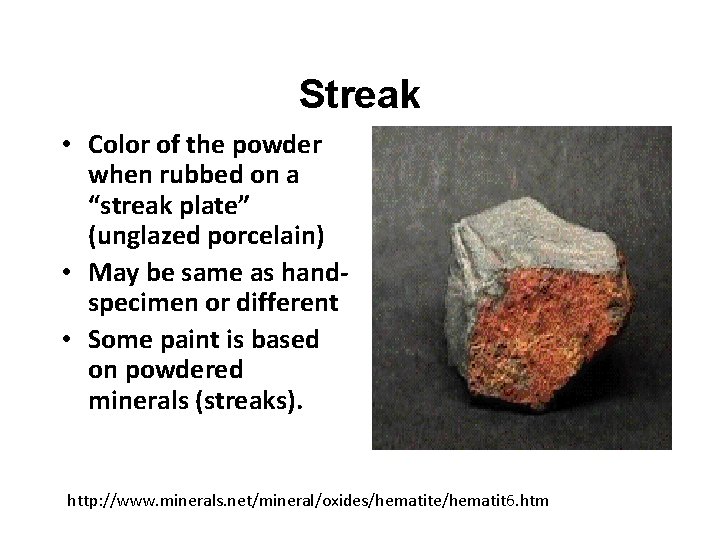
Streak • Color of the powder when rubbed on a “streak plate” (unglazed porcelain) • May be same as handspecimen or different • Some paint is based on powdered minerals (streaks). http: //www. minerals. net/mineral/oxides/hematite/hematit 6. htm
Mineral cleavage/fracture • Some minerals split along flat surfaces when struck hard--this is called mineral cleavage • Other minerals break unevenly along rough or curved surfaces--this is called fracture • A few minerals have both cleavage and fracture
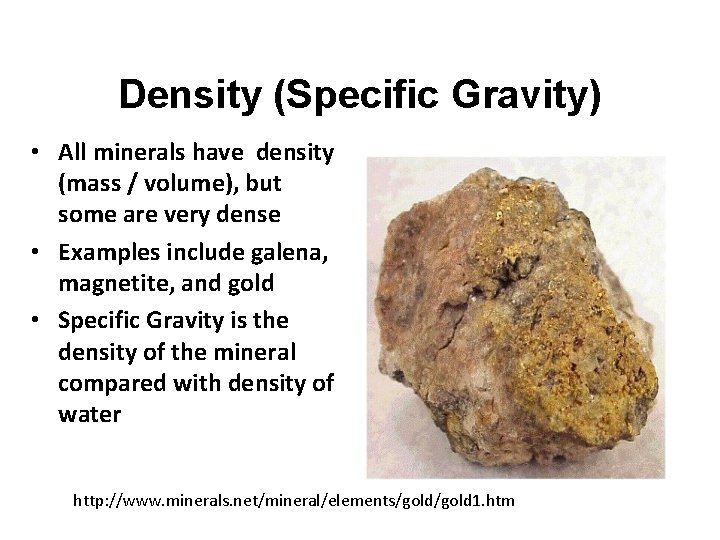
Density (Specific Gravity) • All minerals have density (mass / volume), but some are very dense • Examples include galena, magnetite, and gold • Specific Gravity is the density of the mineral compared with density of water http: //www. minerals. net/mineral/elements/gold 1. htm
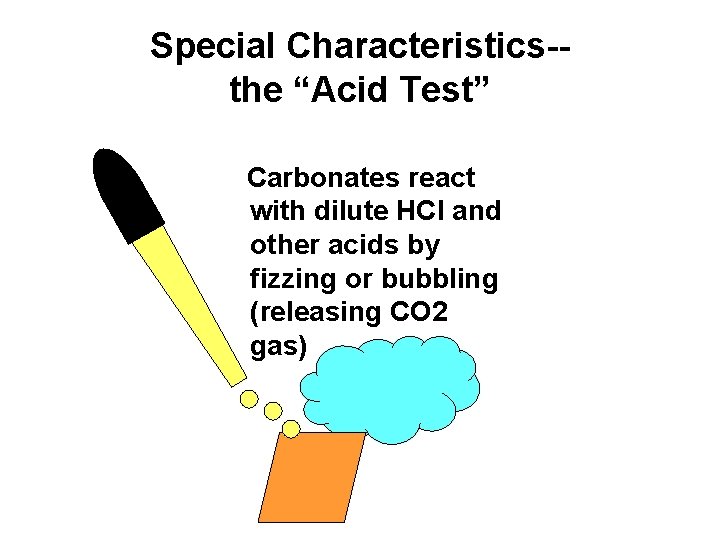
Special Characteristics-the “Acid Test” Carbonates react with dilute HCl and other acids by fizzing or bubbling (releasing CO 2 gas)
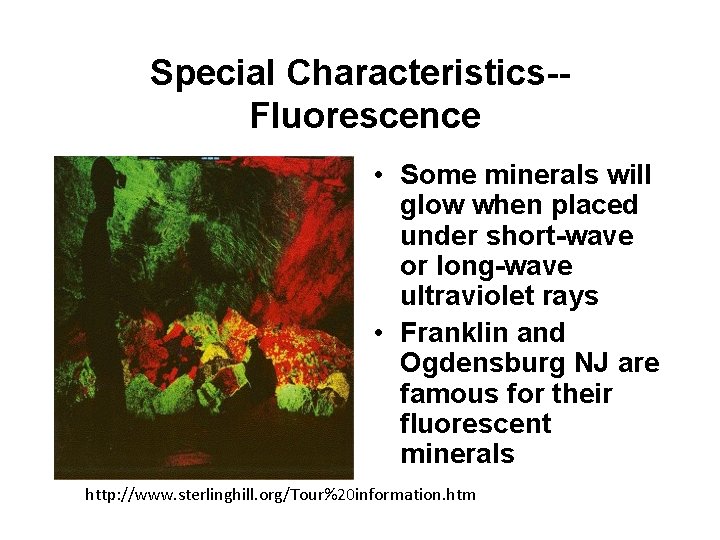
Special Characteristics-Fluorescence • Some minerals will glow when placed under short-wave or long-wave ultraviolet rays • Franklin and Ogdensburg NJ are famous for their fluorescent minerals http: //www. sterlinghill. org/Tour%20 information. htm
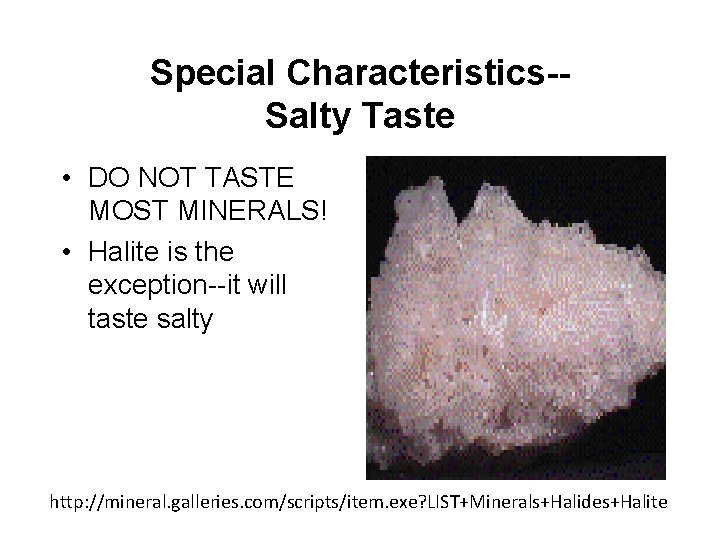
Special Characteristics-Salty Taste • DO NOT TASTE MOST MINERALS! • Halite is the exception--it will taste salty http: //mineral. galleries. com/scripts/item. exe? LIST+Minerals+Halides+Halite
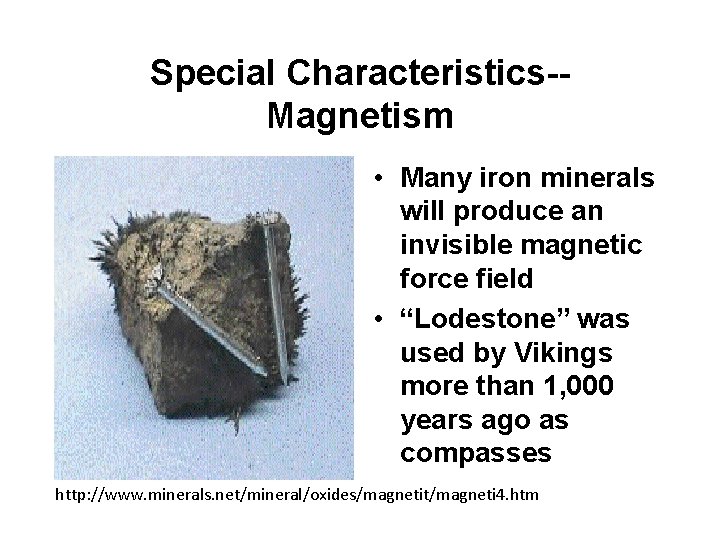
Special Characteristics-Magnetism • Many iron minerals will produce an invisible magnetic force field • “Lodestone” was used by Vikings more than 1, 000 years ago as compasses http: //www. minerals. net/mineral/oxides/magnetit/magneti 4. htm
- Slides: 33