
Plasticity of the nervous system an old concept
- Slides: 21
Plasticity of the nervous system - “an old concept with a new meaning” – a brief introduction … Jörgen Borg MD Ph. D Department of Clinical Sciences, Rehabilitation Medicine Karolinska Institutet, Danderyd Hospital Stockholm, Sweden
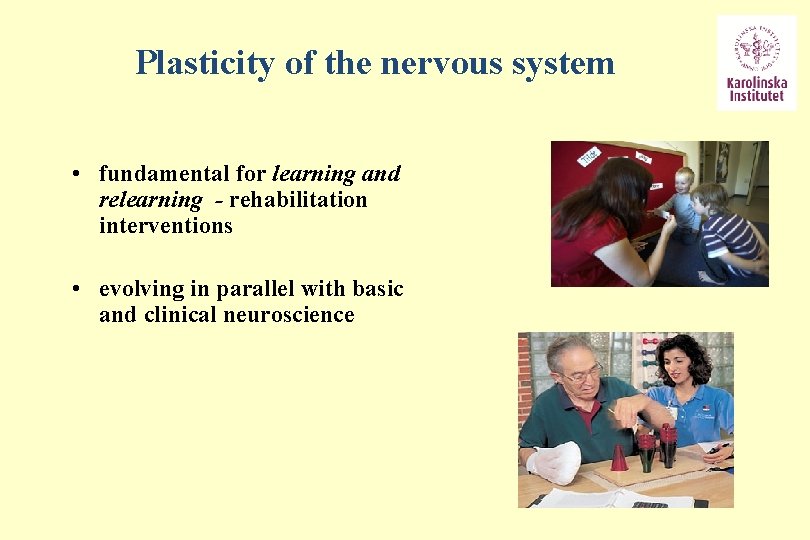
Plasticity of the nervous system • fundamental for learning and relearning - rehabilitation interventions • evolving in parallel with basic and clinical neuroscience
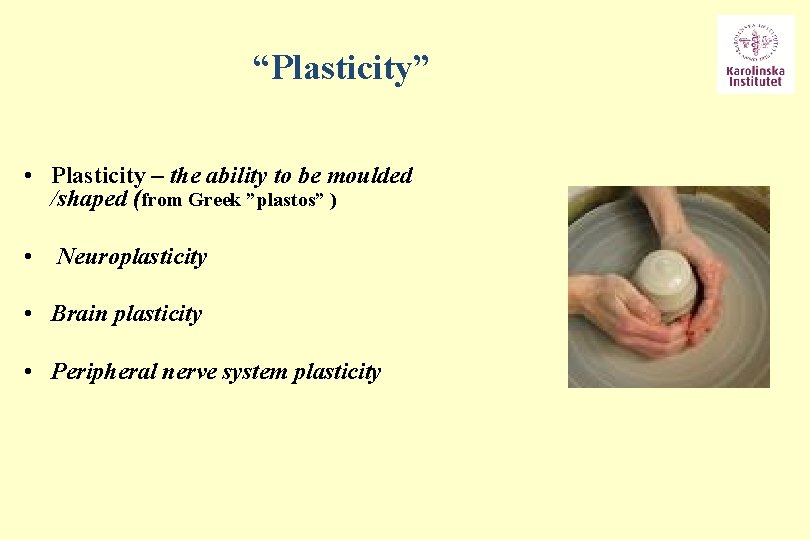
“Plasticity” • Plasticity – the ability to be moulded /shaped (from Greek ”plastos” ) • Neuroplasticity • Brain plasticity • Peripheral nerve system plasticity
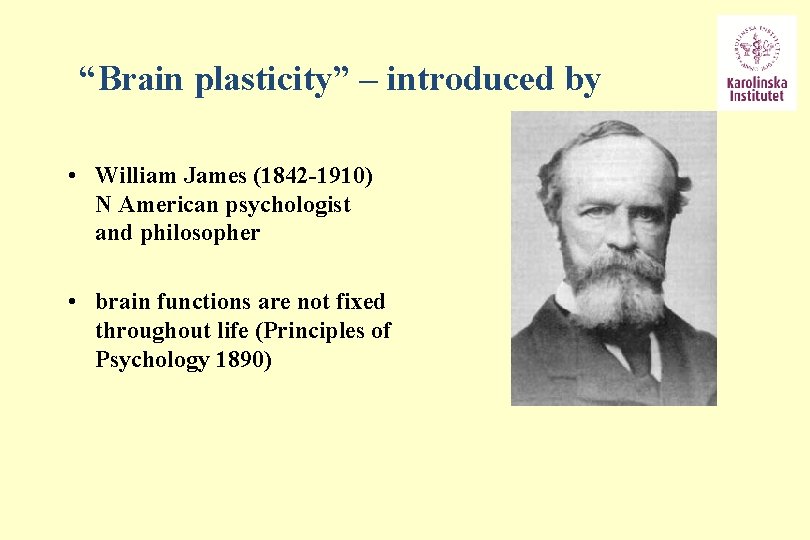
“Brain plasticity” – introduced by • William James (1842 -1910) N American psychologist and philosopher • brain functions are not fixed throughout life (Principles of Psychology 1890)
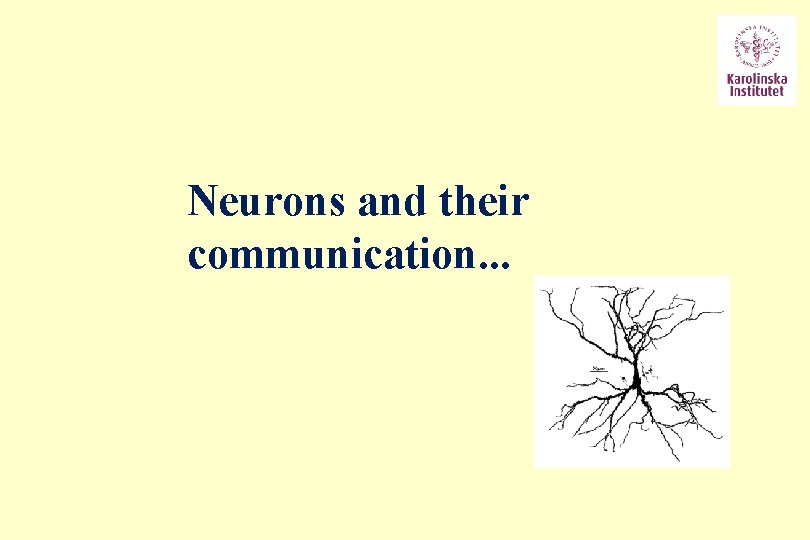
Neurons and their communication. . .
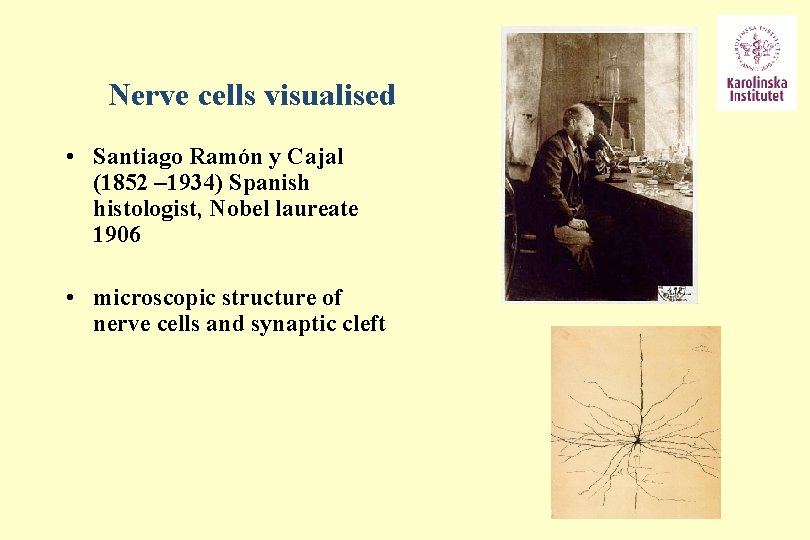
Nerve cells visualised • Santiago Ramón y Cajal (1852 – 1934) Spanish histologist, Nobel laureate 1906 • microscopic structure of nerve cells and synaptic cleft
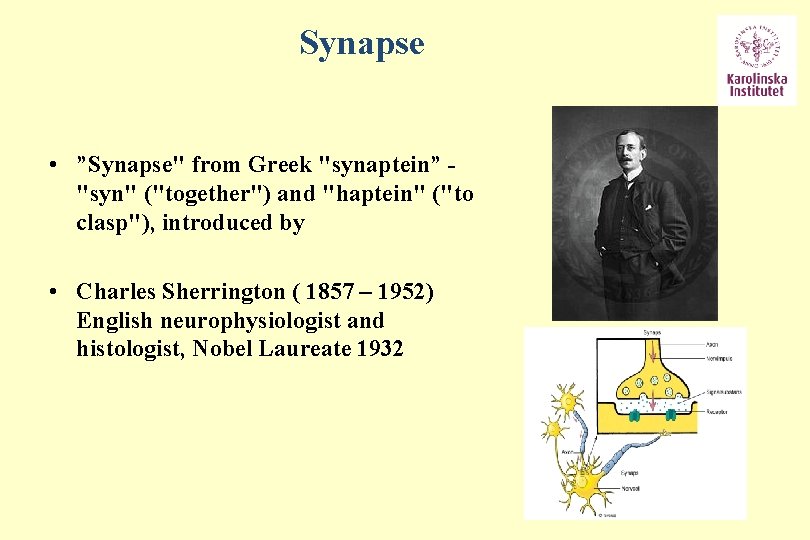
Synapse • ”Synapse" from Greek "synaptein” "syn" ("together") and "haptein" ("to clasp"), introduced by • Charles Sherrington ( 1857 – 1952) English neurophysiologist and histologist, Nobel Laureate 1932
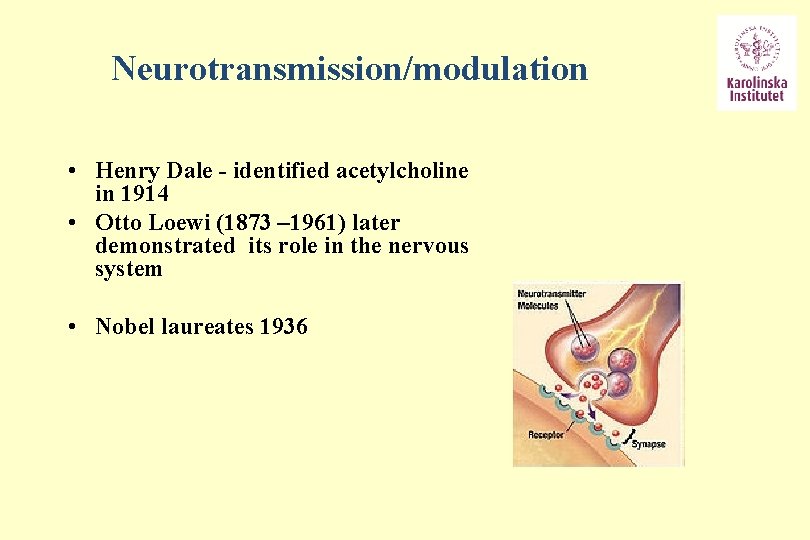
Neurotransmission/modulation • Henry Dale - identified acetylcholine in 1914 • Otto Loewi (1873 – 1961) later demonstrated its role in the nervous system • Nobel laureates 1936
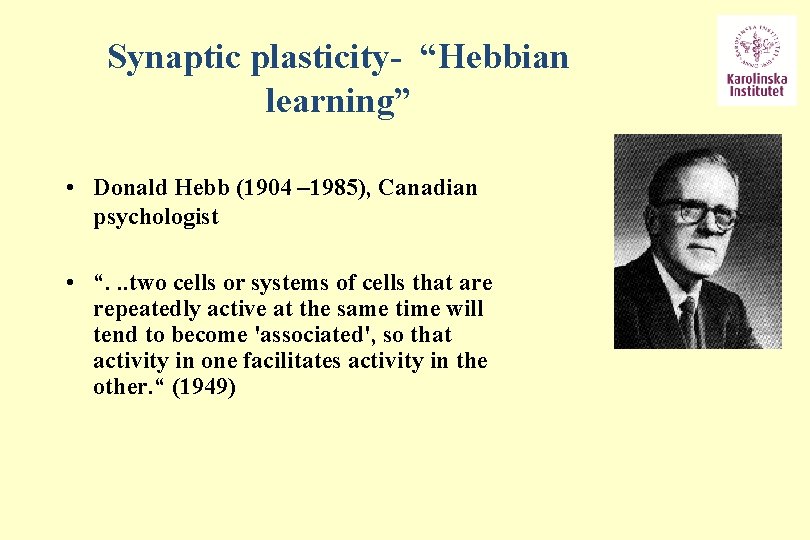
Synaptic plasticity- “Hebbian learning” • Donald Hebb (1904 – 1985), Canadian psychologist • “. . . two cells or systems of cells that are repeatedly active at the same time will tend to become 'associated', so that activity in one facilitates activity in the other. “ (1949)
Synaptic strength - Long Term Potentiation and Depression • Terje Lømo 1966: synaptic long-lasting/long-term potentiation /LTP - increase in the synaptic strength of neurons in hippocampus following electrical stimulation • change of postsynaptic cell's sensitivity to input from presynaptic cells • LTP and LTD important mechanisms for learning and memory
New synapses • - in response to experiences in normal brain • - from dendritic and axonal sproutes in injured brain
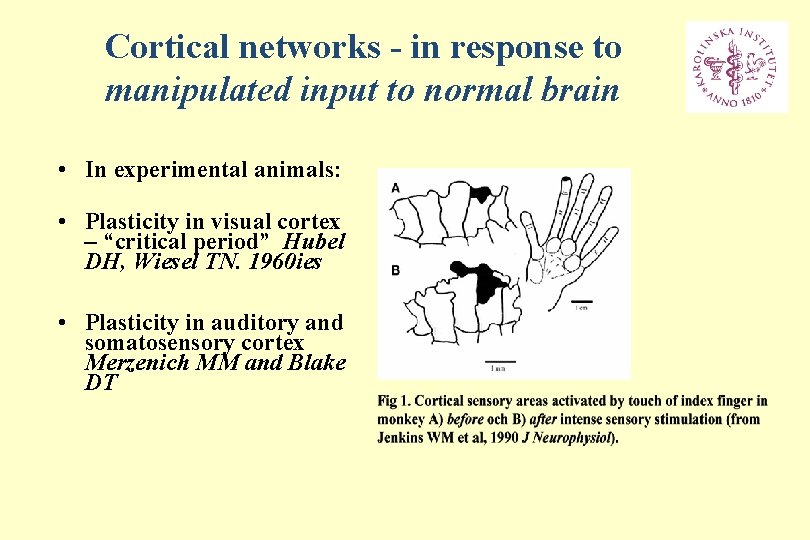
Cortical networks - in response to manipulated input to normal brain • In experimental animals: • Plasticity in visual cortex – “critical period” Hubel DH, Wiesel TN. 1960 ies • Plasticity in auditory and somatosensory cortex Merzenich MM and Blake DT
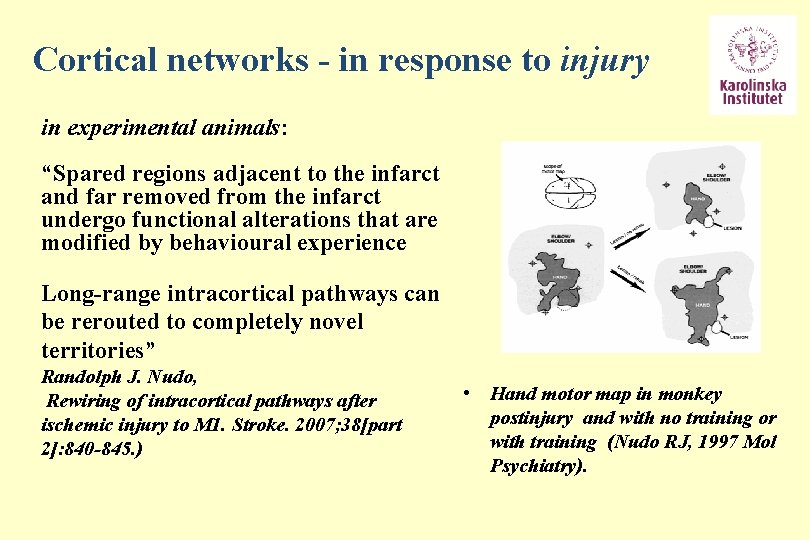
Cortical networks - in response to injury in experimental animals: “Spared regions adjacent to the infarct and far removed from the infarct undergo functional alterations that are modified by behavioural experience Long-range intracortical pathways can be rerouted to completely novel territories” Randolph J. Nudo, Rewiring of intracortical pathways after ischemic injury to M 1. Stroke. 2007; 38[part 2]: 840 -845. ) • Hand motor map in monkey postinjury and with no training or with training (Nudo RJ, 1997 Mol Psychiatry).
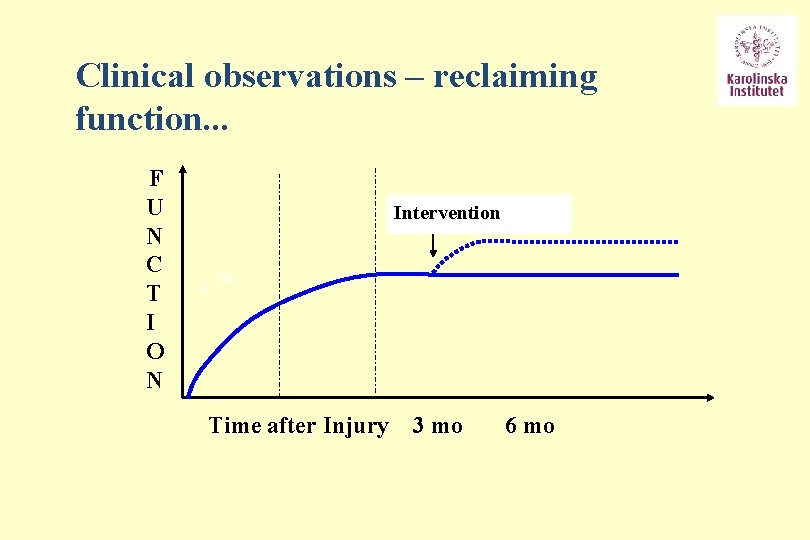
Clinical observations – reclaiming function. . . F U N C T I O N Intervention SM A Time after Injury 3 mo 6 mo
Clinical recovery and plasticity • Numerous studies have described the recovery curve of various functions in patients with stroke and TBI • Correlates with reorganisation of networks - as demonstrated by an increasing number of imaging studies since the pioneering studies by Chollet F et al /PET, Cao Y et al/f. MRI in the 1990 -ies • Reorganisation depends on age at injury, time since injury and interventions
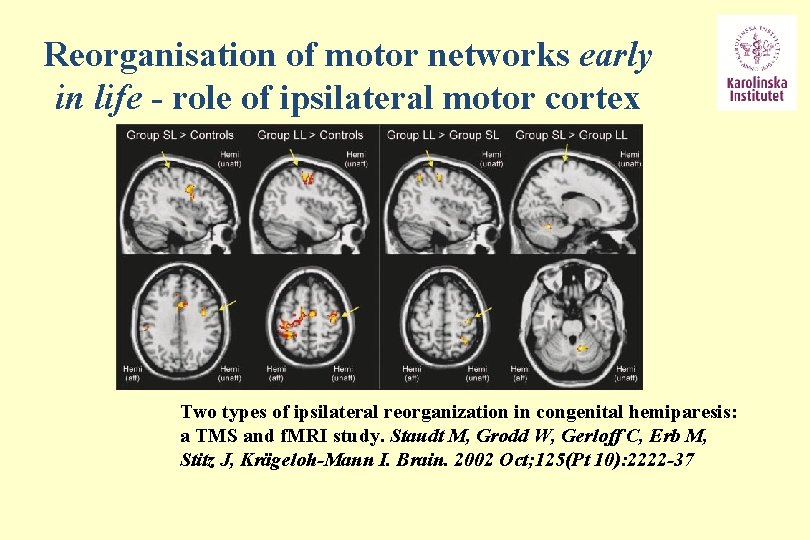
Reorganisation of motor networks early in life - role of ipsilateral motor cortex Two types of ipsilateral reorganization in congenital hemiparesis: a TMS and f. MRI study. Staudt M, Grodd W, Gerloff C, Erb M, Stitz J, Krägeloh-Mann I. Brain. 2002 Oct; 125(Pt 10): 2222 -37
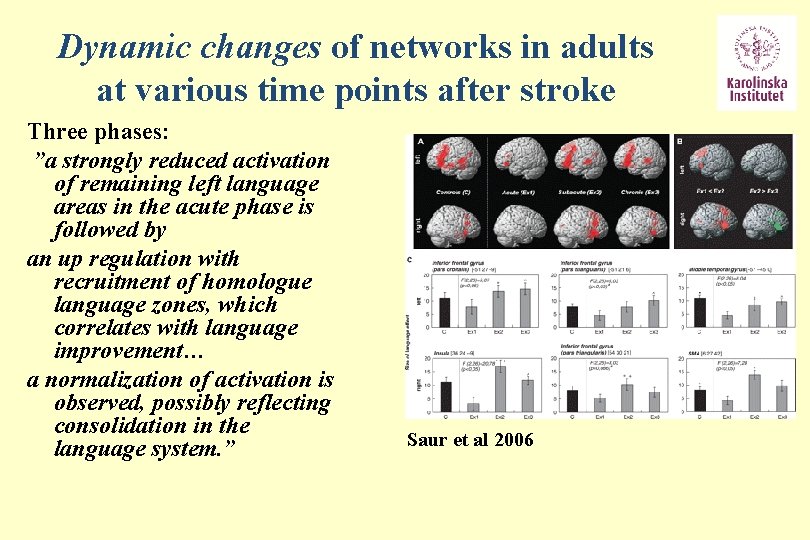
Dynamic changes of networks in adults at various time points after stroke Three phases: ”a strongly reduced activation of remaining left language areas in the acute phase is followed by an up regulation with recruitment of homologue language zones, which correlates with language improvement… a normalization of activation is observed, possibly reflecting consolidation in the language system. ” Saur et al 2006
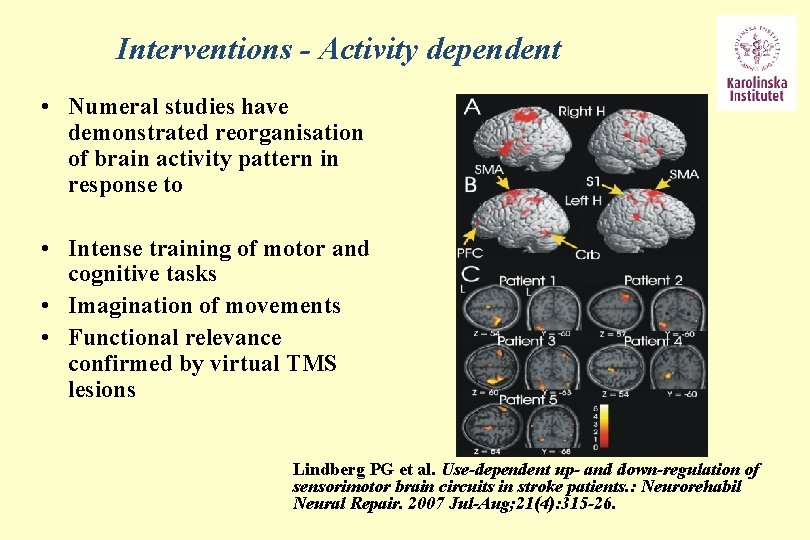
Interventions - Activity dependent • Numeral studies have demonstrated reorganisation of brain activity pattern in response to • Intense training of motor and cognitive tasks • Imagination of movements • Functional relevance confirmed by virtual TMS lesions Lindberg PG et al. Use-dependent up- and down-regulation of sensorimotor brain circuits in stroke patients. : Neurorehabil Neural Repair. 2007 Jul-Aug; 21(4): 315 -26.
Behind today's concept. . • Huge number of observational and experimental studies • Last two decades: • Human brain networks related to sensory-motor, speechcognitive functions, emotions and “consciousness” • Reorganisation of these networks in response to injury and interventions
References in Pub. Med April 2010 • • • Neuroplasticity 28 268 (>90% after 1990) Brain plasticity 24 757 Synaptic plasticity 15 009 f. MRI and plasticity 1 206 PET and plasticity 166 • • • Learning and plasticity 8 473 Motor recovery and plasticity 869 Pain and plasticity 1 354 TMS and plasticity 245 DCS and plasticity 73 • Rehabilitation and plasticity 1 128
Current meaning of brain plasticity in rehabilitation medicine? • Functional improvements after an acquired brain injury are paralleled by reorganisation of cerebral networks • Such reorganisation is activity driven – new technologies may be supportive (also in order to avoid “maladaptive” plasticity? ) • Functional imaging will soon be part of routine functional diagnostic set up and used to design individualised interventions(? )