
Plasma surface treatment and polymerization for functionalizing material
- Slides: 26
Plasma surface treatment and polymerization for functionalizing material surfaces JW Bradley Dept. of Electrical Engineering and Electronics The University of Liverpool
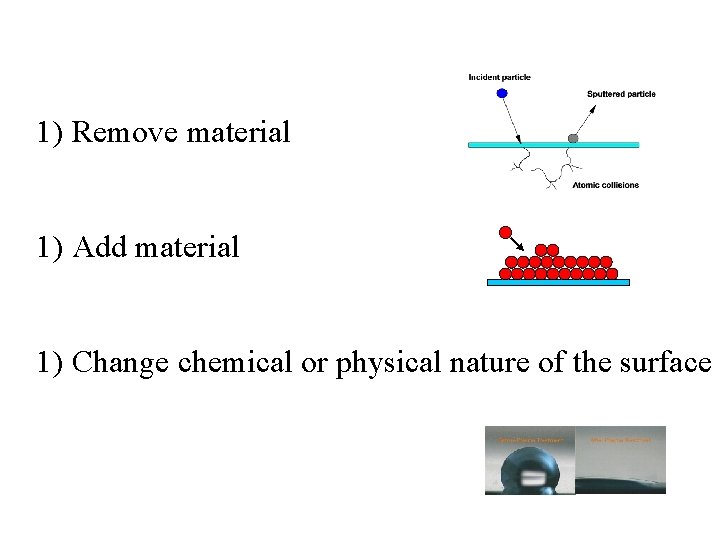
1) Remove material 1) Add material 1) Change chemical or physical nature of the surface
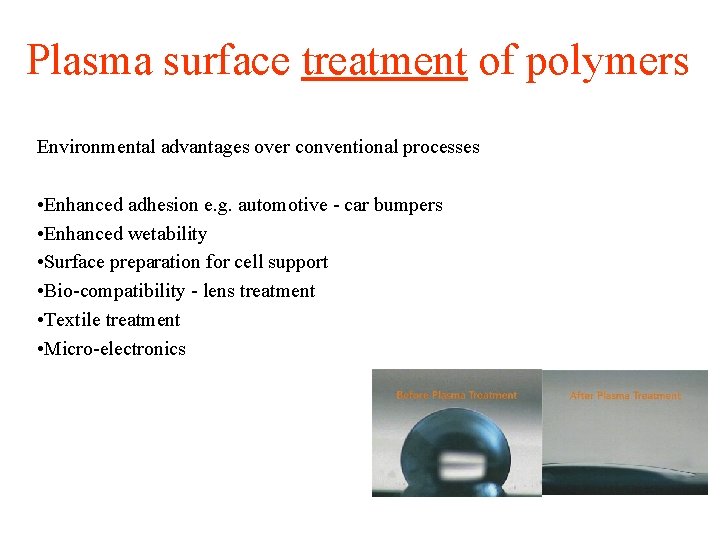
Plasma surface treatment of polymers Environmental advantages over conventional processes • Enhanced adhesion e. g. automotive - car bumpers • Enhanced wetability • Surface preparation for cell support • Bio-compatibility - lens treatment • Textile treatment • Micro-electronics
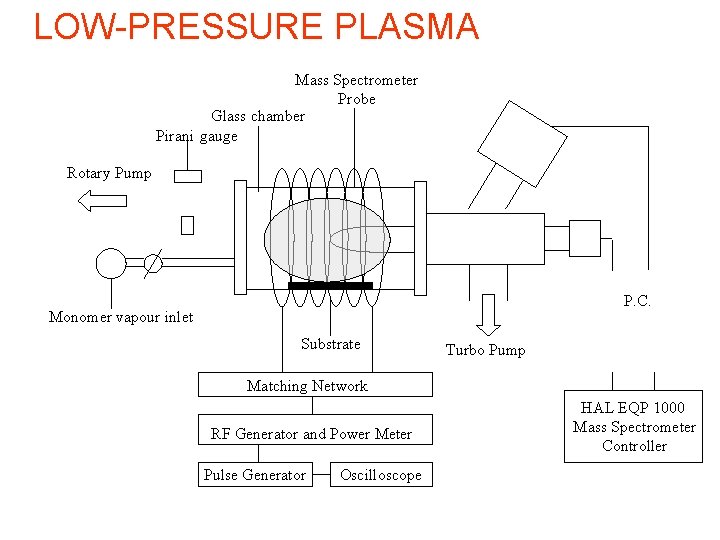
LOW-PRESSURE PLASMA Mass Spectrometer Probe Glass chamber Pirani gauge Rotary Pump P. C. Monomer vapour inlet Substrate Turbo Pump Matching Network RF Generator and Power Meter Pulse Generator Oscilloscope HAL EQP 1000 Mass Spectrometer Controller
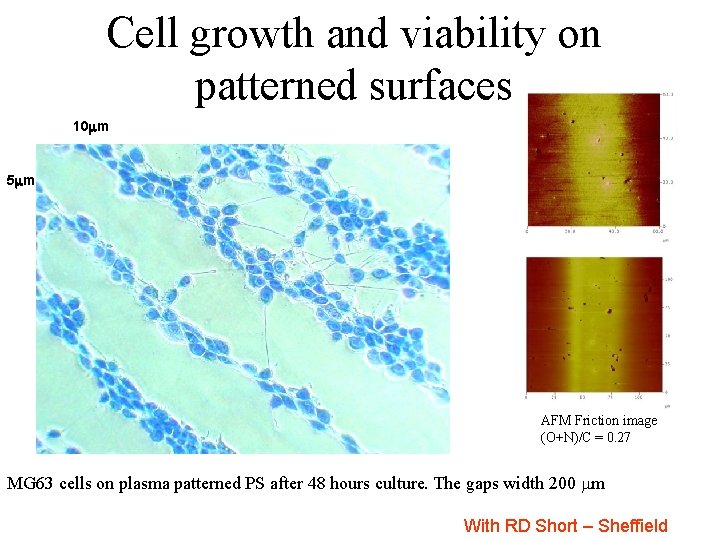
Cell growth and viability on patterned surfaces 10 m 5 m AFM Friction image (O+N)/C = 0. 27 MG 63 cells on plasma patterned PS after 48 hours culture. The gaps width 200 m With RD Short – Sheffield
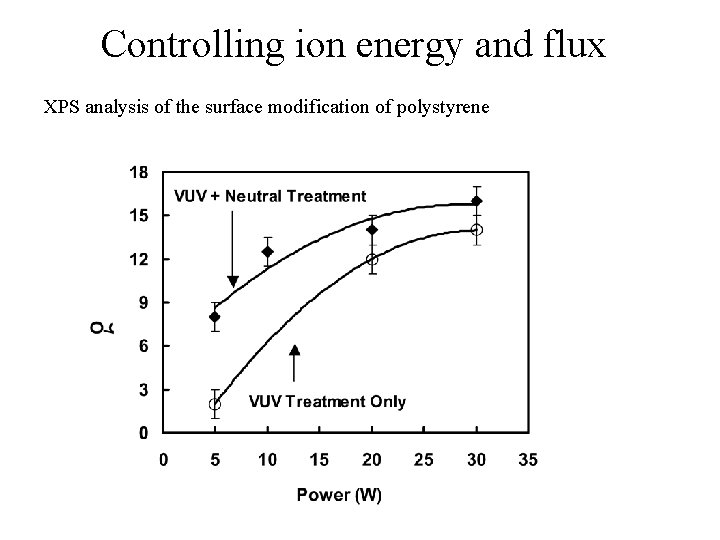
Controlling ion energy and flux XPS analysis of the surface modification of polystyrene
Production of deposits by pulsed plasma polymerisation Pulsed plasma polymerisation • Wide range of potential applications – Barrier coatings: PET films to form packaging cartons – Scratch resistant transparent coatings – Anti-corrosive layers – Anti-adhering, anti-soiling coatings - i. e. baking trays, pans etc – Biocompatibility
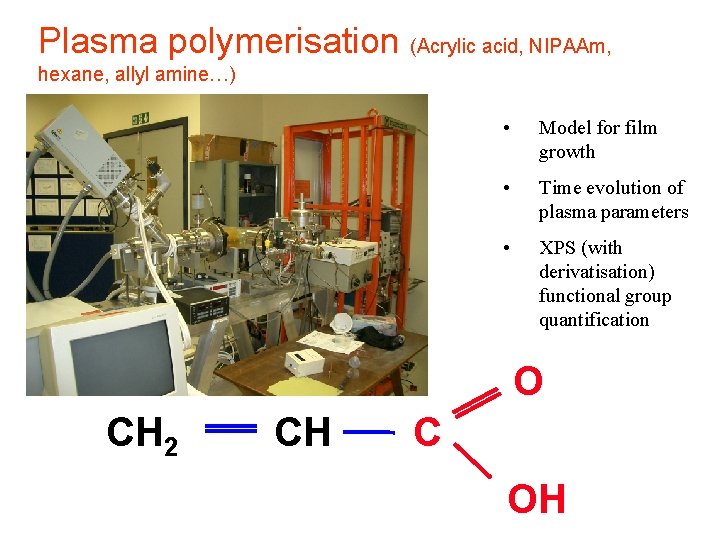
Plasma polymerisation (Acrylic acid, NIPAAm, hexane, allyl amine…) • Model for film growth • Time evolution of plasma parameters • XPS (with derivatisation) functional group quantification O CH 2 CH C OH
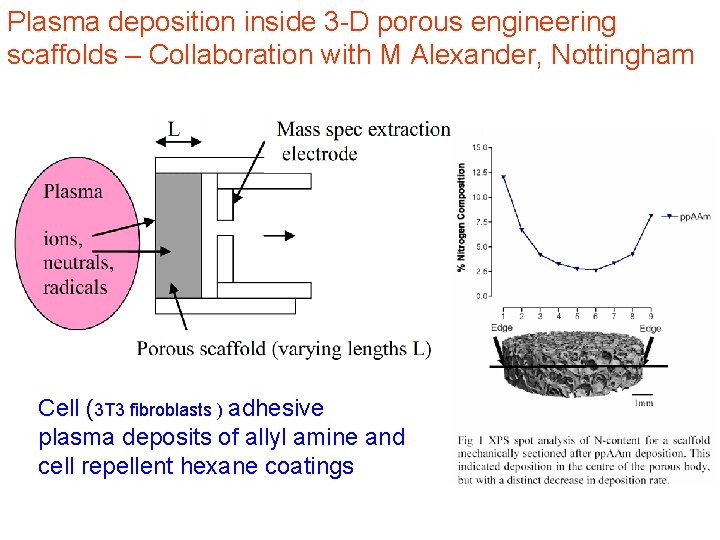
Plasma deposition inside 3 -D porous engineering scaffolds – Collaboration with M Alexander, Nottingham Cell (3 T 3 fibroblasts ) adhesive plasma deposits of allyl amine and cell repellent hexane coatings
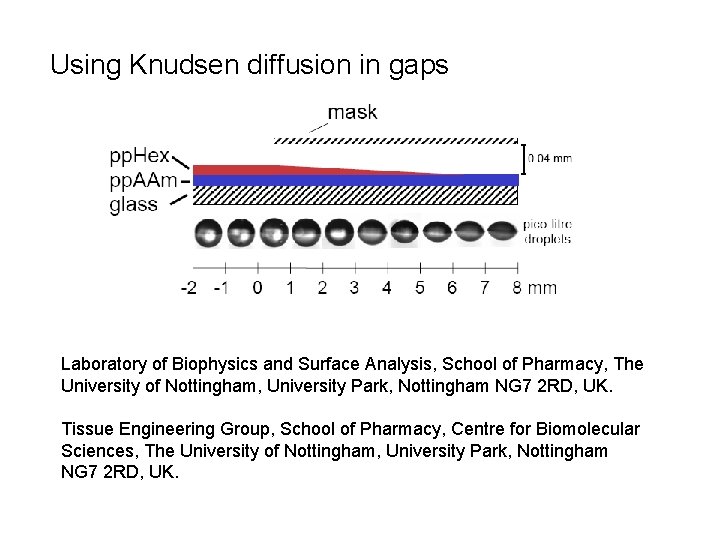
Using Knudsen diffusion in gaps Laboratory of Biophysics and Surface Analysis, School of Pharmacy, The University of Nottingham, University Park, Nottingham NG 7 2 RD, UK. Tissue Engineering Group, School of Pharmacy, Centre for Biomolecular Sciences, The University of Nottingham, University Park, Nottingham NG 7 2 RD, UK.
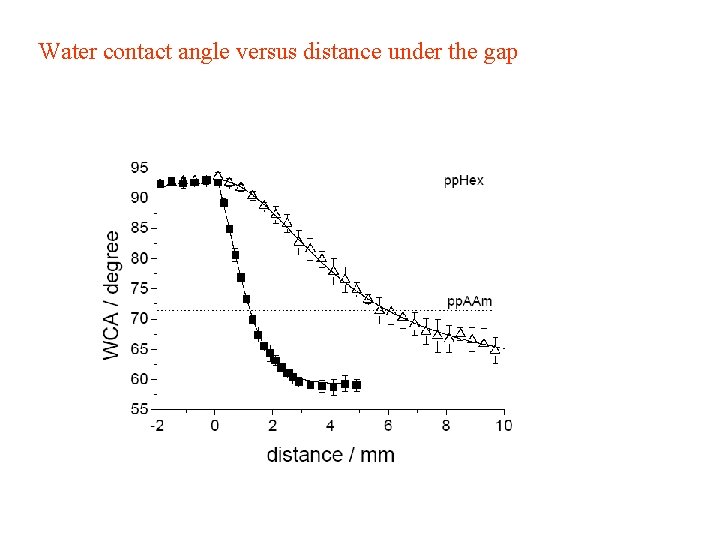
Water contact angle versus distance under the gap
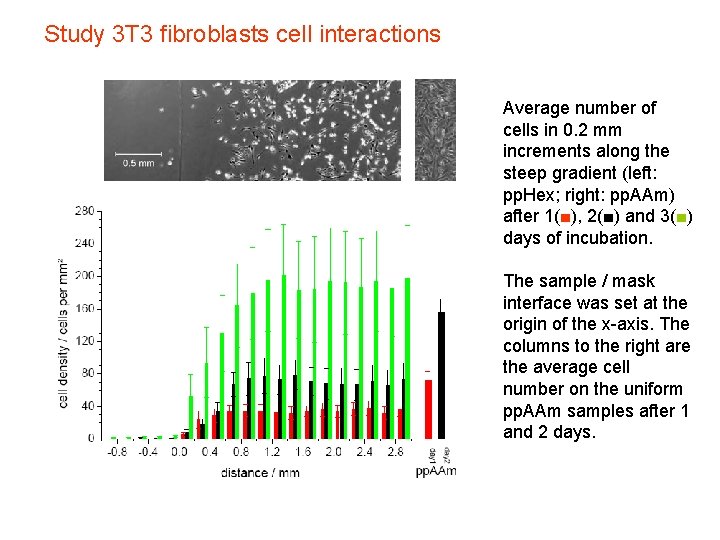
Study 3 T 3 fibroblasts cell interactions Average number of cells in 0. 2 mm increments along the steep gradient (left: pp. Hex; right: pp. AAm) after 1(■), 2(■) and 3(■) days of incubation. The sample / mask interface was set at the origin of the x-axis. The columns to the right are the average cell number on the uniform pp. AAm samples after 1 and 2 days.
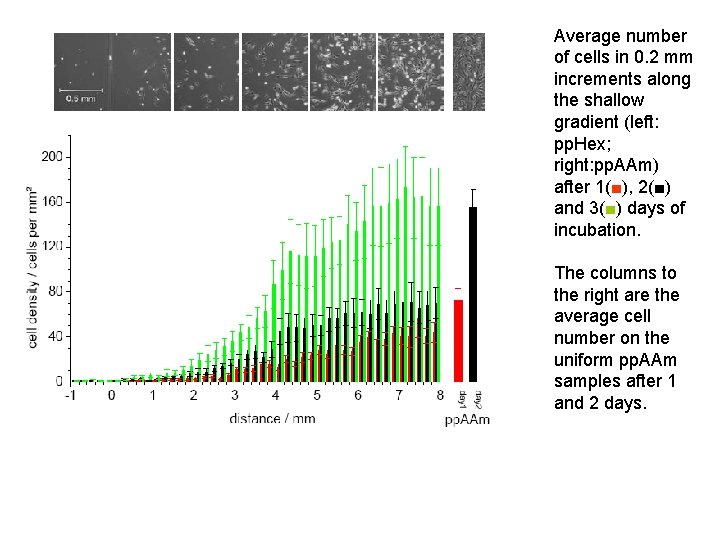
Average number of cells in 0. 2 mm increments along the shallow gradient (left: pp. Hex; right: pp. AAm) after 1(■), 2(■) and 3(■) days of incubation. The columns to the right are the average cell number on the uniform pp. AAm samples after 1 and 2 days.
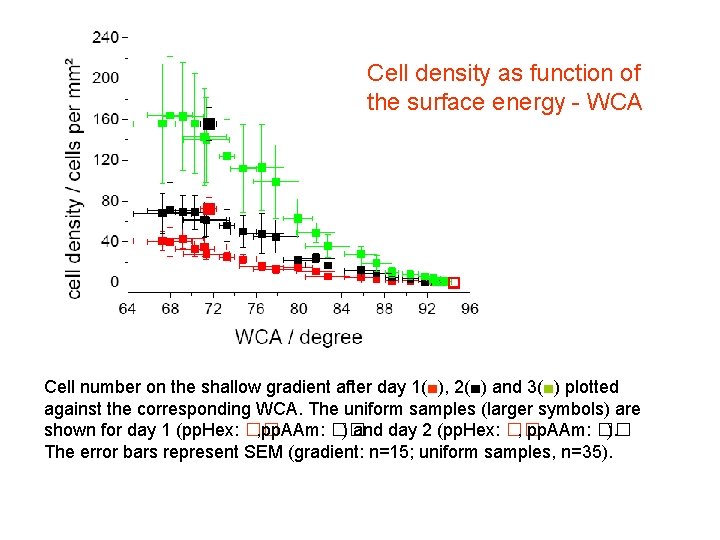
Cell density as function of the surface energy - WCA Cell number on the shallow gradient after day 1(■), 2(■) and 3(■) plotted against the corresponding WCA. The uniform samples (larger symbols) are shown for day 1 (pp. Hex: �� , pp. AAm: �� ) and day 2 (pp. Hex: �� , pp. AAm: �� ). The error bars represent SEM (gradient: n=15; uniform samples, n=35).
Plasma physics- chemistry study - Acrylic acid
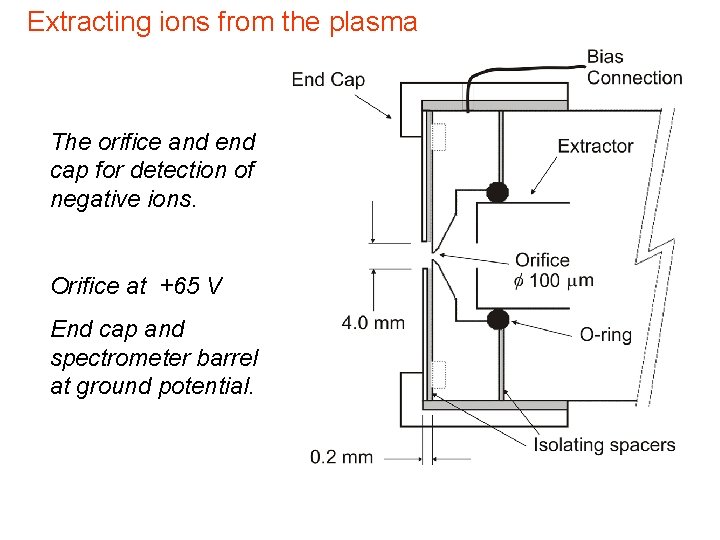
Extracting ions from the plasma The orifice and end cap for detection of negative ions. Orifice at +65 V End cap and spectrometer barrel at ground potential.
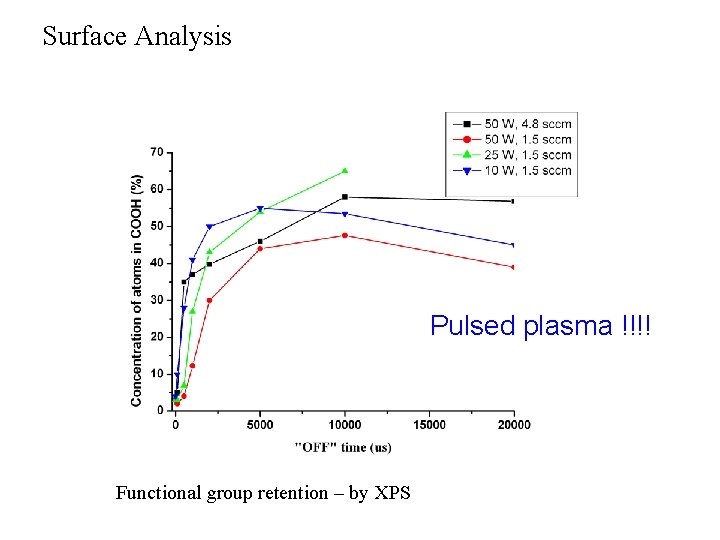
Surface Analysis Pulsed plasma !!!! Functional group retention – by XPS
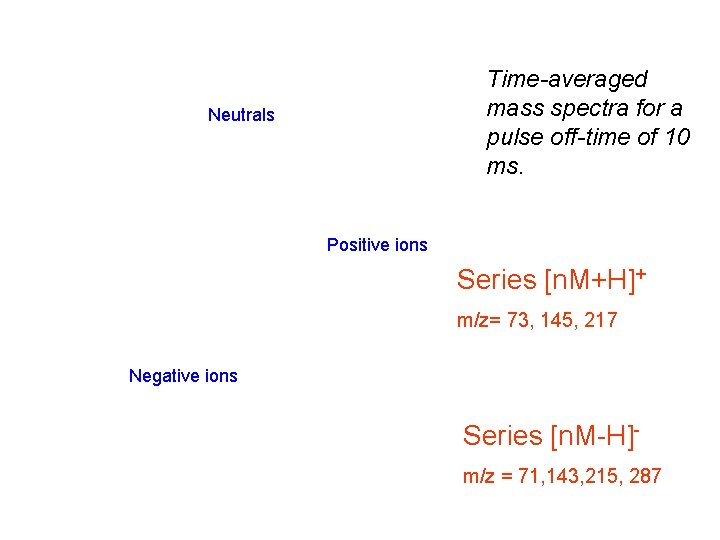
Time-averaged mass spectra for a pulse off-time of 10 ms. Neutrals Positive ions Series [n. M+H]+ m/z= 73, 145, 217 Negative ions Series [n. M-H]m/z = 71, 143, 215, 287
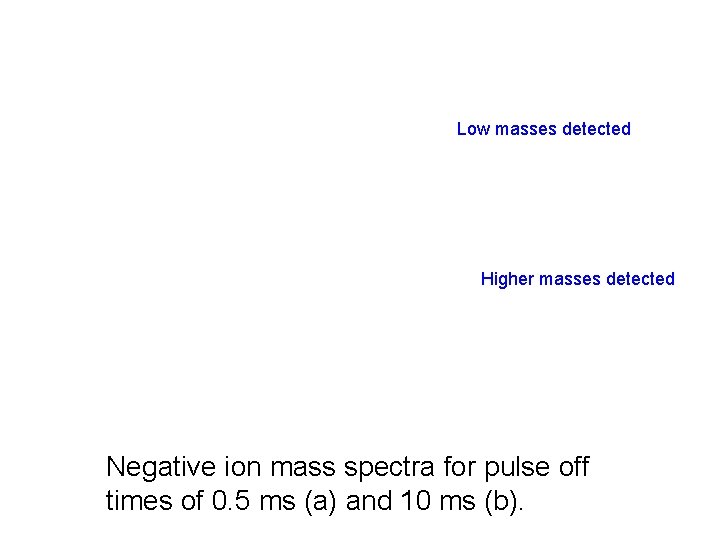
Low masses detected Higher masses detected Negative ion mass spectra for pulse off times of 0. 5 ms (a) and 10 ms (b).
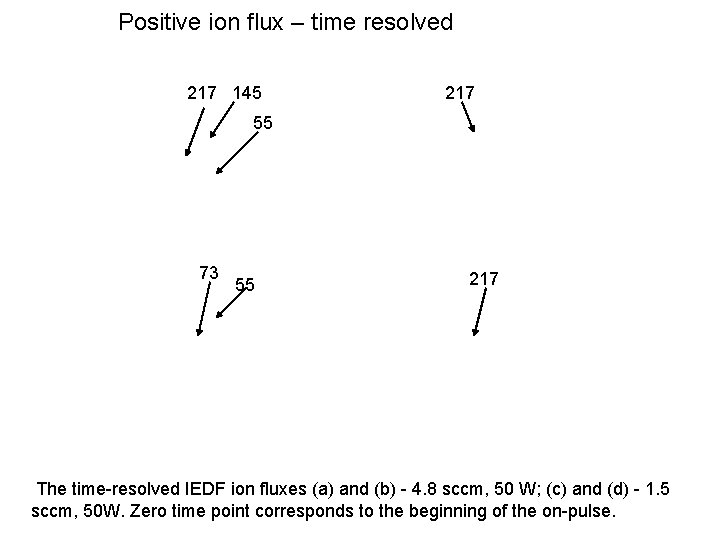
Positive ion flux – time resolved 217 145 217 55 73 55 217 The time-resolved IEDF ion fluxes (a) and (b) - 4. 8 sccm, 50 W; (c) and (d) - 1. 5 sccm, 50 W. Zero time point corresponds to the beginning of the on-pulse.
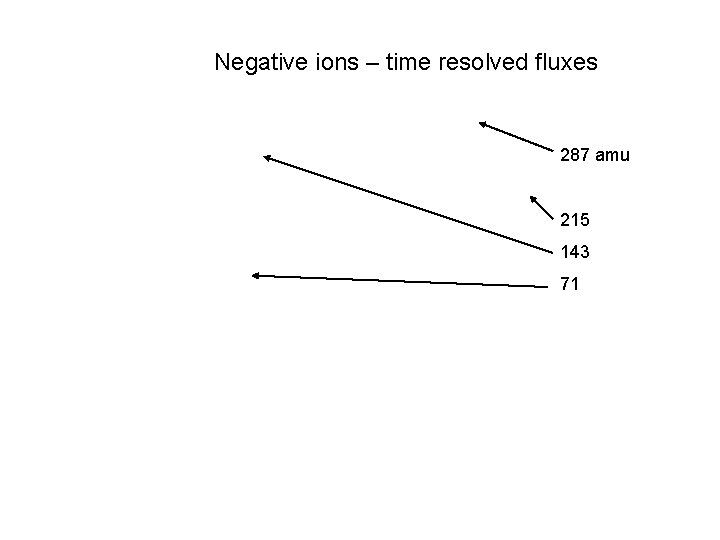
Negative ions – time resolved fluxes 287 amu 215 143 71
Negative ion structural assignments and potential production mechanisms
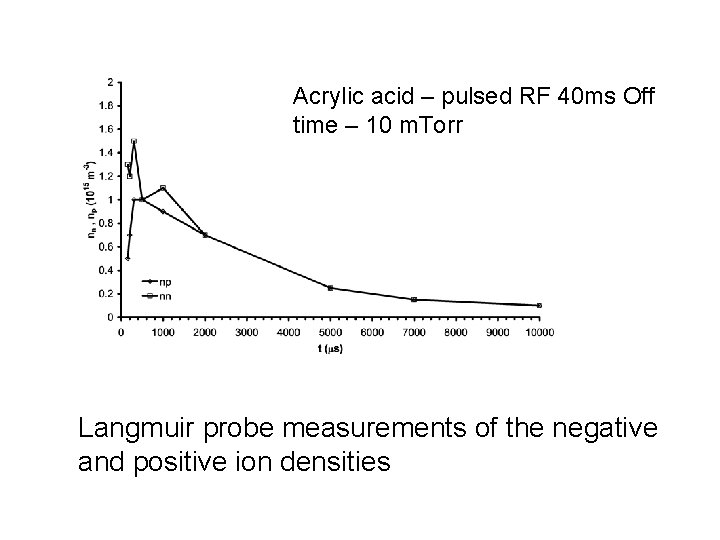
Acrylic acid – pulsed RF 40 ms Off time – 10 m. Torr Langmuir probe measurements of the negative and positive ion densities
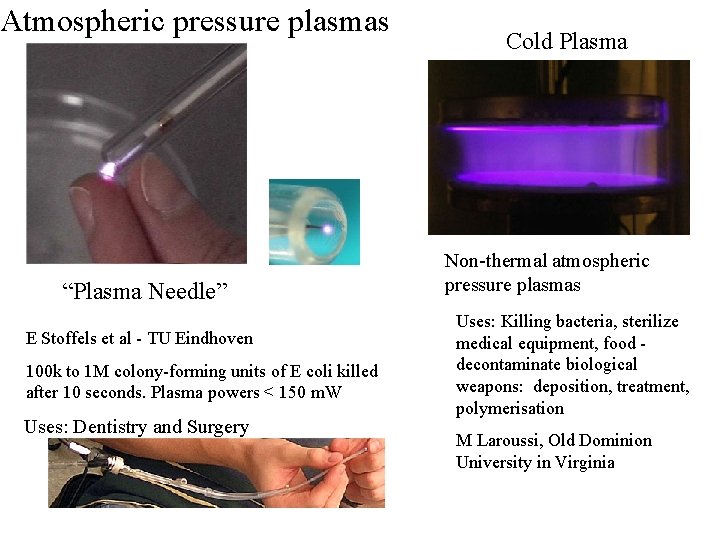
Atmospheric pressure plasmas “Plasma Needle” E Stoffels et al - TU Eindhoven 100 k to 1 M colony-forming units of E coli killed after 10 seconds. Plasma powers < 150 m. W Uses: Dentistry and Surgery Cold Plasma Non-thermal atmospheric pressure plasmas Uses: Killing bacteria, sterilize medical equipment, food decontaminate biological weapons: deposition, treatment, polymerisation M Laroussi, Old Dominion University in Virginia
Conclusions § Low-pressure plasma treatment/polymerization is useful § Applications in many areas – Bio-surfaces, flexible electronics. etc. . § High-pressure and Atmospheric pressure plasma being developed § Activity in technological plasma research is relevant and timely § The synergy between plasma physics, engineering, chemistry, surface science and bio-science will provide unique opportunities
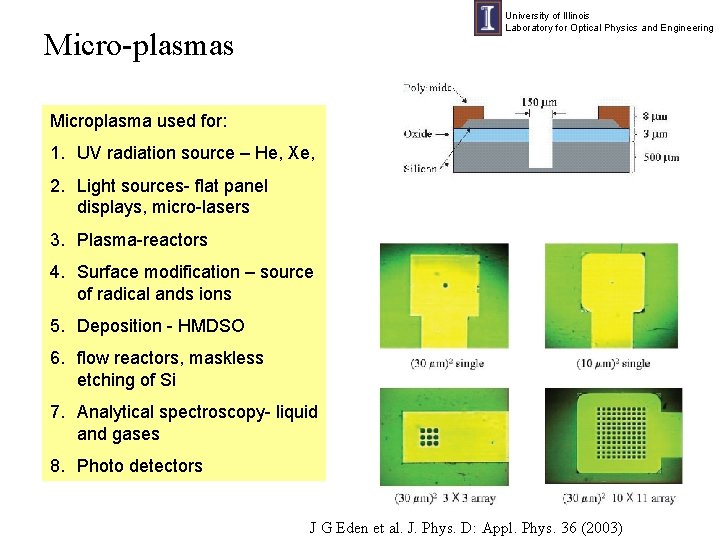
University of Illinois Laboratory for Optical Physics and Engineering Micro-plasmas Microplasma used for: 1. UV radiation source – He, Xe, 2. Light sources- flat panel displays, micro-lasers 3. Plasma-reactors 4. Surface modification – source of radical ands ions 5. Deposition - HMDSO 6. flow reactors, maskless etching of Si 7. Analytical spectroscopy- liquid and gases 8. Photo detectors J G Eden et al. J. Phys. D: Appl. Phys. 36 (2003)