
Plasma proteins 30 October 2020 Department of physiology
Plasma proteins: 30 October 2020 Department of physiology. 1
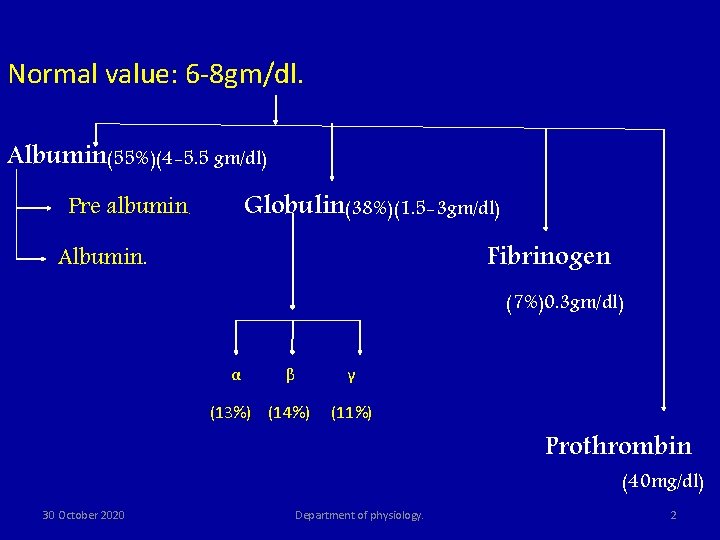
Normal value: 6 -8 gm/dl. Albumin(55%)(4 -5. 5 gm/dl) Globulin(38%)(1. 5 -3 gm/dl) Pre albumin. Fibrinogen Albumin. (7%)0. 3 gm/dl) α β (13%) (14%) γ (11%) Prothrombin (40 mg/dl) 30 October 2020 Department of physiology. 2
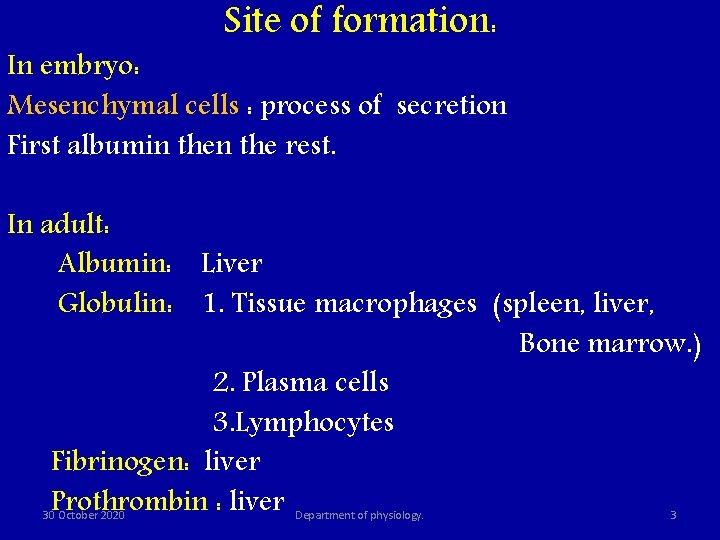
Site of formation: In embryo: Mesenchymal cells : process of secretion First albumin the rest. In adult: Albumin: Liver Globulin: 1. Tissue macrophages (spleen, liver, Bone marrow. ) 2. Plasma cells 3. Lymphocytes Fibrinogen: liver Prothrombin : liver 30 October 2020 Department of physiology. 3
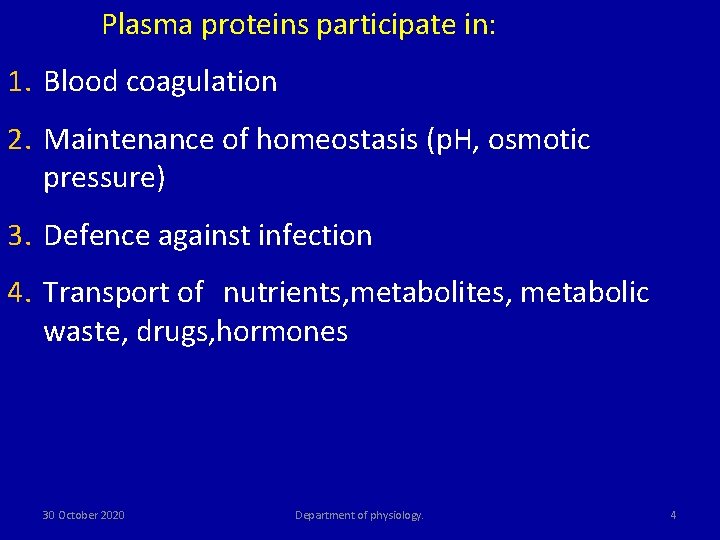
Plasma proteins participate in: 1. Blood coagulation 2. Maintenance of homeostasis (p. H, osmotic pressure) 3. Defence against infection 4. Transport of nutrients, metabolites, metabolic waste, drugs, hormones 30 October 2020 Department of physiology. 4
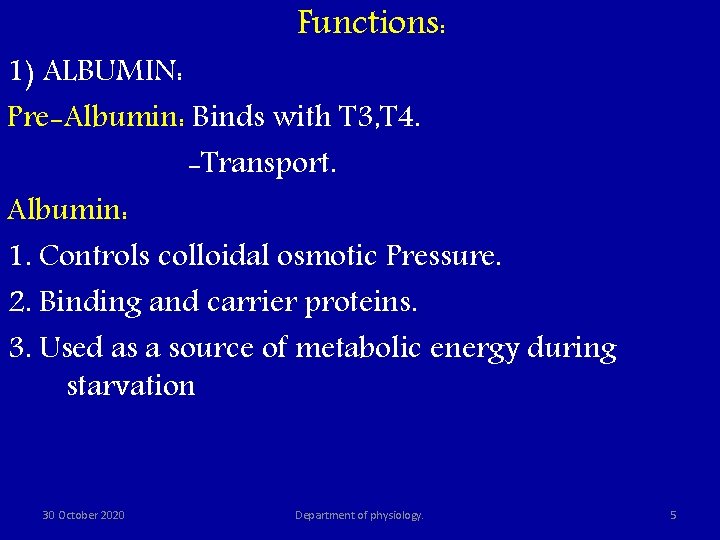
Functions: 1) ALBUMIN: Pre-Albumin: Binds with T 3, T 4. -Transport. Albumin: 1. Controls colloidal osmotic Pressure. 2. Binding and carrier proteins. 3. Used as a source of metabolic energy during starvation 30 October 2020 Department of physiology. 5
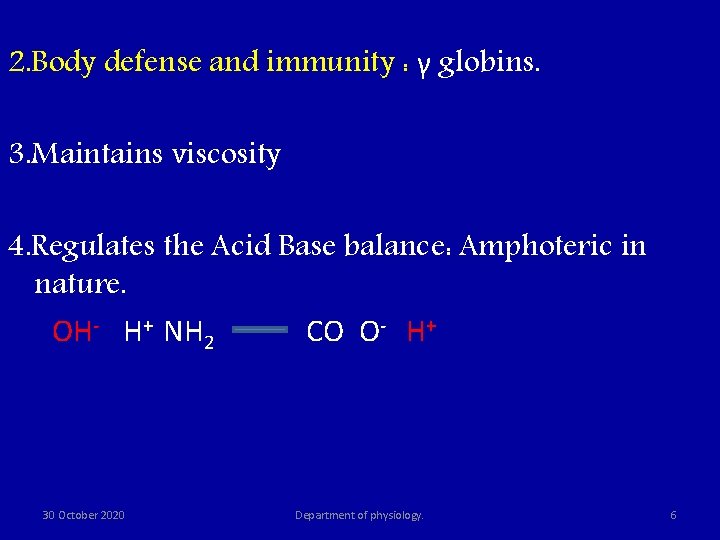
2. Body defense and immunity : γ globins. 3. Maintains viscosity 4. Regulates the Acid Base balance: Amphoteric in nature. OH- H+ NH 2 CO O- H+ 30 October 2020 Department of physiology. 6
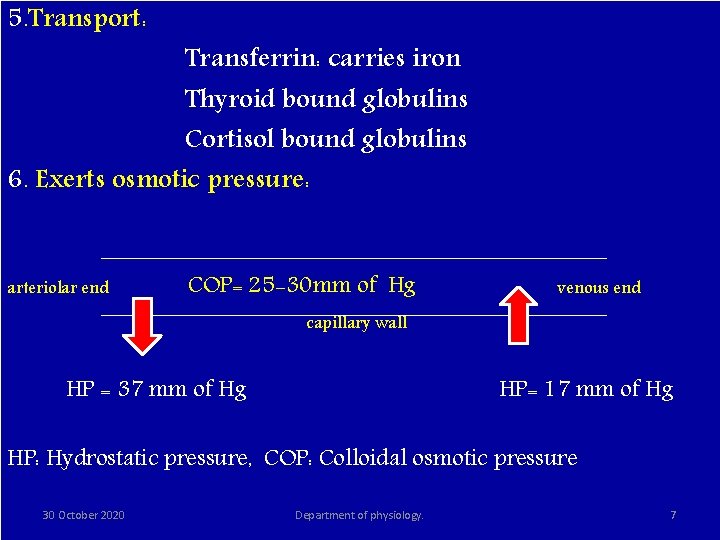
5. Transport: Transferrin: carries iron Thyroid bound globulins Cortisol bound globulins 6. Exerts osmotic pressure: arteriolar end COP= 25 -30 mm of Hg venous end capillary wall HP = 37 mm of Hg HP= 17 mm of Hg HP: Hydrostatic pressure, COP: Colloidal osmotic pressure 30 October 2020 Department of physiology. 7
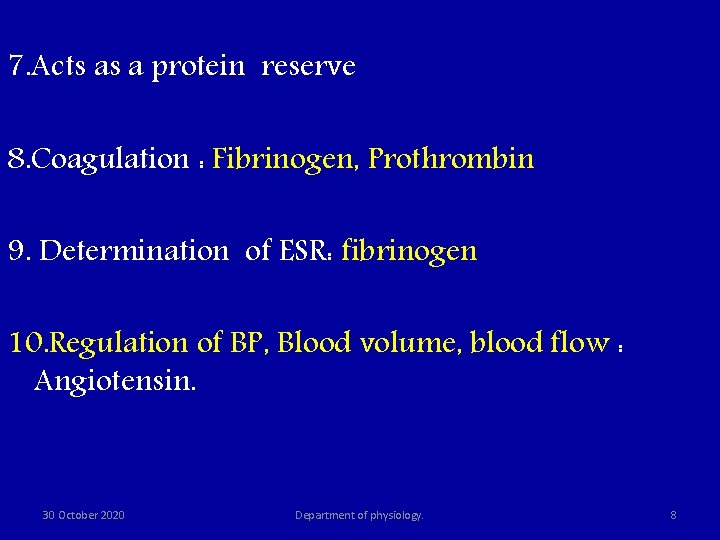
7. Acts as a protein reserve 8. Coagulation : Fibrinogen, Prothrombin 9. Determination of ESR: fibrinogen 10. Regulation of BP, Blood volume, blood flow : Angiotensin. 30 October 2020 Department of physiology. 8
11. Maintain blood in fluid state : Protein C, Protein S. 12. Lipid metabolism : low density lipo -protein(LDL) High density lipo- protein(HDL) 13. Haptoglobin : - form stable complex with HB Prevent loss of iron through urinary excretion. protect the kidney from damage 14. Fetuin: Growth promoting protein 15. Trephones-nourishment of the tissue. . 30 October 2020 Department of physiology. 9
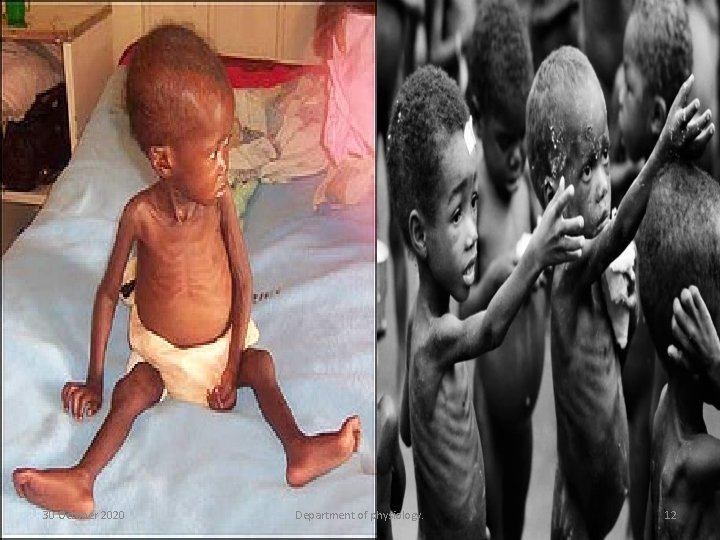
OEDEMA: In acute starvation, the liver cannot synthesize enough plasma proteins (especially albumin) to maintain normal concentrations in blood. Blood colloid osmotic pressure declines and fluids begin moving from the blood into peripheral tissues. 30 October 2020 Department of physiology. 10
In children, fluid accumulates in the abdomino pelvic cavity, producing the swollen bellies typical of starvation victims. A reduction in COP is also seen after severe burns and in several types of liver or kidney disease 30 October 2020 Department of physiology. 11
30 October 2020 Department of physiology. 12
4 -5% - after 15 min increase in plasma protein. Within 2 -7 days normal level, if good diet is given. When it is 4 % -exhaustion of protein reserve. Less than 2%-shock and death. Fixed or indispensible reserve protein. Dispensable reserve protein. Labile reserve protein. 30 October 2020 Department of physiology. 13
Applied physiology : HYPOPROTEINAEMIA § Liver diseases (cirrhosis) § Protein malnutrition § Excessive excretion by kidneys (renal disease) § Haemorrhage HYPERPROTEINAEMIA § Secondary to burns § Dehydration Low levels of Ceruloplasmin ---- Wilson's disease 30 October 2020 Department of physiology. 14
DECREASE IN ALBUMIN Physiological: Infancy and newborn Pregnancy Pathological: Liver disease Malabsorption INCREASE IN GLOBULIN: Lymphatic leukaemia Tuberculosis 30 October 2020 Department of physiology. 15
FIBRINOGEN Decrease: Extensive cardiac or pulmonary surgery Intra vascular coagulation Increase : Pregnancy , menstruation Tissue injury 30 October 2020 Department of physiology. 16
- Slides: 16