
Plasma Membrane Dr Ananda Kumar Saha Dept of
Plasma Membrane Dr. Ananda Kumar Saha Dept. of Zoology Rajshahi University
Physiology of Plasma membrane: � The plasma membrane acts as a thin barrier which separates the intracellular fluid or the cytoplasm from extracellular fluid in which the cell live. � In case of unicellular organisms (Protozoa) the extracellular fluid may be fresh or marine water, while in multicellular organisms the extracellular fluid may be blood, lymph, or intestinal fluid.
Physiology of Plasma membrane � Permeability: The Plasma membrane is a thin, elastic membrane around the cell which usually allows the movement of small ions and molecules of various substances through it. This nature of plasma membrane is termed as permeability. � Impermeable plasma membrane: The plasma membrane of the unfertilized eggs of certain fishes allows nothing to pass through it except the gases. Such plasma membrane can be termed as impermeable membrane.
Physiology of Plasma Membrane � Semi-Permiable membrane: The membranes which allow only water but no solute particle to pass through them are known as semi permeable membranes. � Selective permeable Plasma Membrane: The Plasma membrane and other intracellular unit membranes are very selective in nature. Such membrane allow only certain selected ions and small molecules to pass through them.
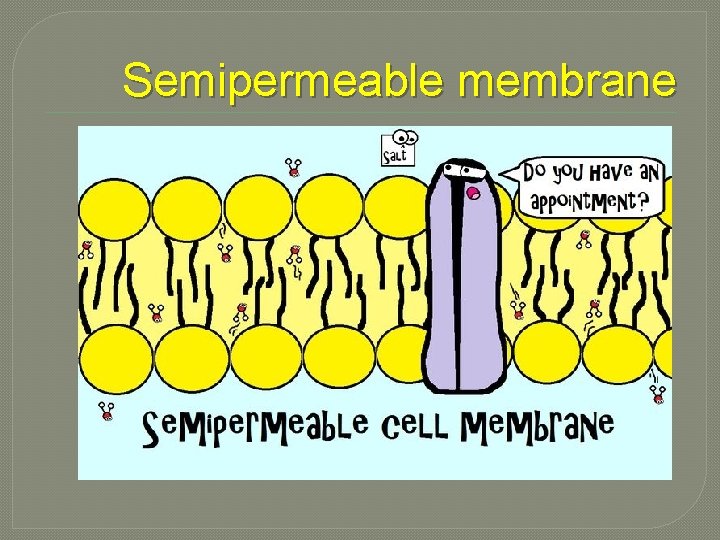
Semipermeable membrane
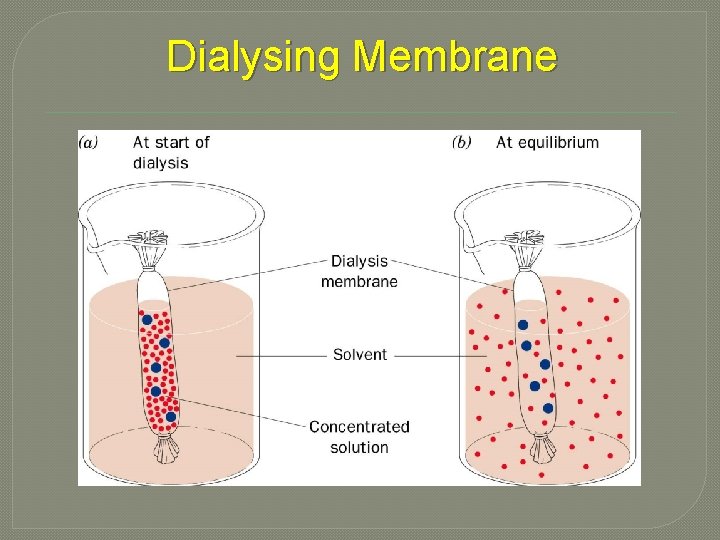
Dialysing Plasma Membrane The Plasma membrane having certain extraneous coats around it as the basement membranes of endothelial cells acts as a dialyzer. In these membranes the water molecules and crystalloids are forced through them by the hydrostatic pressure forces.
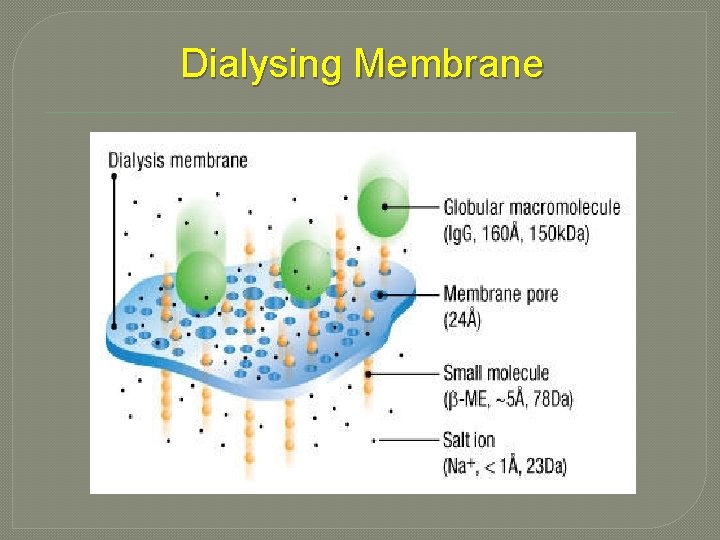
Dialysing Membrane
Dialysing Membrane
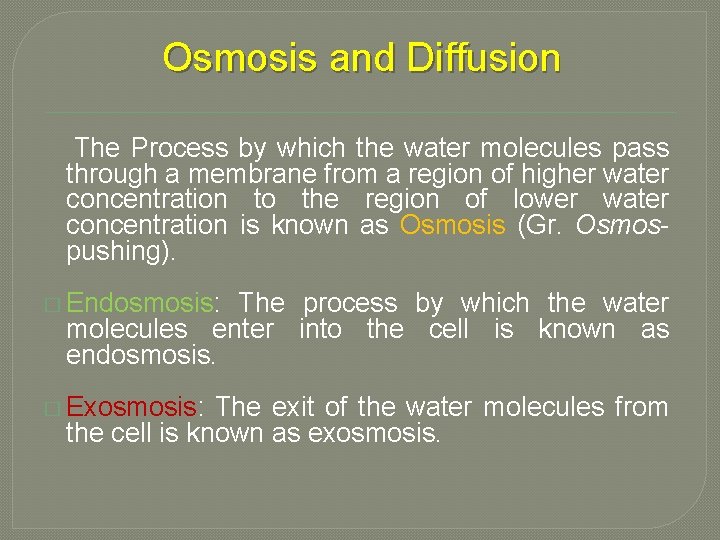
Osmosis and Diffusion The Process by which the water molecules pass through a membrane from a region of higher water concentration to the region of lower water concentration is known as Osmosis (Gr. Osmospushing). � Endosmosis: The process by which the water molecules enter into the cell is known as endosmosis. � Exosmosis: The exit of the water molecules from the cell is known as exosmosis.
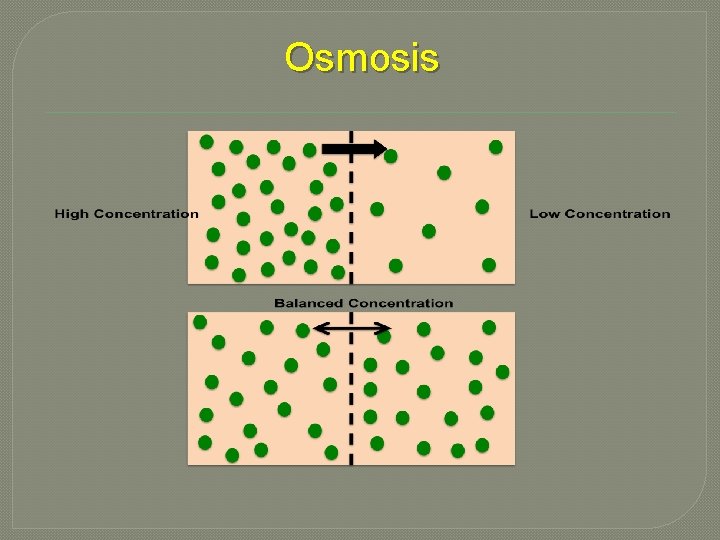
Osmosis
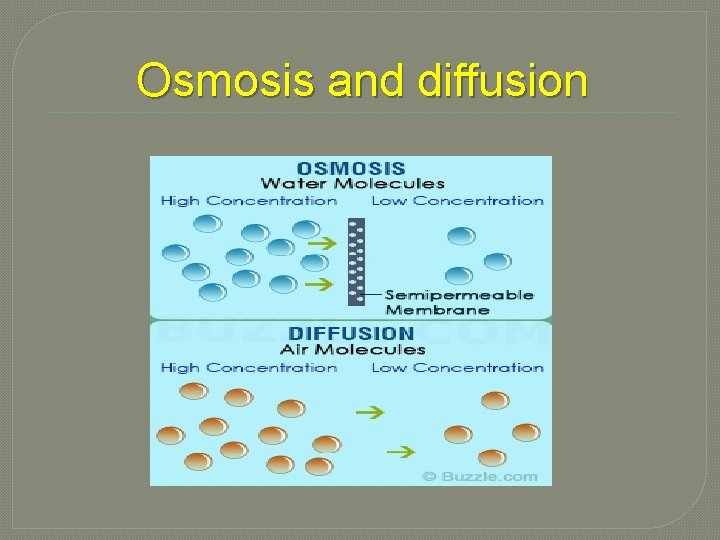
Osmosis and diffusion
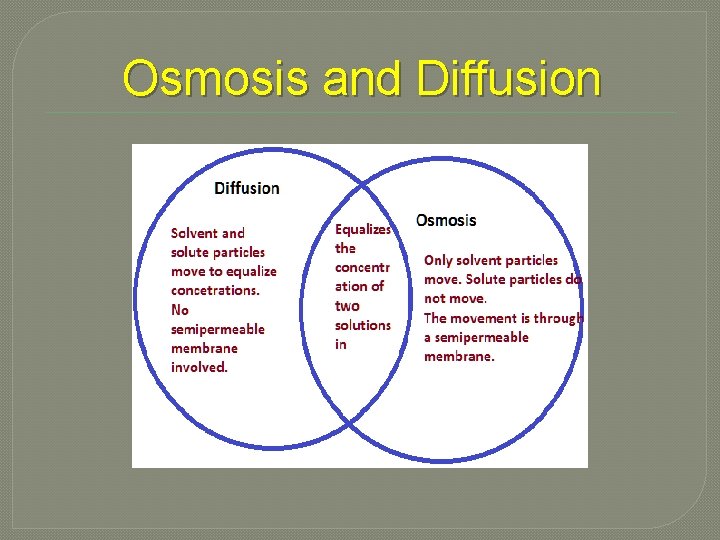
Osmosis and Diffusion
Isotonic and Hypertonic �Isotonic Solution : The intracellular and extracellular fluids contain same concentrations and no osmosis takes place. �Hypertonic Solution: Solutions which have higher concentrations of solutes than the intracellular fluids are known as hypertonic solutions. (Exosmosis)
Hypotonic Solution �Hypotonic Solution: The extracellular solutions which contain less concentrations of the solutes than the cytoplasm are known as hypotonic solutions. (Endosmosis)
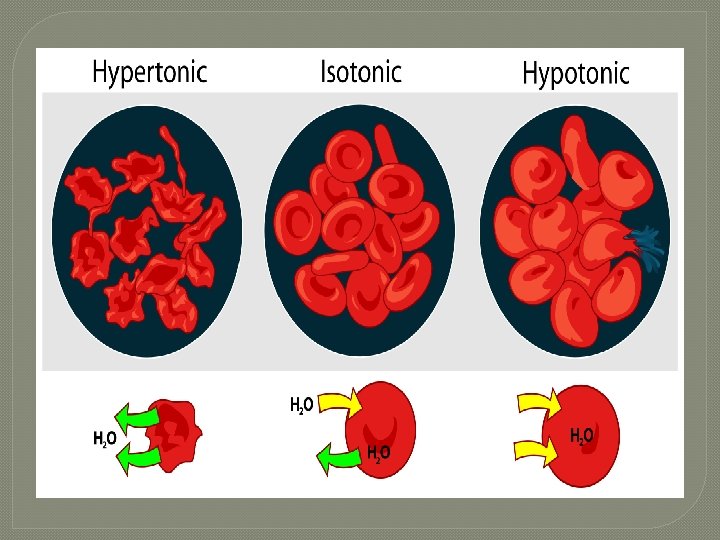
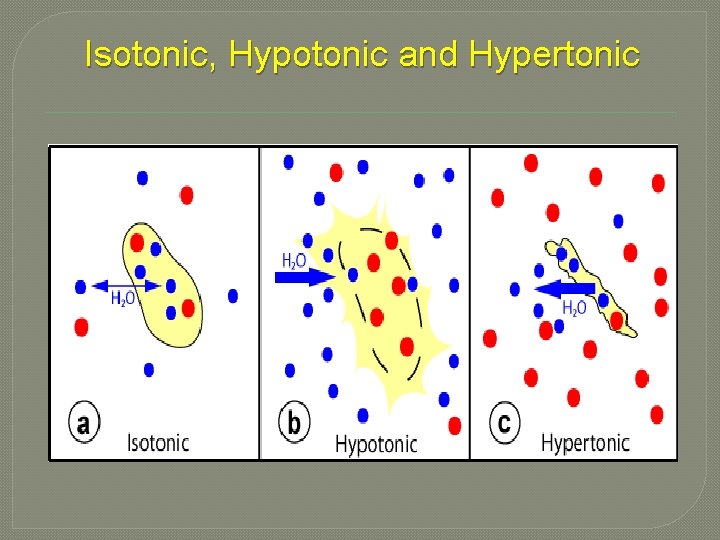
Isotonic, Hypotonic and Hypertonic
Diffusion �Free diffusion: It requires no energy expenditure, on the part of the cell, nor does it require any specific transport molecule. �Facilitated diffusion: Require energy and specific carrier for transport.
Endocytosis and Exocytosis �Endocytosis: The process by which the foreign substances are taken in and digested by the cell is known as endocytosis. �Exocytosis: The cells which have secretory in function , like pancreatic cells pass out their enzymetic secretions outside the cell.
Pinocytosis and Phagocytosis �Pinocytosis: When the ingestion of fluid material in bulk takes place by the cell through plasma membrane the process is known as Pinocytosis. �Phagocytosis: The process of ingestion of large-sized solid substances by the cell is known as Phagocytosis.
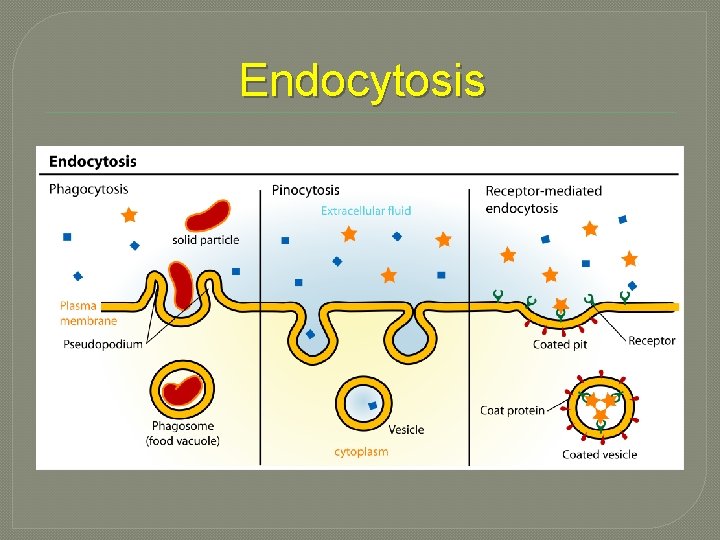
Endocytosis
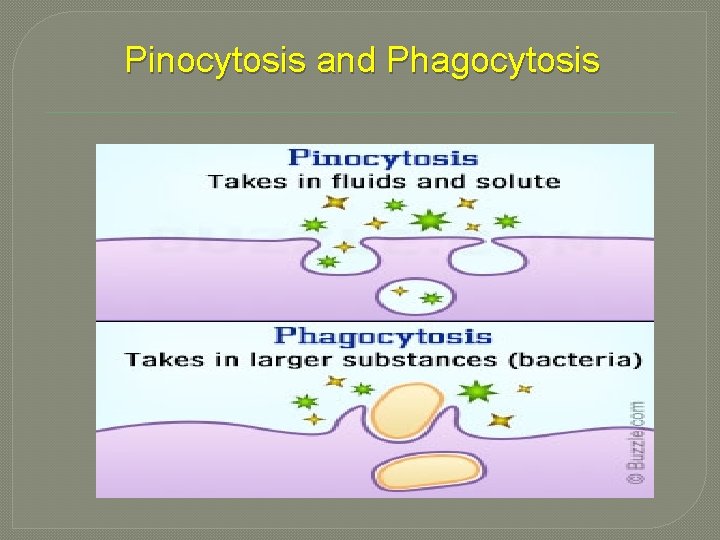
Pinocytosis and Phagocytosis

THANK YOU
- Slides: 23