
Plasma cell neoplasms Anita DSouza MD MS Associate

- Slides: 41
Plasma cell neoplasms Anita D’Souza, MD, MS Associate Professor of Medicine Medical College of Wisconsin Milwaukee, WI 18 th Feb 2020 The CIBMTR® (Center for International Blood and Marrow Transplant Research®) is a research collaboration between the National Marrow Donor Program® (NMDP)/Be The Match® and the Medical College of Wisconsin (MCW).
CIBMTR Funding Disclosure: CIBMTR receives financial support from the government, foundations and industry entities listed below to support broad research and educational missions. These funding sources are disclosed for transparency. Scientific and administrative review processes prevent direct influence of the funding sources to the CIBMTR scientific research agenda and individual research products and findings. The CIBMTR is supported primarily by Public Health Service grant/cooperative agreement U 24 CA 076518 with the National Cancer Institute (NCI), the National Heart, Lung and Blood Institute (NHLBI) and the National Institute of Allergy and Infectious Diseases (NIAID); grant/cooperative agreement U 24 HL 138660 with NHLBI and NCI; grant U 24 CA 233032 from the NCI; grants OT 3 HL 147741, R 21 HL 140314 and U 01 HL 128568 from the NHLBI; contract HHSH 250201700006 C with Health Resources and Services Administration (HRSA); grants N 00014 -18 -1 -2888, N 00014 -17 -1 -2850 and N 00014 -20 -1 -2705 from the Office of Naval Research; subaward from prime contract award SC 1 MC 31881 -01 -00 with HRSA; subawards from prime grant awards R 01 HL 131731 and R 01 HL 126589 from NHLBI; subaward from prime grant award 5 R 01 CA 2151343 from NIH Cancer Institute. P 01 CA 111412, R 01 CA 152108, R 01 CA 218285; R 01 CA 231141, R 01 HL 126589, R 01 HL 129472, R 01 HL 131731 and U 01 AI 126612 from the NIH; and commercial funds from Abb. Vie; Actinium Pharmaceuticals, Inc. ; Adaptive Biotechnologies; Adienne SA; Advocate Lutheran General Hospital; Allovir, Inc. ; Amgen, Inc. ; Anonymous donation to the Medical College of Wisconsin; Anthem, Inc. ; Astellas Pharma US; Atara Biotherapeutics, Inc. ; BARDA; Be the Match Foundation; bluebird bio, Inc. ; Boston Children’s Hospital; Bristol Myers Squibb Co. ; Celgene Corp. ; Children’s Hospital of Los Angeles; Chimerix, Inc. ; City of Hope Medical Center; CSL Behring; Cyto. Sen Therapeutics, Inc. ; Daiichi Sankyo Co. , Ltd. ; Dana Farber Cancer Institute; Enterprise Science and Computing, Inc. ; Fred Hutchinson Cancer Research Center; Gamida-Cell, Ltd. ; Genzyme; Glaxo. Smith. Kline (GSK); Histo. Genetics, Inc. ; Immune Deficiency Foundation; Incyte Corporation; Janssen Biotech, Inc. ; Janssen Pharmaceuticals, Inc. ; Janssen Research & Development, LLC; Jazz Pharmaceuticals, Inc. ; Kiadis Pharma; Kite, a Gilead Company; Kyowa Kirin; Magenta Therapeutics; Medac Gmb. H; Memorial Sloan Kettering Cancer Center; Merck & Company, Inc. ; Merck Sharp & Dohme Corp. ; Mesoblast; Millennium, the Takeda Oncology Co. ; Miltenyi Biotec, Inc. ; Montefiore Medical Center; National Marrow Donor Program; Novartis Oncology; Novartis Pharmaceuticals Corporation; Omeros Corporation; Oncoimmune, Inc. ; Orca Biosystems, Inc. ; Pfizer, Inc. ; Phamacyclics, LLC; Regeneron Pharmaceuticals, Inc. ; REGi. MMUNE Corp. ; Sanofi Genzyme; Seattle Genetics; Shire; Sobi, Inc. ; Stanford University; St. Baldrick's Foundation; Takeda Oncology; Takeda Pharma; The Medical College of Wisconsin; University of Minnesota; University of Pittsburgh; University of Texas-MD Anderson; Viracor Eurofins; Xenikos BV; The views expressed in this article do not reflect the official policy or position of the National Institute of Health, the Department of the Navy, the Department of Defense, Health Resources and Services Administration (HRSA) or any other agency of the U. S. Government. 2
Disclosures • Research support: Merck, Prothena, Sanofi, Mundipharma EDO, Teneo. Bio, Takeda • Consultant: Prothena, Pfizer, Imbrium, Akcea, Janssen • Employment: None • Major Stock Holder: None • Speaker Bureau: None 3
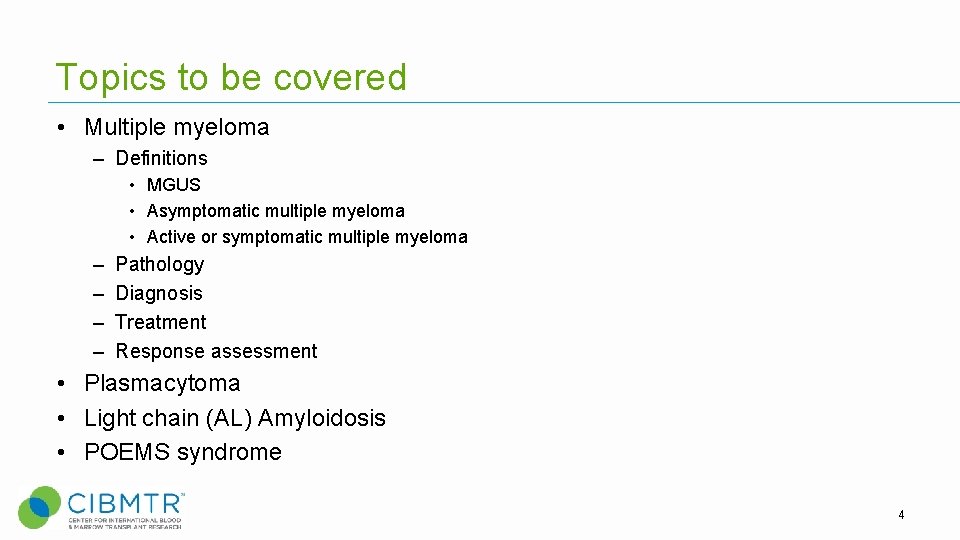
Topics to be covered • Multiple myeloma – Definitions • MGUS • Asymptomatic multiple myeloma • Active or symptomatic multiple myeloma – – Pathology Diagnosis Treatment Response assessment • Plasmacytoma • Light chain (AL) Amyloidosis • POEMS syndrome 4
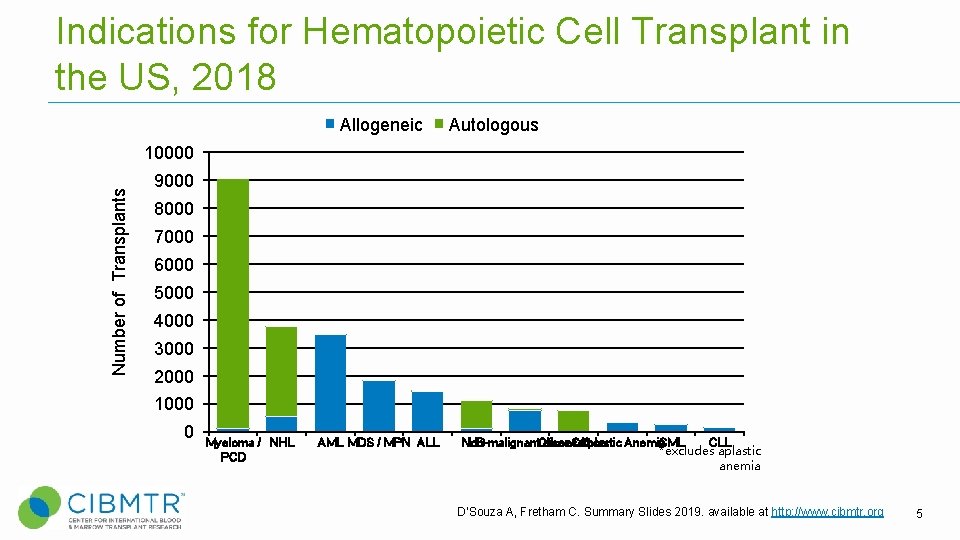
Indications for Hematopoietic Cell Transplant in the US, 2018 Allogeneic Autologous Number of Transplants 10000 9000 8000 7000 6000 5000 4000 3000 2000 1000 0 Myeloma / NHL PCD AML MDS / MPN ALL Non-malignant HD Other disease* Cancer Aplastic Anemia CML CLL *excludes aplastic anemia D’Souza A, Fretham C. Summary Slides 2019. available at http: //www. cibmtr. org 5
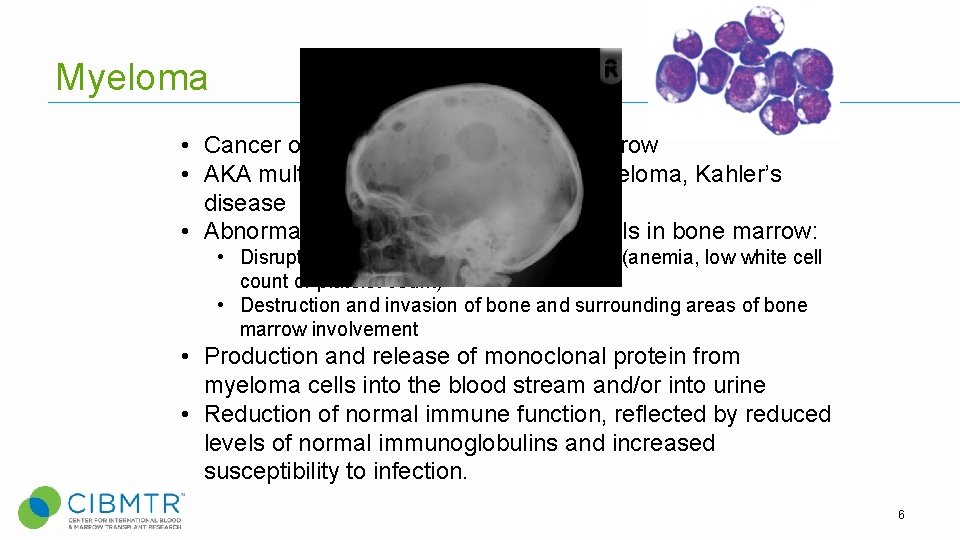
Myeloma • Cancer of plasma cells in the bone marrow • AKA multiple myeloma, plasma cell myeloma, Kahler’s disease • Abnormal accumulation of myeloma cells in bone marrow: • Disruption of normal bone marrow function (anemia, low white cell count or platelet count) • Destruction and invasion of bone and surrounding areas of bone marrow involvement • Production and release of monoclonal protein from myeloma cells into the blood stream and/or into urine • Reduction of normal immune function, reflected by reduced levels of normal immunoglobulins and increased susceptibility to infection. 6
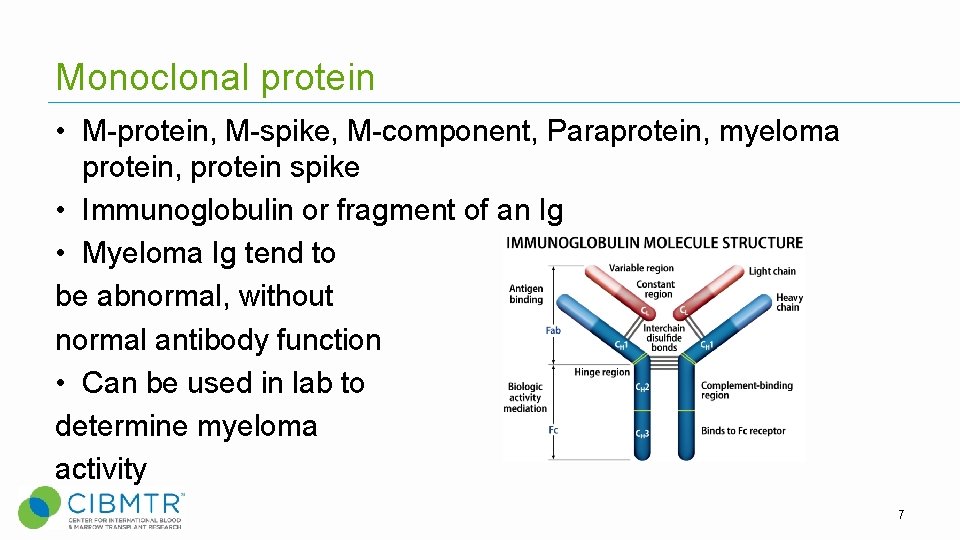
Monoclonal protein • M-protein, M-spike, M-component, Paraprotein, myeloma protein, protein spike • Immunoglobulin or fragment of an Ig • Myeloma Ig tend to be abnormal, without normal antibody function • Can be used in lab to determine myeloma activity 7
Increased production of abnormal Ig • Excess monoclonal protein accumulation in blood and/or urine • Can stick to each other and/or blood components, vessels- reducing blood flow and circulation • Excess light chains (Bence Jones proteins) • Abnormal properties: – binding to normal blood clotting factors (bleeding, clotting) – binding to nerves (peripheral neuropathy) 8
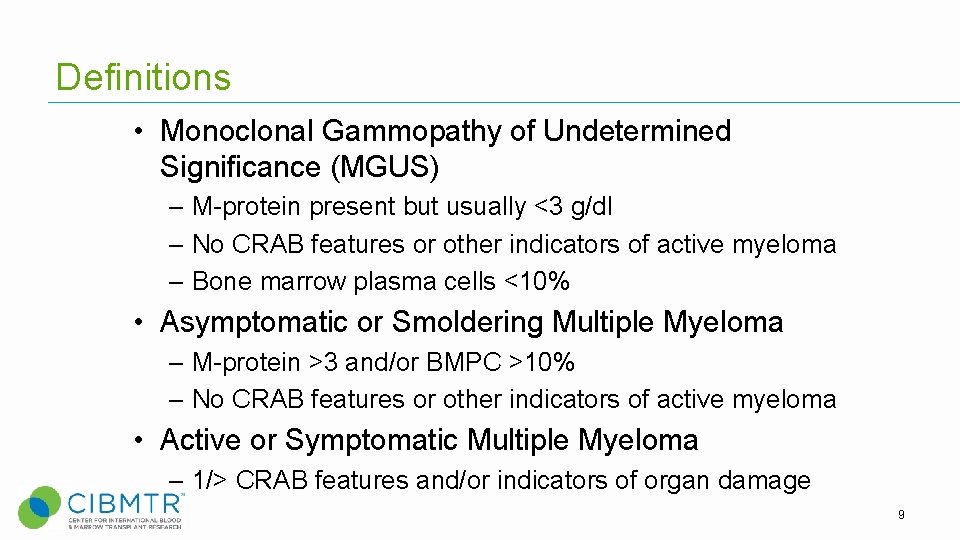
Definitions • Monoclonal Gammopathy of Undetermined Significance (MGUS) – M-protein present but usually <3 g/dl – No CRAB features or other indicators of active myeloma – Bone marrow plasma cells <10% • Asymptomatic or Smoldering Multiple Myeloma – M-protein >3 and/or BMPC >10% – No CRAB features or other indicators of active myeloma • Active or Symptomatic Multiple Myeloma – 1/> CRAB features and/or indicators of organ damage 9
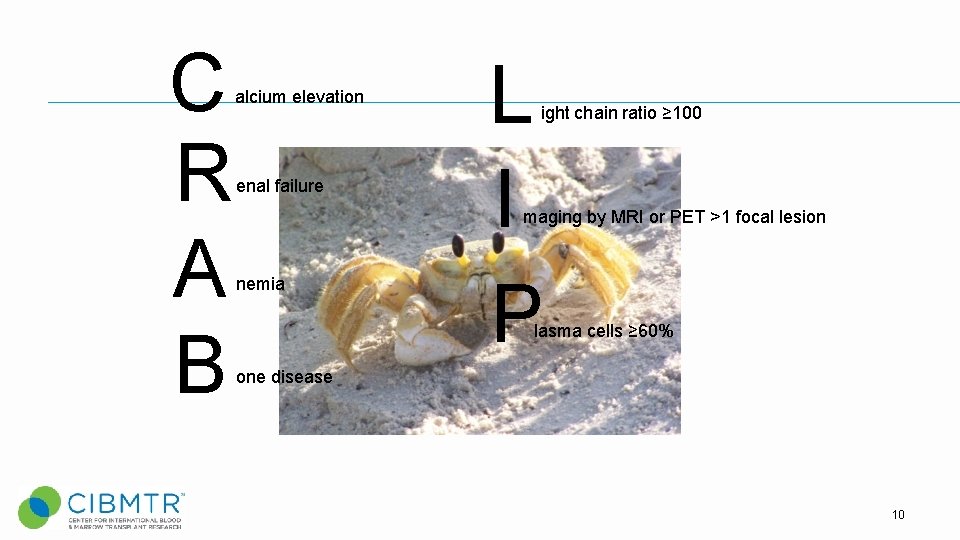
C R A B alcium elevation enal failure L I P ight chain ratio ≥ 100 maging by MRI or PET >1 focal lesion nemia lasma cells ≥ 60% one disease 10
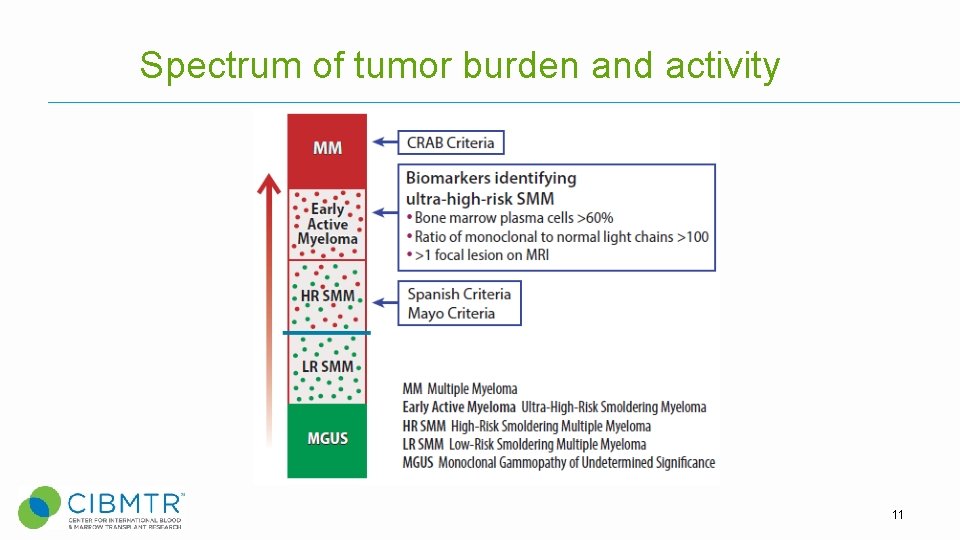
Spectrum of tumor burden and activity 11
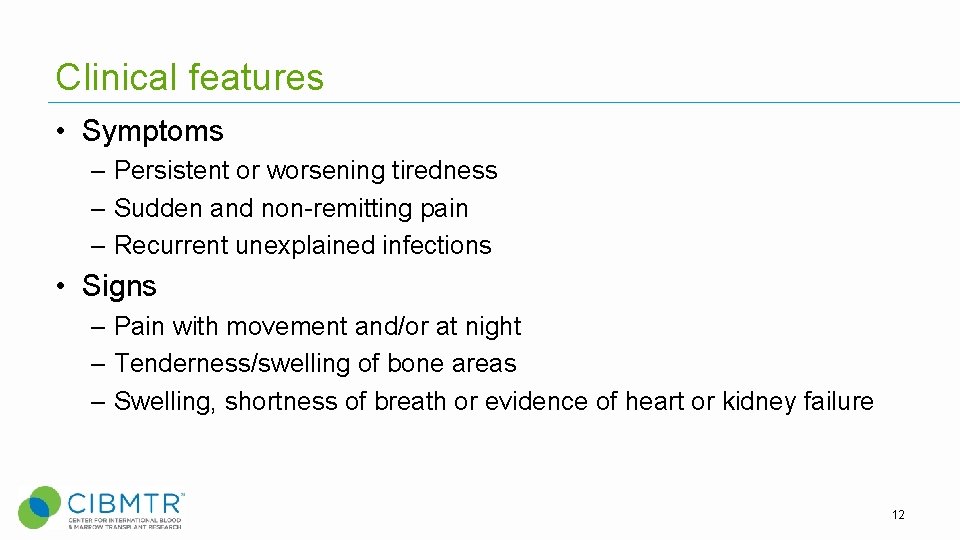
Clinical features • Symptoms – Persistent or worsening tiredness – Sudden and non-remitting pain – Recurrent unexplained infections • Signs – Pain with movement and/or at night – Tenderness/swelling of bone areas – Swelling, shortness of breath or evidence of heart or kidney failure 12
Diagnosis • Serum electrophoresis (M spike quantification) • Serum immunofixation (M spike type) • Serum free light chains – Kappa, Lambda. Look at unit: mg/dl or mg/L • • Urine protein electrophoresis and immunofixation Serum LDH (risk status) Serum albumin + Serum beta 2 microglobulin (staging) Bone marrow biopsy (risk status) – Percent plasma cells – FISH analysis – Cytogenetics 13
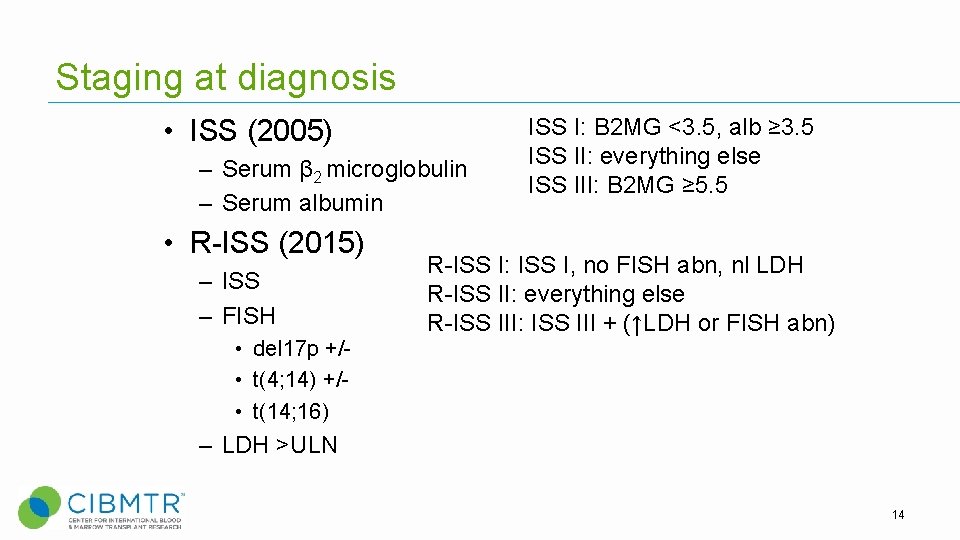
Staging at diagnosis • ISS (2005) – Serum β 2 microglobulin – Serum albumin • R-ISS (2015) – ISS – FISH • del 17 p +/ • t(4; 14) +/ • t(14; 16) ISS I: Β 2 MG <3. 5, alb ≥ 3. 5 ISS II: everything else ISS III: Β 2 MG ≥ 5. 5 R-ISS I: ISS I, no FISH abn, nl LDH R-ISS II: everything else R-ISS III: ISS III + (↑LDH or FISH abn) – LDH >ULN 14
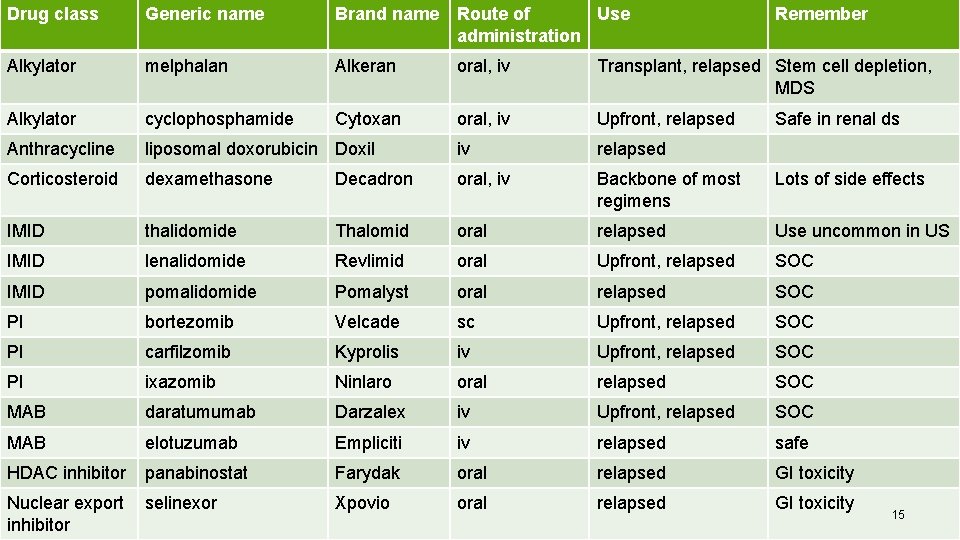
Drug class Alkylator Generic name Brand name Route of Use administration Several FDA-approved drugs in MM melphalan Alkeran oral, iv Transplant, relapsed Alkylator cyclophosphamide Anthracycline Cytoxan Remember Stem cell depletion, MDS oral, iv Upfront, relapsed Safe in renal ds liposomal doxorubicin Doxil iv relapsed Corticosteroid dexamethasone Decadron oral, iv Backbone of most regimens Lots of side effects IMID thalidomide Thalomid oral relapsed Use uncommon in US IMID lenalidomide Revlimid oral Upfront, relapsed SOC IMID pomalidomide Pomalyst oral relapsed SOC PI bortezomib Velcade sc Upfront, relapsed SOC PI carfilzomib Kyprolis iv Upfront, relapsed SOC PI ixazomib Ninlaro oral relapsed SOC MAB daratumumab Darzalex iv Upfront, relapsed SOC MAB elotuzumab Empliciti iv relapsed safe HDAC inhibitor panabinostat Farydak oral relapsed GI toxicity Nuclear export inhibitor selinexor Xpovio oral relapsed GI toxicity 15
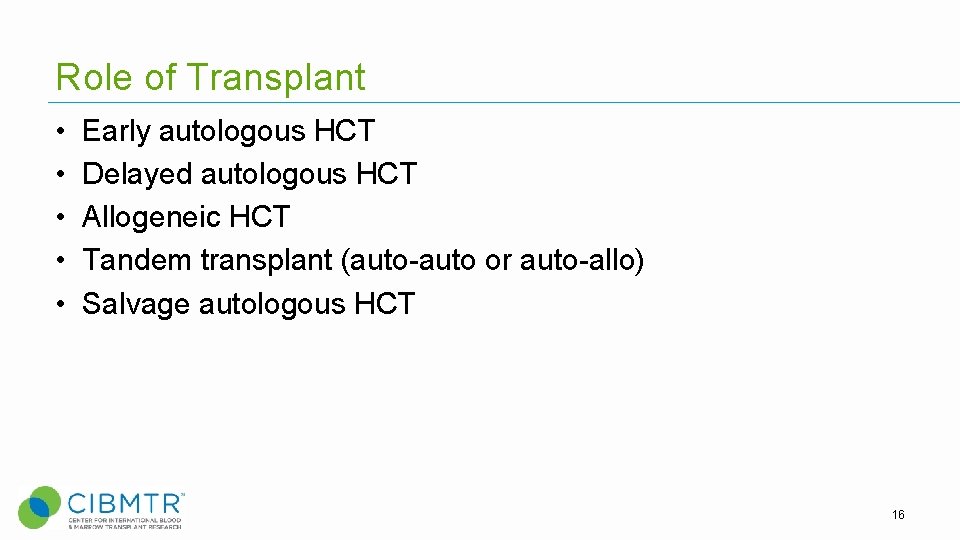
Role of Transplant • • • Early autologous HCT Delayed autologous HCT Allogeneic HCT Tandem transplant (auto-auto or auto-allo) Salvage autologous HCT 16
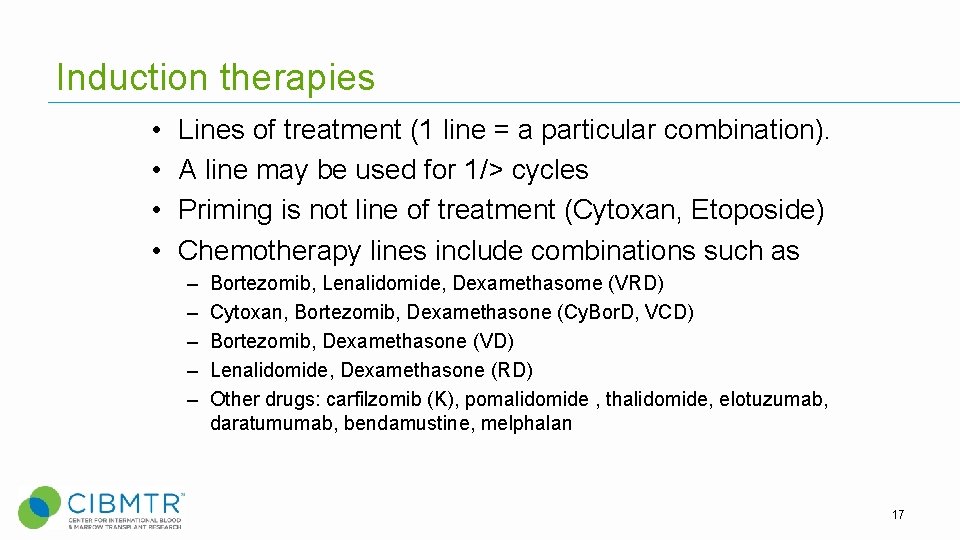
Induction therapies • • Lines of treatment (1 line = a particular combination). A line may be used for 1/> cycles Priming is not line of treatment (Cytoxan, Etoposide) Chemotherapy lines include combinations such as – – – Bortezomib, Lenalidomide, Dexamethasome (VRD) Cytoxan, Bortezomib, Dexamethasone (Cy. Bor. D, VCD) Bortezomib, Dexamethasone (VD) Lenalidomide, Dexamethasone (RD) Other drugs: carfilzomib (K), pomalidomide , thalidomide, elotuzumab, daratumumab, bendamustine, melphalan 17
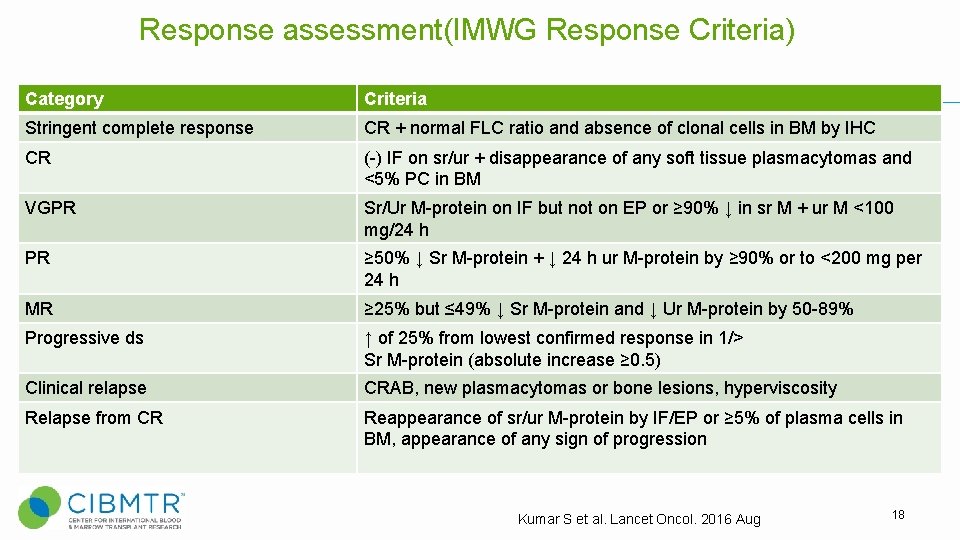
Response assessment(IMWG Response Criteria) Category Criteria Stringent complete response CR + normal FLC ratio and absence of clonal cells in BM by IHC CR (-) IF on sr/ur + disappearance of any soft tissue plasmacytomas and <5% PC in BM VGPR Sr/Ur M-protein on IF but not on EP or ≥ 90% ↓ in sr M + ur M <100 mg/24 h PR ≥ 50% ↓ Sr M-protein + ↓ 24 h ur M-protein by ≥ 90% or to <200 mg per 24 h MR ≥ 25% but ≤ 49% ↓ Sr M-protein and ↓ Ur M-protein by 50 -89% Progressive ds ↑ of 25% from lowest confirmed response in 1/> Sr M-protein (absolute increase ≥ 0. 5) Clinical relapse CRAB, new plasmacytomas or bone lesions, hyperviscosity Relapse from CR Reappearance of sr/ur M-protein by IF/EP or ≥ 5% of plasma cells in BM, appearance of any sign of progression Kumar S et al. Lancet Oncol. 2016 Aug 18
Role of imaging • Whole body MRI and PET/CT scans are the new standard of care • Replacing skeletal Xrays (both for diagnosis and follow up) • Prognostic value (e. g. at diagnosis, post-transplant) • These scans are also helpful to measure residual myeloma after treatment 19
Role of MRD (Minimum Residual Disease) • Multiple sensitivities- 1 in 10, 000 vs 1 in 100, 000 vs 1 in 1, 000 • Type of test- flow cytometry (NGF), gene sequencing (NGS) e. g. Clono. Seq, Euroflow • When to do it- day 100 post-transplant, clinical trials, postcellular therapies – Not currently standard of care 20
Prognosis • Incurable, but controllable • Outcomes have continued to improve for MM • Median survival – ISS I >12 -15 years – High risk ds ~2 years • Multiple relapses and remissions • Majority of patients die of myeloma 21
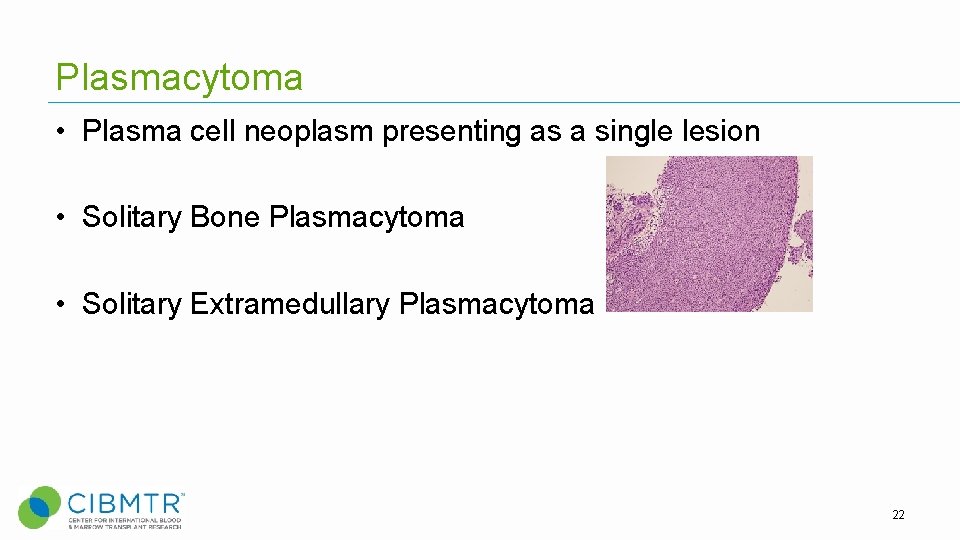
Plasmacytoma • Plasma cell neoplasm presenting as a single lesion • Solitary Bone Plasmacytoma • Solitary Extramedullary Plasmacytoma 22
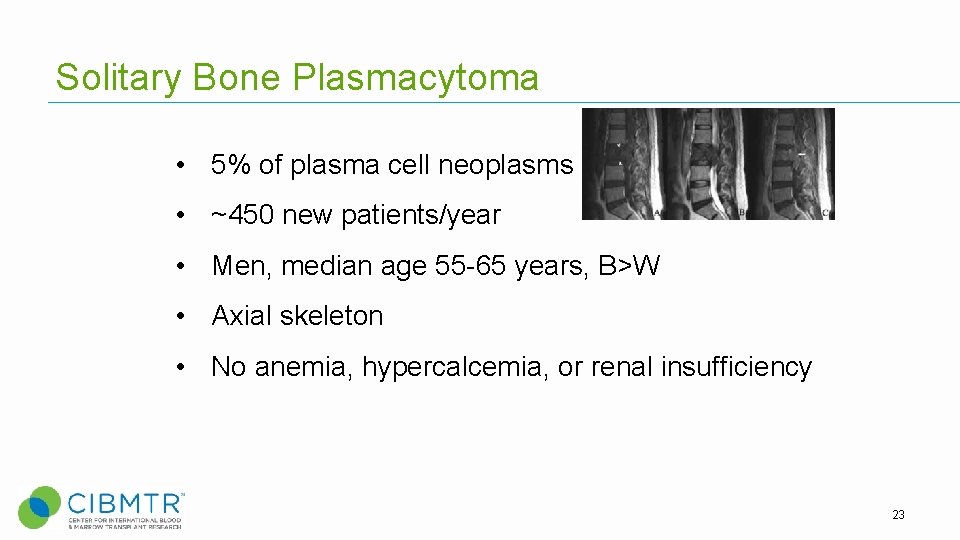
Solitary Bone Plasmacytoma • 5% of plasma cell neoplasms • ~450 new patients/year • Men, median age 55 -65 years, B>W • Axial skeleton • No anemia, hypercalcemia, or renal insufficiency 23
Evaluation • • CBC, chemistries SPEP with immunofixation Free light chain assay 24 h UPEP with immunofixation Bone marrow biopsy Skeletal survey PET/CT or MRI of spine/pelvis 24
SBP plus MGUS • <10% clonal plasma cells in bone marrow • Treated as SBP but have a higher risk of progression to symptomatic myeloma 25
Treatment • Localized radiation to the tumor site • Multiple plasmacytomas- treat as multiple myeloma • Follow up – Highest risk of recurrence in first 4 years – Devpt of multiple myeloma, local recurrence of new plasmacytomas 26
Solitary Extramedullary Plasmacytoma • 80% occur in head & neck region (upper aerodigestive tract) • GI tract, Urinary bladder, CNS, Thyroid, Breast, testes, Parotid glands, Lymph nodes, Skin
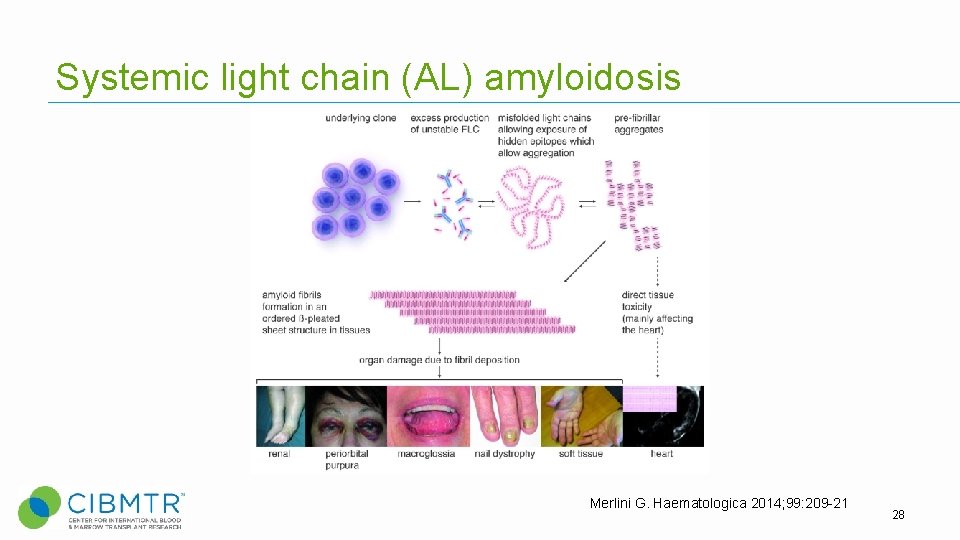
Systemic light chain (AL) amyloidosis Merlini G. Haematologica 2014; 99: 209 -21 28
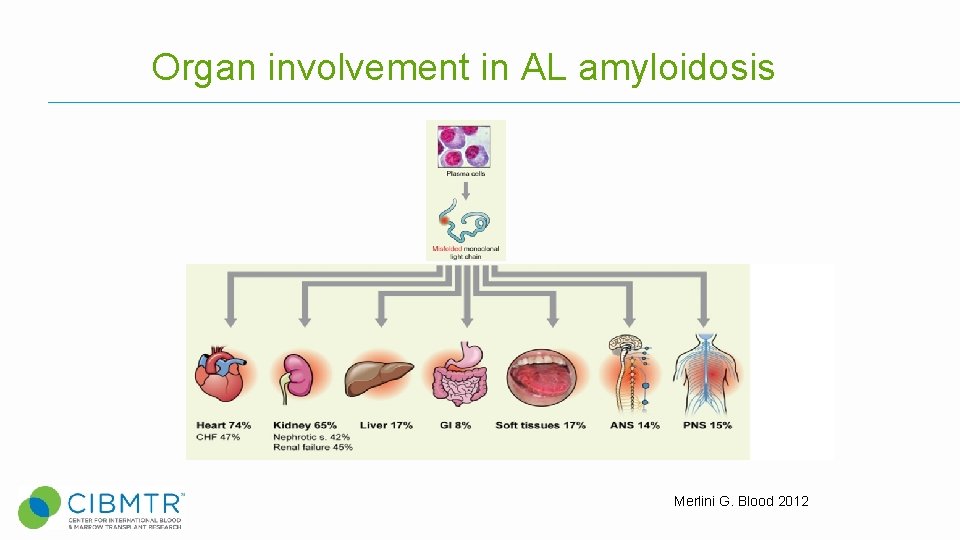
Organ involvement in AL amyloidosis Merlini G. Blood 2012
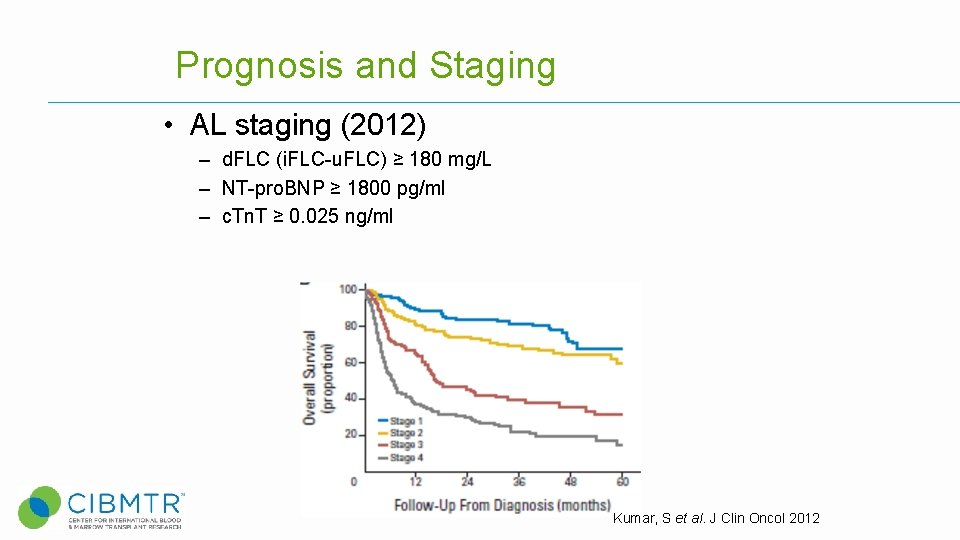
Prognosis and Staging • AL staging (2012) – d. FLC (i. FLC-u. FLC) ≥ 180 mg/L – NT-pro. BNP ≥ 1800 pg/ml – c. Tn. T ≥ 0. 025 ng/ml Kumar, S et al. J Clin Oncol 2012
Organ involvement • Heart: echo: mean wall thickness >12 mm, no other cardiac cause • Kidney: 24 -h ur pr >0. 5 g/day, predominantly albumin • Liver: total liver span >15 cm in the absence of heart failure or alkaline phosphatase >1. 5 times ULN • Peripheral nerve: clinical symmetric lower extremity sensorimotor peripheral neuropathy 31
Treatment • Ideal treatment would be 2 -pronged – Therapy directed to lower concentration of precursor protein – Therapy directed toward amyloid fibrils 32
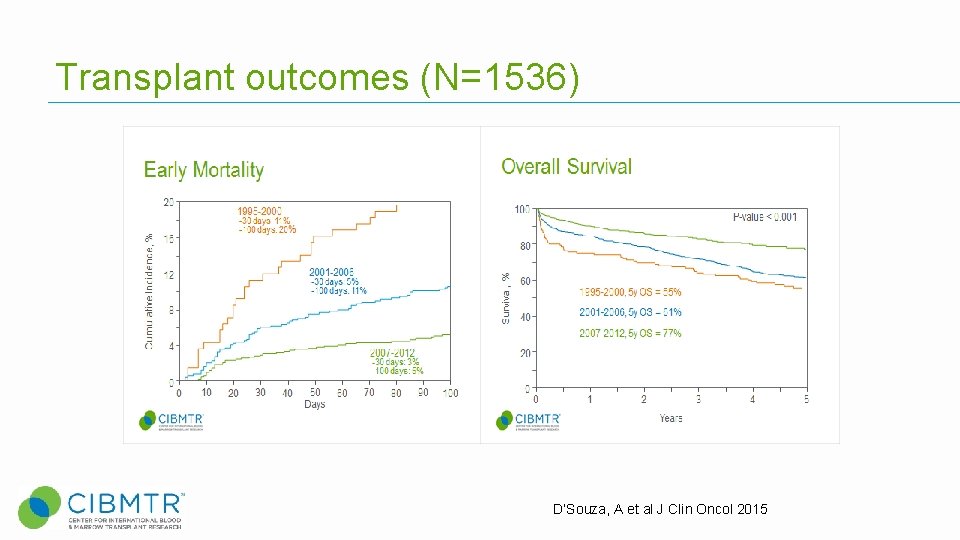
Treatment if transplant eligible • Chemotherapy followed by autologous stem cell transplant • Direct autologous stem cell transplant • Careful selection of patients as AL patients are more fragile (high early mortality) • High response rates and long term survivors (? selection bias) • Multidisciplinary supportive care 33
Transplant outcomes (N=1536) D’Souza, A et al J Clin Oncol 2015
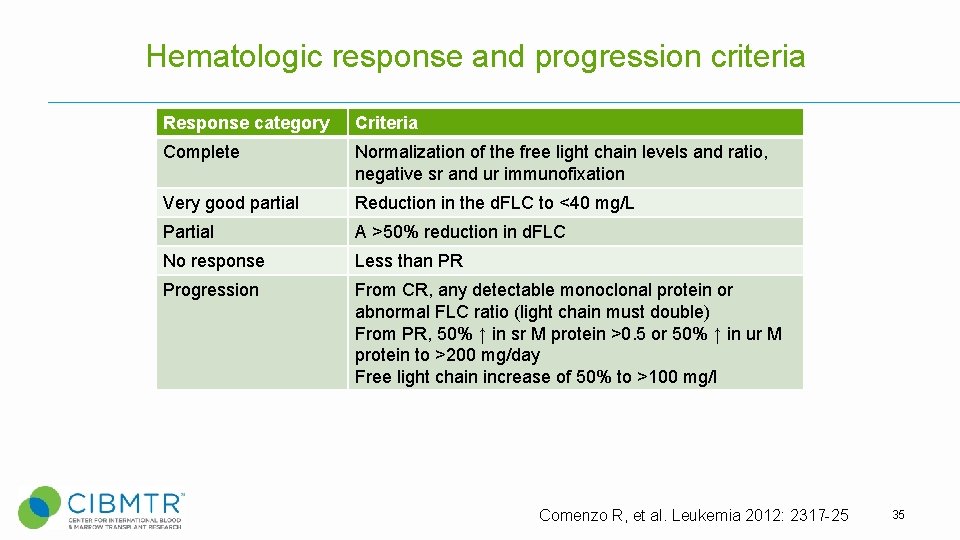
Hematologic response and progression criteria Response category Criteria Complete Normalization of the free light chain levels and ratio, negative sr and ur immunofixation Very good partial Reduction in the d. FLC to <40 mg/L Partial A >50% reduction in d. FLC No response Less than PR Progression From CR, any detectable monoclonal protein or abnormal FLC ratio (light chain must double) From PR, 50% ↑ in sr M protein >0. 5 or 50% ↑ in ur M protein to >200 mg/day Free light chain increase of 50% to >100 mg/l Comenzo R, et al. Leukemia 2012: 2317 -25 35
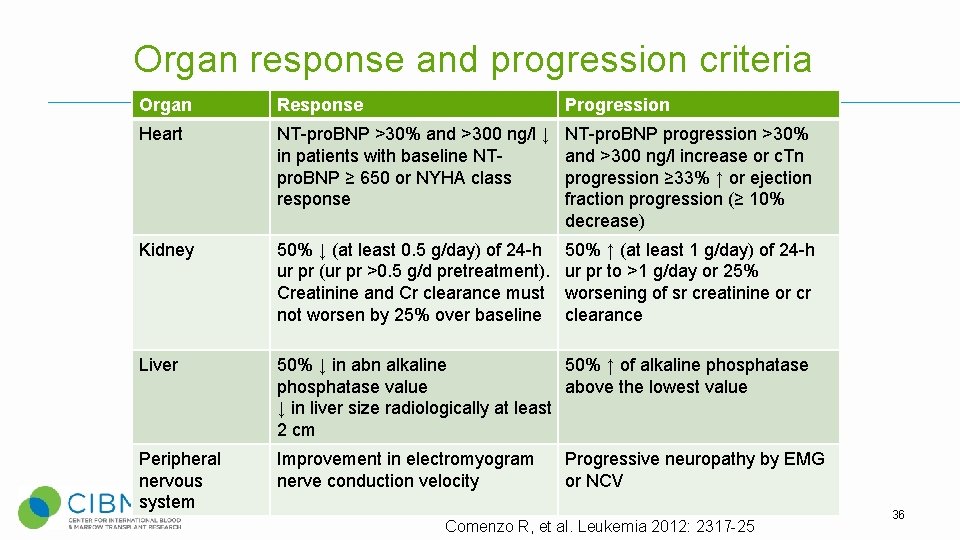
Organ response and progression criteria Organ Response Progression Heart NT-pro. BNP >30% and >300 ng/l ↓ in patients with baseline NTpro. BNP ≥ 650 or NYHA class response NT-pro. BNP progression >30% and >300 ng/l increase or c. Tn progression ≥ 33% ↑ or ejection fraction progression (≥ 10% decrease) Kidney 50% ↓ (at least 0. 5 g/day) of 24 -h ur pr (ur pr >0. 5 g/d pretreatment). Creatinine and Cr clearance must not worsen by 25% over baseline 50% ↑ (at least 1 g/day) of 24 -h ur pr to >1 g/day or 25% worsening of sr creatinine or cr clearance Liver 50% ↓ in abn alkaline 50% ↑ of alkaline phosphatase value above the lowest value ↓ in liver size radiologically at least 2 cm Peripheral nervous system Improvement in electromyogram nerve conduction velocity Progressive neuropathy by EMG or NCV Comenzo R, et al. Leukemia 2012: 2317 -25 36
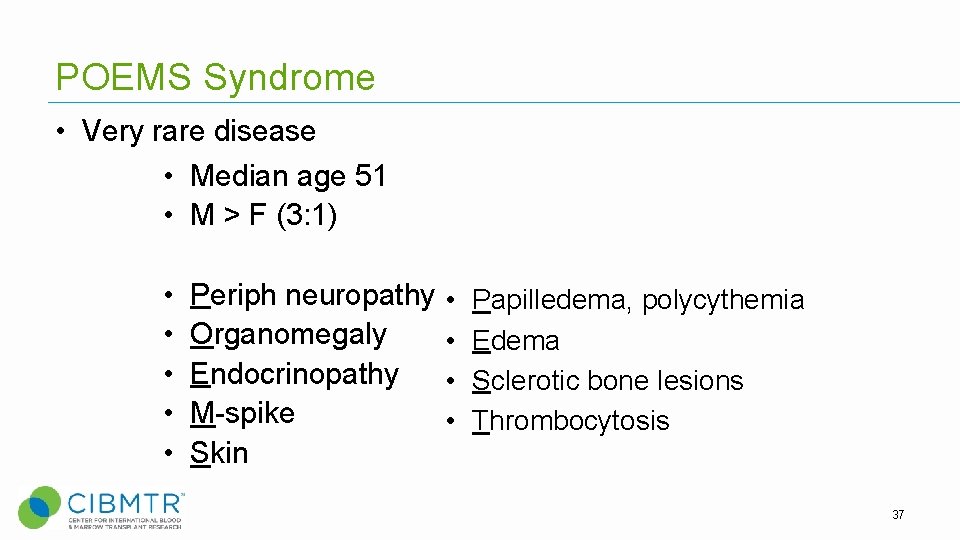
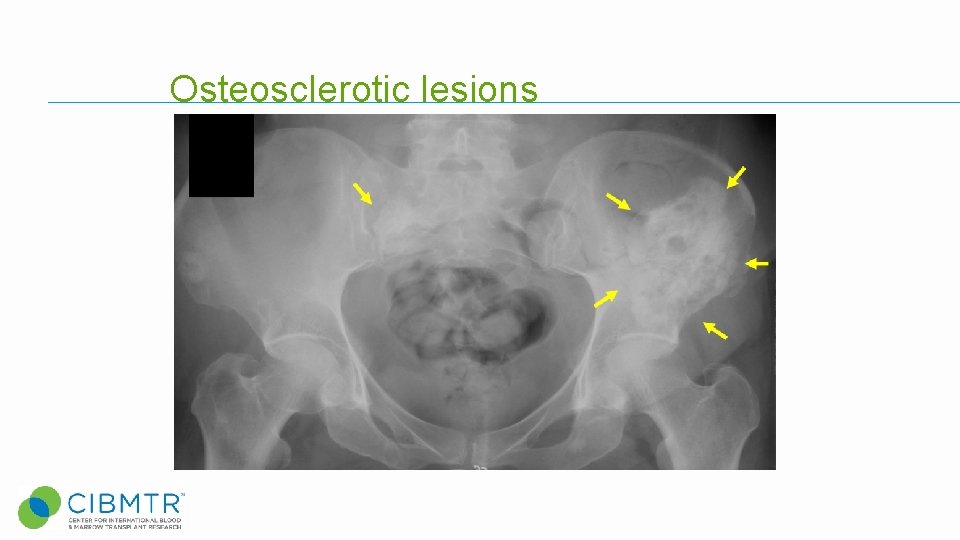
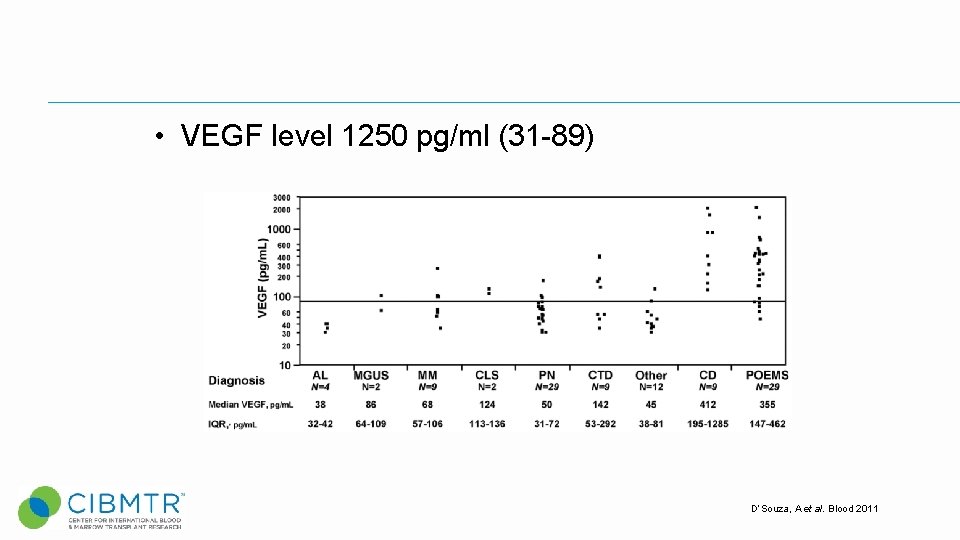
POEMS Syndrome • Very rare disease • Median age 51 • M > F (3: 1) • • • Periph neuropathy Organomegaly Endocrinopathy M-spike Skin • • Papilledema, polycythemia Edema Sclerotic bone lesions Thrombocytosis 37
Osteosclerotic lesions
• VEGF level 1250 pg/ml (31 -89) D’Souza, A et al. Blood 2011
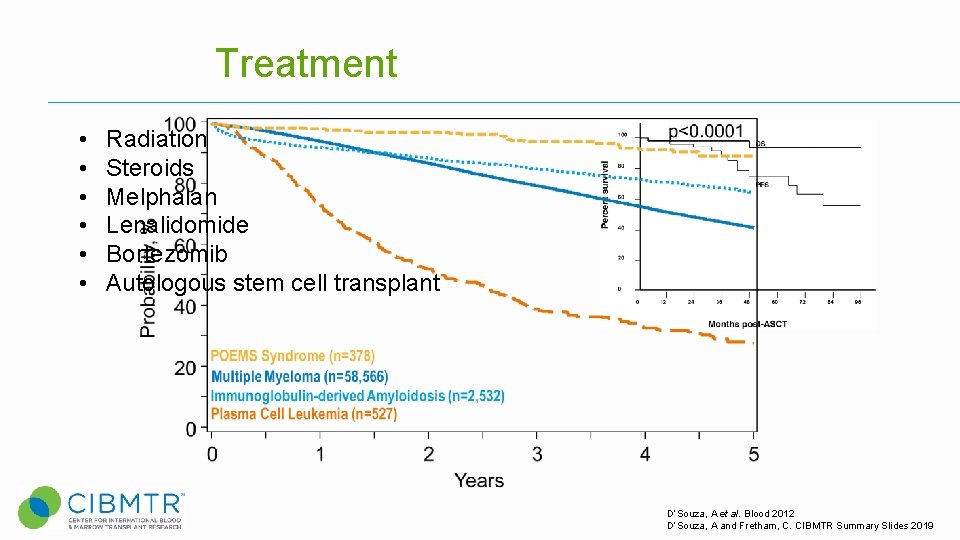
Treatment • • • Radiation Steroids Melphalan Lenalidomide Bortezomib Autologous stem cell transplant D’Souza, A et al. Blood 2012 D’Souza, A and Fretham, C. CIBMTR Summary Slides 2019
Discussion 41